REVIEW · O CHATEAU PARIS
Paris: O Chateau’s Wine Tasting Dinner
Book on GetYourGuide →Operated by O Chateau - Paris Wine Tasting · Bookable on GetYourGuide
Dinner by the Louvre, with wine lessons built in. I like the historic setting close to the museum and the hands-on 4-wine format that turns tasting into a skill. The possible downside? For the price, you’ll want the evening to deliver on both pours and portions, because quality and generosity can vary by night.
The format is designed for fun first, not pressure. You get an English-speaking sommelier who walks you through reading wine and Champagne labels, plus how to taste and choose wine at a restaurant, with practical take-home guidance. One guide named Kim, for example, was praised for making the lessons feel personal and easy to follow.
This is a 90-minute dinner starting at 20:00 at O Chateau, located at 68 rue Jean-Jacques Rousseau (about 3 minutes from the Louvre). It’s $140 per person, you’ll want to bring cash, and tips are not included—small details that matter when you’re budgeting.
In This Review
- Key Things You’ll Notice at O Chateau
- A Historic Paris House Just Steps from the Louvre
- The 90-Minute Flow: How the Menu and Four Wines Fit Together
- What if the evening feels different from what you hoped?
- The Lesson Part: Reading Wine and Champagne Labels Without Stress
- Food on the Plate: Seasonal Courses and Pairing Logic
- Wine Across France: What Makes the Four-Bottle Approach Work
- Price and Value: Is $140 Fair for What You Get?
- Who This Dinner Fits Best in Your Paris Plan
- Should You Book This Tour or Skip It?
- Quick decision rule
- FAQ
- FAQ
- What is the duration of O Chateau’s wine tasting dinner?
- Where is the meeting point in Paris?
- How close is it to the Louvre Museum?
- What’s included with the price?
- Do I need to be an expert in wine?
- What time does the dinner start?
- What should I bring?
- Are tips included in the price?
Key Things You’ll Notice at O Chateau
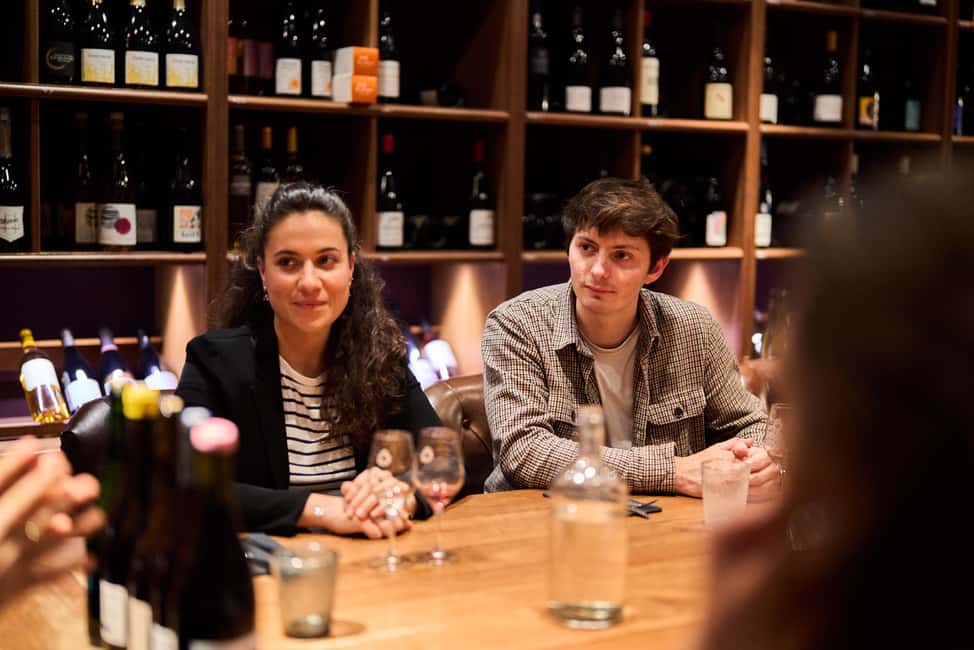
- A historic Paris townhouse vibe in rooms tied to receptions hosted by Mme de Pompadour, with Voltaire, Rousseau, and George Sand in the story
- A structured 90-minute lesson tied directly to a 3-course menu and four paired wines, including a Champagne
- Wine label reading for real life, including how to interpret both wine and Champagne labels
- Fresh seasonal cooking that changes over time, with courses built to match what’s poured
- Small, intimate group energy that makes it easier to ask questions and keep up with the explanations
- A cheat sheet at the end, so you can use what you learned next time you’re staring at a menu
A Historic Paris House Just Steps from the Louvre
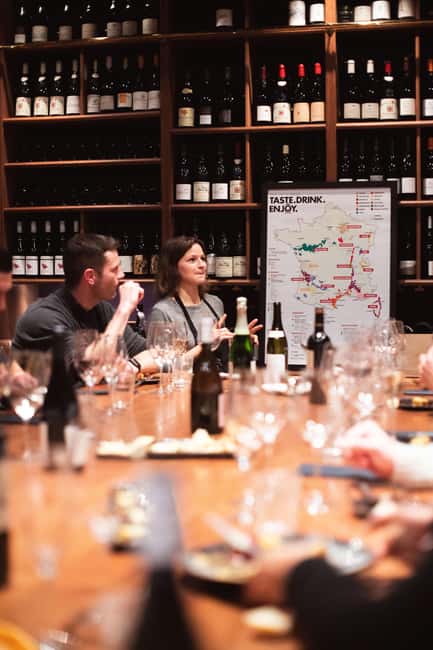
O Chateau is hard to place at first, because it feels like you stepped into a different era and kept walking. The address is central—68 rue Jean-Jacques Rousseau, in the 1st arrondissement—and it’s only about a 3-minute walk from the Louvre area. The nearest metro stops are Louvre Rivoli (Line 1) and Étienne Marcel (Line 4), so it’s simple to pair this with a day of sightseeing without building your evening around long transfers.
What makes the space part of the experience is the house’s background. It’s in a former hôtel particulier that was associated with Mme de Pompadour in the 17th century. Voltaire, Rousseau, and George Sand all appear in the story of the famed receptions held there. You also get the sense of wine culture baked into the setting, since the property originally had vaulted cellars where famous French wines were stored for guests.
That matters because the tour isn’t just about drinking. You’re in a room that supports the idea of tasting as culture—slow enough to learn, relaxed enough to enjoy. If you’re doing Paris as a checklist day, this is a nice counterweight: you trade another museum room for a dining room with a real sense of place.
The 90-Minute Flow: How the Menu and Four Wines Fit Together
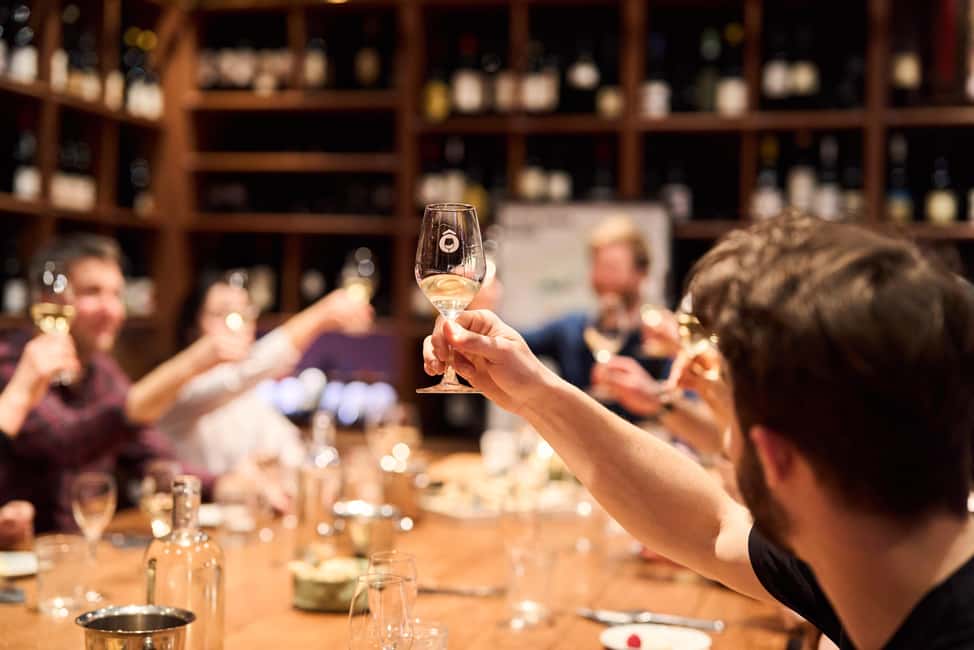
This experience runs about 90 minutes, and it starts at 20:00. You’re not getting a half-day seminar; you’re getting a focused dinner where the lesson stays connected to what lands on your table.
Here’s the basic structure you can expect:
- You arrive at the tasting rooms, where your English-speaking sommelier is ready to guide you.
- You’ll move through a 3-course menu (appetizer, main course, dessert).
- Each course gets paired with a wine from a set of four wines chosen to match the menu.
- A Champagne is included somewhere in that tasting lineup.
The big value is the pacing. By tying the lesson directly to your plate, it stops being abstract. You’re not memorizing labels for the sake of it—you’re connecting what you taste to what you’ll likely order later.
Also note the format is meant to feel approachable. You don’t need to be a wine expert to join. If you love food and you enjoy the idea of learning why certain wines work with certain flavors, you’ll fit right in.
What if the evening feels different from what you hoped?
There’s one practical consideration: at a fixed price point, you want consistent execution. Some diners have described evenings where pours and portion sizes felt small, and others have described strong value with better-than-expected food. Translation for you: don’t assume every course will hit your personal standards in the same way. If you’re the type who cares a lot about steak texture or generous pours, be ready for a night-to-night swing, even in a well-run setting.
The Lesson Part: Reading Wine and Champagne Labels Without Stress
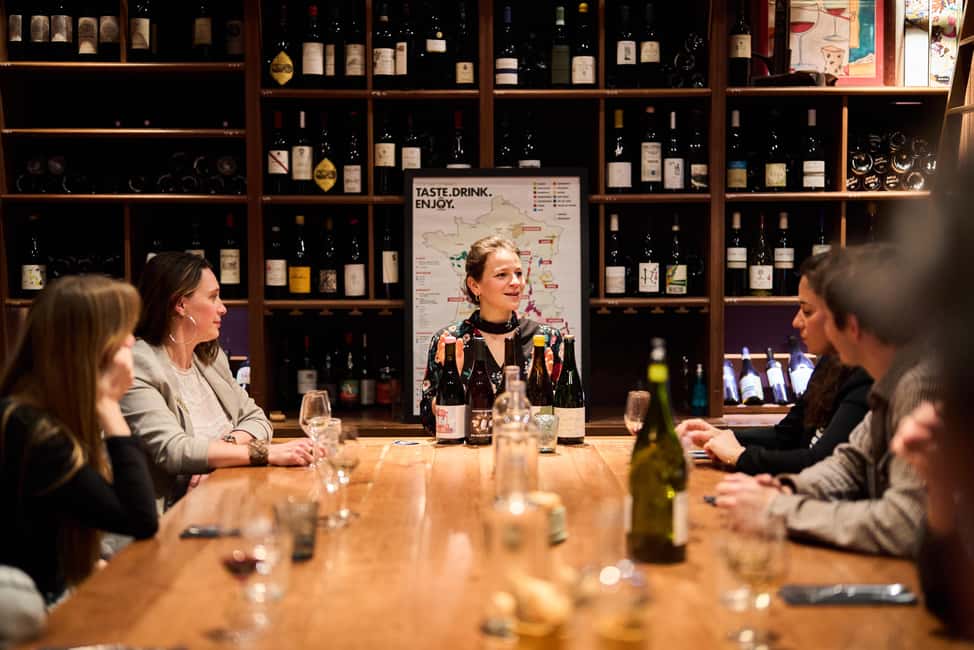
The star skill here is label reading—because it’s what turns wine from luck into choice. You’ll learn how to read French label information and how to interpret details you’d normally skip. Since one Champagne is part of the four-wine lineup, you also get instruction on how Champagne labels work (not just wine in general).
The way the sommelier teaches is the point. This isn’t a slideshow lecture. It’s structured around tasting and decision-making, including:
- how to taste wine properly (the sommelier shares the steps and “secrets” needed to do it well)
- how to choose wine at a restaurant
- how to navigate a wine list using what you learn
- how pairing logic connects wine styles to food
One guide named Kim was praised for combining expert instruction with personal anecdotes, and that’s the kind of delivery that makes label-reading feel usable instead of intimidating. If you’ve ever seen a menu full of abbreviations and felt stuck, you’ll likely appreciate the focus on turning those details into an actual system you can apply.
And you’ll get a cheat sheet at the end. That’s not a throwaway. When you’re in Paris, you can forget half of what you learned the moment you’re staring at your next restaurant menu. A written guide gives you a way to keep the lesson alive after the dinner is over.
Food on the Plate: Seasonal Courses and Pairing Logic
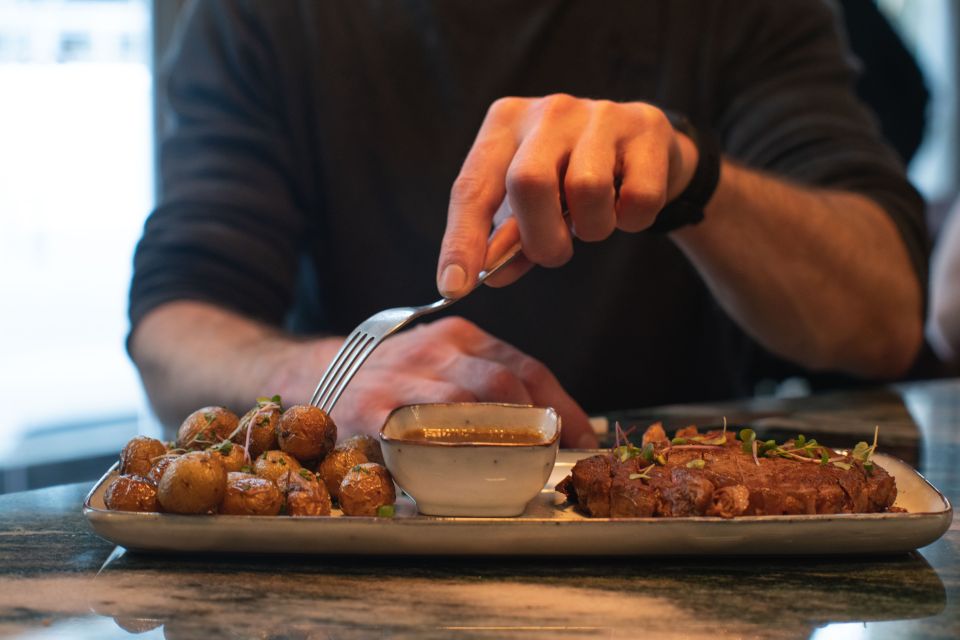
The menu is constantly changing and uses fresh seasonal produce, so you can’t rely on one exact dish every time. But you can plan around the style and level of cooking: classic French techniques with flavors that stand up to wine pairing.
Based on what’s been served, you might see combinations like:
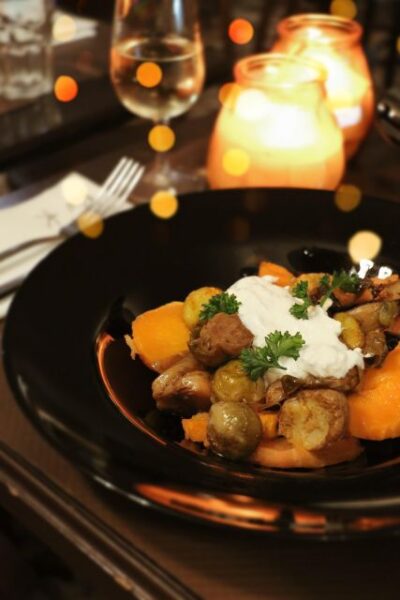
- A starter such as seared scallop with avocado and a cucumber salad, plus a soy sauce element and a raspberry reduction
- A main like veal tenderloin medallions with roasted garlic mashed potatoes, braised seasonal vegetables, and a red wine reduction
- A dessert such as moelleux au chocolat with vanilla bean ice cream
This is important for you as a value question. Wine pairing only works if the food has enough structure to match the wine’s character. The menu choices described here suggest the kitchen isn’t aiming for random “garnish plate” meals. Instead, the sauces and reductions are part of the pairing strategy, which gives the sommelier something solid to teach.
That said, the “watch it” part is real. Some people have found parts of a dinner less satisfying—like a main described as fatty or sinewy and served lukewarm, and a dessert portion described as tiny. Other nights, people reported really good food and satisfying pours. So if your top priority is a perfect meal every time, treat this as a learning dinner that can vary with the menu and execution.
Wine Across France: What Makes the Four-Bottle Approach Work
You taste four different wines from across France, and one of them is Champagne. The point of four bottles isn’t to impress you with variety for its own sake. It’s to show how different regions and styles behave with food.
That’s why the sommelier’s guidance matters. You’ll be taught how to taste and select, and how to connect what’s in the glass to what’s happening in the dish. If you leave with the ability to notice key differences—without needing to be an expert—you’ll get more value out of the next restaurant visit.
A practical way to think about the tasting: every wine is training you for one job. Next time you order wine, you’ll be less likely to pick randomly, because you’ll understand how label information and basic taste cues relate to food pairing. It’s the difference between buying wine like a souvenir and buying it like a decision.
Price and Value: Is $140 Fair for What You Get?
At $140 per person for about 90 minutes, you’re paying for more than dinner. You’re buying three things at once:
- A guided wine lesson in English, including label reading and tasting instruction
- A 3-course chef-prepared meal built to match the wines
- Four paired wines, including a Champagne, plus a cheat sheet to take home
If the evening runs smoothly, this can feel like good value because the price covers both the hospitality and the education. The central location also reduces friction. You’re not spending time and money on getting somewhere far out, and you get to do it at a convenient start time of 20:00.
But here’s the balanced reality check. Some evenings have been described as falling short—especially regarding wine pour size and overall portion satisfaction. In other words, if you’re paying $140, it’s reasonable to expect consistency. If you’re a big eater or you’re the type who notices whether a pour is small, you’ll want the experience to deliver strongly that night.
My advice: go for this dinner if you want wine education you can actually use. If you just want an incredible meal with lots of wine, you might feel picky about what you get. The best “value” comes when your priority is learning how to order wine better tomorrow.
Who This Dinner Fits Best in Your Paris Plan
This is a great match if you’re:
- a foodie who likes pairing stories, not just tasting
- a wine lover who wants to read labels without confusion
- the person in your group who says, I want to learn something, but I still want a fun night
- visiting Paris for a short stay and you want one evening that combines culture, teaching, and dinner in a single block
It’s also a smart choice if you’d rather skip another crowded group activity. The experience is designed for an intimate setting, which makes it easier to ask questions and stay engaged.
If you’re with non-wine-drinkers, you’ll want to consider whether the format is for you. This is built around tasting four wines paired with courses. You can still enjoy the meal and the lesson, but the event’s structure is centered on wine.
Should You Book This Tour or Skip It?
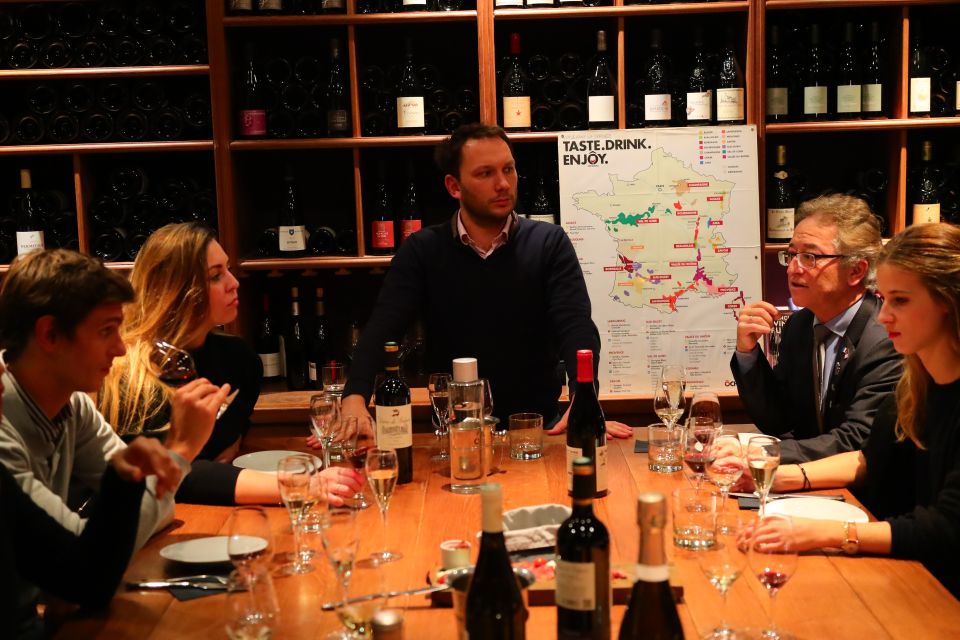
I’d book it if your goal is simple: learn how to read French wine and Champagne labels, taste thoughtfully, and leave with a cheat sheet you’ll actually use. The combination of a central location, a historic venue, an English sommelier, and a 3-course menu paired with four wines can make this a high-impact evening in just 90 minutes.
I’d think twice if you’re extremely sensitive to portion size and pour generosity. The strongest nights sound great, but some accounts point to inconsistencies in what ended up on the plate and how much wine you received. At $140, it’s fair to care.
Quick decision rule
- If you want wine skills you can use after this dinner, book it.
- If you want the “best possible meal no matter what” experience, you might prefer something else and keep your wine education for a place with more flexible structure.
FAQ
FAQ
What is the duration of O Chateau’s wine tasting dinner?
The dinner lasts about 90 minutes.
Where is the meeting point in Paris?
O Chateau is at 68 rue Jean-Jacques Rousseau, 75001, Paris, near the Louvre.
How close is it to the Louvre Museum?
It’s about 3 minutes from the Louvre Museum.
What’s included with the price?
You get a 3-course menu prepared by the house chef and four French wines (including one Champagne), along with an English-speaking sommelier and a cheat sheet at the end.
Do I need to be an expert in wine?
No. The experience is designed for foodies who enjoy wine and food, without needing to be a gourmet expert.
What time does the dinner start?
The dinner starts at 20:00.
What should I bring?
Cash is recommended.
Are tips included in the price?
Tips are not included in the price.