REVIEW · PARIS
Louvre & Mona Lisa Small Group Tour with Reserved Entry
Book on GetYourGuide →Operated by City Wonders Ltd. · Bookable on GetYourGuide
The Louvre, minus the worst line headaches. This 3-hour tour is built for speed and sanity, with reserved access and a guide who keeps you moving. I also love the small-group format, plus headsets so you can actually hear what’s being pointed out (guides like Omar and Addie get especially strong praise for that).
One thing to consider: even with reserved entry, the most popular spots can get crowded, and the tour is a tight sprint. If you want a super quiet, low-talk visit, you might find the pace and talk a bit intense at times.
In This Review
- Quick hits
- Meeting at the Arc: start where Paris funnels you
- Reserved Louvre entry and headsets: the real time-saver
- Winged Victory and the “first look” strategy
- Mona Lisa time: when to stare, and when to not
- Delacroix in the French Wing: Liberty with context
- The building itself matters: medieval foundations and royal power
- Other highlights you’ll likely route through (and why they work in 3 hours)
- Logistics that affect your comfort: bags, security, and what to wear
- Price and value: what $115 buys you in a short visit
- Who should book this tour (and who might want a different style)
- Should you book this Louvre highlights tour?
- FAQ
- How long is the Louvre & Mona Lisa small group tour?
- Where is the meeting point?
- Does the tour include reserved entry to the Louvre?
- How many people are in the group?
- Which highlights are included in the tour?
- What language is the guided tour?
- What do I need to bring for entry?
- Are strollers or large bags allowed?
- Is the tour wheelchair accessible?
- What is the cancellation policy and payment option?
Quick hits

- Reserved entry helps you avoid the worst of the ticket lines
- Headsets mean you can keep up without craning or shouting
- You’ll hit top highlights fast, including Winged Victory and Mona Lisa
- The tour includes Delacroix’s Liberty Leading the People in the French Wing
- Small-group size stays to 12 people or fewer for a more controlled route
Meeting at the Arc: start where Paris funnels you
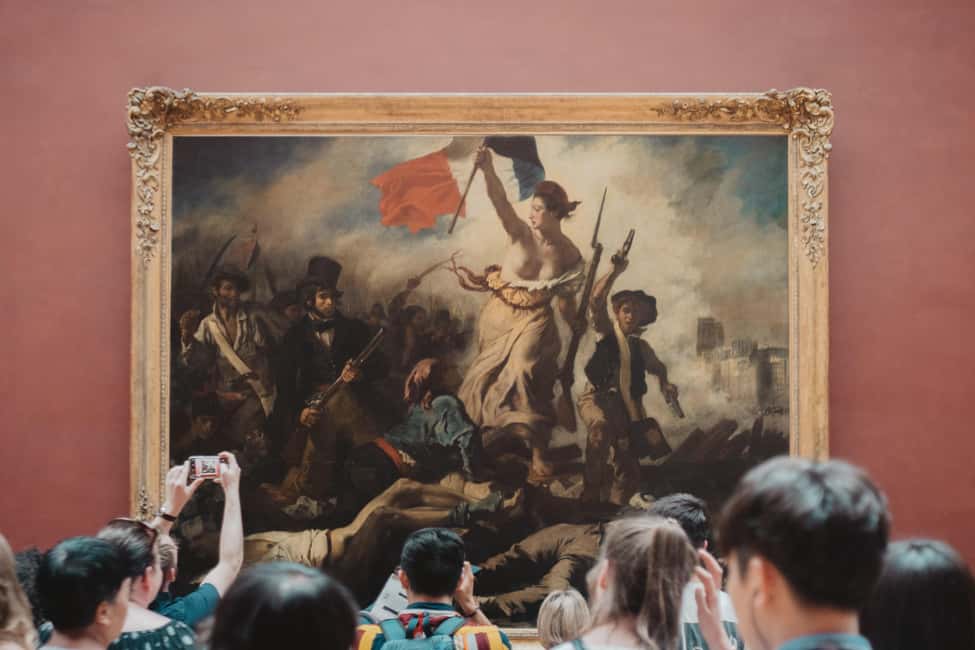
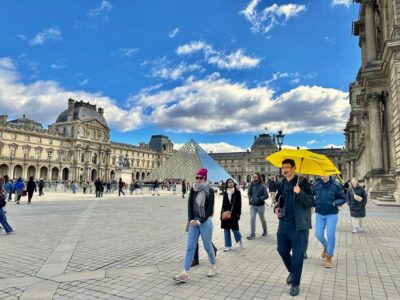
Your tour begins at the Arc de Triomphe du Carrousel, with staff dressed in blue along the wall railing. Stand with your back to the Louvre Pyramid entrance, and look across the road toward the Tuileries Garden area to spot the location.
This meeting point is useful because it gets you on the right side of the Louvre complex fast. You’re not wandering around looking for the correct doorway while other people steam through security. And since the tour ends back near the Louvre Pyramid, you finish at a logical place to reorient and keep exploring on your own.
Heads-up: you’ll need passport or ID for entry. It’s a simple step, but it’s the kind that can slow you down if it’s buried in a bag you’re not allowed to bring inside.
You can also read our reviews of more tours and experiences in Paris.



Reserved Louvre entry and headsets: the real time-saver

The biggest practical win here is reserved access. You get an entrance ticket and reservation fee as part of the experience, and the tour is designed to help you get through the entry process with less waiting than a self-guided visit.
Once you’re inside, the tour does another smart thing: headsets. That changes the whole experience. In a museum the size of the Louvre, the guide can’t always stop long, and other groups can cluster nearby. With headsets, you don’t have to play bodyguard for your own attention.
Also, this tour is built around a small group size of 12 people or fewer. Even when groups are close to that ceiling, the structure helps keep you from getting swallowed by the crowd. One review noted that the group felt a bit larger than what was advertised at booking, but the headsets made it manageable—so don’t expect a private museum, but do expect clear guidance.
Winged Victory and the “first look” strategy
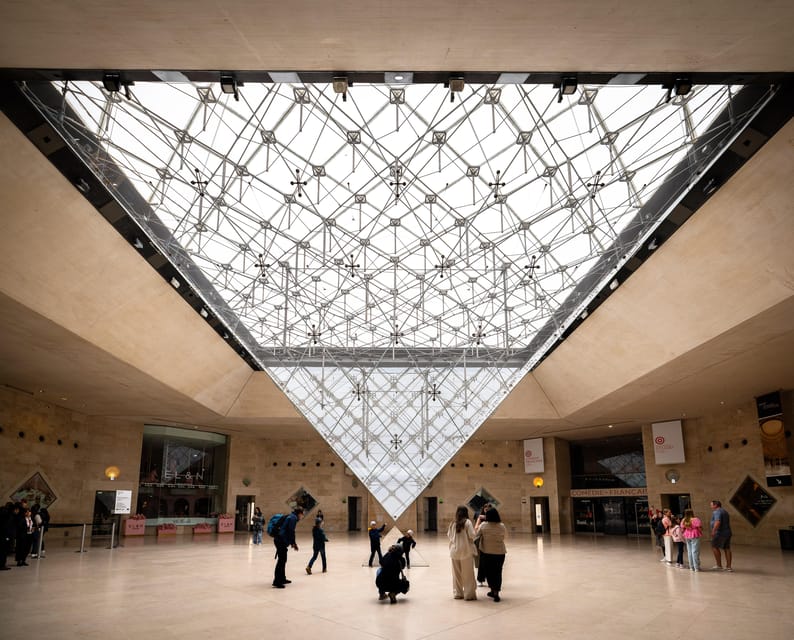
Early in your visit, you’ll be pointed toward some of the Louvre’s best-known sculpture moments, including the Winged Victory of Samothrace. The key value isn’t just that it’s famous—it’s that it’s a great anchor for understanding the Louvre’s breadth.
With a guide, you don’t just see marble. You get context that helps your brain organize what you’re looking at. You’ll also hear about art periods across a wide time span, from ancient artifacts (the tour mentions relics as far back as 450 B.C.) through later centuries.
In practical terms, this “start strong” approach matters because the Louvre’s layout can overwhelm you fast. People lose time zigzagging. You’ll avoid that by following a route that’s meant to connect the dots: ancient → Renaissance/Neoclassicism → modern history painting. It’s a shortcut to making sense of a museum that otherwise feels like 100 museums stitched together.
Mona Lisa time: when to stare, and when to not
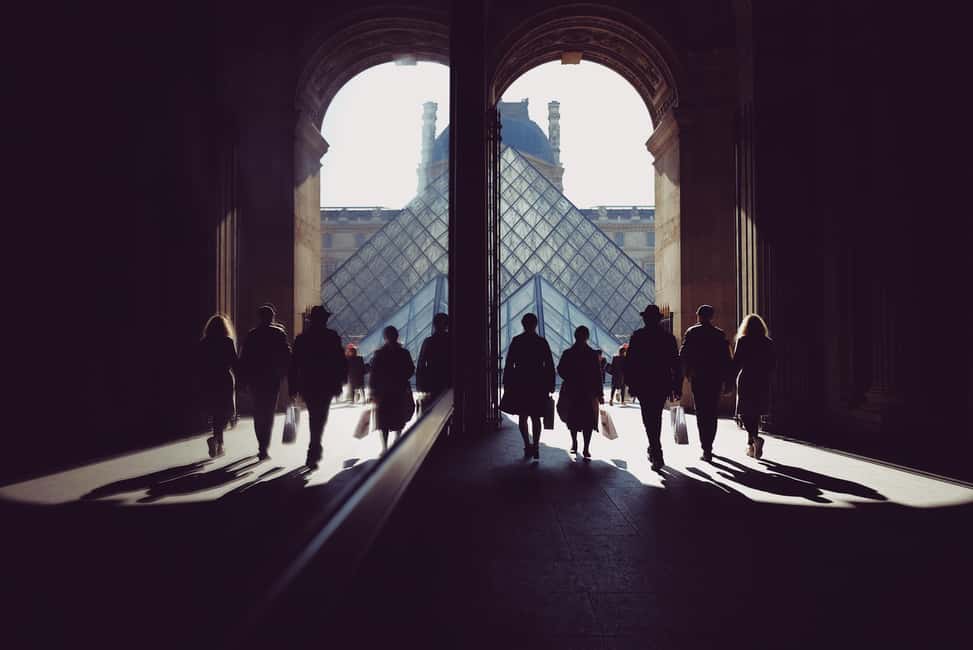
Yes, you’re going to see Mona Lisa. The more important question is how you experience it. The tour includes time to admire her and the famous smile, but the Louvre’s crowd reality is always in the background.
One caution from a real experience: on busy days, the group can still end up waiting near the painting. In one case, the line delay ate about 20 minutes, and the reviewer suggested it might work better if the tour ended there so the time wouldn’t feel “spent” inside the guided window.
So here’s how to use this information without worrying yourself sick:
- Go in ready for a crowd.
- Keep your focus on the moment when you finally get close, not the wait.
- If Mona Lisa is your absolute priority, you’ll likely want to plan your own follow-up time afterward, just in case the guided slot gets squeezed.
Even with the wait, having a guide can still improve this stop. Your guide can explain what to look for and how the Louvre wants you to read the painting. Without that, you’d be standing there doing a lot of guessing.
Delacroix in the French Wing: Liberty with context
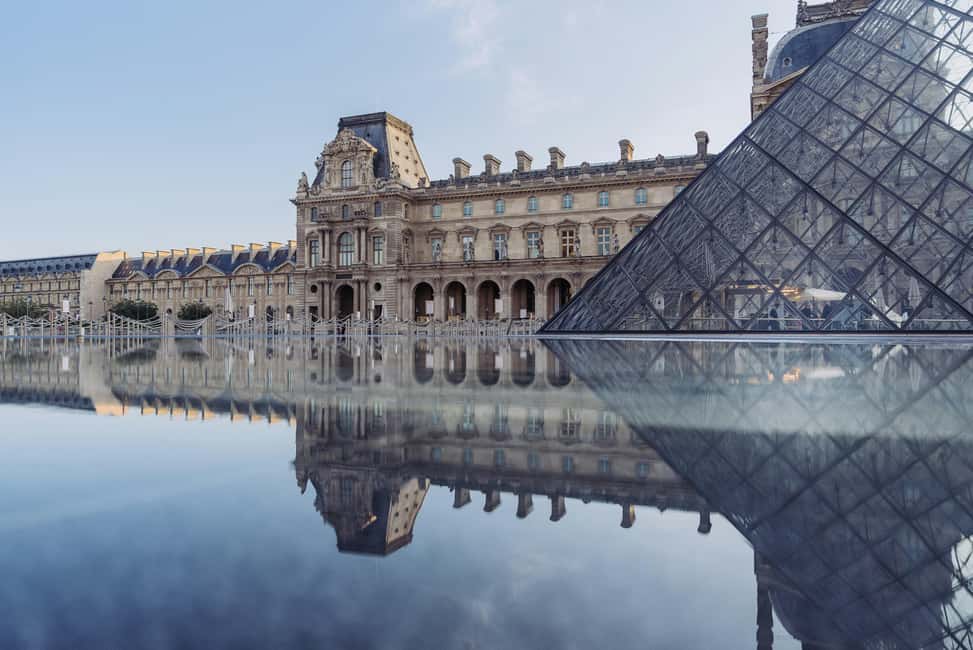
One of the standout stops is Delacroix’s Liberty Leading the People, located in the French Wing. This isn’t just a famous image to check off. It’s a history lesson you can see.
The Louvre can feel like a maze of styles, but works like this help you understand what museums do: they preserve art and also preserve moments in politics, emotion, and storytelling. Your guide connects the painting to its era and explains why it matters, and that makes the scene land harder than it would from a distance.
A helpful way to think about this stop: if you’re not a “museum person,” this is often the painting that makes people feel like they’re watching something unfold. It gives you a narrative you can grasp quickly—especially after you’ve already seen ancient sculpture and Renaissance/Neoclassical works.






The building itself matters: medieval foundations and royal power
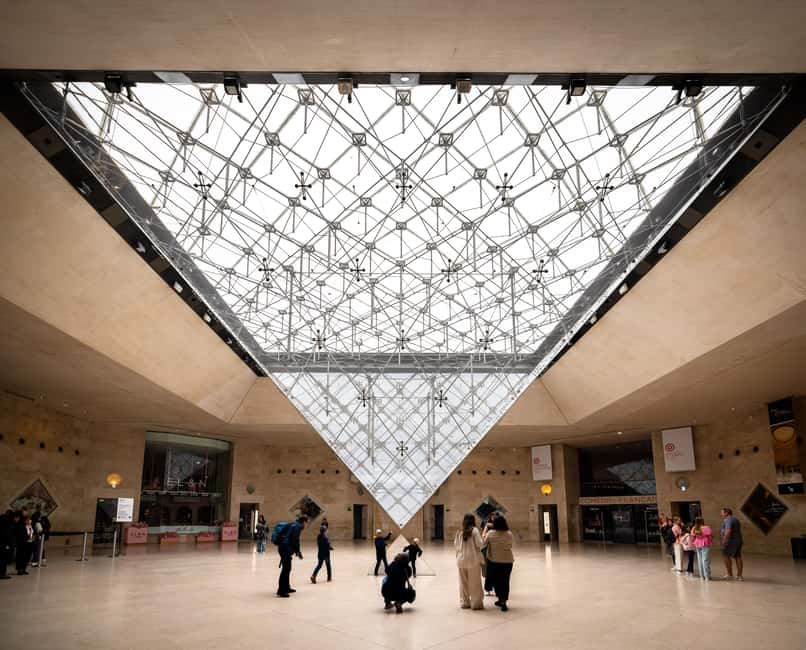
Part of what makes this tour feel worth doing in only three hours is that it doesn’t treat the Louvre as a random list of paintings. You’ll also get the building story, including the medieval foundations of the Louvre when it was a royal palace.
You’ll hear about the Louvre’s layers—how it shifted from royal residence to museum—and you’ll see references to the splendor of later rulers. The tour info specifically mentions things like Napoleon’s crown and treasures connected to King Louis XV. Even if you don’t spend huge time staring at crowns and artifacts, this context changes how you interpret what you’re walking through.
I like this approach because it gives you a lens. Instead of asking Where is everything? you start asking Why is the Louvre shaped like this, and why are these objects here? That’s how a quick tour feels less like a hit-and-run and more like you actually understand the place.
Other highlights you’ll likely route through (and why they work in 3 hours)
You’re set up to see a mix of art types and time periods, including:
- Canova’s Psyche and Cupid (mentioned as part of the experience)
- Additional stops tied to the early through 19th-century arc (the tour spans ancient to iconic 19th-century masterpieces)
In a museum this large, the value isn’t seeing every masterpiece. It’s seeing a representative set that helps you recognize patterns. Sculpture early on gives you an emotional baseline. Then paintings bring storytelling. Then Neoclassicism like Canova adds another texture—how artists re-used classical ideas with a new style.
And because you’re moving with a guide, you’re less likely to miss key “gravity wells” in the museum—the works people line up for, the halls that lead you naturally into the next period, and the visual cues that help you navigate.
One practical tip: you’ll be doing a lot of walking. In a review, someone suggested taking seats when they find them, since there are moments where the route pauses long enough to rest. Do it. Even in good shoes, three hours in the Louvre can be a surprising workout.
Logistics that affect your comfort: bags, security, and what to wear
This tour has clear rules, and they affect your sanity more than you’d think:
- You must pass security before entering galleries.
- Large bags and umbrellas must be left at the bag check (free of charge).
- Items exceeding 55x35x20 cm aren’t permitted.
- No baby strollers and no luggage/large bags inside the galleries.
- Wheelchair users aren’t suitable for this activity.
For the best experience, travel light. If you’re carrying a backpack, test whether it fits the size rule. If it doesn’t, you’re dealing with bag check and extra time.
Also, the meeting point and end point are both near major Louvre entrances, so you’ll probably want to keep your phone charged. You can use the last 10 minutes to orient yourself before you wander off.
Price and value: what $115 buys you in a short visit
At $115 per person for a 3-hour guided experience, you’re paying for three things:
1) a guide who can get you to major works without wasting time,
2) reserved entry (plus the reservation fee), and
3) headsets so you don’t lose the plot.
The tour includes an entrance ticket and reservation fee. It also includes headsets and the expert guide. The reservation fee is 70€ per group, which matters because it spreads the “reserved entry” cost across everyone in your group size.
For most people, the value is straightforward: the Louvre is enormous, and guided time is expensive only because it’s useful. If you try to DIY this in three hours, you’ll spend a lot of that time figuring out where to go next instead of learning what you’re looking at.
One special case: the Louvre entry is free for EU citizens aged 18 to 26. If you qualify, the base museum ticket portion may not be the main value driver for you. In that situation, ask yourself if you’re mainly buying the guide and reserved logistics, or whether you’d prefer a museum-only visit and save money.
Who should book this tour (and who might want a different style)
This is a great choice if you:
- want the top hits without trying to master the Louvre alone,
- prefer a guided route with context (stories around key works),
- like small groups and clear audio through headsets.
It’s also ideal for your first Louvre trip, or for a short Paris schedule where you can’t spend half a day wandering.
It may be less ideal if you:
- strongly dislike any art-history talk and want a mostly silent, low-interpretation visit,
- need step-free access (the tour is not suitable for wheelchair users),
- expect the Mona Lisa experience to be totally crowd-free (it won’t be).
Should you book this Louvre highlights tour?
I’d book it if you want to feel like you made real progress in three hours. The combination of reserved entry, a tight highlight route, and headsets is a practical win, especially for the Louvre’s busiest days.
I’d hesitate only if your priority is a slow, minimal-talk museum day, or if you’re counting on a smooth Mona Lisa visit with no bottleneck. Even then, the guided structure still helps you avoid the bigger time sink: wandering the wrong way and missing key works entirely.
If you want an efficient first Louvre experience that still gives you meaningful context, this tour is a solid bet.
FAQ
How long is the Louvre & Mona Lisa small group tour?
It lasts 3 hours.
Where is the meeting point?
Meet staff dressed in blue beside the Arc de Triomphe du Carrousel. The coordinators are standing to the left of the Arc along the wall railing.
Does the tour include reserved entry to the Louvre?
Yes. You get reserved access and skip the ticket line, and entrance ticket and the reservation fee are included.
How many people are in the group?
The tour is set up for small groups of 12 people or fewer, with headsets provided so you can hear the guide.
Which highlights are included in the tour?
The tour includes major stops such as the Winged Victory of Samothrace, time at the Mona Lisa, and a visit to Delacroix’s Liberty Leading the People in the French Wing.
What language is the guided tour?
The guide is English speaking.
What do I need to bring for entry?
Bring a passport or ID card.
Are strollers or large bags allowed?
No strollers are allowed. Large bags and luggage are not allowed in the galleries, and items over 55x35x20 cm aren’t permitted. Umbrellas must be left at the bag check.
Is the tour wheelchair accessible?
No. It is not suitable for wheelchair users.
What is the cancellation policy and payment option?
Free cancellation is available up to 24 hours in advance for a full refund. You can also reserve now & pay later.