REVIEW · PARIS
Paris: Big Bus Hop-on Hop-off Tour and Seine River Cruise
Book on GetYourGuide →Operated by Big Bus Tours/LES CARS ROUGES · Bookable on GetYourGuide
Paris gets easier when you stop walking. I like the 24- or 48-hour hop-on hop-off flexibility, especially when you want to bounce between the Louvre, Notre-Dame area, and the Eiffel Tower. The big trade-off is simple: traffic and popular departure times can make the day feel slower, and the Seine cruise queue can get long.
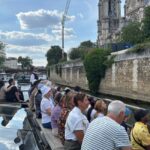
I’m also a fan of the 1-hour Seine River cruise with Les Bateaux Parisiens. It’s a calm change of pace from the bus, and it shines in the evening when the monuments light up. Just note that audio and headphone tech can be hit or miss—so it helps to test your headphones early.
In This Review
- Key things I found most useful
- Big Bus Paris + Seine Cruise: How the combo works
- Price and value: why $61 can make sense
- Planning your day: 10 hop-on stops and a route you can actually use
- The Louvre to Notre-Dame zone: where the bus saves the most energy
- Musée d’Orsay and Invalides: a calmer Left Bank plan
- Champs-Élysées, Grand Palais, and the Eiffel Tower: the route’s headline stretch
- Opéra Garnier: a great “Paris variety” stop
- The Seine cruise with Les Bateaux Parisiens: what to know and when to go
- Timing advice (based on real-world crowd rhythm)
- Audio commentary, WiFi, and the app: the tech that can save your brain
- Getting the most out of hop-on hop-off: my best practical tips
- Wheelchair access and comfort notes for real life
- Should you book Big Bus Paris + the Seine cruise?
- FAQ
- FAQ
- How long is the hop-on hop-off bus ticket?
- How long is the Seine River cruise?
- Where does the Seine River cruise depart from?
- How often do the Seine River cruises run?
- Do I choose a cruise time slot?
- What stops can I start from on the bus?
- What’s included with the bus tour?
- What languages is the audio available in?
- Is hotel pickup included?
- Is the experience wheelchair accessible?
Key things I found most useful
- Start anywhere on the route: You can board at any of the 10 stops, so you’re not chained to one location.
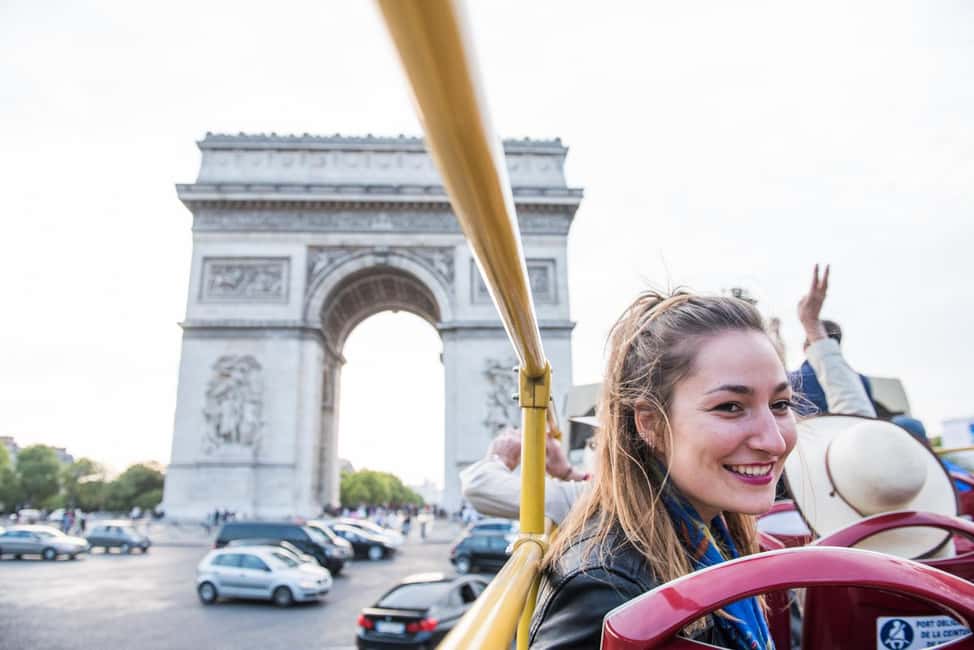
- Time-saving sight coverage: You’ll pass major landmarks like the Eiffel Tower and Arc de Triomphe while staying seated most of the time.
- Seine cruise from Pontoon No. 3: The 1-hour ride runs from near the Eiffel Tower area, with frequent departures.
- Audio in many languages: Headphones come with the digital commentary, and multiple language options are available.
- WiFi and live tracking: Onboard WiFi plus app-based bus tracking helps you plan next moves.
- Built-in flexibility for your pace: You can hop off to explore, then return later—no fixed group tour rhythm.
Big Bus Paris + Seine Cruise: How the combo works
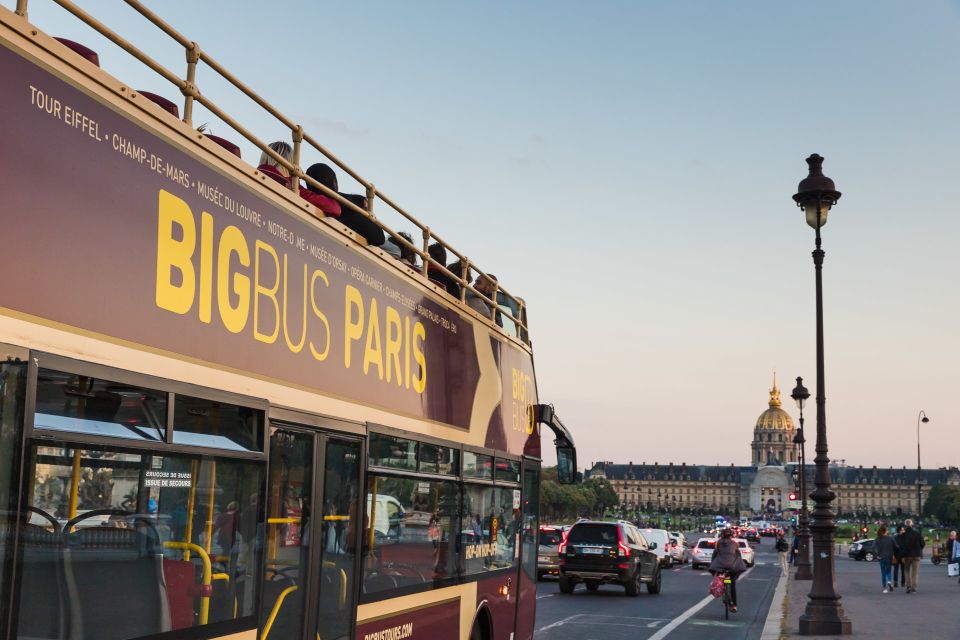
This is one of those Paris “do it smart” bundles. You get a hop-on hop-off bus pass and then an included Seine River cruise. The bus is the workhorse: it drops you near big sights and lets you stitch together your own mini itinerary. The Seine cruise is the reward: from the water, the city looks different, smoother, and a lot more postcard-ready.
The best part is the rhythm. Instead of walking mile after mile, you ride, get your bearings, then jump off only where you actually want to linger. If you’ve got limited time—or you just don’t want to sweat through every neighborhood—that freedom matters.
You can do it in 1 day (if you’re efficient) or spread it across 2 days with the 24- or 48-hour pass. Either way, the ticket setup is designed so you can adjust when Paris crowds or your energy levels change.
You can also read our reviews of more boat tours in Paris



Price and value: why $61 can make sense
At about $61 per person, this combo can be good value if you’d otherwise pay for:
1) separate transport to/from key sights and
2) an activity that gives a different perspective.
The bus pass is more than a ride. The included digital commentary (with headphones) turns each stop into context, so you’re not just looking at buildings—you know what you’re seeing. Add in the cruise, and you get a one-hour experience that you can’t easily replicate on a budget with just walking.
It’s not perfect value if you’re the kind of traveler who loves long, uninterrupted strolling and already knows the city well. But for first-timers, mixed-age groups, or anyone who wants a high “sights per hour” score, this ticket is usually money well spent.
Planning your day: 10 hop-on stops and a route you can actually use
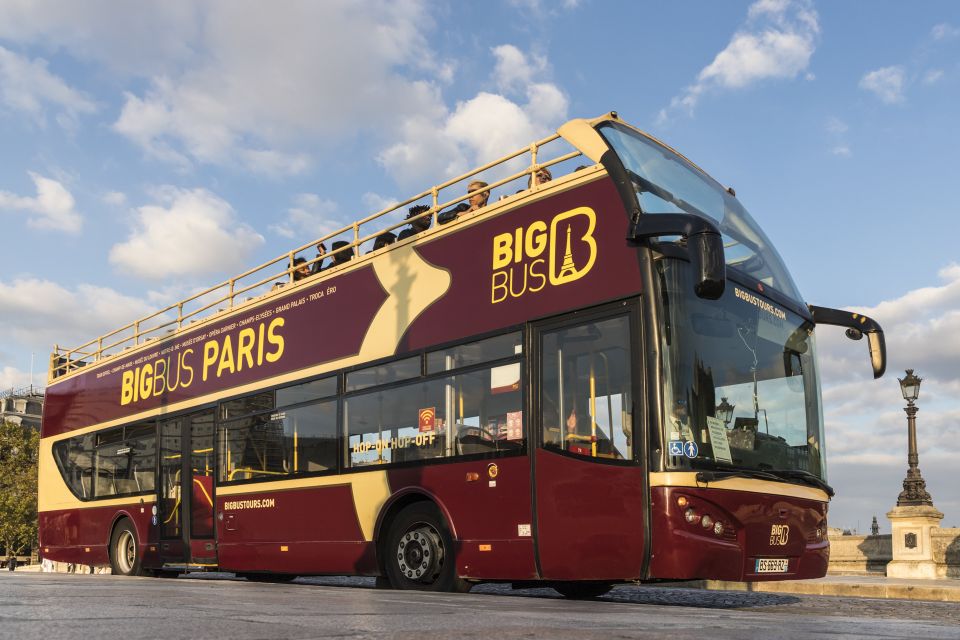
You can begin your hop-on, hop-off tour from any of the Big Bus stops along the route. That’s a big deal in Paris, where the “right” starting point can depend on where you’re staying, where you ate lunch, and how fast your feet feel.
The major stops the bus connects you to include:
- Louvre-Pyramide / Big Bus Information Centre (11 avenue de l’Opéra)
- Louvre – Pont des Arts (56 Quai François Mitterand)
- Notre Dame (3 Rue Lagrange)
- Musée d’Orsay (58 Place Henry de Montherlant)
- Champs-Élysées (156 avenue des Champs-Élysées)
- Grand Palais (Avenue Winston Churchill)
- Iéna (Avenue Iéna)
- Eiffel Tower (Quai Branly, Entrée 2 Tour Eiffel)
- Champ de Mars (Avenue Joseph Bouvard)
- Opéra Garnier (Facing 15 rue Scribe)
- Invalides (2 Avenue de Tourville)
One practical note: the cruise departure is linked to the Eiffel Tower area. The Seine portion leaves from Pontoon No. 3, Port de la Bourdonnais, near the Eiffel stop. So if you’re booking one cruise slot and you want the day to flow, it helps to plan a little around that.
The Louvre to Notre-Dame zone: where the bus saves the most energy
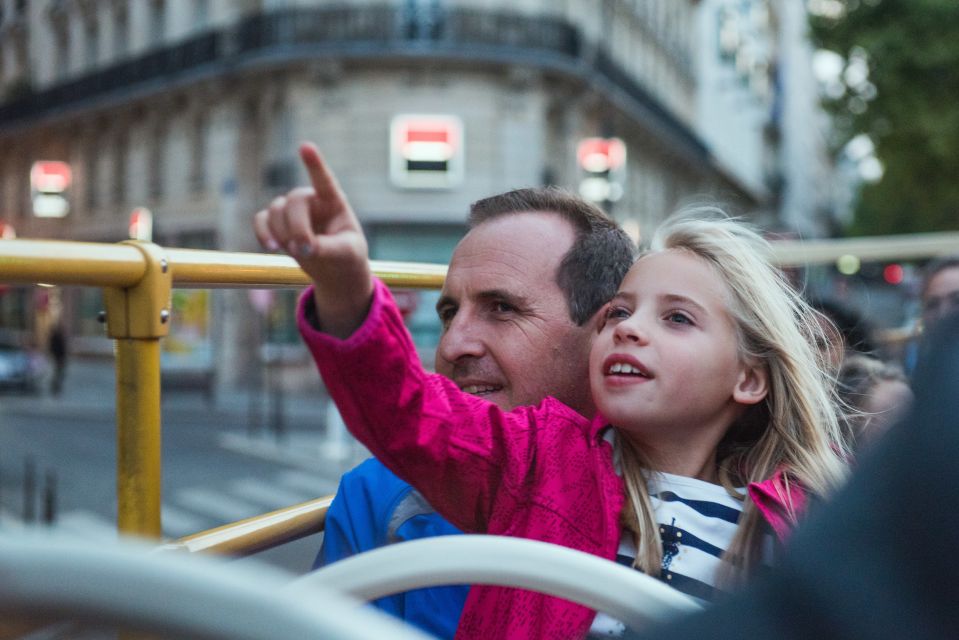
This is the area where the hop-on approach really pays off. If you’ve ever tried to do the Louvre, then crossed to the Seine, then pushed on to Notre-Dame, you know it adds up fast. With the bus, you can break it into sensible chunks.
Louvre-Pyramide / Big Bus Information Centre (11 avenue de l’Opéra) is a strong starting point if you’re trying to set your bearings early. It’s also an easy place to activate your voucher in person if you prefer staff help over the app.
From there, consider getting off at Louvre – Pont des Arts (56 Quai François Mitterand). This puts you right by the Seine crossings and viewpoints—useful if you want photos or simply want to experience that classic Paris river-edge feel without committing to a long walk.
Next stop is Notre Dame (3 Rue Lagrange). Even if you only plan a quick look, you’ll appreciate not having to “figure out routing” through busy streets. The bus drops you close enough that you can spend time where you want—then return when you’re ready.
My practical tip: don’t try to treat this zone like a checklist. Instead, pick 1 or 2 “anchor” stops (Louvre area and Notre-Dame, for example), then leave room for what you actually feel like doing—walk by the river, pause for a view, or step into a café for a reset.
Musée d’Orsay and Invalides: a calmer Left Bank plan
If the Left Bank calls to you, Musée d’Orsay (58 Place Henry de Montherlant) is a smooth bridge between art, the river, and classic Paris architecture. It’s also a smart stop when you want to watch the city change as the day moves along.
Then swing toward Invalides (2 Avenue de Tourville). This stop is helpful if you’re aiming to keep your sightseeing more organized. Instead of bouncing between far-apart points on foot, the bus gives you a direct line so you can reach this area with less transit hassle.
A common mistake is treating these stops as “all or nothing.” If you’re not sure you want a museum entry, still get off. Even just the exterior and the surrounding streets can be enough—this is one of those cases where the bus stop is the feature, not only what’s inside.




Champs-Élysées, Grand Palais, and the Eiffel Tower: the route’s headline stretch
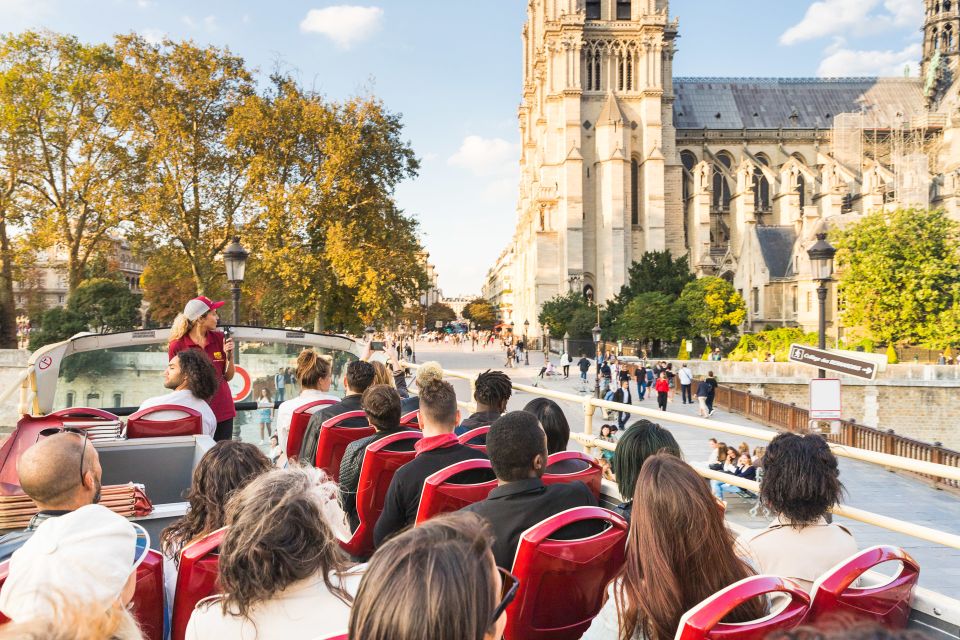
The bus really flexes when you hit the center-of-Paris landmarks. You’ll roll past the Champs-Élysées, and you get a practical way to reach major points without timing every street crossing.
The Champs-Élysées stop (156 avenue des Champs-Élysées) is the obvious photo-and-walk area. It’s also a place where the bus lets you control how much time you spend there. If the crowds or noise start to feel like too much, you can jump back on quickly and shift gears.
Near it, Grand Palais (Avenue Winston Churchill) makes a nice stop if you want the big-architecture moment without overplanning. It’s easy to step off, glance around, and then rejoin the route when you’re ready.
Then comes the Eiffel stretch. You’ll see access points like:
- Iéna (Avenue Iéna)
- Eiffel Tower (Quai Branly, Entrée 2 Tour Eiffel)
- Champ de Mars (Avenue Joseph Bouvard)
Here’s how I’d use it: get off once to be near the Eiffel Tower for views and photos, then consider moving to the Champ de Mars area if you want more open space around you. The bus helps because you can reposition without fighting the city on foot.
And since the Seine cruise departure is near the Eiffel Tower area, this is also where your day can naturally connect to the boat.
Opéra Garnier: a great “Paris variety” stop
Opéra Garnier (Facing 15 rue Scribe) is a useful stop if you want something that feels distinct from the museum-and-monument rhythm. It’s classic Paris, and it gives your itinerary variety.
If you’re doing this in the morning, the bus is an easy way to add it without overcommitting to walking. If you’re doing it later, it’s a good place to reset before heading back toward the river.
The Seine cruise with Les Bateaux Parisiens: what to know and when to go

This part is simple: you get a 1-hour Seine River cruise. You must choose your time slot before boarding. Departures run every 45 minutes from 10:30am to 9:00pm (and every 30 minutes on weekends).
The departure point is Pontoon No. 3, Port de la Bourdonnais, near Stop 8: Eiffel Tower.
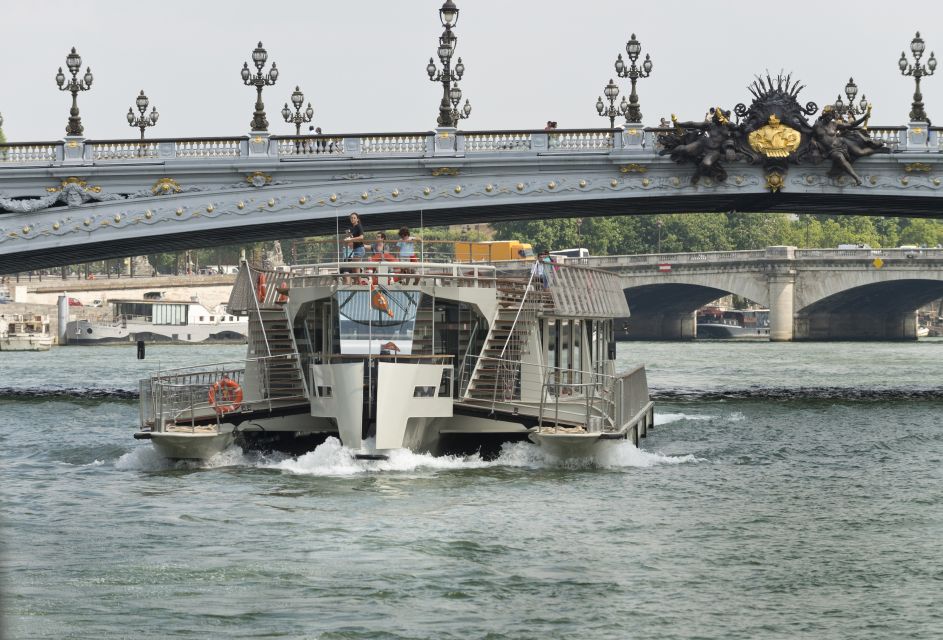
What you’ll like most is the change in perspective. The bus gives you angles from streets and boulevards. The Seine gives you a long, steady look at monuments, bridges, and the way Paris lines up along the water.
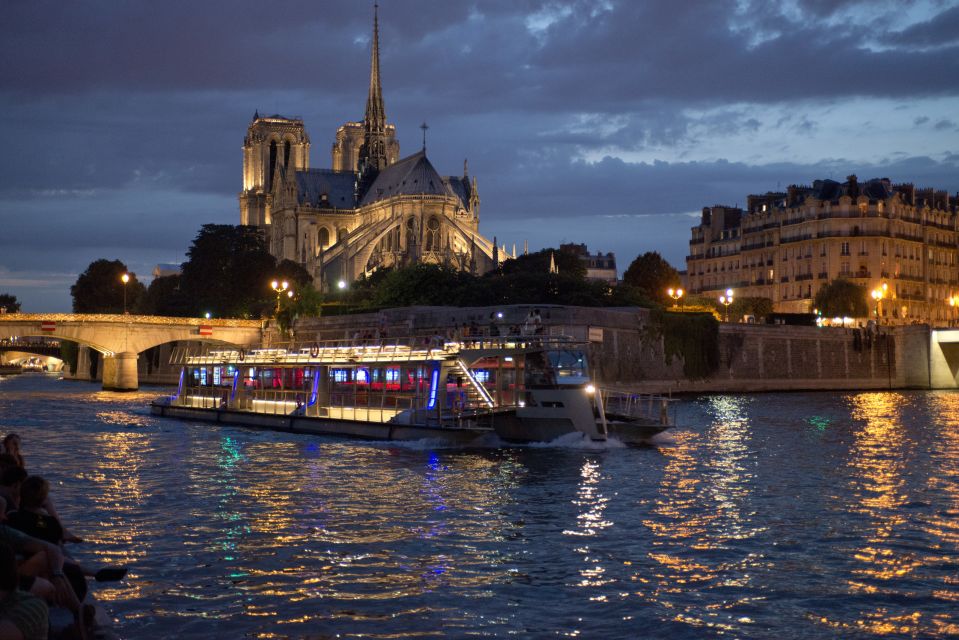
The cruise route includes famous sights such as Notre Dame and the Musée d’Orsay, plus the stretch under the city’s bridges. That’s a big part of why this combo works: you see the city in two very different ways.
Timing advice (based on real-world crowd rhythm)
You’ll want to plan for lines. When departure times are popular, the boat queue can be long—sometimes with huge numbers waiting for the same slot. So don’t treat the cruise like a last-minute afterthought.
If you want the best “wow,” consider going later in the day for the lights. The evening atmosphere is where the cruise feels especially memorable.
Audio commentary, WiFi, and the app: the tech that can save your brain
The included digital commentary is a major plus. You get audio in several languages, and headphones are provided. English, French, Spanish, Chinese, German, Italian, Portuguese, Russian, and Korean are listed as options.
There’s also WiFi onboard, plus a downloadable app with live bus tracking. In practice, that means you’re less likely to waste time standing at a stop guessing when the next bus will come.
Two small caution points:
- Audio can be out of sync at times, so it helps to glance at the stop signage and not only trust the speaker.
- Headphones can occasionally fail to work properly. If the audio doesn’t come through, don’t panic—try another set or switch buses if staff offer that option.
Getting the most out of hop-on hop-off: my best practical tips
Here’s how I’d use this ticket to avoid the most common time traps:
1) Start early. The bus is at its best when you’re using it to set your route and priorities for the day.
2) Hop off in “clusters.” Do one side of the city, then move on. Paris is easier when you don’t bounce back and forth too much.
3) Build in buffer time. Traffic can slow things down, and the cruise boarding line may take longer than you expect.
4) Use the app tracking. If you’re waiting at a stop, don’t just stare at the street. Check where the next bus is so you don’t over-wait.
5) Keep one day flexible. With a 24- or 48-hour pass, you can adjust when energy runs out or when crowds get intense.
Also, if you like a human touch, this service can be helped by staff at stops. On at least some days, assistants guide guests to the right boarding spot—useful when you’re juggling kids, stairs, or confusion in a busy area.
One more fun detail: when you do get staff or driver help, English/French-speaking team members can step in. In the past, guides such as Lou and Roberto have been mentioned as making the experience more entertaining and informative—so if staff offer guidance, take it.
Wheelchair access and comfort notes for real life
This tour is wheelchair accessible, and the buses have a ramp for access. That’s important for anyone who needs smoother boarding.
Comfort-wise, remember the bus is open-top. Weather can change your mood fast in Paris. If rain or cold hits, pack accordingly so you don’t spend the best part of the day waiting for conditions to improve.
Should you book Big Bus Paris + the Seine cruise?
If you want a smart, low-stress way to see Paris highlights like the Louvre, Notre-Dame, Champs-Élysées, and Eiffel Tower, this is an easy yes. The combination of flexible bus sightseeing plus a 1-hour Seine cruise is exactly the kind of “time-saving pair” that works well for first-timers and anyone with limited energy.
Book it if:
- you want a simple plan you can reshape day-to-day
- you like guided context through audio while you walk around on your own
- you want the river view without figuring out boat logistics
Skip (or rethink) if:
- you already know Paris well and don’t need hop-on flexibility
- you hate queues and prefer timed, small-group experiences only
- you’re the type who would rather spend every hour walking and soaking in neighborhoods without transit breaks
FAQ
FAQ
How long is the hop-on hop-off bus ticket?
The ticket is available as a 24- or 48-hour Big Bus hop-on hop-off pass.
How long is the Seine River cruise?
The cruise is 1 hour.
Where does the Seine River cruise depart from?
It departs from Pontoon No. 3, Port de la Bourdonnais (near the Eiffel Tower stop).
How often do the Seine River cruises run?
Departures run every 45 minutes from 10:30am to 9:00pm, and every 30 minutes on weekends.
Do I choose a cruise time slot?
Yes. You must select a time slot before boarding.
What stops can I start from on the bus?
You can begin at any of the 10 Big Bus stops along the route.
What’s included with the bus tour?
The ticket includes the hop-on hop-off bus pass, digital audio commentary with headphones, WiFi onboard, and access to an app with live bus tracking.
What languages is the audio available in?
Audio languages listed include Spanish, Chinese, English, French, German, Italian, Portuguese, Russian, and Korean.
Is hotel pickup included?
No. Hotel pickup and drop-off aren’t included.
Is the experience wheelchair accessible?
Yes. The tour is wheelchair accessible, and the buses have a ramp for wheelchair access.