REVIEW · PARIS
Paris: Kids in the Kitchen – Croissant
Book on GetYourGuide →Operated by MUCURISA · Bookable on GetYourGuide
A good croissant lesson doesn’t need a factory. This Paris kids cooking experience is built for families, with simple at-home tools and a small group so kids can actually participate while learning how croissants and other Viennoiseries fit into a bigger story. You’ll start with the basics, including la mise en place, then follow the trail of the pastry over centuries.
Two things I especially like: first, the class is designed for kids starting around age 3, so it isn’t a long lecture that loses them halfway through. Second, the instruction focuses on what you can repeat after the class, since they use everyday-style tools instead of industrial equipment.
One consideration: it’s held in a private apartment on the 5th floor with no elevator, so plan ahead if stairs are an issue for your family.
In This Review
- Key things that make this croissant class worth your time
- A Kids-Friendly Croissant Class in a 5th-Floor Paris Apartment
- The Croissant Story You’ll Actually Remember: Austria to Viennoiseries
- The Hands-On Difference: Simple Tools and Kid-Scale Work
- What a 90-Minute Session Feels Like for Families
- What’s Included (and Why It Changes the Value)
- Instructor Languages and Group Size: The Comfort Factor
- Price in Perspective: Is $182 Per Person Worth It?
- Who Should Book This Croissant Workshop?
- Should You Book? My Practical Take
- FAQ
- Where does the croissant class take place?
- How long is the class?
- What’s the group size?
- What languages are the instructors speaking?
- Is it suitable for young children?
- What’s included in the price?
- How much does it cost?
- Can I cancel for a refund?
- Is there an option to pay later?
Key things that make this croissant class worth your time
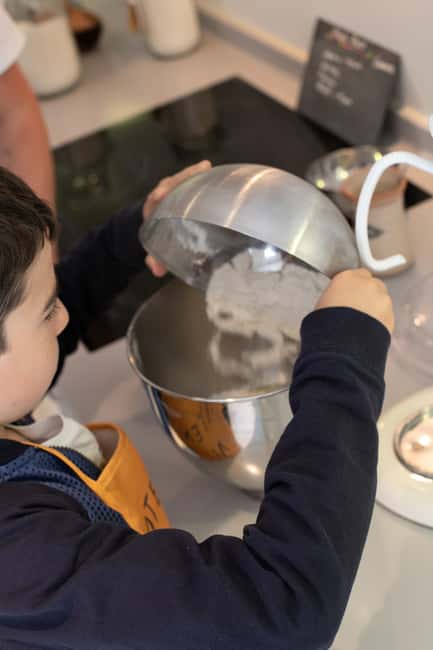
- Kid-first approach starting at age 3 with family-friendly pacing and activities
- Small group limited to 4 participants, so questions don’t get lost
- Simple tools you can recreate at home, not fancy industrial gear
- A Viennoiseries story that reaches back to Austria, not just a modern recipe
- Everything you need is included: materials, borrowed apron, and coffee or tea
- Patient, kind instruction in English or Spanish, which helps younger cooks stay engaged
A Kids-Friendly Croissant Class in a 5th-Floor Paris Apartment
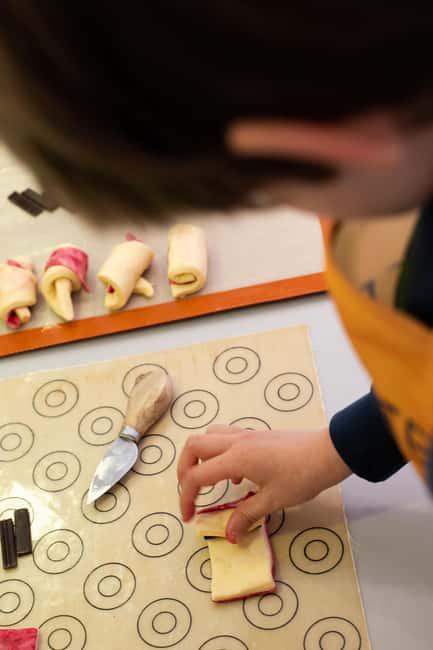
This experience takes place in a private Parisian apartment in the Ile-de-France area. It’s intimate by design, and that matters for families: with only a few seats, your child can stay involved instead of watching from the sidelines.
The meeting point note is important. The apartment is on the 5th floor with no elevator, and that can be a deal-breaker for strollers or anyone who doesn’t do stairs comfortably. If your crew includes little legs and you want a smooth start, build in extra time so everyone arrives calm.
I also like that it’s a proper apartment setting rather than a big classroom. You get that sense of doing something real in a local space, where the focus is cooking first and sightseeing second. For families, it’s often easier to connect with the city through food than through a checklist of monuments.
You can also read our reviews of more tours and experiences in Paris.



The Croissant Story You’ll Actually Remember: Austria to Viennoiseries
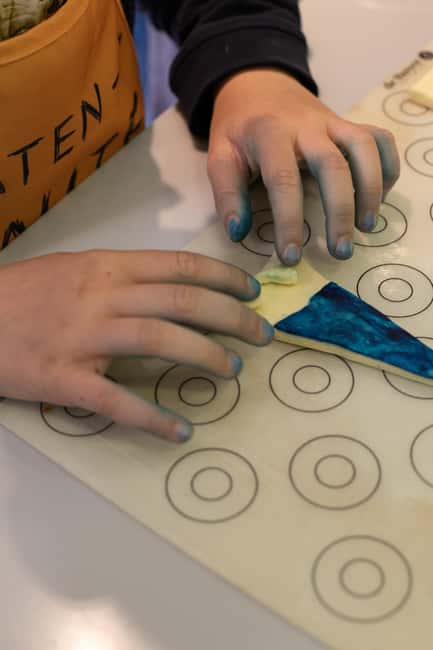
Croissant gets taught like a single recipe. Here, you get the bigger picture. The class starts by placing croissants in context, including the fact that croissants were created in Austria before they became a French breakfast icon.
Then you follow the theme into Viennoiseries, which is the French umbrella term for pastries made from yeast-leavened doughs, often with that rich, layered feel people associate with morning baking. The point isn’t to turn your kid into a pastry historian. It’s to help you understand why things taste the way they do, and why croissants sit alongside other classic Viennoiseries instead of being treated as a one-off.
For adults, this kind of context is more useful than it sounds. If you ever want to recreate the flavor at home, knowing what makes a pastry category different helps you troubleshoot. For kids, the centuries-hopping explanation makes the activity feel like a story, not a chore.
The Hands-On Difference: Simple Tools and Kid-Scale Work
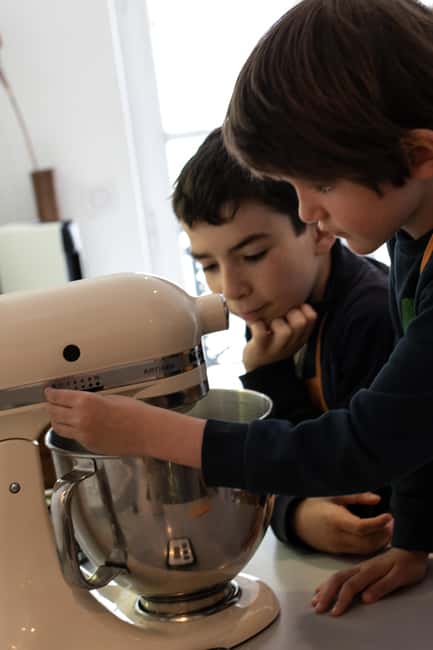
A lot of cooking classes promise hands-on, then quietly rely on gear that belongs in a professional kitchen. This one is different. They stress using simple tools, the kind you’d have at home, so the process feels reachable.
That detail is more than marketing. When kids use tools that behave like everyday baking tools, they learn muscle memory that translates after the class. You’re not just learning a recipe—you’re learning how to handle dough, portion work, and follow steps without needing a special trip to the pastry supply store.
And because the experience is specially built for families, the pace is the real secret sauce. The class is limited to a small group of 4, so there’s room for questions and for an instructor to guide without rushing. Even better: the instructor works in English and Spanish, which helps if your family speaks either language at home.
What a 90-Minute Session Feels Like for Families
The full experience lasts 90 minutes, and that time window is right for kids. It’s long enough to do real work, but short enough that attention usually stays steady.
You begin with la mise en place, meaning you get set up properly before you start cooking. That’s a big deal for kids. When everything is arranged and ready, the activity feels structured and safe, and it prevents that frantic, mid-cooking chaos that can happen in home kitchens.
From there, you move through the pastry story and then into doing the baking work connected to croissants and Viennoiseries. The class is designed around interaction, so your child isn’t just standing near the counter. There’s also coffee or tea included, which helps you slow down enough to enjoy the process rather than just rushing to the end.
At the end, you should expect a tasting moment—croissant class signage often includes the idea of enjoying and tasting what you make, and the experience includes tea or coffee to go with it. For families, that final step matters because it turns the session into a reward, not just a lesson.
What’s Included (and Why It Changes the Value)
You don’t just pay for instruction—you get the main materials. That’s a practical win, because baking classes can quietly become expensive once you add ingredients, packaging, and the little extras people forget.
Included items are:
- All main materials needed for the experience
- A borrowed apron
- Coffee or tea
That means you can arrive without a shopping mission. For families traveling in Paris, “no extra errands” is real value, not a nice-to-have.
Also, the class is positioned for private booking for things like family or friends gatherings, and even anniversaries. If you’re traveling with people who don’t want another museum ticket, a cooking class gives you a shared memory that isn’t dependent on everyone being equally patient with lines or crowds.






Instructor Languages and Group Size: The Comfort Factor
This is listed as English, Spanish instruction. That matters if your household has mixed comfort levels with French. Even if you’ve picked up a few phrases, cooking is where language barriers can feel stressful. Having the instruction in English or Spanish keeps the steps clear and the pace family-friendly.
The group size is capped at 4 participants, which is unusually small. In practice, that usually means:
- better attention from the instructor
- fewer waiting turns at the work surface
- more room to adjust if a child needs a little extra help
And if your kid is the type who needs reassurance while they work, a small group often turns the class into a confidence-building moment.
Price in Perspective: Is $182 Per Person Worth It?
At $182 per person for a 90-minute session, this isn’t a budget snack activity. But the price does bundle several things that can make it feel reasonable compared with other cooking experiences in Paris.
You’re paying for:
- a private apartment setting
- small group size (up to 4)
- materials included, plus apron
- instruction in English or Spanish
- a setup built for families with kids from around age 3
If you’re comparing to a big-group class where you might spend half your time waiting and half your time watching, the small group structure shifts the value in your favor. For families, the biggest cost is often wasted time and low engagement. Here, the design goal is to keep kids participating.
For two adults traveling together with one child, it can still feel steep, but the “family bonding + skills you can reuse at home” factor can justify it if your main goal is a hands-on Paris moment.
Who Should Book This Croissant Workshop?
Book it if any of these match your travel style:
- you want a hands-on Paris activity that feels local and not staged
- you’re traveling as a family and need something that works for young kids starting around age 3
- you want a small-group experience where questions are actually answered
- you’re hoping to bring home skills, since the tools are meant to be recreated at home
It’s not the best fit for very young toddlers. The experience is not suitable for children under 2 years.
It’s also a good option if you’re organizing something like an anniversary or group get-together and want a shared activity that doesn’t require everyone to be equally into shopping or sightseeing.
Should You Book? My Practical Take
I’d book this if your top priority is a family-friendly cooking experience with real participation and a pastry story that feels understandable for kids. The combination of kid-focused design, small group size, and the fact that you use simple tools you can copy at home gives you a good chance of leaving with both a memory and a skill.
Skip it if stairs are a problem for your group, since it’s on the 5th floor with no elevator. Also, if you’re looking for a longer, purely culinary deep-dive with lots of advanced technique, this may feel too short and too family-centered for that goal.
If you’re the kind of traveler who likes food as a shortcut to local life, this class is a strong match.
FAQ
Where does the croissant class take place?
The class takes place in a private Parisian apartment on a 5th floor with no elevator. You’ll need to follow the directions provided in the meeting point instructions page.
How long is the class?
The experience lasts 90 minutes.
What’s the group size?
It’s a small group limited to 4 participants.
What languages are the instructors speaking?
The instructor teaches in English and Spanish.
Is it suitable for young children?
It’s not suitable for children under 2 years. The experience is developed specially for kids starting around age 3 and for families.
What’s included in the price?
The price includes all main materials, a borrowed apron, and coffee/tea.
How much does it cost?
The cost is $182 per person.
Can I cancel for a refund?
Yes. You can cancel up to 24 hours in advance for a full refund.
Is there an option to pay later?
Yes. It offers reserve now & pay later, meaning you can book your spot and pay nothing today.