REVIEW · PARIS
Art nouveau Paris tour
Book on GetYourGuide →Operated by Paris in person private tours · Bookable on GetYourGuide
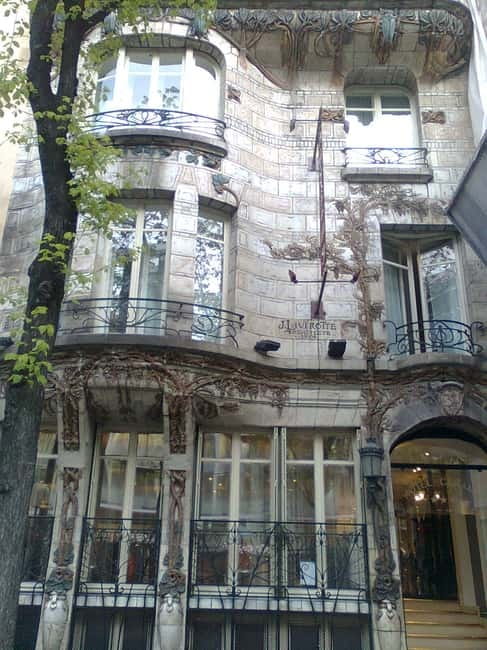
Art Nouveau hides in plain sight. I loved the Ceramic Hotel façade and the flamboyant Jules Lavirotte houses on Avenue Rapp, explained with symbolism that connects architecture to the Belle Époque. The one catch: it’s a focused 2-hour walk, so comfy shoes matter.
This is a private guided stroll where the guide’s job is more than pointing and naming. Guides like Boris put Paris’s Art Nouveau in context, linking it to earlier Gothic ideas, the social world that produced it, and the extra layers you can find in “serious” buildings and occult-minded circles.
You’ll also get the Eiffel Tower connection and a street-level look at Picasso’s favourite drinking dens and more—light on museum time, heavy on seeing. At $171 per person for a private group, the value is strongest when you’ll split the cost with at least one travel partner.
In This Review
- Key Things You’ll Notice on This Art Nouveau Paris Tour
- What Art Nouveau in Paris Is Really About (and why the tour starts at the roots)
- Where You Meet by Franprix on rue de l’Université (and how the walk stays manageable)
- Ceramic Hotel: when Paris turns surfaces into a statement
- Avenue Rapp and Jules Lavirotte: flamboyant façades with hidden meaning
- Theosophic society building and the occult-side of Art Nouveau symbolism
- Metro stations, hotels, and villas: how the city itself teaches the style
- The Eiffel Tower connection: how Art Nouveau thinks alongside industrial modernity
- Picasso’s drinking dens and the Belle Époque creative mood (street-level, not museum-level)
- How 2 hours feels on foot (and what makes it work)
- Price and value: is $171 per person worth it?
- Who This Art Nouveau Paris Tour Suits Best
- FAQ
- How long is the Art Nouveau Paris tour?
- Where do we meet the guide?
- What languages are offered?
- Is this a private tour?
- Is food or drinks included?
- Can I cancel and get a full refund?
- Should You Book This Art Nouveau Paris Tour?
Key Things You’ll Notice on This Art Nouveau Paris Tour
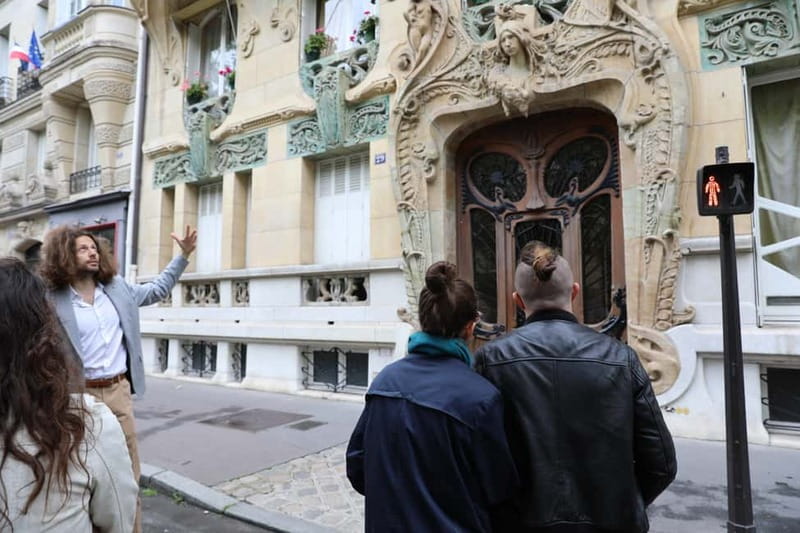
- Ceramic Hotel façade views: one of the most striking Art Nouveau exteriors you’ll see in central Paris.
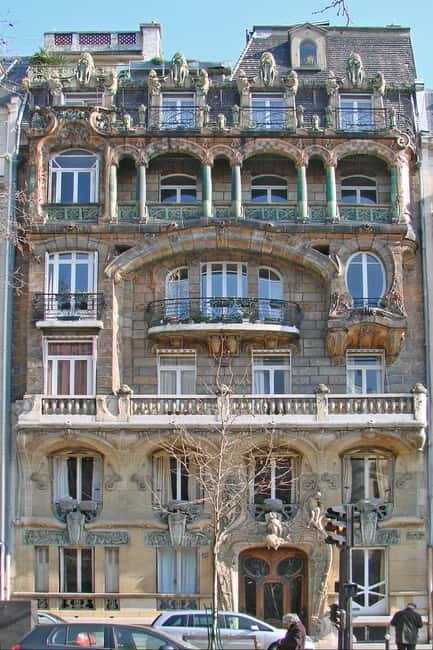
- Avenue Rapp + Jules Lavirotte: ornate houses explained through style and meaning, not just decoration.
- The Theosophic society building: proof that Art Nouveau crossed into philosophical and occult territory.
- The Eiffel Tower tie-in: you’ll hear how a late-19th-century landmark connects to the same design thinking.
- Picasso’s drinking dens angle: Belle Époque mood and creative culture, shown through the streets.
- A guide-led philosophy lesson on foot: less “drive-by sightseeing,” more look-close understanding.
What Art Nouveau in Paris Is Really About (and why the tour starts at the roots)
Art Nouveau in Paris isn’t only about pretty lines. It’s a style built on ideas—new ways of shaping space, new symbolism, and a belief that design could carry meaning beyond function.
This tour is structured to start with the roots of the movement, then move through the style’s mature period. That matters because you’ll be able to spot evolution as you walk: how earlier influences feed into Art Nouveau, and how later design thinking borrows from it. You’ll come away reading façades with fewer mystery blank spots.
The guide also focuses on the layers people often miss: how Art Nouveau symbolism shows up in the surfaces you’d normally glance over, and how the social world of the wealthy, the fashionable, and the curious helped push the style forward.
You can also read our reviews of more tours and experiences in Paris.

Where You Meet by Franprix on rue de l’Université (and how the walk stays manageable)
Your tour starts at street level, meeting your guide in front of a Franprix store at the corner of rue de l’Université and avenue de la Bourdonnais. Look for the guide with a red canvas tote bag.
From a pacing standpoint, this is a 2-hour private walk, so it’s designed to stay focused. It won’t be a marathon, but it is real walking on Paris sidewalks, which can feel longer if you’re traveling with tired feet or stiff calves.
Tip: wear shoes you can stand in for the long look. A lot of the enjoyment here comes from slowing down at each stop and studying details up close.
Ceramic Hotel: when Paris turns surfaces into a statement
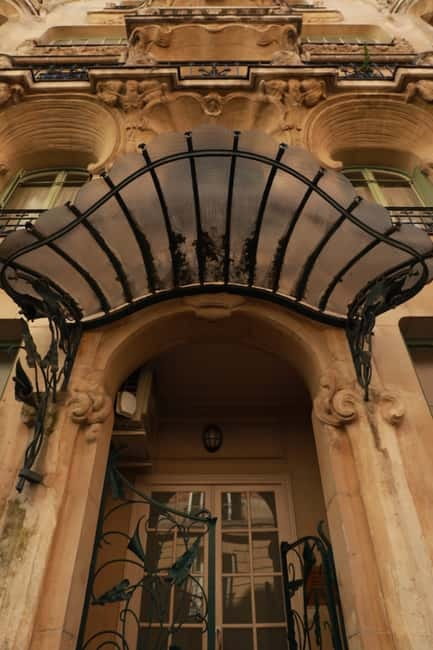
One of the main reasons to book this tour is the chance to see the Ceramic Hotel. This façade is famous for its visual confidence—texture, ornament, and color working together to make the building feel almost alive.
When you pause in front of it during the walk, the guide’s explanations are the difference between seeing decoration and understanding the message. Art Nouveau often uses natural curves and flowing lines, but it also uses form to signal taste, identity, and modernity. Standing close helps you see how the details fit the bigger pattern instead of sitting there as random decoration.
The practical payoff: this stop is photo-worthy from multiple angles, and it gives you a baseline for everything you’ll see later on the route. If the Ceramic Hotel is your first encounter with the style, you’ll have a clearer framework for the rest of the tour.
Avenue Rapp and Jules Lavirotte: flamboyant façades with hidden meaning
Next, you walk down Avenue Rapp to see houses by Jules Lavirotte. Lavirotte’s buildings are playful, but they’re also precise—Art Nouveau that knows exactly how to command attention without looking accidental.
What makes this segment worth your time is how the guide connects façade choices to style history. You’re not just absorbing a list of features; you’re learning why certain elements appear when they do, and what they communicate in the Paris context of the late 1800s and early 1900s.
A helpful way to experience this area is to look in layers. Start with the overall rhythm of the façade, then move your eyes to the details the guide calls out: the flow of lines, the ornament logic, and the symbolic cues. On a 2-hour tour, this stop strikes a good balance between closeness and variety.
Theosophic society building and the occult-side of Art Nouveau symbolism
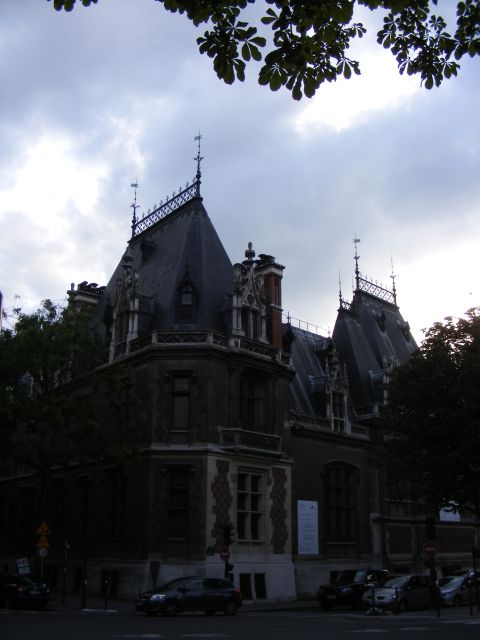
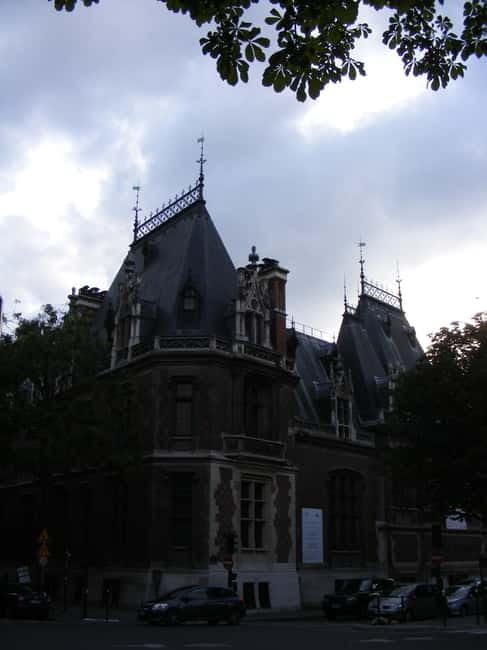
Art Nouveau in Paris didn’t live only in salons and design studios. It also shows up in buildings tied to philosophical and occult interests, including the imposing Theosophic society of Paris building on the route.
This part of the tour matters because it expands what you think “Art Nouveau” can be. If you’ve only seen the style as floral ornament, this segment reframes it as a design language used by people with big ideas—people who believed symbolism and spirituality could shape modern life.
The guide uses these stops to connect architecture to beliefs and cultural movements. That’s the kind of explanation that makes a façade feel less like a landmark and more like a message.
One consideration: if you’re hoping for mostly light, casual sightseeing, this philosophical angle can feel heavier than the purely decorative version of Art Nouveau. Still, it’s exactly the point if you want more than a photo walk.


Metro stations, hotels, and villas: how the city itself teaches the style
A big strength of the tour approach is that Art Nouveau shows up in places you might otherwise pass without noticing. You’ll see testaments to the elegant and innovative style at metro stations, hotels, and villas, not only in the most famous exteriors.
This is where you start building real street literacy. The guide helps you spot Art Nouveau patterns as they appear across different building types, which is key because the style isn’t limited to one neighborhood or one kind of property.
If you enjoy wandering with structure, this segment is great. You’ll move between examples, and each one reinforces the same visual grammar—curves, symbolism, and an obsession with design as a form of identity.
Practical tip: keep your phone camera ready, but also put the lens down sometimes. The best learning happens when you take in the building slowly, not only through a viewfinder.
The Eiffel Tower connection: how Art Nouveau thinks alongside industrial modernity
Even though you may not have time for an extended monument visit, this tour includes the Eiffel Tower connection in a meaningful way. The guide explains links between Art Nouveau and the iconic structure, pointing out how design thinking of the era overlapped with modern engineering spectacle.
This is a smart inclusion because it stretches your understanding of “Belle Époque.” You’ll see that the period’s design mindset wasn’t only decorative. It also aligned with invention, engineering confidence, and the idea that modern life deserved modern aesthetics.
If you’ve always viewed the Eiffel Tower purely as an engineering landmark, this tour gives you a fresh lens. It’s the kind of context that makes a familiar sight feel newly relevant.
Picasso’s drinking dens and the Belle Époque creative mood (street-level, not museum-level)
You’ll also discover the favourite drinking dens of Picasso and more, using the streets as your guide. That adds a human layer to the architecture: the style didn’t exist in a vacuum, and the creative energy of the era helped shape the atmosphere around these buildings.
The key here is to treat this as cultural storytelling rather than a map to a specific venue. The tour uses the Art Nouveau setting to connect to artists and the nightlife mood that swirled around the same time period.
This is a nice fit if you like your sightseeing with a hint of personality. You get a sense of place beyond style charts, without needing to sit in a gallery for hours.
How 2 hours feels on foot (and what makes it work)
This tour is 2 hours long and is private. That private format matters because the guide can keep the pace right for your group, and you’re more likely to ask questions while you’re standing right in front of the building.
The walking itself shouldn’t feel strenuous, and the stops are set up so you can pause and look closely. In a good Art Nouveau tour, the guide controls the rhythm: enough time to notice details, not so much time that you feel trapped at one spot.
If you’re short on time in Paris, this is also a realistic choice. It’s long enough to see several significant examples, and short enough to pair with another plan the same day.
Price and value: is $171 per person worth it?
At $171 per person for a 2-hour private tour, the price won’t feel cheap. But it can still be good value when you compare what you get: a guide-led explanation of symbolism, style evolution, and connections to big Paris touchstones like the Eiffel Tower.
Here’s how I’d think about value for your own trip:
- If you’re traveling as a couple or a small group, private tours often become more affordable per person than you expect.
- If you care about meaning—why a façade looks the way it does—this kind of guided context boosts the value quickly.
- If you only want basic photo stops with minimal talk, you might feel the cost is more than you need.
Given the mix of standout exteriors (like the Ceramic Hotel and the Jules Lavirotte houses) plus the deeper cultural links (Theosophic society building and Eiffel Tower connections), I’d call this a solid buy for people who enjoy design and want to learn while walking.
Who This Art Nouveau Paris Tour Suits Best
This tour fits best if you:
- Like architecture enough to look closely, not just glance
- Want the Belle Époque story told through buildings, symbols, and cultural connections
- Enjoy private guiding and a paced walk rather than a large-group rush
- Are curious about the less-obvious side of Art Nouveau, including philosophical and occult-linked symbolism
It’s less ideal if you’re only interested in art museums, or if you’re traveling with very limited mobility and need a mostly seated experience. The tour is walking-based, and the emphasis is on standing close to façades.
FAQ
How long is the Art Nouveau Paris tour?
It lasts 2 hours.
Where do we meet the guide?
You meet your guide in front of the Franprix store at the corner of rue de l’Université and avenue de la Bourdonnais. Look for the guide with a red canvas tote bag.
What languages are offered?
The live guide is available in English and French.
Is this a private tour?
Yes, it’s listed as a private group experience.
Is food or drinks included?
No. Food and drinks aren’t included.
Can I cancel and get a full refund?
Yes—free cancellation is available up to 24 hours in advance for a full refund.
Should You Book This Art Nouveau Paris Tour?
I’d book it if you want more than a decorative walk. The combination of the Ceramic Hotel, the Jules Lavirotte houses on Avenue Rapp, the philosophical angle from the Theosophic society of Paris building, and the Eiffel Tower links turns Art Nouveau into a story you can actually follow.
Skip it if you’re only chasing quick photos and don’t care about symbolism or style evolution. But if you enjoy standing in front of buildings and having the details explained with clarity—guides like Boris are a big part of the appeal—this is a smart way to spend two focused hours in Paris.