REVIEW · PARIS
Louvre and Musée d’Orsay with Reserved Entry Ticket
Book on GetYourGuide →Operated by Babylon Tours LLC · Bookable on GetYourGuide
Art in two worlds of Paris, tied together. This tour gives you a focused, guided path through the Louvre and Musée d’Orsay, so you do not drown in rooms and dates.
What I love most is the chronological storytelling and the fact that you get reserved entry to both museums, which matters in places where lines can eat your day.
You’ll start at the Louvre with a guide who turns a huge collection into a readable sequence, beginning with Ancient Greek mythology. I also like that you end in the Musée d’Orsay, where the 19th-century French art scene feels like a natural next chapter, not a random jump.
One thing to consider: this is a high-walking day. Even if the route is efficient, there’s a lot of ground to cover, and the experience is not set up for people with mobility impairments or wheelchair use.
In This Review
- Key highlights to know before you go
- Why a chronological two-museum day makes sense
- Louvre Museum: Ancient Greece, palace architecture, and the Mona Lisa moment
- Between museums: a short walk, guided connections, and time to regroup
- Musée d’Orsay: the Beaux-Arts building and the rise of modern French art
- Reserved entry tickets: faster entry, smarter time, fewer headaches
- The guide really drives the quality: Dunya, Alex, and Daniel
- Group size, languages, and how the day feels
- Price and value: what $258 buys you, and what it does not
- Who should book this tour—and who should consider another plan
- Should you book this Louvre and Orsay combo?
- FAQ
- How long is the Louvre and Musée d’Orsay tour with reserved entry?
- Is reserved entry included for both museums?
- What does the tour cover in terms of art history?
- What are the main highlights you’ll see?
- Is lunch included?
- Are transfers between the museums included?
- What group size should I expect?
- What languages are offered?
- What should I bring, and are bags allowed?
- What if a museum closure delays the start time?
Key highlights to know before you go
- Reserved entry for both museums to help you get in faster and spend time looking, not queuing
- A chronological art tour that connects Ancient Greece to French Impressionism and beyond
- You’ll see major hits like Da Vinci’s Mona Lisa, with context for why it matters
- The Louvre tour includes architecture and palace history, not just artwork
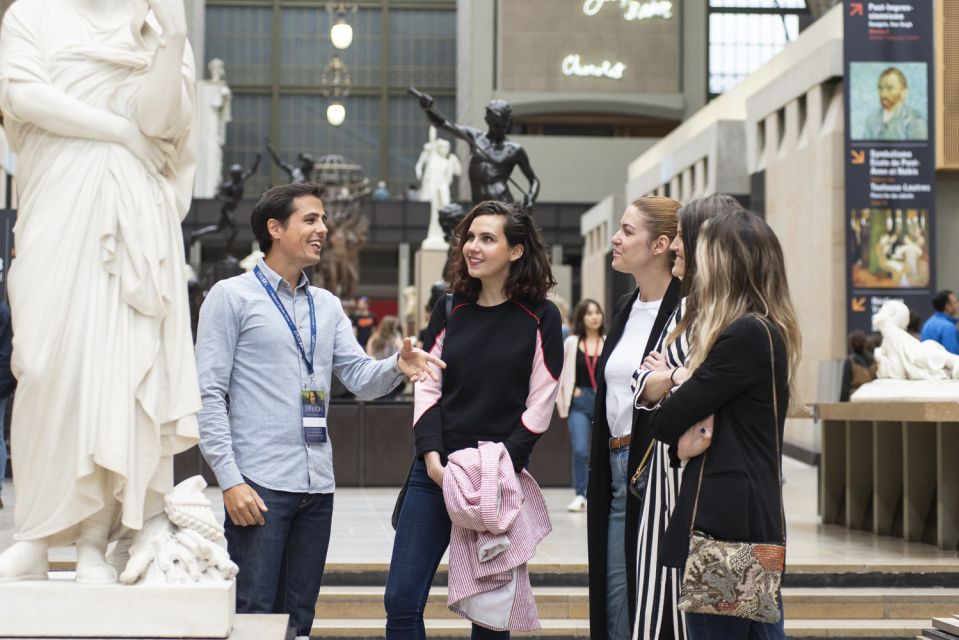
- Musée d’Orsay brings 19th-century masters (Manet, Renoir, Cézanne, Gauguin) to life in the former Gare d’Orsay building
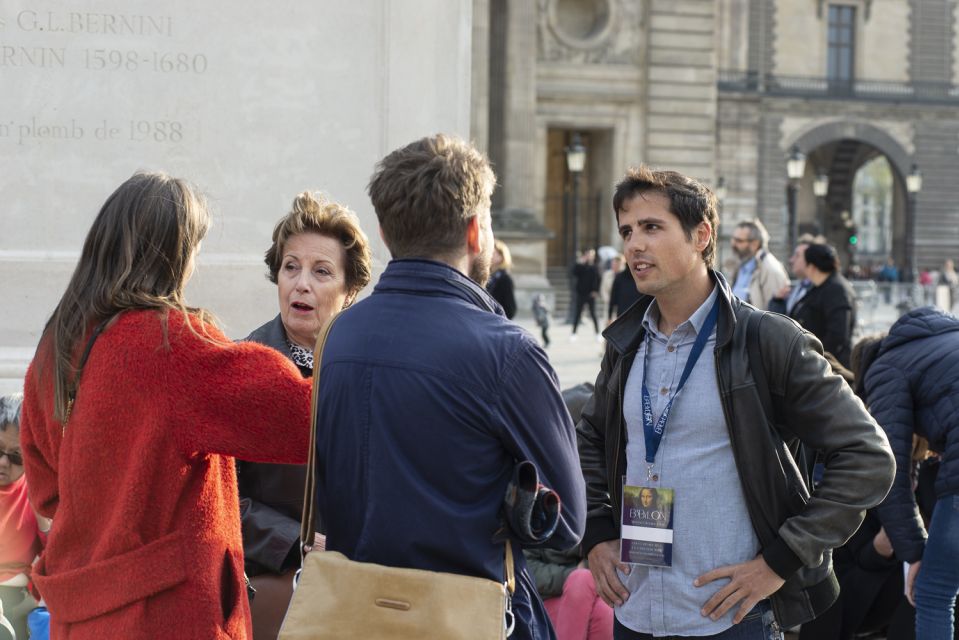
- Small groups (up to 6 guests per guide) keep the experience personal
Why a chronological two-museum day makes sense
Paris has a classic problem: the museums are too good. You walk in expecting a highlight reel, then reality hits—too many galleries, too many styles, too much noise.
This is where the structure of the tour earns its keep. Instead of bouncing around, the guide builds a timeline of art that helps you place what you’re seeing. You’re not just memorizing names. You’re learning how artists and ideas evolve—how techniques, themes, and tastes shift from one era to the next.
And the pairing is smart. The Louvre is your gateway to long-running traditions, from antiquity toward the European art system. Then the Musée d’Orsay lands you in the moment when modern art starts pushing back—Impressionists and their neighbors, including post-Impressionists like Van Gogh, where the rules begin to bend.
You can also read our reviews of more tours and experiences in Paris



Louvre Museum: Ancient Greece, palace architecture, and the Mona Lisa moment

The Louvre can feel like a museum-sized maze. It has more than 35,000 works and around 650,000 square feet of exhibition space, so arriving without a plan is basically asking to lose time.
Your tour starts with the Louvre’s bigger idea: it’s not only an art museum. It’s also the palace setting that shaped how the space developed and how visitors experience it today. That architectural background helps you understand why the building feels grand and theatrical, even when you’re standing in front of something small and intense.
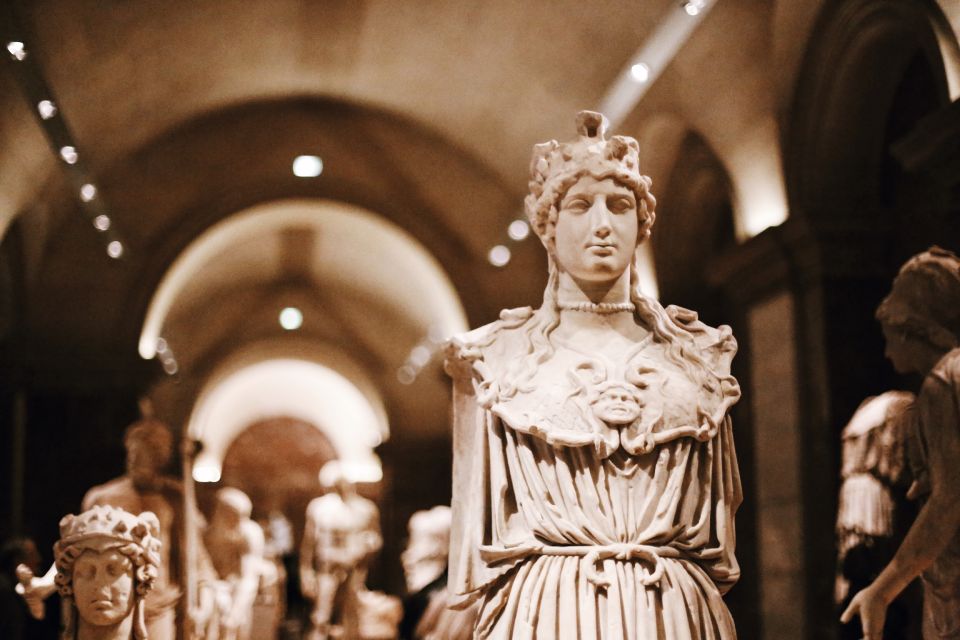
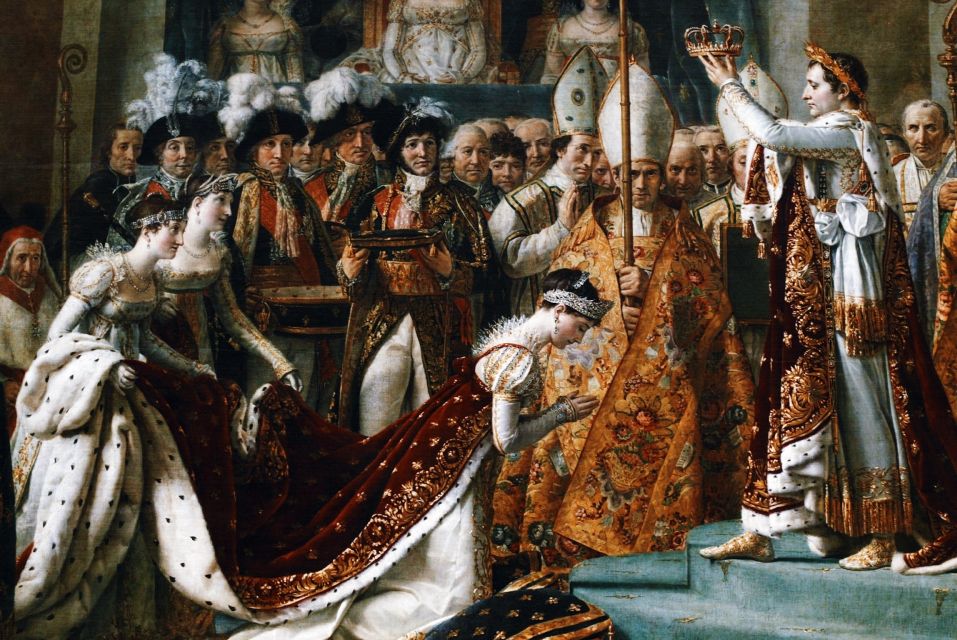
From there, you move through a story that begins with Ancient Greek mythology. That may sound like a detour until you realize it’s the foundation. A lot of European art used Greek and Roman ideas as a common language. When you see those references early, later masterpieces make more sense.
The guide also brings you to major celebrated works, including the Mona Lisa by Da Vinci. What’s valuable here is not only seeing it, but understanding why it became such a reference point for artists and viewers. You’re not left thinking, Yes, that’s the famous one. You’re given the context that makes it feel like a turning point instead of a photo-op.
The big payoff of the Louvre portion is that you get selection. You’re not trying to catch everything. You’re learning what to notice and what to expect from each era.
Between museums: a short walk, guided connections, and time to regroup
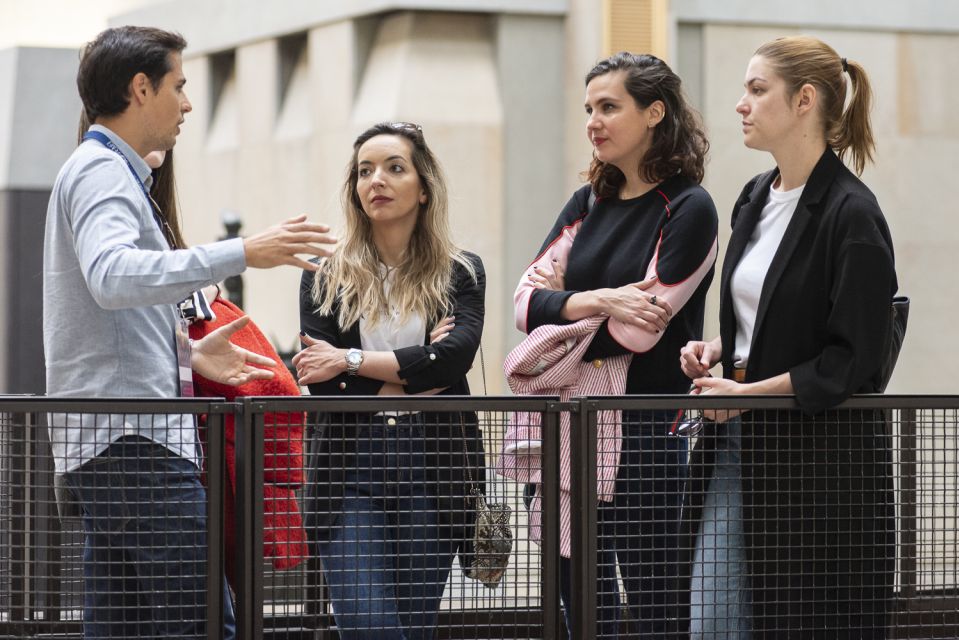
After the Louvre, you’ll take a lunch break and then continue on to the Musée d’Orsay. Transfers are not the point here; you’re looking at a roughly 10-minute walk from the Louvre to Orsay, with your guide accompanying you.
That short walk matters more than it sounds. You get a mental reset between two different museum “moods.” The Louvre’s world feels formal, monumental, and long-reaching. Orsay tends to feel more immediate—19th-century in subject, technique, and attitude.
Since this tour is designed as a single story, your guide keeps the transition connected. That makes the day easier to follow, especially if you’ve already had a few museum days in Paris.
Musée d’Orsay: the Beaux-Arts building and the rise of modern French art
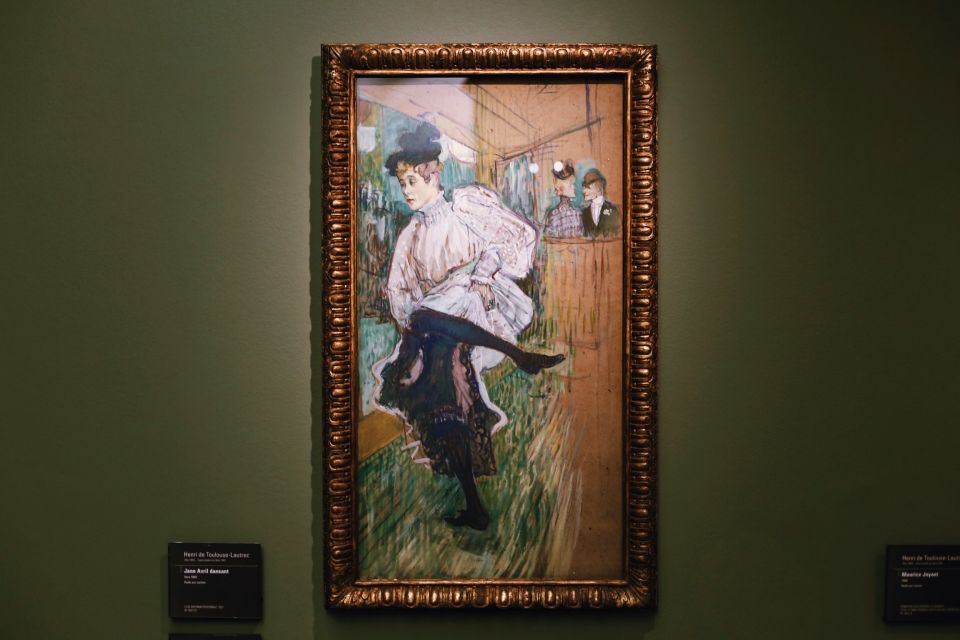
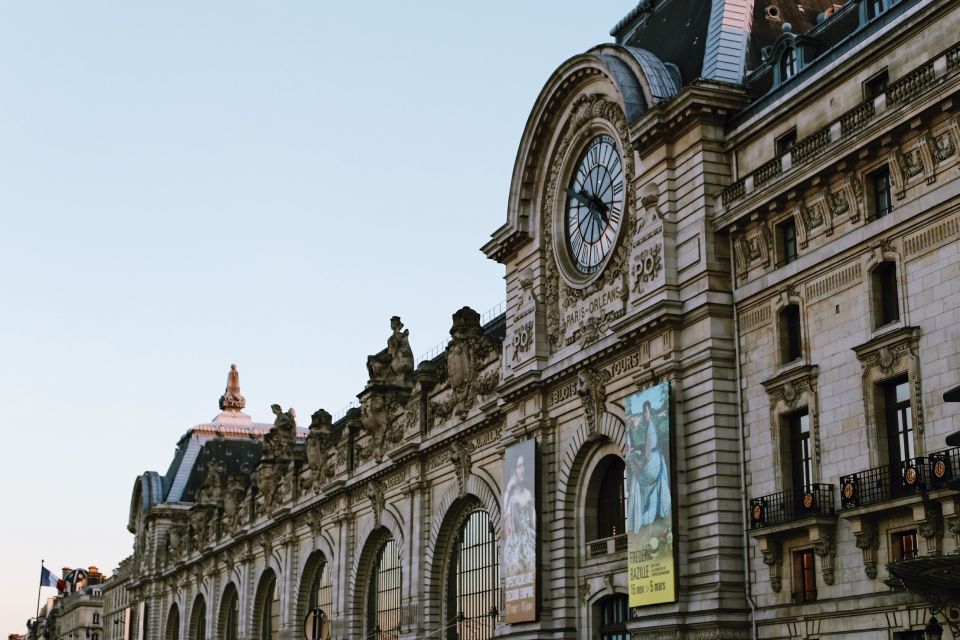
The Musée d’Orsay is housed in the beautiful Beaux-Arts building that used to be the Gare d’Orsay railway station. That building is not just a shell. You feel the shift as soon as you enter, because the space is built around spectacle and light, with a very different vibe from the Louvre’s palace grandeur.
Orsay focuses on the art of the 19th century, and the tour uses that focus to map the next chapter of your timeline. You’ll spend time with artists you’ve heard of for a reason—Manet, Renoir, Cézanne, and Gauguin—and you’ll learn how the styles relate to each other. The goal is to help you recognize what changes as you move through the collection.
This is also where the tour leans into the idea of artistic rebellion. You’re shown how a handful of painters helped pave the way for what became the Impressionist movement, and you’ll likely see post-Impressionism referenced as part of the broader shift. If you usually struggle with Impressionism because you want to know what’s different besides the brushwork, this kind of guide-led framing is exactly what fixes that.
And yes, you should spend time letting Orsay land in your eyes. This museum rewards slow looking. Even within a guided schedule, you end up with moments where you can stand and study, especially when you’ve been taught what to notice.
Reserved entry tickets: faster entry, smarter time, fewer headaches
Reserved entry is one of those “boring” features that actually decides whether you enjoy a big museum day. With the Louvre and Orsay both being major draws, you do not want your experience chopped up by waiting.
Here, reserved entry to both museums aims to speed up access so you can spend more time admiring art instead of passing time in queues. It also supports the chronological flow. When timing is smoother, it’s easier for the guide to keep the story consistent.
You’ll also have freedom at the end. After your guided tour, you can stay on and continue exploring. That’s a big deal in Paris. Museums are where you go to catch up on your own curiosity once you’ve gotten your bearings.





The guide really drives the quality: Dunya, Alex, and Daniel
I’m going to say it plainly: on a day like this, the guide is not a nice extra. The guide is the difference between a museum day you remember and one you shrug about later.
The quality shows up in the way guides talk about art. Dunya, for example, gets described as passionate and knowledgeable, with a great balance between the two museums. That matters because the Louvre and Orsay are different beasts; you want someone who can switch tone without losing the thread.
Alex stands out for practical communication. In one experience, Alex spoke excellent English and also understood French and American customs and culture, which helps when you’re navigating museum rules and the general rhythm of Paris. Alex also tailored the route to the private group’s interests and connected art history and artists so the day felt like one continuous narrative.
Daniel is praised for vast knowledge and for being, in plain terms, the best guide some people have ever had. When a guide is that strong, you end up with more than facts. You end up with patterns—how to see. That’s what makes a tour “worth it” even after the tour ends and you go back to wandering on your own.
If you care about the why behind the what, pay attention to this part. A reserved-entry tour without a strong storyteller can still feel like sightseeing. With the right guide, it turns into art education with momentum.
Group size, languages, and how the day feels

Small group size is another quiet value here. The tour caps at 6 guests per guide, which keeps things personal. You’re more likely to ask questions and get guidance for your specific style of looking.
Languages cover a wide range: Spanish, English, German, Italian, French, and Russian. That means you can pick a language that lets you follow the art history without straining.
The tour is offered as private or small groups, and the semi-private version has a minimum requirement of 2 participants. If the minimum isn’t met for your date, you should expect the operator to propose an alternative date or a full refund.
Also note the rules inside museums. Some rooms require quiet, and speaking may be restricted. Collections can also vary along the year, so your exact mix of works may shift slightly.
Price and value: what $258 buys you, and what it does not
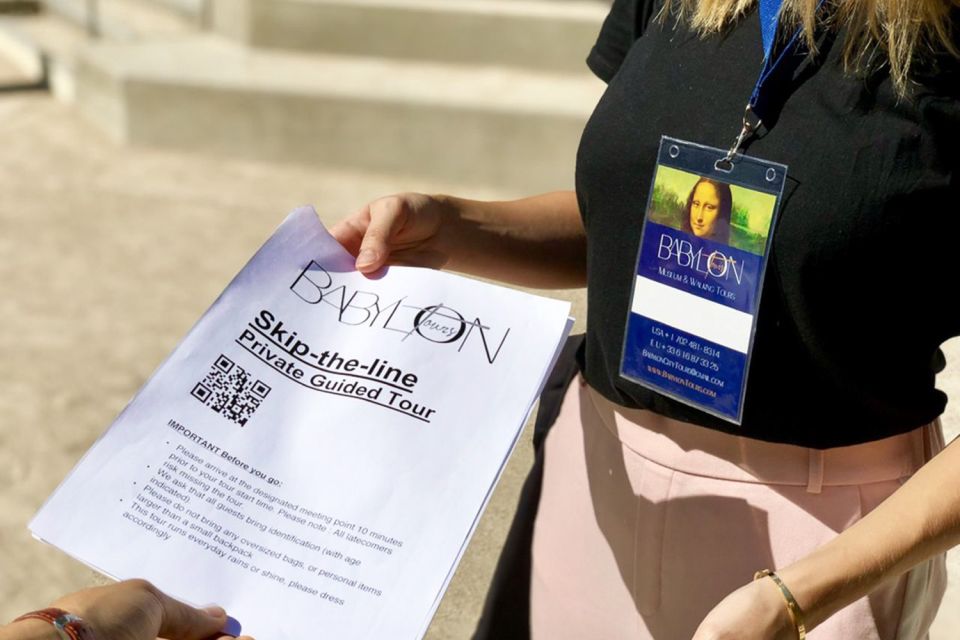
At $258 per person for about 5.5 hours, this is not a cheap activity. But it’s also not “just ticket sales.”
Here’s what your price includes:
- A professional guide for the full art story
- Reserved entry tickets to both the Louvre and Musée d’Orsay
- Museum entrance fees
- A lunch break
What it does not include:
- Food and drinks (the lunch break is a break, not a meal deal)
- Transfers beyond walking between the two sites
- Hotel pickup or drop-off
- Temporary exhibits
So the value question is simple. Do you want an expert to reduce the chaos and pick the right path through two of the hardest museums to tackle alone? If yes, the price starts to make sense. You’re paying for selection, timing, and interpretation—three things that are hard to “DIY” when you’re also trying to see a lot of Paris.
Who should book this tour—and who should consider another plan
This tour suits you best if you want:
- A guided, chronological art story rather than random museum wandering
- Priority entry to two major collections
- Architecture context at the Louvre and building context at Orsay
- A compact day that connects antiquity to Impressionism and beyond
It may not be the best fit if you:
- Want a low-walking, mostly-rest day
- Need accessibility accommodations for mobility impairments or wheelchair use
- The info says wheelchair tours are available on request only, but it also says the tour is not suitable for wheelchair users and that the semi-private version is not available for those with walking disabilities or wheelchair users. This is exactly the kind of detail to verify directly before booking.
Also consider your bag situation. Large bags and luggage are not allowed, and items larger than 55x35x20 cm are not permitted inside the museums. Bring ID or a passport, and travel light.
If you want to see the “big names” but also understand what they mean, this is a strong match.
Should you book this Louvre and Orsay combo?
Book it if you like your Paris days guided and intentional. This tour is built for momentum: reserved entry, a clear art timeline, a guide who ties themes together, and two museums that naturally follow each other in art history.
Skip it only if you’re hoping for an easy, minimal-walking outing or if your accessibility needs require a setup that the provided details don’t clearly support for everyone. In that case, confirm the exact accessibility option available for your date.
If you want a day that helps you see more than you recognize, this combo is a smart use of 5.5 hours in Paris.
FAQ
How long is the Louvre and Musée d’Orsay tour with reserved entry?
The tour lasts 5.5 hours. You’ll see starting times when you check availability for your date.
Is reserved entry included for both museums?
Yes. Reserved entry tickets to both the Louvre Museum and Musée d’Orsay are included.
What does the tour cover in terms of art history?
You’ll follow a chronological story that goes from Ancient Greece to French Impressionism and post-Impressionists such as Renoir and Van Gogh, with a focus on major artists like Da Vinci, Manet, Renoir, Cézanne, and Gauguin.
What are the main highlights you’ll see?
The tour highlights include the Mona Lisa by Da Vinci, Louvre architecture and its time as a palace, and the Beaux-Arts Musée d’Orsay building (formerly the Gare d’Orsay). You’ll also explore key Impressionist and related artists.
Is lunch included?
A lunch break is included, but food and drinks are not included.
Are transfers between the museums included?
No. The Louvre to Musée d’Orsay transfer is a short 10-minute walk, and you’ll be accompanied by your guide if needed.
What group size should I expect?
The tour has a maximum of 6 guests per guide for a more intimate experience. Private or small groups are available.
What languages are offered?
The live guide is available in Spanish, English, German, Italian, French, and Russian.
What should I bring, and are bags allowed?
Bring your passport or ID card. Luggage or large bags are not allowed, and items larger than 55x35x20 cm are not permitted.
What if a museum closure delays the start time?
Sometimes museums can close occasionally without prior warning. If the opening is delayed more than 1 hour from the tour starting time, guests are provided with an appropriate alternative, but refunds or discounts may not be available in these cases.