Montmartre can feel like a movie set, yet this tour keeps it real. I like that it’s built for solo wanderers, with a max 14-person group and an easy rhythm that lets you stop, look, and think. Two other big wins: you’ll taste a buttery croissant from a local patisserie and you’ll get pointed toward photo angles most people miss.
One thing to consider: this tour includes a butter croissant, so it’s not suitable for lactose-free, gluten-free, or vegan diets. If you need special foods, you’ll want to plan around that before you book.
In This Review
- Key highlights you’ll actually feel
- Montmartre Solo Mode: why the group size matters
- Blanche to Moulin Rouge windmill: starting on the right beat
- Moulin Rouge area to the Wall of Love: independence, but make it romantic
- Back streets, Van Gogh, and the quiet views you can actually use
- Moulin de la Galette and the last vineyard in Paris
- Cabaret Le Lapin Agile: Lolo the donkey and the lighter side
- Finishing at Sacré-Cœur: a rarely seen angle plus the big photo
- Guides who shape the day: Paloma and Camila in the mix
- What’s included (and what you’ll want to budget for)
- The carbon-neutral angle and B Corp certification: what it really means here
- Who should book this Montmartre solo walk
- Should you book this Montmartre solo walking tour?
- FAQ
- Where does the tour start and where does it end?
- How much walking is involved?
- What’s included in the tour?
- Is the tour vegetarian-friendly?
- Is it suitable for lactose-free, gluten-free, or vegan diets?
- What should I bring?
- Is the tour environmentally responsible?
- Can I cancel or pay later?
Key highlights you’ll actually feel
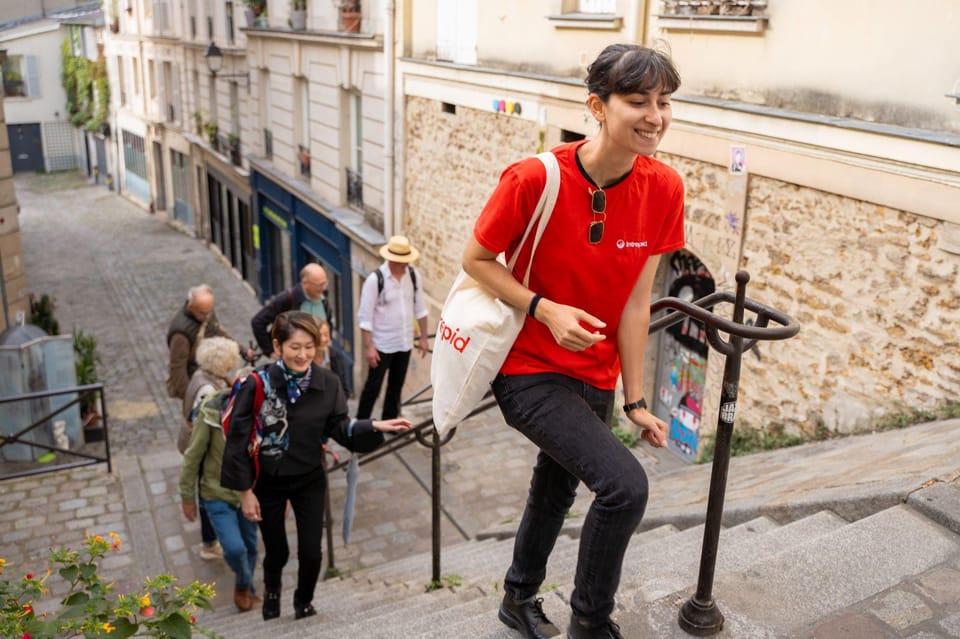
- Personal pacing with a small group that makes it easier to ask questions as you walk
- Butter croissant stop at one of the best local bakers in the neighborhood
- A lesser-known panorama that’s made for photos without the usual crush
- Sacré-Cœur from a different angle plus a final sweeping view over Paris
- Montmartre surprises like the last vineyard in Paris and the story of Lolo the painting donkey
Montmartre Solo Mode: why the group size matters
If you’ve ever tried to do Montmartre on your own, you know the two problems: hills slow you down, and the big sights attract big crowds. This tour solves both by keeping the group small and moving with a plan. With up to 14 people, you’re not swallowed by a herd, and the guide can help you find side streets and viewpoints at the right moments.
I also like the mental vibe of the route. It’s not just monuments in a line. You’re nudged to connect ideas—art, identity, love, and independence—while walking actual Montmartre lanes. That makes the day feel like your experience, not a checklist.
The tour covers about 2 km (1.2 miles) on foot, which sounds modest until you remember you’ll be climbing and descending. Wear shoes you trust. This is the kind of walking where you’ll notice cobblestones more than flat streets.
You can also read our reviews of more tours and experiences in Paris.



Blanche to Moulin Rouge windmill: starting on the right beat
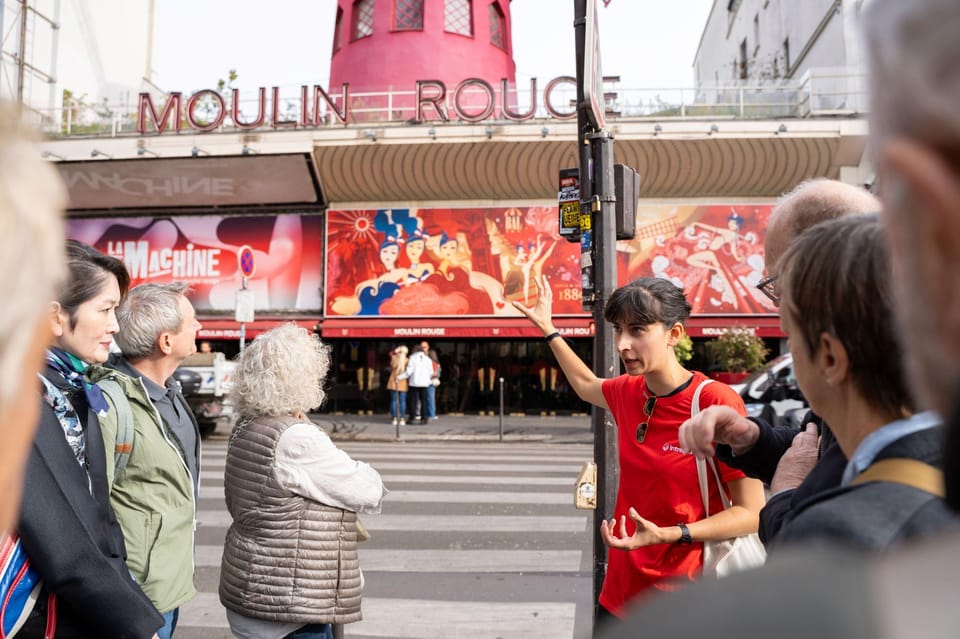
You begin at Blanche, which is a smart way to enter Montmartre without starting at the busiest doorstep. From there, you’ll move into the area’s art-laced atmosphere, where street corners feel like they have a second life after the tourists pass.
As you head uphill, you’ll start with the Moulin Rouge windmill—an obvious landmark, but it matters because it sets the tone. The guide helps you read Montmartre like a story: the film references, the artistic ghosts, and the neighborhood’s stubborn individuality. You’ll even pass by a café connection from Amélie, so the movie world and the real street world overlap in a way that feels fun, not forced.
One underrated value of a guided start is navigation. Montmartre has enough twists that you can wander for an hour and still feel lost. Here, you’re pointed in the direction you need, so your solo time stays productive.
Moulin Rouge area to the Wall of Love: independence, but make it romantic
After the Moulin Rouge, the tour pivots toward Montmartre’s theme of expressing yourself. The Wall of Love is the centerpiece for that idea. It features the phrase I love you in 250 languages, and the guide frames why that matters in a neighborhood that has long attracted artists, outsiders, and people who refuse to be ordinary.
What I like about this stop is that it’s not just a photo wall. You get a moment to slow down and think, especially if you’re traveling alone and want something that feels personal. If you’re the type who likes a pause in the day—rather than only moving—you’ll appreciate this part.
From here, the route keeps tying back to big names and big personalities. You’ll learn about the former residence of Pablo Picasso and hear the story around Dalida, a beloved French singer known for carving her own path. It’s the kind of context that makes the neighborhood feel less like a theme park.
Back streets, Van Gogh, and the quiet views you can actually use
Montmartre’s reputation is that it’s all stairs and postcards. In reality, it’s also side streets and tiny turns where the view suddenly makes sense. This tour takes you through those lanes, so you can experience the neighborhood’s texture without spending your whole day dodging crowds.
As you climb, you’ll get the Vincent van Gogh connection, including a stop at his former home area. You’ll also be led through what you might call secret passage moments—short stretches where the air changes and the panorama opens up. The guide doesn’t just point; they help you look at the city in layers, which is what makes these photos worth the effort.
This is also where the solo angle really works. When you’re alone, it’s easy to rush from sight to sight. Here, the pacing gives you permission to stand still, take a breath, and let Montmartre show you what it’s like when no one is yelling at you to move on.
Moulin de la Galette and the last vineyard in Paris
At Moulin de la Galette, you’re in the part of Montmartre that feels both historic and lived-in. It’s another spot where the guide adds meaning beyond the landmark itself. You’ll understand how the neighborhood’s identity was shaped by daily life and by artists who found inspiration here.
Then comes one of the most practical reasons to take a guided walk: you’ll hear about the vineyards of Montmartre, including the last vineyard in Paris. Even if you’ve read that Montmartre has vineyards, you might not grasp where they fit into the neighborhood’s story until you’re standing there with a guide explaining the why.
I also appreciate that these sections aren’t only about facts. You get atmosphere: what the hillside looks like, what the light feels like, and why the slopes mattered for work and for art. It’s a different way to “see Paris” than the usual riverside route.






Cabaret Le Lapin Agile: Lolo the donkey and the lighter side
Not every Montmartre walk gives you comedy with your culture. This one includes a whimsical stop at Cabaret Le Lapin Agile, where you’ll hear the tale of Lolo the painting donkey. It’s the kind of story that breaks up the solemn names and gives the neighborhood a sense of play.
Le Lapin Agile also helps you understand Montmartre as an arts zone that didn’t only produce famous painters and singers. It supported weird, creative thinking—performers, storytellers, and people who treated art like something you can laugh about and share.
If you’re traveling solo, this sort of stop is useful. It keeps your day from becoming purely academic. You’re still learning, but you’re also enjoying the neighborhood’s personality.
Finishing at Sacré-Cœur: a rarely seen angle plus the big photo
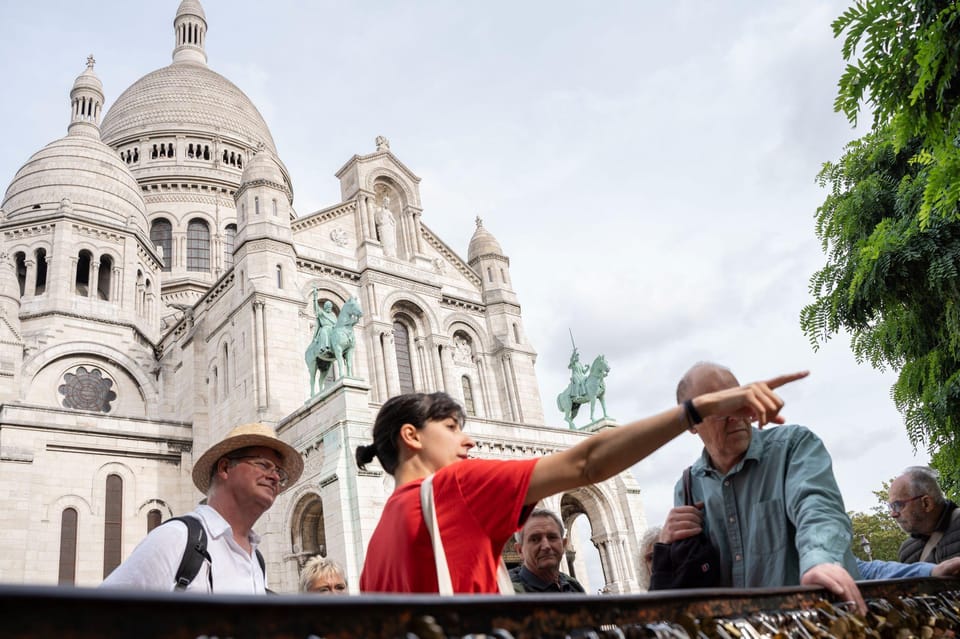
The tour ends at the Basilica of Sacré-Cœur, but the big value is how you get there and what you do right before the finale. You don’t just arrive to the obvious viewpoint. You get a different perspective on the basilica, with a more “useful” understanding of its position on the hill.
There’s also a best and little-known panorama moment built into the walk. The goal is a photo view that feels rewarding instead of rushed. Montmartre is famous for viewpoints, but not all of them are equally photogenic or comfortable to reach. This tour aims for the ones that let you linger.
When you finally face the city from Sacré-Cœur, the contrast is clear. Earlier you were learning names, stories, and themes. Now you’re looking at Paris like it’s the setting those stories needed. It feels like a conclusion that makes sense, not just a destination you hit before moving on.
Guides who shape the day: Paloma and Camila in the mix
This tour’s quality isn’t only in the route; it’s in how the guide handles people moving at slightly different speeds. I especially like that this experience is described as organized in a way that helps everyone keep up, including slower walkers.
You might meet guides such as Paloma or Camila. Paloma is praised for being outstanding and highly knowledgeable, while Camila is praised for navigating the streets carefully and explaining life, culture, and history of Montmartre in a way that feels easy to follow. Either way, the consistent thread is clarity: you’ll come away with practical context and a stronger sense of what you just walked through.
What’s included (and what you’ll want to budget for)
You get a walking tour, an English-speaking local guide, and one butter croissant. That croissant stop is a real part of the experience, not an afterthought, so treat it like your break in the middle of the hill climbing.
What’s not included is drinks and additional food. If you want coffee or water, plan on buying it. Montmartre hills can make you feel thirst faster than you expect, and you’ll probably want something during or after Sacré-Cœur.
Diet note matters: the tour is suitable for vegetarians, but not for lactose-free, gluten-free, or vegan needs. If you’re one of those travelers, the itinerary might still be interesting for the viewpoints and stories, but the included pastry could become a deal-breaker.
The carbon-neutral angle and B Corp certification: what it really means here
This tour is carbon-neutral and run by a B Corp-certified company, which signals they’re tracking social and environmental impacts and aiming for responsible tourism practices. You don’t need to be an eco-nerd to appreciate it; it’s simply a reminder that your sightseeing day can be run with accountability.
In practical terms for you, the biggest payoff is that the tour is designed to be efficient: small group, walking route, and planned stops rather than random hopping around. That tends to reduce wasted time and extra transportation—both of which are good for your wallet and your schedule.
Who should book this Montmartre solo walk
This tour is a strong match if you want:
- A solo-friendly plan with a small group and time to reflect
- A guided route that helps you avoid the busiest chaos while still hitting major moments
- A morning or afternoon walk with a clear arc, from Moulin Rouge up to Sacré-Cœur
- A food moment built in (that butter croissant)
You might want to skip it if:
- You can’t eat dairy and are counting on the included pastry
- You dislike hill walking or uneven cobblestones and want something flatter
- You prefer to design your own photo stops from scratch without a set storyline
Should you book this Montmartre solo walking tour?
I think this is a great book for solo travelers who want structure without feeling herded. The small group size, the included butter croissant, and the focus on rare viewpoints and meaningful stops make it more than a basic Montmartre highlights walk. You’ll leave with a better grasp of the people and ideas tied to the neighborhood, and you’ll get a photo view that feels worth the climb.
If your diet restrictions are tight, that’s the main reason to hesitate. Otherwise, it’s a smart way to spend time in Montmartre: you’ll walk less than you think, see more than you’d guess, and finish at Sacré-Cœur with a view that feels like a reward.
FAQ
Where does the tour start and where does it end?
The tour starts at Blanche and finishes at the Basilica of the Sacred Heart of Paris (Sacré-Cœur).
How much walking is involved?
The tour covers about 2 km (1.2 miles) on foot.
What’s included in the tour?
Included are the walking tour, a local English-speaking guide, and a butter croissant.
Is the tour vegetarian-friendly?
Yes, the tour is suitable for vegetarians.
Is it suitable for lactose-free, gluten-free, or vegan diets?
No. It unfortunately isn’t suitable for lactose-free, gluten-free, or vegan customers.
What should I bring?
Bring comfortable shoes and weather-appropriate clothing.
Is the tour environmentally responsible?
Yes. It is described as carbon-neutral and operated by a B Corp-certified company.
Can I cancel or pay later?
Yes. It offers free cancellation up to 24 hours in advance for a full refund, and it has a reserve now & pay later option where you pay nothing today.