REVIEW · PARIS
Paris: Aura Invalides Immersive Experience Entry Ticket
Book on GetYourGuide →Operated by Cultival · Bookable on GetYourGuide
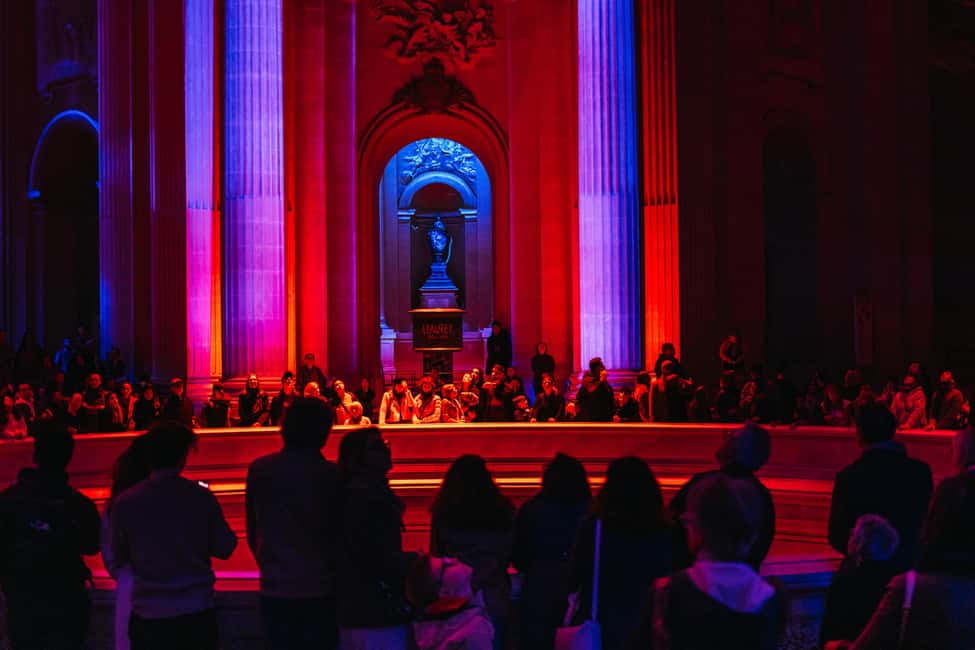
Napoleon’s tomb, lit like a stage. Aura Invalides turns the Dôme des Invalides into a night performance using video mapping and spatialized sound, with lights that guide you where to look. I especially liked how the show makes you notice architectural details you usually miss when you’re just walking through.
My other favorite part is the way the experience asks you to move a bit—sit, shift, and follow the action—so the space feels active, not like a lecture. One thing to plan for: the sound can be loud and there are flickering lights, plus it can be cold inside the monument.
In This Review
- Aura Invalides: what you’re actually buying
- 50 minutes of theater inside a historic Dome
- Entering via Place Vauban: the entrance trick to know
- The three-part sensory journey (and what each part does for you)
- Napoleon’s tomb and the 90-meter ceiling: how the show changes your viewpoint
- Walking, sitting, and finding your best viewing spot
- Six chapels at night: the moment that makes the building feel personal
- Sound, cold, and flicker: comfort tips that can save your night
- Who should go, and who might want a different evening
- The ticket price: does $33 feel fair for what you get?
- Booking and practical expectations (so you’re not surprised)
- Should you book Aura Invalides?
- FAQ
- How long is the Aura Invalides experience?
- When does the show start compared to my ticket time?
- Where do I enter for the experience?
- Can I use the Esplanade entrance instead?
- What happens if I arrive late?
- Is it suitable for young children?
- Is it wheelchair accessible?
- Are toilets, changing rooms, or food available inside?
Aura Invalides: what you’re actually buying
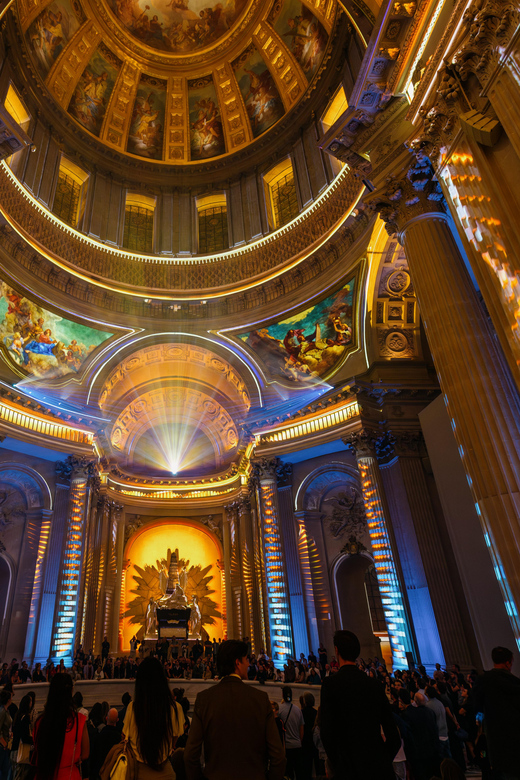
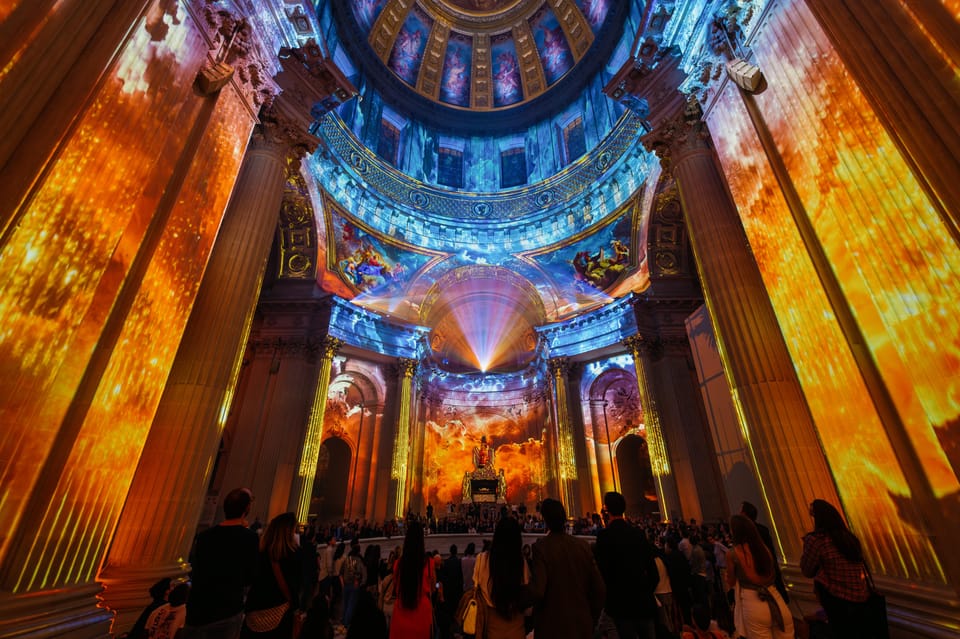
Aura Invalides is a ticketed night multimedia show inside the Dôme des Invalides. Think orchestral music, video mapping, and lighting effects used to spotlight the building’s shape, surfaces, and centerpiece spaces—including Napoleon I’s tomb and the vaulted ceiling that reaches about 90 meters high.
What’s valuable here is not just the tech. It’s how the show teaches your eyes to read the Dome. The guiding lights pull your attention toward key architecture and the six chapels, so you leave with a better mental picture of what you’re seeing during the next Paris stop.
50 minutes of theater inside a historic Dome
The experience lasts about 50 minutes, but timing is a little quirky. Your ticket shows a session time, and the show begins about 20 minutes after that time, so arriving exactly at the listed time tends to be the smoothest move.
Also note the no-latecomers rule after the beginning. That means you should plan to be in the Dome area and ready before the first images and sound start. If you hate rushing, this isn’t the night for wandering around the block too long.
You can also read our reviews of more tours and experiences in Paris

Entering via Place Vauban: the entrance trick to know
Your meeting point is Place Vauban, on the Dôme des Invalides side (near the Ecole Militaire or St François Xavier metro stations). There is another entrance at Esplanade, but no visitors are admitted there, and the walk between entrances is around 12 minutes.
This matters because it’s easy to end up at the wrong side if you’re using directions without checking the exact entrance. I suggest getting oriented before you leave the metro stop so you don’t end up sprinting in cold weather.
The three-part sensory journey (and what each part does for you)
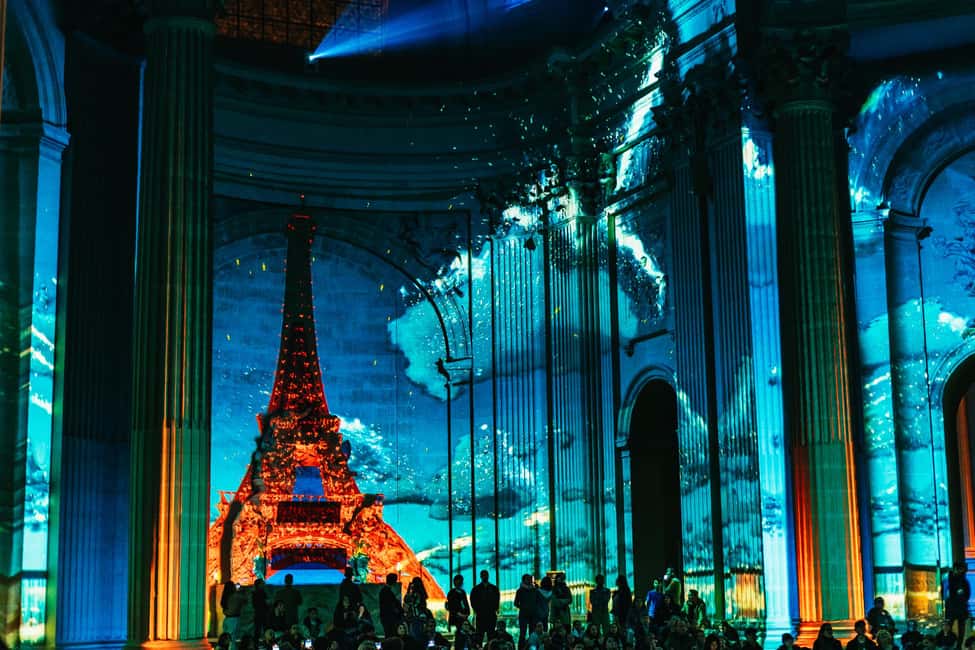
The show is built as a three-part sensory journey. You’ll experience it through light, sound, and multimedia visuals that amplify the Dome’s architectural features instead of blocking them.
Here’s how that translates into your night, in practical terms:
- Act one: the Dome’s huge interior comes into focus. Light and video mapping make the ceiling and surfaces feel closer, which helps you understand the scale right away.
- Act two: attention shifts toward the chapels. You’ll be guided by changing illumination and sound cues, and you get time to look around at key spots inside the chapels.
- Act three: the show ties the experience together emotionally, with the music and visuals leading toward a moment of collective contemplation—especially powerful when the space is quiet around you.
You’ll also see that the experience can include narrative support from a screen, so the visuals aren’t just decorative; they’re telling you where to place your attention.
Napoleon’s tomb and the 90-meter ceiling: how the show changes your viewpoint
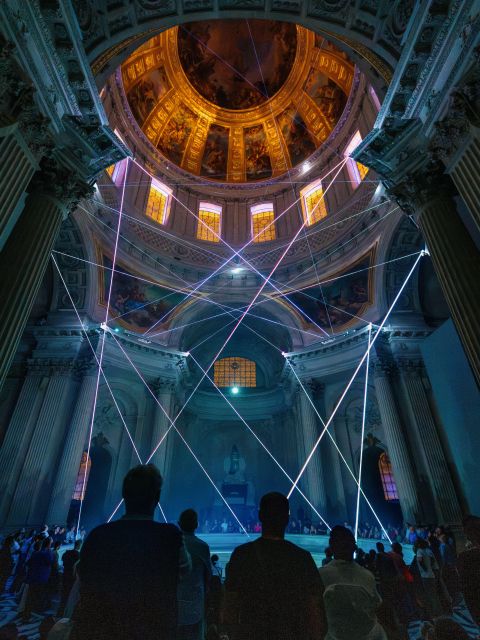
If you only remember the name Napoleon’s tomb, you’ll still have a great time. But what makes Aura Invalides feel worth it is how it turns the tomb area and the surrounding space into a visual story.
The show highlights major features like Napoleon I’s tomb and the decorative ceiling painting that sits beneath the Dome’s towering interior. With projection and lighting, those details become easier to read from different angles—especially at night when you’re not distracted by daylight.
In other words, this isn’t just about seeing a famous place. It’s about learning how that place “works” in your eyes: angles, height, materials, and how light travels through the Dome.
Walking, sitting, and finding your best viewing spot
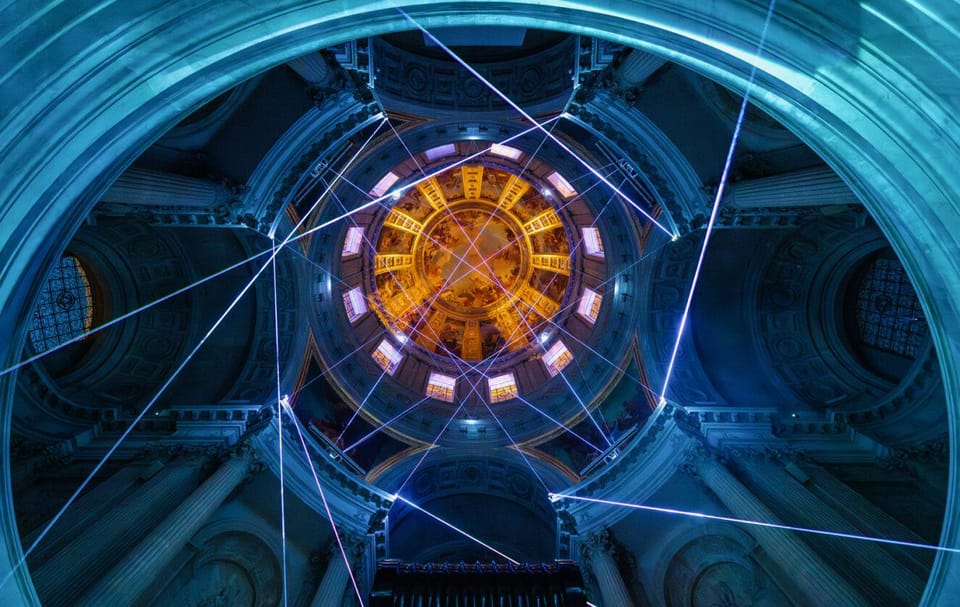
This experience is ambulatory, meaning you’ll be moving around during parts of the show. There are stairs inside and outside the Dôme des Invalides, so comfortable shoes help, even though you’re not doing a long walk.
The viewing style is flexible:
- You can sit on stair steps in the interior spaces.
- You can watch from different points as the show shifts attention.
- At moments, you’re allowed to wander the chapels area rather than staying locked to one spot.
A practical tip: pick a spot that lets you see the show’s main visuals without twisting your neck all night. One helpful strategy is to aim for a seat on the steps where you can both see projected elements and still turn to follow light cues when the show moves you.
If you get overwhelmed by crowds, come in with a plan: arrive early enough to get positioned, but not so early that you’re stuck waiting too long outside in winter air.





Six chapels at night: the moment that makes the building feel personal
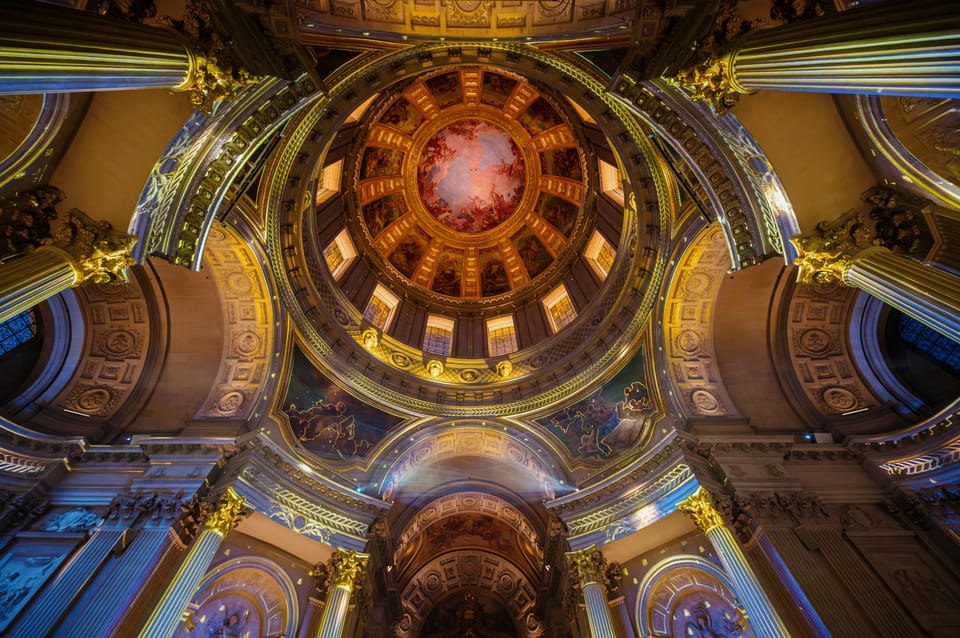
The “wow” factor often comes from the chapels part. The show guides you through a sensory exploration of six chapels, and the lighting changes make each one feel like a separate room in a connected story.
Even if you’re not reading every detail about the chapels beforehand, the show gives you a guided way to notice them. At certain points, you can take in the space rather than just facing forward, and that’s where the experience starts to feel more intimate.
This is also why it’s a good idea to slow down and look around during the walking moments. Don’t treat the show like a movie where you stare only at one screen.
Sound, cold, and flicker: comfort tips that can save your night
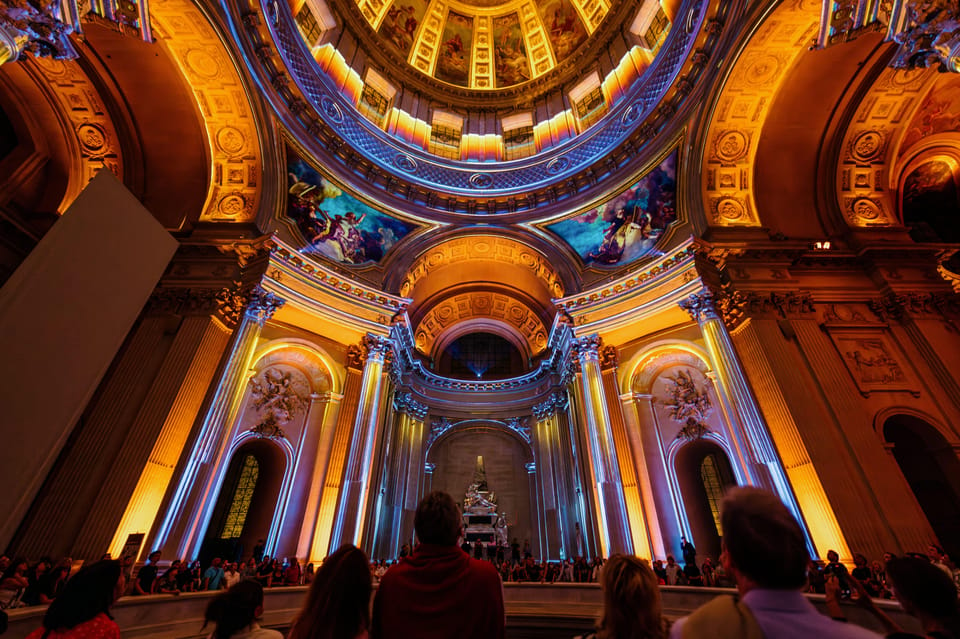
This show can be intense in the best way, but you’ll want to be ready.
Important notes to take seriously:
- Flickering lights are part of the experience.
- Sound volume can be high.
- The Dome can be quite cold inside, especially in winter.
So if you’re sound-sensitive, bring earplugs or use proper earphones. It’s the difference between enjoying the experience and feeling stressed through the whole thing.
Dress for indoor chill. You’re in a major historic monument—no warm air comfort guarantee. I’d rather you be slightly overdressed than standing there wishing you’d added a layer.
Also remember there are no toilets, no changing rooms, and no catering facilities on site. Plan your stop before you go in, and skip food for the evening because food and drinks aren’t allowed inside the site.
Who should go, and who might want a different evening
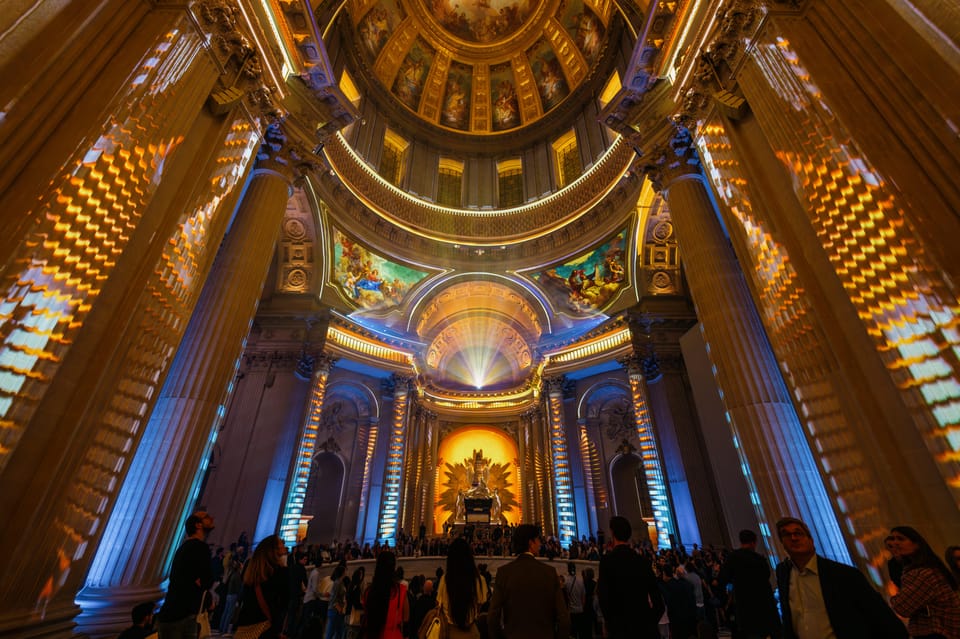
Aura Invalides works best if you like art, architecture, and music paired with modern projection. It’s a strong choice for couples, solo travelers, and anyone who wants a short, high-impact plan for a night in Paris.
It’s also a good fit if you want something indoors during cold or rainy months. The Dome gives it an atmospheric feel that’s hard to recreate outside.
But it may not be the best match if:
- You’re traveling with very young kids (it’s not recommended for children under 5).
- You have hypersensitivity to loud sound or flickering lights.
- You need wheelchair access (it’s not suitable for wheelchair users).
- You’re bringing strollers or large luggage (strollers and luggage/large bags are not allowed).
If you’re fine with stairs and a bit of crowd movement, you’re in the right zone.
The ticket price: does $33 feel fair for what you get?
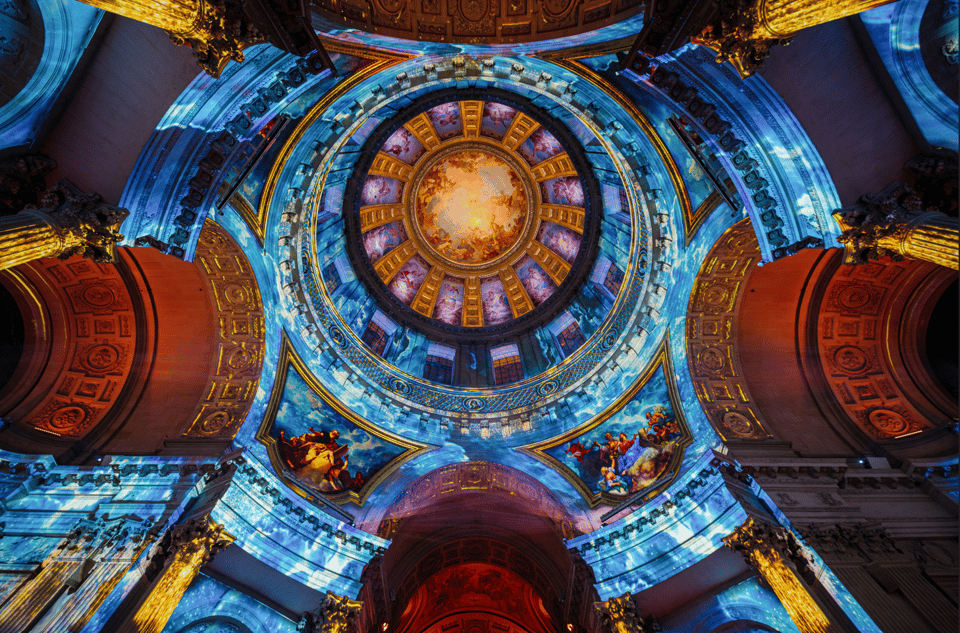
At about $33 per person, the value depends on what you want from your evening.
If you’re looking for a long guided history tour, this isn’t that. The show is primarily a multimedia art experience that uses the monument as its stage, and you’ll come away with a stronger sense of what you saw—not a textbook lesson.
If you want a one-and-done night plan that’s short (about 50 minutes), concentrated, and visually impressive inside a landmark, the price feels reasonable. You’re paying for a tailored use of the Dome itself—architecture plus orchestral music plus projection—without needing extra add-ons like food.
In Paris terms, it’s the kind of ticket that can replace a casual nighttime wandering session with something memorable.
Booking and practical expectations (so you’re not surprised)
A few things to keep your night smooth:
- Arrive via Place Vauban for entry.
- The show starts about 20 minutes after the session time on your ticket.
- No latecomers after the experience begins.
- Expect stairs and an indoor chill.
- Bring ear protection if you’re sensitive to sound.
One last practical point: there may not be a traditional live guide standing with you during the performance. Plan to follow the light cues, watch the visuals, and let the show do the directing.
Should you book Aura Invalides?
Book it if you want one of Paris’s most theatrical uses of a historic space. You’ll likely enjoy it most if you like architecture, orchestral music, and modern projection work—and if you’re comfortable with a short but active night inside a Dome with stairs.
Skip it (or choose a different plan) if you’re not comfortable with loud sound and flickering lights, if you need wheelchair access, or if you’re traveling with very young children.
If you’re weighing it against other evening options, I’d choose Aura Invalides—especially in winter. The building’s scale, the light show, and the chapel moments make the ticket feel like more than just entertainment. It’s a way of seeing the monument that’s hard to copy any other night of your trip.
FAQ
How long is the Aura Invalides experience?
The experience lasts about 50 minutes.
When does the show start compared to my ticket time?
The show begins about 20 minutes after the session time shown on your ticket.
Where do I enter for the experience?
Enter via Place Vauban on the Dôme des Invalides side, near the Ecole Militaire or St François Xavier metro stations.
Can I use the Esplanade entrance instead?
No. Visitors are not admitted via the Esplanade entrance, and the walk between the entrances is about 12 minutes.
What happens if I arrive late?
No latecomers will be admitted after the beginning of the experience.
Is it suitable for young children?
It’s not recommended for children under 5 years old.
Is it wheelchair accessible?
No, the experience is not suitable for wheelchair users.
Are toilets, changing rooms, or food available inside?
The site has no changing rooms, toilets, or catering facilities. Food and drinks are also prohibited throughout the site.