REVIEW · PARIS
Paris: Guided Segway Tour
Book on GetYourGuide →Operated by SeeWay · Bookable on GetYourGuide
Paris looks different at Segway speed. One minute you’re near Les Invalides, the next you’re crossing Pont Alexandre III with the city opening up in front of you. I love the way this tour strings together iconic landmarks in one smooth loop, and I especially like the grand scale moments at Dôme des Invalides and Pont Alexandre III.
What makes it work is the human touch. With a small group capped at 10, guides such as Alex and Sasha have a reputation for keeping beginners calm, checking comfort before you roll into busier streets, and guiding you with clear safety signals. The ride is fun, but it’s also organized and measured, not chaos.
The main thing to think about is road feel: the Segway route uses bike lanes, and those can be narrow with a lot of cyclists moving fast around you. If you’re not comfortable balancing for short stretches in traffic conditions, you’ll feel it more than you would on a simple walking tour.
In This Review
- Key highlights to know before you go
- Why this Segway loop feels like Paris, not a checklist
- From 14 Rue Mathurin Régnier to your first smooth glide
- Les Invalides and the Dôme moment you can’t fake
- Pont Alexandre III: the bridge that puts Paris on display
- Petit Palais and Grand Palais: elegant stops, quick resets
- Place de la Concorde to the national assembly area
- Louvre sightseeing without the museum slog
- Champs de Mars, École Militaire, and the Eiffel Tower finale
- Price and value: is $74 worth 150 minutes of motion?
- Safety, traffic, and what to expect on Paris bike lanes
- Who this tour fits best (and who should skip)
- Should you book this Paris Segway tour from the Invalides?
- FAQ
- How long is the Paris Segway tour?
- What is the meeting point?
- How much does the tour cost?
- What’s included in the tour?
- What is not included?
- What language is the live guide?
- Are there any age, weight, or health restrictions?
- What should I bring, and is anything prohibited?
Key highlights to know before you go
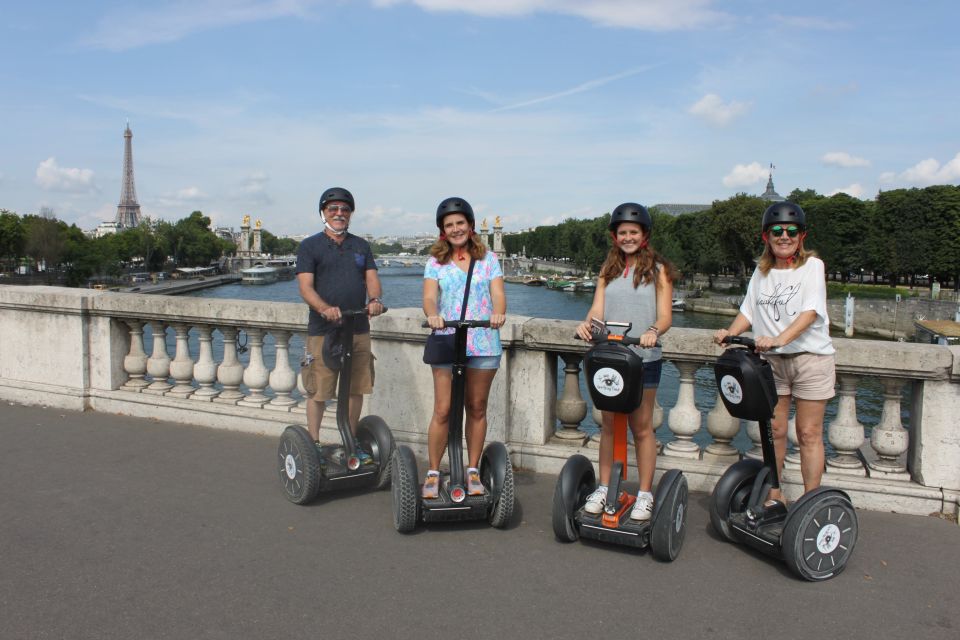
- Dôme des Invalides to Eiffel Tower: A classic Paris route, stitched together for maximum sightseeing time.
- Pont Alexandre III photo window: The “wow” bridge moment comes in the middle of the tour, not the end.
- Small group (10 max): Easier pacing and more attention when you’re learning Segway basics.
- Guides who coach safety: Names like Alex and Sasha show up often for patient, calm guidance.
- English live guide: You’ll get explanations as you glide between sights.
- Segway i2 + helmet included: You’re set up to ride without hunting down gear.
Why this Segway loop feels like Paris, not a checklist
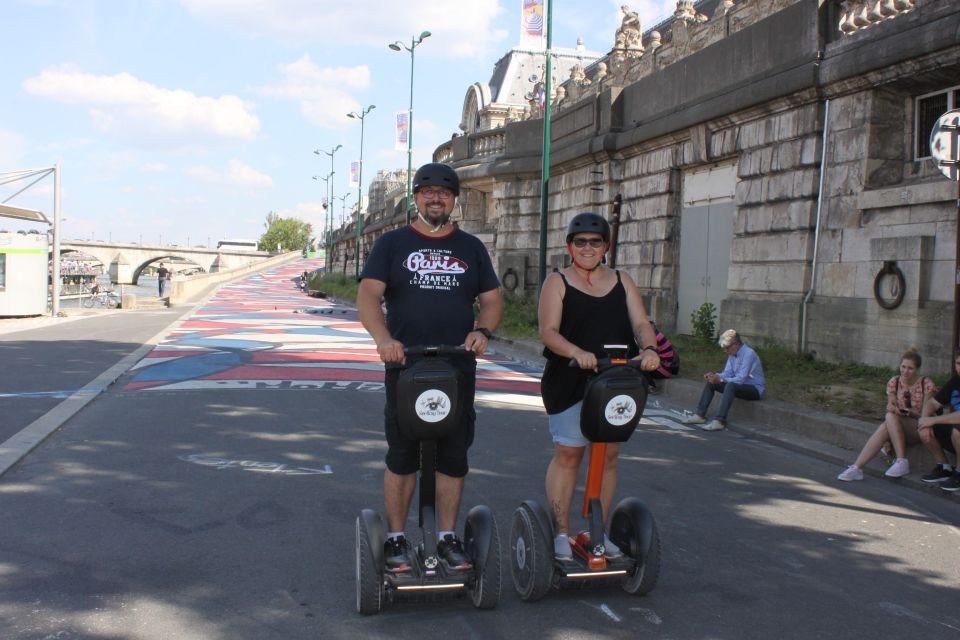
There are a lot of ways to do Paris. This one works when you want the big stuff—without spending your whole afternoon in lineups or stopping every two minutes just to reorient. I like that the route is built around walkable landmarks that feel central and “you’re in the city” rather than remote. In 150 minutes, you’re moving through several postcard zones, and the Segway turns travel time into sightseeing time.
You also get a very practical kind of education. As you roll from stop to stop, your guide isn’t just naming buildings. They’re giving you context for why these places matter and what you’re looking at. Riders repeatedly describe the guide’s focus on safety and clarity—especially when people are first-time Segway riders—so you’re not left figuring out controls while traffic whirs by.
One more reason this tour clicks: it’s not only about monuments. It’s about how Paris connects them. The bridge, the ceremonial squares, the museum fronts, and the approach to the Eiffel Tower all show you the city’s rhythm. That makes the tour feel less like checking boxes and more like learning how the center is laid out.
You can also read our reviews of more guided tours in Paris



From 14 Rue Mathurin Régnier to your first smooth glide
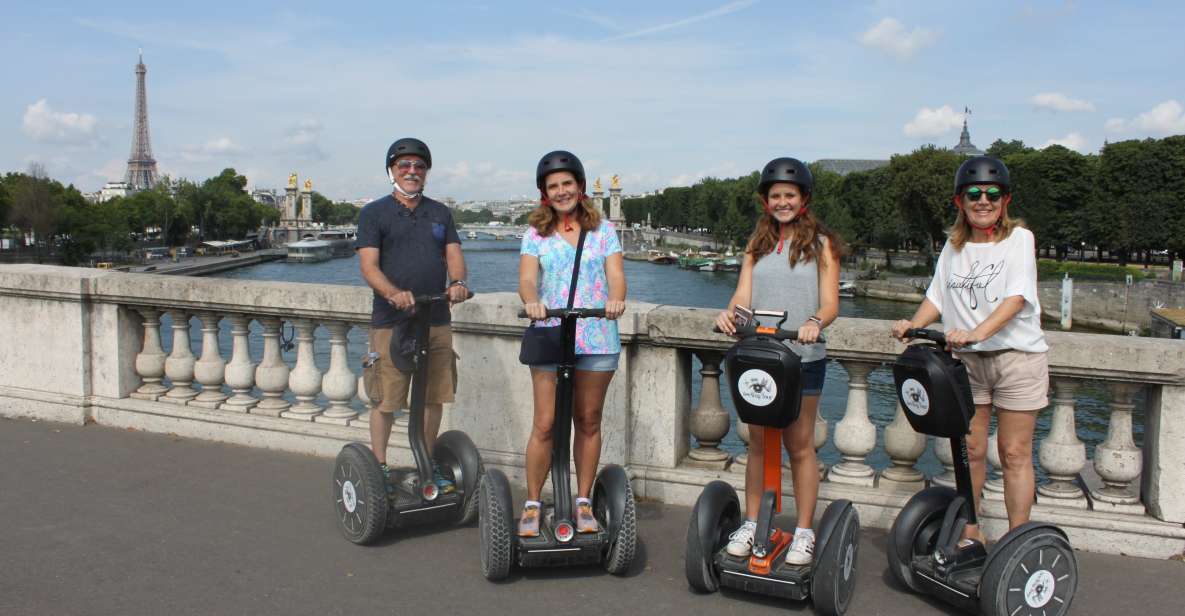
Your meeting point is 14 Rue Mathurin Régnier, 75015 Paris. Since there’s no hotel pickup, plan to get there under your own steam. This matters because you don’t want to show up late and get rushed through the ride start.
Once you’re on-site, you’re provided with a Segway i2 and a helmet, plus a live English guide. The guides in past tours have been described as patient with beginners. That’s a big deal, because a Segway feels different from walking, and it helps when the guide slows down enough for you to get comfortable before you’re moving through busier areas.
You’ll also want to show up ready to ride. Bring comfortable shoes—not fashion sneakers that pinch after 90 minutes of use—and sunglasses if you’re sensitive to glare. And keep your expectations realistic: you’re gliding, not sprinting. A tour like this is designed to keep the group together and safe, which means the pace is “steady sightseeing,” not “run and conquer.”
Les Invalides and the Dôme moment you can’t fake
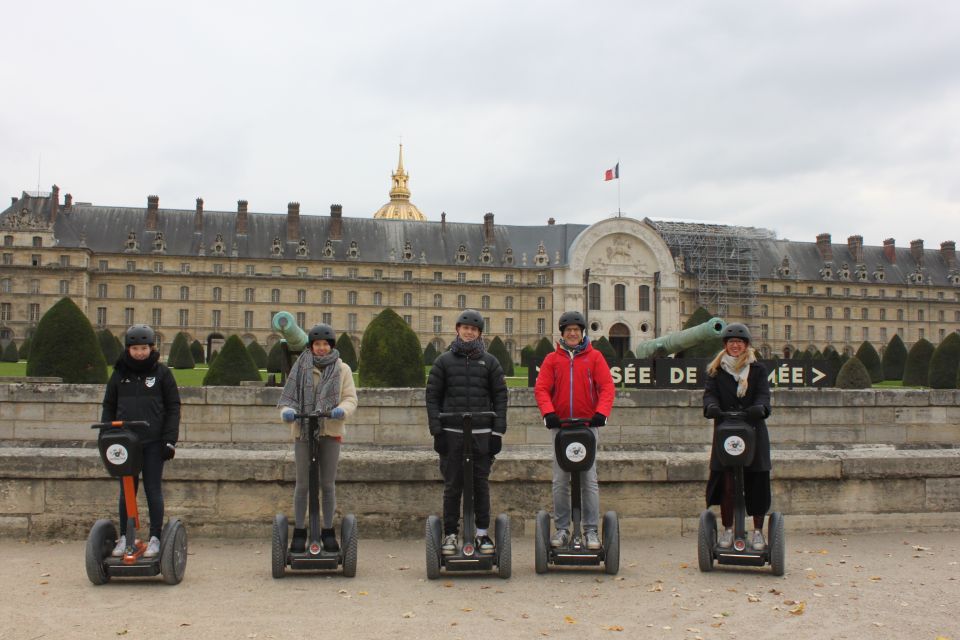
You start with Les Invalides—including the Dôme des Invalides—for about 15 minutes. This is a strong first stop because it sets the tone. You’re in a part of Paris where grand architecture and royal-era weight feel tangible. Even if you’ve seen photos, being there gives you scale fast.
This stop also helps Segway riders warm up. The early minutes are often where you learn how to balance smoothly, steer predictably, and feel confident stopping and turning. A good guide will keep eyes on the group, and past riders have highlighted that the guides take safety seriously, especially at the beginning.
What to watch for: don’t treat this like a quick drive-by. Slow your mind down for a moment. Look up at the dome lines, then look back at how you’ll be moving out into the city. That switch—from “one major monument” to “a moving view of multiple landmarks”—is what makes Segway sightseeing feel special.
Pont Alexandre III: the bridge that puts Paris on display
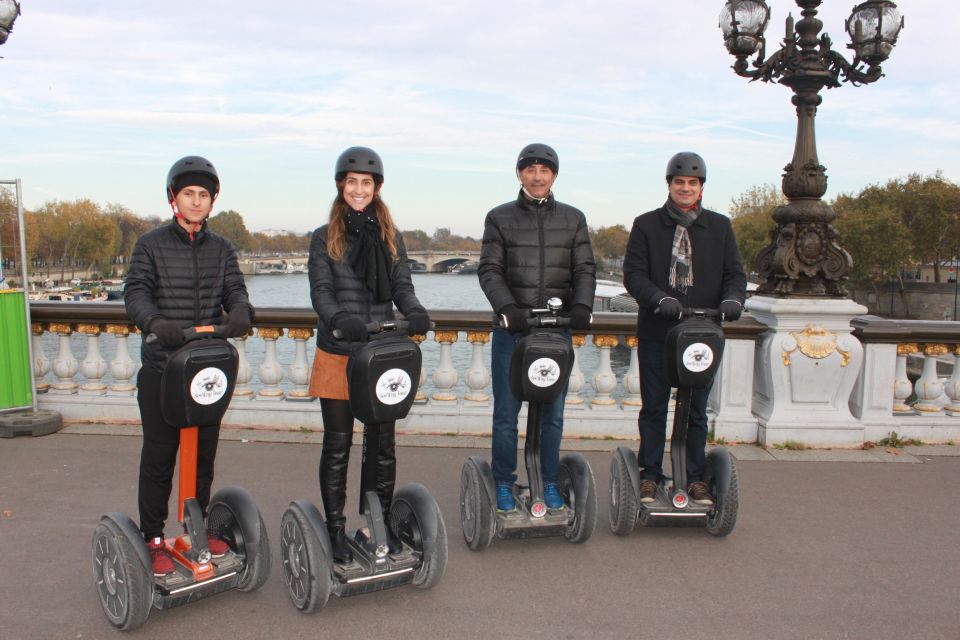
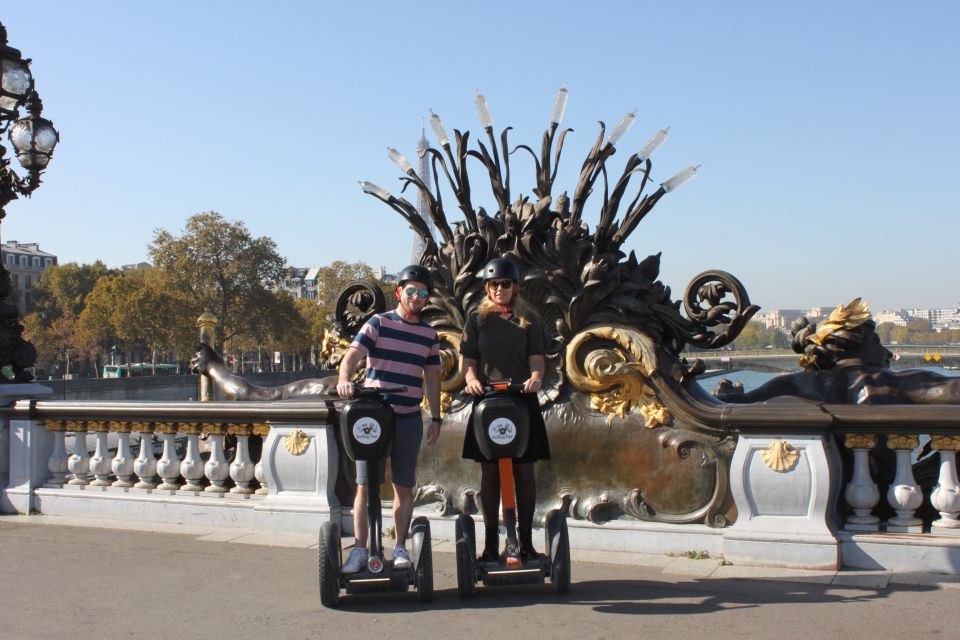
Next comes Pont Alexandre III (about 20 minutes). This is one of the most extravagant bridges in the city, and the time allocation makes sense. A bridge view isn’t just about looking forward; it’s about how the riverfront and skyline stack up while you cross.
You’ll be in an area where you can actually appreciate the bridge as a set piece, not just as a transit point. The tour timing puts this in the middle—meaning you’ve already learned the Segway enough to relax, but you’re still early enough that the “big wow” isn’t lost to fatigue.
Practical note: bridge zones can feel visually crowded. There’s a lot to look at, and in the same space there are other cyclists and pedestrians. The guide’s role here is key. Riders who loved the tour often mention clear signaling and guidance around busier sections. Follow that lead, and you’ll enjoy the view more than you would if you were constantly trying to manage your own route decisions.
Petit Palais and Grand Palais: elegant stops, quick resets
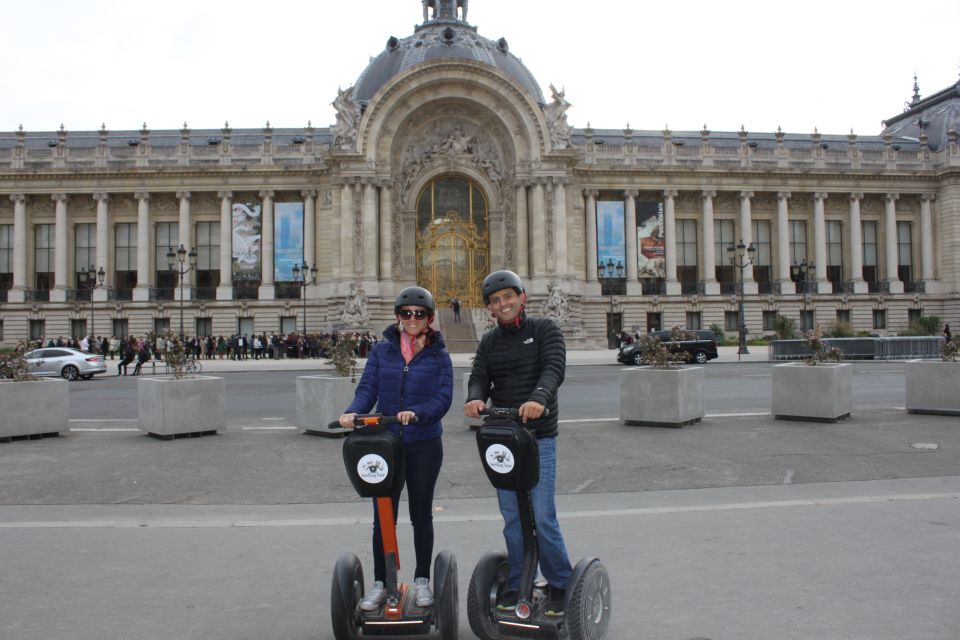
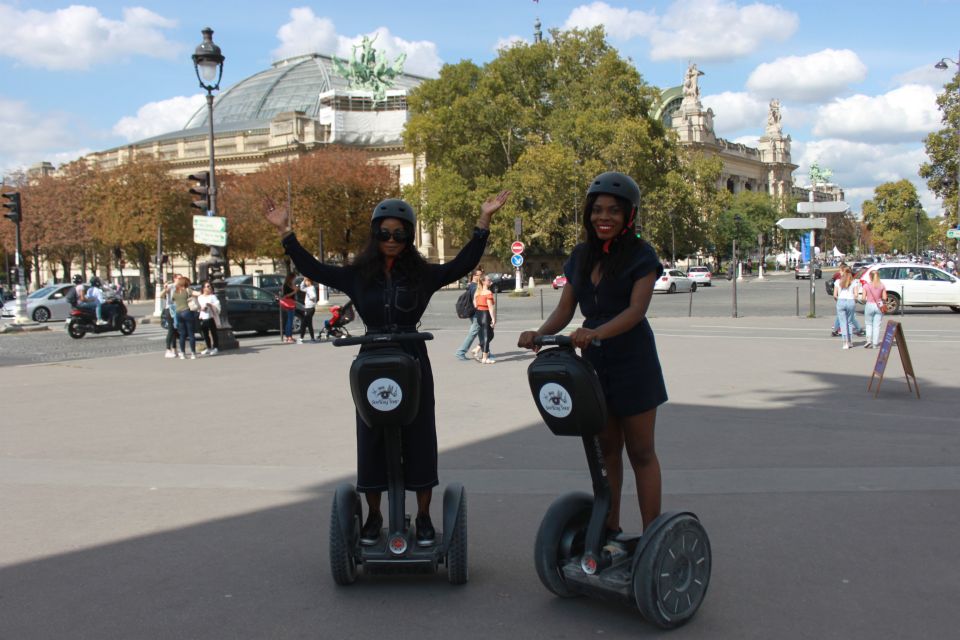
Then you hit Petit Palais and Grand Palais—each around 10 minutes. These are beautiful buildings, but the tour treats them smartly: short stops, high impact. You won’t have time for museum-level exploration here, but you also won’t waste the day waiting for the perfect moment. The value is the glide-and-look rhythm. You see the fronts, get the vibe, and then you move on.
A quick stop can sound limiting, but on a Segway tour it often plays out well. You arrive more energized than you would if you were on foot trudging between sites. Plus, the guide is positioned to point out what’s worth noticing fast.
If you’re the type who likes to linger, plan to take a couple photos at each stop and then trust the guide to keep things moving. With a small group, that pace tends to stay friendly rather than frantic. One rider even mentioned the guide was offering photo help along the way—an underrated benefit when you’re riding and can’t easily ask someone to snap one for you.





Place de la Concorde to the national assembly area
After the palatial stops, you reach Place de la Concorde for about 15 minutes. This is one of Paris’s most famous squares, and the tour uses that time for what squares do best: orientation. You get a sense of major axes—where things align and how the city’s grand spaces connect.
From there, you continue to l’Assemblée Nationale (about 10 minutes) and Musée d’Orsay (about 10 minutes). I like this stretch because it changes the mood. It’s less domes and bridges, more civic and cultural framing. Even if you don’t go inside, it helps you understand what this part of Paris is: a place built for ceremonies, attention, and public life.
A small heads-up: this is where crowds can build around you. The guides who get high marks tend to keep the group together and manage crossing/traffic flow. If you’re sensitive to noise or tight spaces, you might prefer to arrive calm and treat this as a “slow-look” segment rather than expecting wide-open angles.
Louvre sightseeing without the museum slog
The tour then brings you to the Louvre Museum for about 20 minutes. The big idea here isn’t deep museum time. It’s getting the Louvre as an outdoor landmark—seeing the scale and getting perspective on where it sits in the city.
This is a good compromise if your trip time is short. You’ll get the famous presence without sacrificing your entire day to a ticket line, route planning, and galleries. And because you’re gliding, you can see how the Louvre fits into the surrounding streetscape instead of only seeing it from one stair-step perspective.
Still, this is where expectations matter. If your dream is to spend hours inside, this isn’t that tour. If your dream is to get a strong orientation to the Louvre area and check the location off your mental map, it’s a smart hit.
Then the tour continues out toward the Eiffel Tower zone, so you’re not stuck in one museum bubble. That’s a practical reason this route works: it turns “one big attraction” into a sequence that ends with one of the most dramatic Paris finales.
Champs de Mars, École Militaire, and the Eiffel Tower finale
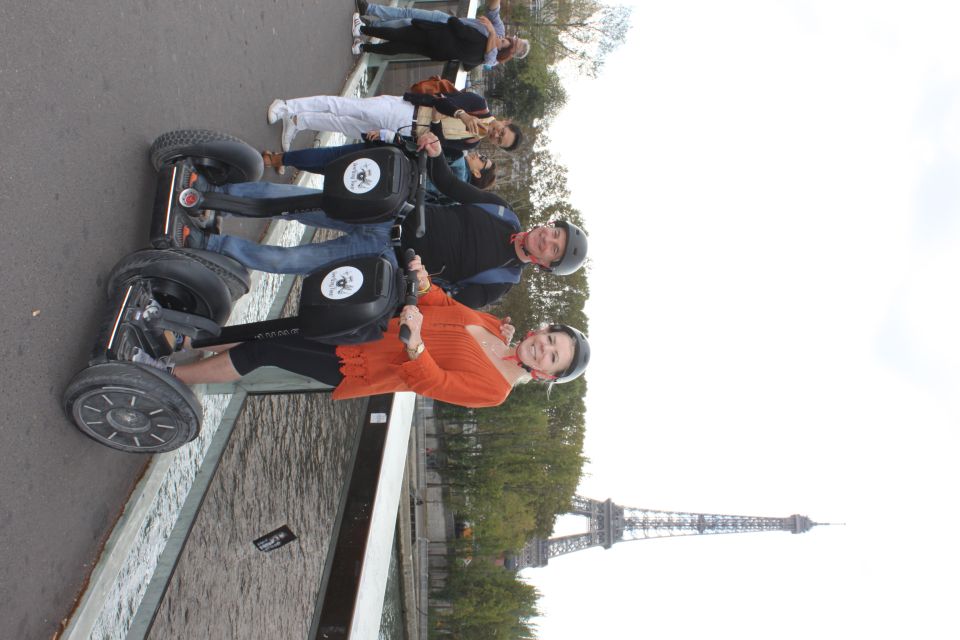
You move to Parc du Champs de Mars (about 15 minutes), then Ecole Militaire (about 10 minutes), and finish with a spectacular Eiffel Tower view (about 15 minutes). This ending is more than just a payoff. It gives you a clear “Paris arc,” from historic power and civic space to the city’s most recognizable symbol.
Champs de Mars is helpful because it’s open. Open spaces let you breathe a little after denser sections. You’re also approaching the Eiffel Tower from a perspective that feels like arriving rather than just seeing a distant tower.
I also like that the tour ends with a view instead of starting with one. The order matters. By the time you’re near the Eiffel Tower, you’ve already seen the route’s key connectors—bridge, squares, major institutions—so the tower feels like the culmination of a plan.
One rider note to keep in mind: weather can change quickly. A past rider mentioned that rain jackets were provided, but also said the return experience wasn’t set up well for drying off afterward on a freezing, soaking day. If you go in shoulder season or winter, bring a backup layer and be ready to get a bit wet.
Price and value: is $74 worth 150 minutes of motion?
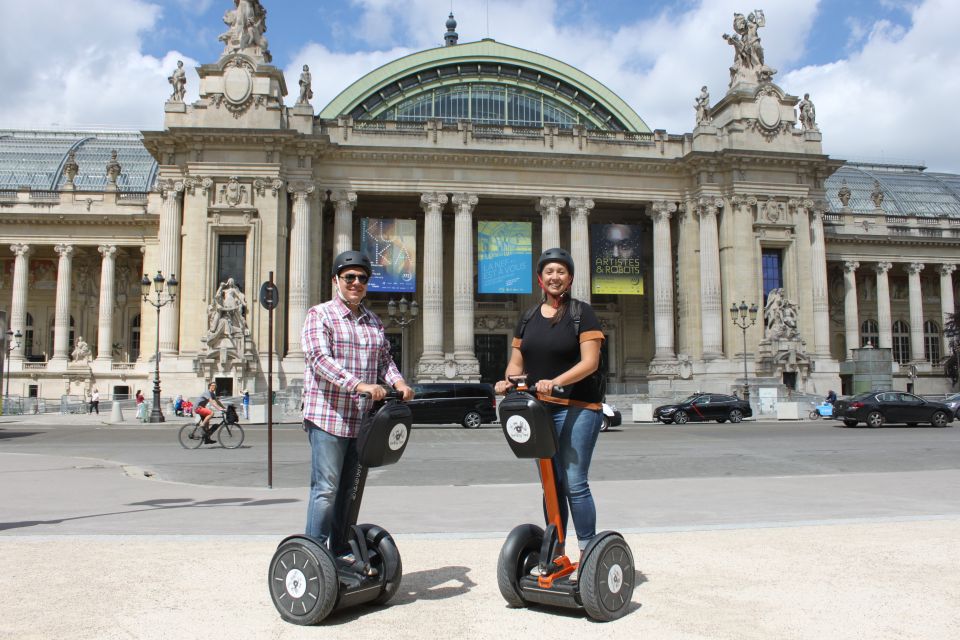
At $74 per person for 150 minutes, this tour is priced like a premium sightseeing experience—because it is. You’re paying for three things: the Segway i2, the helmet, and a live English guide who moves you through multiple major landmarks without you coordinating route segments.
For me, the value case is simple: if you want a lot of iconic Paris in a short window and you’re willing to ride in city traffic conditions, you’ll get your money’s worth. The tour hits Les Invalides, the bridge moment, Petit/Grand Palais, Place de la Concorde, the Louvre area, and ends with Eiffel Tower views. That’s not a small list, and Segways make it feasible without turning your day into a 20,000-step punishment.
If you’re only after one or two sites, you might find better value doing those on your own. But if your goal is efficiency and you want the “gliding between highlights” feeling, this is one of the more sensible ways to spend an afternoon in central Paris.
Safety, traffic, and what to expect on Paris bike lanes
This is the section that keeps your day smooth. Several riders described the route as mostly using bike lanes, which means your surroundings can feel different from a pedestrian tour. Bike lanes can be narrow. Other cyclists can pass quickly. That doesn’t mean it’s unsafe when the guide is doing their job—but it does mean you should stay relaxed and let the guide set the tempo.
The best guides handle this by teaching you how to ride consistently. Riders repeatedly praise guides like Alex for being calm, patient, and attentive—staying close, offering photo help, and signaling clearly at busy spots. So if you’re booking, keep an eye on your own comfort level with balance and steering.
What you should do before you start:
- Wear comfortable shoes
- Bring sunglasses
- If you’re a first-timer, assume you’ll need a few minutes to settle in
And a strict note: intoxication isn’t allowed. This is common sense for a moving, guided ride.
Who this tour fits best (and who should skip)
This tour is aimed at people who can handle the Segway and city movement. It’s not recommended for:
- Children under 12
- Pregnant women
- People with back problems
- People over 264 lbs (120 kg)
So if any of those apply, you’ll want a different format. The Segway requires a stance and balance that can be stressful for certain bodies.
If you do fit the guidelines, it’s a great match for:
- First-time visitors who want a fast overview of central Paris
- People who like their sightseeing organized and time-efficient
- Travelers who don’t want to commit to long museum hours, but still want the big icons
Also, if you enjoy taking photos but don’t want to spend half the day asking strangers to take shots, the guides offering photo help is a real perk.
Should you book this Paris Segway tour from the Invalides?
Book it if you want a structured, time-efficient way to see major Paris landmarks in one afternoon, and you’re comfortable riding a Segway through busier city zones. This route is especially appealing because it links big moments—the Dôme des Invalides, the bridge crossing, the Louvre area, and then the Eiffel Tower view—into one coherent glide.
Skip it if you’re easily stressed by close traffic, you’re dealing with mobility or back issues, or you’re expecting deep museum time. And if you’re visiting in weather that could turn, plan to bring layers. A tour like this can include rain jackets, but you can’t assume perfect drying setup afterward.
FAQ
How long is the Paris Segway tour?
It lasts 150 minutes.
What is the meeting point?
The meeting point is 14 Rue Mathurin Régnier, 75015 Paris, France.
How much does the tour cost?
The price is $74 per person.
What’s included in the tour?
Included are the Segway i2, a helmet, and a guide.
What is not included?
Hotel pickup and drop-off are not included.
What language is the live guide?
The tour offers a live English guide.
Are there any age, weight, or health restrictions?
Yes. It’s not recommended for children under 12, pregnant women, people with back problems, or people over 264 lbs (120 kg).
What should I bring, and is anything prohibited?
Bring comfortable shoes and sunglasses. Intoxication is not allowed.