REVIEW · PARIS
Paris: Small-Group Catacombs Tour with Skip-the-Line Entry
Book on GetYourGuide →Operated by LivTours - We craft tours, you live them · Bookable on GetYourGuide
Skeletons have a way of making Paris feel real fast. This small-group Paris Catacombs tour gives you skip-the-line entry plus guided access to restricted areas, so you’re not just wandering tunnels and guessing what you’re looking at. I especially liked how the history connects the macabre to everyday Paris, from limestone quarry work to wartime use. And with guides like Maria and Remi, the bones are explained with care, not creep-for-creep’s-sake.
The one downside is physical and practical: you’ll face a steep 133-step descent and narrow, dim passageways, and the tour is designed to keep moving at a steady pace.
In This Review
- Key Highlights Worth Showing Up For
- The Catacombs Start With a 133-Step Reality Check
- Skip-the-Line Entry: What You’re Actually Paying For
- Your Guide Makes the Bones Make Sense
- The Bone Decorations: More Than Just a Wall of Skulls
- Why Quarrying Turned Into Burial (And Then Into Survival)
- The Parts You Can Actually Access
- The Crypt of the Passion and the Barrel Moment
- The Weird, Dark Footnotes: Philibert Aspairt and Cataphiles
- Pace and Group Size: Why Max 6 Changes Everything
- Logistics That Matter: Meeting Point and What to Bring
- Who This Catacombs Tour Fits Best
- Should You Book This Catacombs Tour?
- FAQ
- How long is the Paris Catacombs small-group tour?
- What do I get with skip-the-line entry?
- How many people are in the group?
- Is the tour offered in English?
- Does the tour include access to restricted areas?
- What are the main stops during the tour?
- Are food and drinks included?
- What’s included in the ticket price?
- Is cancellation allowed?
- What should I know about group size exceptions?
Key Highlights Worth Showing Up For
- Skip-the-line, separate entrance: Less waiting, more time underground.
- Restricted areas access: You get parts not covered by the main public route.
- 133-step descent: Real height change right away, so wear practical shoes.
- Crypt of the Passion and the Barrel: A constructed skeletal feature that’s hard to forget.
- WWII and Revolutionary-era context: Not just spooky stories, but why the tunnels mattered.
- Small group (max 6): More chances to ask questions and spot details.
The Catacombs Start With a 133-Step Reality Check
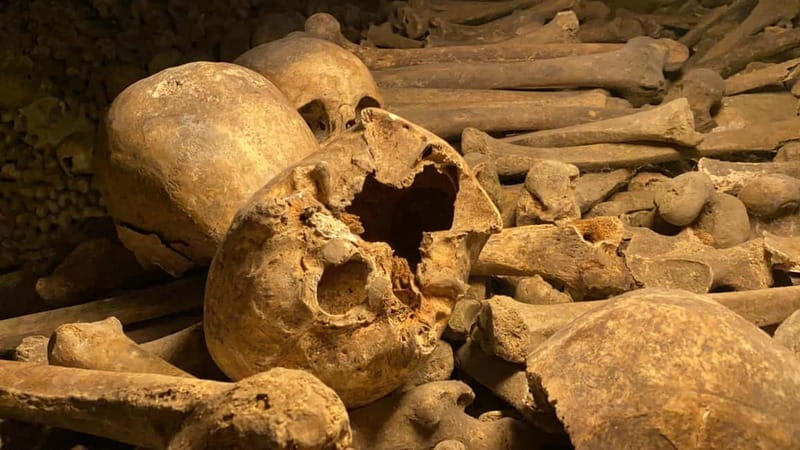
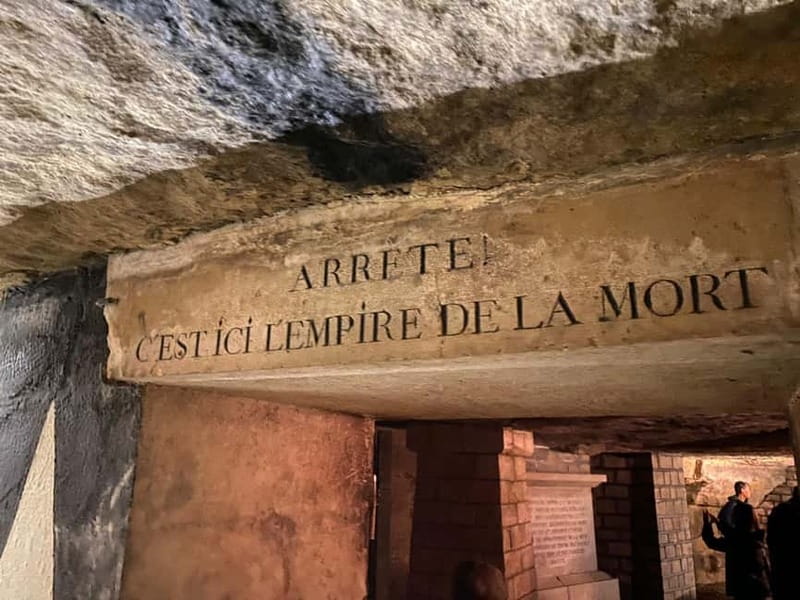
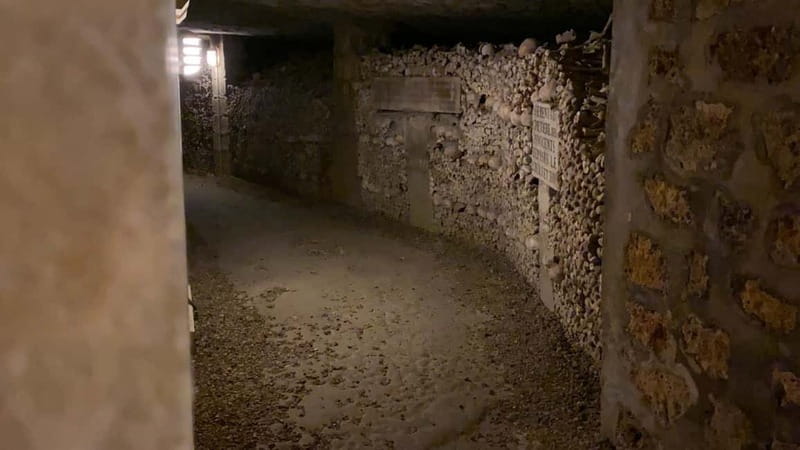
The Catacombs experience in Paris isn’t subtle. Before you even settle in, you start with a descent—down a staircase of 133 steps. That’s your first hint that this is not a casual stroll. It’s a guided walkthrough through narrow tunnels where the lighting and the spacing make everything feel closer than you expect.
I like this approach because it sets expectations immediately. You’re going underground to see human remains and the way people arranged them, but you’re also walking through a man-made space that has had multiple lives: quarry, burial site, and shelter.
If you’re the type who tends to get cold or cramped on tours, plan for it. The catacombs are dim and you’ll be standing still at points to take in bone decoration. Good shoes matter here more than you think.
You can also read our reviews of more tours and experiences in Paris



Skip-the-Line Entry: What You’re Actually Paying For
At $227 per person for a 1.5-hour tour, it’s reasonable to ask whether this is worth it versus doing it on your own. Here’s the value logic that makes sense.
You’re buying three things that are hard to replicate independently:
- Skip-the-line access via a separate entrance
- A small group capped at 6 people
- Exclusive access to restricted areas, not just the standard route
That restricted-area piece is the big deal. The catacombs are popular, and the general entrance experience is set up to handle crowds efficiently. A guided tour that includes areas you can’t just wander into on a self-guided visit changes the feel of the outing. You’re seeing more, and you’re understanding more while you’re there.
Yes, the price is high. But if you care about context, and you want to spend less time stuck in public queues and more time in the story, the structure justifies itself.
Your Guide Makes the Bones Make Sense
The Catacombs are visually intense on their own. But the real magic comes when a guide connects what you’re seeing to why it exists.
I noticed a clear pattern in the strongest feedback: guides like Maria, Remi, Leo, and Michelle are praised for being energetic, staying on the right pace, and pointing out details you’d miss without interpretation. One person even described feeling like they were walking through a history book, which is exactly what you want here.
On this tour, you get explanations that go beyond spooky theater:
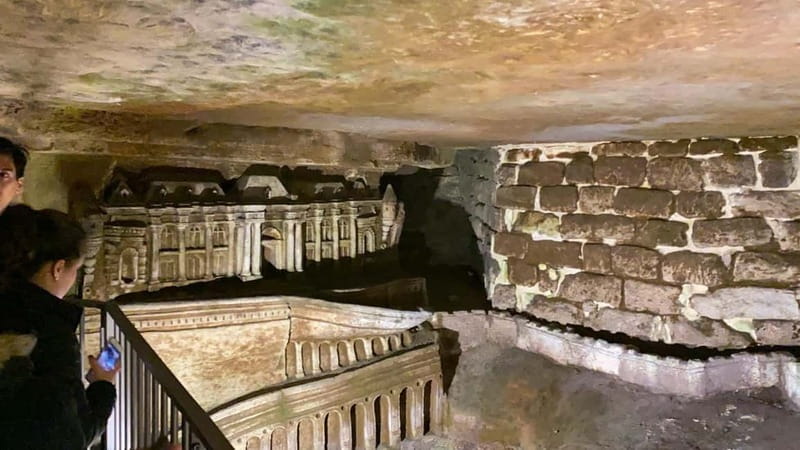
- How the tunnels relate to 13th-century limestone quarrying
- Why the burials accelerated after bad weather in the 1780s
- What makes certain sections visually distinct, including religious iconography and “beautified” bone compositions
- How different wartime groups used parts of the catacombs as bunkers during World War II
This is the kind of tour where your brain stops treating the bones as a single scary mass and starts recognizing sections, symbols, and purpose.
The Bone Decorations: More Than Just a Wall of Skulls
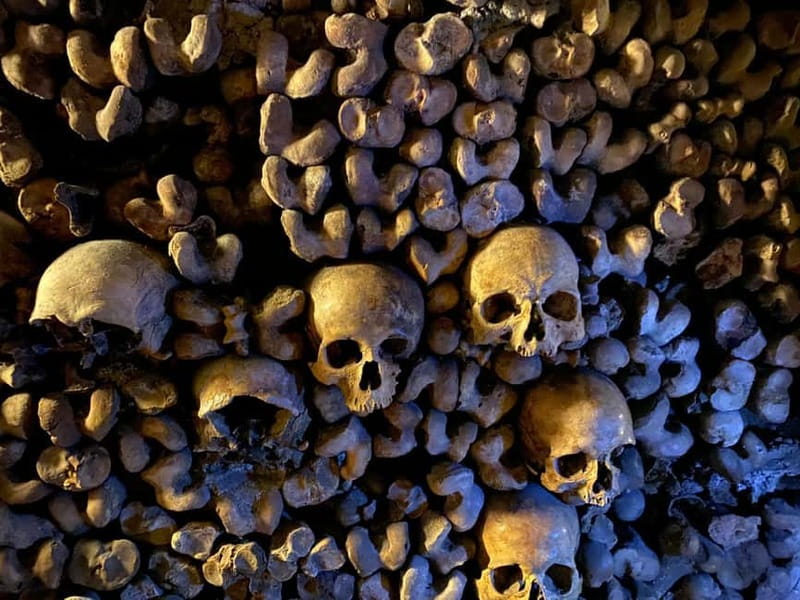
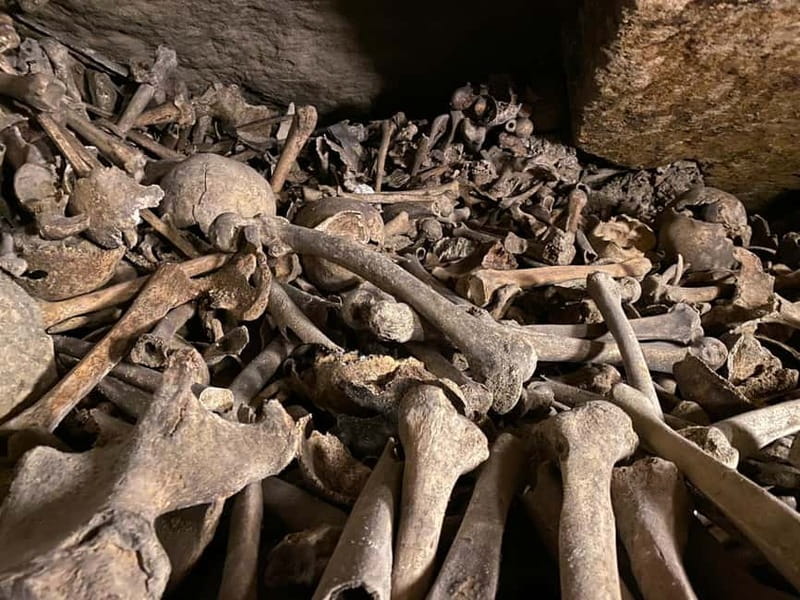
The catacombs don’t just store remains. They’re decorated in a very specific, human way. As you move through the tunnels, you spend time admiring detailed bone arrangements—religious symbols and hearts show up as part of the visual language.
One detail that earns a lot of attention is inside the Crypt of the Passion. Here, you get a moment to look at the Barrel, constructed from various skeletal remains. Even if you’re expecting something intense, it tends to hit with a special kind of heaviness, because it’s not random. It’s made.
And that’s part of the point of a guided route. Without guidance, you might look at arrangement after arrangement and still feel like you’re only collecting impressions. With a good guide, you understand the logic of the space: where people worked, why they arranged what they arranged, and why certain symbolism shows up.
Why Quarrying Turned Into Burial (And Then Into Survival)
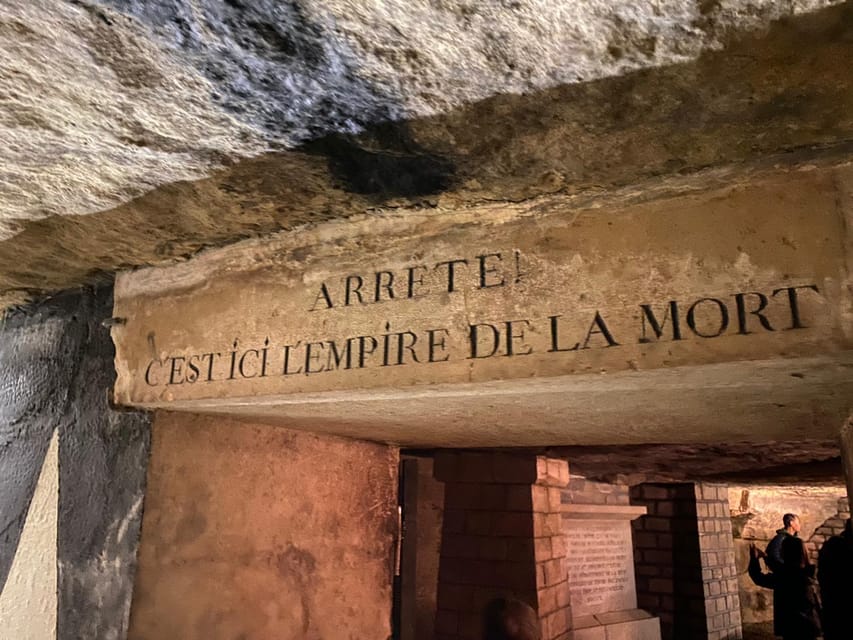
You’ll hear a straight line connecting three major uses of the catacombs, and it helps you see the underground city as more than a horror set.
1) Limestone mining in the 13th century
The tunnels began as a quarry system. The same space that created stone for major landmarks—mentioned as grand as Notre Dame—eventually became a different kind of storehouse.
2) The 1780s burial crisis
Bad weather in the 1780s forced a change. Instead of keeping up with regular burial practices, people ended up using the catacombs as an answer to a problem that had gotten out of hand.
3) Wartime use during World War II
This is where the tour adds real historical weight. You’ll learn how the German Wehrmacht and the French Resistance both used parts of the catacombs as wartime bunkers. It’s a stark contrast: the same tunnels that hold arranged remains also supported people hiding from danger.
You also get context for how the catacombs relate to the French Revolution, which adds another layer to the story. This matters because it keeps the experience grounded. You’re not only there for shock value—you’re seeing how Paris used the earth beneath it in multiple eras.






The Parts You Can Actually Access
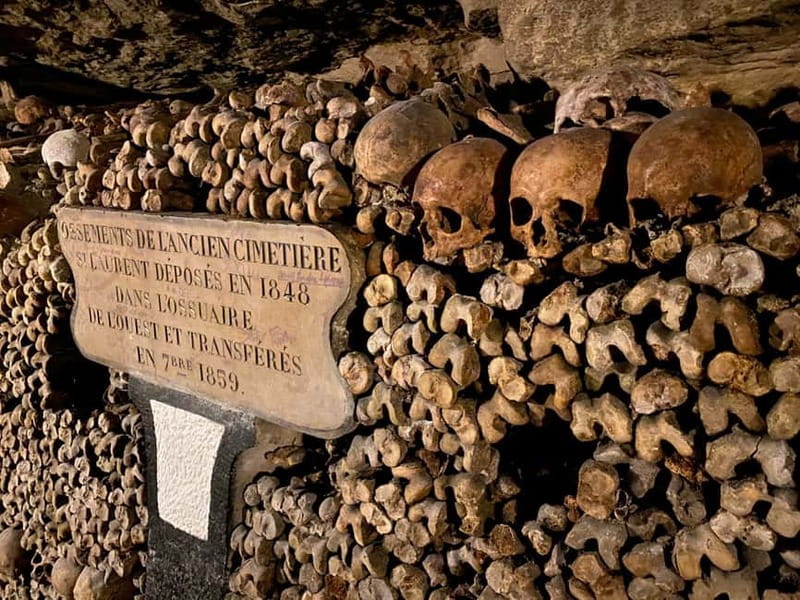
One reason people rave about this tour is the access. It isn’t just the standard walk-through. The promise is exclusive access to restricted areas, and that’s reflected in the strongest comments.
In practical terms, what you want is time in areas that feel less like a conveyor belt. Restricted areas tend to be quieter and more focused. You also get the guide’s explanations tied directly to those sections, which helps you connect the visuals to the story in real time.
If you like photography, keep in mind you’ll be in dim conditions and sometimes in tight spaces. I’d focus more on learning what you’re seeing than on getting the perfect shot.
The Crypt of the Passion and the Barrel Moment
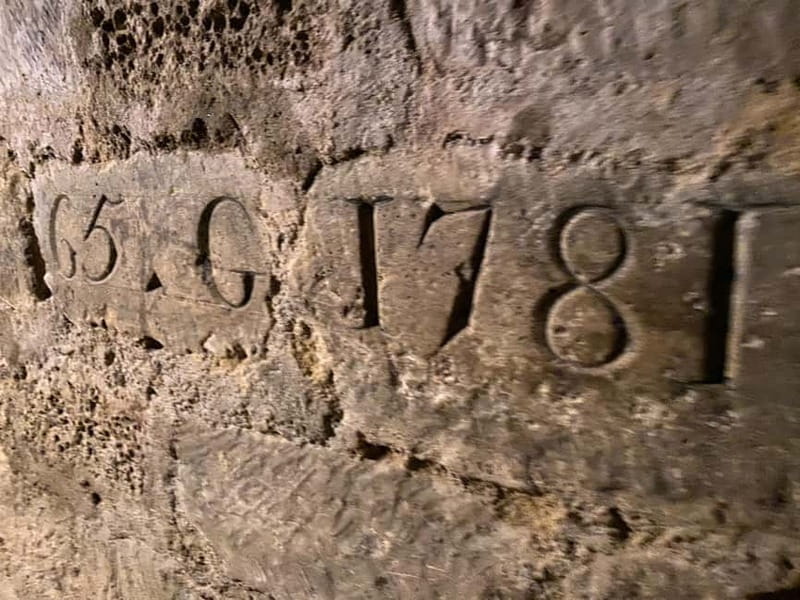
If you want one standout stop to mentally prepare for, make it the Crypt of the Passion. This is where the tour highlights the Barrel, made from skeletal remains.
The crypt doesn’t function like a random display. It’s presented as part of the catacombs’ designed approach to bone decoration and meaning. And because you have a guide explaining what you’re looking at, you don’t just stare—you understand.
This is also the point where your personal comfort level matters most. If you’re squeamish, you’ll still be okay if you’re steady and calm, but you should know this is not a quick glance-and-move area.
The Weird, Dark Footnotes: Philibert Aspairt and Cataphiles
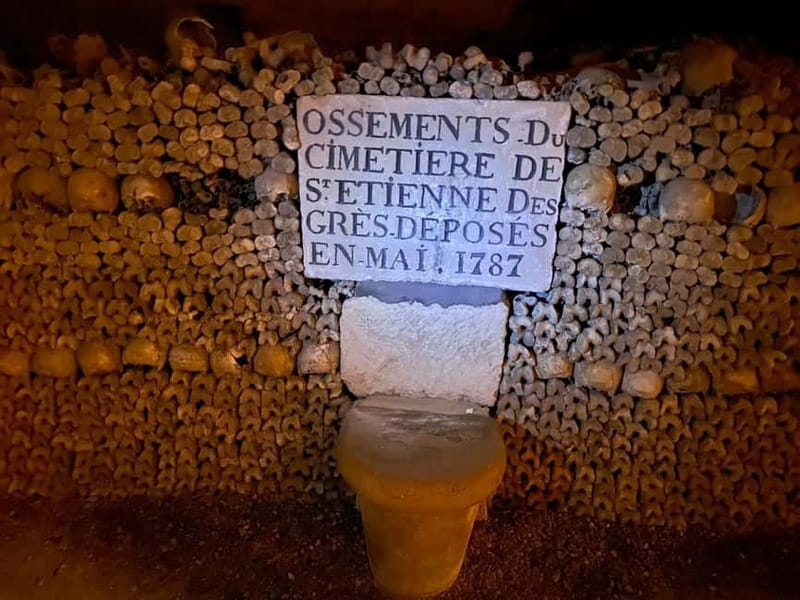
Part of the reason this tour feels different from a purely educational museum visit is the “small stories” your guide can weave in.
You’ll hear about the grave of doorman Philibert Aspairt, said to have passed away in the catacombs in the 18th century. That gives the space a personal human thread, not just a set of historical facts.
Then there are modern catacombs subcultures. You’ll learn about cataphiles—people who explore underground spaces—and how the scene has caused stir in recent years, including activities like raves and swimming parties, as well as an extensive underground network. You’ll also want to keep an eye out for graffiti left by cataphiles.
I like including this kind of info because it changes your view of the catacombs from purely historical to “still alive in the present,” even if that present is controversial.
Pace and Group Size: Why Max 6 Changes Everything
A small group is not a fancy marketing bullet when you’re underground. It affects everything:
- Fewer people to block your view
- More time to notice details
- More chances to ask questions
- A better pace that doesn’t feel like you’re constantly being redirected
This tour limits you to 6 participants, and the good feedback consistently praises that intimacy. People also mention the “right amount of time,” which matters because a 1.5-hour underground tour can feel long if you’re cramped or if the guide overtalks. The best guides here keep the flow moving while still giving you time to look.
If you travel with kids or teens, small-group structure can help a lot too—one guide-led family experience noted the tour worked well for a 10 and 16-year-old, mainly because the information was entertaining and organized.
Logistics That Matter: Meeting Point and What to Bring
You’ll meet at the Catacombs main entrance area on 1 Avenue du Colonel Henri Rol-Tanguy, Paris, with your guide holding a LivTours sign. The tour ends back at the meeting point, so you don’t have to worry about getting lost after you leave the underground.
Duration is listed as 1.5 hours, so you should plan your day like this is a main event, not a quick stop between things.
What to bring:
- Comfortable, closed shoes for steps and uneven surfaces
- A small layer if you get chilly easily
- If you’re the kind of person who likes it, bring water and a snack for after (food and drink aren’t included)
One more practical note: you’ll be in narrow tunnels, so avoid bulky bags if possible.
Who This Catacombs Tour Fits Best
This tour makes the most sense if:
- You want more than a self-guided walk through bones
- You care about why the catacombs exist (quarrying, burials, war use, revolution links)
- You prefer small groups and a guided pace
- You’re specifically interested in restricted areas and the standout crypt section
It may be less ideal if:
- You have trouble with steep stairs (the descent is part of the core experience)
- You want a very hands-off experience with lots of wandering time
- You’re only interested in quick photos and minimal reading
Should You Book This Catacombs Tour?
I think you should book if you want the catacombs to feel guided and meaningful, not just crowded and creepy. The combination of skip-the-line entry, expert interpretation, small group size, and restricted access is exactly what turns this from an attraction into an experience.
Skip it if you’re firmly in the DIY camp and you don’t care about deeper context, restricted areas, or having your questions answered as you go.
If you do book, look for a guide you connect with. The tour has been led by people like Maria, Remi, Leo, Lavinia, Alex, Michelle, and Angelo, and the strongest satisfaction shows up when the guide’s energy matches your travel style.
And if you want flexibility, the option is offered to cancel up to 24 hours in advance and there’s also a reserve-and-pay-later style booking. Keep an eye on your start time since the tour length is fixed at 1.5 hours.
FAQ
How long is the Paris Catacombs small-group tour?
The tour duration is listed as 1.5 hours. Check availability to see starting times.
What do I get with skip-the-line entry?
You get skip-the-line access through a separate entrance, so you avoid waiting with the main crowd.
How many people are in the group?
The group is limited to only 6 people, which keeps it small-group and easier to hear your guide.
Is the tour offered in English?
Yes, the live tour guide is listed as English.
Does the tour include access to restricted areas?
Yes. This tour includes exclusive access to restricted areas in addition to the main catacombs visit.
What are the main stops during the tour?
The experience is centered on the Paris Catacombs guided visit. The published starting location is near House Veterans of the 2nd Armored Division, and the meeting point is by the main entrance on 1 Avenue du Colonel Henri Rol-Tanguy with a LivTours sign.
Are food and drinks included?
No. Food and drink are not included.
What’s included in the ticket price?
Included are skip-the-line entry, a professional local expert guide, and the small-group format (6 people).
Is cancellation allowed?
Yes, free cancellation is offered up to 24 hours in advance for a full refund.
What should I know about group size exceptions?
On rare occasions, an exception may be made to the 6-person group policy to accommodate participants traveling together without splitting groups.