REVIEW · PARIS
Paris: Hop-On Hop-Off Seine Cruise Pass with 9 Stops
Book on GetYourGuide →Operated by BATOBUS · Bookable on GetYourGuide
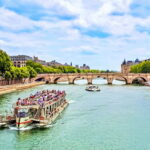
From the Seine, Paris feels slower and smarter. The Batobus hop-on hop-off pass rides heated boats with a glass-covered terrace, then lets you get off at 9 stops to hit landmarks like the Eiffel Tower, Louvre, and Notre-Dame.
I love the flexibility here: a 24/48-hour pass means you can take a relaxed loop, then decide later where you want to linger. You’ll also get an interactive webapp in several languages to help you make sense of what you’re seeing. One catch: the cruise doesn’t provide onboard audio, so if you want commentary, plan on using your phone and the webapp.
In This Review
- Key Things I’d Plan Around
- Batobus Pass Basics: 24 vs 48 Hours on the Seine
- The Glass-Covered Terrace Experience (and Photo Reality Check)
- Ports Worth Getting Off At: From Eiffel Tower to Place de la Concorde
- Tour Eiffel Stop: Port de la Bourdonnais
- Musée d’Orsay Stop: Quai de Solférino
- Saint-Germain-des-Prés Stop: Quai Malaquais
- Notre-Dame Stop: Quai de Montebello
- Jardin des Plantes Stop: Quai Saint-Bernard
- Hôtel de Ville Stop: Quai de l’Hôtel de Ville
- Louvre Stop: Quai du Louvre (Pont Royal and Pont du Carrousel area)
- Place de la Concorde Stop: Port des Champs-Élysées
- Invalides Stop: Port des Invalides (near Pont Alexandre III)
- How to Use the Interactive Webapp (Without Losing Time)
- Timing, Direction, and How Often the Boat Comes
- What Makes This Better Than Walking or the Metro
- Who This Fits Best (and Who Might Be Frustrated)
- Should You Book the Batobus Hop-On Hop-Off Seine Cruise Pass?
- FAQ
- How long is the Batobus pass valid?
- How many stops does the cruise include?
- Where can I board the boat?
- Do I need a smartphone?
- Is there audio narration on the boat?
- Is skip-the-ticket-line included?
- Are strollers or luggage allowed?
- Is the experience suitable for wheelchair users?
Key Things I’d Plan Around
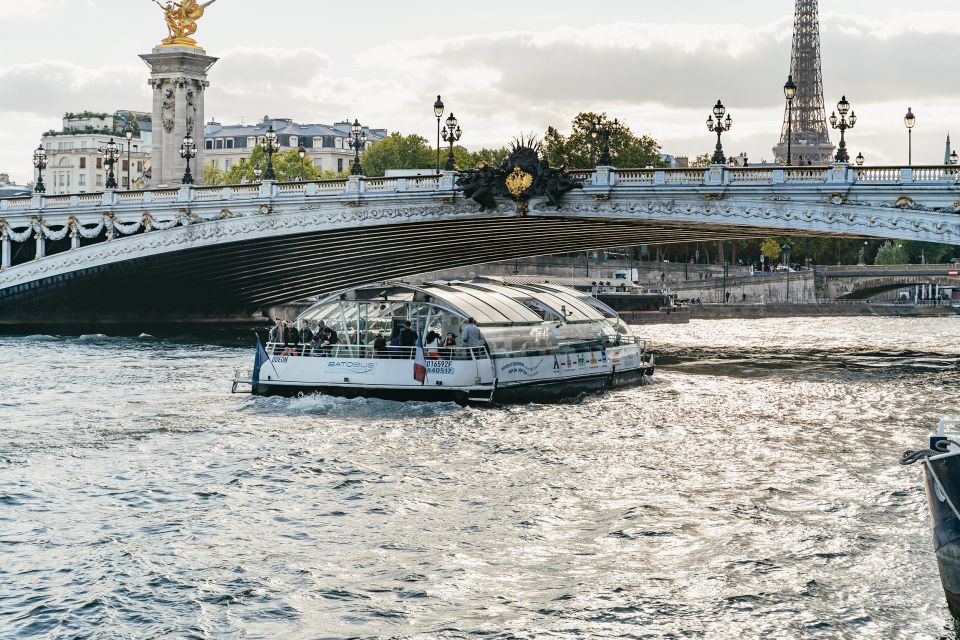
- Heated, glass-covered terrace boats make winter cruising much more comfortable than walking
- 9 strategically placed Seine stops connect major sights with minimal transfer stress
- Your pass starts when you first board, so timing your first trip matters
- Interactive webapp in 5 languages helps you understand the monuments you’re passing
- Frequent departures tend to keep wait times reasonable at the docks
- Smudged glass and sun heat can affect viewing, so choose where you sit/stand
Batobus Pass Basics: 24 vs 48 Hours on the Seine
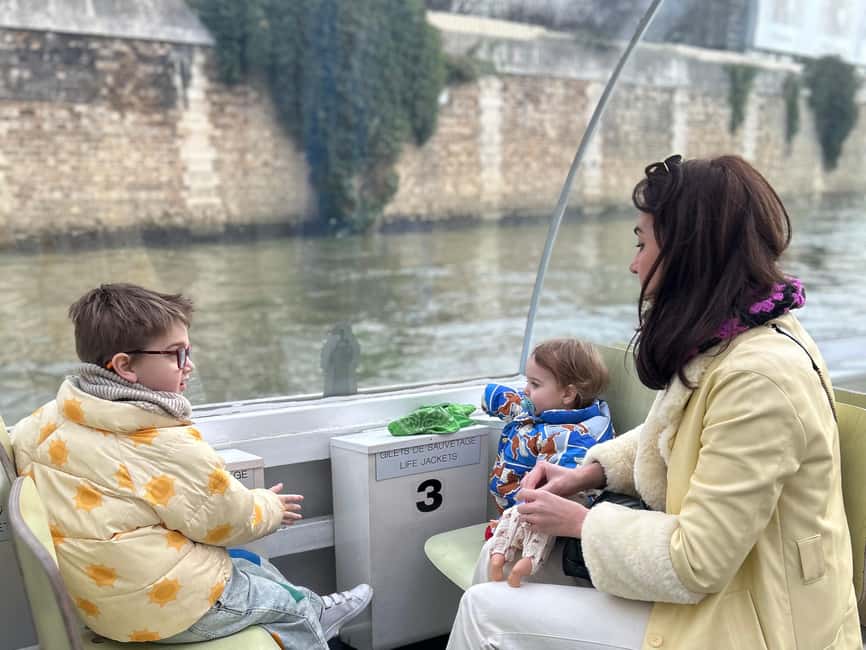
This is one of those Paris products that works best when you treat it like transportation plus sightseeing, not like a “must-do show.” You buy a consecutive 24-hour or 48-hour pass, then you hop on and off the Batobus river shuttleboat at the Seine ports.
In practical terms, the pass is designed for two different travel styles:
- If you have only a day, you can do one full circuit and get off at one or two “anchor” sights.
- If you have two days, you can spread it out—one loop for orientation, then repeat the parts you enjoyed most.
One detail that matters: validity begins the moment you first board. So if you buy a 24-hour ticket and don’t start right away, you’re effectively shortening your real time on the water. I’d rather you start earlier in your sightseeing day, even if you begin at a calmer hour.
You can also read our reviews of more boat tours in Paris


The Glass-Covered Terrace Experience (and Photo Reality Check)
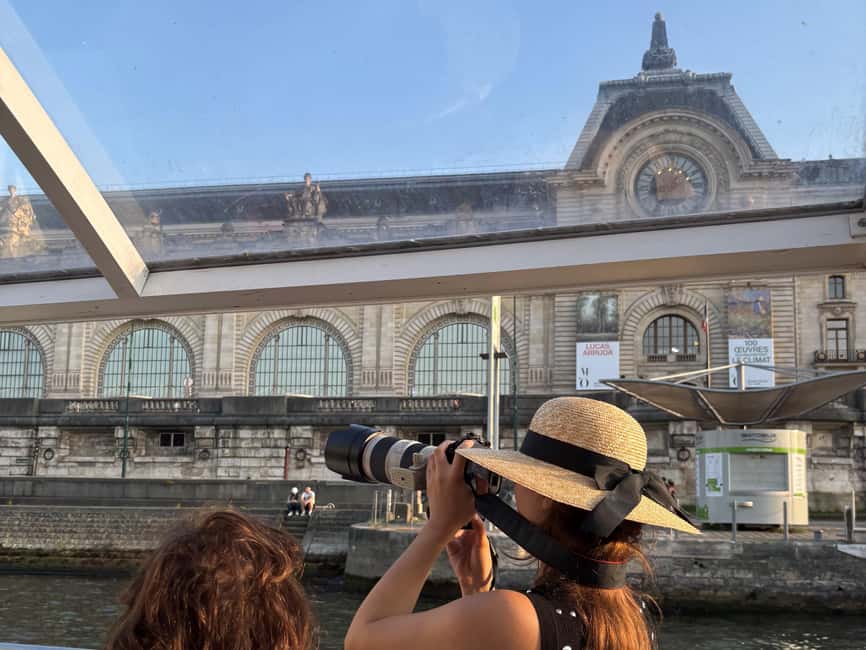
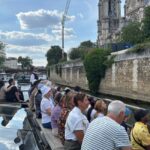
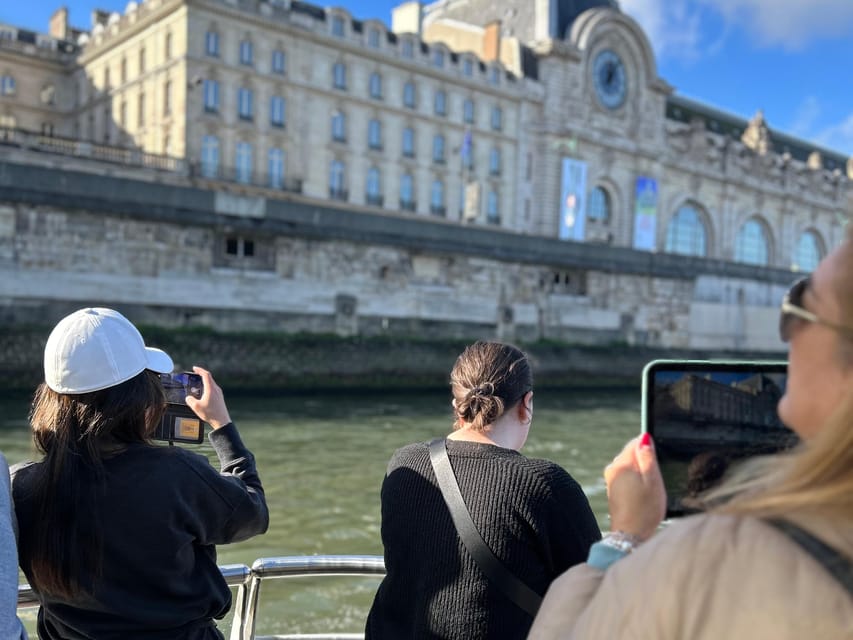
Batobus uses heated boats with a terrace and glass around parts of the ride. That’s a big deal because the Seine is both scenic and changeable—cool mornings, chilly evenings, and wind off the water. People also report the February experience feels warm aboard, which is not something you can say for an open-air sightseeing boat.
For photos, you get a better “Paris postcard” angle than you’d get from the street. The key is how the glass behaves:
- In some conditions, the view can look a bit blurry through the top glass, so it helps to shift your position to clearer panels or different sections of the boat.
- In hot weather, glass can turn into a greenhouse. Reviews mention feeling hot under the glass in summer, so plan to move toward the terrace when you can.
Also, remember there’s no audio on the boat. That means your phone becomes part of the experience: you’ll want a charged smartphone and access to the interactive webapp.
Ports Worth Getting Off At: From Eiffel Tower to Place de la Concorde
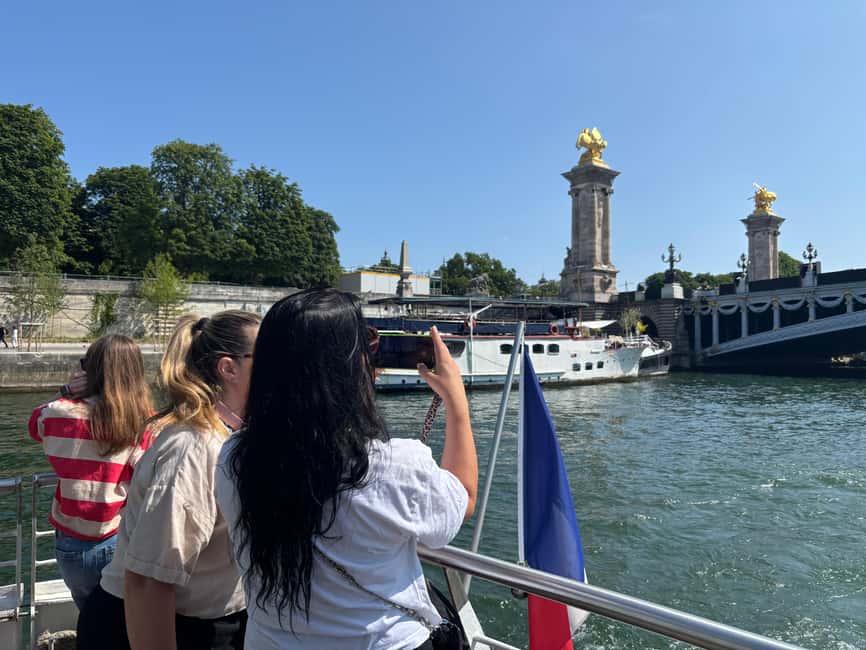
The route strings together classic Paris by water. You can use the pass like a menu: ride to reset your feet, then get off when you want museum time, church time, café time, or simply river views.
Here are the major stops, what makes each one special, and what to watch for.
Tour Eiffel Stop: Port de la Bourdonnais
This is your jump-off point for the Eiffel Tower area. It’s a smart first stop if you want Paris orientation fast, because you’ll get that landmark framed from the water, and then you can decide how ambitious you want to be on foot.
A nearby bonus is the Cité de l’Architecture. If you like architecture, it’s a good way to balance the iconic tower with a museum focused on French architectural heritage.
Consideration: Eiffel-area days can get crowded. If you’re flexible, go earlier or later in the day to keep the time on the ground more pleasant.
Musée d’Orsay Stop: Quai de Solférino
If you’re an art fan, this stop sets you up for Musée d’Orsay, home to famous works by artists including Monet, Renoir, and Van Gogh.
This is also a nice “storytelling” stop because Orsay doesn’t just look impressive from outside. It’s the kind of museum where you’ll want a real chunk of time, and a hop-off pass helps you do that without worrying about how you’ll get back.
Consideration: Museums are time magnets. If you only have a 24-hour pass, I’d keep one other must-see on a “walkable from the stop” plan so you don’t feel forced to rush.




Saint-Germain-des-Prés Stop: Quai Malaquais
This is Paris in a more intellectual, old-streets mood. The Saint-Germain-des-Prés area connects to places like Café de Flore and Les Deux Magots, plus historic institutions around the neighborhood.
From the boat, you get a different sense of the area’s scale and the flow of the river. On foot, you can slow down—coffee, bookstores, and just wandering side streets that feel very “Paris between eras.”
Tip: If you’re traveling with kids or just tired from walking, this stop is great for “do less, enjoy more.” You can hop off, stroll, and still feel like you used your day well.
Notre-Dame Stop: Quai de Montebello
The Notre-Dame stop is one of the best places to connect river views to iconic Paris on land. From here, the Latin Quarter is right in your orbit—bookshops, cafés, and the student energy vibe that makes this area feel alive.
It’s also a strong stop for photos because the river-to-cathedral perspective is exactly what you came for.
Consideration: This area can be intense in peak hours. If you’re chasing the most peaceful experience, schedule your get-off for slightly off-peak timing when you can.
Jardin des Plantes Stop: Quai Saint-Bernard
This stop shifts the tone. Jardin des Plantes is Paris’ main botanical garden, and it’s a great counterbalance to the big-ticket landmarks.
If your feet are tired, this is a smart place to take a proper break: greenery, space, and an easier pace than rushing museum to museum.
Consideration: Gardens are best when you actually have time to enjoy them. On a tight schedule, you might treat it as a short refresh rather than a full garden day.
Hôtel de Ville Stop: Quai de l’Hôtel de Ville
This stop puts you near Paris City Hall and puts the center of the city within easy reach. It’s also a convenient bridge toward the Pompidou Centre area and the Marais district, with galleries, boutiques, and cafés nearby.
If you like Paris neighborhoods more than single monuments, this is a strong “wander and snack” base.
Tip: Because this is centrally connected, it’s a good stop for resetting your plan. If you decide you want to add something spontaneous, Hôtel de Ville can work like a convenient hub.
Louvre Stop: Quai du Louvre (Pont Royal and Pont du Carrousel area)
The Louvre is the obvious draw here. But what I like about this stop is how it connects museum time to a beautiful river approach. You’re not just arriving to the Louvre—you’re building a route around it from the water.
If you’re strategic, this is where you can spend a half day or more and still keep the day flexible with a later hop back onto the boat.
Consideration: The Louvre is huge. With only 24 hours total, you’ll likely enjoy it more if you pick a shortlist rather than try to see everything.
Place de la Concorde Stop: Port des Champs-Élysées
This is your “grand Paris square” stop. Place de la Concorde is a powerful scene-maker, and the nearby Avenue Montaigne area gives you the sense of Paris’ high-fashion stretch.
It also works well as a bridge between classic monuments and more modern shopping streets—depending on what you feel like doing that day.
Consideration: If you’re only going to hop off once on a 24-hour pass, this stop is best when you’re already feeling comfortable with the general sightseeing flow.
Invalides Stop: Port des Invalides (near Pont Alexandre III)
The Hôtel des Invalides stop is a strong historical anchor, including Napoleon’s tomb. It’s also a beautiful river area because it pairs major architecture with one of the prettiest bridge views in the city.
On the route, you’ll also pass by Pont Alexandre III, which is the kind of bridge you want to see without rushing. The boat gives you a perspective that’s harder to replicate from the sidewalk.
Consideration: If you’re photographing bridges, give yourself a few minutes to reposition on the terrace so you’re not stuck with an awkward angle.
How to Use the Interactive Webapp (Without Losing Time)
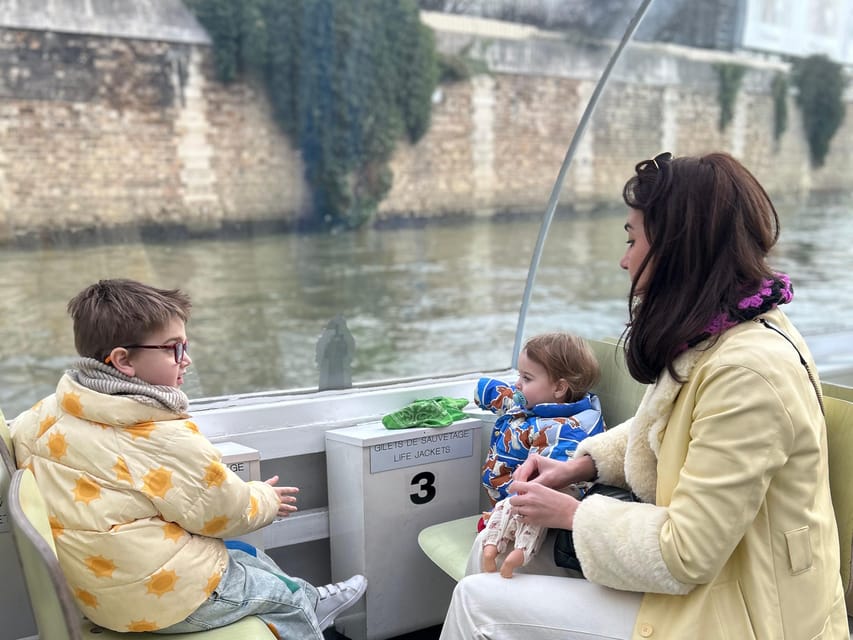
The boat experience works best when you treat the interactive webapp like your on-water guide. It offers commentaries and things to do around each stop, and it’s available in English, French, Italian, Spanish, and German.
This matters because the cruise doesn’t supply onboard narration. So instead of relying on a prerecorded voice, you’ll want:
- to read what you’re looking at while the sight is in view
- to check what each stop area offers before you hop off
My practical suggestion: open the webapp before you board, then use the phone to match the names you see (Eiffel, Orsay, Notre-Dame, and so on) to the view outside.
Also, bring a charged smartphone. You don’t want to be hunting for power outlets mid-day.
Timing, Direction, and How Often the Boat Comes
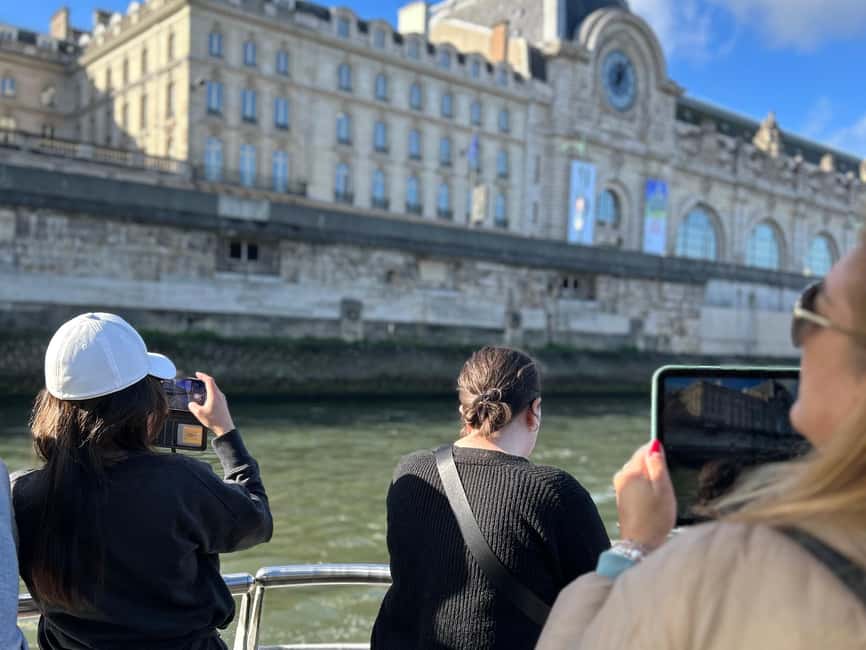
With a hop-on hop-off pass, the main question becomes: will you waste time waiting, or will it keep your day moving?
From real-world feedback, boats tend to arrive frequently—often around every 25 minutes—and a full circuit can be around two hours. That’s helpful because it means you can plan in chunks: one loop for orientation, then hop off for time on land.
One more smart habit: double-check the direction of the journey at the dock so you’re heading toward your next stop. River routes can feel simple on a map, but on the ground you want to be sure you’re on the side and direction that actually gets you where you want next.
Seasonal note: the first and last departure times vary by season. For the period from 3 November 2025 to 31 March 2026, the Eiffel Tower stop runs from 10:00 to 17:00 Monday to Thursday, and 10:00 to 19:00 Friday to Sunday. If you’re traveling in winter, build your plan around these limits.
What Makes This Better Than Walking or the Metro
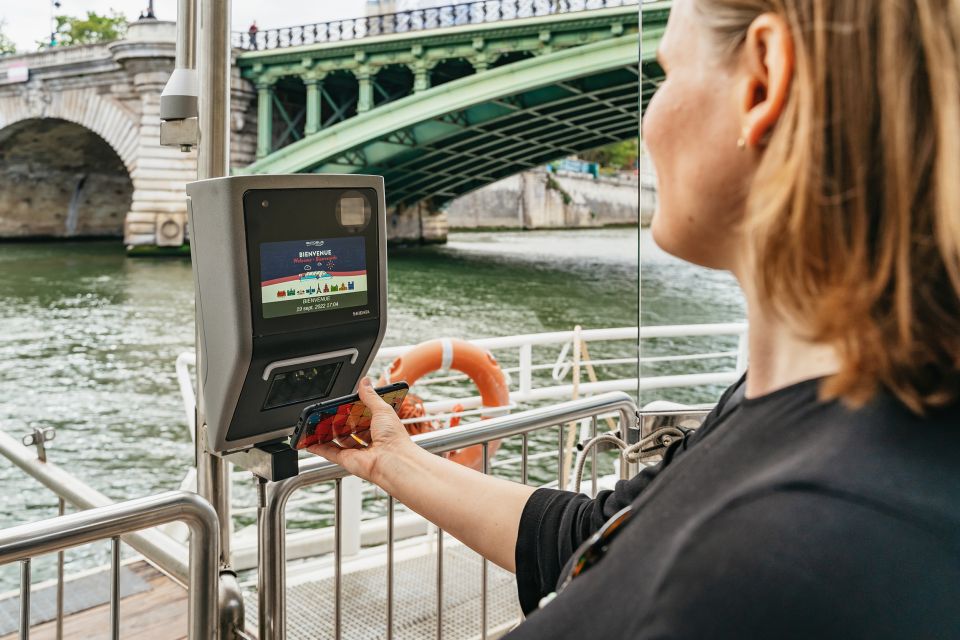
This pass isn’t just scenic; it’s a practical fatigue-management tool. Paris is gorgeous, but it’s also a lot of pavement. Riding the Seine gives you:
- a break from constant walking
- an easier route between major areas
- views that don’t require squeezing through crowds
People also like it because it helps avoid street-level friction—traffic, long detours, and having to constantly re-plan around metro connections.
And since the boat is heated with a terrace, it’s a smoother experience than guessing whether you picked the right moment to brave the weather.
Price-wise, you’re looking at about $27 per person. That’s good value if you actually use the hop-off advantage. If you hop off only once, you’re mostly paying for the cruise. If you hop off multiple times across different ports, the pass starts to feel like a budget-friendly way to cover a lot of top Paris sights without building your entire day around logistics.
Who This Fits Best (and Who Might Be Frustrated)
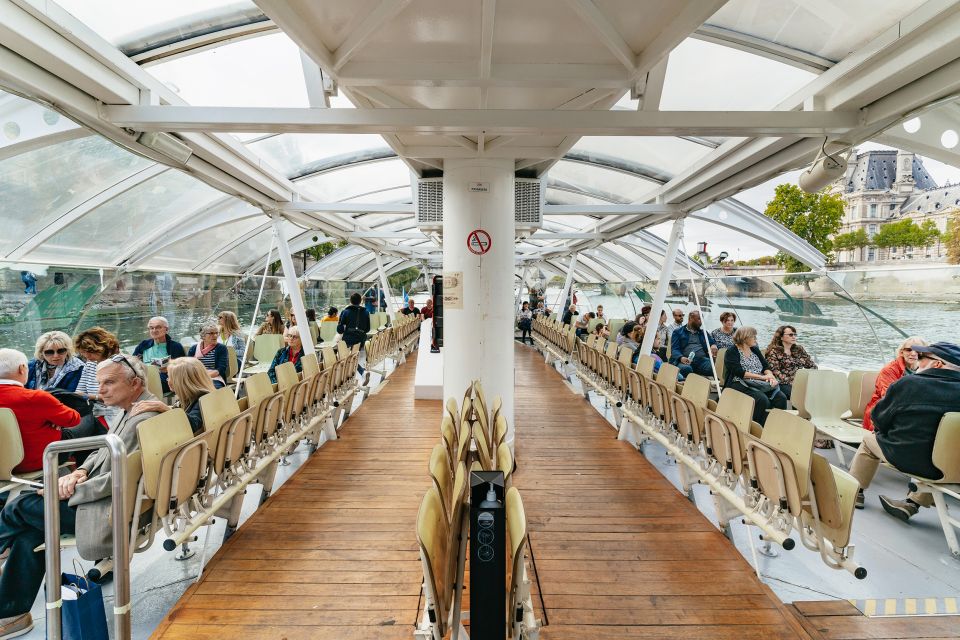
This suits a wide range of travelers because it’s flexible and easy to repeat. It’s especially good if you:
- want a relaxed sightseeing rhythm
- are visiting big landmarks and want a simple way to connect them
- prefer staying above the street traffic chaos
- have kids or a stroller and want fewer transfers
It can also be a kinder option for people who find subway stairs difficult, since the riverboat is more of a continuous ride between key spots.
Two caution points, though:
- Wheelchair users are not suitable based on the provided information.
- Luggage rules are strict: no luggage or large bags, and non-folding strollers aren’t allowed. Baby carriages are allowed if they’re fold-up.
Should You Book the Batobus Hop-On Hop-Off Seine Cruise Pass?
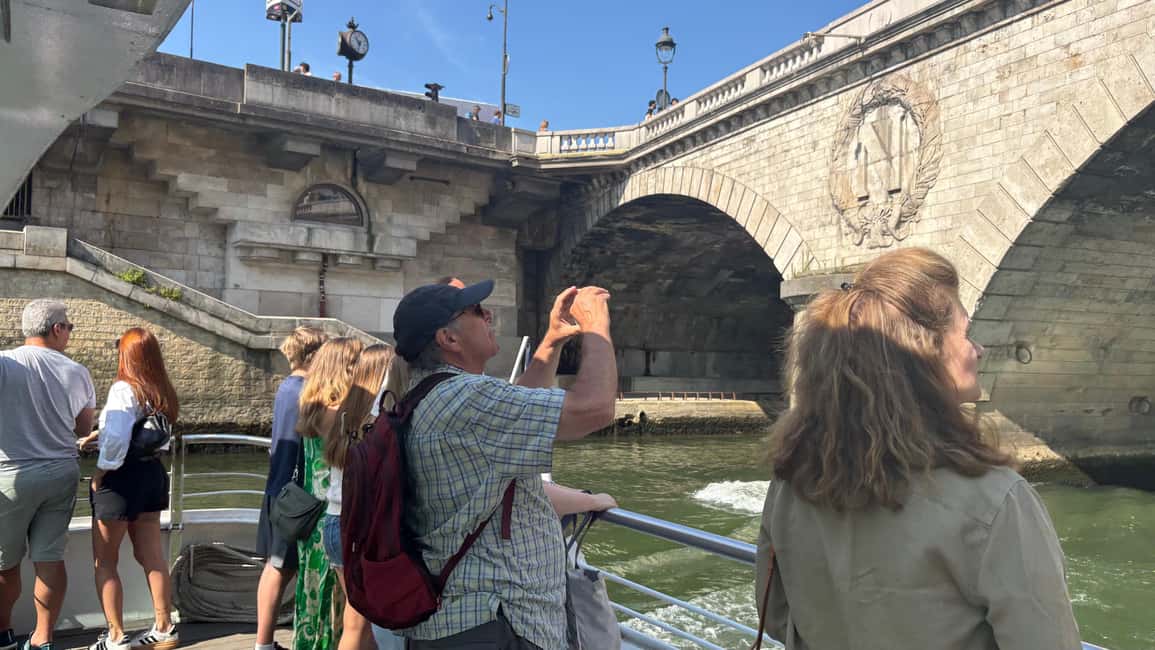
I’d book this if your Paris goal is to see the headline sights—Eiffel Tower, Orsay, Notre-Dame, Louvre, and the rest—without building a stressful transport puzzle. The combination of 9 strategic stops, heated boats, and a multilingual webapp makes it a smart way to cover ground while still keeping your day flexible.
I wouldn’t prioritize it if you’re expecting audio narration onboard or if you need wheelchair accessibility. But for most people planning a first or second visit to Paris, it’s one of the simplest ways to get a lot of the city’s best views with less strain on your schedule.
FAQ
How long is the Batobus pass valid?
The pass is valid for either 24 hours or 48 hours, and the validity starts from the moment you use it for the first time.
How many stops does the cruise include?
The service offers hop-on hop-off access at 9 stops along the Seine.
Where can I board the boat?
You can board at the listed stops, including Tour Eiffel (Port de la Bourdonnais), Musée d’Orsay (Quai de Solférino), Saint-Germain-des-Prés (Quai Malaquais), Notre-Dame (Quai de Montebello), Invalides (Port des Invalides), Jardin des Plantes (Quai Saint-Bernard), Hôtel de Ville (Quai de l’Hôtel de Ville), Louvre (Quai du Louvre), and Place de la Concorde (Port des Champs-Elysées).
Do I need a smartphone?
Yes. You should bring a charged smartphone.
Is there audio narration on the boat?
No audio narration is indicated. The experience includes an interactive webapp with commentaries, so you’ll want to use that for information.
Is skip-the-ticket-line included?
Yes, skip the ticket line is included.
Are strollers or luggage allowed?
Luggage or large bags are not allowed. Non-folding strollers aren’t allowed. Fold-up baby carriages are allowed on board.
Is the experience suitable for wheelchair users?
No. It is not suitable for wheelchair users.