REVIEW · PARIS
Paris: Louvre Museum Guided Tour with Skip-the-Ticket-Line
Book on GetYourGuide →Operated by The Tour Guy · Bookable on GetYourGuide
The Louvre can feel impossible without a plan. This skip-the-line small-group tour uses the glass pyramid entry so you start seeing the good stuff fast, with skip-the-ticket-line access and expert stories.
I like how the tour is tightly focused on must-see works like Venus de Milo and the Winged Victory of Samothrace, instead of making you wander until you’re museum-stuffed. I also like the human side: guides such as Joe and Dimitri (names people highlight) tend to give clear, story-first explanations with the right pace—so even if you’re not an art superfan, you still walk away feeling like you understood what you saw.
One drawback to plan for: the Mona Lisa area can still feel crowded, even with fast entry. Add in security checks that can take extra time in busy seasons, and you’ll want to keep your expectations realistic.
In This Review
- Key Highlights Worth Booking For
- Meeting at Louis XIV and Getting In Through the Louvre Pyramid
- The 2-Hour Louvre Highlight Route That Keeps You From Getting Lost
- Venus de Milo: More Than a Famous Sculpture Pose
- Winged Victory of Samothrace: Seeing Nike Without the Confusion
- Mona Lisa Time: The Story Behind the Face Debate
- After the Tour Ends: What You Can Do Inside (and the One Rule That Trips People)
- Price and Value: What $76 Really Buys You
- Who This Tour Fits Best (and a Key Group to Skip)
- Book It or Skip It: My Decision Guide for the Louvre
- FAQ
- Where do I meet the guide?
- How long is the Louvre tour?
- What’s included with the skip-the-ticket-line entry?
- Which major artworks are included?
- Is there still a wait at security?
- Are there bag size limits or rules about what I can bring?
- Can I stay in the museum after the tour ends?
Key Highlights Worth Booking For

- Skip-the-ticket-line through the Louvre Pyramid so your visit starts sooner
- Small-group pace that keeps you moving without feeling herded
- Venus de Milo plus Winged Victory with context about their meaning and style
- Mona Lisa storytelling including the debate around the facial expression
- Italian Renaissance stops that connect Da Vinci with Botticelli, Veronese, and Raphael
- After-tour freedom until closing time, with a key rule about where you can’t re-enter
Meeting at Louis XIV and Getting In Through the Louvre Pyramid
Meet your guide at the equestrian statue of Louis XIV in front of the Louvre Pyramid. Look for someone holding a sign with The Tour Guy on it. This matters more than you’d think. With the Louvre, a wrong turn at the start can cost you serious time once you’re trying to find the right entrance route and security line.
From there, you’ll do a quick photo stop by the Pyramid and then head inside. The Pyramid isn’t just a famous landmark—it’s also one of the fastest ways to get into the museum with guided access. You’re not spending your energy figuring out where to go while everyone else crowds the same few bottlenecks.
Before you go, pack for walking. Bring comfortable shoes and your passport or ID card. The Louvre doesn’t play around with size restrictions: if you arrive with luggage or oversized bags, you may have a rough time. Also note that baby strollers aren’t allowed, and weapons or sharp objects are not permitted.
If you’re traveling with a group, this is where small-group planning helps. In many Louvre tours, you end up with a crowd inside your crowd. Here, the small-group format is meant to keep the experience personal enough that you can ask questions—without turning your day into an audio-guided scavenger hunt.
You can also read our reviews of more tours and experiences in Paris



The 2-Hour Louvre Highlight Route That Keeps You From Getting Lost

The guided portion lasts about 2 hours (with the overall activity listed as 2 to 2.5 hours). That time window is ideal for a first visit because it protects you from the two biggest Louvre traps: seeing too little, or seeing too much with zero connections.
I like that the route is designed around the Louvre’s standout works plus a few “odd but memorable” moments along the way. That combination is what makes the museum feel like more than a checklist. Instead of treating the Louvre as a pile of masterpieces, the guide helps you read what you’re seeing—style, subject, and the stories behind the objects.
This is also where the guide quality really shows. People often mention guides who are quick, funny, and good at keeping attention without turning the tour into a lecture. You’ll hear about how the Louvre became an art museum, how certain works gained fame, and what to look for in the details (faces, gestures, materials, and symbolism).
You’ll also move through enough galleries to feel like you covered the essentials. Still, you’re not meant to “finish” the Louvre. The museum has an extensive collection of over 38,000 art works, so the point of a highlight tour is to give you a smart route, not to turn one afternoon into a lifetime achievement.
Venus de Milo: More Than a Famous Sculpture Pose

You’ll stop at Venus de Milo during the tour. This is the sculpture most people recognize immediately, even if they can’t place it by name. The guide’s job here is to make it more than a photo moment.
The big value of this stop is context. Venus de Milo is one of those works that has inspired countless artists, and your guide can explain why her form and presence created such a lasting impression. You also get a chance to look closely without the usual pressure of the crowd moving you along.
Practically, this stop also helps you pace your day. A lot of visitors sprint straight to the “big ticket” paintings and then burn out. Venus gives you a strong visual anchor in sculpture, and it breaks up the day nicely before the tour shifts into paintings and the Mona Lisa spotlight.
If you’re visiting with kids, this is one of the easiest pieces to make fun. Some guides are especially good at turning classic art into something a child can understand—through simple questions, mini challenges, or fast facts that don’t feel like school.
Winged Victory of Samothrace: Seeing Nike Without the Confusion

Next up is The Winged Victory of Samothrace. This Hellenistic statue portrays Nike, the Greek goddess of victory. If you’re wondering why this sculpture gets so much attention, the answer is physical presence: the way she’s shown, the feeling of motion, and the drama of the pose.
A good guide turns this into a clear viewing lesson: what the statue is doing, why it was made in this style, and how the “victory” idea shows up in the artwork. The tour framing is helpful because many first-time visitors don’t realize Hellenistic art often aims for emotion and impact rather than calm, textbook beauty.
One practical bonus: you’ll typically get a guided stop that helps you find the right angle and avoid getting stuck behind people trying to take the perfect shot. It’s still a popular area, but the tour format helps you see it instead of only circling it.
Mona Lisa Time: The Story Behind the Face Debate
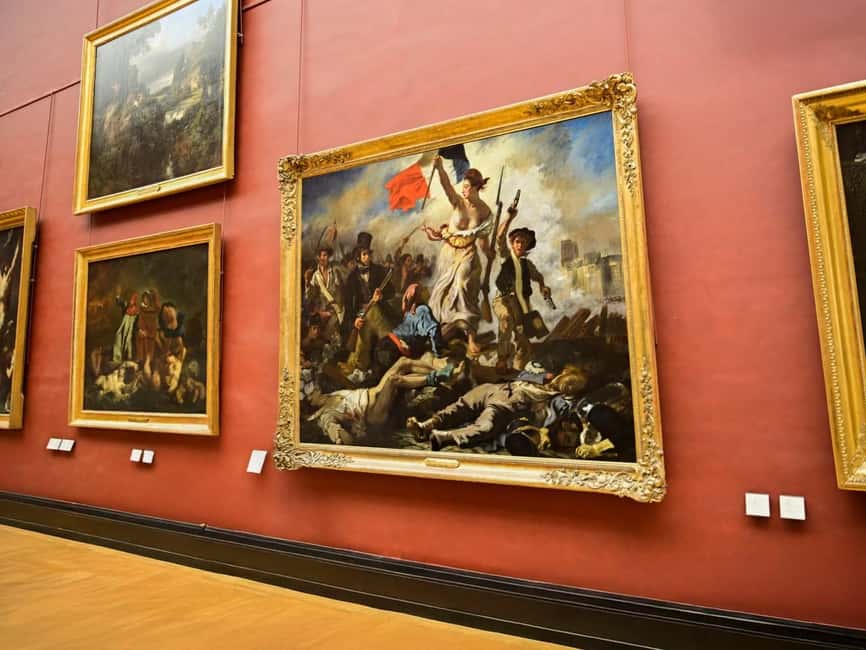
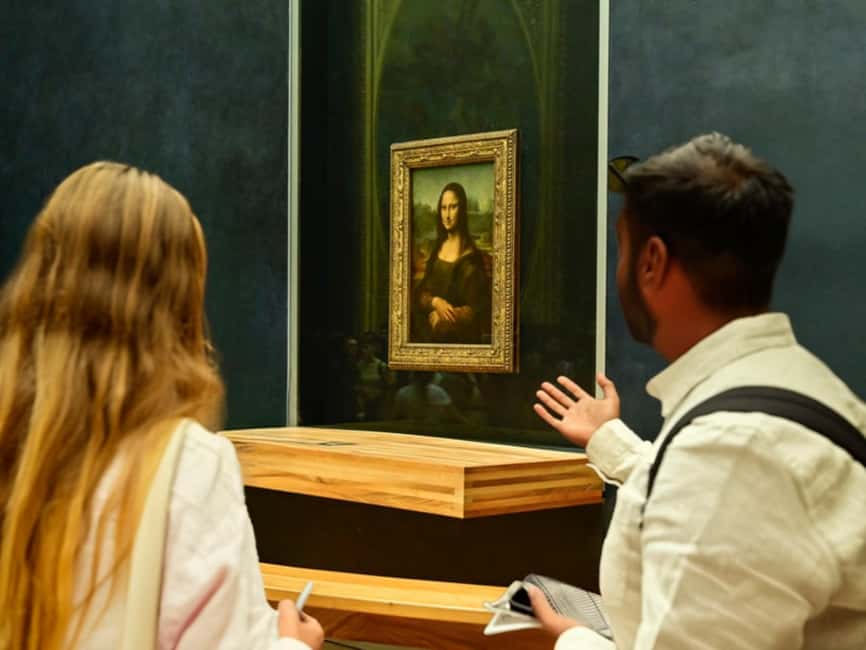
Then comes the moment most people plan around: Leonardo da Vinci’s Mona Lisa. You’ll learn the history behind the painting and why it’s famous—not just for being famous, but for what viewers keep noticing and arguing over.
One specific story angle is the facial expression debate: is the subject happy or sad? That single question is a great example of why this tour format works. Without a guide, you might stare at the painting for a few minutes and move on. With the guide, you get the background that makes your staring more meaningful.
You’ll also see more of Da Vinci’s work, plus paintings from other Italian Renaissance heavyweights such as Botticelli, Veronese, and Raphael. This is a smart move. Once you connect Da Vinci to the surrounding artistic circle, the Renaissance collection becomes a narrative instead of a series of disconnected frames.
Now, here’s the realistic part: even with fast entry, the Mona Lisa area can be packed. One reason the guide matters is that you’re less likely to waste your time in the wrong spot or miss the viewing setup because you didn’t know what to prioritize first. Plan to be patient, but don’t expect this to feel calm.
You can also read our reviews of more guided tours in Paris






After the Tour Ends: What You Can Do Inside (and the One Rule That Trips People)
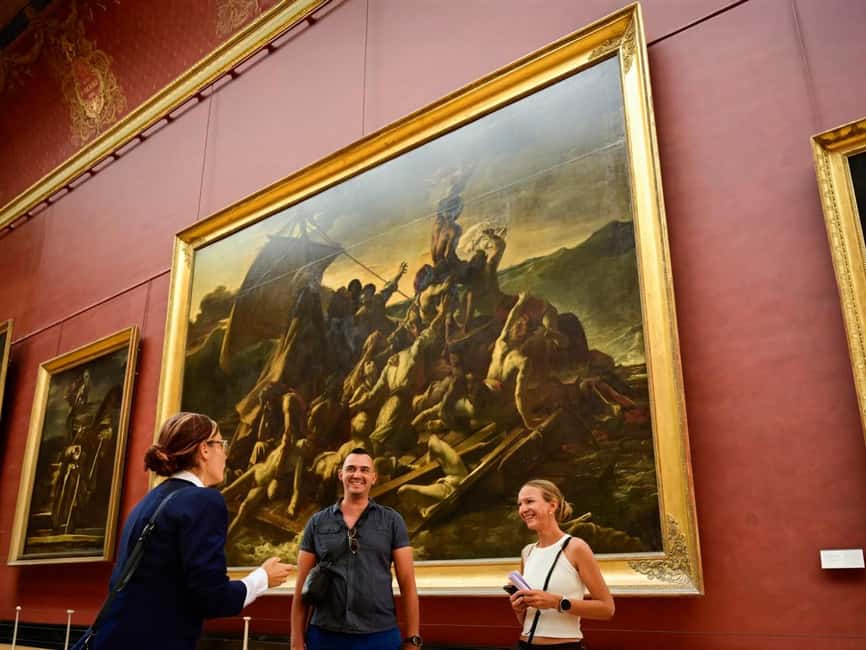
When the guided tour concludes, you’re allowed to stay inside the museum until closing time. That’s a huge advantage—because you can turn your guided experience into a personal follow-up. You’ll know where to go next instead of wandering the Louvre like a ship without a map.
But there’s one rule you should treat seriously: once you exit the area where the artwork stops were, you won’t be allowed to re-enter. So don’t drift out for a quick detour unless you’re sure you’re done for the day.
Use the guided time to set yourself up for freedom:
- If a painting or sculpture really hits you, take note of where it is and return right away while you still have the route in your mind.
- If you want a break, do it in a way that doesn’t make you exit the tour area too early.
Photography has limits too. Photography and filming are strictly prohibited in the temporary exhibition rooms. If you’re snapping pictures in those areas, you’ll want to stop immediately. For everything else, follow posted rules.
Finally, security can still slow you down. Even with skip-the-ticket-line access, there may be a wait at security. In high season, that can be up to 20 minutes. So arrive ready to wait a little if you’re traveling during peak dates.
Price and Value: What $76 Really Buys You
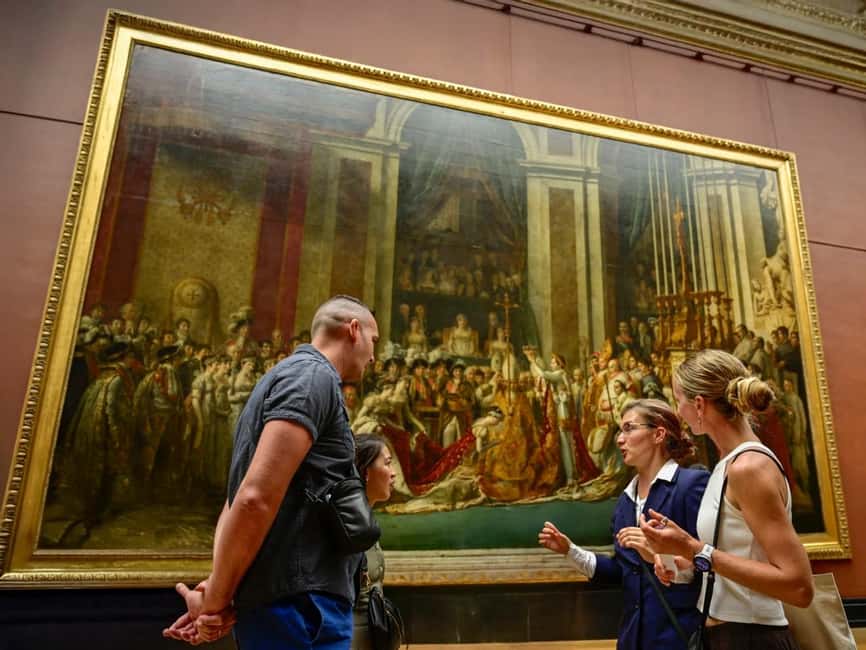
At $76 per person for 2 to 2.5 hours, the price isn’t just about getting inside faster. It’s about buying structure.
The Louvre is huge, and that size is the hidden cost of doing it alone: you lose time guessing, you miss connections between works, and you end up with a shaky “I saw stuff” memory instead of an “I understood what I saw” feeling. This tour pays for:
- Priority entry via the Pyramid (time saved at the start)
- A guided route that targets the highlights you actually want
- Context for the works people come for—especially Mona Lisa, Venus de Milo, and Winged Victory
- Small-group flow, which usually means less crowd stress than big group tours
So yes, $76 can feel like a splurge compared to museum tickets. But the value is strongest if it’s your first Louvre visit, or if you’re only in Paris for a short window and want maximum payoff without spending the whole day trying to orient yourself.
Who This Tour Fits Best (and a Key Group to Skip)
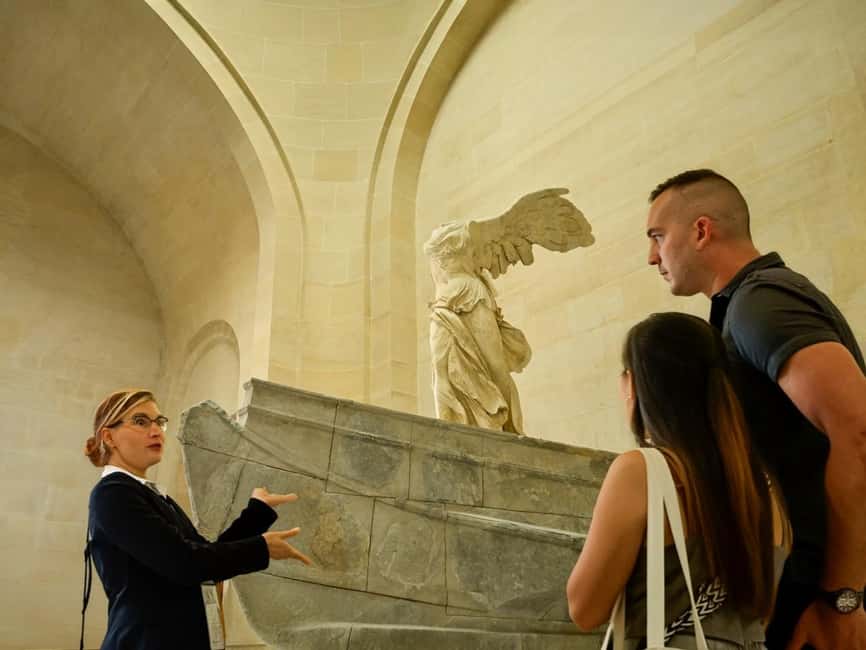
This is a great fit if you want a first-pass Louvre experience that doesn’t turn into chaos. I’d particularly recommend it if:
- It’s your first time at the Louvre and you feel overwhelmed by how big it is
- You want to see the big sculptures and the Mona Lisa with real context
- You’d like a small-group format where you can ask questions instead of being stuck in a passive crowd
- You’re okay doing a fair amount of walking on museum floors
It’s not suitable for people with mobility impairments. Also, if you’re traveling with lots of gear, plan to travel light. There’s no coat check on site, and lockers aren’t accessible to the tour on the small-group format. The Louvre size limit for items brought in is listed as anything exceeding 55 cm x 35 cm x 20 cm. Big bags, backpacks, luggage, umbrellas, and tripods aren’t for this tour day—leave those at your accommodation.
If you’re bringing kids, this tour can work well with the right guide. Some guides are noted for engaging children with fun facts and interactive mini tasks. If your goal is a museum visit that doesn’t feel like dragging, this is one of the more promising Louvre formats.
Book It or Skip It: My Decision Guide for the Louvre
If you’re the kind of person who wants the Louvre to feel organized and meaningful, I’d book this. The skip-the-line access matters, but the bigger win is that you get a route that makes the Mona Lisa and the sculpture highlights feel connected to the larger story of art.
Skip it if you’re planning to spend most of the day drifting without any structure, or if you strongly prefer a fully self-directed museum day where you choose every turn and linger as long as you want. Also skip if mobility is an issue, since this tour isn’t set up for it.
If you’re unsure, here’s the simple way I’d decide: if you want the Louvre “greatest hits” with explanations in a short visit, this tour is a smart purchase. If you want to treat the Louvre like a slow wandering project, consider going on your own later with more time.
FAQ
Where do I meet the guide?
Meet at the equestrian statue of Louis XIV in front of the Louvre Pyramid. Look for a person holding a sign that says The Tour Guy.
How long is the Louvre tour?
The guided experience runs about 2 hours, with the full activity listed at 2 to 2.5 hours.
What’s included with the skip-the-ticket-line entry?
You get admission to the Louvre, skip-the-ticket-line access, and an English-speaking professional guide (Spanish is also available).
Which major artworks are included?
You’ll see Venus de Milo, The Winged Victory of Samothrace, Leonardo da Vinci’s Mona Lisa, and you’ll also visit the Italian Renaissance collections featuring works by artists including Botticelli, Veronese, and Raphael.
Is there still a wait at security?
Yes. Even with skip-the-ticket-line access, you may still wait at security. In high season, the wait can be up to 20 minutes.
Are there bag size limits or rules about what I can bring?
Yes. Large bags, backpacks, luggage, and umbrellas can’t be brought in. Items exceeding 55 cm x 35 cm x 20 cm aren’t allowed. There’s no coat check on site, and lockers aren’t accessible to the tour on the small-group format.
Can I stay in the museum after the tour ends?
Yes, you can stay inside until closing time. One key rule: once you exit the area where the artwork stops are, you won’t be able to re-enter.