REVIEW · PARIS
Louvre Guided Tour with Mona Lisa & Masterpieces
Book on GetYourGuide →Operated by City Wonders Ltd. · Bookable on GetYourGuide
The Louvre is huge, but this tour gives you a smarter path. I like the reserved afternoon access (it helps you avoid some of the worst crowding) and I love having an expert guide pointing out what to actually look for in the Mona Lisa and other masterpieces. One thing to consider: you’ll walk a fair amount in a museum that has security lines, and the tour isn’t wheelchair-friendly.
You’ll meet your team near the Arc de Triomphe du Carrousel, not at the Louvre doors, then head inside with skip-the-line benefits. You get an English-speaking guide plus headsets so you can keep up without leaning over or constantly guessing what comes next. If you’re hoping for a super slow, sit-down pace, this 3-hour format may feel brisk.
In This Review
- Key highlights you’ll feel on the ground
- Why this 3-hour Louvre tour is a smart afternoon plan
- Finding the meeting point by Arc de Triomphe du Carrousel
- Reserved access and skipping the ticket line (what it really buys you)
- Mona Lisa and the Renaissance focus: how the guide keeps it from feeling repetitive
- Classical must-sees: Venus de Milo and Winged Victory
- From Apollo Gallery to Napoleon Apartments: the palace layer of the museum
- Caravaggio, Michelangelo, and the “why” behind the masterpieces
- Walking pace, group size, and keeping your energy up
- Price and value: what $80 covers and when it’s worth it
- Who this tour fits best (and who should look elsewhere)
- Should you book this Louvre guided tour?
- FAQ
- What’s the duration of the Louvre guided tour with Mona Lisa and masterpieces?
- Where is the meeting point?
- What does the tour include?
- Does it skip the ticket line?
- Is hotel pickup or drop-off included?
- Is the tour suitable for wheelchair users?
- What items are not allowed in the museum?
- Is there free cancellation?
- Can I reserve and pay later?
Key highlights you’ll feel on the ground
- Reserved afternoon entry that aims for a calmer Louvre experience
- Skip the ticket line plus a headset so you always hear your guide
- Iconic stops like Mona Lisa, plus Renaissance painting and sculpture
- Greek and Roman must-sees including Venus de Milo and Winged Victory of Samothrace
- Major highlights in the classics and sculpture zones such as Apollo Gallery and Napoleon Apartments
- A tight 3-hour tour that’s built for focus, not wandering
Why this 3-hour Louvre tour is a smart afternoon plan
The Louvre can feel like a living map with no legend. This tour is built to solve that problem with timing and guidance. By targeting an afternoon slot with reserved access, you’re more likely to spend your attention on art instead of inching through crowds.
I also like that the tour is designed around the museum’s “greatest hits,” but with context that makes those hits more meaningful. When you’re standing in front of something famous like the Mona Lisa, it’s easy to stare and move on. With an expert guide, you get help noticing the details and the stories that explain why these works became legends.
The biggest trade-off is simple: it’s still the Louvre. Even with a guide, you’re doing museum walking, and there’s security at the entrance. Plan comfortable shoes, expect a busy environment, and don’t schedule a long nap right before.
You can also read our reviews of more guided tours in Paris



Finding the meeting point by Arc de Triomphe du Carrousel
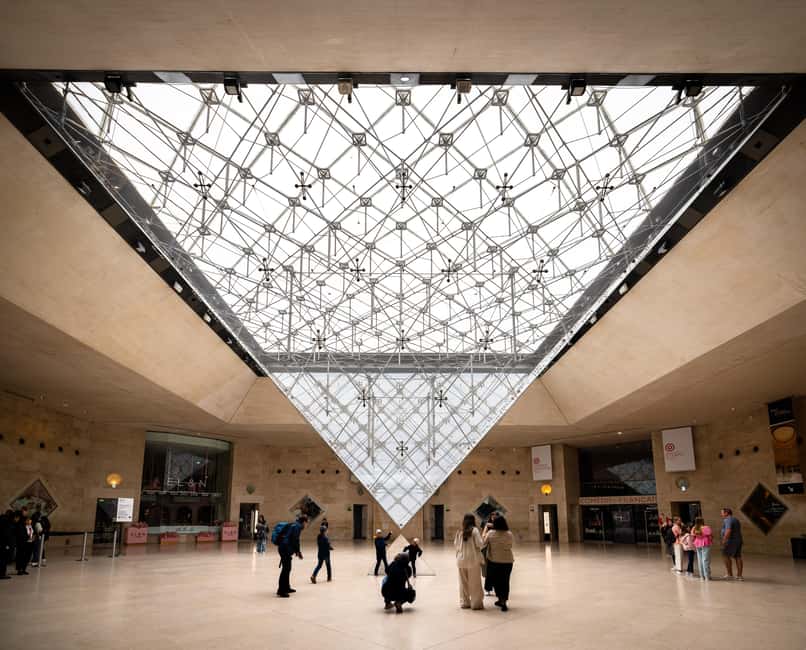
This is one of those tours where the meeting spot matters. You start at Arc de Triomphe du Carrousel, which is not located at the Louvre entrance. That sounds minor until you’re standing on the wrong side of the pyramid with everyone else already moving.
Here’s the practical way to find it: stand with your back to the Louvre Pyramid entrance. Look across the road toward the Tuileries Garden side, and you should spot the arch. Your coordinators are in blue attire, standing to the left of the Arc along the wall railing.
If you hate last-minute stress, arrive a bit early. Small delays at this location can turn into a long scramble through the area, just because the Louvre is surrounded by traffic flow and pedestrian lanes.
Reserved access and skipping the ticket line (what it really buys you)
The tour includes a reserved entry to the museum plus the reservation fee and an entrance ticket. That matters because the Louvre is one of those places where waiting can eat your best hours. With this option, you get the benefit of skip-the-ticket-line access tied to your reservation.
You still need to pass museum security before entering. That’s normal for the Louvre, and it’s the one part you can’t totally “shortcut.” What the reservation does help with is reducing chaos around entry timing.
One other practical note: this tour doesn’t allow baby strollers, and you can’t bring luggage or large bags. There’s also a size limit for items over 55 x 35 x 20 cm. If you’re traveling light, great. If you’re traveling with a bigger bag, you’ll want a plan for what to leave behind before you show up.
Mona Lisa and the Renaissance focus: how the guide keeps it from feeling repetitive
Yes, you’ll see Da Vinci’s Mona Lisa. But the bigger value is how the tour steers you to look with purpose. Without guidance, the Mona Lisa experience can turn into a quick photo moment followed by a push to the next room. With a guide, you’re more likely to notice the painting’s character, what makes it stand apart, and how it fits into the Renaissance world.
You’ll also get Renaissance works referenced through major artists such as Caravaggio and Michelangelo, plus other highlight pieces. This is where the headset is a quiet lifesaver. You won’t need to keep turning around to hear the explanation, and you can stay oriented while you move room to room.
I especially appreciate that this isn’t only “famous for fame’s sake.” The tour is aimed at giving you enough framing so the masterpieces don’t feel like random stops. Instead, they feel like a guided storyline of ideas, styles, and artistic ambition that the Louvre holds in one place.
One practical consideration: the Mona Lisa area is still a magnet. Even with reserved entry, there will be people. The guide’s job is to help you make the most of the time you have there.
Classical must-sees: Venus de Milo and Winged Victory
If you love ancient art, this is one of the strongest parts of the Louvre. You’ll see Venus de Milo and the Winged Victory of Samothrace, two works that almost always stop people in their tracks.
Here’s why that matters for your experience: these sculptures aren’t just “old.” They’re teaching tools. With the right explanation, you can understand how form, pose, and presentation communicate movement and power. The guide helps you read the work instead of just admiring it from a distance.
The tour also includes Greek and Roman antiquities, with attention to details and lesser-known stories. That’s a big deal because the Louvre can be overwhelming when you’re stuck in a checklist mode. When you’re told what to watch for, you slow down in the best way.
If you’re the kind of person who likes to compare styles—stone, proportions, how the body is shaped for emotion—this classic section is where your time starts to feel focused rather than scattered.





From Apollo Gallery to Napoleon Apartments: the palace layer of the museum
The Louvre isn’t only an art museum. It used to function like a royal palace, and this tour takes you through spaces where that reality shows. You’ll spend time in areas like the Apollo Gallery and the Napoleon Apartments, where the setting makes the art feel different.
This is a sneaky value-add. When you’re surrounded by the grandeur of the palace rooms, you understand why the collection was curated for power and prestige as much as for taste. Even if you’re not a history person, the physical space helps you connect the dots.
During these stops, I like that the tour keeps you moving with context rather than turning it into slow sightseeing. You’re not just looking at walls and ceilings; you’re learning why the museum layout matters and how the building itself became part of the experience.
Expect a shift from the drama of sculptures to the feel of formal rooms. If you’ve been to other museums in Europe, you’ll recognize how rare this combination is: top-tier art plus palace architecture in the same guided route.
Caravaggio, Michelangelo, and the “why” behind the masterpieces
Seeing famous artists is only half the story. The other half is understanding how their works fit into their time and what makes them still hit today.
This tour references major names like Caravaggio and Michelangelo, and it also includes standout sculpture moments. You may also get time with works including Michelangelo pieces such as the Dying Slave, plus other sculpture highlights like Canova’s Psyche Revived.
What I find useful about this style of tour is that it helps you connect paintings and sculptures across eras. For example, when you move from Renaissance painting into sculpture, you start noticing recurring concerns: expression, drama, and how the artist stages the viewer’s attention.
The pace stays tight, so you won’t spend 45 minutes in one room. But because the guide is selecting key works, you end up with a coherent set of impressions rather than random highlights.
Walking pace, group size, and keeping your energy up
This is a 3-hour tour, and you should treat it like active sightseeing. The museum is spread out, and your feet will do most of the work. Comfortable shoes aren’t optional here.
Group size can affect the “feel” of your experience. If your group is 7 or more people, you may be split into different groups at the meeting point. That doesn’t mean the tour quality drops, but it can change who you walk with and how quickly you move as a single unit.
Also, the tour ends at the Louvre Pyramid. That’s convenient if you want an easy way to continue your day in the area, but it also means you should keep your next plans flexible. If you’re trying to catch a tight connection immediately after, you’ll want buffer time.
Price and value: what $80 covers and when it’s worth it
The price is listed at $80 per person for a 3-hour guided experience. That can sound like a lot until you compare it to what you’re actually buying.
You’re getting:
- a reserved entry to the Louvre
- an English-speaking expert guide
- headsets so you can hear clearly
- an entrance ticket plus a reservation fee
Separately, you might see the entrance ticket cost listed as 22€, and the reservation fee listed as 70€ per group. The key value question is whether you’ll benefit from skipping the most painful waiting and following a guide through the most important rooms in a limited timeframe. For many people, the answer is yes, because it turns your Louvre visit from overwhelming to manageable.
One exception: if you’re eligible for free entry at the Louvre (EU citizens ages 18 to 26 can enter free), you’d save on the museum ticket portion. But you’re still paying for the guide and reservation access. So even then, the value depends on whether you want expert navigation and a focused route.
In general, I think this is strong value if you:
- have limited time in Paris
- want the Mona Lisa and other classics without spending your day lost
- prefer guidance over guesswork
- want to learn what you’re looking at, not just where the big names are
Who this tour fits best (and who should look elsewhere)
This tour is ideal for first-timers who want a structured path through the Louvre’s biggest art names and key collections. It’s also a good fit if you’re curious about the overlap between Renaissance art, ancient sculpture, and the palace setting of the museum.
It may not suit you if you:
- need a fully wheelchair-accessible option (it’s not suitable for wheelchair users)
- want an extremely slow pace
- plan to bring large luggage or items that may exceed the allowed size
Should you book this Louvre guided tour?
I’d book it if your goal is a high-impact Louvre experience in 3 hours with reserved afternoon access, an English guide, and the right “what to look for” context. The combination of Mona Lisa, major Renaissance references, key classical sculptures like Venus de Milo and Winged Victory, plus time in spaces like the Apollo Gallery and Napoleon Apartments makes it a focused way to see a lot without feeling like you’re sprinting on your own.
Skip it if you want total freedom to roam at your own pace, or if mobility limits or large-bag needs will derail your visit. And if you’re someone who enjoys the Louvre by studying quietly and longer in fewer rooms, you might prefer a longer independent plan.
If your schedule is tight and you want the museum to make sense quickly, this tour is a strong match.
FAQ
What’s the duration of the Louvre guided tour with Mona Lisa and masterpieces?
The tour lasts 3 hours.
Where is the meeting point?
You meet beside the Arc de Triomphe du Carrousel, and it is not located at the entrance to the Louvre Pyramid. Coordinators in blue attire stand to the left of the Arc along the wall railing.
What does the tour include?
It includes reserved access to the Louvre, an English-speaking live guide, headset so you can hear clearly, and the entrance ticket plus reservation fee.
Does it skip the ticket line?
Yes, it’s listed as skipping the ticket line.
Is hotel pickup or drop-off included?
No, hotel pickup and drop-off are not included.
Is the tour suitable for wheelchair users?
No, it is not suitable for wheelchair users.
What items are not allowed in the museum?
Baby strollers aren’t allowed. Luggage or large bags aren’t allowed, and items exceeding 55 x 35 x 20 cm are not permitted.
Is there free cancellation?
Yes. You can cancel up to 24 hours in advance for a full refund.
Can I reserve and pay later?
Yes. The option is reserve now & pay later, with you paying nothing today.