
REVIEW · PARIS
Montmartre en chansons: tour with a professional singer
Book on GetYourGuide →Operated by Montmartre en chansons · Bookable on GetYourGuide
A voice can change the whole street. This tour pairs a professional, a capella performance with Montmartre anecdotes that connect famous singers to real corners you’ll walk past. I especially love the way Anne-Sophie’s singing turns ordinary viewpoints into story moments, and how you’re guided like you’re touring with someone who actually knows the neighborhood. One thing to consider: it’s a walking experience and not suitable for people with mobility impairments.
Over two hours, you’ll cover a compact route on foot, with short stops for singing and photos. If you’re not comfortable with uphill streets and standing for a bit, you may find the pace tough.
Key highlights you’ll feel fast
- A capella street singing that actually makes passers-by pause and listen
- Anne-Sophie’s Montmartre voice: dense, powerful, moving, and very present
- Landmarks tied to singers like Dalida, Piaf, Brel, Aznavour, and more
- Real Montmartre stops: Wall of Love, Le Moulin de la Galette, Au Lapin Agile, Place du Tertre
- A 2-hour route that mixes viewpoints with short story-and-song moments
In This Review
- Starting at Place des Abbesses, then walking straight into the song
- The Wall of Love stops everyone for a reason
- Rue Lepic: the street where the mood stays with you
- Le Moulin de la Galette: the viewpoint with singer energy
- Maison de Dalida and the Dalida statue: one story, one stop at a time
- Théâtre Lepic and La Maison Rose: cabaret atmosphere in plain sight
- Vigne du Clos Montmartre: a calmer, surprising break
- Au Lapin Agile and La Bonne Franquette: the neighborhood’s “hangout” side
- Place du Tertre: artists, energy, and a fitting finale before Sacré-Cœur
- Why this tour feels different: music plus local storytelling
- Who should book Montmartre en chansons (and who should skip it)
- Price and value: $34 for singing you can’t DIY
- What to bring so the walking part stays pleasant
- Should you book this Montmartre en chansons tour?
- FAQ
- Where does the tour start?
- How long is the tour?
- What languages are offered?
- Is food or drinks included?
- What should I bring?
- Is the tour suitable for mobility impairments?
- Can I book a private tour?
- What can’t I bring?
Starting at Place des Abbesses, then walking straight into the song
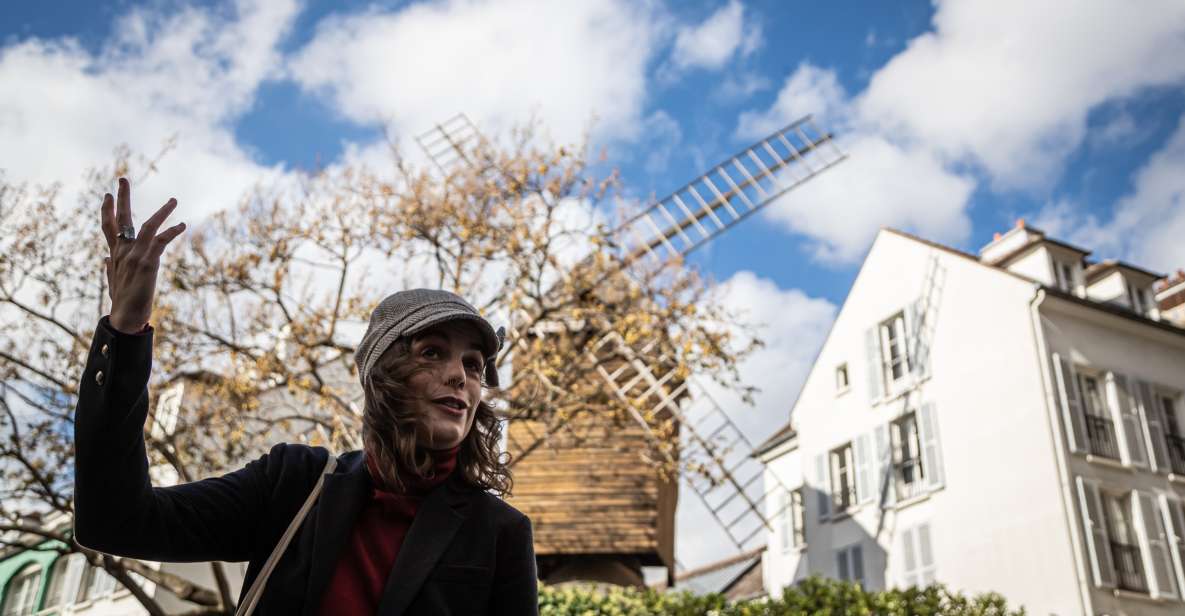
I like tours that make you slow down, even when you’re moving. This one starts at Place des Abbesses, a smart choice because it immediately places you in Montmartre’s actor-and-artist world. You’re not meeting a history lecture; you’re meeting a performance that happens in the open, among real streets and real pedestrians.
From the start, you’ll understand the core idea: the singer isn’t just singing at you from a distance. She’s performing like a traditional street singer in modern-day Montmartre, and the neighborhood responds. One review summed up the feeling well: Anne-Sophie is upbeat, charming, and energetic, and you can genuinely feel her love for the area.
The tour also runs in English or French, so you can pick a language that makes the stories land. If your French is rusty, the singing still carries a lot on its own—classic songs like La Vie en Rose, L’hymne à l’amour, and La Bohème connect fast even when you’re not catching every detail.
The Wall of Love stops everyone for a reason
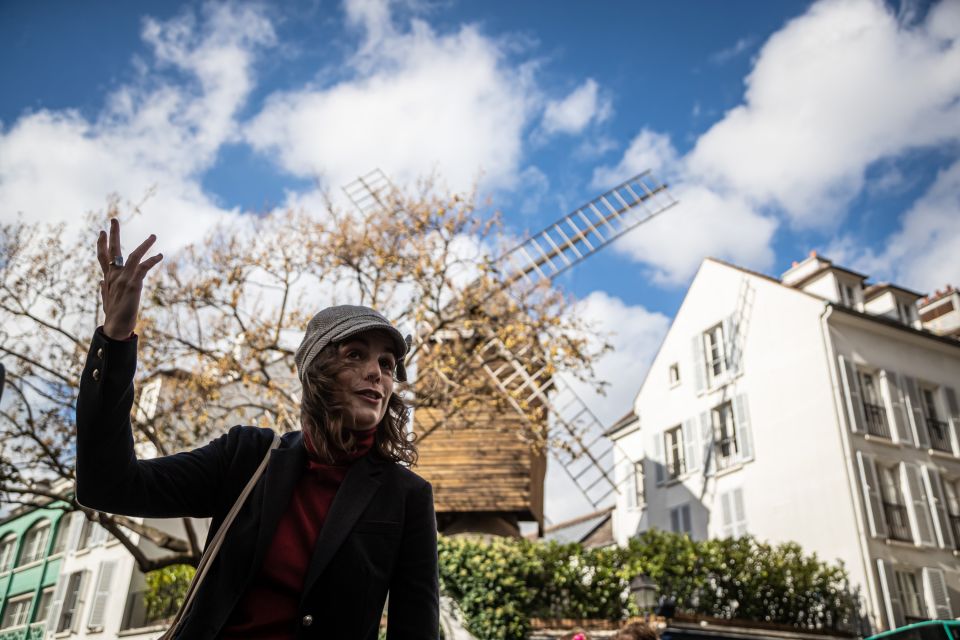
The first major stop is the Wall of Love (the famous “je t’aime” wall). It’s only a short stop, but it’s a good early moment. You get that iconic photo area out of the way, and you’re already warmed up for the emotional tone of French music.
This kind of landmark works well early in the tour because it gives you a visual anchor. After this, the stories and songs can move fluidly from the wall to the streets without you feeling like you’ve already “done the big thing.” You’re building a Montmartre map in your head.
Practical tip: go easy on the time you spend posing. The best part of the tour is what happens in between landmarks—where the singer ties the neighborhood to the songs.
You can also read our reviews of more tours and experiences in Paris.



Rue Lepic: the street where the mood stays with you
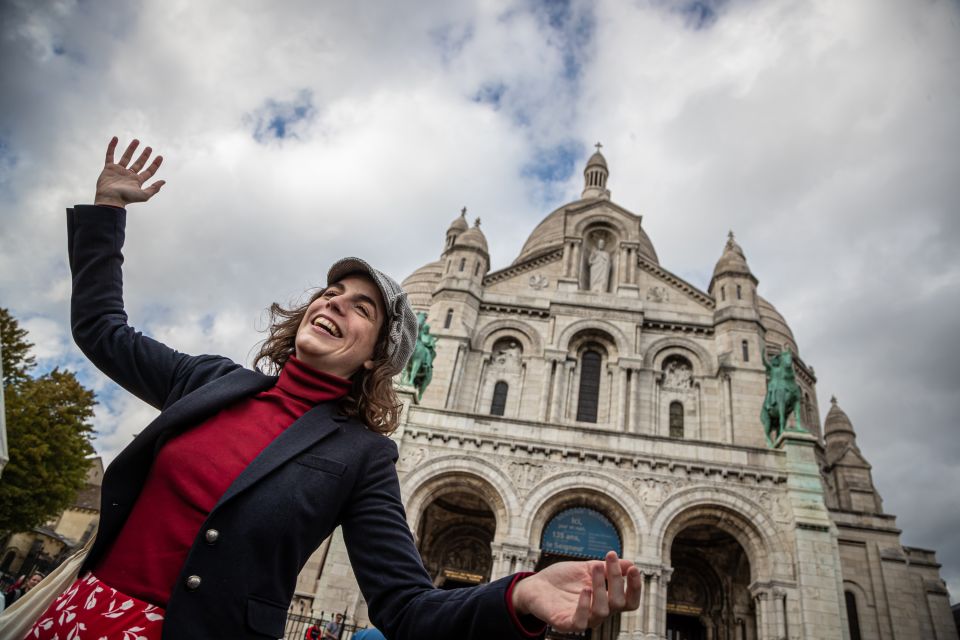
Next comes Rue Lepic, one of those Montmartre streets that feels like it’s waiting for an old film scene. This stop is brief, but that’s the point. You’re not there to linger; you’re there to keep moving and keep listening.
Rue Lepic matters because it supports the tour’s rhythm. Montmartre is steep, and the walking adds up. Short stops keep the tour comfortable without turning it into nonstop pressure. You’ll feel the route “click” as you move from one themed spot to the next.
If you’re taking photos, focus on what the street gives you: angles, stairs, and the quick reveal of Montmartre’s layers as you look up and down.
Le Moulin de la Galette: the viewpoint with singer energy
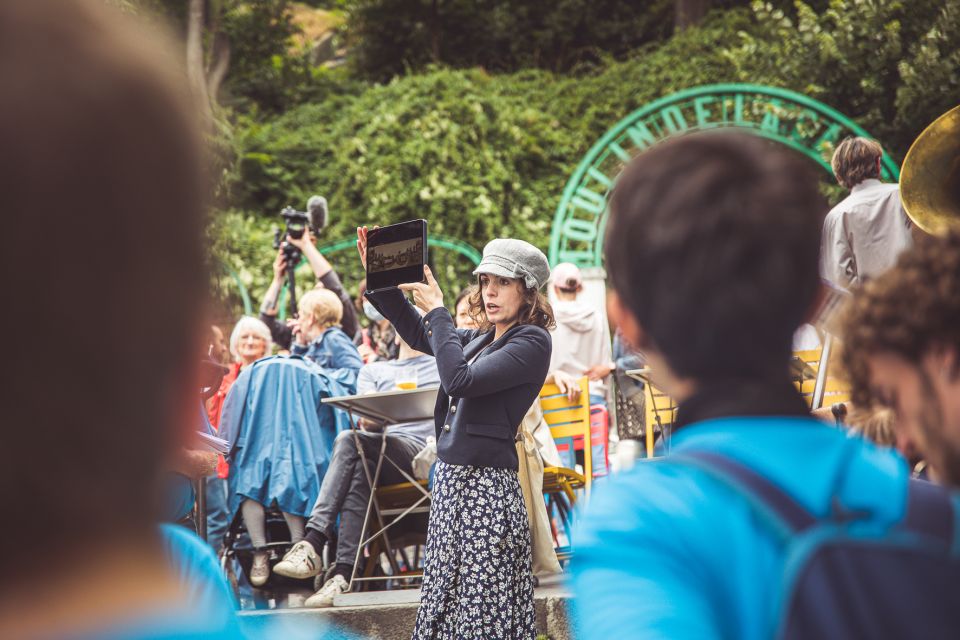
Then you reach Le Moulin de la Galette. Even if you’ve seen it in pictures before, being near it in person helps. This is one of those Montmartre landmarks that feels tied to art, performance, and the idea of life outside the formal city center.
In this tour, it’s not just a “look at the windmill” moment. It’s a singing-and-anecdotes stop: you connect the landmark to the people and cabarets Montmartre has been famous for. That’s what makes it more than a standard photo break.
Drawback to keep in mind: because you’re outdoors and the route includes multiple concert-style moments, you’ll likely be standing for short stretches. Wear shoes that don’t punish you after 90 minutes.
Maison de Dalida and the Dalida statue: one story, one stop at a time
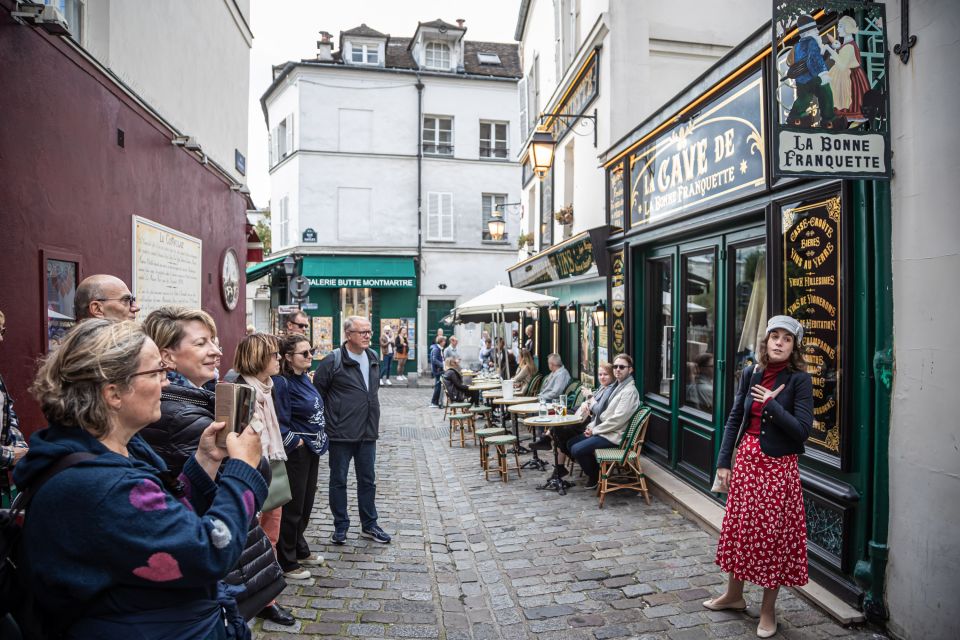
The next series focuses on Dalida, including Maison de Dalida and the Dalida statue. If you know her music, these moments land fast, because you’re hearing classic references while you stand near places connected to her Montmartre presence.
This tour uses “pause points” cleverly. You’re given a short story, then the singer gives you the emotional connection through song. That’s why it feels different from tours that only explain. Here, you get the explanation plus the soundtrack.
If you’re a music fan, you’ll probably start to notice patterns: singers aren’t treated like museum objects. You’re seeing how their careers and personalities connect to real streets, venues, and everyday Montmartre life.
Théâtre Lepic and La Maison Rose: cabaret atmosphere in plain sight
You then move to Théâtre Lepic—another stop that fits the tour’s cabaret theme. Even if you only catch part of the story, the idea is clear: Montmartre’s identity isn’t just views and postcards. It’s performance spaces, stages, and the constant flow of artists.
After that, you arrive at La Maison Rose. This one is especially fun because it’s a recognizable Montmartre icon, and the tour frames it as part of the neighborhood’s spirit rather than just a pretty restaurant façade.
If you’re deciding what to do in Montmartre, I think this stop is a good reminder: the area’s famous colors and landmarks matter, but the feeling comes from the stories that explain why people gathered here in the first place.






Vigne du Clos Montmartre: a calmer, surprising break
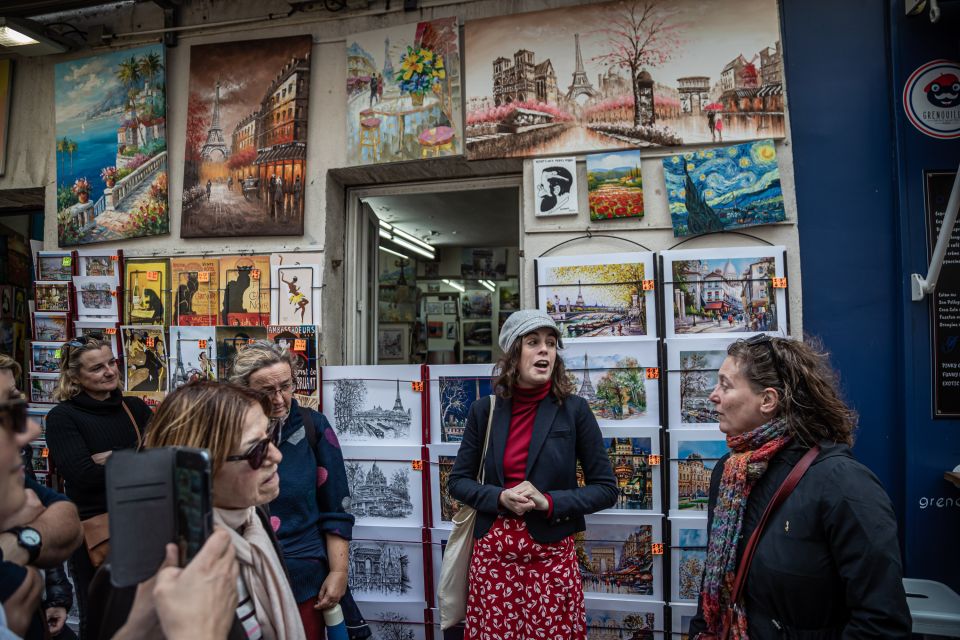
At Vigne du Clos Montmartre, you get a breather. It’s short, but it changes the texture of the tour. After streets and cabaret references, the vineyard stop gives you a different kind of Montmartre—one that feels older, more rooted, and quietly unexpected.
This matters for pacing. You’ll likely be walking uphill for much of the route, so even a small change like this helps your energy.
Au Lapin Agile and La Bonne Franquette: the neighborhood’s “hangout” side
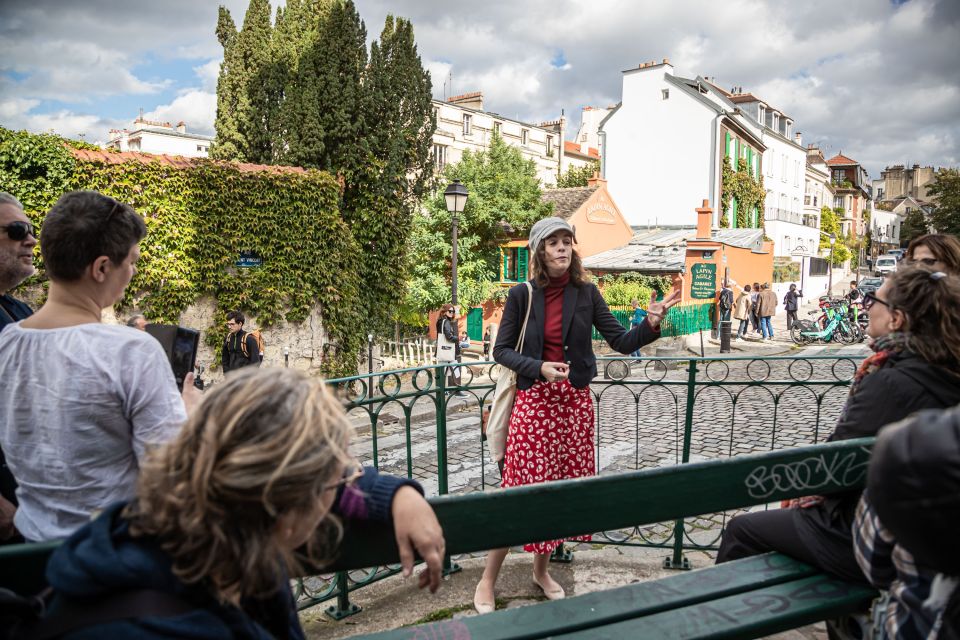
Then the tour hits two spots that feel like Montmartre’s meeting points for artists and bohemian life: Au Lapin Agile and La Bonne Franquette.
These stops are where the tour really leans into the tradition of the neighborhood. The singer’s performance style matches the venues’ atmosphere. You’re not just touring famous places—you’re being guided through the vibe that made them famous.
From a value point of view, this is where the tour justifies its price. A walking tour alone could show you landmarks. Adding live a capella performance at places associated with the cabaret tradition turns it into something you can’t replicate on your own without serious effort.
Place du Tertre: artists, energy, and a fitting finale before Sacré-Cœur
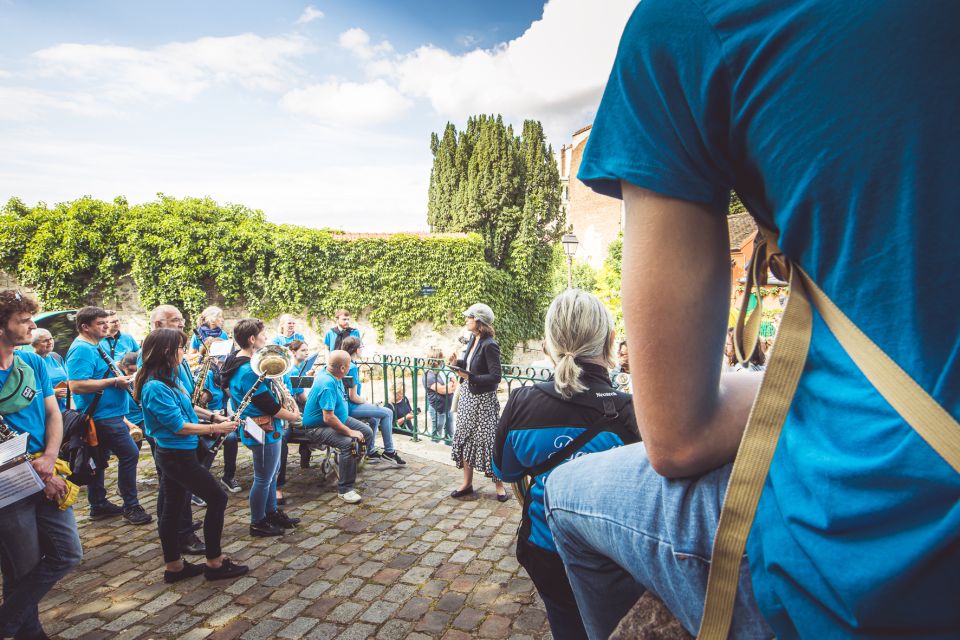
Next is Place du Tertre, the famous square where artists set up and Montmartre feels like it’s performing even when no one tells it to. It’s a great place to let everything you’ve heard “sit in” your brain while the neighborhood continues around you.
Then the tour walks you up to Sacré-Cœur Basilica, ending at the Parvis du Sacré-Cœur. This is a classic end point, but it works here because you’re not arriving empty-handed. You’ve been hearing songs tied to Montmartre as you go, so the final views feel earned.
Practical tip: as you get near Sacré-Cœur, keep an eye on your footing. Uneven ground and steps are common around here, and you’ll want to spend your energy on the view, not on correcting your stride.
Why this tour feels different: music plus local storytelling
Plenty of Montmartre tours show you the same big names and the same iconic photos. What makes this one stand out in a practical way is how it mixes three things:
1) A professional singer with a strong, street-ready presence
The singing isn’t background noise. It stops people. That matters because you get a rare moment of “quiet attention” in a busy tourist area.
2) An inhabitant’s perspective
You’re shown the neighborhood like it’s lived-in, with anecdotes that connect singers to hidden addresses and cabarets.
3) A compact route that stays focused
You don’t wander for hours. The stops are timed like musical movements—brief, meaningful pauses.
You’ll hear classic French standards such as La Vie en Rose, L’hymne à l’amour, and La Bohème, plus stories connected to Piaf, Charles Aznavour, Jacques Brel, and Dalida. The show-and-tell format keeps things moving, and it prevents that “I’ve heard this before” feeling that can hit generic sightseeing tours.
Who should book Montmartre en chansons (and who should skip it)
This tour fits best if you:
- Love French music and want it tied to real streets
- Prefer a guide who tells stories with energy, not just facts
- Like walking but don’t want a long hike
- Want something more human than a typical museum-style experience
Skip it if you:
- Have mobility limitations or need a more accessible route
- Want a mostly seated, low-walking experience
- Don’t like standing outdoors for short performances
Also, remember it’s not a “food tour.” The essentials are sightseeing, songs, and stories. Bring your own plans for snacks before or after.
Price and value: $34 for singing you can’t DIY
At $34 per person for two hours, this is priced like an experience, not just a guided walk. And that’s exactly what you’re buying: guided commentary plus live, a capella performances by a professional singer, in multiple locations.
If you were to try this on your own, you’d need two separate things: someone to guide the stories and someone to perform the songs in a way that matches each stop. Here, it’s bundled together, and the pacing is built for the neighborhood.
For music lovers, the value often lands quickly—especially when the voice is strong enough to shift the atmosphere around you.
What to bring so the walking part stays pleasant
The tour gives you practical guidance for the way Montmartre feels underfoot. I’d follow it closely:
- Hiking shoes (seriously—steps and uneven ground happen)
- Water
- Umbrella (weather in Paris can switch fast)
- Sun hat (especially if the tour timing is bright and clear)
And don’t plan on hauling a lot of stuff. The tour doesn’t allow bikes, oversize luggage, backpacks, or electric wheelchairs. Light and simple wins here.
Should you book this Montmartre en chansons tour?
Book it if you want Montmartre with a soundtrack and a storyteller who clearly cares about the neighborhood. The biggest strength is the combination of Anne-Sophie’s performance and the way she threads classic French songs through real landmarks like the Wall of Love, Le Moulin de la Galette, Dalida locations, cabaret stops, and the climb to Sacré-Cœur.
Skip it if you’re looking for a low-effort, fully accessible sightseeing format, or if you’d rather spend your time doing Montmartre at your own pace without performances. This tour is meant for people who enjoy being part of the moment—standing in the street while the song changes what you notice.
FAQ
Where does the tour start?
The meeting point is behind the exit of the subway station Abbesses.
How long is the tour?
The tour lasts 2 hours.
What languages are offered?
Tours are available in English and French.
Is food or drinks included?
No. Food and drinks are not included.
What should I bring?
Bring hiking shoes, water, an umbrella, and a sun hat.
Is the tour suitable for mobility impairments?
It is not suitable for people with mobility impairments.
Can I book a private tour?
Private tours are available in French or English on request during the week and on some Sundays.
What can’t I bring?
The tour does not allow bikes, oversize luggage, backpacks, or electric wheelchairs.
If you tell me when you’re going (weekday vs weekend, daytime vs evening), I can help you choose whether this route matches your energy level and what you might pair it with afterward.