REVIEW · PARIS
Montmartre: Guided tour to Sacré-Coeur
Book on GetYourGuide →Operated by My Super Tour · Bookable on GetYourGuide
Montmartre can feel like it time-traveled. This guided walk strings together Pigalle street energy, artist hangouts, and the big payoff: a guided visit of Sacré-Cœur plus one of the best angles over Paris. You’ll also get little detours through quiet lanes that make the hill feel lived-in, not staged.
Two things I really like: first, the guide turns famous stops into real stories, connecting places to artists and writers you actually recognize (think Manet, Renoir, Van Gogh, Picasso, Emile Zola). Second, the tour keeps moving at a smart pace for a short 2 hours—so you get a true sense of Montmartre without spending your whole day climbing.
One possible drawback: Sacré-Cœur sits on a hill and the tour is not for wheelchair users. Even though the plan includes an easier climb option with just one short stretch of stairs, you should still expect some uphill walking and uneven old-street surfaces.
In This Review
- Key things to know before you go
- From Blanche to Moulin Rouge: Pigalle’s backstory
- Climbing to Montmartre: artists’ streets and standout photo stops
- Sacré-Cœur inside: what the guide helps you notice
- The view over Paris: timing your Eiffel Tower moment
- Windmills, vineyard wine, and the pink Maison Rose
- Place du Tertre and getting back down smart
- Price and value for a 2-hour Montmartre experience
- Should you book this Montmartre Sacré-Cœur guided tour?
- FAQ
- How long is the Montmartre tour to Sacré-Cœur?
- Where do we meet for the tour?
- What sights are included besides Sacré-Cœur?
- Is entry to Sacré-Cœur included?
- What languages are the guides?
- How large is the group?
- Is food or drinks included?
- Is the tour suitable for wheelchair users?
- How do you get back down after the tour ends?
Key things to know before you go
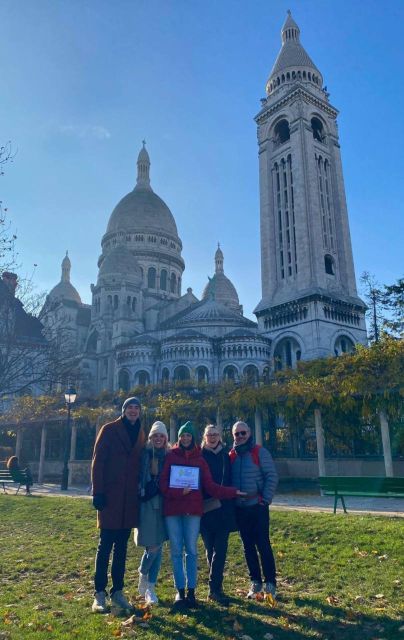
- Small group (up to 8) means more time for questions and tighter storytelling.
- Meet at Blanche (Metro line 2) and start with Pigalle context right away, not “Montmartre-only” history.
- Guided entry inside Sacré-Cœur is included, so you’re not left staring at the exterior.
- 180-degree city views over Paris, including the Eiffel Tower, with a sunset-style payoff.
- Artist landmarks and playful photo stops: Moulin Rouge, Le Bateau-Lavoir, Le Passe-Muraille, La Maison Rose, and more.
From Blanche to Moulin Rouge: Pigalle’s backstory
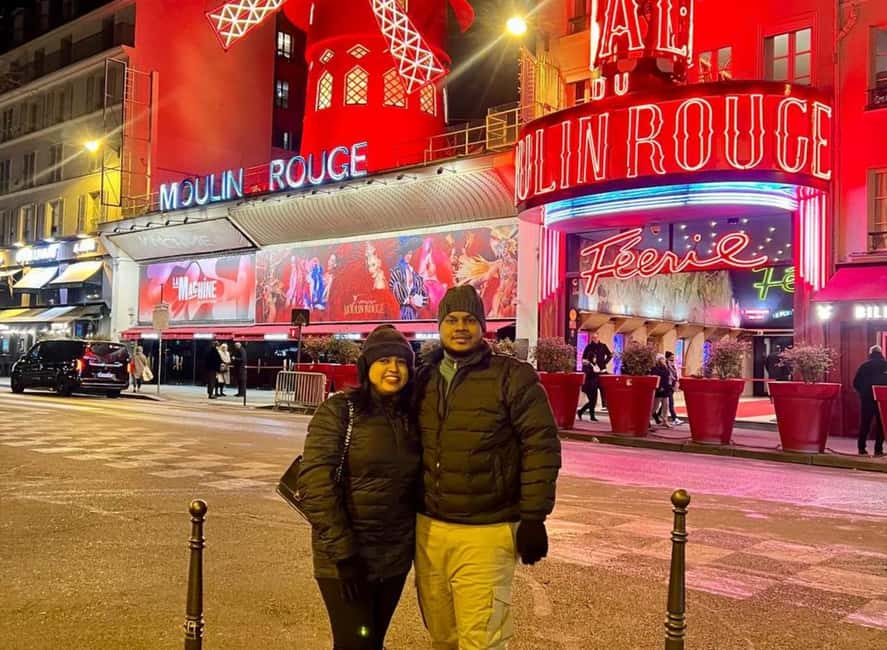
You start in the Blanche area, at the metro station closest access point, and right away you’re in the world Montmartre always had a link with: Pigalle. Even if you’ve only heard the name in passing, the guide frames it as more than a nightlife label. You get a feel for how this neighborhood fed art, performance, and the kind of characters who end up in paintings and novels.
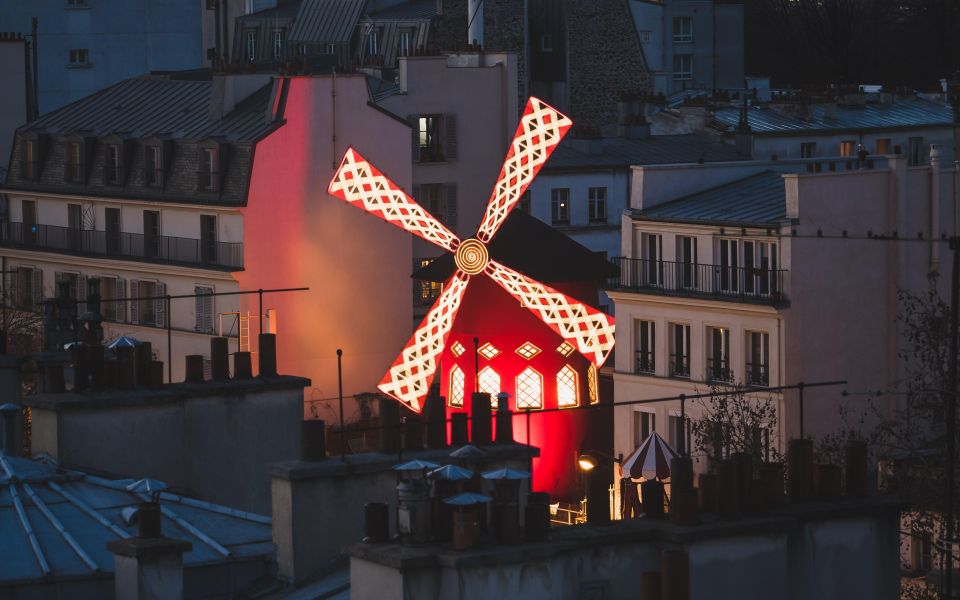
Then comes the quick detour to Moulin Rouge for a short photo stop. It’s a classic “oh, that place” moment, but the guide doesn’t treat it like a postcard. The best part is the way the stories connect Moulin Rouge to artists and writers—so it clicks as a creative ecosystem rather than a single building.
One practical note: this is a walking tour, and it begins with the expectation that you’re ready to move. If you’re the type who likes to linger, you’ll still have time later at the top, but you’ll want to keep your energy for the climb and the views. Good shoes help. The streets can be a mix of cobbles and uneven pavement, especially as you angle toward Montmartre’s lanes.
You can also read our reviews of more guided tours in Paris


Climbing to Montmartre: artists’ streets and standout photo stops
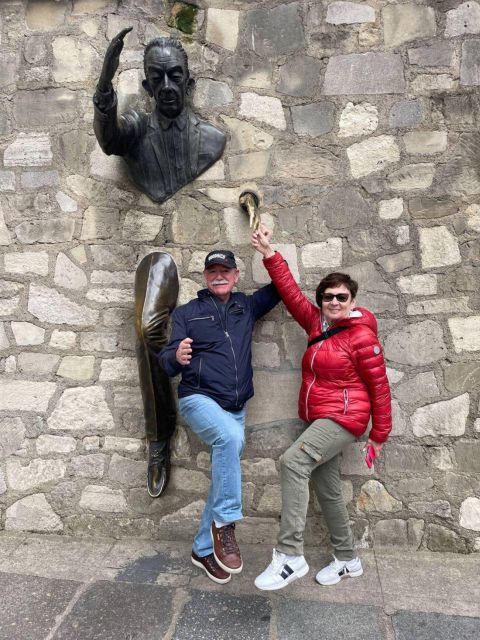
Once you’re on the hill approach, the tour shifts from nightlife context to the artists’ quarter vibe. You walk in the footsteps of the people who made Montmartre famous—names like Manet, Renoir, Van Gogh, and even Picasso get woven into what you see.
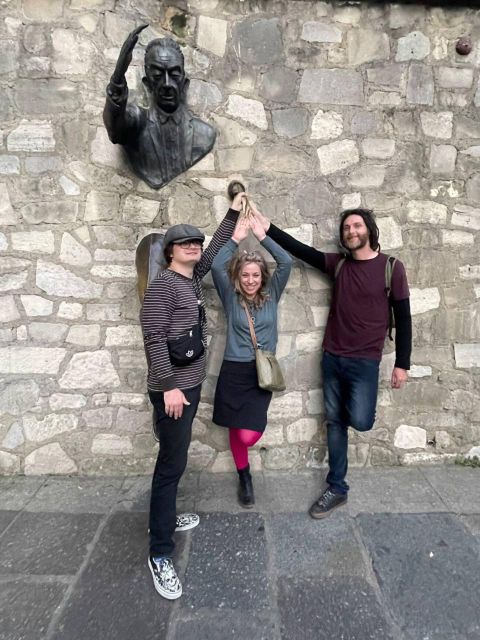
Along the way, you stop at places that feel almost like set pieces. The itinerary includes stops such as Le Bateau-Lavoir, an area strongly tied to art history in Montmartre’s imagination, plus Le Passe-Muraille, where the guide points out the story behind this playful monument-style image. There’s also Place des Abbesses, a spot that helps you understand how the neighborhood shifts from broad views into dense, story-heavy streets.
Then you reach the area where “hidden streets” really means something: small cobbled lanes with surprising anecdotes. These are the moments that make the hill feel personal, like you’re walking inside someone’s memory of the place. It’s also where the guide’s style matters. The reviews highlight how guides such as Sacha/Sasha and Dina bring energy and humor while staying on track, which is exactly what you want on a short tour.
A smart detail in this tour design is that it’s built for ease. The description promises the easiest way up with only one short range of stairs. You’ll still have climbing, but the route is chosen to avoid turning the day into a stair workout. If you’re sensitive to stairs or your legs tire fast, this is one reason the tour can feel more manageable than other Montmartre routes.
Sacré-Cœur inside: what the guide helps you notice
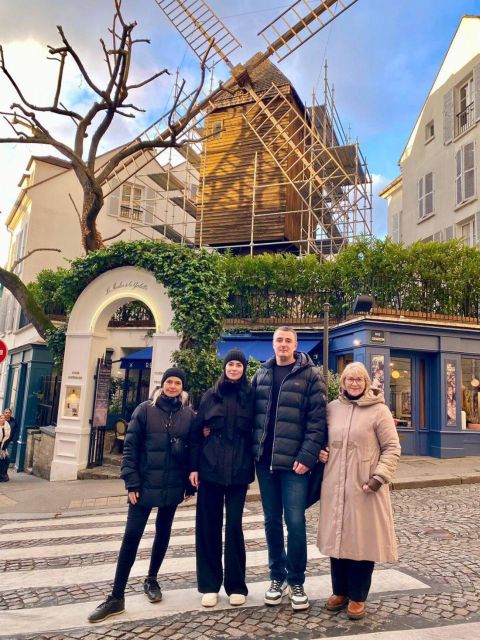
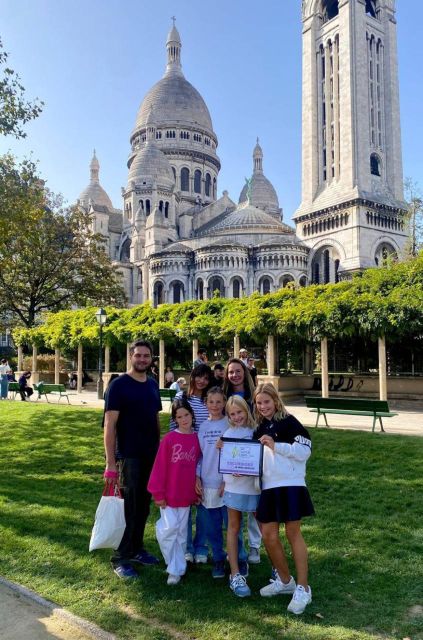
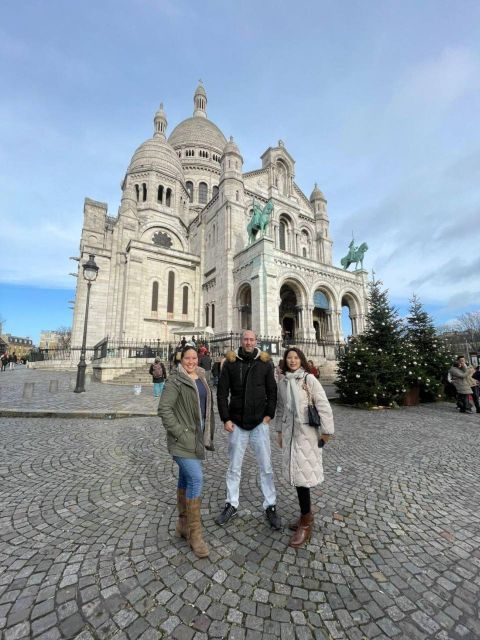
The headline attraction is the Basilica Sacré-Cœur, described as the biggest church in Paris. The key value here is not just that you visit—it’s that the tour includes a guided look inside. That changes everything.
Inside a big church, you can easily get lost in scale: ceilings, stone, and light. A good guide helps you notice the design choices and the symbolism, and it also keeps you moving so you don’t spend precious minutes standing in a line-like rhythm with no context. This tour keeps Sacré-Cœur as a guided segment rather than a quick stop.
You also get time for a photo stop around the basilica area, which matters because the outside is dramatic and the interior is meaningful. You can plan it as two different experiences: first, absorb the façade and hill-top presence; second, slow down inside with the guide’s explanation.
If you care about architecture, sacred spaces, or you just want your visit to feel less like a checklist, this included interior visit is the heart of the value. At $50 for a 2-hour small-group tour, skipping the interior would be a waste. Here, you actually get the payoff part.
The view over Paris: timing your Eiffel Tower moment
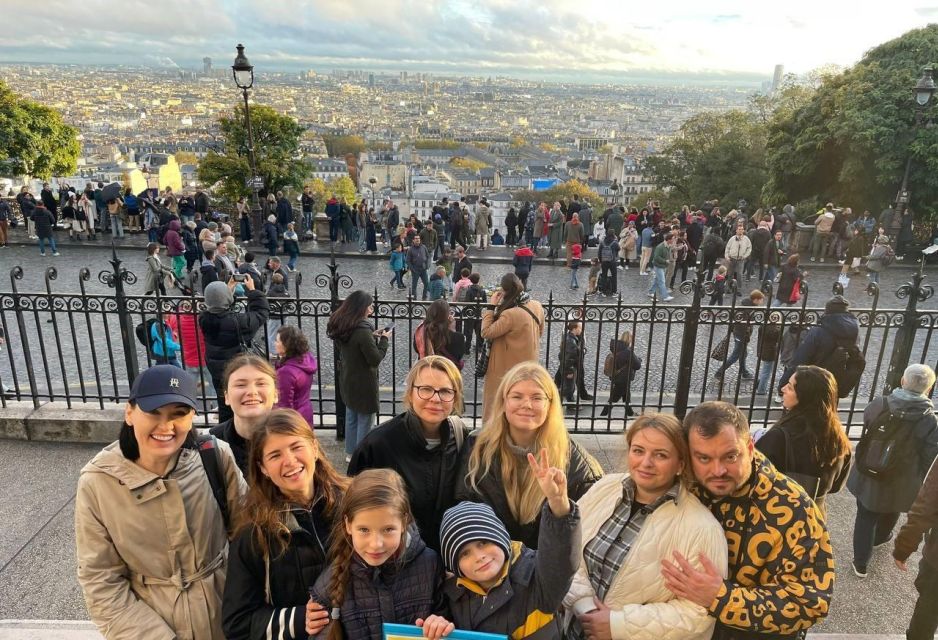
Montmartre’s best tricks are vertical. You’re higher, which means views, and you’re also surrounded by curves of streets, which means you can frame the city differently at each turn. This tour is built around one of those payoff moments: a 180-degree view over Paris, explicitly including the Eiffel Tower, timed for sunset-style viewing.
Here’s how to make the view portion actually work for you. First, accept that crowds and lighting can shift your angle. When the guide tells you where to stand or where to look first, take it seriously. Second, be ready to look up and scan—Eiffel Tower visibility isn’t just about distance, it’s about the exact line of sight from the spot.
If you’re traveling with a phone camera, don’t assume you can “fix it later.” Bring a fully charged battery and consider taking a few short shots rather than one long fuss at the perfect time. The tour’s promise is a strong view moment, and the guide’s job is to help you get the right perspective without turning it into chaos.
This is also where the group size matters. With only up to 8 participants, you’re less likely to fight for space around a viewpoint. You get a more human, not-too-crowded feel at the top.
Windmills, vineyard wine, and the pink Maison Rose
Montmartre isn’t only churches and view decks. Part of why I love it is how odd it gets—art history mixed with everyday local quirks. This tour leans into that.
You’ll see the last still existing windmills on the hill. Then there’s the vineyard created by artists, still producing wine. That detail is one of the most Montmartre things you can imagine: a working landscape tied to creative people, not just a souvenir story.
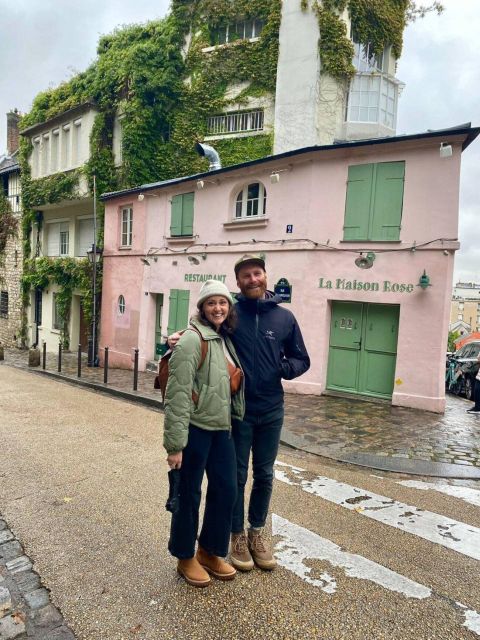
And then comes the truly Montmartre-color moment: the pink restaurant—the guide explains how it became pink due to a drunk artist. It’s the kind of anecdote you remember because it’s specific. It also shows you how Montmartre’s reputation for art isn’t just an official label; it’s in the neighborhood’s humor and legends.
You’ll also stop at La Maison Rose, another famous visual cue on the hill. The idea isn’t just to point and shoot. The guide uses these stops to connect what you see to how Montmartre became a magnet for creative outsiders.
If you like travel that feels slightly quirky but grounded in real places, this segment is a big win. You’ll walk away with more than “we went to Sacré-Cœur.” You’ll have stories tied to things you actually saw: windmill forms, vineyard vines, and the weird charm of pink walls on a Paris hill.





Place du Tertre and getting back down smart
The tour ends at Place du Tertre, the area known for painters and that iconic Montmartre street-scene energy. You’ll get time around the square where artists work, and you can watch the scene with fresh context from everything the guide has already explained.
From there, you can keep wandering through the shops and small lanes in the heart of Montmartre. If you want food or a drink, the area has many typical French options up top, but remember that food and drinks are not included. I’d treat the tour as your “orientation + stories” portion, then choose your own meal afterward.
Now the practical part: how to get back down. The tour description gives you two options. You can return via open stairs, or you can use the cog railway that connects to the metro station Anvers. This is useful information because the route down can feel like a different neighborhood experience, depending on your energy level.
If you want the smoothest exit after a view-heavy hour, the cog railway is the easy-minded choice. If you still have energy and you like watching the neighborhood change as you descend, the open stairs can be scenic, slow, and very Montmartre.
Either way, ending at Place du Tertre is a smart move: it’s central to the hill’s famous energy, so you’re not stuck at an awkward dead-end after the guide wraps up.
Price and value for a 2-hour Montmartre experience
At $50 per person for a 2-hour small-group tour, the value comes from three places.
First, it’s small—limited to 8 participants. For a short Montmartre tour, that matters. You get better pacing and more chance to hear the guide clearly at each stop.
Second, the tour includes the thing people often skip: a guided visit inside Sacré-Cœur. If you already know you want more than exterior photos, that included interior visit justifies the price.
Third, you get a tight route that covers multiple “faces” of the hill: Pigalle context, artist landmarks, quick photo stops, and a promised wide city view including the Eiffel Tower. Many short tours focus only on one angle. This one tries to give you the whole Montmartre story arc without dragging on.
As for who gets the most out of it, it’s a great fit if you:
- want a guided orientation to Montmartre in a limited time window
- enjoy street-level art history connections
- care about seeing Sacré-Cœur with guidance rather than just standing inside
- like viewpoints but don’t want to spend hours hunting the best angle on your own
One caution: it’s not wheelchair-friendly, and the hill terrain means you should plan for uneven streets and some stairs. Also, because the tour is time-structured, you should keep a little flexibility in your own pace.
Should you book this Montmartre Sacré-Cœur guided tour?
If your goal is to see Sacré-Cœur properly, learn how Montmartre got its reputation, and still leave with time to enjoy Place du Tertre on your own, I think this is a smart booking. The strongest reason to choose it is the combination: small group + guided interior + big viewpoint in a short, efficient route.
Book it if you like practical storytelling and want your Montmartre day to feel organized, not stressful. Skip it if you want a long, slow wander with zero structure, or if walking and stairs are a real problem for you.
In short: for $50 and two hours, you get a lot of Montmartre for your money—especially the Sacré-Cœur inside visit and that clear, framed view over Paris.
FAQ
How long is the Montmartre tour to Sacré-Cœur?
The tour lasts about 2 hours.
Where do we meet for the tour?
You meet outside the only metro access at Blanche (Metro line 2). The guide holds a sign that says My Super Tour.
What sights are included besides Sacré-Cœur?
You’ll see and stop for photos or guided sightseeing at places like Moulin Rouge, Place des Abbesses, Le Bateau-Lavoir, Le Passe-Muraille, La Maison Rose, Place du Tertre, and you’ll also visit areas such as the windmills and the artists’ vineyard.
Is entry to Sacré-Cœur included?
Yes. The tour includes a guided visit inside the Basilica Sacré-Cœur.
What languages are the guides?
The tour runs with live guides in English and Russian.
How large is the group?
The group is limited to 8 participants.
Is food or drinks included?
No. Food and drinks are not included.
Is the tour suitable for wheelchair users?
No. It is not suitable for wheelchair users.
How do you get back down after the tour ends?
After the tour ends at Place du Tertre, you can return to the city using the open stairs or the cog railway that leads to the metro station Anvers.