REVIEW · PARIS
Montmartre Walking Tour with a Local Guide
Book on GetYourGuide →Operated by Parifiane Tours · Bookable on GetYourGuide
Montmartre feels like Paris’s creative wild card. You’ll get a guided walk through the painter’s quarter—snapped between big-name landmarks and quieter corners—and I like how the local guide ties places to the artists who made the neighborhood famous. Two of my favorite parts are the art-focused stops around Place du Tertre and the panoramic payoff from Sacré-Cœur. The main catch: expect uphill walking in parts of the route, and the tour isn’t suitable for wheelchair users or people with mobility impairments.
This tour runs in English, rain or shine, and you start at Place Blanche (Metro 2) near Moulin Rouge. You meet your guide by looking for a green booklet and green badge, then spend about two hours moving at a comfortable pace with photo stops along the way. You’ll also get help taking family photos, which is a small detail that makes a big difference when you’re trying to enjoy the view instead of hunting for a stranger with your camera.
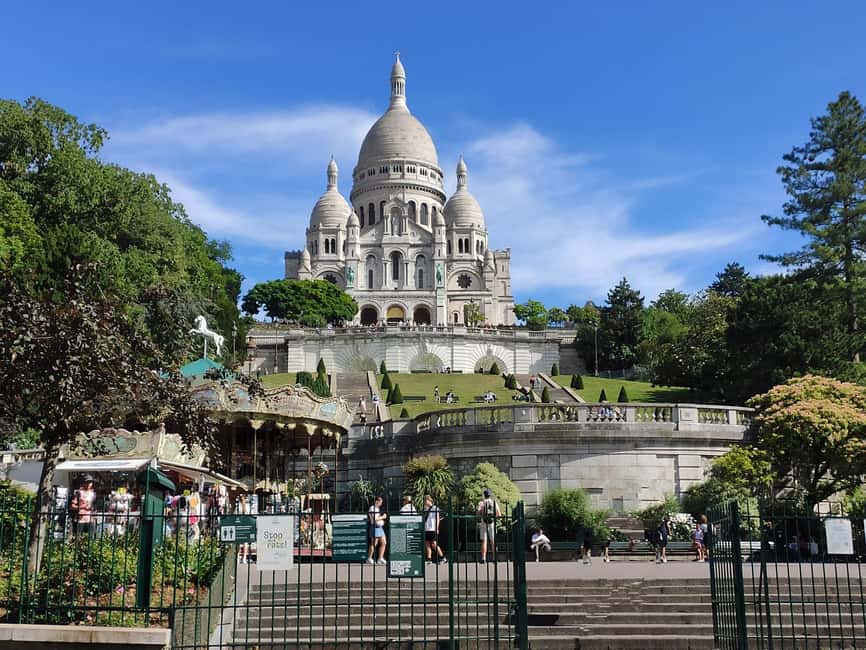
You end at the Basilica of the Sacred Heart of Montmartre, with time to explore outside and inside. From the hill, you can spot major landmarks like Eiffel Tower, Notre-Dame, and the Montparnasse Tower, so the walk ends on something you can actually frame in your photos.
In This Review
- Key things I’d circle on your map
- Starting at Place Blanche: meet your guide and get oriented fast
- Moulin Rouge to the Wall of Love: postcard scenes with street-level meaning
- Moulin de la Galette, Dalida, and La Maison Rose: art vibes in plain sight
- Place du Tertre: watch the painters and understand the ritual
- Sacré-Cœur approach: scenic views while your legs do the work
- The hilltop payoff: a city view you can actually use
- Pace, stops, and how 2 hours really feels on your feet
- Price and value: why $27 can work in your favor
- Practical tips: what to bring and how to get better photos
- Who should book this Montmartre walk
- Should you book this tour
- FAQ
- How long is the Montmartre Walking Tour?
- Where does the tour start?
- Is the tour offered in English?
- What’s included in the price?
- Are food and drinks included?
- What are some of the main stops?
- Is the tour rain or shine?
- Is it suitable for wheelchair users or people with mobility impairments?
- What should I wear or bring?
Key things I’d circle on your map
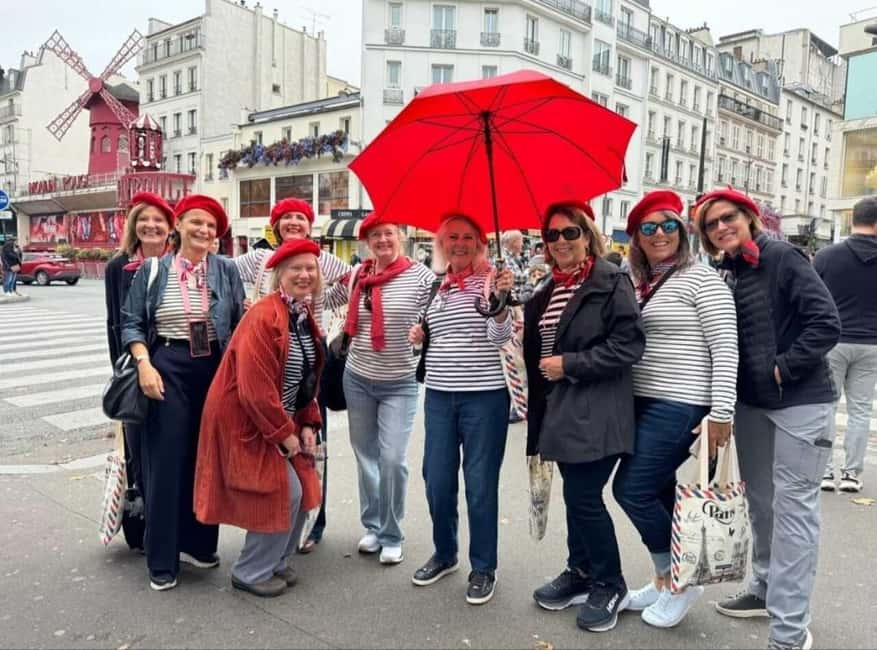
- Green-badge meeting at Blanche Metro 2: easy to find, close to Moulin Rouge.
- Iconic photo stops in compact time: Moulin Rouge, Wall of Love (Le Mur des Je T’aime), and more.
- Artist connections you can picture: stories tied to Lautrec, Picasso, and Van Gogh’s Montmartre world.
- Place du Tertre with real atmosphere: you’ll see the artists and the scene where it all happens.
- Sacré-Cœur from the hilltop approach: plenty of scenic views on the way, then outside and inside time.
- Small-group energy: kept intimate enough for questions and quick photo help.
Starting at Place Blanche: meet your guide and get oriented fast
You begin near the exit of Metro 2 at Blanche, right by Moulin Rouge. That location matters because it gets you into Montmartre’s rhythm without wasting time commuting through the city’s maze.
As soon as you spot the guide with the green booklet and green badge, you’re ready to go. I like this start because it sets expectations quickly: you’ll be walking, you’ll be stopping for photos, and you’ll be learning as you go.
This tour is built as a 2-hour walk, so there’s no long lead-in. It’s also rain-or-shine, meaning you should plan on staying flexible and keeping your shoes grippy.
You can also read our reviews of more walking tours in Paris



Moulin Rouge to the Wall of Love: postcard scenes with street-level meaning
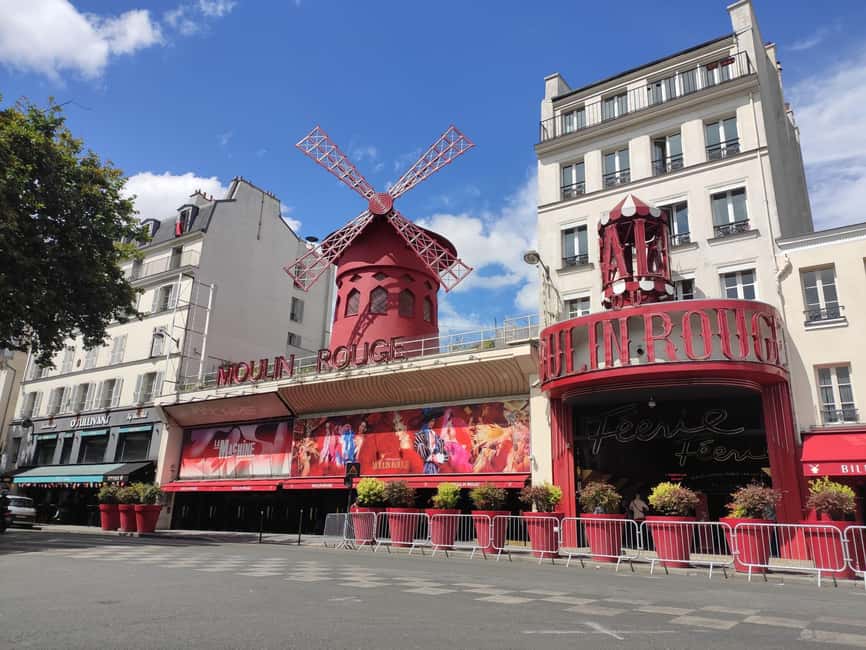
Your first big stop is Moulin Rouge, where you’ll have a short photo moment and guided context. Even if you’ve seen it in pictures, it hits differently in person—because the streets around it show the mix of showbiz glamour and everyday life.
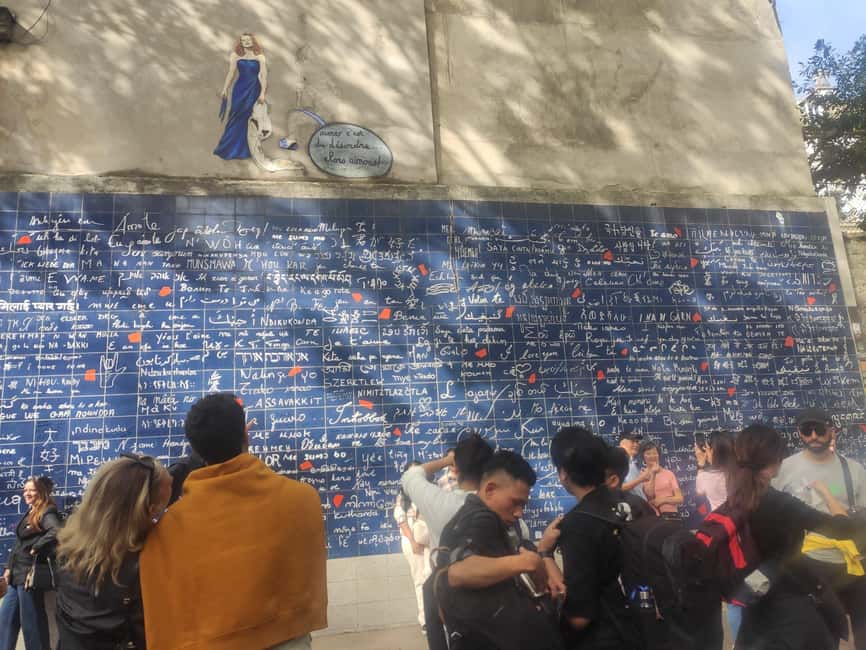
Right after that comes Le Mur des Je T’aime (the Wall of Love). The guide’s job here isn’t just pointing out a famous wall; it’s helping you understand why this corner became one of Montmartre’s shorthand images for romance and identity.
These stops are short—think 10 minutes each—but that’s the point. You’re building a mental map of Montmartre landmarks before you start climbing toward the higher viewpoints.
One consideration: Montmartre can get crowded, and some spots near the most photographed facades draw lines. Go with the mindset of a guided “best-of” flow, not a quiet stroll, and you’ll enjoy it more.
Moulin de la Galette, Dalida, and La Maison Rose: art vibes in plain sight
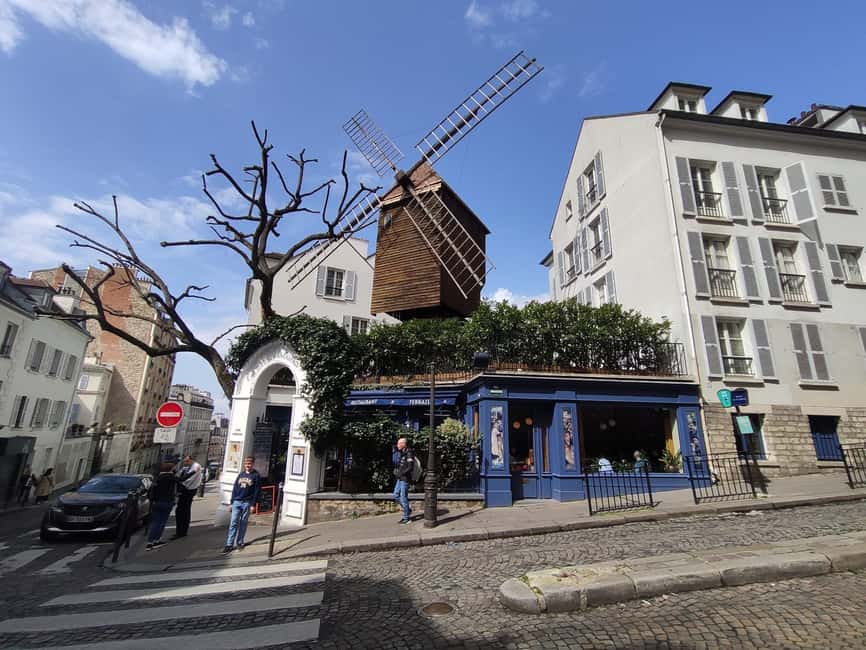
Then the tour shifts into Montmartre’s character streets. You’ll pass by Moulin de la Galette for another photo stop and quick guided walk-through.
This is the kind of place you’d easily walk past if you were on your own, because the street scene doesn’t scream museum. With a local guide, you notice the details that connect the neighborhood to its cultural history—how leisure, art, and street life overlap in the same few blocks.
You’ll also stop for photos at the Dalida statue, plus La Maison Rose. These might sound like simple “look at this building” moments, but in Montmartre they function like visual clues. You’re learning how locals and artists have used color, names, and landmarks to brand the neighborhood over time.
If you want one practical takeaway here, it’s this: take your shoes seriously. The whole experience is built on walking and short climbs, so comfortable footwear keeps the tour fun instead of tiring.
Place du Tertre: watch the painters and understand the ritual
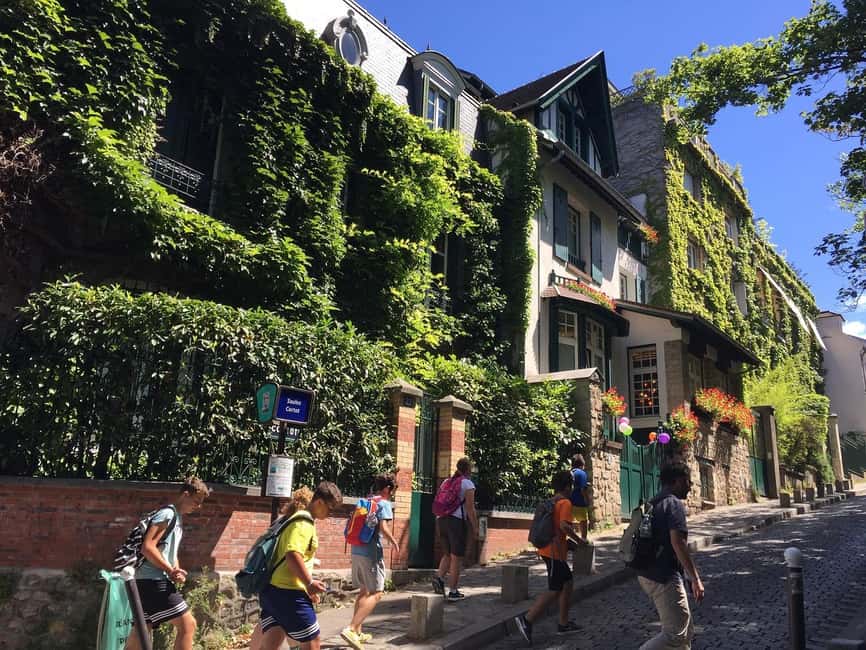
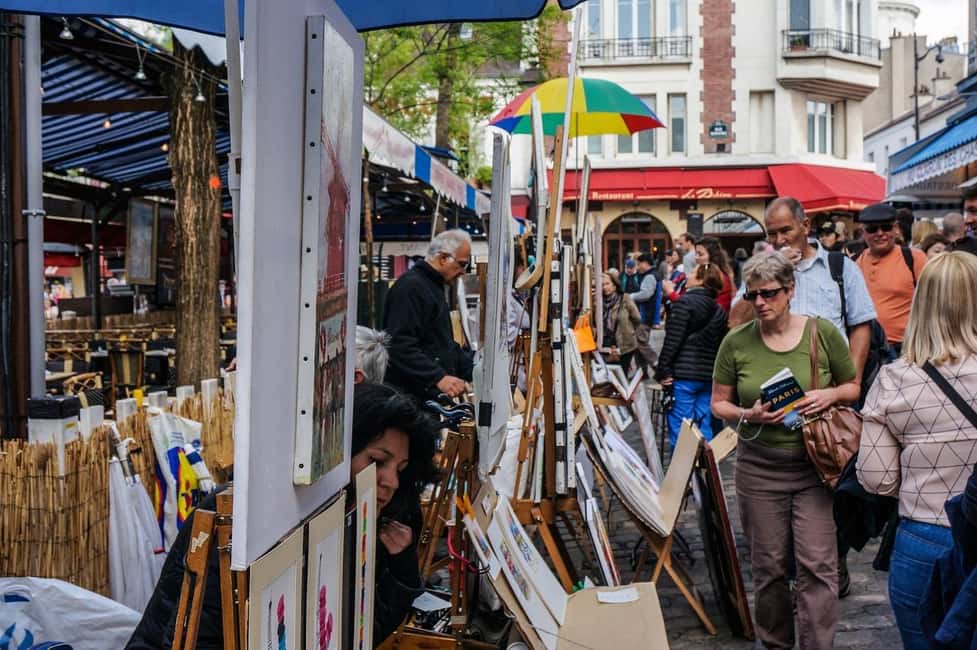
Next comes Place du Tertre, the famous artists’ square. You’ll get a photo stop and guided walk-through, plus a short walking segment to transition into the next phase of the neighborhood.
What I like about Place du Tertre is how it gives you both spectacle and structure. The square is the stage; the surrounding streets are the backstage. A guide helps you spot what’s happening in the scene—who’s painting, what people come here for, and how the area’s artistic reputation became a living tradition.
Also, this is where the tour’s tone can shift from “icons” to “atmosphere.” You’re no longer just checking off famous names; you’re looking at the working-art vibe that made Montmartre more than a postcard.
The drawback is simple: it’s popular. If you’re sensitive to crowds, you might want to treat this stop like a quick taste, not a long hang. You’ll get plenty more payoff as you move toward Sacré-Cœur.
Sacré-Cœur approach: scenic views while your legs do the work
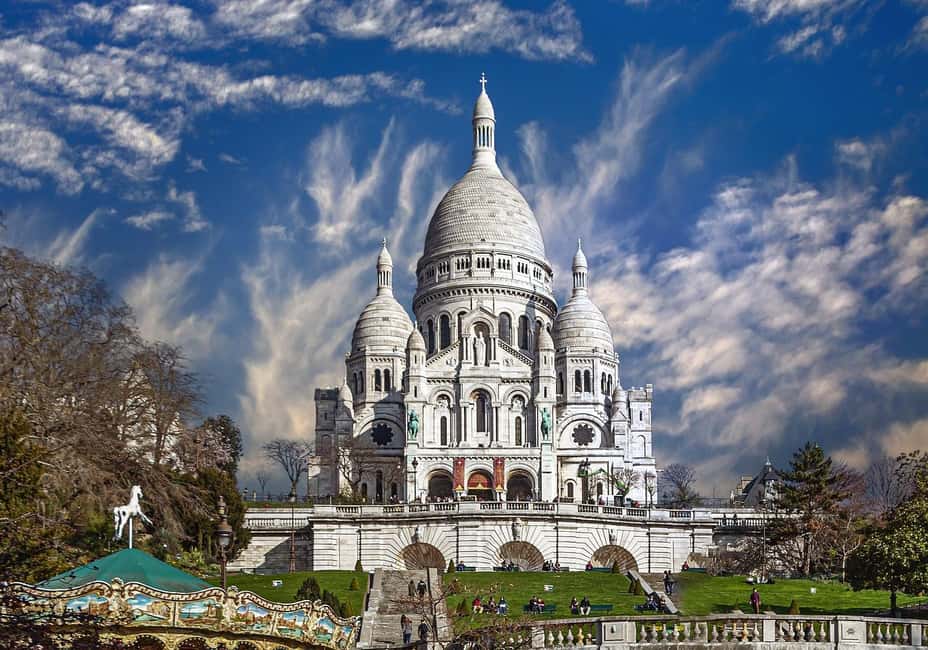
You’ll head toward the Basilica of Sacré-Cœur de Montmartre with another photo stop and guided info, plus scenic views on the way. The route includes moderate climbs, and the guide’s pacing is part of the value.
One smart detail in how this tour feels: the walk is designed so you’re not just grinding upward with no payoff. You get repeated “look up” moments, and the guide points out sightlines that make the hill worth it.
At Sacré-Cœur, the tour finishes with time to explore both outside and inside the basilica. That’s helpful if you want more than exterior photos—because the building has a different mood once you’re actually inside, with space for quiet and a chance to reset.
This is also where you’ll appreciate that the tour is family-friendly in the sense that it slows down for people who need a bit more time. So if your group has mixed ages or walking comfort, this style of pacing can work well.
You can also read our reviews of more guided tours in Paris





The hilltop payoff: a city view you can actually use
From Montmartre’s heights, you get sweeping views over the city of lights. The tour highlights famous landmarks you can look for from above, including the Eiffel Tower, Notre-Dame, and the Montparnasse Tower.
This matters because views can turn into a vague blur if you don’t know what you’re seeing. With a guide, you’re not just standing somewhere high—you’re identifying targets, lining up your photos, and understanding why this spot became such a magnet.
I also like that this is the “end” moment. It gives the walk a satisfying shape: you start at the theatrical edge near Moulin Rouge, move through artists’ streets, then climb into the skyline view.
If you’re visiting in colder months, bring layers. Sacré-Cœur hilltop air can feel sharper, and standing still for a few minutes for photos is part of the deal.
Pace, stops, and how 2 hours really feels on your feet
The published duration is about 2 hours, but it can vary depending on your group’s pace and how long people spend at photo stops. In real life, that means you should plan to feel the climbing, especially as you move toward the basilica.
Still, this tour is structured with short segments: each major landmark gets around 10 minutes for photos and guided context, plus a little extra time for walking segments. That tends to keep energy up for most people, as long as you come prepared.
For you, the key planning point is simple: treat Montmartre like a walking-and-climbing neighborhood, not a flat museum. If you’re okay with moderate uphill and you have good footwear, the time is a sweet spot—long enough to feel like you saw the district, short enough that you’re not stranded in sightseeing fatigue.
Price and value: why $27 can work in your favor
At $27 per person for a 2-hour guided walking tour, you’re paying for three things you can’t easily recreate alone:
1) a guided route that connects landmarks into a coherent story,
2) help spotting what matters in crowded areas,
3) photo assistance so you spend less time asking strangers and more time enjoying the moment.
Montmartre can be expensive if you only do self-guided “trophy photos” because you’ll keep circling landmarks without learning how they relate. This tour is priced to give you a local lens without turning your day into a big budget event.
One more value add: the tour includes family photos. That sounds small until you’re the person always holding the camera. Having the guide ready to take photos is the kind of practical detail that makes the tour feel like it was built for real groups.
What’s not included is food and drinks, so you’ll want to plan a meal around the rest of your day. The tour duration is short enough that you can pair it with a casual lunch or coffee afterward.
Practical tips: what to bring and how to get better photos
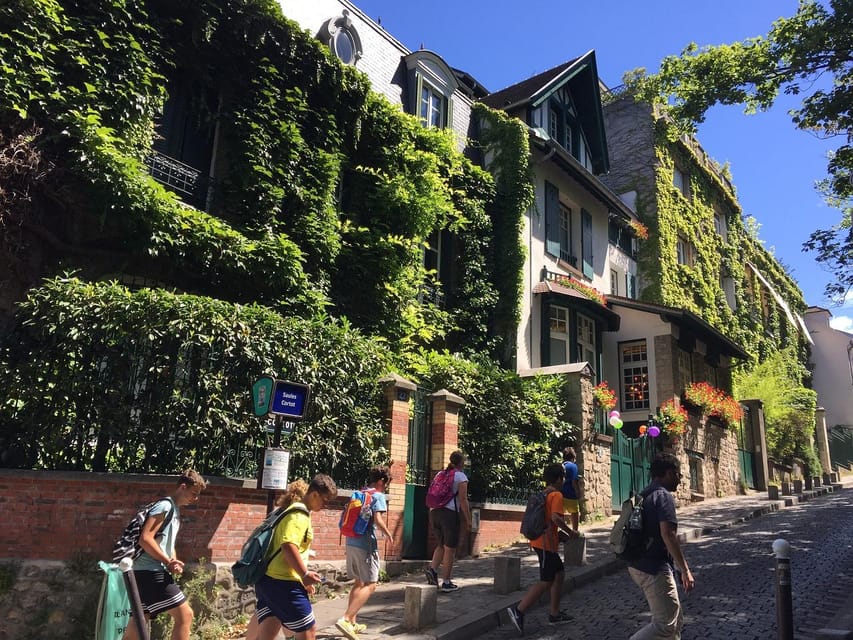
Bring comfortable shoes—seriously. Moderate climbs and cobbled streets don’t forgive bad footwear, and the whole tour is built on staying steady while you move from stop to stop.
For photos, expect several quick photo moments rather than one long “pose here” scene. If your group needs extra time, you’ll likely get it in the form of pacing adjustments, so don’t stress if you’re slower than the average tourist.
Weather matters. The tour runs rain or shine, so a light rain layer or compact umbrella can keep you from feeling miserable. If it’s wet, take extra care on slopes and stones.
Finally, have a flexible plan after the tour. The guide’s local tips can help you decide what to do next, especially if you want to keep exploring Montmartre beyond the main basilica skyline.
Who should book this Montmartre walk
This tour fits you if:
- you want an English local guide and don’t want to piece together Montmartre’s story on your own,
- you enjoy photo stops but want context beyond the camera,
- you’re comfortable with some uphill walking,
- you like art and the idea of seeing famous neighborhoods through the people who lived there.
It’s not the best fit if:
- you have mobility impairments or wheelchair needs, because the route includes climbs,
- you’re expecting a fully flat, stroller-friendly experience.
If you’re traveling with teens, mixed-age family members, or a small group, the small-group feel helps. It keeps the tour from feeling like you’re getting herded through the hill.
Should you book this tour
Yes, I’d book it if your goal is to understand Montmartre quickly and walk away with photos that actually make sense. The value is strong for the price: you get an organized route, multiple iconic stops, and a guided push toward the Sacré-Cœur viewpoint, plus family photo help that saves time and hassle.
I’d skip it only if uphill walking would be a problem for you or if you prefer total freedom over structured stops. For most people, this is one of those tours that turns a famous area into something you can navigate with confidence—and that’s the kind of win you’ll feel the rest of your trip.
FAQ
How long is the Montmartre Walking Tour?
The tour lasts about 2 hours, though the duration may vary slightly depending on group pace and number of stops.
Where does the tour start?
Meet your guide near the exit of Metro 2 at Blanche, near the Moulin Rouge.
Is the tour offered in English?
Yes, the live tour guide speaks English.
What’s included in the price?
The price includes a walking tour, a local guide, and family photos.
Are food and drinks included?
No, food and drinks are not included.
What are some of the main stops?
You’ll visit places like Moulin Rouge, Le Mur des Je T’aime, Moulin de la Galette, Place du Tertre, and the Basilica of Sacré-Cœur, with photo stops along the way.
Is the tour rain or shine?
Yes, the tour runs rain or shine.
Is it suitable for wheelchair users or people with mobility impairments?
No, it is not suitable for people with mobility impairments or wheelchair users.
What should I wear or bring?
Wear comfortable shoes. The route includes moderate climbs, so be ready for uphill walking.