REVIEW · PARIS
Paris: Montmartre Must-See Walking Tour with a Local Guide
Book on GetYourGuide →Operated by French Tales · Bookable on GetYourGuide
Montmartre turns you into an art detective. This small-group walk with French Tales, guided by Jean-Baptiste, strings together street-level stories with big-name landmarks like Sacré-Cœur, Place du Tertre, and the Wall of Love. I especially like how the guide connects art, artists, and everyday life street by street, and how you get purposeful photo stops so you don’t miss the views.
The one real thing to plan for is physical effort: expect hills, stairs, and cobblestones, and you’ll want comfortable shoes.
If it’s your first time in Paris, this tour gives you fast context so Montmartre stops feeling like a postcard. If you’ve been before, you’ll still pick up details that make the neighborhood feel personal, from quiet corners to places tied to Dalí, Picasso, Modigliani, and Dalida.
In This Review
- Key things I liked about this Montmartre walking tour
- Montmartre in 150 minutes: why this walk works
- Starting at Carrousel de Saint-Pierre: the easy way to meet up
- Square Louise Michel: first views and quick orientation
- Sacré-Cœur: mosaics, parvis views, and the big moment
- Place du Tertre and Square Nadar: why the artists picked this street
- Dalí, surrealism, and Montmartre’s storytelling stops
- Le Poulbot and La Maison Rose: two icons with different energy
- Clos Montmartre and Moulin de la Galette: the “wait, Paris had vineyards?” moment
- Bateau-Lavoir: the workshop connection that makes Picasso and Modigliani feel real
- Wall of Love and Place des Abbesses: end romantically, finish practically
- Price and what $29 actually buys you in Montmartre
- What the guide brings: Jean-Baptiste energy and small-group flow
- Who should book this tour
- Should you book this Montmartre walking tour or skip it?
- FAQ
- Where do I meet the guide?
- How long is the tour?
- Is the tour in English?
- What should I wear or bring?
- What’s included in the price?
- Is it wheelchair accessible?
- Who is this tour not suitable for?
Key things I liked about this Montmartre walking tour
- Jean-Baptiste storytelling that keeps pace with the walk, with jokes and facts that actually stick
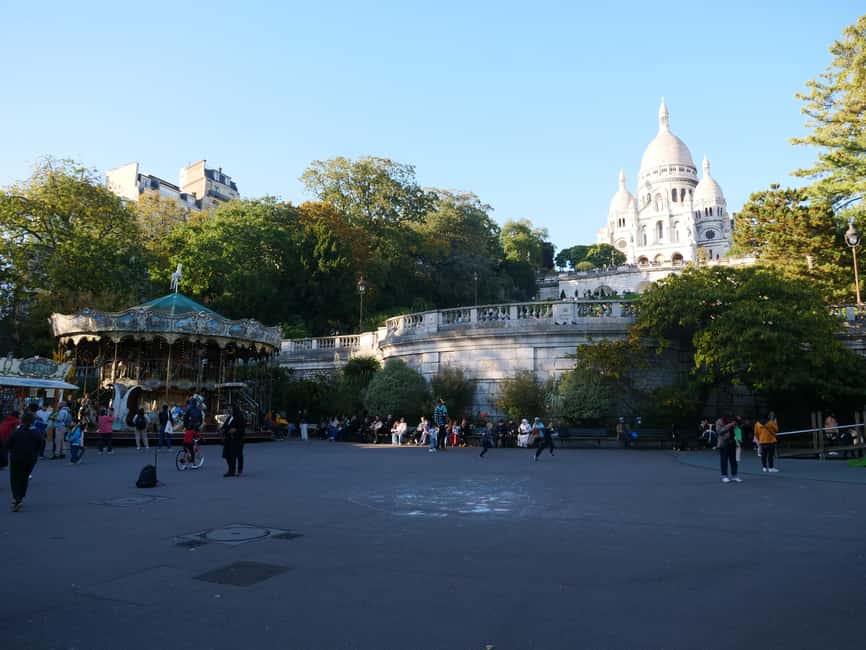
- Sacré-Cœur inside + the panoramic parvis views as a clear payoff point
- Place du Tertre and artist-history stops that explain why the square looks the way it does
- Montmartre’s surprises, like the Clos Montmartre vineyard and Bateau-Lavoir workshop setting
- Ending with the Wall of Love and a smooth finish near Place des Abbesses
Montmartre in 150 minutes: why this walk works
Montmartre is the kind of Paris neighborhood where you can stare at a wall for ten minutes and still find a new reason it matters. This tour works because it doesn’t treat Montmartre like a list of photos. It treats it like a timeline: old Paris first, then the artists and entertainers who made these streets their stage.
You get a guided flow that starts around Carrousel de Saint-Pierre and climbs toward Sacré-Cœur, then winds through the artist core. Along the way, you pause at places that are visually dramatic and historically tied to the creative world. That’s the main value here: you’re not just seeing Montmartre, you’re learning how it became Montmartre.
And yes, it’s built for pictures. The itinerary keeps putting you at the right spots at the right moments: big views, iconic facades, and romantic murals like Le Mur des Je T’aime.
You can also read our reviews of more walking tours in Paris



Starting at Carrousel de Saint-Pierre: the easy way to meet up
Meeting point details matter in Montmartre, and this one is straightforward. You meet at Place Saint-Pierre, 75018 Paris, at the bottom of Square Louise Michel. The guide is easy to spot: they hold a sign with French Tales and a stick featuring Disney’s Ratatouille character.
Look for Café Le Ronsard on the red storefront side, then head toward the carousel. If you’re using the metro, Line 2 (Anvers) is a short walk (about 5 minutes). Line 12 (Abbesses) is around 7 to 10 minutes; the instructions note to avoid stairs and use the elevators if needed.
Square Louise Michel: first views and quick orientation
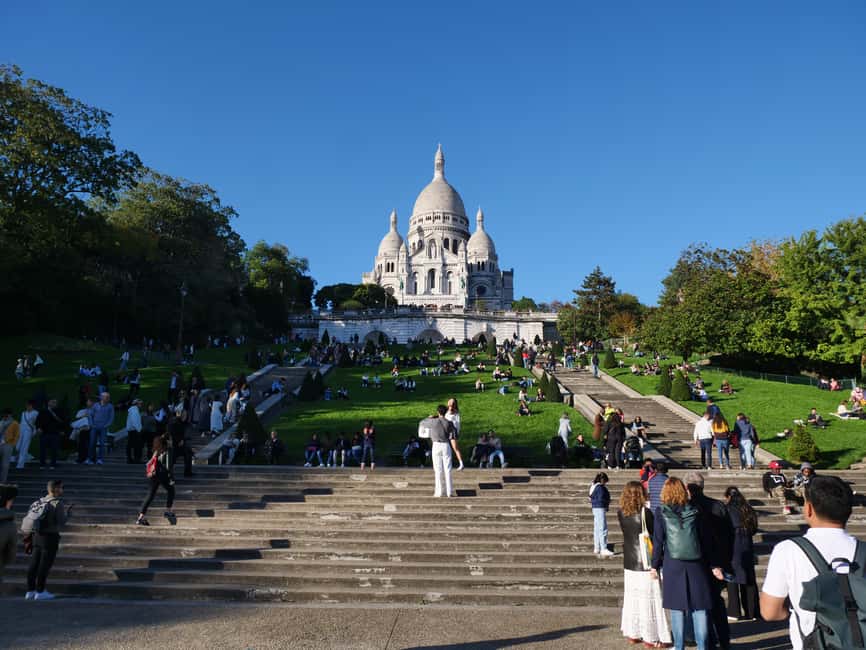
Right away, you get a breather and a view. At Square Louise Michel, the guide gives you a sense of where you are on the hill and how Montmartre’s streets stack up. It’s a smart first stop because it turns the walk into navigation instead of wandering.
I like this part because it helps you understand what you’re about to climb toward. You’ll see the hilltop energy building in front of you, and you’ll start noticing how the neighborhood is shaped for viewpoints.
Photo-wise, it’s a good opener: enough visual interest to start your Montmartre album without the heavy climb yet.
Sacré-Cœur: mosaics, parvis views, and the big moment
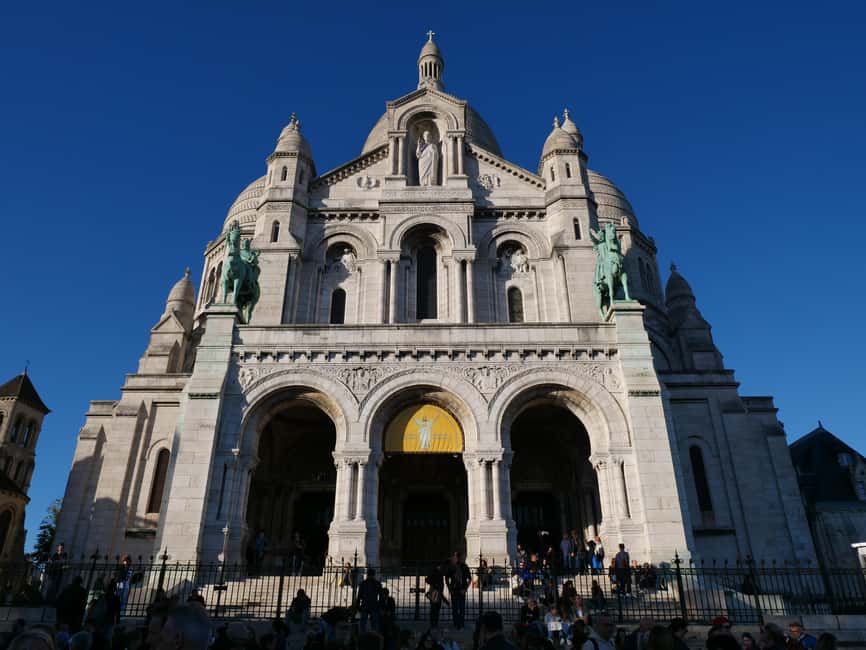
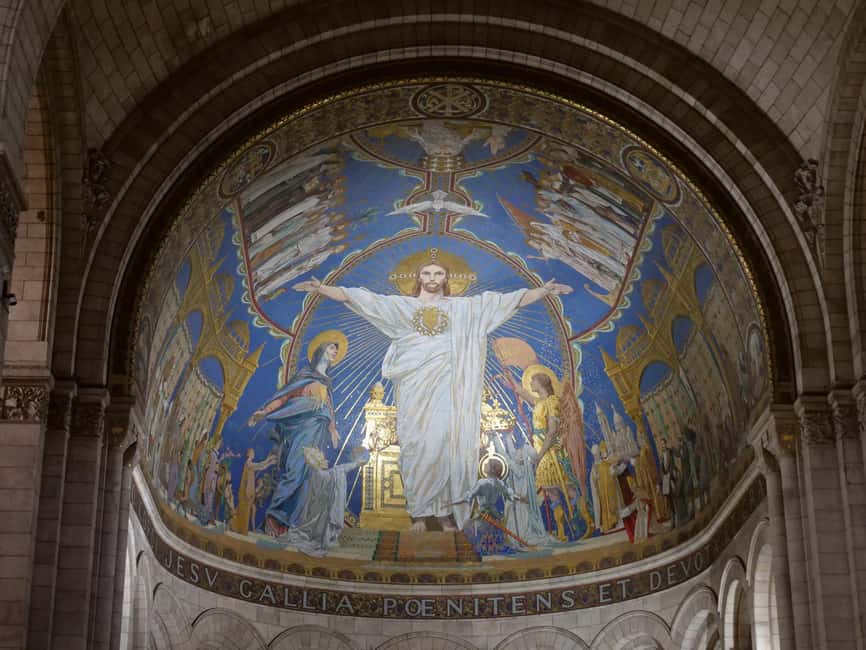
No Montmartre tour is complete without Sacré-Cœur. Here, you get more than a quick glance from outside. You go to the parvis and step inside the basilica to see the mosaics. Then you get the panoramic payoff from one of the neighborhood’s highest points.
This is one of the clearest “worth the effort” stops. If you’ve ever wondered why people talk about Sacré-Cœur like it’s its own destination, this is where it clicks: the view frames the city, and the basilica interior gives you something more than stone and stairs.
Practical note: expect the walk to feel like a workout here. Plan to take it slow and let the guide set the pace.
Place du Tertre and Square Nadar: why the artists picked this street
After Sacré-Cœur, the tour swings toward Montmartre’s creative heart. At Square Nadar, you learn about the photographer tied to Montmartre’s history, and you get a quieter, more reflective pause than the main artist area.
Then it’s on to Place du Tertre, the famous square where you’ll see painters, caricaturists, and lots of café life. The guide helps you read the scene: what you’re seeing now connects to how the neighborhood became a magnet for artists and performers.
I like Place du Tertre in this context because you’re not just looking at the art activity. You understand why this corner stayed important.
Photo tip: spend a minute watching how people move through the square. It makes it easier to take photos without blocking anyone’s view.
You can also read our reviews of more guided tours in Paris





Dalí, surrealism, and Montmartre’s storytelling stops
Montmartre has a way of swallowing famous names into everyday street corners. This tour uses that talent well.
You pause at the Dali Museum—a short stop, but memorable if you like surrealism and visual culture. Then the walk includes Cabaret Au Lapin Agile, a legendary cabaret with a strong reputation in 20th-century artist circles.
These stops work best if you enjoy the “why” behind the neighborhood’s mythology. The guide ties artists to places so it feels less like random sightseeing and more like a story with locations.
Le Poulbot and La Maison Rose: two icons with different energy
Some Montmartre icons are about color and vibe. Others are about what the neighborhood represented to artists.
You’ll visit Le Poulbot, named after the illustrator associated with Montmartre street children. It’s tied to a specific cultural thread, and the guide uses it to explain the neighborhood’s imagination of itself.
Then comes La Maison Rose, the pastel-pink house that’s instantly recognizable in photos. It’s the kind of stop that’s easy to pass by on your own. With a guide, you get the context so it’s not just a picture.
If you’re deciding between chasing photos versus learning, this stretch balances both. You get iconic visuals plus a reason to care.
Clos Montmartre and Moulin de la Galette: the “wait, Paris had vineyards?” moment
This is where the tour gets memorable in a different way. You visit Vignes du Clos Montmartre, a vineyard area that shows winemaking history still alive in the neighborhood. It’s a surprising contrast to the urban streets, and it gives you a fresh angle on Montmartre.
Then you move to Moulin de la Galette, the historic windmill tied to Montmartre’s artistic and social story. Windmills feel like props until you understand they were part of how the area entertained people and attracted creative minds.
I like pairing Clos Montmartre with the windmill because it shifts your idea of Montmartre. It’s not just art galleries and cafés; it’s also production, tradition, and community.
Bateau-Lavoir: the workshop connection that makes Picasso and Modigliani feel real
Next up is Bateau-Lavoir, the workshop space associated with big names like Picasso and Modigliani. This stop is powerful because it connects art legends to a specific place where artists worked.
A guided walk matters here. Without context, Bateau-Lavoir can feel like another building. With a guide, it turns into a snapshot of the creative process—where ideas happened, not just where masterpieces ended up.
If you like modern art history, this is one of the stops that justifies spending time on Montmartre instead of bouncing to the next landmark.
Wall of Love and Place des Abbesses: end romantically, finish practically
The finale is Wall of Love (Le Mur des Je T’aime), covered with “I love you” in over 250 languages. It’s a bright, emotional ending that’s easy to photograph and satisfying to reach after the climbs and alleyway turns.
Then the tour finishes at Place des Abbesses, where you can naturally continue exploring, grab a drink, or head back down toward the metro.
This ending makes sense. You finish with a clear landmark that’s fun to share and easy to recognize, and you end in a lively hub for transit.
Price and what $29 actually buys you in Montmartre
At $29 per person for about 150 minutes, this tour is good value if you care about three things: context, pacing, and photos.
You’re paying for a local guide (not just a self-guided walk), plus stops at major sites like Sacré-Cœur and Place du Tertre, and also the less-obvious locations like Clos Montmartre and Bateau-Lavoir. The guide also provides recommendations for local cafés and attractions, which is the sort of practical help that can save you time later.
Audio support is included in English, too. That matters if you like to replay details while you walk or if you want a backup when the crowd noise picks up.
Not included are food, drinks, and transportation. That’s normal for a walking tour, but it also means you can plan meals on your own terms.
What the guide brings: Jean-Baptiste energy and small-group flow
This experience stands out because of the guide style. Jean-Baptiste, often referred to as JB or JP, comes across as funny, attentive, and safety-minded. The walk doesn’t feel like you’re being dragged from stop to stop. You get breaks built into photo moments, and the pace is designed for the terrain.
A theme from the guide approach is interaction. He’ll help take photos, keep the group together, and share details that turn famous names into characters. Some people even mention he gave a small souvenir as part of the experience, which adds a personal touch.
Also useful: the guide shares local advice, including how to stay alert in busy areas. Montmartre draws tourists, so practical safety guidance can be more valuable than another museum fact.
Who should book this tour
This is a great fit if you want:
- A first-time Paris introduction to Montmartre with real context
- An art-and-history walk focused on artist-linked places
- A guided route that helps you find key spots without overthinking navigation
It’s less ideal if:
- You struggle with steep hills, stairs, and uneven cobblestones
- You’re traveling with mobility needs that make long uphill walking hard
- You want a slow, stroller-style pace
The tour runs rain or shine, so you should pack for weather and expect the route to stay active.
Should you book this Montmartre walking tour or skip it?
Book it if you want Montmartre with structure: Sacré-Cœur, artist squares, and the quieter stops that explain why this neighborhood matters. The combination of iconic sights, surprise locations like Clos Montmartre, and a guide who keeps the energy up makes it feel like more than a standard checklist.
Skip it only if you know your legs won’t handle hills and stairs on a cobblestone route. If you’re comfortable walking uphill for a little over two hours, this is a solid, high-value way to see Montmartre the way it’s meant to be seen: as a lived-in story, not just a backdrop.
FAQ
Where do I meet the guide?
Meet at Place Saint-Pierre, 75018 Paris, at the bottom of Square Louise Michel. The guide is easy to spot holding a sign with French Tales and a stick featuring Disney’s Ratatouille character, directly in front of Café Le Ronsard.
How long is the tour?
The tour lasts about 150 minutes.
Is the tour in English?
Yes. It’s a live English guide, and an English audio guide is also included.
What should I wear or bring?
Wear comfortable shoes. Bringing a bottle of water is recommended, and dressing for the weather matters since the tour runs rain or shine.
What’s included in the price?
A local guide and a walking tour with stops at iconic landmarks, plus recommendations for local cafés and attractions.
Is it wheelchair accessible?
No. The route is not wheelchair accessible due to uneven terrain and stairs.
Who is this tour not suitable for?
It’s not suitable for wheelchair users, people with mobility impairments, and people over 95 years. Children under 12 must be accompanied by an adult.