REVIEW · PARIS
Mysteries of Père Lachaise
Book on GetYourGuide →Operated by Cultival · Bookable on GetYourGuide
Père Lachaise has a way of turning stone into story. This 90-minute guided tour takes you past Paris’s most famous names and then leans hard into the mysterious tombs and odd legends that made the Romantics fixate on the macabre. You’ll walk the old cemetery alleys and hear unusual narratives that feel more like urban folklore than a standard cemetery visit.
I love that the tour gives you more than famous names. You’ll hear about specific, story-rich graves tied to love, illusion, spiritualism, and dark myths. I also like the tone: it’s guided by a live person and tends to keep things clear and entertaining, with humor showing up in the way the guide explains the material.
One watch-out: it’s French only, and the visit is built around lots of walking on cobbled paths and slopes. If you need step-free access or low-mobility routes, this isn’t a great fit, and even with good mobility you’ll have limited reach to every tomb because the cemetery is a place of meditation.
In This Review
- Key things to know before you go
- Père Lachaise is where Paris keeps its legends
- Price and what 90 minutes buys you
- Finding the meeting point at the largest entrance
- How the walk is paced (and why cobblestones matter)
- Stop 1: Abelard and Héloïse, love turned into legend
- Stop 2: Countess Demidoff and the vampire-woman legend
- Stop 3: Robertson, illusions, skulls, and phantasmagorias
- Stop 4: Count of Lavalette, adventure with a shadow
- Stop 5: Alan Kardec and spiritualism after death
- You’ll also see the cemetery’s famous names as context
- What the tour gets right about “mystery” storytelling
- Who should book this tour
- Should you book Mysteries of Père Lachaise?
- FAQ
- Is the tour guided in English?
- How long is the Mysteries of Père Lachaise tour?
- Where do I meet the group?
- Which public transport stops are nearby?
- Is transfer included in the price?
- Is it accessible for people with reduced mobility or pushchairs?
- Does the tour include a guide?
Key things to know before you go
- French-guided only: plan to understand French for the full experience.
- Cemetery “mysteries” focus: famous graves are part of the backdrop, but the stories center on unusual tombs.
- Plenty of walking: cobbled paths and slopes mean comfortable shoes are not optional.
- Not every grave is guaranteed: meditation space means access can be limited.
- 90 minutes is tight: you’ll cover highlights, not every corner of Père Lachaise.
Père Lachaise is where Paris keeps its legends
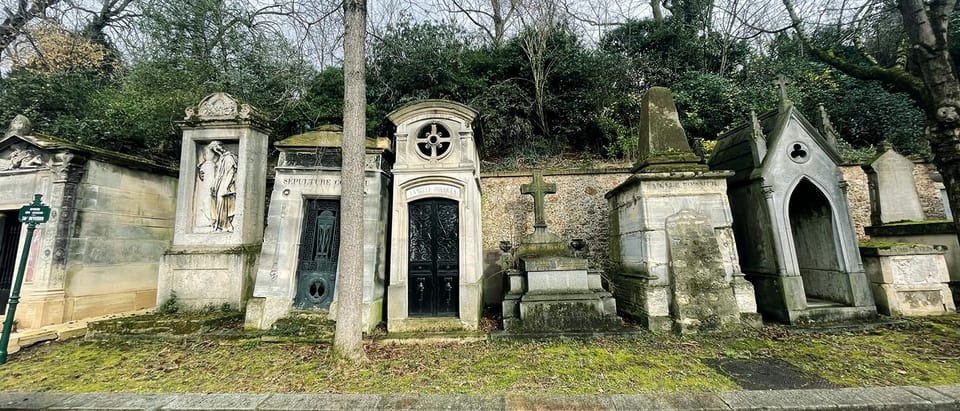
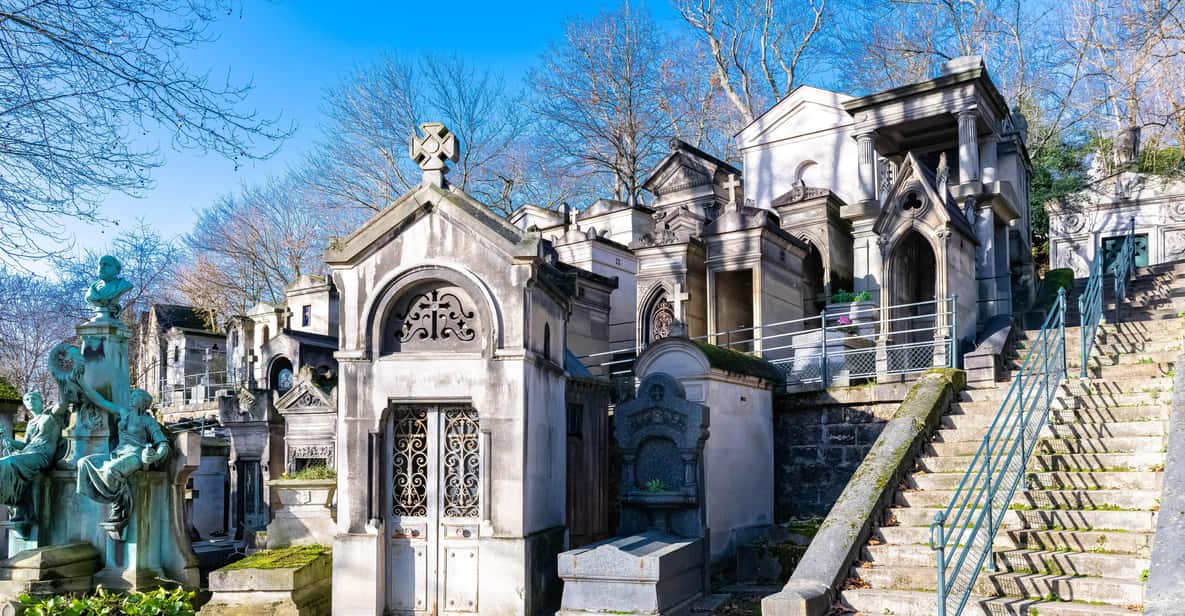
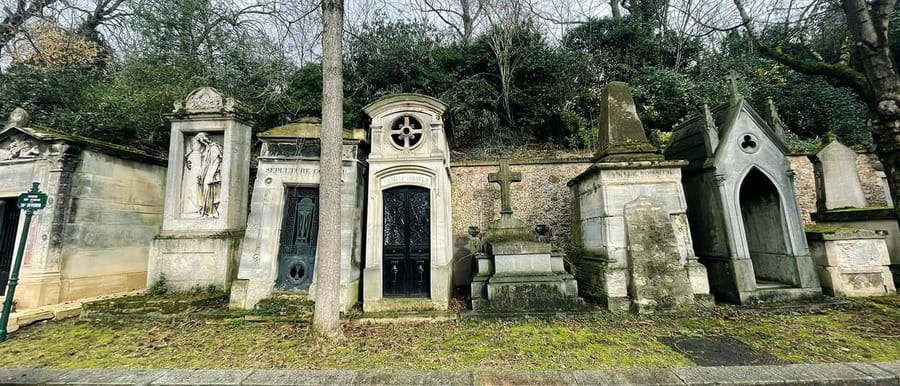
Père Lachaise is the city’s oldest cemetery, and it has three big claims to attention: it’s beautiful, it’s historic, and it’s famous. The alleys are the kind that romantics loved, and it’s packed with graves tied to writers, artists, and public figures you’ll recognize fast—think Balzac, Oscar Wilde, Marcel Proust, Baron Haussmann, Edith Piaf, Gérard de Nerval, and Jim Morrison.
So why book a tour about mysteries instead of just wandering? Because the cemetery can feel like a museum if you don’t have a guide to connect the names to the stories. This tour leans into the part that people often find more fun: the oddly specific legends and supernatural-flavored tales attached to certain plots. The stories are framed in the spirit of earlier romantics—Gothic tastes, a fascination with the supernatural, and even references to classic occult ideas like mysterious table-turning.
The best value here isn’t that you’ll learn a single trivia fact. It’s that you get a guided path through the cemetery where the “why is this tomb famous?” question gets answered again and again in plain, story-forward language.
You can also read our reviews of more tours and experiences in Paris.



Price and what 90 minutes buys you
At about $17 per person for 90 minutes, this is priced like a local-style activity, not a big-ticket museum tour. That matters because Père Lachaise is huge, and a short guided loop helps you avoid the common problem: spending an hour finding nothing but more headstones.
You’re also getting what many city tours forget to include: a live guide, not an audio script. That makes a difference in a cemetery setting where you want context right when you reach a grave. You’ll spend your time on the parts that have enough story to justify stopping.
If you’re expecting a strict, supernatural-only show, keep this in mind. The tour can also connect themes to broader threads of French history and politics depending on how the guide frames the material. In other words, the atmosphere stays “mysteries,” but it may not be 100% ghost-story mode.
Finding the meeting point at the largest entrance
You’ll meet at the main entrance, the largest entrance to Père-Lachaise cemetery. The address is on boulevard de Ménilmontant, opposite rue de la Roquette, in the 75020 area.
Getting there is straightforward with several transit options:
- Metro Père Lachaise (line 3)
- Metro Philippe Auguste (line 2)
- Bus 61 or 69
I like choosing line 3 because it puts you close enough that you can arrive calmly, rather than rushing through the last blocks. Since the tour is built around walking, arriving a few minutes early helps you avoid the stress that can steal attention from the stories.
How the walk is paced (and why cobblestones matter)
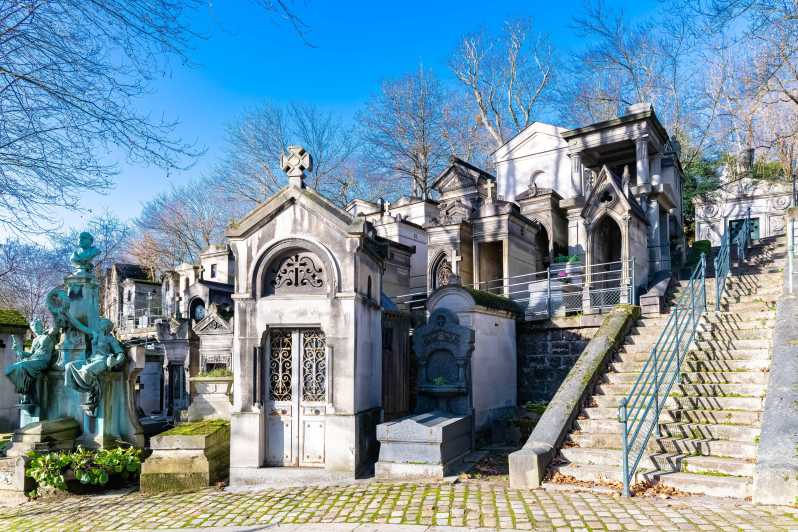
The experience is guided in French only and runs for about 90 minutes. Expect a proper stroll, not a quick drive-by. Père Lachaise has cobbled paths, plus slopes, and the tour takes place on those surfaces.
That leads to three practical tips that improve your day fast:
- Wear shoes with grip. Even on a dry day, cobbles can feel slick.
- Bring water if you’re visiting in warmer months. The tour doesn’t list specific breaks.
- Don’t assume you’ll see every famous grave. The cemetery is also a meditation space, and access to some tombs can be limited.
Also note that the provider can postpone the visit in bad weather. If you’re in Paris on a tight schedule, this is one more reason to keep flexibility.
Stop 1: Abelard and Héloïse, love turned into legend
One of the most compelling story graves on this route is the final resting place of Abelard and Héloïse. Their legend carries a built-in drama: ill-fated lovers, separated by conflict, but reunited in eternity.
What makes their tombs especially interesting for a “mysteries” tour is the way love becomes part history, part myth. You’ll hear how a figure named Alexander the Black played a role in the reunification narrative—described as a curator at the dawn of the 19th century.
Even if you already know the names, the tour’s angle helps you read the cemetery differently. Instead of treating graves as isolated markers, you start seeing how later people shaped which stories got emphasized and remembered.






Stop 2: Countess Demidoff and the vampire-woman legend
If you like the idea that a cemetery can contain more than solemnity, you’ll probably enjoy the story connected to Countess Demidoff. This is presented as the vampire woman with a strange will, which gives the tour its darker edge without turning it into pure sensationalism.
The key value here is that you’re seeing how rumors and literary darkness attach themselves to real names and real monuments. Whether you believe every detail or not, the cultural effect is real: the legend gives the grave a storyline visitors want to understand.
This is also a good moment to slow down. Some tours rush you past the stone. Here, the story focus encourages you to look longer at the details and let the narrative land.
Stop 3: Robertson, illusions, skulls, and phantasmagorias
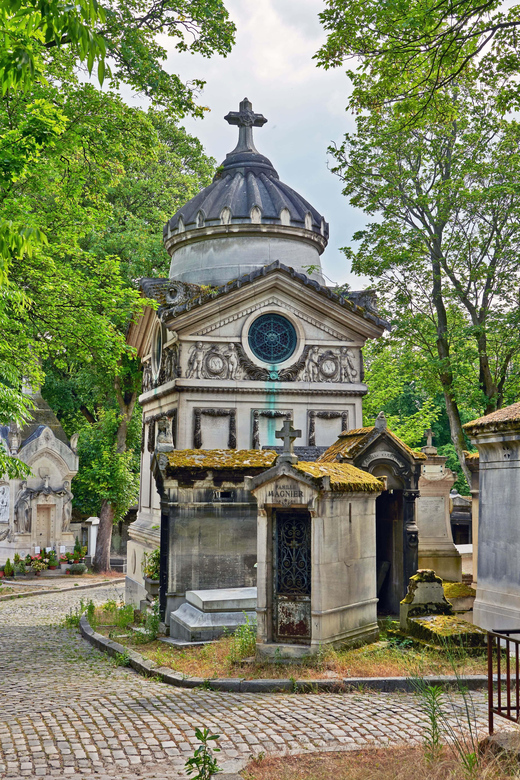
Another highlight you may be excited for is the grave connected to Robertson, described as the grand master of illusions. The tour frames this in a very theatrical way, with references to skulls and phantasmagorias—the kind of spooky stage imagery that fits the gothic taste of earlier eras.
This is a smart stop for people who love the intersection of performance and mystery. A cemetery is silent, but illusions are about perception. The story helps connect those ideas: how people in the past used spectacle and fear to create unforgettable experiences.
If you’re the type who usually skips over “art history” parts of tours, this is a counterexample. The description is vivid enough to keep you engaged, while the cemetery setting makes it feel slightly more haunting.
Stop 4: Count of Lavalette, adventure with a shadow
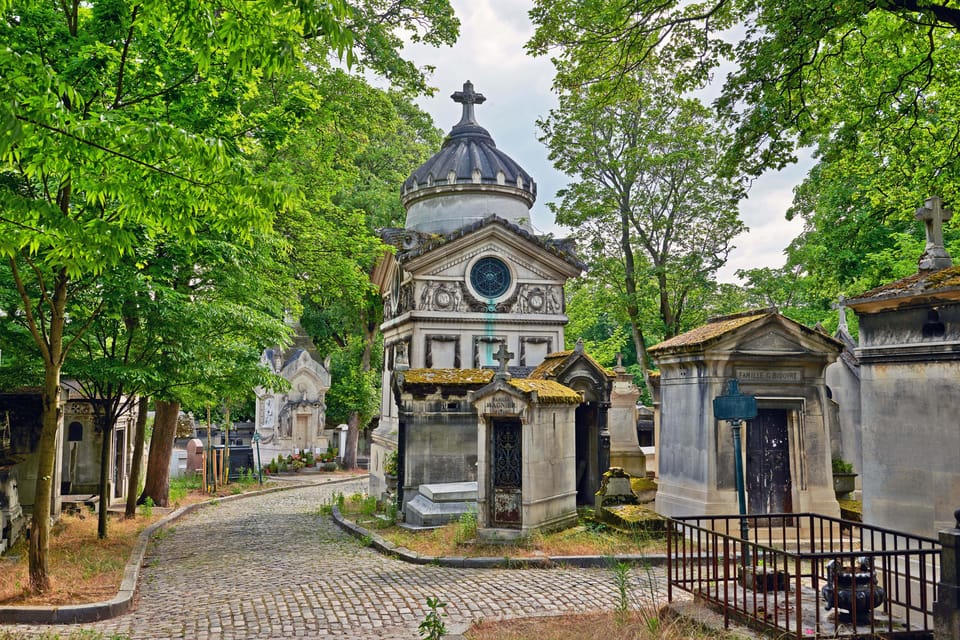
The tour also includes the grave of the Count of Lavalette, whose life is described as full of adventure. This is one of those stops where the “mystery” framing does not have to mean supernatural.
Sometimes, mystery is just human risk—modes of escape, plots, and dramatic twists. In a cemetery packed with famous writers and public figures, it’s refreshing when a guide reminds you that the legends belong to real people who had complicated lives.
If the guide ties this into larger historical threads, that can be a plus. It gives the cemetery more context than a purely gothic route.
Stop 5: Alan Kardec and spiritualism after death
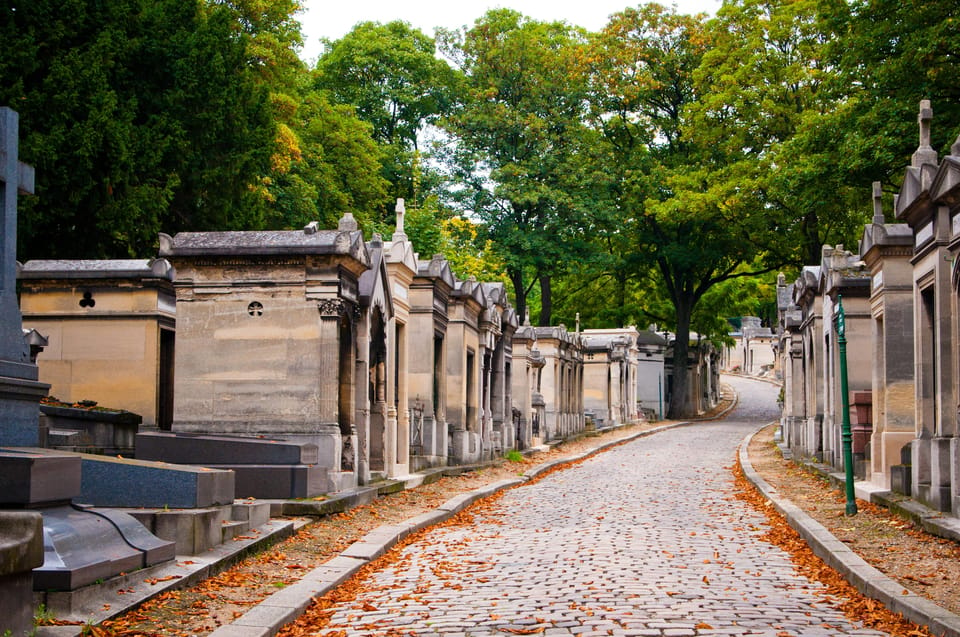
If you want a philosophical turn, look for the grave of Alan Kardec, described as the spiritualist who communicated with the spirits of the dead somewhere in the afterlife.
This stop is valuable for two reasons:
- It widens the tour beyond “dark aesthetics” into ideas about what people thought death might mean.
- It connects the cemetery to 19th-century thinking where spiritualism was not just a fringe hobby—it was a movement.
It also fits the tour’s broader theme about romantics and the supernatural. Instead of just telling creepy stories, this part helps you understand why visitors in earlier eras would go looking for meaning in stone.
You’ll also see the cemetery’s famous names as context
Even though the tour’s heart is the mysteries, the bigger cemetery context matters. Père Lachaise is famous for big literary and cultural names like Balzac, Oscar Wilde, Proust, Haussmann, Edith Piaf, Nerval, and Jim Morrison.
I like having that “you are standing in the same city memory as everyone else” moment early on. It makes the mysterious tomb stories feel anchored rather than random. After you’ve heard one legend, the cemetery stops feeling like a list and starts feeling like a network of stories that Paris keeps passing down.
What the tour gets right about “mystery” storytelling
A good mystery tour doesn’t just offer thrills. It gives you a way to interpret what you’re seeing. Here’s how this one tends to work:
- The guide uses specific tomb stories, so you’re not stuck with vague atmospherics.
- The cemetery backdrop is used as context, not as an afterthought.
- The tone can include humor, which keeps it human rather than overly grim.
That’s also why the tour works well for visitors who don’t normally enjoy cemeteries. You’re not being asked to mourn. You’re being guided through cultural narratives that happened to take root in a place of reflection.
One more practical note: you can’t count on accessing every tomb. Because the cemetery is a meditation space, some areas may not be open in the way you expect. That isn’t a failure of the tour. It’s part of how Père Lachaise operates.
Who should book this tour
This experience is a strong match if:
- You like story-driven guides and want legends tied to real places
- You’re curious about romantics, gothic aesthetics, and the supernatural angle that comes with it
- You want a short, focused visit to a massive cemetery
It’s not ideal if:
- You only speak basic French and want a fully understandable guide (this is French only)
- You can’t manage cobbled paths, slopes, or uneven surfaces
- You want a slow, silent cemetery stroll with no guiding direction
If you’re visiting Paris and want one activity that feels more like a historical walking tale than a checklist, this is a good contender.
Should you book Mysteries of Père Lachaise?
I’d book it if you want a guided, story-rich way to experience Père Lachaise in a limited amount of time. The value at $17 is strong for a live 90-minute tour, and the focus on unusual tombs helps you go beyond the generic “famous people are buried here” version of the cemetery.
Don’t book it blindly if you need English. French-only tours can feel frustrating if you’re not comfortable. Also, if you want strictly supernatural content without any historical or political framing, be aware the guide may connect the mysteries to wider French threads.
If you show up with comfortable shoes and an open mind for macabre storytelling, you’ll leave with Père Lachaise feeling less like a stop on a route and more like a chapter of Paris you can walk through.
FAQ
Is the tour guided in English?
No. The tour is in French only.
How long is the Mysteries of Père Lachaise tour?
It lasts 90 minutes.
Where do I meet the group?
You meet at the main entrance of Père-Lachaise cemetery, on boulevard de Ménilmontant, opposite rue de la Roquette (75020 Paris).
Which public transport stops are nearby?
You can use Metro Père Lachaise (line 3) or Metro Philippe Auguste (line 2). Bus 61 and 69 also serve the area.
Is transfer included in the price?
No. Transfer is not included.
Is it accessible for people with reduced mobility or pushchairs?
No. The tour is not accessible to people with reduced mobility or pushchairs because it takes place on cobbled paths and slopes.
Does the tour include a guide?
Yes. A live guide is included.