REVIEW · PARIS
Paris: Anzac Day Day Tour to Villers Bretonneux
Book on GetYourGuide →Operated by Paris' TRIP · Bookable on GetYourGuide
Dawn over the Somme is unforgettable. This 12-hour Anzac Day day trip pulls you from Paris to Villers-Bretonneux and then across the Somme battlefield country, tied together by the people and places that still carry the story. I love how the trip doesn’t treat the day like a photo stop; it links the Dawn Service with cemeteries and battlefield sites so the meaning lands. I also like the logistics on the ground, with a comfortable ride and an English-speaking guide who keeps things moving and clear. One possible drawback: the schedule is full, and during the Dawn Service window you’ll feel the time pressure more than you might expect.
By the end, you’re not just seeing landmarks. You’re standing in the actual terrain where battles happened—craters, villages, and memorials to the Missing Soldiers—with the calm-but-serious feeling that Anzac Day brings.
In This Review
- Key Highlights Worth Planning For
- Why Villers-Bretonneux Matters on Anzac Day
- The 12-Hour Rhythm: From Paris to the Somme and Back
- Dawn Service Timing and the Memorial Tower Closure
- Victoria School: A Living Memorial Connection
- Adelaide Cemetery: Pay Attention to the Details
- La Boisselle and the Lochnagar Crater (1916)
- Pozières: Seeing the Battlefield Beyond the Postcards
- Thiepval Memorial: Honoring the Missing
- Péronne and Mont Saint-Quentin: A View That Changes the Perspective
- Price and Value: What You’re Actually Paying For
- What to Bring So the Day Feels Manageable
- Who This Tour Suits Best (And Who Might Feel Frustrated)
- Should You Book This Anzac Day Somme Tour?
- FAQ
- How long is the Paris to Villers-Bretonneux and Somme tour?
- Where is the meeting point in Paris?
- Is there an English-speaking guide?
- Is food and drinks included?
- Is the tour wheelchair accessible?
- Will the central tower of the Australian National Memorial be open?
- What is the latest time I can cancel for a full refund?
Key Highlights Worth Planning For
- Anzac Day Dawn Service in Villers-Bretonneux with technical setup affecting access around the memorial area
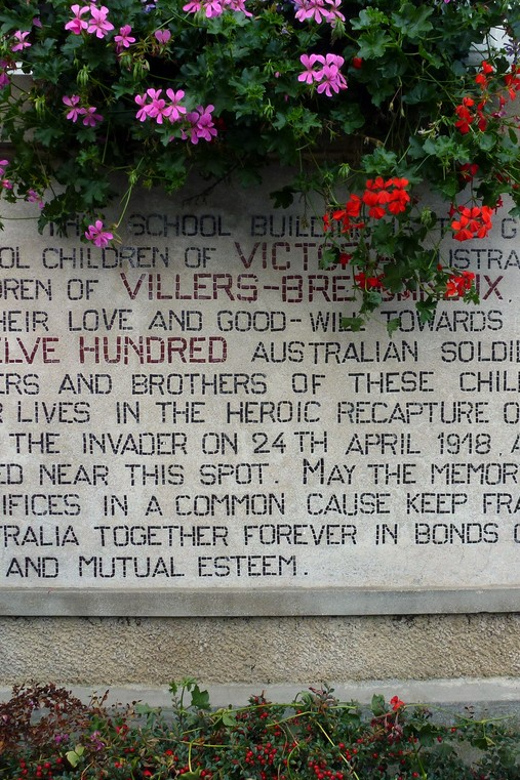
- Victoria School connection (1923–1927), built as a gift from the children of Victoria to the children of Villers-Bretonneux
- Adelaide Cemetery for a dedicated moment of remembrance
- Lochnagar Crater at La Boisselle (1916), a stark reminder of how war reshaped the land
- Thiepval Memorial to the Missing of the Somme, built specifically for soldiers with no known grave
- Mont Saint-Quentin memorial at Péronne, overlooking the Somme River for big-sky perspective
Why Villers-Bretonneux Matters on Anzac Day
Villers-Bretonneux is one of the emotional centerpoints of Anzac Day in France. This is where many Australians connect the day to a specific place: schools, memorials, and the shared effort of remembrance. The tour’s first major cultural stop is the Victoria School, built between 1923 and 1927 as a gift from the children of the Australian state of Victoria to the children of Villers-Bretonneux.
That detail matters because it shifts the day away from pure battlefield tourism. You’re seeing a community connection built right into the landscape—proof that the war’s aftermath didn’t just produce cemeteries and memorial stones. It also produced education, goodwill, and long-term bonds between places that were once far apart.
If you’re coming from Paris, this also gives your day a clear arc. You start with a place that feels human and shared, then you move toward the Somme’s heavy ground—where the story turns colder and more physical.
You can also read our reviews of more tours and experiences in Paris.



The 12-Hour Rhythm: From Paris to the Somme and Back
This is a serious day—12 hours total—so you’ll want to treat it like a full program, not a flexible sightseeing loop. The tour uses round-trip transportation from central Paris, then moves you between multiple sites across the Somme area. Depending on group size, you’ll travel by minibus, a 15-seater coach, or a coach.
What I like about this kind of format (and what works for most people) is that it removes the toughest planning headache: routes across battlefields and memorials are not always intuitive. You’re paying for someone else to handle the driving while you focus on understanding what you’re seeing.
The tradeoff is simple: you don’t control the pace. If you want long, quiet time at every memorial, you may feel a bit constrained. Still, when the theme is Anzac Day and there’s a specific Dawn Service moment, a tight timeline is part of the deal.
Dawn Service Timing and the Memorial Tower Closure
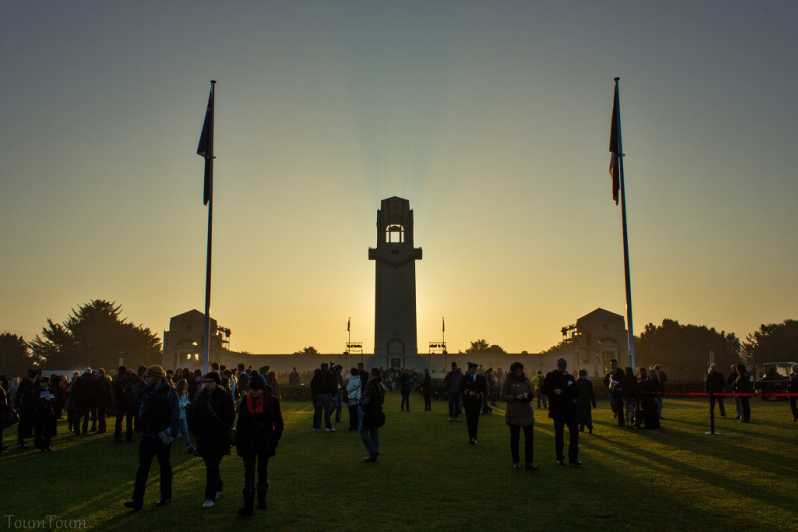
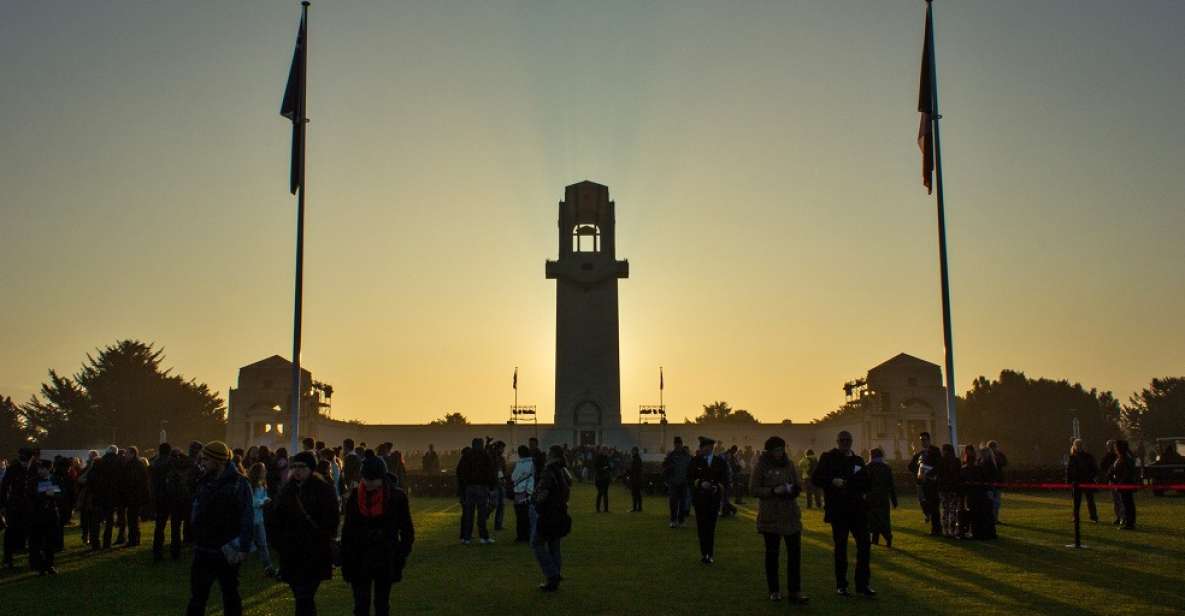
The heart of the trip is the Anzac Day Dawn Service in Villers-Bretonneux. The tour includes time for this observance as part of the overall itinerary, and it’s treated as the day’s focal point.
One important heads-up: the central tower of the Australian National Memorial will not be open to the public due to the installation of technical equipment for the Dawn Service. That’s not unusual on major ceremony days, but it does change what you can physically access around the memorial complex.
Practically, this means you should go with the mindset that your experience is about the ceremony and the surrounding memorial environment—not climbing, circling, or exploring every angle like it’s a normal day.
Also, dress like you expect cool early-morning weather. The itinerary is very much outdoors, and comfortable shoes matter for the walking you’ll do between ceremony areas and stops.
Victoria School: A Living Memorial Connection
After the initial transfer from Paris, you’ll head into Villers-Bretonneux’s connection to Australia: the Victoria School. This building was constructed from 1923 to 1927 as a gift from the children of Victoria to the children of the town.
That’s a powerful reminder that WWI remembrance isn’t just about battle dates. It’s about how communities rebuilt meaning after the horror—linking people through education and shared respect. It’s also a nice change of pace in a day that otherwise leans heavy. You’ll likely feel the difference between reading war history and standing in a place that was created by children, for children, as part of goodwill.
If you care about the human side of history—how places heal and remember—this stop is one of the most meaningful parts of the day.
Adelaide Cemetery: Pay Attention to the Details
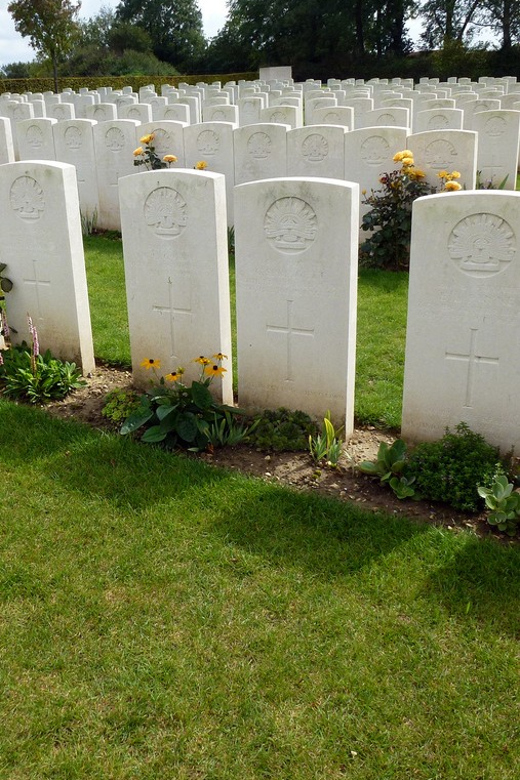
The tour then moves to Adelaide Cemetery, with a chance to pay respects to the fallen soldiers. A cemetery stop is never just a photo moment. It’s where the day becomes personal in a different way—names, ranks, and the quiet order of the ground.
This kind of stop also works well inside a guided day because you get context quickly. You’re not left guessing what you’re looking at. Even if you’ve read about WWI before, a cemetery visit brings the scale into focus.
Go slowly here. If you rush, you miss the emotional rhythm. Take a moment to look at the markers and think about how many lives are condensed into a small footprint of earth.






La Boisselle and the Lochnagar Crater (1916)
Next comes one of the most visually unforgettable battlefield reminders on the Somme: the deep Lochnagar Crater at La Boisselle. This crater is a left-behind scar from 1916, and it’s hard to process until you’re actually standing near it.
What makes this stop valuable is that it turns abstract tactics into something you can see. A battlefield can be explained in words all day long, but a crater like this communicates impact immediately. The scale and the sudden violence of it are obvious—especially when you compare it to the calm landscape around you now.
This is also where the guide’s role becomes extra important. You’ll get help understanding what the crater represents and why it matters within the broader fighting in the area.
Pozières: Seeing the Battlefield Beyond the Postcards
From there, you’ll visit the site of the Battle of Pozières. Pozières is one of those WWI locations that people remember for what happened there, not for what it looks like today. That can be both sobering and clarifying.
In this tour format, you’re not just “at a site.” You’re given the storyline—why this location mattered, what fighting involved, and how the land ties into the events. That’s what keeps Pozières from becoming a generic stop.
If you’re doing the Somme for the first time, Pozières can help you understand the geometry of the conflict: how villages, ridges, and positions shaped what was possible.
Just be ready for walking and standing time. Battlefield ground isn’t designed for comfort, even when it’s well-kept and accessible enough for normal tourism.
Thiepval Memorial: Honoring the Missing
One of the emotional peaks of the day is the Memorial to the Missing of the Somme at Thiepval. This is not a cemetery where you can visit a grave. It exists because many soldiers have no known final resting place.
That difference matters. A cemetery can feel like closure. A missing memorial feels like something else: a commitment to remembering even when answers were never found.
This is the kind of stop that benefits from a respectful tempo. If you let yourself absorb it, you’ll likely feel that the memorial’s purpose is larger than commemoration. It’s a way to hold names in public memory when private closure wasn’t possible.
Péronne and Mont Saint-Quentin: A View That Changes the Perspective
In Péronne, you’ll see the war memorial of Mont Saint-Quentin, located overlooking the Somme River. This is a smart final-zone stop because viewpoints do something the ground can’t: they help you understand distances and direction.
Standing somewhere elevated—especially looking over a river valley—helps you picture why certain positions mattered. Even with no military training, you can sense how geography affects movement, visibility, and control.
It also gives your day a bit of breathing room. After craters, memorial names, and cemetery rows, the view can make the scale feel real in a different way.
If you like getting your bearings fast, take advantage of any moment you get here to look around slowly.
Price and Value: What You’re Actually Paying For
At $330 per person for a 12-hour day, this isn’t a bargain-bin outing. But it’s also not just a bus ride with quick stops. You’re paying for three things that usually cost money and time:
- English-speaking guidance that ties sites together into one coherent story
- Round-trip transportation from central Paris to the Somme and back
- Access to key Anzac Day moments and multiple major memorial/battlefield locations in one go
Food and drinks are not included, so you’ll want to budget for that separately. The upside is you avoid the constant question of where to eat and how to coordinate it without messing up ceremony timing.
For many people, $330 feels like fair value if you’re prioritizing remembrance plus understanding—rather than trying to drive yourself through a heavy region on a schedule that includes a Dawn Service.
What to Bring So the Day Feels Manageable
This tour asks you to move through outdoor sites and memorial spaces. The basics matter more than you think.
Bring comfortable shoes. Then add warm layers, because even if the sky looks mild, early and battlefield areas can feel cold fast. Also, remember that food and drinks are not included, so plan for snacks and water you can carry during the day.
A small practical note: if you’re traveling specifically for the Dawn Service, double-check your documentation and any ceremony-related instructions with the provider well before departure. On major event days, details can cause delays for individuals, and you do not want to waste that precious time right around the ceremony.
Who This Tour Suits Best (And Who Might Feel Frustrated)
This is an excellent fit if you:
- want a guided, structured Anzac Day in France (not DIY driving)
- care about WWI memorials and want context, not just location names
- value a single-day route that covers multiple major Somme sites
It’s not for everyone. The tour is not wheelchair accessible and isn’t suitable for people with mobility impairments. If you have mobility needs, you’ll likely find too much walking and uneven ground for your comfort.
Also, if you hate tight schedules, this may feel rushed during high-demand moments. Anzac Day observances work on ceremony time, not sightseeing time.
Should You Book This Anzac Day Somme Tour?
If Anzac Day in France is your priority, I’d book it—especially if you want the experience tied together by a guide and you’re okay with a full, structured day. The combination of Dawn Service, the Victoria School connection, the Adelaide Cemetery, Lochnagar Crater, Thiepval, and the Mont Saint-Quentin memorial gives you one coherent “from grief to remembrance to understanding” arc.
If you’re the type who wants lots of free time to wander silently at each stop, or you’re sensitive to schedule pressure, you may find it less satisfying. In that case, look for a smaller, more flexible option.
FAQ
How long is the Paris to Villers-Bretonneux and Somme tour?
The tour duration is 12 hours.
Where is the meeting point in Paris?
Meet in front of the Opera Garnier (Metro Station Opera or bus lines 3, 7, and 8).
Is there an English-speaking guide?
Yes, the tour includes an English-speaking guide.
Is food and drinks included?
No. Food and drinks are not included.
Is the tour wheelchair accessible?
No. This tour is not wheelchair accessible and is not suitable for people with mobility impairments.
Will the central tower of the Australian National Memorial be open?
No. The central tower will not be open to the public due to technical equipment installed for the Dawn Service.
What is the latest time I can cancel for a full refund?
You can cancel up to 24 hours in advance for a full refund. No cancellations, modifications, or refunds are available 5 days prior to the scheduled tour date.