
REVIEW · PARIS
Paris: Conciergerie Ticket with Histopad
Book on GetYourGuide →Operated by Distributor: GetYourGuide Tours & Tickets GmbH · Bookable on GetYourGuide
A prison you can almost hear. The Conciergerie turns from a royal palace into an infamous Revolution-era jail, and the HistoPad adds an AR-style 3D reconstruction so the story feels concrete instead of abstract. I especially like how the visit connects big-picture French Revolution drama to specific spaces: cells you can stand in, and the chapel tied to Marie Antoinette.
I also like the practical setup: you’re on your own schedule with an audio guide, so you can linger where your curiosity pulls you. One thing to consider is navigation. This site is easy to enjoy, but it can take a bit of effort to stay oriented while you move room to room with the audio setup.
The ticket is straightforward: entrance to the Conciergerie plus the HistoPad 3D reproduction of Marie-Antoinette’s cell, available in several languages, and an audio guide. You’ll get a one-day entry, with timing details that matter because the HistoPad is handed out until 4:15 PM and the last entry is 30 minutes before closing.
In This Review
- Key highlights I’d plan around
- Entering the Conciergerie: palace walls with a prison purpose
- The Salle des Gens d’Armes: the medieval hall that anchors everything
- Cells, criminals, and Revolutionary tombs: the building tells the story
- Marie Antoinette’s chapel and the HistoPad time-shift
- Self-guided audio: multilingual and flexible, but plan for wayfinding
- How to pace the day so you don’t feel rushed
- Ticket value: what you pay for and what you still need to plan
- Practical rules that matter on the day
- Who this fits best (and who might prefer something else)
- Should you book the Conciergerie ticket with HistoPad?
- FAQ
- How long is the Conciergerie ticket with HistoPad?
- Is the visit guided or self-guided?
- What does the HistoPad include?
- What should I bring for entry?
- What’s not included with the ticket?
- What should I know about refunds and key closures?
Key highlights I’d plan around
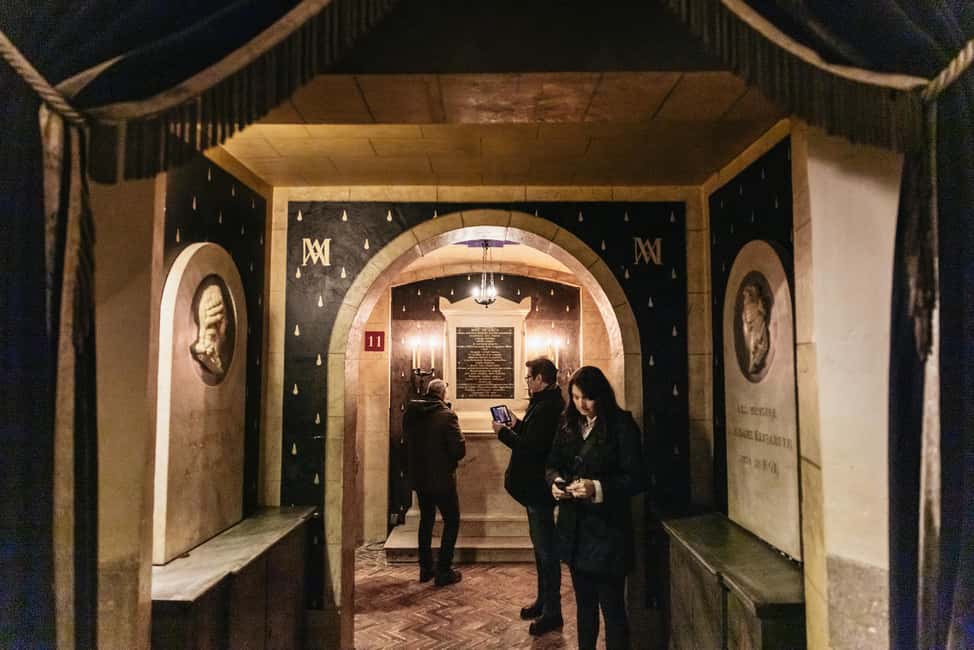
- Marie Antoinette’s cell, reconstructed in 3D via the HistoPad, so you’re not just reading about it
- The Salle des Gens d’Armes, the largest remaining medieval hall in Europe, and a real visual anchor for the visit
- Cells of criminals and Revolutionary tombs, where the building’s purpose becomes painfully clear
- The chapel tied to Marie Antoinette’s imprisonment, a small-but-heavy stop in the route
- Self-guided pacing with multilingual audio, useful if you like control over your time
Entering the Conciergerie: palace walls with a prison purpose

Start at the Conciergerie, 2 Boulevard du Palais, 75001 Paris. Plan to arrive with your ID or passport ready because the entry rules are tied to identification, and you won’t want to fumble at the start.
The building’s “double life” is the whole point. The Conciergerie began as a 14th-century royal palace. When the royal family moved residence, the palace transformed into a prison, and during the French Revolution it became known as an antechamber to the guillotine. That shift matters because it changes how you read the architecture: what once housed power now processed prisoners.
If you like sites that make history physical, you’ll feel it fast. Even before you hit the specific cell areas, the mood and layout tell you that this wasn’t designed as a quiet museum.
You can also read our reviews of more tours and experiences in Paris



The Salle des Gens d’Armes: the medieval hall that anchors everything
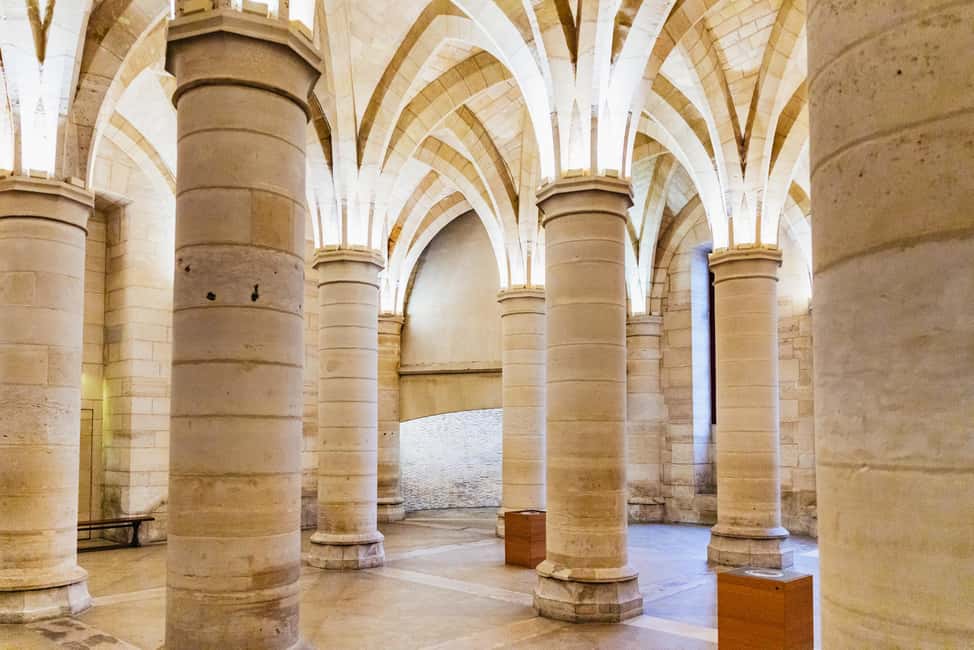
One of the most striking stops is the Salle des Gens d’Armes, described as the largest remaining medieval hall in Europe. Even if you’re not a medieval architecture nerd, this is the kind of space that resets your sense of scale.
Why it’s worth prioritizing: a big hall like this helps you understand how the building functioned beyond individual rooms. When you later move into confinement-related spaces, that contrast lands harder. The scale also helps you orient yourself—use this hall as your mental reference point as you work through the route.
If you’re short on time, don’t treat this as a photo-op only. Spend a few minutes standing still and letting the room’s size sink in. It makes the later “small space” sections more meaningful.
Cells, criminals, and Revolutionary tombs: the building tells the story

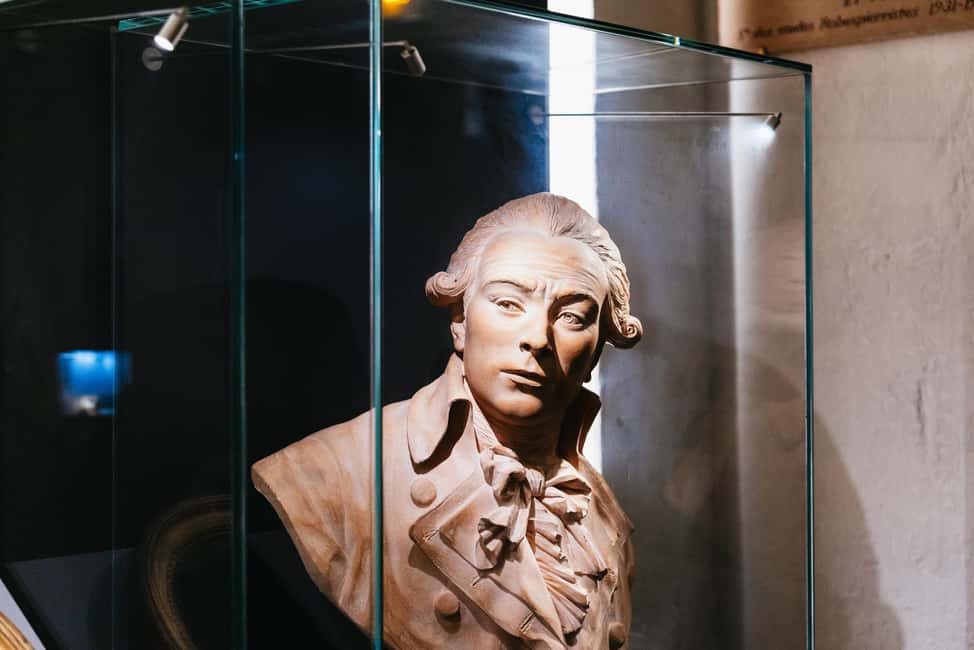
The core experience is the move from royal spaces into the prison world. You’ll explore cells of criminals and the tombs of heroes of the French Revolution. Together, these stops create a sharp emotional rhythm: suffering and punishment on one side, revolutionary memory on the other.
For me, the power of this arrangement is that it refuses to keep the Revolution tidy. The tombs remind you that the Revolution was also about ideals and outcomes. The prison cells remind you what those outcomes cost in daily life.
Practical tip: keep an eye on where you are in the building. Because this is a self-guided experience, it’s easy to get turned around if you’re wandering freely in every direction. Use the bigger anchor areas (like the Salle des Gens d’Armes) to keep your route logical.
Also, note that the site includes medieval rooms and spaces that have disappeared—so not everything you see exists in exactly the same form today. That makes the HistoPad timing especially important (more on that below).
Marie Antoinette’s chapel and the HistoPad time-shift
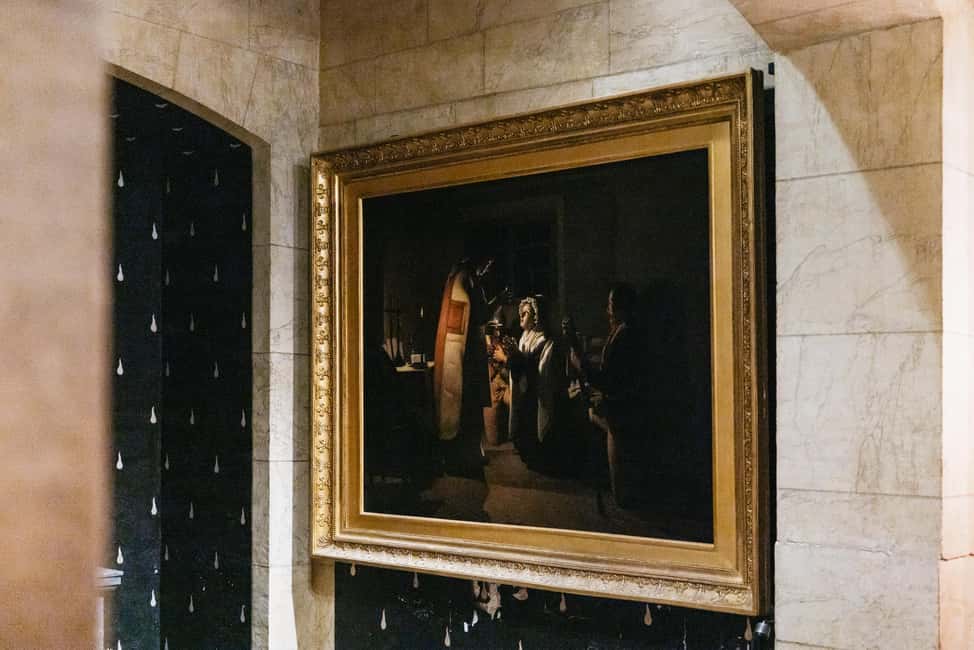
One of the highest-impact stops is the chapel that was once a prison cell where Marie Antoinette was held. Even without any tech, this section carries weight because it’s linked directly to a person who became an emblem. Standing there shifts you from general-history mode into human-scale history.
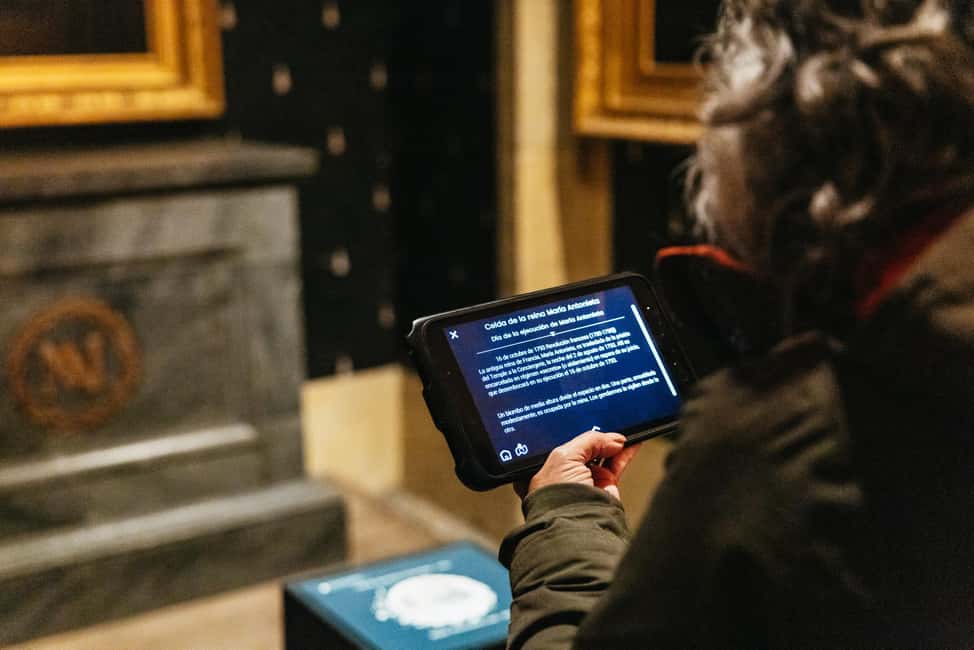
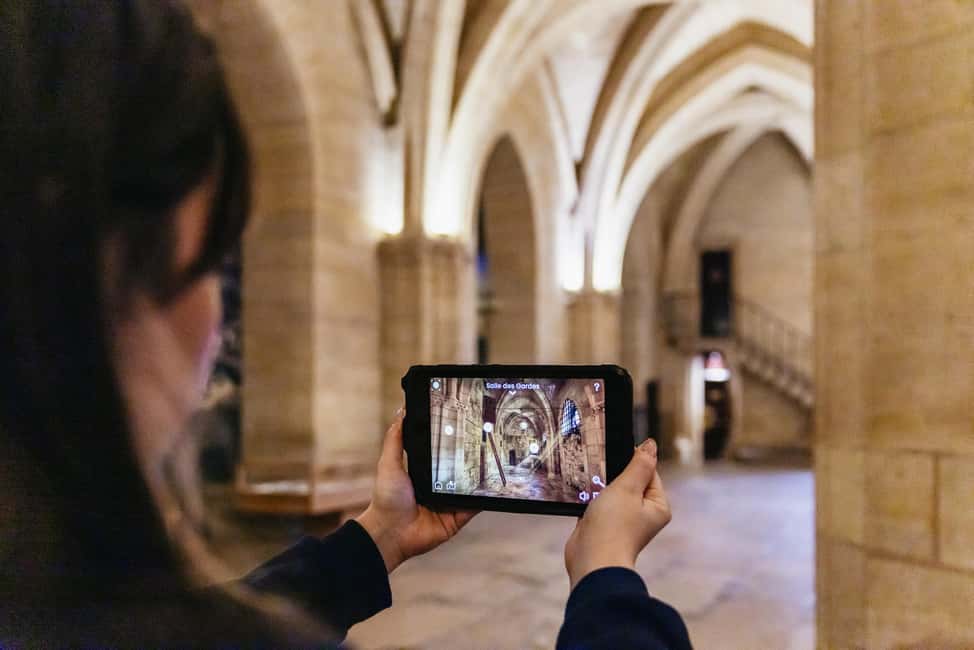
This is where the HistoPad 3D-reproduction adds real value. Instead of only picturing what the cell may have looked like, you get an augmented, reconstructed view designed to help you “see” the past. That makes a difference if you’re the type who struggles with museum storytelling unless it becomes visual and specific.
What to know about the HistoPad:
- You’ll find the HistoPad 3D reproduction of Marie-Antoinette’s cell as part of your ticket.
- It’s available in French, English, German, Spanish, Italian, Japanese, and Chinese.
- The HistoPad is distributed to visitors until 4:15 PM, so you need to plan your day with that deadline in mind.
If you’re visiting later in the afternoon, don’t assume you’ll still get one. Build your route so you reach the HistoPad area well before 4:15 PM, then you can keep exploring afterward.
Self-guided audio: multilingual and flexible, but plan for wayfinding
This is a self-guided visit with an audio guide included. That’s a big plus if you like your own pace, especially in a site this emotionally intense. You can linger near the cells, then move briskly through larger halls if you’re time-crunched.
The audio guide languages include Chinese, English, French, German, Italian, Spanish, Japanese, Korean, and Portuguese. So you should find your language without hunting for alternatives.
The trade-off is orientation. One of the only frustrations that shows up in the feedback is that the route information could be clearer. On a self-guided site, that usually means you should give yourself a little extra patience at the start. Don’t try to “power through” with fast walking—slow down for the first one or two sections so you understand how the building flows.






How to pace the day so you don’t feel rushed
Here’s a simple approach that works well in practice:
- Start with the main architectural anchor first (the Salle des Gens d’Armes area helps).
- Move into the prison cell sections next, when you’re fully in the building’s “purpose” mindset.
- Save the Marie Antoinette chapel + HistoPad for a point in the day where you’re comfortably ahead of the 4:15 PM HistoPad distribution cutoff.
Also remember the time boundary: the last entrance is 30 minutes before closing time. And the site is closed May 1 and December 25.
Ticket value: what you pay for and what you still need to plan
At about $15 per person, this is a solid value if you care about two things: a real historical site and a visual upgrade through HistoPad. You’re not paying extra just for “an entry.” You’re paying for a structured museum experience plus the AR reconstruction element.
What you get with your ticket:
- Entrance to the Conciergerie
- A self-guided visit
- Audio guide included in multiple languages
- HistoPad 3D reproduction of Marie Antoinette’s cell
What you don’t get:
- Entrance to Sainte-Chapelle (so if you want it, you’ll need a separate ticket)
- Transportation (you’ll be navigating Paris on your own)
Because it’s a one-day activity with starting times, I’d treat it as a primary stop rather than a side quest. If you’re building a tight Paris day, you’ll likely get more satisfaction by choosing a nearby schedule buffer than by trying to stack it instantly with another ticketed site.
Practical rules that matter on the day
Before you go, keep these constraints in mind so you don’t hit friction at the entrance:
- Bring your passport or ID card.
- Luggage or large bags aren’t allowed.
- The HistoPad is distributed until 4:15 PM.
- Last entrance happens 30 minutes before closing time.
- Free entry rules exist:
- Visitors under 18
- EU citizens under 26 with photo ID (you’ll need a ticket issued onsite)
There’s also free entrance at certain times: the first Sunday of January, February, March, November, and December, and during European Heritage Days (the third weekend of September each year). If you’re traveling around those dates, it can be a great way to save money.
Who this fits best (and who might prefer something else)
This ticket is a great match if you want:
- A self-paced museum visit with strong storytelling spaces
- A specific historical hook around Marie Antoinette
- An experience that mixes room-by-room exploration with a tech-enhanced reconstruction
It’s less ideal if:
- You dislike any time-pressure tech handouts (because the HistoPad distribution ends at 4:15 PM)
- You’re the type who expects perfect signage and effortless routing in a self-guided site (it can require a bit more attention to stay on track)
Overall, if you’re comfortable walking through a meaningful, heavy historical site and you like using audio to connect dots, you’ll probably feel you got your money’s worth.
Should you book the Conciergerie ticket with HistoPad?
Yes—book it if your priority is seeing the Conciergerie as more than a “stop along the Seine.” The combination of prison cells, Revolutionary memorial spaces, and the HistoPad reconstruction of Marie Antoinette’s cell gives you both atmosphere and clarity.
My biggest booking advice is timing. Plan your route so you’re not scrambling at the 4:15 PM HistoPad distribution point, and don’t cut it close to the last entrance window. Do that, and you’ll leave with a much stronger sense of place than you’d get from entry alone.
If you’re unsure, ask yourself one simple question: do you want the Marie Antoinette cell story to be visually reconstructed for you? If the answer is yes, this ticket is worth it.
FAQ
How long is the Conciergerie ticket with HistoPad?
It’s listed as valid for 1 day, with starting times based on availability.
Is the visit guided or self-guided?
The visit is self-guided, with an audio guide included.
What does the HistoPad include?
The ticket includes a HistoPad 3D-reproduction of Marie-Antoinette’s cell, available in French, English, German, Spanish, Italian, Japanese, and Chinese.
What should I bring for entry?
Bring your passport or ID card.
What’s not included with the ticket?
The ticket does not include entrance to Sainte-Chapelle, and it does not include transportation.
What should I know about refunds and key closures?
This activity is non-refundable. The Conciergerie is closed May 1 and December 25, and the last entrance is 30 minutes before closing time.