REVIEW · PARIS
Paris: Invalides Dome – Skip-the-Line Guided Museum Tour
Book on GetYourGuide →Operated by Babylon Tours LLC · Bookable on GetYourGuide
Gold dome, dark secrets, and a short walk. I love the Skip-the-line entry because it helps you beat the slow start, and I also love how Napoleon’s tomb becomes the centerpiece of the visit with a clear story behind it. One drawback to plan for: this is a 2-hour tour with moderate walking, so bring comfortable shoes and expect to stand while you listen.
You’ll move through the Hôtel des Invalides complex with a professional art historian guide, usually in a max 8 guests group for a calmer pace. I like that the route doesn’t stay stuck in the basics; you get the courtyard origin story, the cathedral setting, and then the museum artifacts and military maps that explain the stakes behind the names you hear.
If you’re sensitive to quiet rules in certain rooms or you’re not able to handle walking, double-check fit first. The semi-private format isn’t set up for wheelchair users, though wheelchair tours may be available only on request.
In This Review
- Key things you’ll notice
- Entering the Dôme des Invalides: how your 2-hour route actually flows
- Skip-the-line access at Musée de l’Armée: time saved, focus gained
- The Hôtel des Invalides courtyard: Louis XIV’s veteran mission made concrete
- The cathedral and the Sun King’s legacy: why the setting matters
- Napoleon’s tomb under the gold dome: seeing the centerpiece up close
- Museum time: artifacts, recreations, and military maps that bring context
- Who your guide might be (and why it matters)
- Group size, language options, and pacing (what you gain)
- Logistics you’ll want to know before you go
- Price check: why $128 feels fair for this specific experience
- Should you book this skip-the-line Invalides tour?
- FAQ
- How long is the Paris Invalides dome skip-the-line tour?
- What does skip-the-line include?
- Which sites are covered during the tour?
- Is Napoleon’s tomb included?
- What group size should I expect?
- What languages are available for the live guide?
- Do I need to bring anything?
- Are large bags allowed inside?
- Is wheelchair access available?
- Is pickup from my hotel included?
Key things you’ll notice
- Skip-the-line access that gets you into Musée de l’Armée faster
- Louis XIV’s Invalides mission explained in the courtyard and cathedral
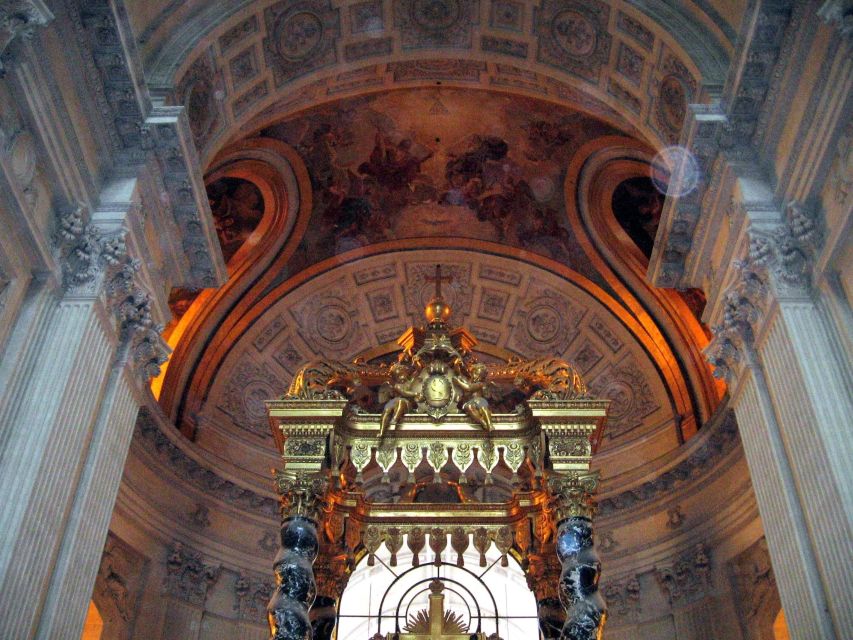
- Napoleon’s tomb under the gold dome, plus nearby burials
- Military artifacts and maps that go beyond the usual “great man” story
- Small-group pacing (up to 8) with an art historian guide
- No large bags and moderate walking built into the experience
Entering the Dôme des Invalides: how your 2-hour route actually flows
This tour is built for people who want the big moments without losing time. In about two hours, you’ll hit the highlights that make the Dôme des Invalides so famous—especially the cathedral area and Napoleon’s burial setting—then you’ll continue into the museum for context that makes the displays click.
What makes it work well is the sequence. The Invalides complex has layers. You start with the place and its purpose, then you move into the cathedral where the story becomes personal, and only after that do you spend time with museum items that turn speeches and slogans into objects, documents, and battlefield references.
You’ll also get a live guide in multiple languages, so you’re not stuck piecing together your visit from labels alone. If you’re traveling as a family, this is one of those stops where a good guide matters. A lot of history museums turn into a slow slideshow; this one is designed to keep the narrative moving.
You can also read our reviews of more guided tours in Paris



Skip-the-line access at Musée de l’Armée: time saved, focus gained
At the price point of about $128 per person, you’re paying for two things: a guide and an easier start. The skip-the-line access is the practical part—Invalides is popular, and waiting can eat your energy fast.
But the bigger value is what you gain after you get in. Instead of wandering between rooms and hoping you stumble into the right exhibits, you follow a path that’s clearly tied to French military leadership: Louis XIV first, Napoleon next, and then the museum material that fills in the “how” and “why.”
This also helps you avoid a common museum problem. You can spend time reading labels, but you might miss how themes connect. Here, the guide points out what to look for and how items relate to the bigger timeline—wins and defeats, leadership choices, and the consequences of pushing too far.
The Hôtel des Invalides courtyard: Louis XIV’s veteran mission made concrete

The courtyard is where the site’s purpose becomes real. You’ll walk through the epic space tied to the 17th century origins of the Invalides as a veteran’s hospital under King Louis XIV. That detail matters, because it changes how you see the complex.
If you only view the Invalides as a monument, it feels like a stage set. But once you understand that it was designed as respite and care after battle, the architecture reads differently. The stones aren’t just grand. They’re functional—built around the idea that soldiers needed somewhere to recover and live.
The guide’s job here is to connect the setting to the people. Louis XIV isn’t just a name from textbooks. In this story, he’s part of how France organized military life and how it treated the human aftermath of war.
The cathedral and the Sun King’s legacy: why the setting matters
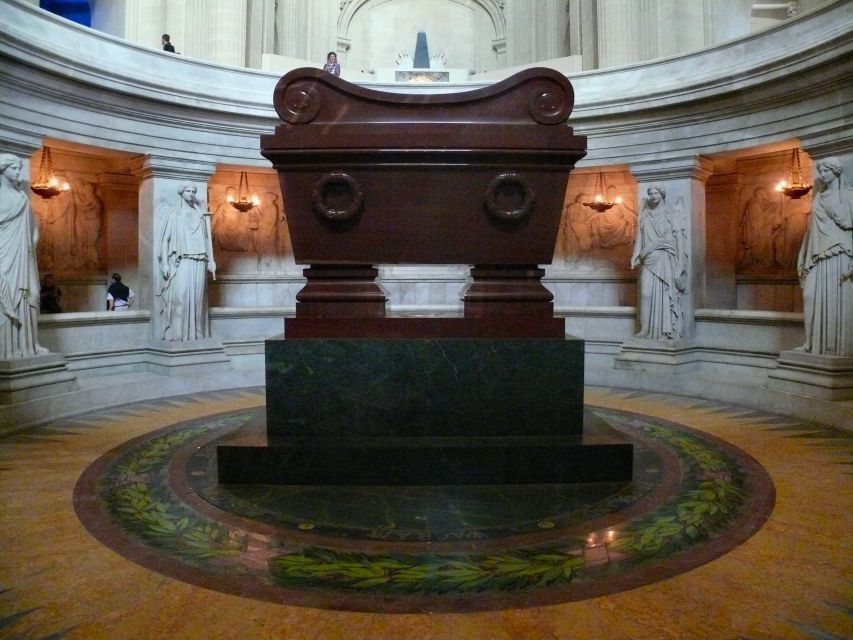
After the courtyard, you move into the cathedral area linked to Louis XIV’s efforts for his former troops. This is one of those moments where the building itself does storytelling work. The space is meant for reverence, and the tour uses that mood carefully: you’re not just looking around; you’re learning what the cathedral was for and why it became tied to military memory.
This part of the tour also helps if Napoleon is your main reason for coming. You’ll understand that Napoleon’s tomb is not floating in isolation. It sits inside a larger French tradition of commemorating leadership, service, and national identity.
You’ll come away with more than architecture facts. You’ll understand the logic of the complex: a place to care for veterans, and later, a place where France chooses to preserve its most influential military chapters in stone.
Napoleon’s tomb under the gold dome: seeing the centerpiece up close
Then comes the moment most people came for: Napoleon Bonaparte’s tomb beneath the magnificent gold dome. The tour frames Napoleon as a brilliant general and audacious emperor—someone who made France feel unstoppable during its military conquests.
But the best part is that the guide doesn’t stop at the glamour. You also learn the end of the story: Napoleon dies in exile, and his remains are interred underneath that dome. That contrast—triumph, fall, exile—hits harder when you’re standing in the space built to hold the memory.
You’ll see Napoleon’s tomb up close, and you’ll also have time for the tombs of those closest to him. That added layer matters. France can treat history like a single hero narrative, but the burial arrangement suggests a more complicated circle of people tied to his legacy.
If you’re visiting for the first time, this is the section that helps the whole museum make sense. You’ve got the “center of gravity” in front of you, so when you move into galleries and artifacts afterward, you’re not just collecting facts—you’re connecting them.
You can also read our reviews of more museum experiences in Paris






Museum time: artifacts, recreations, and military maps that bring context

After the tomb focus, you spend time in the museum. This is where the tour earns its keep for people who don’t want only a photo stop.
You’ll learn about Napoleon beyond the famous stature through artifacts, recreations, and military maps. That mix is important because it hits different learning styles. An object can be powerful. A map can explain movement and strategy fast. A recreation can help you visualize what happened without relying only on text.
You’re also guided through a timeline of wins and defeats. That’s the difference between a history site that feels like myth and one that feels like cause-and-effect. France’s military story isn’t presented as neat heroism; it’s shown as decisions made under pressure, with consequences that escalate.
One practical note: some rooms inside the museum have quiet or restricted rules for speaking. The guide will steer you through what’s allowed, so you can focus on the exhibits without turning the tour into a rule-bending exercise.
Who your guide might be (and why it matters)
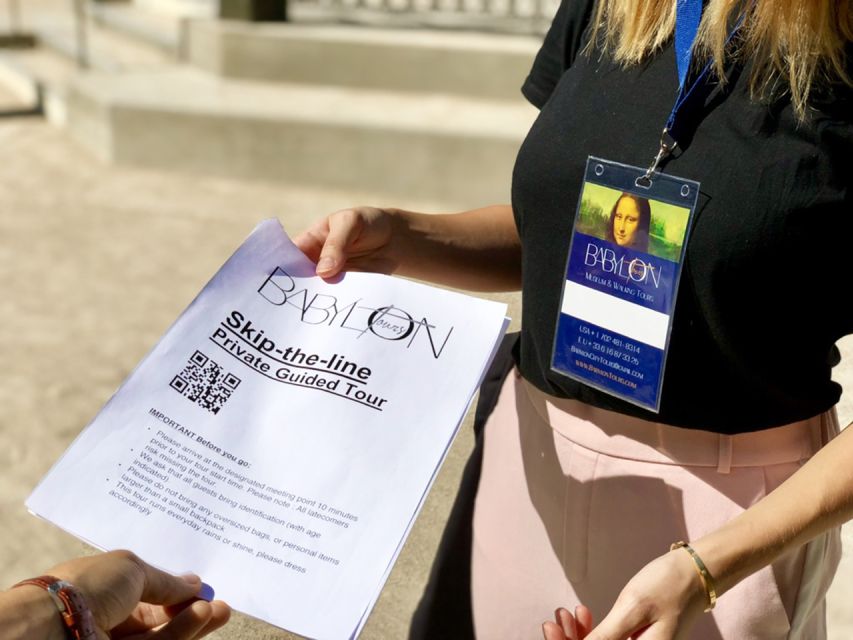
A tour like this lives or dies on the guide. The standout reviews tie the experience to strong storytelling and fast answers to questions.
In particular, I’d keep an eye out for guides named Florent, Mathieu, Anatole, Daniel, or Taylor. Each name in the mix comes with the same theme: the guide connects the site’s layout to the historical ideas, and stays responsive when you ask something specific.
For kids or teens, the guide tone really matters. If you’re bringing a 13-year-old history fan, this is the kind of tour where the right phrasing can turn a “museum chore” into a guided story they remember later.
Also, there’s a small touch of usefulness in how guides prepare you. One example: a tip about Angelina for hot chocolate came up in guide recommendations. If you like the idea of pairing a grand military site with a comfort-food treat afterward, it’s a fun way to balance the mood.
Group size, language options, and pacing (what you gain)
You’re limited to a maximum of 8 guests per guide, which makes the whole experience feel less like a rush and more like a planned walk. That small group size also helps the guide notice if you’re more interested in Napoleon’s life, Louis XIV’s military role, or the details of artifacts and maps.
Language is covered well. Tours can run in German, English, Russian, Spanish, Italian, or French. So you’re not stuck with the “tour group roulette” problem.
Duration stays tight at 2 hours, which is perfect if you want to fit Invalides into a packed Paris day. It’s also long enough to avoid the ultra-short skip-and-snap style tours that leave you feeling like you missed the point.
Logistics you’ll want to know before you go
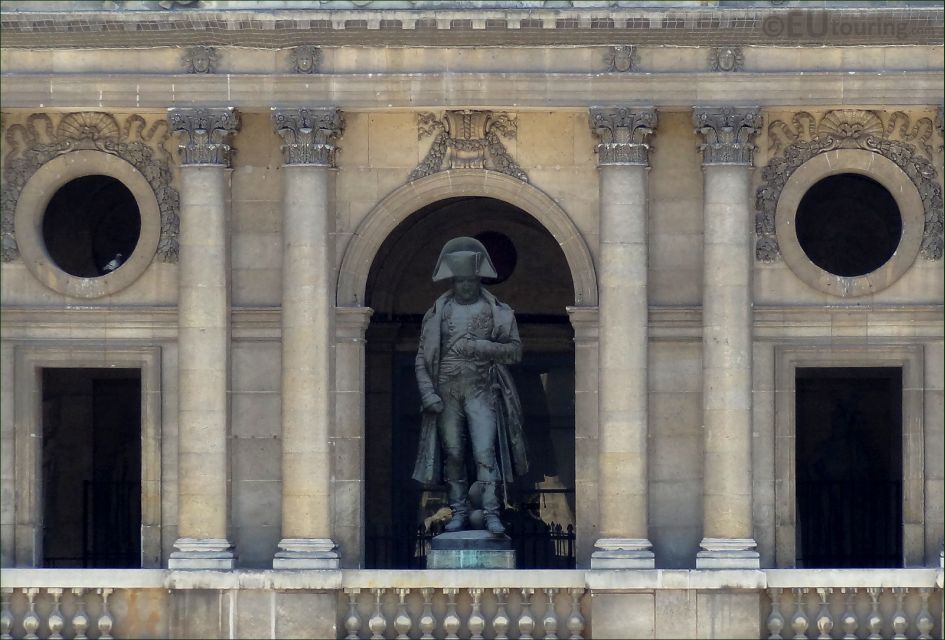
Meeting point can vary depending on the option you book, and the tour ends back at the meeting point. That means you should plan your next stop nearby—or at least be ready to backtrack a little if you’re moving on foot.
Bring a passport or ID card. It’s specifically called out as what you should have with you.
Also, don’t show up with large bags or suitcases. No luggage or large bags are allowed. If you’re traveling light, you’ll have fewer headaches. If you’re traveling with a day bag, keep it manageable.
Walking is moderate. This tour isn’t set up for people with walking disabilities, and wheelchair users should not assume it’s workable in the semi-private format. Wheelchair tours are mentioned as available only on request, so if accessibility is part of your plan, contact the provider before you lock in your dates.
One more real-world thing: occasional closures can happen without warning from the museum management. If the museum opening time is delayed by more than 1 hour from the tour starting time, you’ll be provided an appropriate alternative, but refunds or discounts may not apply in those cases. It’s the kind of uncertainty that happens in major attractions—so keep your schedule flexible when possible.
Price check: why $128 feels fair for this specific experience
$128 per person is not a bargain, and you shouldn’t treat it like one. What you’re paying for is a guided route plus entrance fees with skip-the-line access, delivered in a small group with a professional art historian guide.
If you’re the type who enjoys self-guided wandering, you could probably visit Invalides on your own. But this tour targets exactly the parts that usually get lost when you go solo: the building’s purpose under Louis XIV, the way Napoleon’s tomb fits into the cathedral setting, and the museum materials that explain the military story with artifacts, recreations, and maps.
Think of it like buying clarity. The money isn’t just for standing in front of Napoleon. It’s for learning what to look at, how to connect items to the leaders and events, and how the French military narrative shifts from the Sun King to the emperor.
At two hours, it’s also time-efficient. You’re not spending a full day trying to piece together 300 years of military leadership with limited attention. You’re getting the sharp outline fast.
Should you book this skip-the-line Invalides tour?
Book it if you want:
- A guided focus on Louis XIV and Napoleon rather than a random museum circuit
- Skip-the-line entry so you can keep your day on schedule
- A small-group pace where you can ask questions and move through key rooms efficiently
- A route that connects the courtyard, cathedral, and museum galleries into one story
Skip it (or consider a different format) if you:
- Need a fully accessible route for mobility limitations, since the semi-private format isn’t available for wheelchair users
- Prefer long, silent browsing over a guided narrative
- Are bringing large bags or suitcases, because you’ll need to travel light
For most first-timers, this tour is a smart way to see the Dôme des Invalides without turning your visit into a hurried scavenger hunt. The best payoff is that the gold dome isn’t just a sight—it becomes the ending to a storyline you understand when you walk into the museum afterward.
FAQ
How long is the Paris Invalides dome skip-the-line tour?
The tour duration is 2 hours, with starting times that depend on availability.
What does skip-the-line include?
It includes skip-the-line access to the museums and entrance fees.
Which sites are covered during the tour?
You’ll explore the Hôtel des Invalides complex, including the courtyard and the cathedral area, and you’ll also spend time in the Musée de l’Armée museum.
Is Napoleon’s tomb included?
Yes. You’ll see Napoleon’s tomb up close and also the tombs of those closest to him.
What group size should I expect?
The tour has a maximum of 8 guests per guide for a more intimate experience. Private and small group options are available.
What languages are available for the live guide?
Live tour guidance is offered in German, English, Russian, Spanish, Italian, and French.
Do I need to bring anything?
You should bring your passport or ID card.
Are large bags allowed inside?
No. Luggage or large bags are not allowed.
Is wheelchair access available?
Wheelchair tours are available only on request, but the semi-private option is not available for wheelchair users or those with walking disabilities.
Is pickup from my hotel included?
No. Hotel pickup and drop-off are not included.