REVIEW · PARIS
Paris: La Défense Modern District Walking Tour
Book on GetYourGuide →Operated by Cognosimo Tours · Bookable on GetYourGuide
Modern Paris starts right here. This is a compact walk through La Défense, the city’s financial district, with Grande Arche as your anchor, plus street-level sculpture and planning context. I like how fast it gives you the big picture of 1960s urban changes, and I like that the tour keeps you focused on what you can actually see: modern towers, outdoor art, and civic space. One drawback: the meeting spot at Grande Arche de la Défense can be tricky at the start, so build in a little extra time to get oriented.
This is a private group walking tour that lasts about 75 minutes, guided in French or English. It’s a great fit if you enjoy modern architecture and urban design, and want the contrast with classic Paris—without spending half a day commuting and wandering. If you’re looking for a traditional museum-style stop with lots of indoor time, this one is more about open-air city form and design.
In This Review
- Key things I’d focus on before you go
- La Défense in One Hour: Why This Modern Walk Works
- Meeting at the Grande Arche and Getting Oriented
- Grande Arche: The Monument That Lines Up With Paris
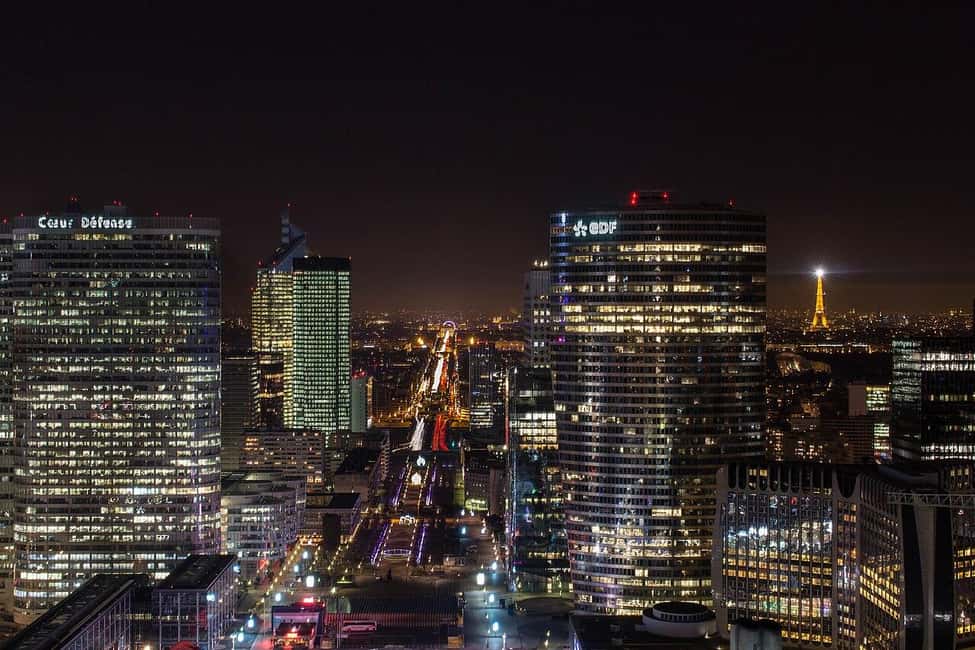
- Skyscrapers, Squares, and Outdoor Sculpture at Street Level
- The 1960s Planning Story: Georges Pompidou’s Influence You Can See
- Classic Paris vs. Contemporary Development: The Contrast You Can Actually Measure
- Price and Value: Is $100 for 75 Minutes Fair?
- Who This Tour Fits Best (and Who Might Skip It)
- Should You Book La Défense Modern District Walking Tour?
- FAQ
- Where is the meeting point?
- How long is the tour?
- What does the tour include?
- What price should I expect?
- What languages are available?
- Is this a private group or a public tour?
- Can I smoke during the tour?
- Is the tour suitable for wheelchair users or people with mobility impairments?
- What is the cancellation policy?
Key things I’d focus on before you go
- Grande Arche: the monumental centerpiece and your main orientation point
- Modern squares and outdoor sculpture: design you can read at street level
- Planning story from the 1960s: how the district was shaped under Georges Pompidou
- Architecture names you’ll hear: Jean Prouvé and Oscar Niemeyer are part of the narrative
- Clear classic-versus-contemporary contrast: Paris themes, but in a new language
La Défense in One Hour: Why This Modern Walk Works
La Défense can feel like one of those places you either rush through or you slow down for, because the scale is different. This tour makes the “slow down” option realistic. In about 75 minutes, you get your bearings in a district that’s more about lines, geometry, and big projects than old-street charm.
What I like most is the structure. You start at the Grande Arche—an instantly recognizable landmark—then you work outward through the public spaces: squares, sculpture, and the surrounding modern buildings. Instead of getting lost in a maze of office blocks, you follow a guide-led story.
The other strong point is the context. The tour doesn’t just say modern design exists. It explains that La Défense was part of a larger urbanization push that began in the 1960s, shaped during the Georges Pompidou era and developed with involvement from architects such as Jean Prouvé and Oscar Niemeyer. That makes the district feel less random when you’re standing inside it.
You can also read our reviews of more walking tours in Paris



Meeting at the Grande Arche and Getting Oriented
The meeting point is Grande Arche de la Défense, and that’s the right starting choice. It’s central, iconic, and easy to anchor to. Still, I recommend arriving a few minutes early and taking a moment to check where you’ll line up. One piece of real-world feedback from bookings is that people had some trouble spotting the guide at the start, and that the meeting arrangement could be clearer. So treat the start like a mini scavenger hunt, not a casual stroll.
Once you’re with the group, you’re basically set up for success: Grande Arche gives you a visual reference, and the tour is designed so you move through La Défense as a sequence of viewpoints and design features.
Small practical note: this is a walking tour, so wear shoes you trust. You’ll be on outdoor surfaces for the full experience, and it’s not meant to be a “sit and rest constantly” format.
Grande Arche: The Monument That Lines Up With Paris
The star of the show is the Grande Arche—a modern structure built to symbolize Paris’s modernity. Even if modern architecture isn’t your usual thing, you’ll feel the impact quickly. It’s a big, bold form that acts like a skyline landmark and a city statement at the same time.
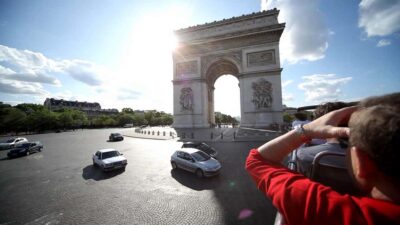
Here’s the angle that makes this stop more than just a photo moment: the Grande Arche is aligned with major Paris references, including the Arc de Triomphe and the Place de la Concorde area (and the obelisk reference tied to that axis). That alignment is one of the reasons this district works as a contrast with classic Paris. You’re not leaving Paris behind—you’re seeing Paris through a different planning lens.
On this tour, you also get time to look at the surrounding design: sculptures and the way public space is organized around the monument. That matters because La Défense isn’t just a pile of towers. It’s a carefully treated outdoor environment where movement, sightlines, and monument scale all play together.
Skyscrapers, Squares, and Outdoor Sculpture at Street Level
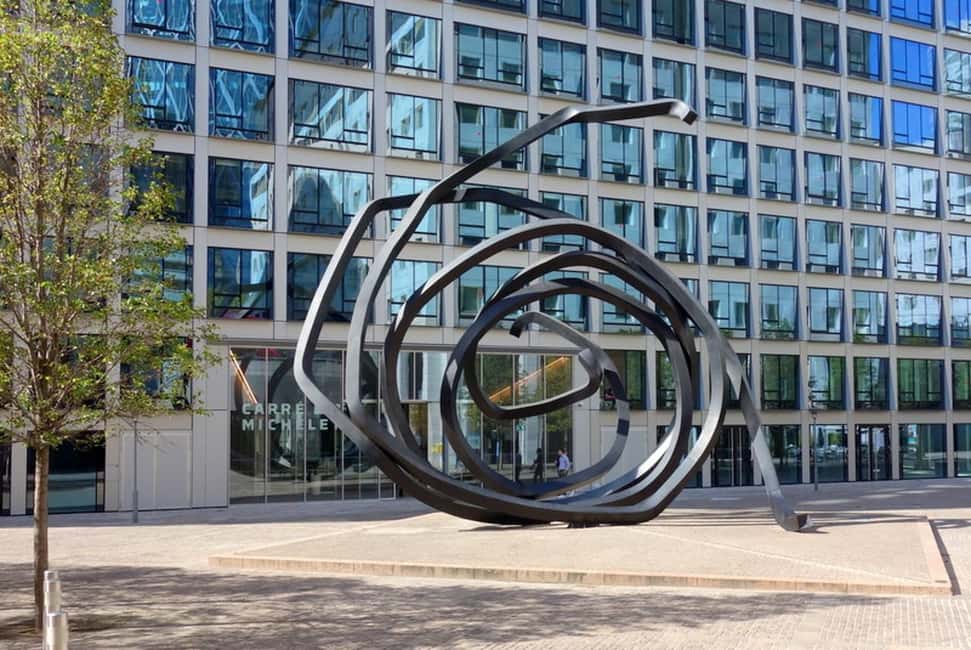
One of the most praised parts of this experience is the mix of modern skyscrapers and outdoor art. And that’s exactly how to enjoy it: at street level, not from a distance.
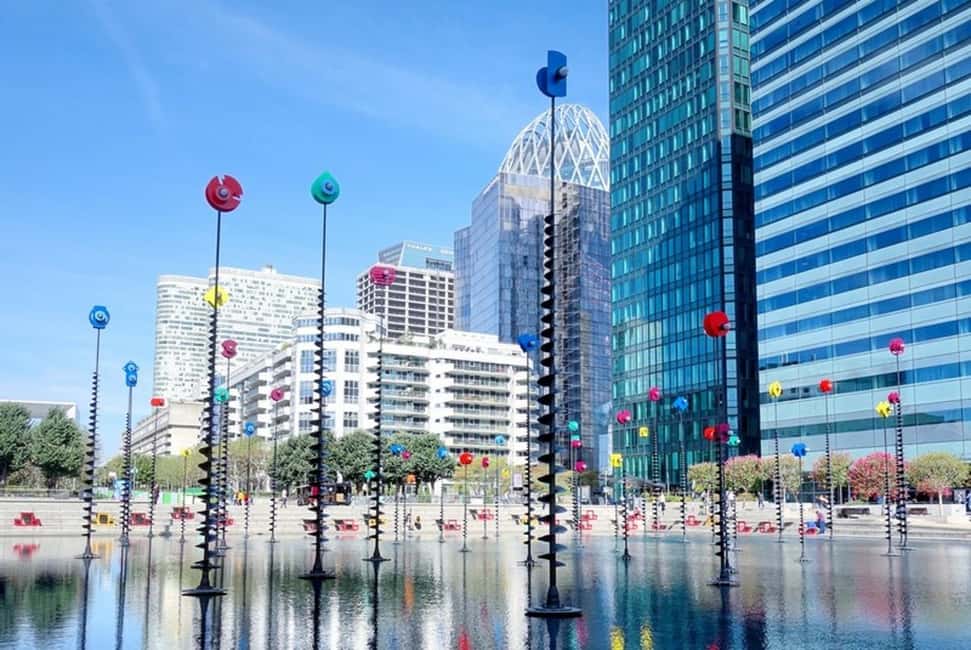
A lot of financial districts become visually monotonous if you only glance. La Défense is different because the planning emphasizes public-space objects—sculptures, civic squares, and open areas that break up the office-dominated feel. During the walk, you’ll see these features as part of the overall layout, not as random extras.
What I like about this approach is that it helps you read the district. When you connect sculpture and squares to their setting—wide pedestrian areas, building placement, and long lines of sight—you start to understand how the place wants you to move through it.
There’s also a useful contrast built in. Classic Paris is often about small, human-scale streets. La Défense is more about big volumes and modern civic geometry. You’ll feel that difference in your body as you walk: wider spaces, a more planned rhythm, and a different relationship between pedestrians and tall structures.
The 1960s Planning Story: Georges Pompidou’s Influence You Can See
This tour gets at the heart of why La Défense exists in its current form. The urbanization project began in the 1960s, and the tour connects that era to the direction given under Georges Pompidou.
Knowing that background changes how you interpret what you see. A modern district like this can feel like a sudden intrusion if you think it grew organically over centuries. But the reality is that La Défense was designed. It was built as a project—something shaped with big decisions, professional collaboration, and an idea of what Paris should become next.
The guide also references architects involved in the broader story, including Jean Prouvé and Oscar Niemeyer. Even if you’re not a design nerd, it’s helpful to learn the names because you then have something to hang the aesthetic on: modernism wasn’t one idea; it was a set of philosophies about function, form, and public space.
For you, that means the tour feels more like learning to read a city than simply checking off landmarks.






Classic Paris vs. Contemporary Development: The Contrast You Can Actually Measure
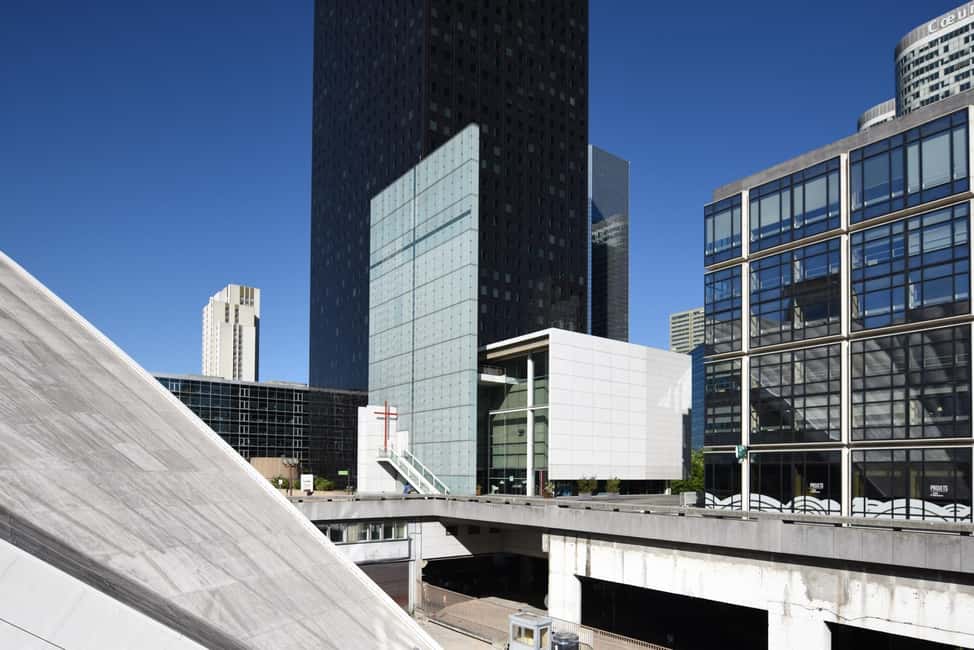
If you’ve ever felt that Paris is one big postcard, this is a good antidote. La Défense won’t replace classic neighborhoods, but it does create a clear, visible argument about how cities keep evolving.
This tour is built around that contrast. You start at a monument designed for modern symbolism, then you move through the district’s avant-garde design language—squares, sculpture, and architecture—while keeping your anchor point in mind. That’s how you stay oriented and how the contrast becomes real instead of abstract.
In practical terms, it’s also a smart way to “add range” to your Paris trip. If your days are packed with older districts, you can spend one focused hour seeing how Paris thinks about the future. Not by time travel. By urban design.
And if you’re a fan of modern architecture, this district is a particularly good classroom because you can compare scale, materials, and public space patterns without leaving the city.
Price and Value: Is $100 for 75 Minutes Fair?
At $100 per person for a 75-minute guided walking tour, the question isn’t only whether it’s expensive or cheap. It’s what you get for that time.
You’re paying for:
- a live guide (French or English),
- a walking format that helps you understand the district instead of wandering blindly,
- a visit focus that includes the Grande Arche,
- and on-the-ground explanation of how La Défense’s 1960s urban planning shaped what you see today.
In other words, the value comes from interpretation. If you’re the type of traveler who enjoys reading a city and wants names, context, and sightline details while you walk, this price starts to make sense. If you’re the type who mostly wants photos and would happily self-walk La Défense on your own, you may feel the cost is higher than the experience’s length.
I think it’s fair specifically because the tour is short enough to fit a normal day and focused enough that you’re not paying for hours of transit. The private group also tends to make the experience feel tighter, even though the tour is designed to be accessible for the average walker.
Who This Tour Fits Best (and Who Might Skip It)
This tour is aimed at people who actually like what La Défense represents: modern architecture, urban planning, and the contrast between old and new Paris.
It’s a strong match if:
- you’re curious about how planned districts replace or redefine city life,
- you enjoy outdoor design and public art,
- you like a focused, time-efficient sightseeing format.
It’s not suitable for:
- people with mobility impairments,
- wheelchair users.
That’s important because it’s a walking tour in an outdoor environment. Even if you can manage short distances, the district’s layout and the pace of a guided route are part of the experience.
Also, smoking isn’t allowed, so plan accordingly if you’re traveling with smokers in your group.
Should You Book La Défense Modern District Walking Tour?
I’d book it if you want a clear, guided way to understand modern Paris in a single hour. The Grande Arche plus the outdoor sculpture and squares make the walk more interesting than a simple skyline pass. And the planning story—started in the 1960s under Georges Pompidou, with key modernist influence—adds meaning to the visuals.
I’d hesitate if you strongly prefer old-world streets, or if you want lots of indoor museum time. This is not that. It’s architecture, public space, and urban design, experienced by walking.
One last practical tip: plan to show up right at the Grande Arche de la Défense meeting point and give yourself a buffer. The tour is short, so you don’t want to lose minutes hunting for the group at the start.
FAQ
Where is the meeting point?
Please meet at Grande Arche de la Défense.
How long is the tour?
The tour lasts 75 minutes.
What does the tour include?
It includes a guided walking tour of La Défense, a visit to Grande Arche, exploration of modern sculptures and squares, and insights into the urbanization project of La Défense.
What price should I expect?
The price is $100 per person.
What languages are available?
The live tour guide is available in French and English.
Is this a private group or a public tour?
This activity is listed as a private group.
Can I smoke during the tour?
Smoking is not allowed.
Is the tour suitable for wheelchair users or people with mobility impairments?
No, it is not suitable for people with mobility impairments or wheelchair users.
What is the cancellation policy?
Free cancellation is available up to 24 hours in advance for a full refund.