REVIEW · PARIS
Paris: Le Marais Highlights Guided Small Group Walking Tour
Book on GetYourGuide →Operated by Paris Tours Experiences · Bookable on GetYourGuide
Le Marais rewards slow walking and sharp questions. This 135-minute, small-group tour turns everyday streets into a clear story, from medieval Paris leftovers to grand mansions and a key moment of remembrance. I especially like the small group size (max 9) and the way the guide connects buildings to real people. One heads-up: the route involves cobbled streets and is not suitable for people with mobility impairments.
You start at Place des Vosges, then you keep moving through a part of Paris that didn’t get reshaped by Haussmann the way much of the city did. Expect church stops, photo moments, and streets where you can still feel earlier Paris without needing a museum ticket.
If you hate walking, this may feel like a lot. If you enjoy learning while you stroll, it’s a strong use of time at a fair price.
In This Review
- Key highlights I’d plan around
- Start at Place des Vosges: the Marais begins with order
- Hôtel de Sully and the mansions lesson: why buildings matter here
- Saint-Paul Saint-Louis: church storytelling that feels human
- Philippe Auguste’s wall remains: medieval Paris, no special effects
- Hôtel de Sens and the court-connection streets
- Rue des Rosiers and Saint Gervais: history meets everyday streets
- The Holocaust memorial stop: a serious moment on the route
- Ending at Place de l’Hôtel de Ville: you finish with direction
- Time, pace, and group size: why max 9 matters
- Price and value: $58 for 135 minutes with a local guide
- Practical tips before you go
- Should you book this Le Marais highlights tour?
- FAQ
- How long is the Le Marais highlights guided walking tour?
- Is the tour offered in English?
- What’s the group size limit?
- What stops are included during the tour?
- What should I bring or wear?
- Is the tour suitable for people with mobility impairments?
Key highlights I’d plan around
- Le Marais avoided Haussmann’s major redesign, so the street feel stays older.
- Place des Vosges and Hôtel de Sully give you instant wow-factor with real context.
- Saint-Paul Saint-Louis brings the church stories into focus, not just photos.
- Wall remains of Philippe Auguste show the medieval city’s footprint in a practical way.
- Rue des Rosiers shopping time lets you mix history with everyday life.
- A stop at the Holocaust memorial adds a serious pause amid the sightseeing.
Start at Place des Vosges: the Marais begins with order
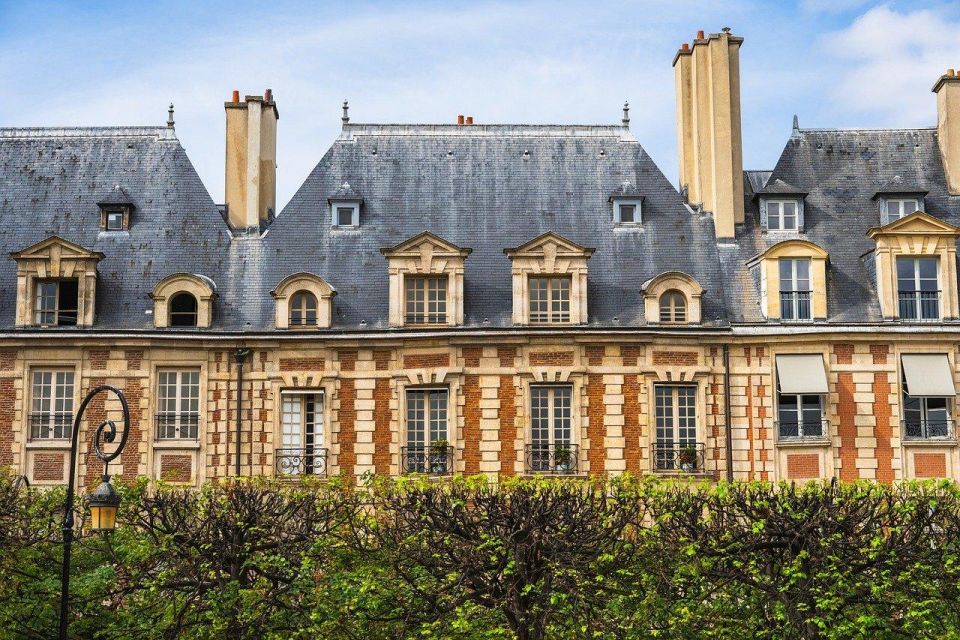
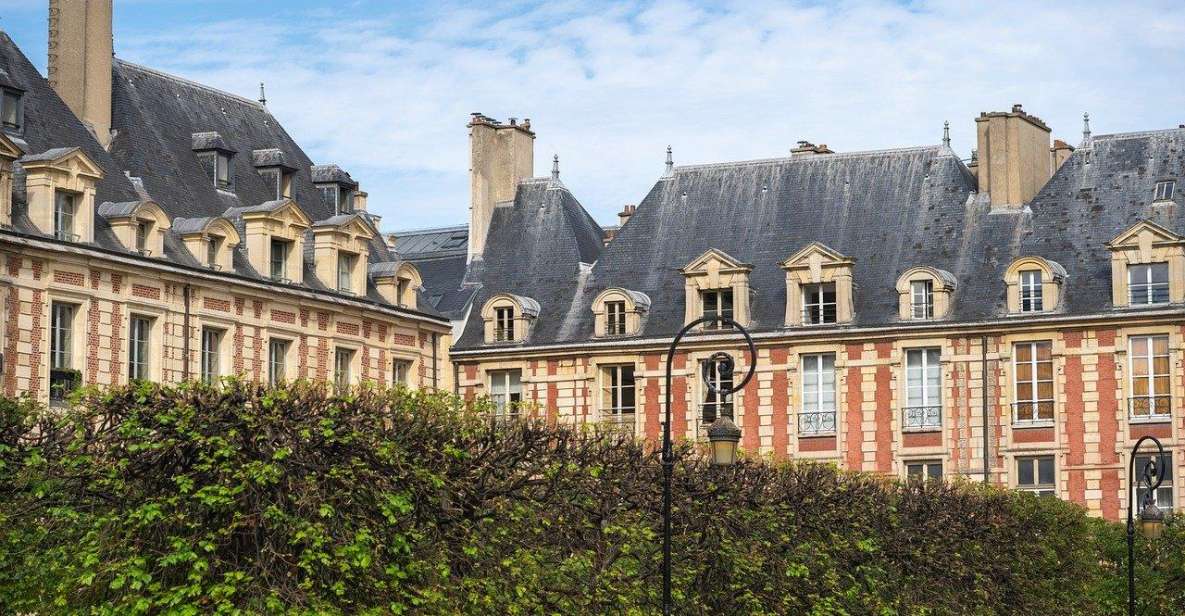
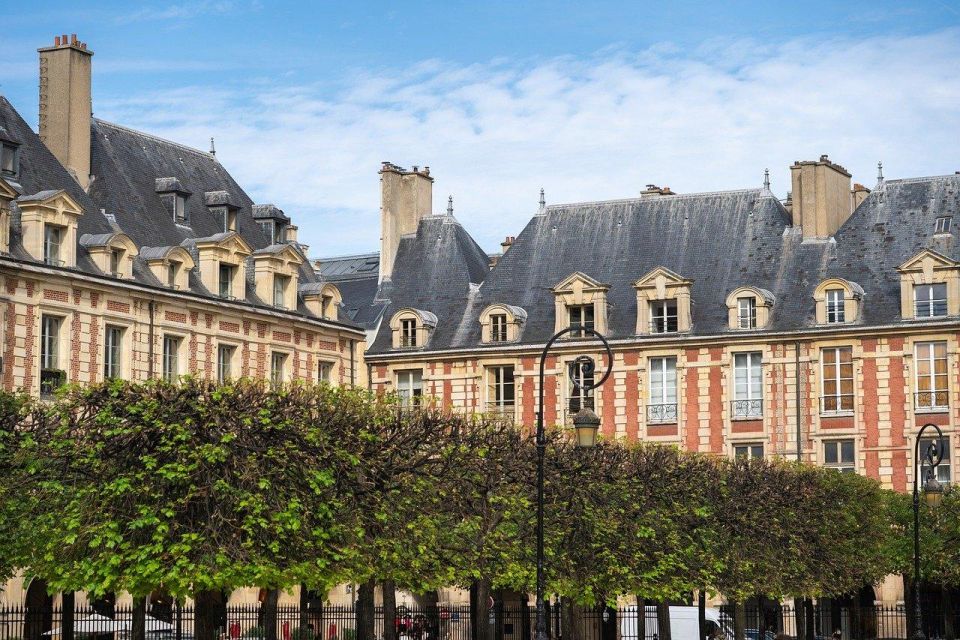
You begin at Place des Vosges, one of the most composed squares in Paris. It sets the tone fast: green pockets, stately buildings, and the sense that this district was designed for long-term standing—not quick change.
You spend about 30 minutes here with your guide. It’s not just standing around looking pretty. This is where you learn the basic map of the Marais and why it stayed relatively intact while other Paris neighborhoods got major surgery in the 1800s. That context matters later, when you’re staring at old walls and noble residences wondering what you’re even looking at.
I also like that the tour starts in a place that’s easy to recognize. You check in with your voucher, and you look for your guide near the Louis XIII statue, specifically where the sign Paris tours experiences is located. Your guide will be wearing a white shirt, so you’re not hunting forever.
You can also read our reviews of more walking tours in Paris



Hôtel de Sully and the mansions lesson: why buildings matter here
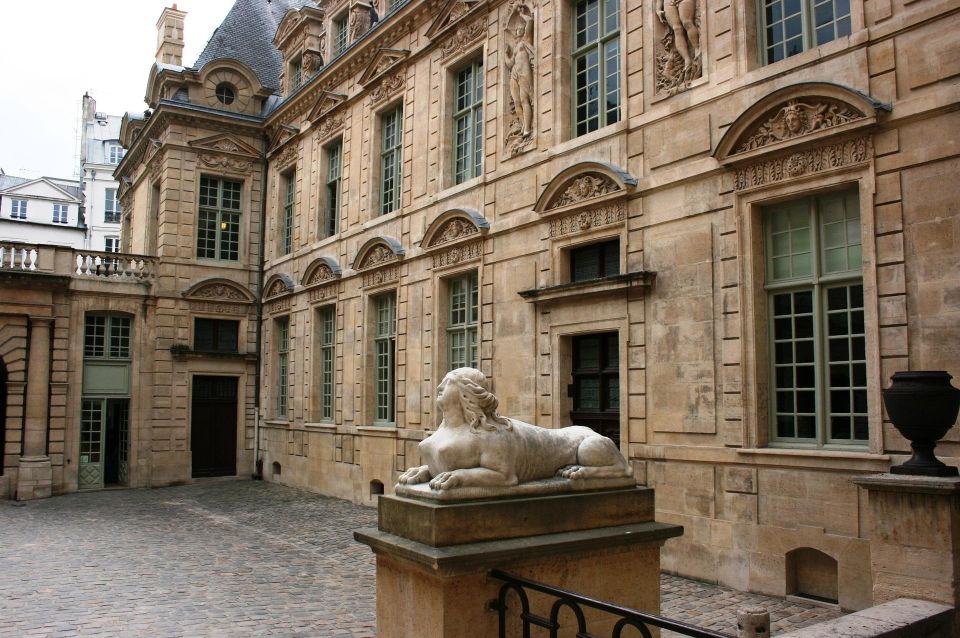
After Place des Vosges, you head to Hôtel de Sully. You get a photo stop plus guided time, roughly another 30 minutes. This is where the tour turns architecture into a readable language.
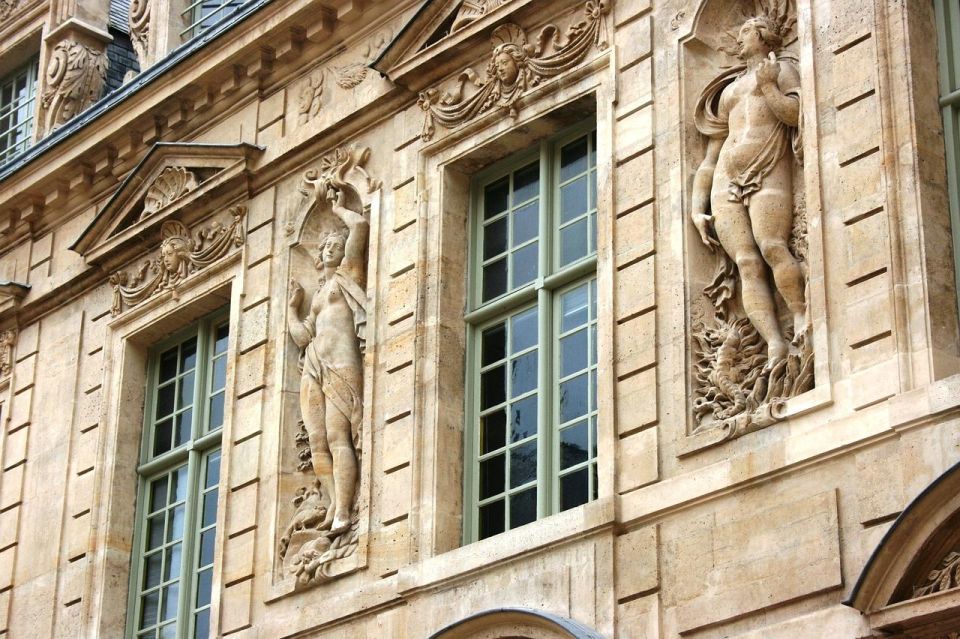
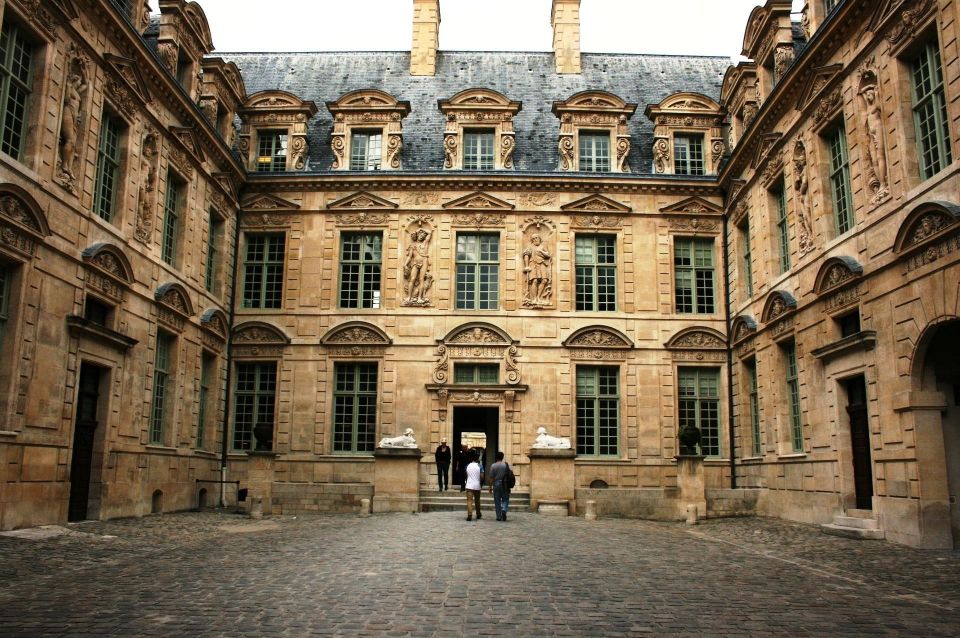
You’ll learn how these hôtels particuliers (large private residences) worked as status markers. You can spot the difference between what looks like decoration and what was built for power, family life, and prestige. Your guide also helps you connect the dots between old Paris wealth and the court world that influenced who lived where.
A small practical tip: when you’re doing a guided walk, take photos the moment your guide points something out. If you wait, you’ll miss the reason it’s important. That’s especially true at Hôtel de Sully, where details can be easy to overlook from street level.
Saint-Paul Saint-Louis: church storytelling that feels human
Next comes Saint-Paul Saint-Louis, with about 20 minutes of guided time. Churches can be a mixed bag on tours—some are rushed, others feel like you’re reading a brochure out loud. Here, the focus is on how the building accumulated stories over centuries.
You’ll also notice how the guide handles respectful pacing. A few groups highlighted the way the guide keeps things considerate when you’re entering or standing near active religious spaces. If you’re the sort of person who appreciates a calm guide voice inside churches, this stop will likely land well.
The payoff is that you start seeing the Marais as more than mansions and street corners. You get the religious and community side too—people lived, prayed, mourned, and celebrated in these walls long before the tourist crowd showed up.
Philippe Auguste’s wall remains: medieval Paris, no special effects
One of the most satisfying parts of this tour is the presence of medieval leftovers. You’ll see impressive remains of the wall of Philippe Auguste. It’s a tangible clue to how Paris grew, and it explains why certain streets and neighborhoods developed the way they did.
This isn’t just a dramatic ruin for your camera. It helps you understand boundaries—where the city could expand, where it had to stop, and how later Paris built over older layers. When you’re standing near those remnants, the guide’s story turns geography into history.
If you like the city as a physical puzzle, this stop is a big reason to book. Even if you’ve walked the Marais before, you’ll likely miss this kind of “how the city shaped itself” information without a guide pointing it out.
Hôtel de Sens and the court-connection streets
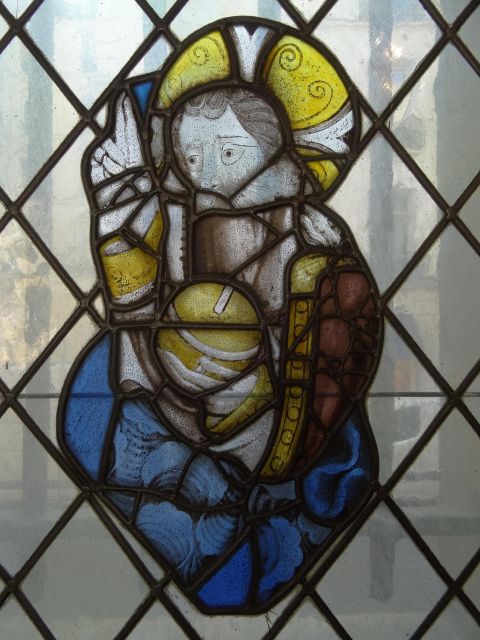
You continue through the Marais’s private mansion area, including time around Hôtel de Sens (about 20 minutes of guided stop). This part of the walk is where the tour leans into power networks.
You’ll hear stories that connect the architecture to medieval and early modern royalty—characters like Louis XIII, Henry II, and Catherine de Medici come into the conversation. You’re not just memorizing names. You’re learning the social reason those buildings look the way they do and why certain families mattered.
Hôtel de Sens gives you a strong contrast with the earlier square and church. It’s more “deep Paris,” less postcard. And because your guide keeps explaining how the neighborhood changed over time, you start noticing the differences between older forms and later additions while you’re still walking.
You can also read our reviews of more guided tours in Paris





Rue des Rosiers and Saint Gervais: history meets everyday streets
Then you move to Rue des Rosiers, with a shopping-focused break of around 20 minutes. This is where the tour balances heavy history with something practical: you see a neighborhood in motion.
You’ll likely pass storefronts and feel the rhythm of a district that still functions as a living community. That matters because the Marais isn’t only for sightseeing. It’s a place where people buy food, browse shops, and grab coffee like you would anywhere else.
From there, you reach Saint Gervais Church for about 15 minutes. The church stop keeps the story grounded. It also gives your legs a chance to slow down without turning the walk into a long museum detour.
In some groups, guides also share practical food ideas along the way. One group specifically mentioned recommendations for boulangeries, and that’s exactly what you want on a neighborhood walk: guidance you can use after the tour ends.
The Holocaust memorial stop: a serious moment on the route
A key part of this tour is a stop at a place of importance for the Jewish community in Paris: the Holocaust memorial. It’s not presented as a quick photo backdrop. You get time to understand why it’s here and what it represents within the district’s broader cultural landscape.
This stop is one of the most important reasons to do the tour with a guide rather than wandering on your own. You’re learning context, not just location.
It’s also a reminder that the Marais has layers. Past grandeur exists next to hard truths, and a good guide helps you hold both without turning either into a spectacle.
Ending at Place de l’Hôtel de Ville: you finish with direction
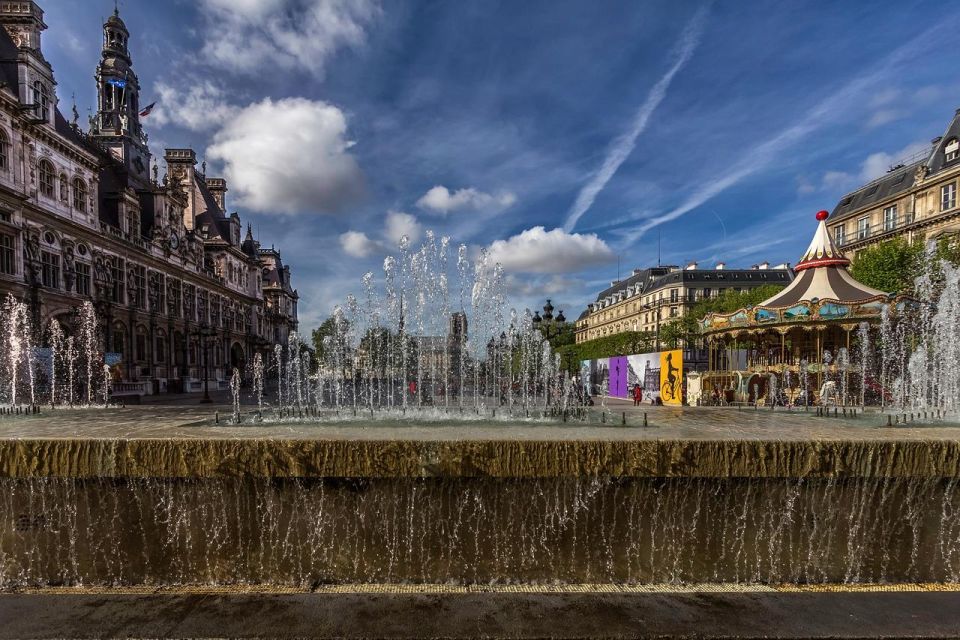
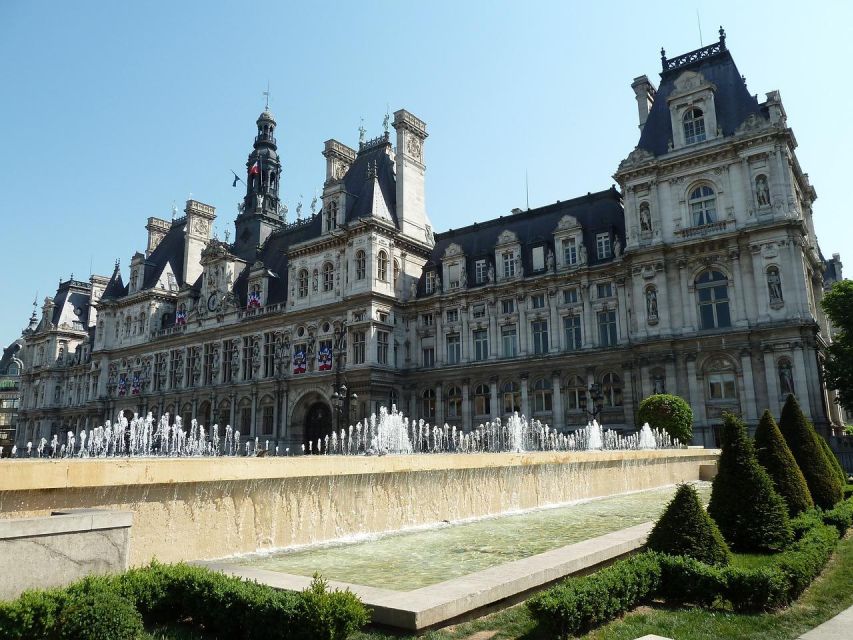
You wrap up at Place de l’Hôtel de Ville. It’s a smart ending point because it leaves you with easy options for the next step—more walking, a metro connection, or just the ability to reorient without feeling trapped in the oldest lanes.
If you’ve got dinner plans, this ending location is useful. The guide often gives suggestions for what to do next, and having the tour end near a major hub helps you act on those ideas instead of delaying until tomorrow.
Time, pace, and group size: why max 9 matters
This tour runs about 135 minutes, so you’re not stuck for half a day. It’s also structured enough that you won’t just wander randomly—you move from square to mansion to church to street with a clear reason for each stop.
The small group size (maximum 9) is a real advantage in the Marais. Streets are tight. When you’re walking with a bigger crowd, you lose the ability to hear details, and guides spend more time herding than teaching. In smaller groups, questions feel normal and the pace feels conversational.
A bunch of recent groups praised guides like Yazid and Jean-Baptiste (often called JB) for their ability to answer questions and keep the energy up. That matters because a neighborhood tour lives and dies by clarity. If your guide can explain why a wall matters or who lived where and why, you’ll remember the walk long after the photos fade.
Price and value: $58 for 135 minutes with a local guide
At about $58 per person, this is priced like a mid-range guided neighborhood experience. The value comes from two things you can’t easily replicate on your own: guided interpretation and access to the “why” behind the sites.
You’re paying for:
- a local guide leading you between multiple meaningful stops,
- guided time inside/at Saint-Paul Saint-Louis,
- and contextual connections across medieval Paris, royal residences, and the Jewish quarter area.
If you were trying to piece this together yourself, you’d likely spend extra time figuring out what you’re looking at, and you’d miss the connections between sites. For many first-timers, that alone makes the price feel fair.
It’s also a good deal for couples and solo travelers, since the group stays small and the guide can actually keep track of everyone’s questions.
Practical tips before you go
This tour runs rain or shine, so come ready. Wear comfortable shoes—the Marais is famous for cobblestones, and your feet will notice. Bring warm clothing if you’re traveling in cooler months. The tour also adapts for kids, but you should let the operator know if you’re coming with kids or a stroller so the guide can plan accordingly.
Also, since food and drinks aren’t included, plan your timing. If you do this earlier in your day, you’ll have time to eat afterward. If you do it late, use the guide’s street-level tips to find something close without wasting time.
One more thing: when you meet your guide, check in with your voucher and look for the Paris tours experiences sign under the Louis XIII statue. That little detail can save you 10 to 20 minutes of stress, which is a big deal when you’re touring a dense area.
Should you book this Le Marais highlights tour?
I’d book it if you want your Marais visit to feel like a guided story, not a self-guided scavenger hunt. The tour works especially well as an early stop in your trip, because it teaches you what to notice afterward—walls, hôtel particulier details, and why the district feels different.
Skip it if you need a low-walking experience or you use mobility assistance. This route isn’t designed for mobility impairments, and the streets will likely be uncomfortable.
If your goal is to understand the Marais in a practical way—what stayed from medieval Paris, what rose with royal power, and how important remembrance fits into the neighborhood—this is a good use of time. For many people, it turns the Marais from a pretty district into a place with clear meaning.
FAQ
How long is the Le Marais highlights guided walking tour?
The tour lasts 135 minutes.
Is the tour offered in English?
Yes, it’s an English live guided tour.
What’s the group size limit?
The group is limited to 9 participants.
What stops are included during the tour?
You’ll visit Saint Paul Church and explore Le Marais highlights, including time focused on the Jewish quarter, plus a stop at the Holocaust memorial.
What should I bring or wear?
Bring warm clothing and wear comfortable shoes for the walking route.
Is the tour suitable for people with mobility impairments?
No, it is not suitable for people with mobility impairments. The tour takes place rain or shine, so dressing for weather is also important.