
REVIEW · PARIS
Paris: Magical Montmartre, without the crowds. Small group
Book on GetYourGuide →Operated by Discover Walks · Bookable on GetYourGuide
Montmartre feels like a secret after hours. I really enjoyed this walk because it mixes big landmarks with the smaller, lived-in corners of the neighborhood, and it does it in English with a local guide. I also like the simple rhythm: you get the famous sights like Moulin Rouge and Sacré-Cœur, then you’re pointed toward the quieter streets where the stories land. One thing to plan for: it’s a walking tour with an uphill feel in parts, and it’s not suitable for people with mobility impairments.
This is the kind of tour where the guide’s personality changes everything. On my walk, the storytelling style like the one I’ve seen praised for guides such as Mathieu, Max, and Anna (all named in the guide feedback I read) makes the district feel less like postcards and more like a working neighborhood.
If you’re hoping for a slow, mostly-flat stroll, you may find the pace a bit brisk. But if you want to actually understand Montmartre—Impressionism-era artists, cabaret lore, and local jokes included—this format is a strong match.
In This Review
- Key points worth knowing before you go
- From Place Blanche up to Montmartre’s first viewpoints
- Moulin Rouge and Sacré-Cœur: the “famous” stops done the useful way
- Moulin de la Galette and Place du Tertre: art where you stand
- Vignes du Clos Montmartre: the vineyard stop that changes the whole story
- The “traditional village” sections and the in-between stops
- Timing matters: the twilight 6:30 PM option
- English-only guiding: what that means on the street
- Value check: is $17 worth 1.5 hours of Montmartre?
- Who this tour fits best (and who should choose differently)
- Practical tips I’d follow before you meet the guide
- Should you book this Magical Montmartre without the crowds?
- FAQ
- FAQ
- Where is the meeting point for this Montmartre tour?
- What time does the tour start?
- What landmarks do you visit during the walk?
- Is the tour in English?
- Does the tour run in bad weather?
- Are tickets or entry fees included?
- Is transportation included?
- What should I bring?
- Is this tour suitable for wheelchair users or people with mobility impairments?
- Where does the tour end?
Key points worth knowing before you go
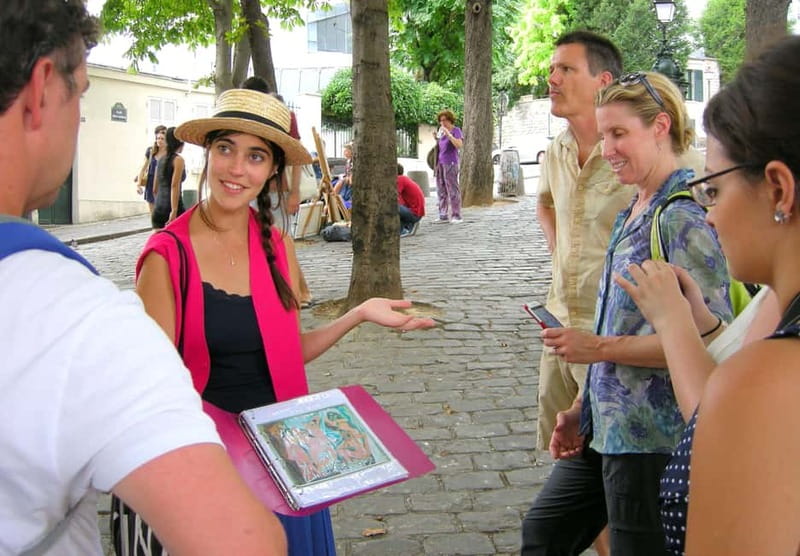
- Icons, then side streets: You see Sacré-Cœur and Moulin Rouge, but you don’t stop at the obvious photo spots.
- Stories with real local texture: Art names and anecdotes are tied to specific corners, not delivered in a lecture.
- English-only with a local guide: You’ll hear the neighborhood through a Paris native’s lens.
- Rain or shine: The walk keeps going even if the weather gets moody.
- Twilight timing helps: The 6:30 PM option is built for lighter crowds and locals coming out.
From Place Blanche up to Montmartre’s first viewpoints
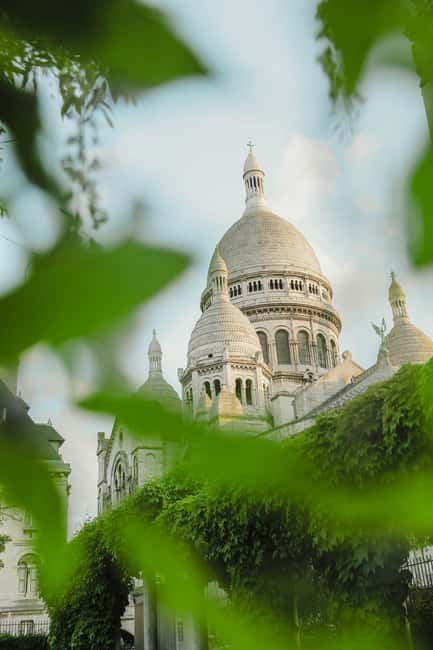
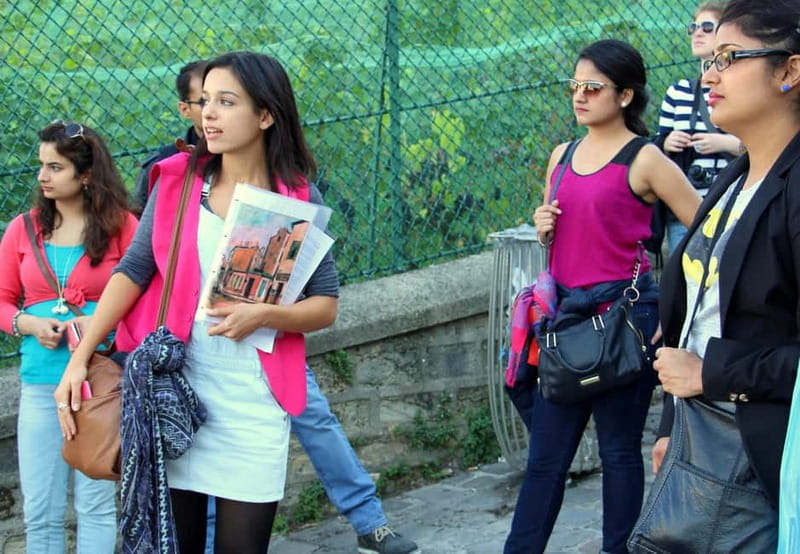
The tour starts at street level outside the Blanche metro station exit (line 2). You’ll spot the guide in a pink vest, and you start right on time—so I’d set myself up to be waiting a few minutes early. The meeting spot is practical because it’s easy to find, and it puts you right at the edge of Montmartre rather than far away.
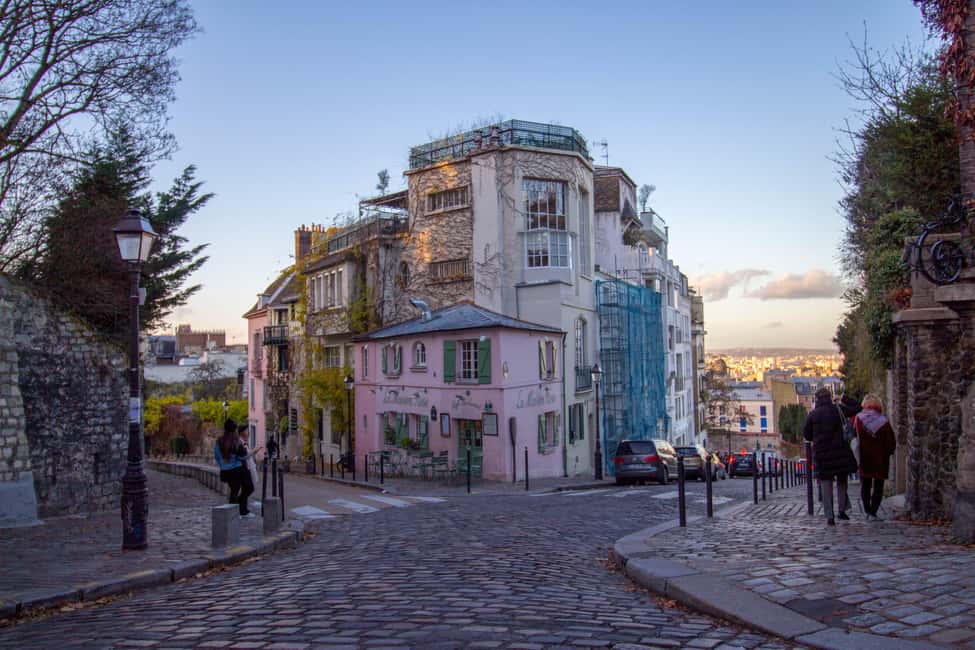
The first chunk of the walk is all about orientation. Montmartre is often described as a village inside Paris, and walking it makes that feel real: you shift from busy streets into narrower lanes where the buildings and viewpoints do the talking. This is where the guide sets expectations—what you’ll see later, why it matters, and how the neighborhood developed into an artist magnet.
Two small practical tips that matter here:
- Comfortable shoes are not optional. You’re on foot for 1.5 hours and the streets include steps and sloped segments.
- Bring weather gear. The tour runs rain or shine, so you’ll want something that keeps you comfortable, not just something that covers you.
You can also read our reviews of more tours and experiences in Paris.



Moulin Rouge and Sacré-Cœur: the “famous” stops done the useful way
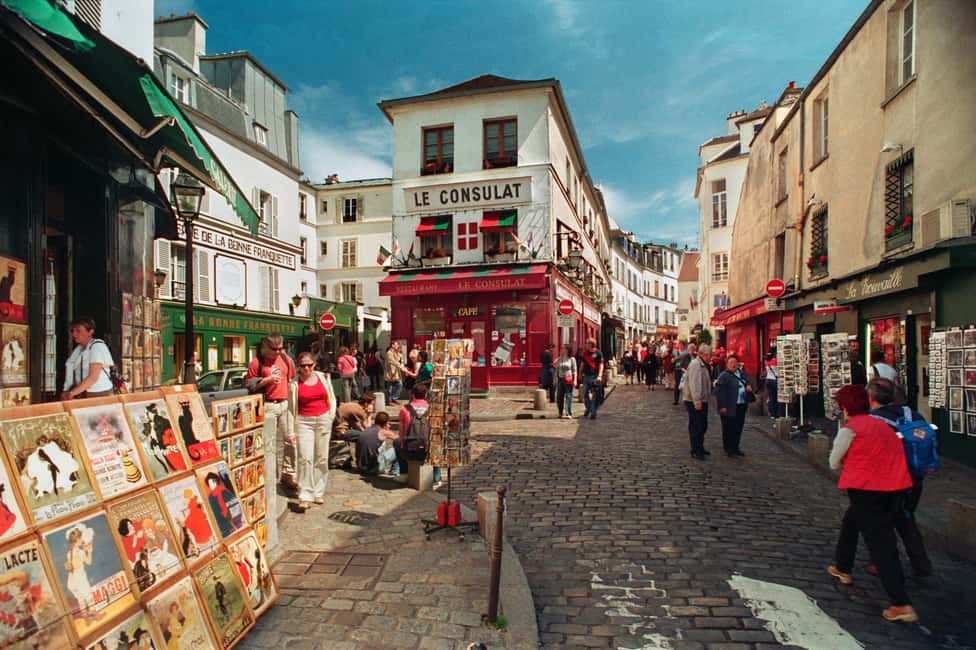
Most Montmartre walks treat Moulin Rouge and Sacré-Cœur as quick photo stops. This one uses them as anchors for the bigger story.
At Moulin Rouge, you get a short guided visit (about 10 minutes) and a bit of scenic viewing while moving through the area. You’re not meant to linger for a full show-or-museum experience—this is about understanding how the neighborhood’s entertainment identity feeds its artistic reputation. Even if you know Moulin Rouge only from movies, it helps to place it in context: how Montmartre became a magnet for performers and writers, and why that aura still lingers in the streets.
Then you head toward Sacré-Cœur Basilica, where you’ll get another guided stop (also about 10 minutes). Here’s the thing I found most valuable: the guide doesn’t just say it’s pretty (though it is). They bring in the neighborhood’s complicated relationship to the church—there’s commentary on why some locals actually dislike Sacré-Cœur. That detail shifts the visit from “look up at the dome” to “understand why people argue about it.”
You’ll also get the payoff that most people come for: views over Paris from the higher ground. In clear weather, the skyline feels like an extra attraction. In rain, it’s different—fog can soften the city and make the streets feel even more theatrical. Either way, you get the height advantage without having to plan it alone.
Moulin de la Galette and Place du Tertre: art where you stand
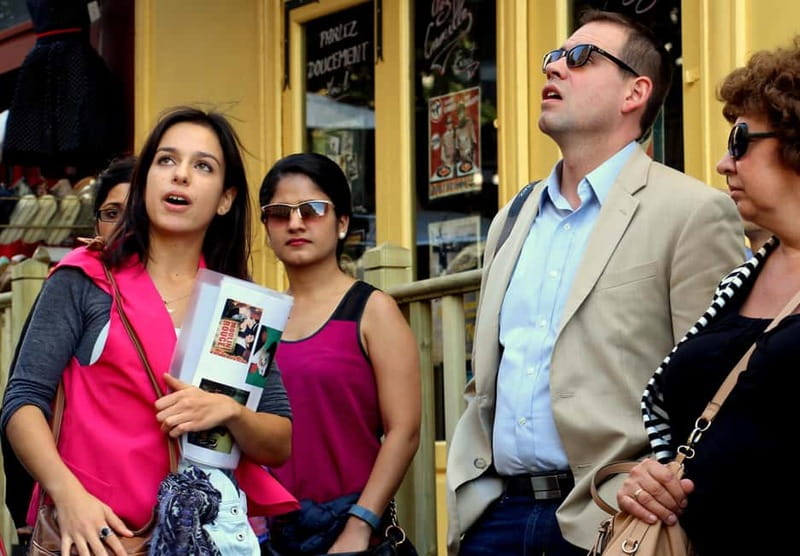
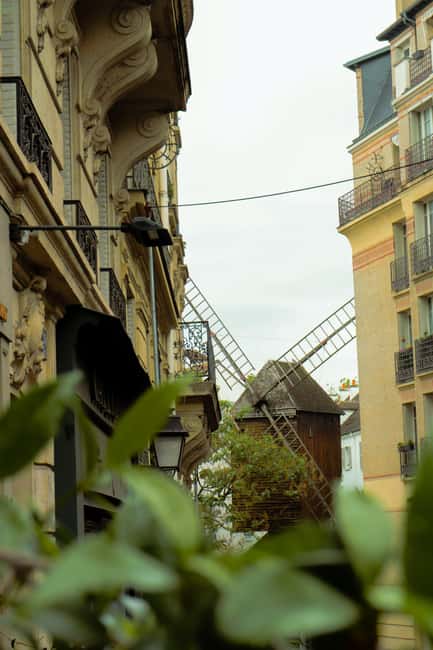
After Sacré-Cœur, the walk turns more “Montmartre-on-foot.” Moulin de la Galette gets about 10 minutes. It’s not just an iconic name—it connects to the idea of Montmartre as a place where artists worked because the area offered light, scenery, and a certain creative mood. When your guide connects the historical dots, you start noticing how the neighborhood itself feels like an artwork.
Next is Place du Tertre, again roughly 10 minutes. This is one of those squares you’ll recognize immediately once you’re there. The value isn’t only what you see in the moment—it’s how the guide frames the square as part of Montmartre’s ongoing identity. If you’re curious about why the area has that “bohemian” reputation, this stop gives you the social context, not just the vibe.
This is also where the tour’s small-group format matters. With fewer people, your guide can steer attention to details you’d miss—street angles, old corners, where to look for specific visual cues, and how local life still plays out in the same spaces.
One thing to keep in mind: your group size is advertised as small, but in the real world some departures can feel closer to a larger group than you expect. The guides’ job is to keep everyone connected to the stories and the pacing, and the reviews I read praised that ability repeatedly.
Vignes du Clos Montmartre: the vineyard stop that changes the whole story
At Vignes du Clos Montmartre, you’ll spend about 10 minutes sightseeing. This is the part that surprised me most in a good way. Montmartre is often sold as purely nightlife and art, but the vineyard reminder says: this wasn’t always just a gallery district. It’s a sign that the neighborhood evolved, and that it once held farming life in a way that still shows up in the modern city layout.
Even without a long stop, the vineyard segment helps you understand the transitions:
- how agriculture and open space shaped the earlier landscape
- how the area shifted into a creative hub
- how the views and slopes that made it good for artists remain part of what you experience today
If you’re the type who likes to see how cities change over time, this stop does a lot of work for such a short visit.
The “traditional village” sections and the in-between stops
Montmartre’s magic is in the walk between the big sights. Your itinerary includes a stop labeled Traditional village (about 10 minutes) and at least one more guided segment (also about 10 minutes). These in-between portions are where the guide’s storytelling becomes your navigation tool.
This is where you’ll hear how Montmartre connects to major art movements, including the birthplace of Impressionism and the role played by artists such as Renoir, Van Gogh, and Picasso. You’ll also get references to cabaret lore—there’s mention of the Cabaret of the Assassins and why that story matters.
What I found useful for you (not just “interesting”): these sections teach you how to watch Montmartre. Instead of walking past a street and forgetting it, you’ll know what to look for and why that specific corner makes sense historically.
Also, these parts are a big reason the tour is designed to be far from the crowds whenever possible. When you’re sent through quieter lanes, the neighborhood feels more like a living place and less like an attraction line.






Timing matters: the twilight 6:30 PM option
There’s a specific 6:30 PM tour highlighted as a twilight-hour experience—when locals emerge and daytime crowd levels ease. If you’re juggling limited time in Paris, this timing can be a smart choice because it blends two things people usually chase separately:
- daylight for easy sightseeing
- evening mood for local energy
Even on non-twilight departures, the tour still aims for a calmer pace than the busiest daytime hours. The guide’s approach is built around moving away from the densest congestion so your photos and your ears have a chance to relax.
English-only guiding: what that means on the street
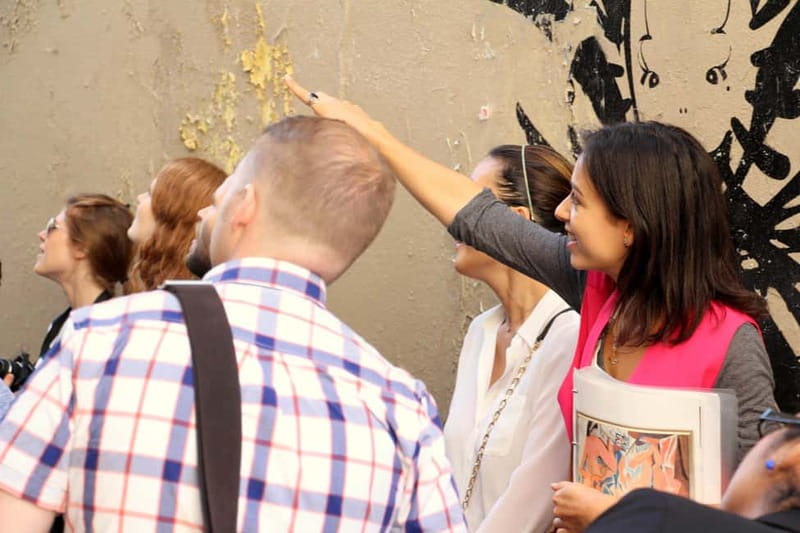
This tour is English-only, with a local guide leading you on foot. That matters because Montmartre’s details are not just visual—they’re verbal. The best part of the experience is how the guide ties locations to stories: how a place got its reputation, why people talk about it, and how locals see it today.
From the guide names that have been praised in feedback—Matthew, Mathieu, Max, Anna, Leonie, and others—you can expect a similar emphasis on engagement. The repeated theme is storytelling that keeps the group moving and makes the history feel connected to real streets rather than distant dates.
Value check: is $17 worth 1.5 hours of Montmartre?
At about $17 per person for a 1.5-hour small-group walking tour, the value is strong on two levels.
First, you’re paying for interpretation. Montmartre is too big to “figure out” quickly on your own if you want the art and historical context. A good guide turns a set of streets into a coherent path.
Second, you’re not stuck paying for extra add-ons. The tour includes the guide and walking tour, but doesn’t include entry fees, food, or drinks. That keeps the cost easier to predict.
If you’re a first-time Montmartre visitor, I’d treat this as a high-impact orientation walk. If you already know Montmartre well and want only the top-of-the-church photos, you might prefer a self-guided day. But if you want the neighborhood to make sense, $17 for guided structure is a fair trade.
Who this tour fits best (and who should choose differently)
This experience is a great fit if you:
- want an overview of Montmartre’s icons plus the quieter streets
- like art history stories connected to specific corners
- prefer English guiding over a self-walk with an app
- want a plan that works rain or shine
It’s not a great fit if you:
- need wheelchair access or have mobility limitations
- want a flat, minimal-steps walk
Practical tips I’d follow before you meet the guide
A few small choices make your tour smoother:
- Wear comfortable shoes with grip.
- Bring a reusable water bottle—the walk is short, but you’ll still feel it.
- Dress for the weather since it runs rain or shine.
- Arrive early enough to spot the guide in the pink vest.
If you’re late, the tour notes suggest you try finding the guide around the roundabout in front of Moulin Rouge about 15 minutes after departure.
Should you book this Magical Montmartre without the crowds?
I’d book this if your goal is to see Montmartre through a guide’s eyes—icons plus the neighborhood’s side streets—without spending your whole time in the busiest congestion. The reviews’ consistent praise for the guides’ humor, pacing, and story delivery (names like Matthew, Mathieu, Max, and Anna come up often) points to a tour that works because it’s led well, not just because it visits famous locations.
Skip it if you want a slow, mostly-flat stroll or you need accessibility support for mobility. Otherwise, this is one of those Paris walks that helps you leave with more than photos—you leave with a sense of how Montmartre became Montmartre.
FAQ
FAQ
Where is the meeting point for this Montmartre tour?
Meet your guide at street level outside the metro station exit Blanche (metro line 2). The guide wears a pink vest.
What time does the tour start?
The duration is 1.5 hours, and starting times vary, so you’ll need to check availability to see the exact start times. A 6:30 PM twilight tour is also listed.
What landmarks do you visit during the walk?
You’ll cover Montmartre with guided stops at major sights including Moulin Rouge, Sacré-Cœur Basilica, Moulin de la Galette, Place du Tertre, and you’ll also see Vignes du Clos Montmartre.
Is the tour in English?
Yes. It’s an English-only tour with a live local guide.
Does the tour run in bad weather?
Yes. The tour runs rain or shine.
Are tickets or entry fees included?
No. Entry fees are not included. The tour is a walking tour with guided visits, but it doesn’t list entry tickets.
Is transportation included?
No. Transportation is not included.
What should I bring?
Wear comfortable shoes, dress for the weather, and bring a reusable water bottle.
Is this tour suitable for wheelchair users or people with mobility impairments?
No. It is not suitable for people with mobility impairments or wheelchair users.
Where does the tour end?
The itinerary lists finishing at the Basilica of the Sacred Heart of Paris, but the meeting-point information also says the activity ends back at the meeting point. Check your booking confirmation for the exact end location.