REVIEW · PARIS
Paris: Choux Pastry and Chocolate Éclair Making Class
Book on GetYourGuide →Operated by Le Foodist · Bookable on GetYourGuide
Choux pastry is all about timing. In this Latin Quarter class at Le Foodist, you learn the mechanics of pâte à choux and fillings like crème pâtissière. Then you finish with chocolate éclairs and cream puffs you can box up and share.
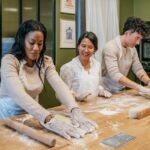
I love that the session is truly hands-on: about 2 hours of work at your own station, where you mix, cook, pipe, and assemble. I also love the small-group feel. Many people note the instructors give direct help, and with groups kept around 3 to 7 (up to 8), you’re not lost in a crowd.
One consideration: the kitchen has age rules. Kids under 12 can’t enter the kitchen, and teens need a participating adult, so plan around that if you’re traveling as a family.
In This Review
- Key takeaways before you go
- Why Paris choux and éclairs feel like real skill, not a demo
- Le Foodist and the Latin Quarter: a practical start near Notre-Dame
- From pâte à choux to crème pâtissière: the foundation you can reuse
- Piping like a pro: shaping éclairs, choux puffs, and more
- Teatime with the chef: culture lessons that land while you bake
- What you take home: your takeaway box (and how to use it)
- Price and value: is $151 really fair for a 3-hour class?
- Who this class suits best (and who should plan differently)
- Should you book this éclair and choux pastry class?
- FAQ
- Where is the meeting point for the class?
- How long is the class, and how much of it is hands-on?
- What pastries will I learn to make?
- Will the instruction be in English?
- Is this a small-group experience?
- Are recipes included, and in what format?
- Are children allowed to participate?
Key takeaways before you go
- You’re learning the building blocks: pâte à choux plus crème pâtissière and chantilly, from scratch.
- Piping is the core skill: you practice until éclairs and choux puffs look right, not just edible.
- Instructors coach the details: people consistently mention clear English instruction and patient, high-energy teaching styles (names like Stefan, Florence, Stephane, and Anne show up).
- Tea time turns practical cooking into memory: a French storyteller shares culture and pâtisserie anecdotes over tea, coffee, or organic fruit juice.
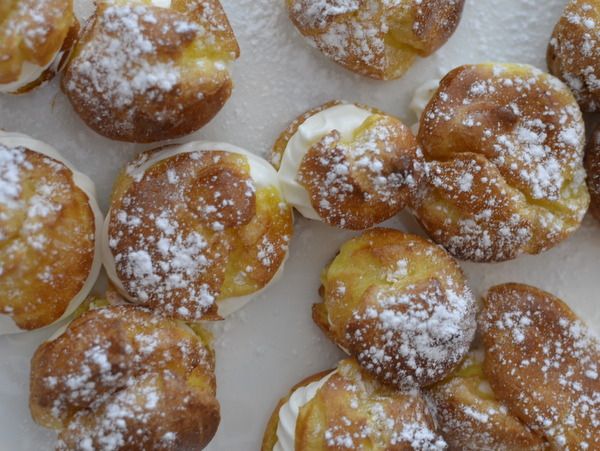
- You leave with a takeaway box: your own chocolate éclairs and cream puffs, ready to bring home.
Why Paris choux and éclairs feel like real skill, not a demo
If you’ve ever bought an éclair and thought, I could never do this at home, this class is built to change that feeling. Choux pastry looks fancy, but it follows rules. Once you learn those rules—how the dough comes together, how the pastry cream is built, and how to pipe—you gain a repeatable skill.
What makes this experience practical is the focus on fundamentals. You’re not just decorating. You’re making the core dough and the filling that makes the whole thing taste like a proper Paris pastry. From there, you put your technique to work on chocolate éclairs and choux puffs.
You also get a little extra variety. Along the way, the class includes some savory delicacies in addition to the sweet core. So you’ll leave knowing pastry basics and also understanding that the same pastry logic can show up in more than one direction.
You can also read our reviews of more tours and experiences in Paris

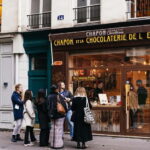
Le Foodist and the Latin Quarter: a practical start near Notre-Dame
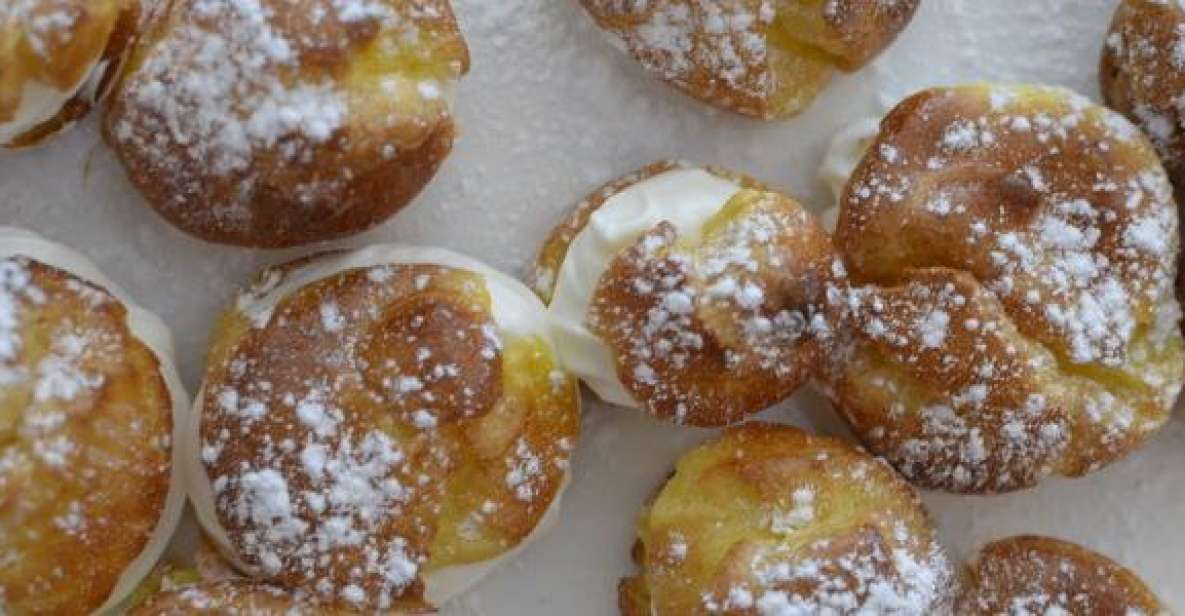
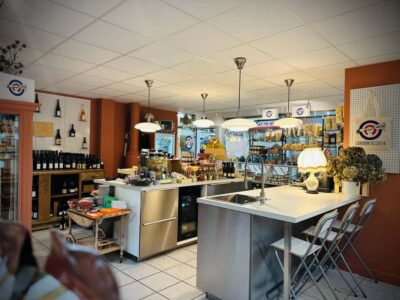
You meet at Le Foodist, 59 rue Cardinal Lemoine, 75005 Paris. The location is in the Latin Quarter, a short walk area from Notre-Dame de Paris, which makes it easy to combine with sightseeing before or after.
The start is low-stress. You get a welcome refreshment and time to meet your fellow bakers. That matters more than it sounds—because choux pastry isn’t a “watch and hope” skill. You’ll do better when you’re settled, comfortable with the tools, and ready to work.
The class is kept intimate. It runs in small groups (between 3 and 7, limited to 8), which helps because piping is picky. When you’re shaping small pieces, a quick correction can make the difference between shells that bake up nicely and ones that don’t quite behave.
From pâte à choux to crème pâtissière: the foundation you can reuse
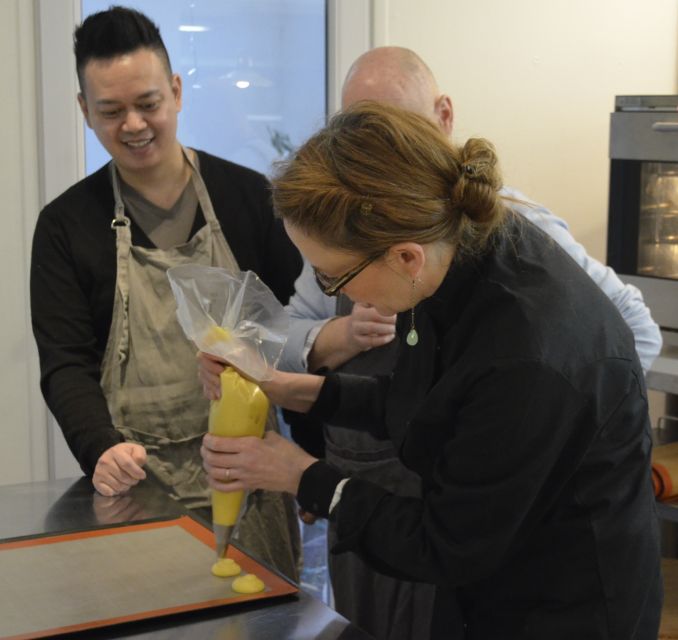
The heart of the class happens during the about-2-hour hands-on baking time. You’ll work through pâte à choux and crème pâtissière (plus chantilly), which are the classic building blocks behind many French pastries.
You’ll start by learning foolproof technique for the dough. With choux, the texture needs to be just right. Too loose and your shapes won’t hold; too stiff and you’ll struggle to pipe clean lines. The point of the class is not just to get you a finished result—it’s to give you the “why” behind the dough behavior, so you can troubleshoot.
Then you move into the fillings. Crème pâtissière brings that rich custard base, while chantilly adds a lighter, airy touch. This combination is exactly what makes éclairs taste like éclairs instead of just sweet pastry.
You’ll also get recipes in English, both hard copy and electronic. That’s a big deal for value. It means you can repeat the process at home without guessing what you did right (or wrong) in the kitchen.
Piping like a pro: shaping éclairs, choux puffs, and more
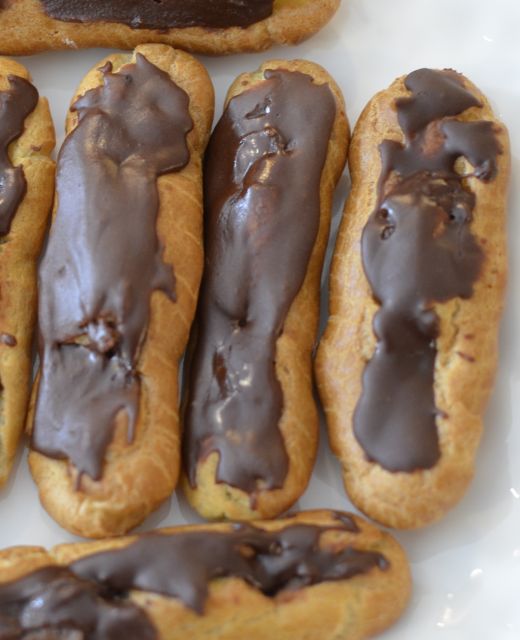
Once the dough and fillings are ready, you put technique to work. This is the part people remember: learning how to pipe and apply your skills so your éclairs and puffs look like real pastry work.
You practice the piping motions so the choux shells bake in the correct way. A lot of home attempts fail because the shell shape is off. In this class, you get corrections in the moment, and that’s where the small-group setup earns its keep.
After that, you assemble. For chocolate éclairs, you’re working with a filling and topping approach that gives the classic look and taste. For choux puffs, you’ll use a technique that highlights the same pastry base but in a different silhouette.
One extra detail worth noting from real classroom experiences: some classes include an old-school choux “Swan” style. Even if you’re just there for éclairs, it’s a fun way to see how far you can push piping once your hands stop feeling “new.”
Teatime with the chef: culture lessons that land while you bake
Midway through the experience, a native French instructor steps in for stories—often tongue-in-cheek—about French culture and pâtisserie. You’ll enjoy tea, coffee, or organic fruit juices while listening.
This part isn’t filler. It turns the kitchen work into something you can talk about later. When someone ties a pastry technique back to how French patisseries think, you start noticing patterns: why certain textures matter, why balance is treated like an art, and why presentation is part of the flavor experience.
People consistently mention the teaching style. Instructors like Stefan and Florence get called out for being easy to understand, high energy, and fun, while also giving individual attention. Others highlight chefs like Stephane and Anne for being detailed, patient, and witty. So even if you’re a first-timer, you should feel guided rather than tested.
You can also read our reviews of more tours and experiences in Paris

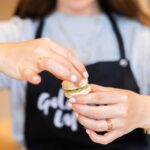



What you take home: your takeaway box (and how to use it)
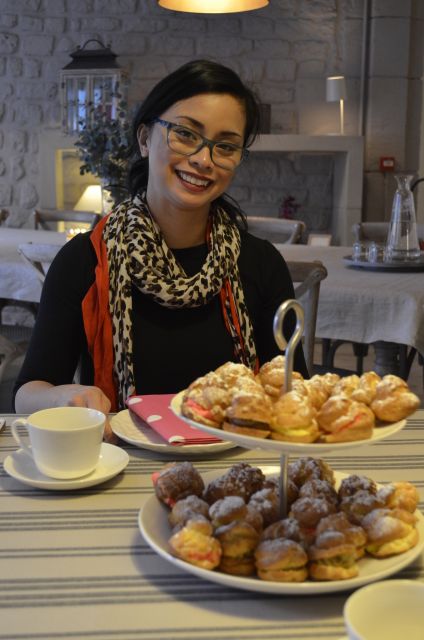
The class ends with you leaving loaded with a box of your own creations. That takeaway matters because it makes the learning stick. You don’t just get the feeling of success in the kitchen—you get a small “Paris pastry kit” that you can enjoy later.
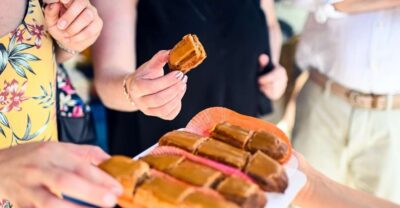
You’ll take home chocolate éclairs and cream puffs made during the session. Some experiences also mention that each person receives extras to take away, which is great if you want to share or if you want a second day treat.
Your best move at home is to follow the recipe instructions you receive in English. Since the class gives you the exact steps and formats, you’ll know how to store and serve based on how the pastries were built in the kitchen.
Price and value: is $151 really fair for a 3-hour class?
$151 per person isn’t a bargain, but it also isn’t pricing you out of a “special occasion” category. Here’s why the value can make sense for the right person.
You’re paying for several things at once: a small-group setup, an English-speaking pastry chef/instructor, hands-on time, and use of all cooking equipment plus an apron. You also get recipe handouts in English (hard copy and electronic), plus a finished box of pastries you made yourself.
Then there’s the skill-transfer. Choux pastry isn’t just “a recipe.” It’s technique. If you want to bake éclairs and cream puffs again later, the class is essentially buying you time, coaching, and correction—things you can’t get from watching a video alone.
If you’re the type who loves cooking and wants a real foundation, the cost starts to feel reasonable. If you’re mostly interested in eating without learning, you’ll likely feel like you’d rather spend that money on pastries and a walking tour instead.
Who this class suits best (and who should plan differently)
This works well for both first-timers and serious bakers. You’ll find a mix in many sessions: people mention everyone from adults who don’t bake often to experienced cooks, plus teens in some groups. The structure is hands-on enough for beginners, but still technical enough for people who like details.
It’s also a nice choice for bonding time. One mother-daughter experience was described as meaningful, with both people learning a lot. So if you want a shared activity that feels distinctly Paris, this fits the bill.
Now the limits: children under 12 can’t enter the kitchen, and only participating people can come into the kitchen. Unaccompanied minors aren’t allowed. If your group includes kids, check that kitchen-access rule early so you don’t end up disappointed.
Should you book this éclair and choux pastry class?
Book it if you want an actual pastry skill, not just a taste of French baking. The combination of pâte à choux, crème pâtissière, chantilly, and then piping chocolate éclairs and cream puffs gives you a complete workflow you can repeat.
Also book it if you like clear teaching in English and you appreciate a small group. With groups kept around 3 to 7, you’re more likely to get the quick corrections that make choux pastry work.
Skip it if you’re expecting mostly sightseeing or if you only want to eat. This is a working kitchen class. You’ll get the most from it when you’re happy to get flour on your sleeves and focus on technique.
FAQ
Where is the meeting point for the class?
You meet at Le Foodist, 59 rue Cardinal Lemoine, 75005 Paris.
How long is the class, and how much of it is hands-on?
The class runs for 3 hours total, with about 2 hours of hands-on baking.
What pastries will I learn to make?
You’ll make classic choux pastry dough and learn crème pâtissière and chantilly, then you’ll pipe and create chocolate éclairs and cream puffs.
Will the instruction be in English?
Yes. The instructor speaks English.
Is this a small-group experience?
Yes. It’s limited to 8 participants, and classes are described as being in smaller groups (between 3 and 7).
Are recipes included, and in what format?
Yes. You get a hard copy and an electronic copy of all recipes in English.
Are children allowed to participate?
Unaccompanied minors aren’t allowed. Children under 12 years old cannot enter the kitchen, and children between 12 and 16 must be accompanied by a participating adult.