REVIEW · PARIS
Paris : Montmartre highlights walking tour
Book on GetYourGuide →Operated by Parifiane Tours · Bookable on GetYourGuide
Montmartre rewards the curious eye. This guided walk strings together the big-name sights and the smaller street scenes that explain why artists still orbit this hill, with a memorable Sacré-Cœur finish and Paris views from the top.
I especially love the way this tour mixes classic icons with quick photo-stops and short stories, so you’re not just passing landmarks—you’re learning what to look for. The small group (up to 10) also makes it easier to ask questions and keep your pace.
One drawback to plan for: it’s a walking tour with a hilltop ending, and it’s not suitable for wheelchair users or people with mobility impairments.
In This Review
- Key highlights at a glance
- Starting at Place Blanche: where the tour actually begins
- Moulin Rouge to the Wall of Love: the first real wow moment
- Moulin de la Galette, Dalida, and La Maison Rose: Montmartre details you’d miss alone
- Lapin Agile and the artist district: where the stories start to matter
- Place du Tertre: the painter square and the creative crowd
- Sacré-Cœur approach: views start before you reach the basilica
- Finishing at the Basilique du Sacré-Cœur de Montmartre
- Value for $29: what you’re really paying for
- Who this tour suits best (and who should skip it)
- Practical tips before you go
- Should you book this Montmartre highlights walking tour?
- FAQ
- Where does the tour start?
- Where does the tour end?
- How long is the tour?
- Is the tour in English?
- What’s included in the price?
- What should I bring?
- Is the tour suitable for wheelchair users or limited mobility?
- How many people are in the group?
Key highlights at a glance
- Place Blanche start: Get oriented right by metro 2, near Moulin Rouge.
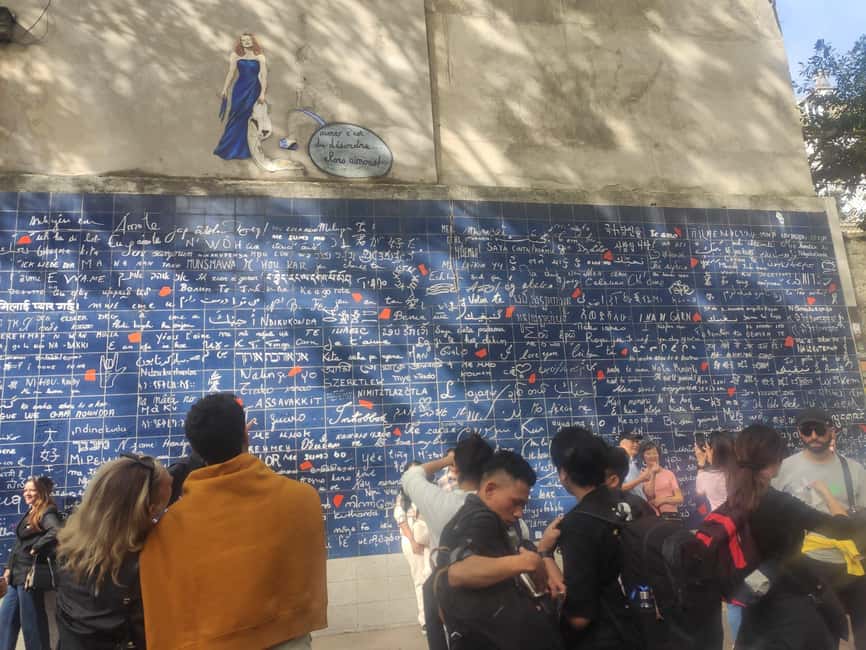
- Photo stops with context: Moulin Rouge, Le Mur des Je T’aime, and other stops include brief guiding plus time for pictures.
- Artist-haunted Montmartre route: You’ll hear about the artistic district where names like Picasso and Van Gogh lived.
- Place du Tertre: The painter square where you’ll see artwork on display.
- Sacré-Cœur hilltop finish: Scenic walkways and a big payoff at the Basilique du Sacré-Cœur de Montmartre.
- Panoramic city views: From the highest point area, the view helps you spot landmarks like the Eiffel Tower, Notre Dame, and Montparnasse Tower.
Starting at Place Blanche: where the tour actually begins
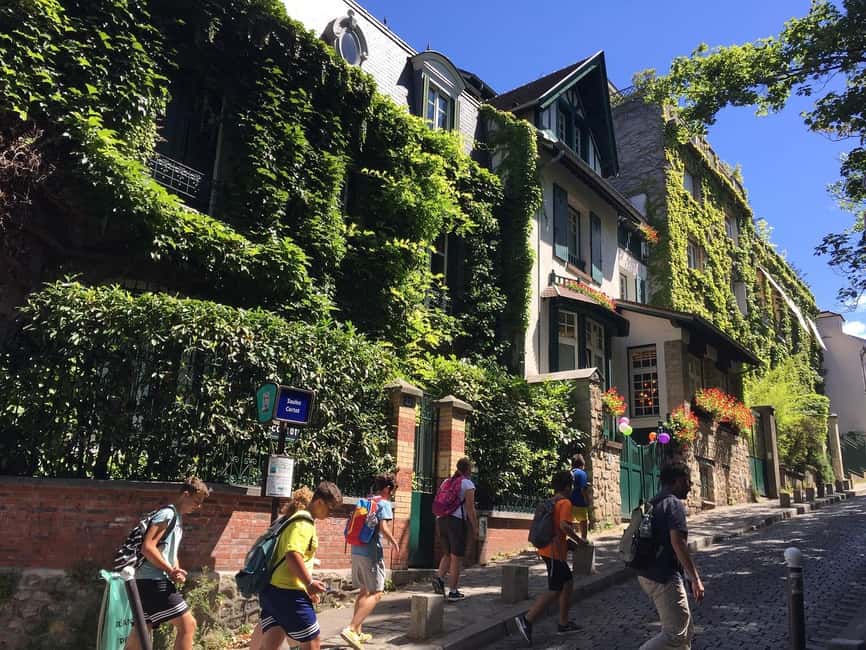
Your tour meets near the exit of the metro station Blanche (metro 2), close to Moulin Rouge. The guide is easy to spot with a green booklet and green badge, which matters because Montmartre streets can feel like a maze in the first ten minutes.
If you like arriving with a plan, this start is a win. You’ll already be in the right neighborhood, so you’re not burning energy figuring out which street is which.
You can also read our reviews of more walking tours in Paris



Moulin Rouge to the Wall of Love: the first real wow moment
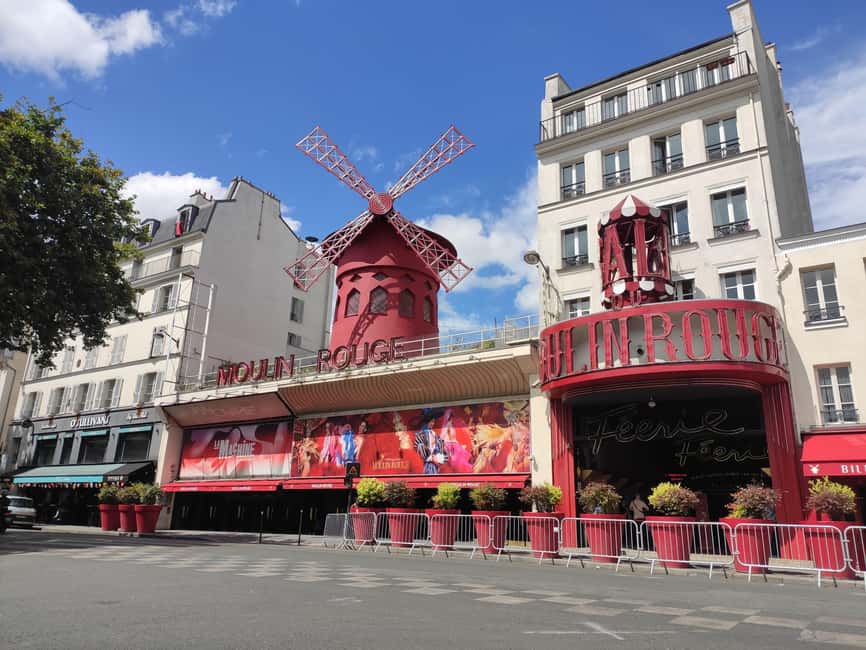
The walk kicks off at Moulin Rouge with a short photo stop and guided highlights. This is the kind of stop that helps you get bearings fast: you see the landmark, then your guide places it in the bigger Montmartre story.
Next comes Le Mur des Je T’aime, another quick photo stop with guidance around what you’re looking at. Even if you’ve seen pictures before, seeing it on foot in context feels different—less like a postcard, more like a living neighborhood wall.
This early section is also where the guide’s personality shows. In the feedback, guides like Sammy/Samy are repeatedly praised for being personable and patient, including when people struggle with French. That’s a plus if you want the tour to feel human, not like a lecture you can’t keep up with.
Moulin de la Galette, Dalida, and La Maison Rose: Montmartre details you’d miss alone
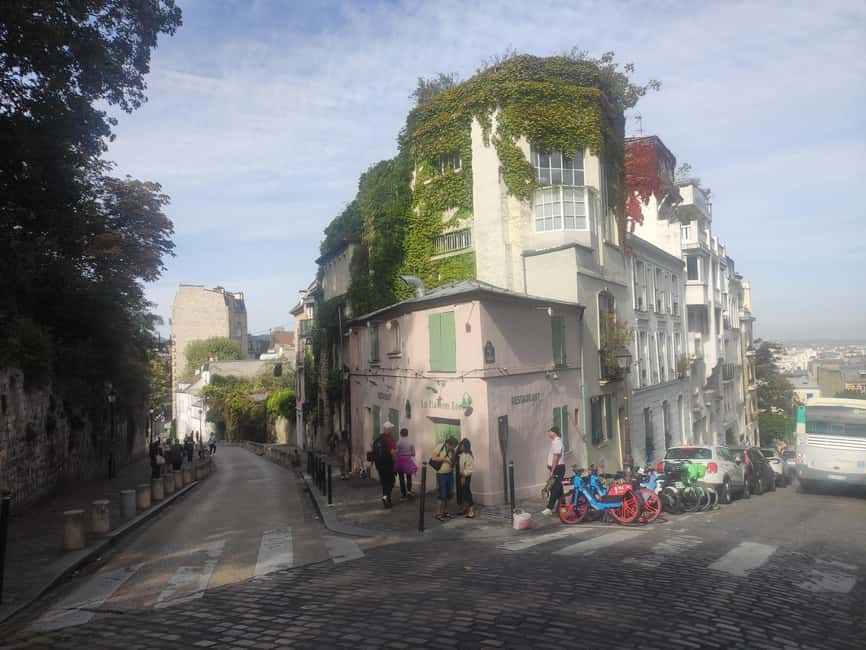
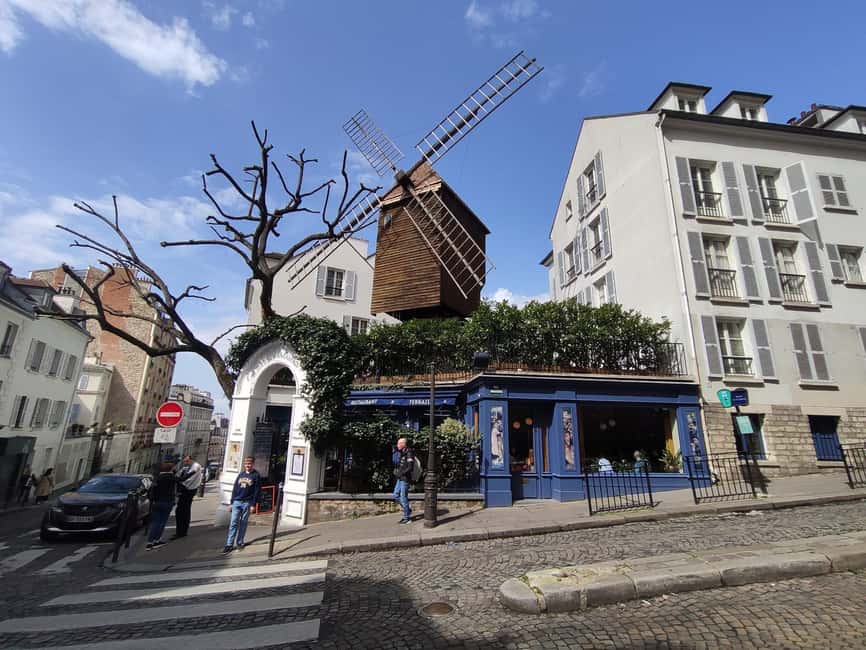
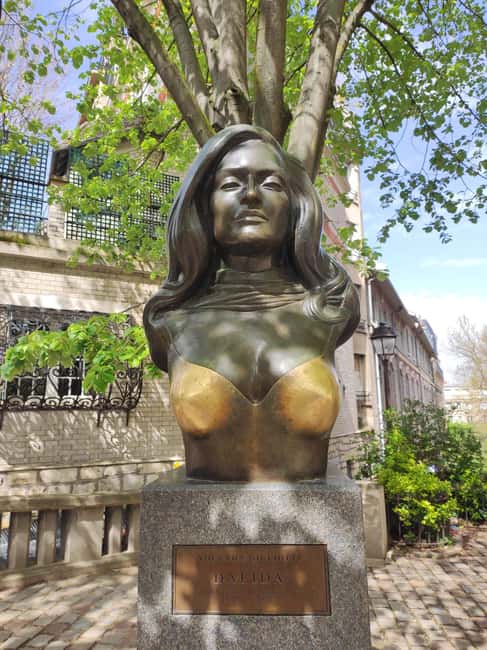
From there you’ll hit a run of classic Montmartre visuals: Moulin de la Galette, the Dalida statue, and La Maison Rose. Each stop is brief, but that’s the point. You get time to look closely, take photos, and move on before the area starts to blur together.
Why these specific spots work: they build a visual timeline of the neighborhood. Montmartre isn’t just one view or one landmark—it’s a cluster of characters, buildings, and street corners that keep the vibe consistent even as you move uphill.
At these stops, a good guide helps you focus on the right things: shapes, locations, and the little storytelling connections that make a walk feel purposeful. The guides behind the highest ratings, like Diana as well as Sammy/Samy, are singled out for sharing lots of information while still keeping the pace relaxed.
Lapin Agile and the artist district: where the stories start to matter
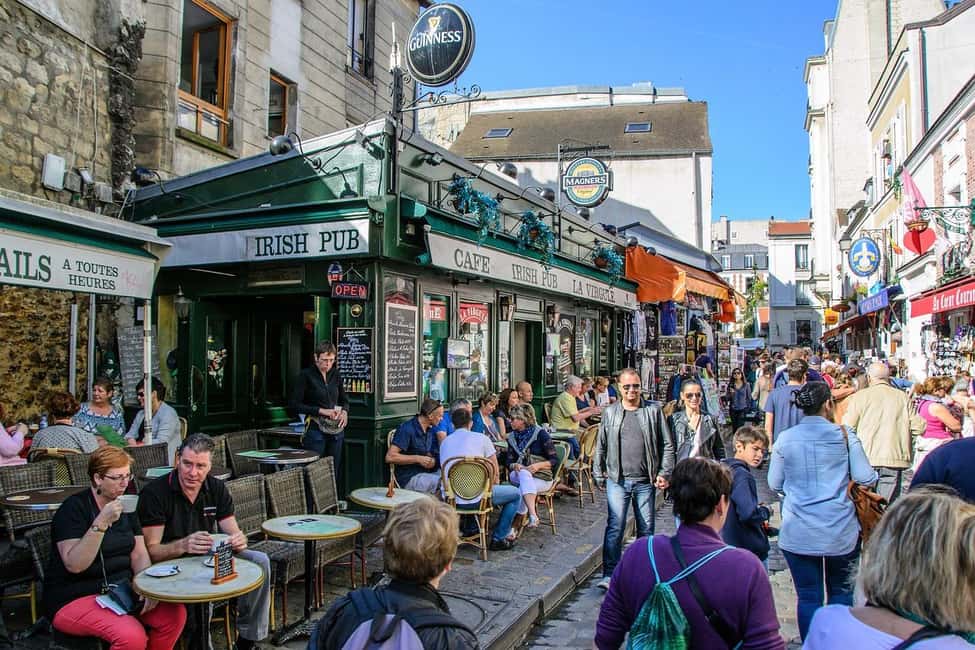
Then you reach Lapin Agile, another photo stop with guided context. After a few of the big and recognizable sights, this is where the tour leans into why Montmartre earned its reputation.
The walk includes the artistic side of the district—specifically the neighborhood where famous painters such as Picasso and Van Gogh lived. You’re not getting heavy academic detail, but you do get enough story to make the streets feel linked, like you’re following footsteps rather than just checking boxes.
If you care about atmosphere, this segment is the bridge between showy landmarks and the day-to-day creative energy of the area. And because the tour is limited to small-group size (up to 10), it’s easier to ask follow-up questions without getting rushed.
Place du Tertre: the painter square and the creative crowd
Next is Place du Tertre, one of the most fun stops because it’s both scenic and active. You’ll get a photo stop and guided introduction here, plus time to actually see painters displaying their artworks.
This is a great moment to slow down for a minute. Watch how artists set up, how people wander, and how the square feels like it’s part market, part stage. Even if you don’t buy anything, it helps you understand the neighborhood’s ongoing relationship with art.
If you’re the type who likes to take photos but hates feeling rushed, you’ll probably appreciate how the guide builds in time. The feedback often mentions guides giving space for pictures and questions, and that’s the difference between a fast checklist and a satisfying walk.






Sacré-Cœur approach: views start before you reach the basilica
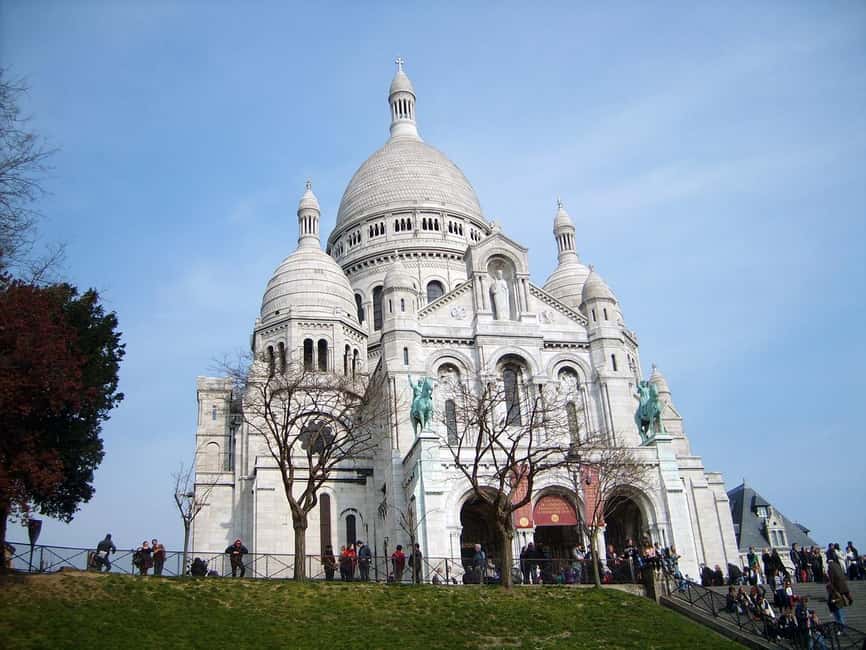
The walk continues with Sacré-Coeur Basilica as the final destination. You’ll have a photo stop and time for sightseeing, plus scenic views along the way.
This matters because the hilltop payoff begins before you even reach the doors. As you climb, you’ll start to see the city change layers—rooftops giving way to bigger sightlines.
Your guide also helps you spot major landmarks from the hilltop viewpoints, including the Eiffel Tower, Notre Dame, and the Montparnasse Tower. That’s useful because it turns a pretty view into a navigable map in your head.
Finishing at the Basilique du Sacré-Cœur de Montmartre
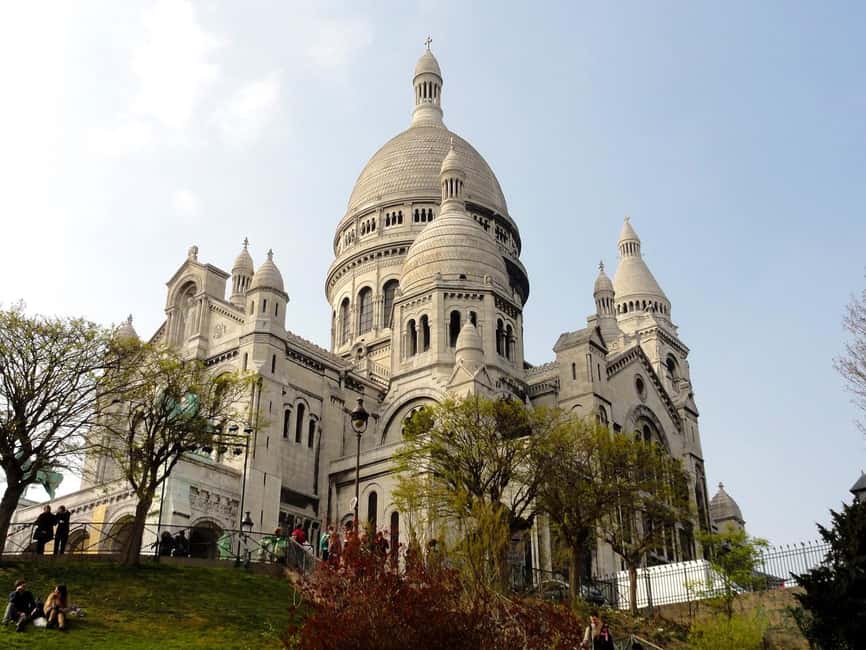
The tour finishes at Basilique du Sacré-Cœur de Montmartre, which is the perfect ending for a highlights walk. It gives you a clear conclusion: you’ve reached the high point and the views make sense.
If you’re wondering what to do after you finish, you’re in the right place to keep wandering on your own. You can linger for photos, look at the basilica area, and then decide how long you want to stay on the hill.
Just remember the main event is the walking and the viewpoints. Since food and drinks aren’t included, you’ll want to plan a café stop afterward if you’re hungry.
Value for $29: what you’re really paying for
At $29 per person for 105 minutes, you’re not buying a long, drawn-out day. You’re buying a compact, curated route that hits a lot of Montmartre in about 1.5 hours, without the hassle of planning each stop yourself.
Here’s what you get for the money:
- A live English guide who connects the landmarks to stories and what to look for.
- Small-group attention (up to 10), so the walk doesn’t feel crowded.
- Multiple named stops: Moulin Rouge, Le Mur des Je T’aime, Moulin de la Galette, Dalida statue, La Maison Rose, Lapin Agile, Place du Tertre, and finally Sacré-Cœur.
- A hilltop view where the guide helps you spot famous Paris landmarks.
What you don’t get:
- Food or drinks (so don’t count on a built-in break).
- A full-day Montmartre deep dive. This is a highlights route, not an all-day exploration.
For many first-time visitors, that trade-off is exactly right. If your Paris schedule is tight, this tour gives you a high-ROI route that still feels personal.
Who this tour suits best (and who should skip it)
This is best for you if you want:
- An English walking tour with a guide who explains what you’re seeing.
- A small-group experience where you can ask questions and take photos.
- A route that mixes iconic sights with creative-district storytelling.
It’s not the right fit if you have mobility limits. The tour isn’t suitable for people with mobility impairments and wheelchair users, which matters because the route includes getting up to the hilltop area and walking between several points.
Also, if you dislike walking at all, you might find the pace tiring. This is designed around shoes and steady movement, not sitting breaks.
Practical tips before you go
Wear comfortable shoes. That sounds obvious, but Montmartre can be a lot underfoot, and your comfort is the difference between enjoying the walk and counting minutes.
Bring your camera. The route includes multiple photo stops, especially early at Moulin Rouge and later at Place du Tertre and Sacré-Cœur.
Finally, go in expecting a relaxed pace. The strongest feedback highlights guides like Sammy/Samy for being patient and adaptable, including when people are struggling with French, and also for giving enough time for questions and photos. That’s a good sign you’ll feel guided, not herded.
Should you book this Montmartre highlights walking tour?
Book it if you want a smart first taste of Montmartre with an English guide, a manageable walking time, and a big finish at Sacré-Cœur with city views. The route covers the neighborhood’s signature visuals and gives you story context for why the district matters—plus you finish at the top, not back at the bottom.
Skip it if you need wheelchair access or you know you can’t handle a hilltop walking route. Also skip it if you only want museums or long sit-down experiences, because this is built around walking and seeing.
If you’re in the sweet spot—comfortable shoes, curiosity, and a love of street-level Paris—this is a solid way to spend about 105 minutes turning Montmartre from a name into a place you’ll remember.
FAQ
Where does the tour start?
The tour meets near the exit of metro station Blanche (metro 2), near Moulin Rouge.
Where does the tour end?
The tour finishes at Basilique du Sacré-Cœur de Montmartre.
How long is the tour?
The duration is 105 minutes.
Is the tour in English?
Yes, it’s a walking tour in English.
What’s included in the price?
You get a walking tour with a guide. Food and drinks are not included.
What should I bring?
Bring comfortable shoes for walking.
Is the tour suitable for wheelchair users or limited mobility?
No. It’s not suitable for people with mobility impairments and wheelchair users.
How many people are in the group?
The tour is a small group, limited to 10 participants.