REVIEW · PARIS
From Paris: Normandy D-Day Landing Beaches Full-Day Tour
Book on GetYourGuide →Operated by Blue Fox Travel · Bookable on GetYourGuide
One day, four battlefronts, and quiet shock. I love the small-group pace that makes the driving feel like a field trip, not a cattle call, and I love the Normandy American Cemetery stop, where the scale hits you in the chest.
The main thing to consider is time and food: it’s a long 12-hour day and meals aren’t included, so plan to budget for lunch.
In This Review
- Key highlights worth planning for
- Normandy D-Day from Paris: what this tour does better than a self-guided day
- The small-group minibus ride: comfortable logistics, better pacing
- Longues-sur-Mer battery: seeing the German fortifications up close
- Omaha Beach: shoreline reality, bunkers, and why tide timing can matter
- Operation Overlord Museum: using artifacts to make sense of what you saw
- Lunch and rest breaks: you’ll need energy, and you’ll pay for it
- Pointe du Hoc: where strategy becomes cliffs and concrete
- A quick wine tasting: small stop, optional mood booster
- Normandy American Cemetery: 10,000+ white crosses and the power of names
- Price and value at $312: what you’re buying with a guided full day
- Who this tour fits best (and who might feel the strain)
- Should you book this Normandy D-Day tour from Paris?
- FAQ
- How long is the tour and what time will I get back to Paris?
- Where do I meet the tour?
- What’s the group size?
- Is the guide available in English?
- Is food included?
- What stops are included on the day?
- Does the tour run in bad weather?
Key highlights worth planning for
- Max 8 people means more asking questions and less time stuck behind big tour groups
- Guides use campaign maps and photos to connect what you see to what the Allied planners were thinking
- Omaha Beach can be timed for low tide to help you grasp how the shoreline shaped the assault
- You hit both the American and British front feel, including places tied to the liberation effort
- The American Cemetery experience is guided to matter, with time to reflect at one of the most moving memorials in Europe
Normandy D-Day from Paris: what this tour does better than a self-guided day
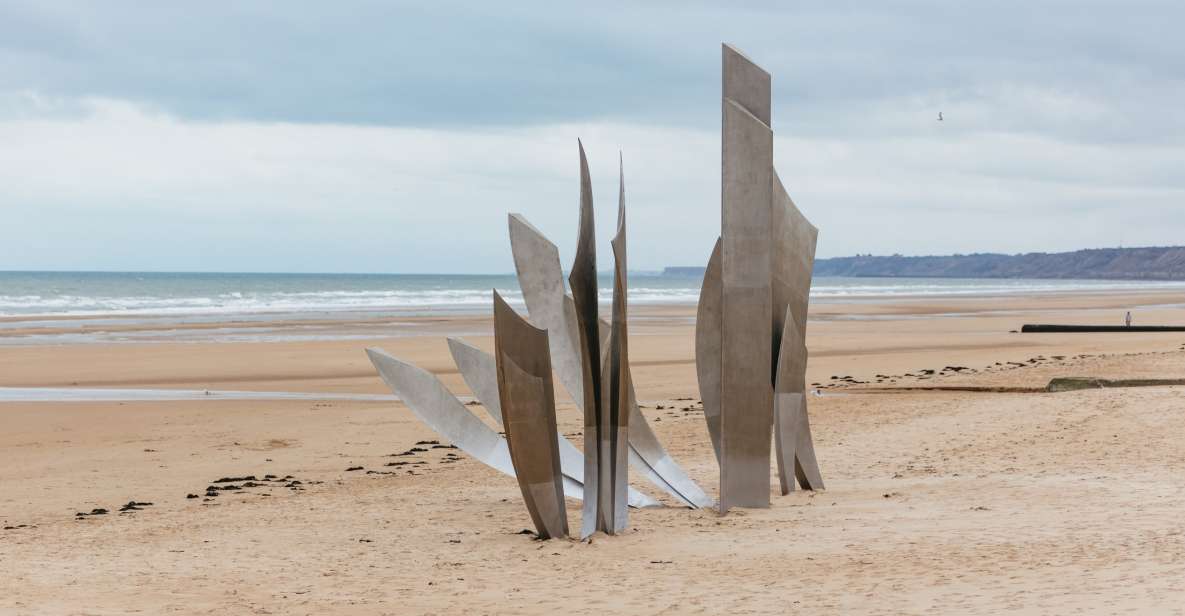
This is the kind of day trip that makes Normandy feel bigger than a postcard. You’re not just looking at coastline and reading plaques; you’re walking the terrain while someone explains how the battle unfolded, why the Allies landed where they did, and what it took to keep moving forward after the first waves.
What I like most is how the tour blends “seeing” with “understanding.” Along the drive, your guide uses D-Day campaign maps, plans, and period photos to frame each stop. That turns the day into a story you can follow, not a checklist.
And yes, it’s emotional. The American Cemetery is the emotional center, but the earlier stops keep preparing you for it: concrete bunkers, cliffs, gun emplacements, and the strategic logic behind them.
You can also read our reviews of more tours and experiences in Paris


The small-group minibus ride: comfortable logistics, better pacing
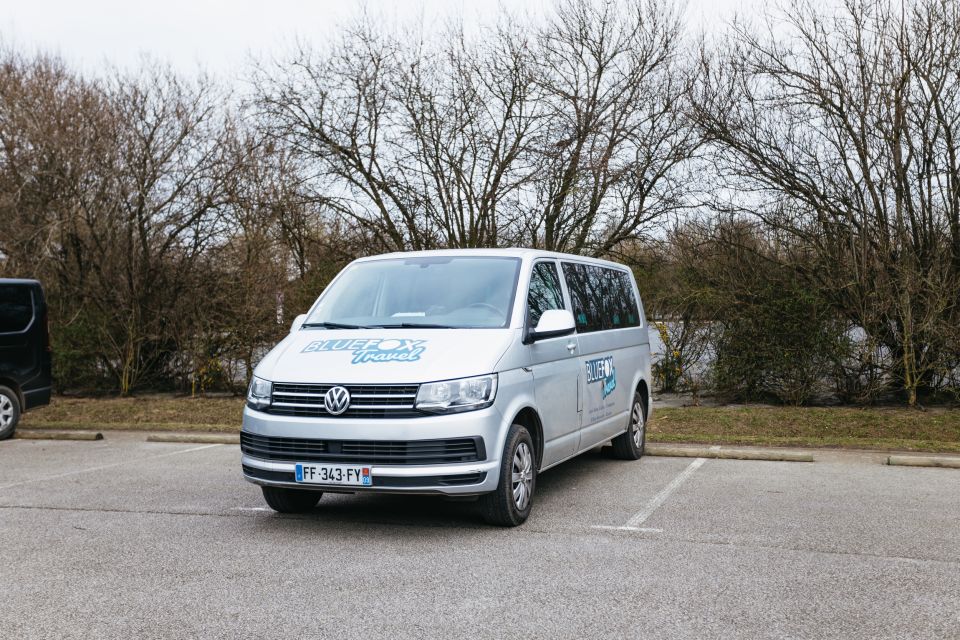
Your day starts at 6 Avenue de Wagram. Your driver/guide shows up a little early in a gray minivan, and you’ll head out of Paris before the day feels fully started. This matters more than it sounds. Leaving on time lets you spend daylight at the sites instead of burning time in traffic.
Most people expect a long drive—Normandy is far enough that it is real travel, not a quick hop. But the minibus setup helps. With a group size capped at 8, you’re more likely to get direct answers, quick photo breaks, and a smoother flow between stops.
From the reviews and the way the day is structured, the guides also tend to bring extra tools into the trip. I’ve seen guides named like Oliver, Enzo, Augustine, and Will praised for being engaging, and several specifically mention the use of visual aids during the drive. Some groups even get 1944-style broadcasts played in the van while you travel between key points.
Longues-sur-Mer battery: seeing the German fortifications up close
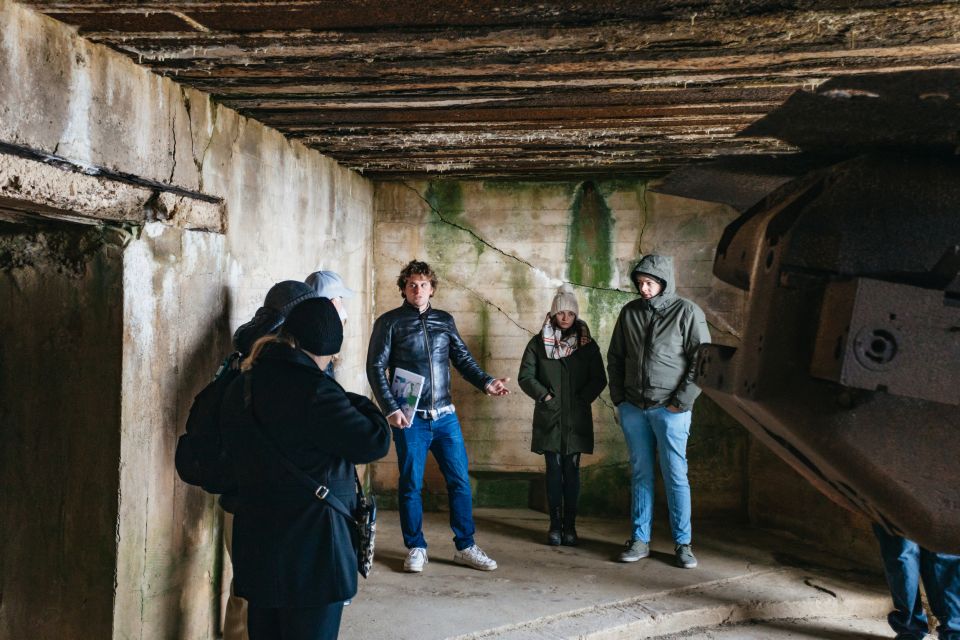
Early on, you reach Longues-sur-Mer battery for a short visit. This isn’t just about standing near old guns. It’s about understanding what the Allied troops were facing when they approached the beaches—fixed defenses designed to slow or break the landing force.
Even when your stop is brief, you get the benefit of an explanation. The guide helps you connect what you’re looking at to why it mattered during the campaign, and how these positions fit into the broader German defensive plan in the area.
If you’re the type who likes to “read” terrain, this is a good first stop. You start seeing the coastline the way soldiers saw it: with angles, sightlines, and choke points.
Omaha Beach: shoreline reality, bunkers, and why tide timing can matter
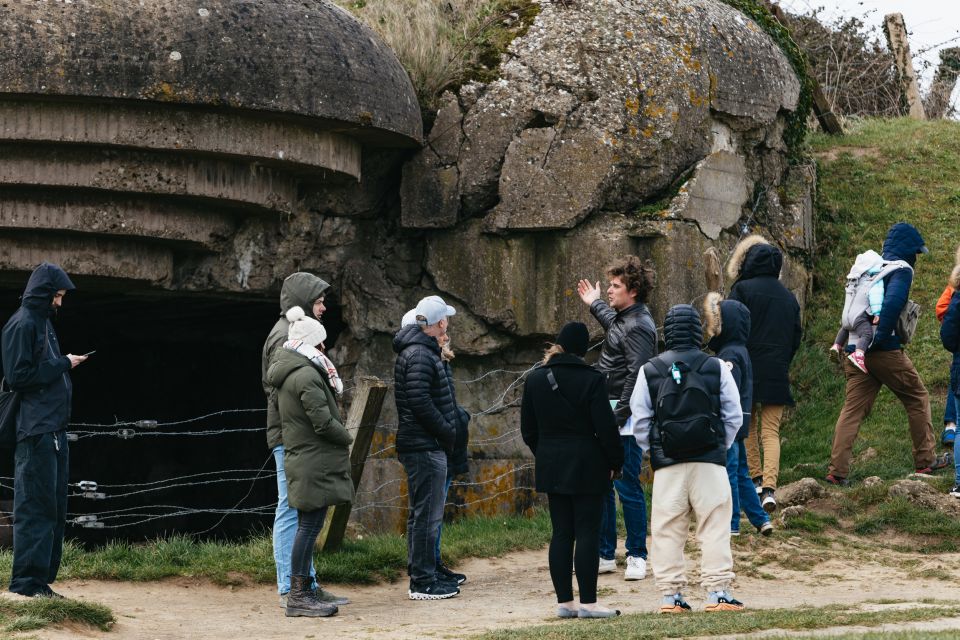
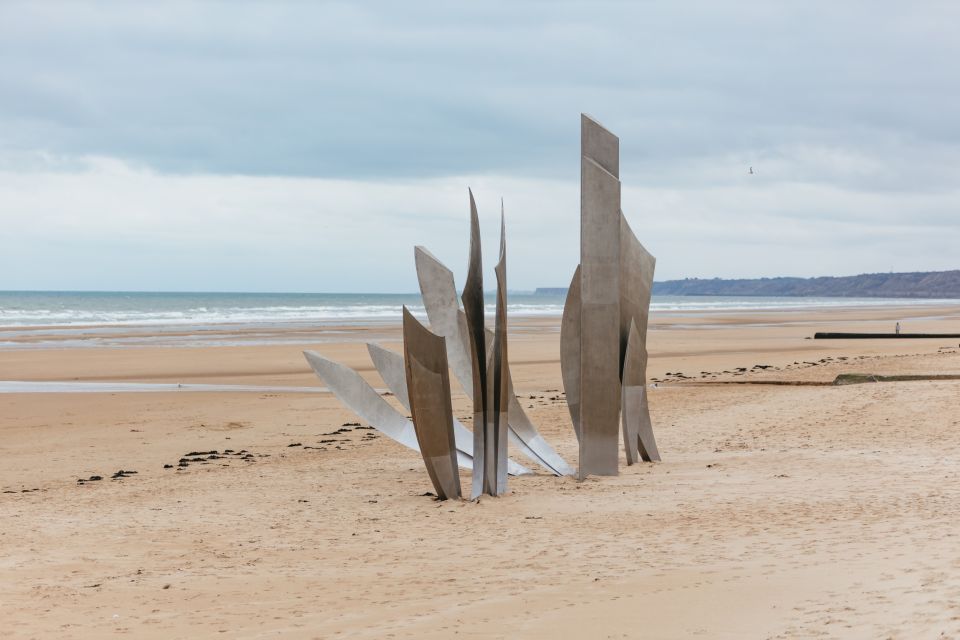
Omaha Beach is the stop people talk about most, and for good reason. You get time on the beach and on the approaches that connect it to what happened on 6 June 1944. The guide walks you through what the attackers had to deal with—terrain that didn’t forgive mistakes, and defenses that made progress painfully slow.
One detail that really improves the experience is when the guide times your visit around low tide. On at least some departures, the schedule is adjusted so you can better understand the shoreline approach. You’ll feel it in your legs too: it can be windy, cold, and damp, so bring layers even if the forecast looks friendly.
This is also where you’ll see German bunkers—a reminder that the fighting wasn’t abstract. Concrete survived, and that makes the history feel physical.
Practical tip: wear shoes you don’t mind getting gritty. Beach sand plus sea air equals slippery footing, and you’ll want stable traction as you follow the guide’s route.
Operation Overlord Museum: using artifacts to make sense of what you saw
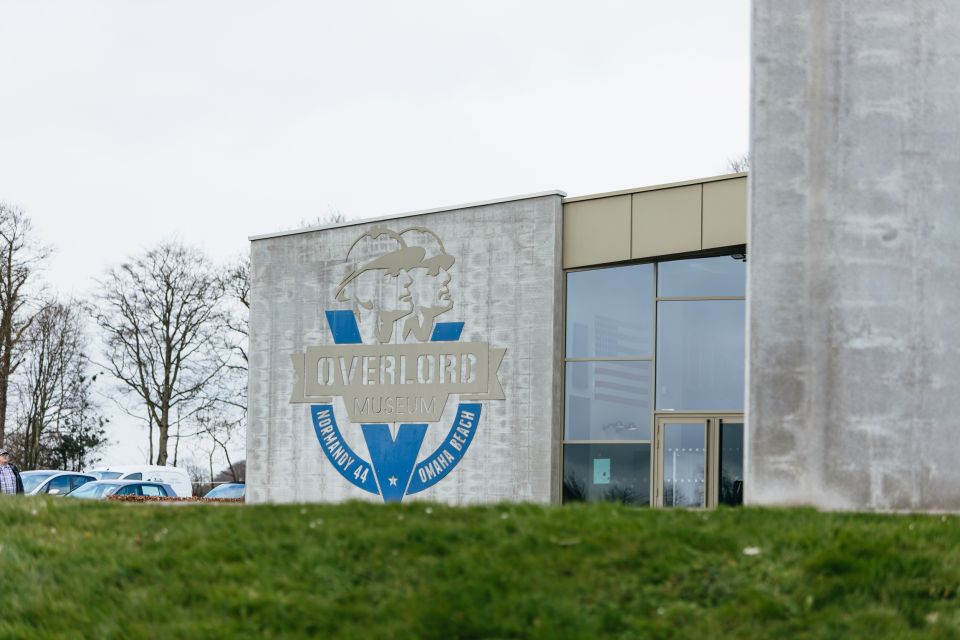
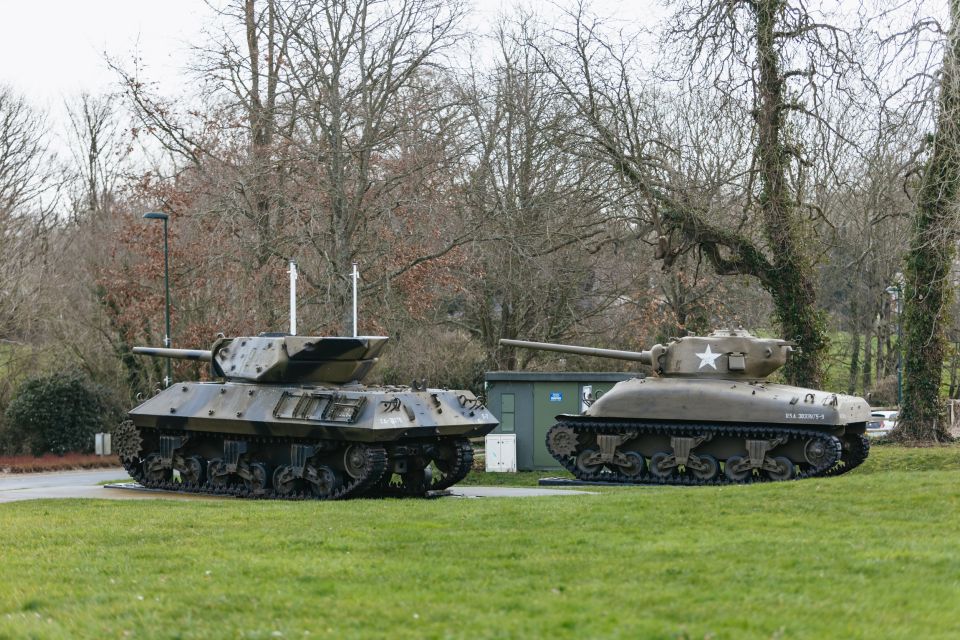
The Operation Overlord Museum is a smart mid-day stop because it turns the battlefield you’ve been staring at into something you can interpret. You get guided entry and skip-the-line access through a separate entrance, which saves you time in a place where everyone is trying to get in at once.
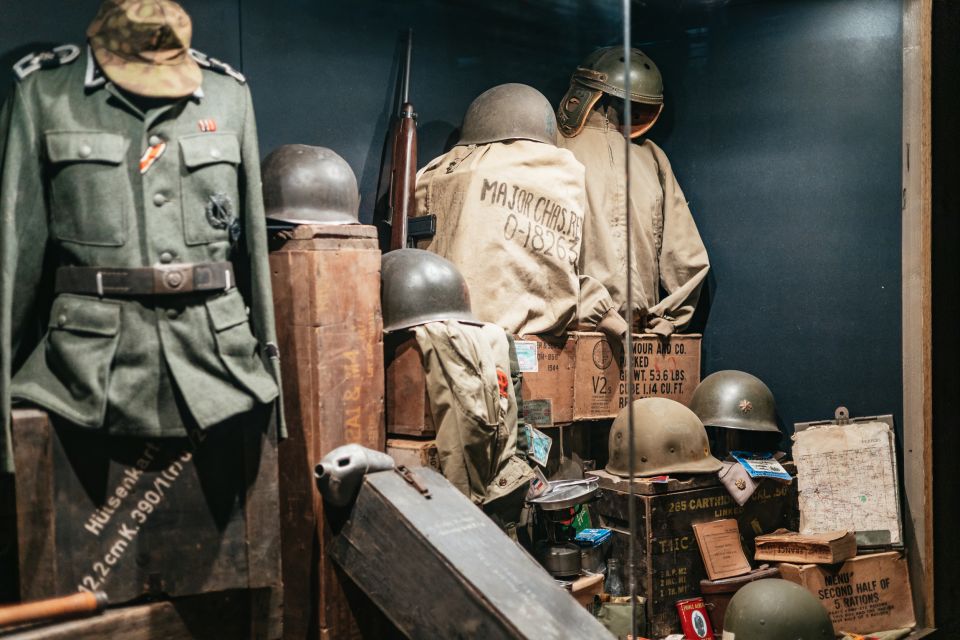
This museum stop is usually where the story gets more concrete. You’re not just hearing about plans and maps; you’re seeing artifacts and materials that connect those documents to the real operation.
There’s also a built-in rhythm benefit. Omaha and the surrounding area can be overwhelming. The museum gives your brain a chance to sort facts, not just absorb scenery.
If the Overlord Museum is exceptionally closed, the day may swap in the American Cemetery Visitor Center instead. Either way, you still keep the “interpretation” slot in the itinerary.






Lunch and rest breaks: you’ll need energy, and you’ll pay for it
Lunch is built in with about 75 minutes of time. Food is not included in the tour price, so you’re choosing what to eat during that break.
This is a moment where your guide’s skill shows indirectly. In good departures, the lunch stop is not just a rushed stop near the biggest tourist flow. Several named guides in feedback are praised for finding enjoyable local meals and for keeping the day moving without feeling frantic.
If you want to plan ahead, do one simple thing: eat earlier if you tend to get hungry on long drives, and keep snacks in your bag for the minibus.
And don’t forget basics: restrooms can be limited once you’re out in the countryside. The guides generally manage breaks, but you’ll enjoy the day more if you don’t wait until you’re desperate.
Pointe du Hoc: where strategy becomes cliffs and concrete
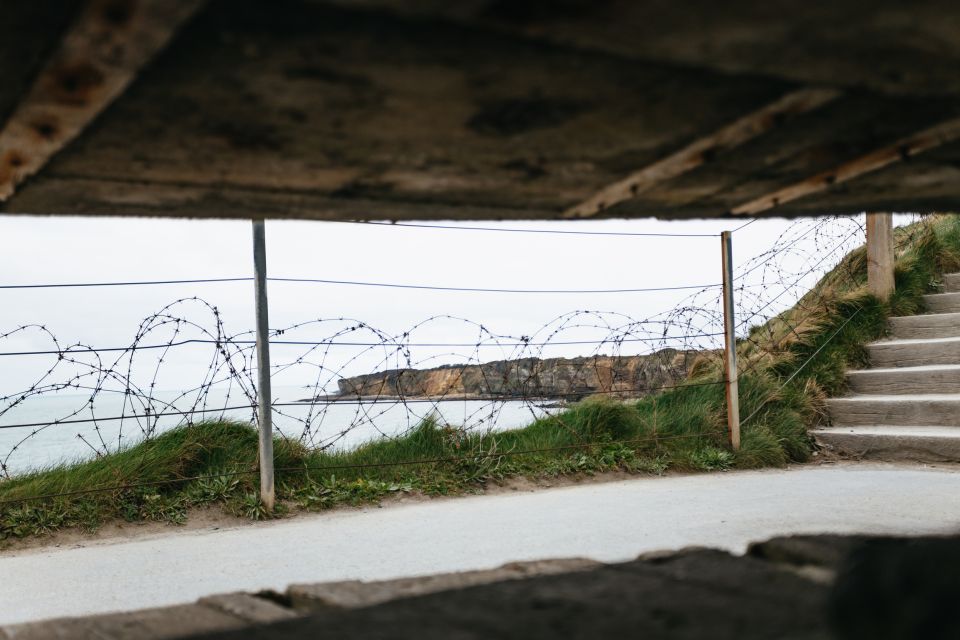
Pointe du Hoc is where you see how audacious the Allied planning was—and how brutal the terrain was for whoever held it. The stop is long enough for you to walk part of the area and grasp the scale, not just snap a photo and move on.
This is also one of the places described as tied to Nazi bunkers Allied troops had to neutralize. Standing near the lookout points and rocky edges, you can understand why the operation mattered. It wasn’t just about landing forces on a beach; it was about removing the ability to fire on the landing zones.
If you like guided context, this is where you’ll really feel it. Your guide ties the cliffside to what the military maps and battle plans were trying to accomplish.
A quick wine tasting: small stop, optional mood booster
After Pointe du Hoc, there’s a brief wine tasting stop—about 15 minutes. For some people, that’s a fun moment: a sip, a breath, and a tiny pause between heavy sites.
For others, it can feel like “one more thing,” especially if the day already feels packed. If you’re sensitive to short stops, consider this the part of the day you can treat as optional in your own head. Use the time to regroup, hydrate, and reset.
The same goes for anything like cider tasting you may encounter depending on the exact day and local supplier partner. Reviews include mixed feelings: some people loved the apple-orchard angle and the family tradition behind it; others felt the stop was too quick to add much.
Normandy American Cemetery: 10,000+ white crosses and the power of names
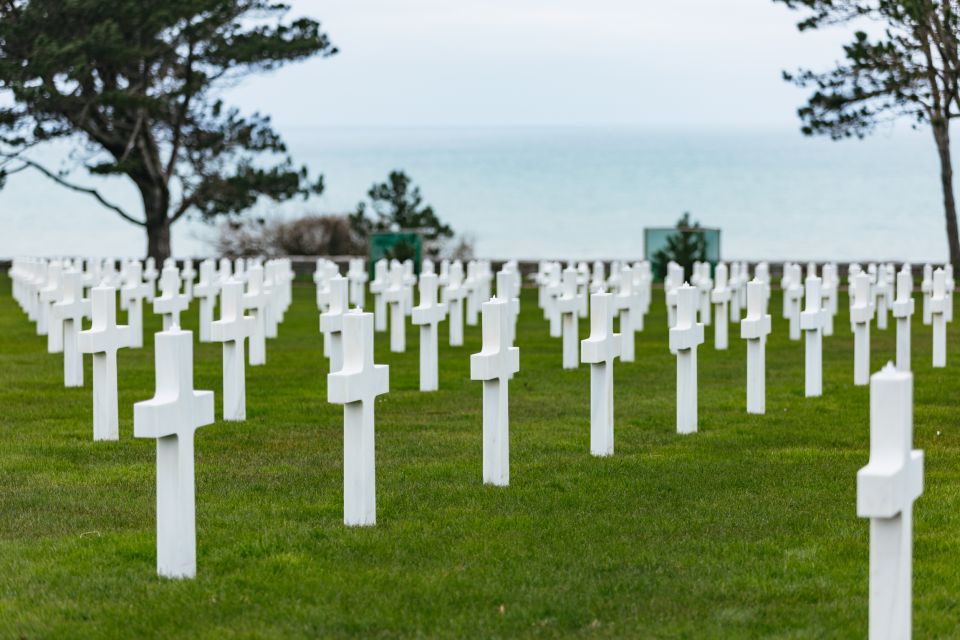
This is the emotional anchor of the tour, and it deserves the time it gets. At the American Cemetery, you’ll see more than 10,000 white cross graves, each marking fallen soldiers. The guide helps you understand how these burials are organized and why the cemetery carries such weight for American history.
What makes the stop hit harder is how you’re guided through it. It’s not rushed sightseeing. You’re encouraged to look slowly, take in the layout, and let the scale sink in.
Some guides time the day so you can catch key moments like Taps. In at least some departures, guides make sure the group arrives in time for the sound ceremony at 4pm. Even if your day differs, the cemetery visit itself is built to be reflective.
If you’re visiting with family, this is one of those stops that sticks with everyone—kids included, as long as they’re old enough for the tour’s focus. (This tour isn’t suitable for children under 7.)
Practical tip: dress warmly and bring a small personal item like tissues or hand sanitizer. Cemeteries are quiet, and you’ll want to be comfortable while you slow down.
Price and value at $312: what you’re buying with a guided full day
At $312 per person for a 12-hour day, this isn’t a cheap add-on. But it is paying for a few things that add up fast:
- Transportation from Paris in a small minibus for a full day
- An English-speaking guide who ties stops together with maps, plans, and story
- Museum entry (Operation Overlord Museum) and the benefit of skipping the line
- A route that strings together multiple battlefield zones so you don’t have to puzzle out logistics across a wide region
If you tried to do this on your own, you’d spend time arranging transport, driving long distances, and figuring out what to prioritize. Most of the value here is time plus interpretation. The guide’s job isn’t just to talk. It’s to help you avoid the main trap at D-Day sites: seeing places as isolated scenery instead of parts of one brutal operation.
The other value point is group size. With a max of 8, you’re not fighting for attention or competing with dozens of people for the same viewpoints. That’s part of why guides like Enzo, Augustine, and Will get named so often for pacing and care.
Who this tour fits best (and who might feel the strain)
This is a good match if you:
- Want an organized day that covers major D-Day locations from Paris
- Enjoy guided storytelling and visual context (maps, photos, and museum artifacts)
- Prefer small groups over a crowded bus day
It may feel like a stretch if you:
- Don’t like long days (you’re out roughly 12 hours, returning around 20:00 depending on traffic)
- Get tired in busy schedules; there’s a lot packed into a single day
- Need wheelchair access (the tour is not suitable for wheelchair users)
Also, note that the tour operates rain or shine. Normandy can go from clear to cold and blustery quickly, so pack layers and a light waterproof layer.
Should you book this Normandy D-Day tour from Paris?
I think you should book it if you want a full, guided D-Day experience without the stress of planning your own route across Normandy. The value is strongest when you care about context: the guide’s maps and battle-plan explanations make the stops work together.
Skip it if you want a relaxed, slow-moving day or if you hate long travel. This tour is intense by design, and the best parts—especially Omaha and the American Cemetery—benefit from having enough energy to stand still and take it in.
If your goal is one day that connects the landing beaches, the fortifications, and the memorials into one clear story, this is a very solid choice.
FAQ
How long is the tour and what time will I get back to Paris?
The tour runs for 12 hours and returns to Paris at around 20:00, depending on traffic.
Where do I meet the tour?
Meet at 6 Avenue de Wagram. The gray minivan typically arrives about 10 minutes before departure.
What’s the group size?
It’s a small-group tour with a maximum of 8 participants.
Is the guide available in English?
Yes, the tour includes an English-speaking live guide.
Is food included?
No. Lunch time is scheduled, but food is not included in the tour price.
What stops are included on the day?
You’ll visit key D-Day locations including Omaha Beach, the Operation Overlord Museum, Pointe du Hoc, and the Normandy American Cemetery, plus additional battlefield sites along the way.
Does the tour run in bad weather?
Yes, the tour operates rain or shine.