REVIEW · PARIS
Louvre Masterpieces Private Guided Tour with Reserved Access
Book on GetYourGuide →Operated by ExperienceFirst · Bookable on GetYourGuide
The Louvre moves fast; this tour keeps up. Starting at the Pyramid with reserved access, you get a guided hit list that ends at the Mona Lisa and still leaves you time to wander.
I like the storytelling style, especially when guides like Mariane and Mélina bring famous works into plain talk. I also like that the route is built around set stops—then you finish at Mona Lisa with practical tips for what to see next.
One consideration: it is a 2-hour overview, so if you expect an ultra-shock scandal show, the emphasis stays on context and clever explanations more than raw sensation.
In This Review
- Key things I’d target in this Louvre tour
- Meeting at Louis XIV and getting into the Louvre with reserved access
- The Pyramid start: controversy, the red-ghost legend, and fast orientation
- Medieval Foundations: the Louvre as a fortress, not just a gallery
- Great Sphinx of Tanis: why this riddle stop feels different
- The highlight loop: from famous gossip to the Mona Lisa finish
- Private tour energy, or a semi-private small group of six
- Price and value: paying $527 per person for focus in two hours
- FAQ
- Where do I meet for the Louvre Masterpieces private guided tour?
- How long is the tour, and where does it end?
- Do I get skip-the-line entry?
- What ID and items should I bring or avoid?
- Is the tour wheelchair accessible?
- Is the experience refundable if I cancel?
- Should you book this Louvre masterpieces tour?
Key things I’d target in this Louvre tour
- Reserved access starts at the Pyramid for an efficient, high-impact beginning near the Tuileries Garden
- Skip-the-line entry uses a separate entrance so you spend less time queueing
- Fortress-era Louvre stops point you to the Medieval Foundations and the museum’s older layers
- A rare-feeling detour to the Great Sphinx of Tanis with its long-running “riddle” vibe
- A defined masterpiece route that includes Venus de Milo, Winged Victory, and the Mona Lisa finale
- Private guidance with an end-of-tour boost so you can keep exploring on your own
Meeting at Louis XIV and getting into the Louvre with reserved access
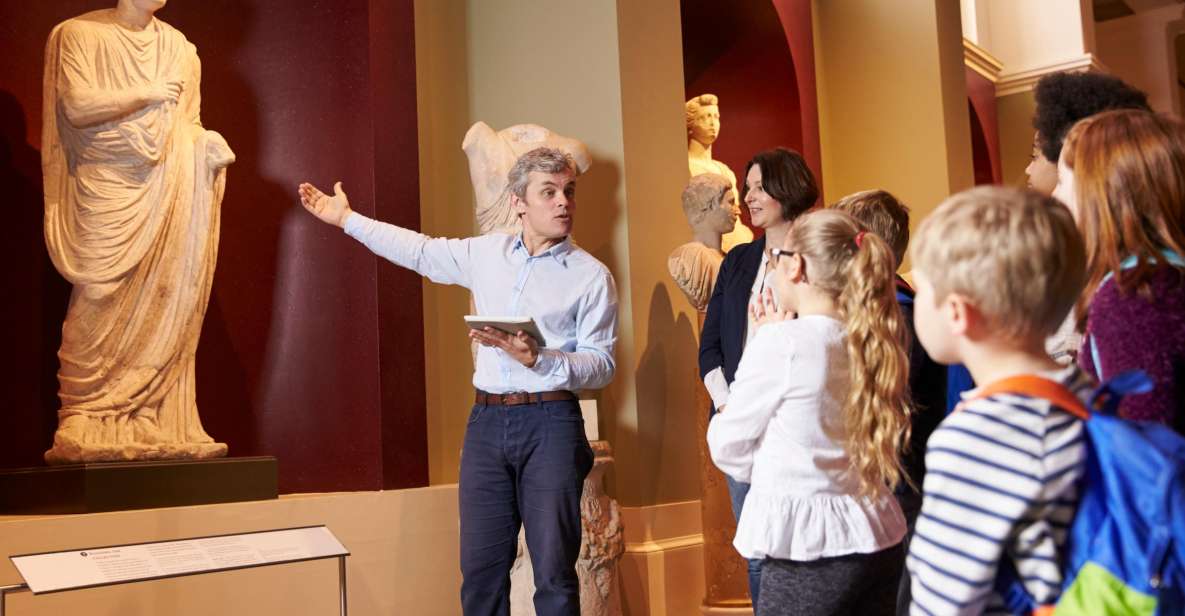
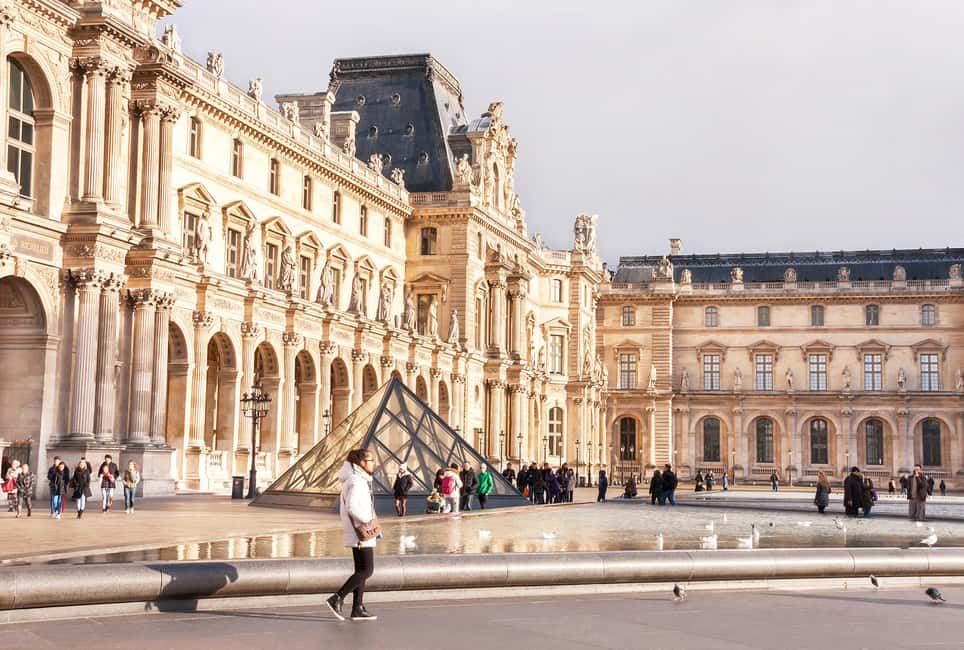
Your tour starts outside, at the statue of Louis XIV (the man on a horse) in front of the big Pyramid, directly in front of the main Louvre entrance. It’s a good setup because the Louvre complex can feel like a maze at first glance, and this meeting point is hard to miss once you’re there.
You’ll begin with skip-the-line entrance using a separate entrance, so the key win here is time. In a museum this big, “time saved” often turns into “more art actually seen,” not just more wandering. The tour length is 2 hours, so that early efficiency matters.
Bring your passport or ID card, and keep bags tight. The museum does not permit items over 55x35x20 cm, and you’re not allowed luggage or large bags on the tour. Also plan on no pets and no smoking. If you’re coming in with a daypack, aim for something compact, because you don’t want an extra headache right when the fun starts.
One more practical note: the guide covers the highlights with you, then the visit becomes self-guided inside after the guided portion. That means you should be ready to choose what you want most once you’ve been oriented.
You can also read our reviews of more guided tours in Paris



The Pyramid start: controversy, the red-ghost legend, and fast orientation
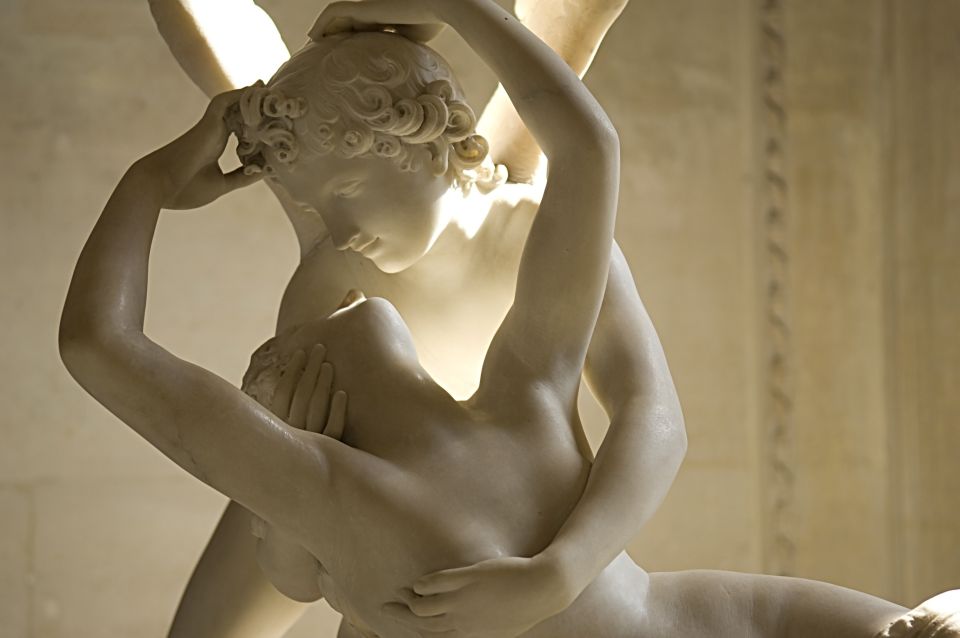
The tour begins at the Pyramid, which is famous not just for being iconic but also for being controversial. You’ll hear what people argue about and why the Pyramid is such a big deal in the Louvre’s modern story. If you’ve seen photos online, you already know what it looks like. What you may not know is how much the building’s design affects how people experience the museum.
Right there, near the Pyramid, you’ll get a dose of Louvre folklore too: the story of a pesky little red ghost that’s said to have lived around the area for hundreds of years. It sounds like a throwaway legend, but these small local tales are useful. They help you connect the museum to a specific place and time, instead of treating it like a generic “must-see box.”
This opening matters because it sets a pace. In two hours, you don’t have time to figure things out on the fly. Starting where the tour can control your route gives you momentum right away. And because you’re guided from the beginning, you get to focus on art—rather than decoding signage, crowds, and which doors go where.
It also helps that the Pyramid sits by the Tuileries Garden, so the area gives you a sense of Paris outside the museum walls. Think of this start as a quick Louvre “orientation speech,” wrapped in an entertaining walk.
Medieval Foundations: the Louvre as a fortress, not just a gallery
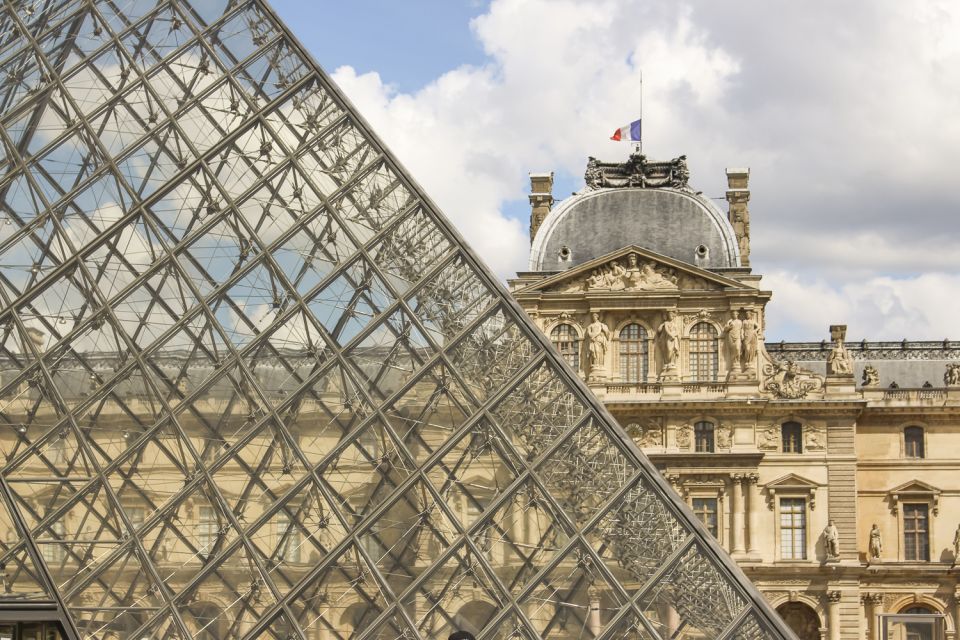
After the Pyramid kickoff, you move into older layers of the Louvre experience. You’ll walk through the shadows of the Medieval Foundations, and the tour frames the Louvre as something more than a polished palace of art.
The guided story is that you’re seeing traces from when the Louvre functioned as a fortress. That angle changes how you look at the space. Instead of viewing the museum only as rooms of paintings, you start noticing the museum as a place that grew, changed, and survived through different eras.
This is one of those stops that pays off even if you don’t love every artwork you pass. Understanding that the museum has roots in defense and power gives the whole building context. It also makes later masterpieces feel more dramatic, because you’re watching the institution evolve.
You can treat this section like the “warm-up” before the big-name galleries. It’s not just trivia. It’s a way to make the Louvre feel connected, not like random rooms you hop between.
And because your guide plans stops carefully, this background doesn’t eat up your time. You’ll still get to the headline works without feeling rushed or lost.
Great Sphinx of Tanis: why this riddle stop feels different
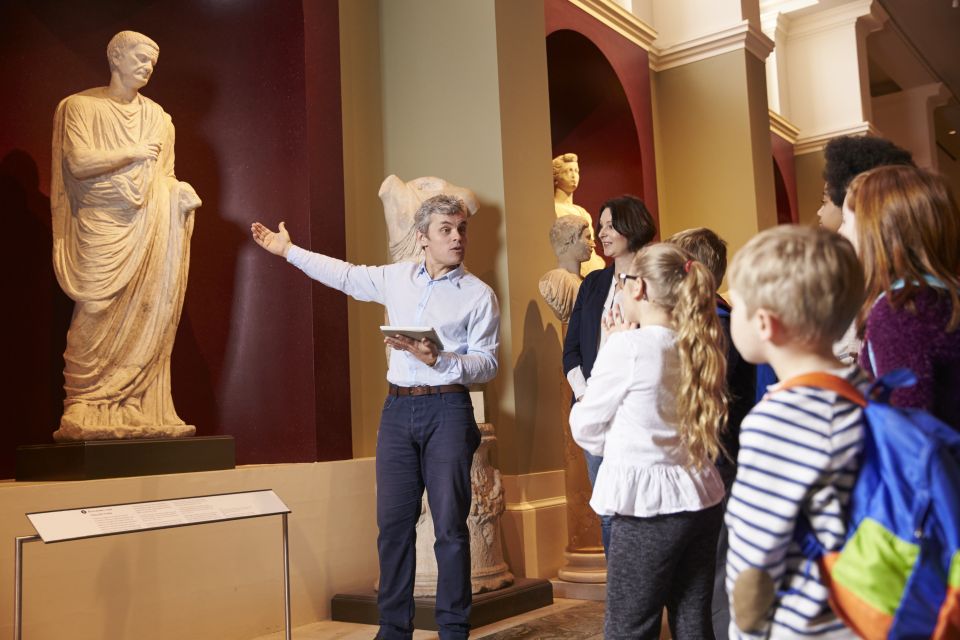
At some point you’ll face the Great Sphinx of Tanis. It’s presented as a piece that’s been puzzling people for thousands of years, and that “riddle” framing is a smart guide move. The Louvre is packed with famous artworks, but this stop gives your eyes a breather and your mind something odd and memorable.
The Sphinx also works as a contrast. You come in thinking in terms of European masterpieces, and then you’re pulled into a bigger, older story—Egyptian art and the mysteries people attach to it. If you’re the type who likes art history but hates long lectures, this kind of stop can be the sweet spot: it’s visual, it’s dramatic, and the guide can tell stories without bogging you down.
This is one reason the tour feels more “planned” than a quick highlight loop. The route mixes familiar icons with less predictable moments, which helps the whole 2 hours feel varied instead of like a straight line.
It’s also good for people who worry they’ll only remember the famous names. After a tour like this, you’re more likely to leave with a mental map of the museum’s different eras—and at least one unexpected image you’ll remember in the week after.
The highlight loop: from famous gossip to the Mona Lisa finish
The heart of this experience is walking past thousands of objects while stopping at over a dozen of the museum’s best-known works. You’re promised the lowdown and the gossip, and the tone leans into dramatic stories, including dark rumors like murder and cannibalism. Keep expectations realistic: you’re not signing up for a horror documentary. You are getting guided explanations and interpretation through story-like language.
You’ll hear about crowd magnets such as Mona Lisa, Venus de Milo, and Winged Victory, plus other major pieces. The guide approach is designed for efficiency: you move at a leisurely pace, but the stops keep your attention locked onto what matters.
A key part of the value is the way the tour builds meaning. You’re not just checking off titles. You get context for why people argue, mythologize, and obsess over these works. That’s especially useful for the Mona Lisa ending, because by the time you reach it, you’ve already been taught how to look.
The tour concludes at Mona Lisa. Then you’re free to stay in the museum as long as you wish. The guide also gives you handy tips for other works to seek out on your own. That last step is important. Two hours is the guided sprint, but the Louvre is the long race. Finishing at the museum’s most famous face gives you a clean emotional high point, then you choose your next chapters.
You can also read our reviews of more private tours in Paris






Private tour energy, or a semi-private small group of six
This is built as a private guided tour, with an option to customize for a small group of six for a semi-private style. That choice affects more than comfort. It affects how closely the guide can manage your pace and your specific interests.
In a private setting, the guide can steer the route so you spend more time where your eyes actually go—especially helpful in the Louvre, where “must-see” can quickly turn into “I walked past it and never really looked.” In the small-group version, you still get that focused feel, but you’ll share the energy with a few other people.
You also get an English-speaking guide, and the reviews attached to this tour highlight real skill in making art talkable. Names that come up include Mariane, Mélina, Sébastien Cormier, and Lea, with praise for details and interpretations. One guide experience specifically noted accessibility to children, which is a good sign that the tour is not only built for adults who already know museum vocabulary.
If you’re traveling with teens or kids who get bored with long explanations, this “story plus structure” method can work better than a straight lecture. If you’re traveling as a couple or a small friend group, the semi-private option can feel like a sweet spot between attention and price sensitivity.
Price and value: paying $527 per person for focus in two hours
At $527 per person for a 2-hour tour, this is not a “budget Louvre” option. You’re paying for a few very practical things bundled together: reserved access, skip-the-line entry, and a guide who keeps you moving through the biggest hits in a defined route.
So the value question is simple. Will you get more out of your day by paying for guidance, or will you be happier self-guiding with the hours you’d save? If you want to walk in and feel oriented fast, reserved access helps. If you dread spending your best energy trapped in queues, the separate entrance is a real payoff.
The tour also earns its cost by giving you structure. The Louvre is the kind of place where “I’ll figure it out” turns into “I missed the paintings I came for.” This tour tries to prevent that by stopping at key works and then letting you keep exploring afterward with tips.
For solo travelers, the price is high, but the benefit can be high too: less decision stress, less time hunting, more looking. For small groups, the semi-private option can make the experience feel more reasonable—especially if you share the decision-making and know you’ll actually appreciate guided context.
FAQ
Where do I meet for the Louvre Masterpieces private guided tour?
Meet at the statue of Louis XIV (the man on a horse) in front of the big Pyramid, directly in front of the Louvre entrance. The starting location is also listed as 8 Pl. du Carrousel.
How long is the tour, and where does it end?
The guided tour lasts 2 hours. It ends at the Louvre, concluding at the museum’s most famous artwork, Mona Lisa, after which you can stay and explore on your own.
Do I get skip-the-line entry?
Yes. You get skip-the-line entrance through a separate entrance, and you also have reserved access tied to the ticket.
What ID and items should I bring or avoid?
Bring a passport or ID card. You can’t bring pets, and smoking is not allowed. Luggage or large bags are not allowed, and items over 55x35x20 cm are not permitted.
Is the tour wheelchair accessible?
The provided details include both: wheelchair accessible and also not suitable for wheelchair users. Because of that conflict, it’s smart to confirm suitability for your specific needs before going.
Is the experience refundable if I cancel?
No. The activity is listed as non-refundable.
Should you book this Louvre masterpieces tour?
Book it if you want a fast, guided hit list that still leaves you time to wander after you reach Mona Lisa. It’s especially appealing when you value reserved access and a guide who can turn major works like Venus de Milo and Winged Victory into understandable stories.
Skip it if you want a long, slow museum day where you control every turn without a set 2-hour arc. And if you’re counting on the tour to be a full-on scandal theater, keep your expectations focused on guided interpretation and highlight context.
If you’re aiming for maximum art with minimal stress, this is a strong way to start your Louvre day.