REVIEW · PARIS
Paris: Private Guided City Tour in a Traction Avant or DS 21
Book on GetYourGuide →Operated by Vintage Traction · Bookable on GetYourGuide
Paris has a way of feeling huge. This tour keeps it human-sized—by car. You’ll ride in a classic Citroën Traction Avant or DS 21, then hit the big-name sights and photo points without spending your day in transit lines. The best part is the guide angle: you get story, street-level tips, and stops that are timed for great views.
I love the vintage-car factor, but I love the planning even more. I especially like how the route threads together the grand Paris landmarks (think Place de la Concorde to the Eiffel area) and then switches to other famous architecture and neighborhoods, with room to customize. One thing to consider: this is a short, car-based overview, so you won’t have time to go deep inside sites, and you should expect brief stops.
In This Review
- Key Highlights You’ll Feel Immediately
- Choosing Between the Traction Avant and the DS 21
- Hotel Pickup and a Private Route Built Around Your Timing
- The Core Drive: Paris by the Big Sights Loop
- Place de la Concorde to the Champs-Élysées: Seeing Paris’s Grand Axis
- Arc de Triomphe and the Eiffel Tower: Short Stops, Big Payoff
- Les Invalides to Pont Alexandre III: Classic Views with Real Architecture
- Palais de l’Élysée, Place Vendôme, and the Palais Garnier Streets
- Moulin Rouge to Sacré-Cœur: Montmartre Without the Footwork
- Louvre Museum and the Louvre Pyramid: Seeing the Modern Layer
- Notre-Dame Area and the Panthéon: Finishing on a Story Turn
- Food Stops, Local Tips, and the Bonus of Not Guessing
- Price and Value for a Private Up-to-Four Group
- The Real-World Experience: What It Feels Like in Traffic
- Who Should Book This Car Tour (and Who Should Skip It)
- Should You Book This Vintage Car Tour in Paris?
- FAQ
- What’s included in the price?
- How long is the tour?
- Is this a private tour?
- What languages are available for the live guide?
- Can I bring luggage or large bags?
- Is the tour suitable for mobility or hearing needs?
Key Highlights You’ll Feel Immediately
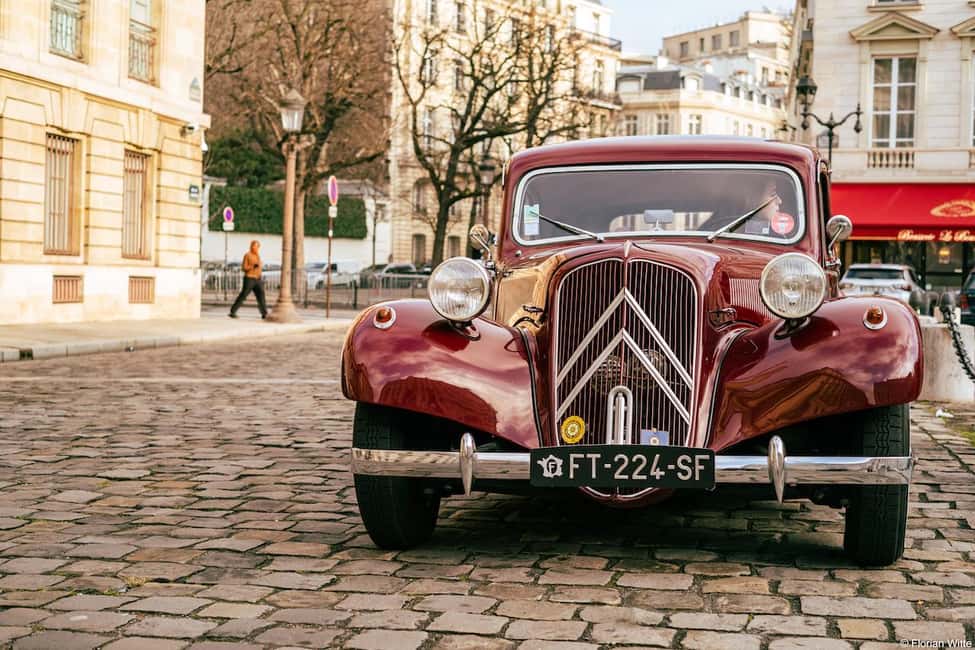
- 1955 Traction Avant 11B or 1971 DS 21 BHV: two kinds of Citroën cool, both built for attention
- Hotel pickup and drop-off: less hassle, more time looking out the window
- Major landmarks plus smart photo timing: short stops for the iconic views
- Route includes Haussmann, Lavirotte, and Guimard-style architecture: you’ll learn what you’re seeing
- English, French, and Japanese tour guidance: pick the language that fits your trip
- Private group up to 4: you control the pace and focus
Choosing Between the Traction Avant and the DS 21
Your biggest decision here is the car mood.
If you choose the Citroën Traction Avant 11B (1955), you’re stepping into a piece of automotive history: an early, front-wheel-drive unibody design that feels clever even today. The ride has that classic “everything is mechanical” feel, and it’s the kind of car that makes people slow down to stare. The advantage for you is simple: it turns every major street into a mini red carpet.
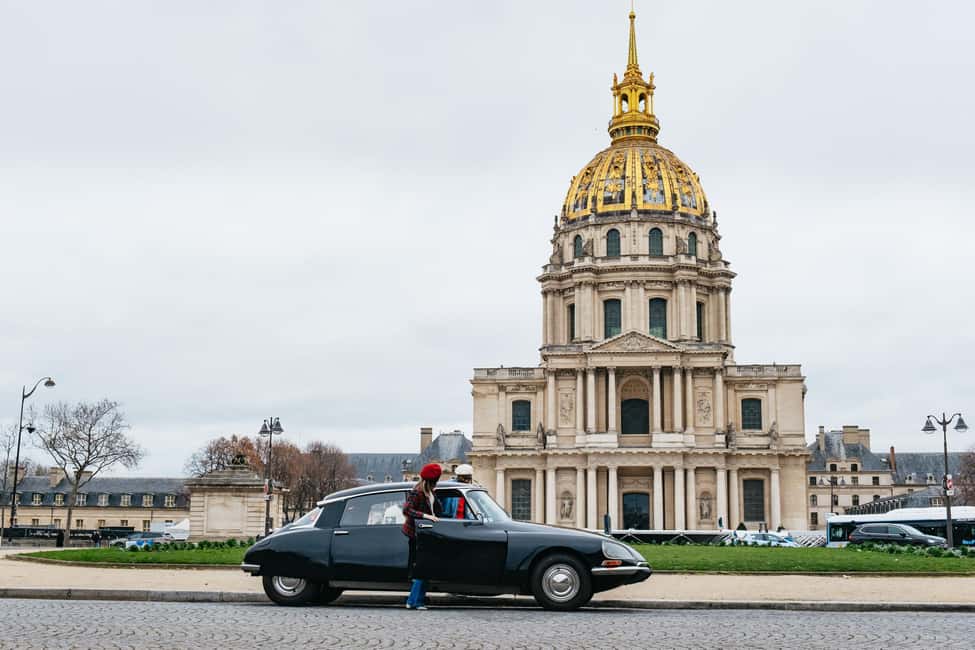
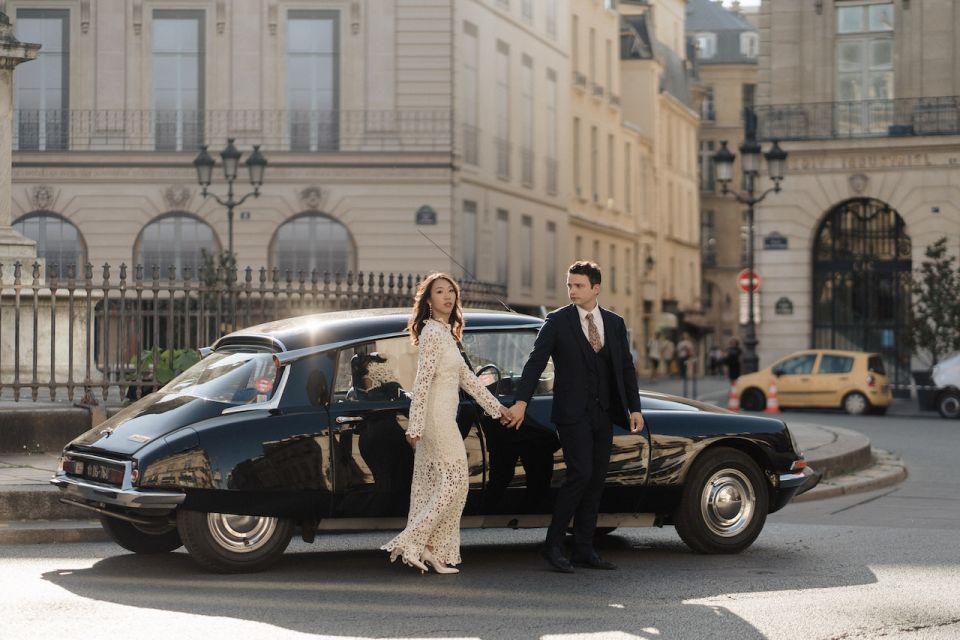
The Citroën DS 21 BHV (1971) is a different kind of wow. The DS is known for its hydraulic suspension, and the ride feels smoother and more floating than what you expect from an older vehicle. If your day includes lots of curbside photo stops, that comfort matters. Some guests also find that the DS makes it easier to enjoy the tour rather than just endure it.
Either way, you’ll be touring by car in the Paris traffic reality: narrow streets, quick photo windows, and constant turns. The car isn’t a side detail. It’s the whole experience.
You can also read our reviews of more guided tours in Paris

Hotel Pickup and a Private Route Built Around Your Timing
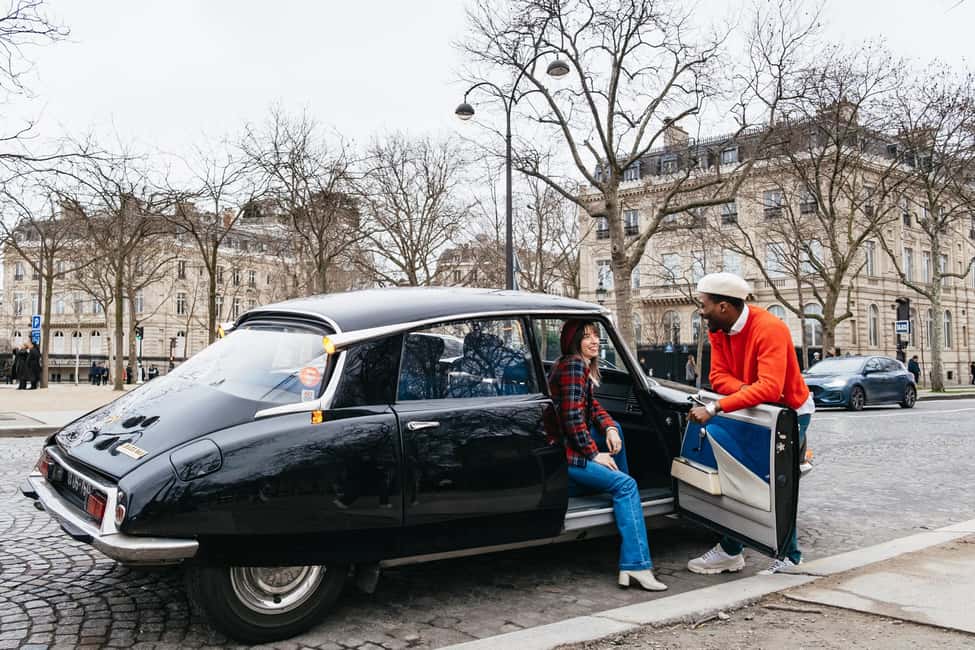
The tour starts with hotel pickup and drop-off, so you don’t need to figure out where to meet or how to get back. Your guide/driver also handles the private driving for your group (up to four people), which is a big deal in a city where getting across town can eat hours fast.
You can choose the length: 1 hour, 2 hours, or 3 hours. Think of it like this:
- In less time, you’ll prioritize the main sights and photo spots.
- With more time, you can linger where you care more and adjust the order to match what’s going on that day.
You’ll be guided in English, French, or Japanese. From the on-the-ground experience, communication quality can depend on where you sit in the car and how loud the street is. If you’re sensitive to that, go in expecting the guide will do best with quick stops and clear reference points—not long lectures.
One more practical note: no luggage or large bags are allowed. If you’re traveling light, you’re fine. If you’re carrying big suitcases, plan a different activity for the day.
The Core Drive: Paris by the Big Sights Loop
This is not a museum day. It’s a “get your bearings fast” tour with a strong sightseeing backbone. The itinerary-style route mixes major monuments with major viewpoints and famous buildings, plus time for photos.
You’ll commonly see the itinerary shaped around these major stops:
- Place de la Concorde
- Champs-Élysées
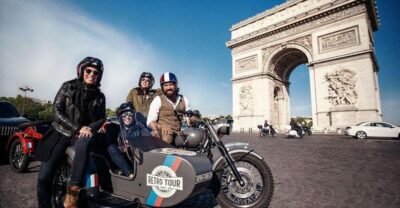
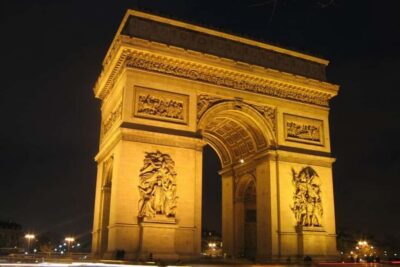
- Arc de Triomphe
- Eiffel Tower area (photo stop)
- Les Invalides
- Pont Alexandre III
- Petit Palais
- Grand Palais
- Palais de l’Élysée
- Place Vendôme
- Palais Garnier
- Moulin Rouge (photo stop)
- Sacré-Cœur (photo stop)
- Louvre Museum and Louvre Pyramid
- Notre-Dame area
- Panthéon
Not every tour length hits every single stop the same way. Your guide typically chooses what fits your time and what’s workable on the roads that day. The upside is that you’re not stuck in a rigid script.
Place de la Concorde to the Champs-Élysées: Seeing Paris’s Grand Axis
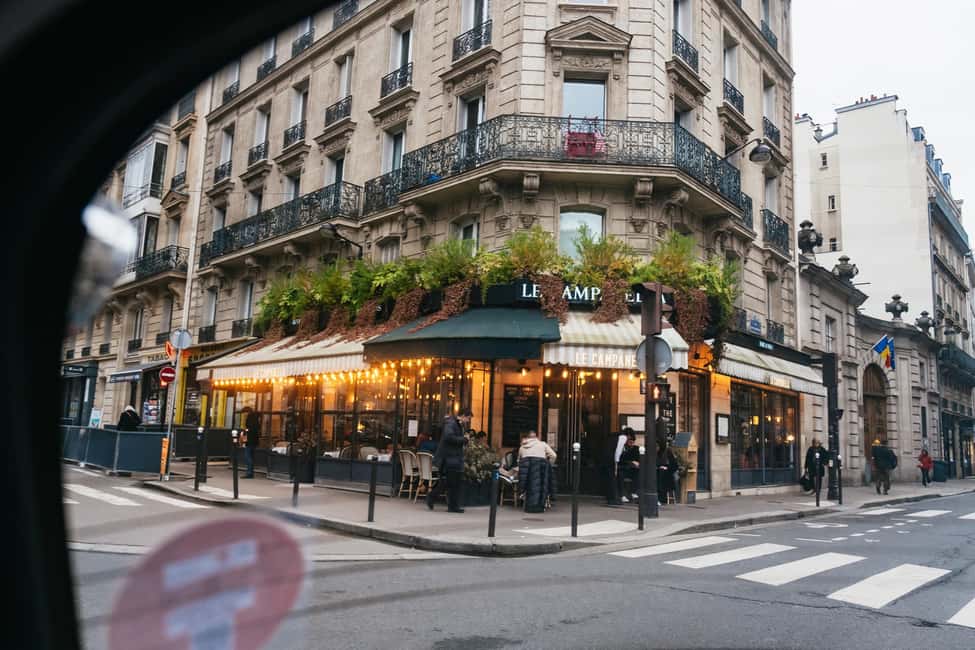
Starting around Place de la Concorde gives you a strong visual anchor. It’s one of those spots where Paris feels planned—wide streets, big views, and angles that make you understand why the city looks the way it does on postcards.
From there, you roll toward the Champs-Élysées, the city’s big parade boulevard. This is where being in a car helps. You don’t need to fight the crowds on foot to see the scale. You can watch the storefront rhythm, catch architectural details, and get your first set of landmark photos without walking miles.
This early segment is also where the guide’s style matters most. A good driver/guide can point out not only what you’re seeing, but why it feels important. One theme you’ll hear about is the architectural influence of Haussmann, plus styles connected with Lavirotte and Guimard—the kind of names that sound fancy until you realize you’re actually seeing their impact in the streets.
Arc de Triomphe and the Eiffel Tower: Short Stops, Big Payoff
Here’s where you should set your expectations. Both Arc de Triomphe and the Eiffel Tower are usually photo stops. That’s the right trade. You get the iconic views and angles without turning the tour into a queue day.
At the Arc de Triomphe, you’ll get a chance for photos (and quick orientation). It’s also a useful moment to understand the street geometry around the monument. Paris loves radiating lines, and this is a prime example.
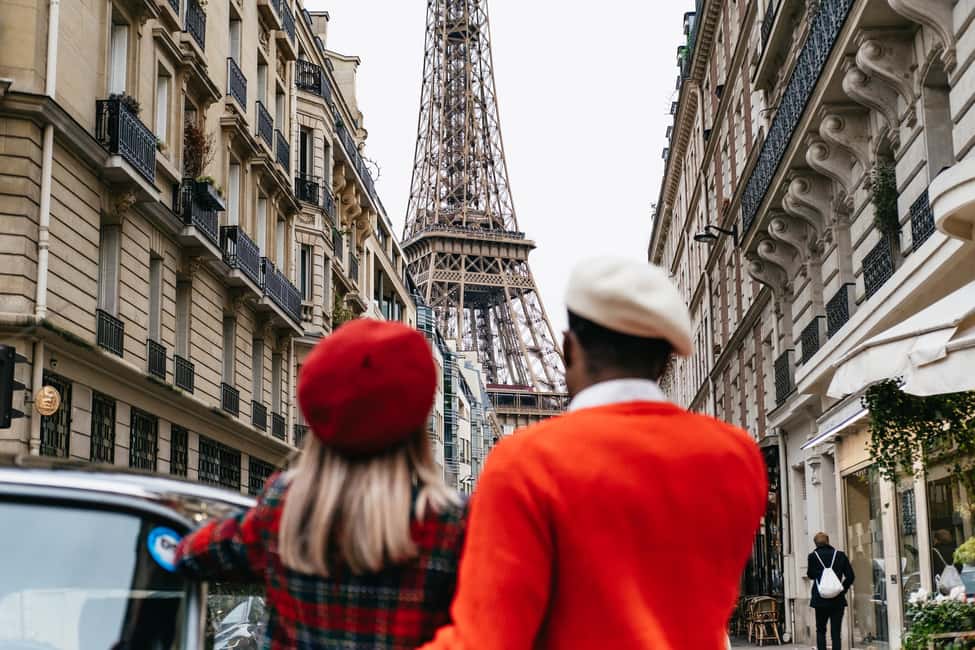
Then you head to the Eiffel Tower area for another short photo window. The value is in how the guide positions the car for sightlines. Many guests highlight that the driver knows exact places to stop so you get better composition than you’d get from random curb parking. If you care about photos, this segment is the payoff portion.
You can also read our reviews of more city tours in Paris





Les Invalides to Pont Alexandre III: Classic Views with Real Architecture

A big plus of the route is the jump from the “tourist maximum” sights to areas where Paris shows off in stone and detail.
You’ll pass Les Invalides, a landmark that carries serious historical weight in France, but on this tour the point is not a full lecture. It’s getting a strong view and learning how the area fits into the city’s story.
Then comes Pont Alexandre III, one of those bridges that looks like a stage set. It’s a great place for photos because the angles show the bridge’s elegance and the surrounding city lines. Right after that, you’ll often see Petit Palais and Grand Palais, famous for their grand facades and architecture that matches the “big Paris” mood you got at the beginning of the day.
If you like the Paris that feels ceremonial and formal, this part of the loop delivers.
Palais de l’Élysée, Place Vendôme, and the Palais Garnier Streets

As you continue, you hit the zone where Paris feels official and elegant.
- Palais de l’Élysée: a quick guided look with context about the area’s importance
- Place Vendôme: a classic “stand and look up” square
- Palais Garnier: the opera house area, where architecture and city atmosphere mix fast
This section is good for two kinds of people:
- You want a visual tour of famous addresses without walking
- You like hearing the quick “why does this place matter?” explanation while you’re still on the move
It also helps that the guide can often steer you through narrower streets that big buses can struggle with. That means you may see parts of Paris that feel more like real driving routes, not just sightseeing corridors.
Moulin Rouge to Sacré-Cœur: Montmartre Without the Footwork
You’ll make time for Moulin Rouge with a quick photo stop. Even if you’ve seen it in photos a dozen times, seeing it in the real street rhythm still hits differently. The car gives you the chance to position for a better view without forcing a long wait.
Then you head toward Sacré-Cœur. Another photo stop. This is where the tour is smart: you get a look at the dramatic hill-area setting without needing to spend your energy on the climbs.
If you’re traveling with kids, limited mobility for walking, or you just don’t want to burn your legs on steep streets, this is a big advantage. You get the “I was there” moment with much less effort.
Louvre Museum and the Louvre Pyramid: Seeing the Modern Layer
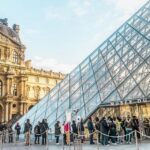
You’ll roll past Louvre Museum and likely take in the Louvre Pyramid area with guided context.
This stop works because the tour is about perspective. You’ll see how Paris layers time: older monumental architecture plus modern design elements that created a new kind of landmark focal point.
Don’t plan on this turning into a full museum visit. The tour is built for views, stops, and quick guidance. If you want inside time, you can use this as your primer before booking a longer museum session on a different day.
Notre-Dame Area and the Panthéon: Finishing on a Story Turn
Your route can include Notre-Dame Cathedral and later Panthéon, Paris.
Notre-Dame is one of the most photographed places on earth, but it also has a “you must see the area” quality. On car-based tours, you typically get the orientation and views without committing to interior entry. That fits the tour format.
The Panthéon stop is a nice way to close the loop with a different feeling: more solemn, more “Paris thinks in monuments.” It helps the tour land with variety, not just a repeated parade of famous structures.
One practical detail: roads and access can change due to the day’s conditions. On at least one tour day, the guide adjusted the plan to keep the route workable and still hit the planned landmarks you want. That adaptability is worth paying for when you only have a few hours.
Food Stops, Local Tips, and the Bonus of Not Guessing
The highlight list mentions exploring foodie spots and hidden areas, and the guide’s approach in practice is about giving you options.
You’ll likely get restaurant and shop suggestions tied to where you’re actually going, not vague “go here someday” advice. In the car, you can ask quick questions and get practical recommendations that match your vibe: casual lunch, nicer dinner, or something kid-friendly.
Also, many guides in this kind of setup are strong on photo strategy. Guests often mention that Abi, a frequent guide name in the experience, actively helps with phone cameras and knows where to stand the car so you don’t get a boring background or awkward angle.
Some guests even mention an add-on experience involving champagne. If that’s on offer for your date, it can add a celebratory touch. Just remember the base tour is sightseeing and driving first.
Price and Value for a Private Up-to-Four Group
The price is listed as $164 per group up to 4, with a duration of 1 to 3 hours.
Here’s the fair way to think about value:
- If you’re traveling as a duo, you’re paying for private transport and a personal guide rather than buying a ticket per person.
- If you’re traveling as a family or small group, the per-person cost drops fast, and the “group of four in a classic car” part becomes the core value.
Also, the tour includes hotel pickup and drop-off. In Paris, transportation time is expensive. Removing that friction is part of what you’re paying for.
One more value angle: the car is not just “transport.” It’s an attention-getter. People stop and take photos. That alone creates a built-in, memorable atmosphere that you won’t get with standard car services.
The Real-World Experience: What It Feels Like in Traffic
Let’s be honest about the atmosphere. You’re in a classic car on real streets. That means:
- it can be noisy
- street sounds and engine hum can compete with the guide
- timing matters for photos and stops
Some guests have pointed out that it wasn’t always easy to understand every word, especially depending on where you sat. If you’re the type who wants constant commentary, plan to focus on visual landmarks as your anchor, then let the guide’s story fill in the gaps.
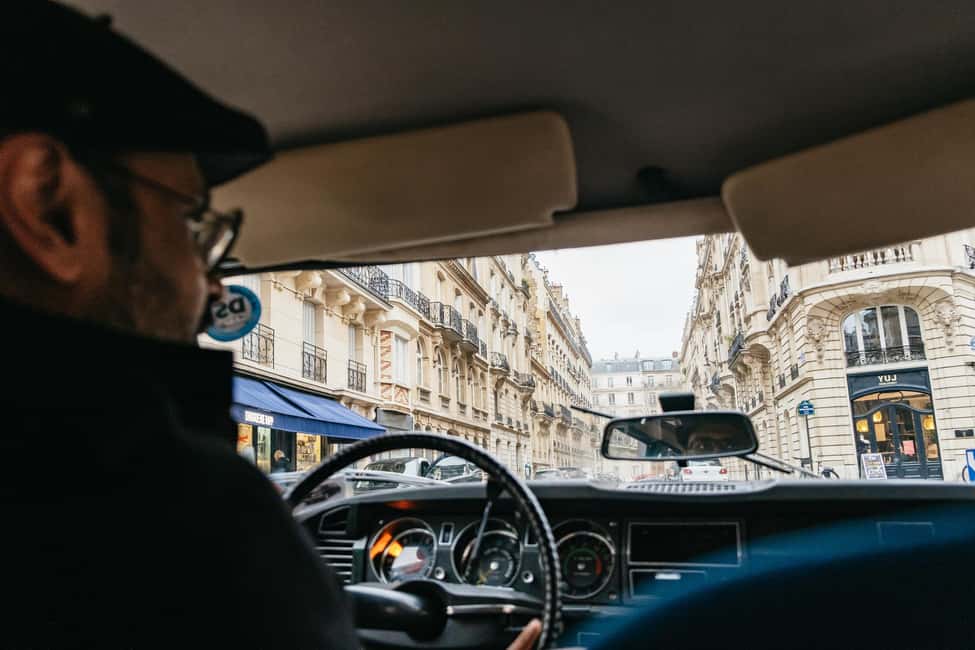
Also, the advantage of having a driver who knows the city is huge. People mention that the driver navigates narrow streets with ease, which reduces the “are we stuck?” stress and makes the route feel smoother.
Who Should Book This Car Tour (and Who Should Skip It)
This tour fits best if you want:
- a fast, high-impact overview of major Paris sights
- a way to see multiple neighborhoods without long walking days
- a memorable experience in a private vintage Citroën
- help getting better photo stops than you’d manage on your own
It’s a great first-trip activity. It can also be a smart choice if the rest of your itinerary is packed and you need a clean overview day.
It’s not suitable for:
- people with mobility impairments
- wheelchair users
- hearing-impaired people
That matters because it’s a car-based sightseeing route with specific practical requirements (and the data explicitly says it’s not appropriate for those needs). If you fall into any of those categories, look for a different format that matches accessibility.
Should You Book This Vintage Car Tour in Paris?
If your goal is to get your bearings and see the big Paris hits fast, I think this is a strong choice. The combination of hotel pickup, a private group up to four, and the photo-friendly guide approach makes it feel like an efficient use of limited time.
I’d book it if you’re excited by the Traction Avant vs DS 21 car experience and you want the Eiffel and Arc area without turning your day into a queue and walking marathon. Choose the longer 2–3 hour option if you care about photos and want more breathing room between stops.
Skip or reconsider if you’re expecting a museum deep dive, you need accessibility support, or you’re sensitive to hearing commentary over street noise. For everyone else, this is one of those Paris ideas that makes you feel like you turned the volume up on the whole city.
FAQ
What’s included in the price?
Hotel pickup and drop-off, the tour guide/driver, and transportation by the vintage car (Traction Avant or DS 21) are included. Food and drinks are not included, and entry fees to sites are not included.
How long is the tour?
You can choose a 1-hour, 2-hour, or 3-hour private tour, depending on availability.
Is this a private tour?
Yes. It’s listed as a private group, priced for up to 4 people per group.
What languages are available for the live guide?
The live tour guide is available in English, French, and Japanese.
Can I bring luggage or large bags?
No. Luggage or large bags are not allowed.
Is the tour suitable for mobility or hearing needs?
It is not suitable for people with mobility impairments, wheelchair users, or hearing-impaired guests.