REVIEW · PARIS
Montmartre Walking Tour
Book on GetYourGuide →Operated by Soul Tours · Bookable on GetYourGuide
Montmartre hits fast, even on foot. This 1.5-hour walk strings together the neighborhood’s big visual sights with the art stories you actually want to hear, from Moulin Rouge to the Sacré-Cœur viewpoint.
I especially like the way the tour builds momentum with photo-friendly stops, so you’re always looking up and not just listening. I also like the focused artist trail, including Picasso’s early work connections around Le Bateau-Lavoir and the city locations tied to Van Gogh on Rue Lepic.
One thing to consider before you go: there are reports of a guide not arriving and no response when riders tried to contact someone, so build in a little flexibility and plan to message right away if anything feels off.
In This Review
- Quick reasons to book this Montmartre walking tour
- Montmartre on a clock: how 1.5 hours stays worth your time
- Starting near Moulin Rouge: the cabaret that still sets the tone
- Place des Abbesses and the I love you wall: street art with a clever story
- Rue Lepic: Van Gogh’s address and the reality behind the art myth
- Place du Tertre: the artist square that still draws painters
- Le Bateau-Lavoir on Rue Ravignan: Picasso’s work-life in a real building
- Saint-Pierre de Montmartre: Romanesque details before the big climb
- Sacré-Cœur steps: your panoramic finish and what to notice
- Price and value at $28: what you’re really paying for
- Who this tour suits best (and who should think twice)
- Should you book this Montmartre walking tour?
- FAQ
- How long is the Montmartre Walking Tour?
- Where does the tour start?
- What are the main sights included?
- What languages is the live guide available in?
- Is food or drinks included?
- What should I bring?
- Is the tour suitable for wheelchair users?
- Is free cancellation available?
Quick reasons to book this Montmartre walking tour
- A timed art-and-views route that fits into a 1.5-hour window without turning into a museum day
- Panoramic payoff at Sacré-Cœur with Paris laid out below you from the steps
- Picasso’s early Paris trail tied to Le Bateau-Lavoir and the artist hub around Place du Tertre
- Le Mur des Je t’aime at Place des Abbesses, featuring I love you in 300+ languages
- Rue Lepic history with Van Gogh at No. 54, where he lived with his brother Theo
- Small-group feel and photo help, including assistance capturing group photos
Montmartre on a clock: how 1.5 hours stays worth your time
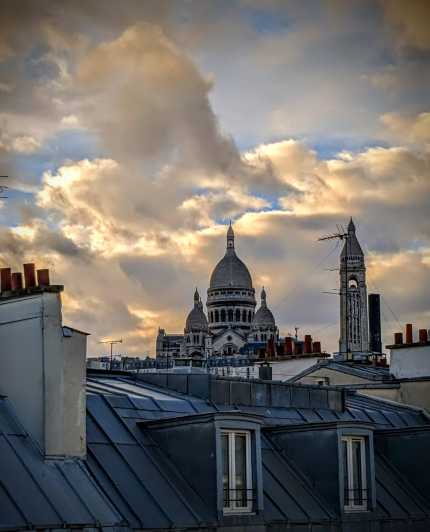
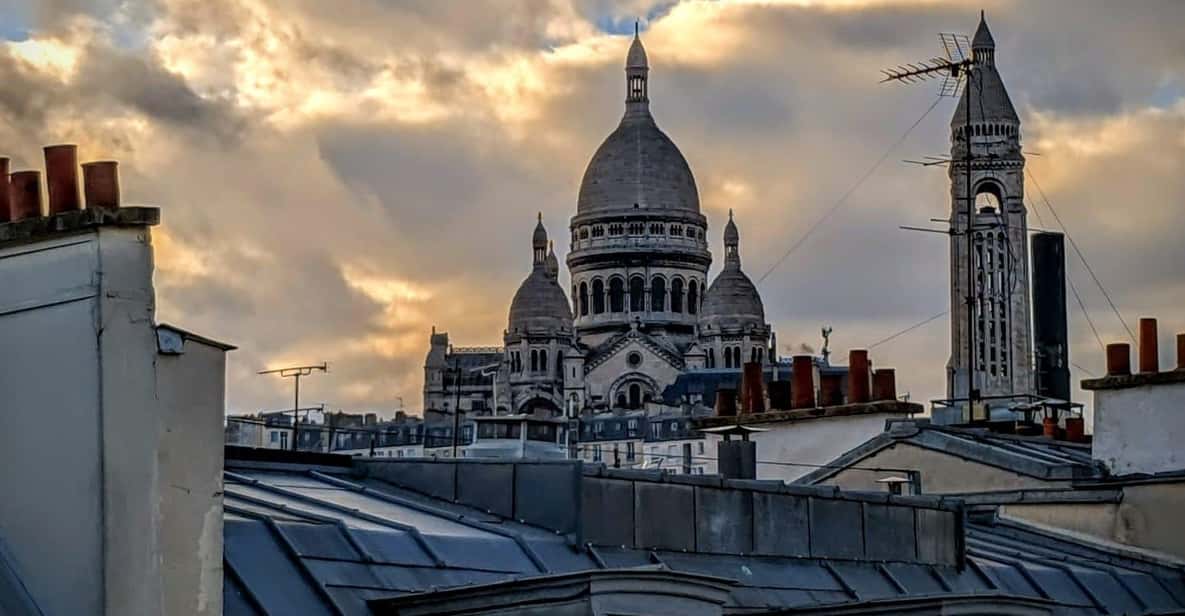
This is a short walk by design. You’re not trying to cover every street in Montmartre, and that’s the point. In about 90 minutes, you get a tight storyline: cabaret energy, artistic rebellion, and then a dramatic finish with the big basilica viewpoint.
Because it’s relatively compact, you’ll likely enjoy it most if you want a clear orientation fast. Think: you walk away knowing where the key art locations are, how they connect, and what to notice when you wander on your own afterward.
You do need to be ready for a real walking route. Montmartre is hilly, and the tour isn’t suitable for wheelchair users. Comfortable shoes matter. This is one of those activities where your footing affects your enjoyment.
You can also read our reviews of more walking tours in Paris



Starting near Moulin Rouge: the cabaret that still sets the tone
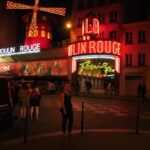
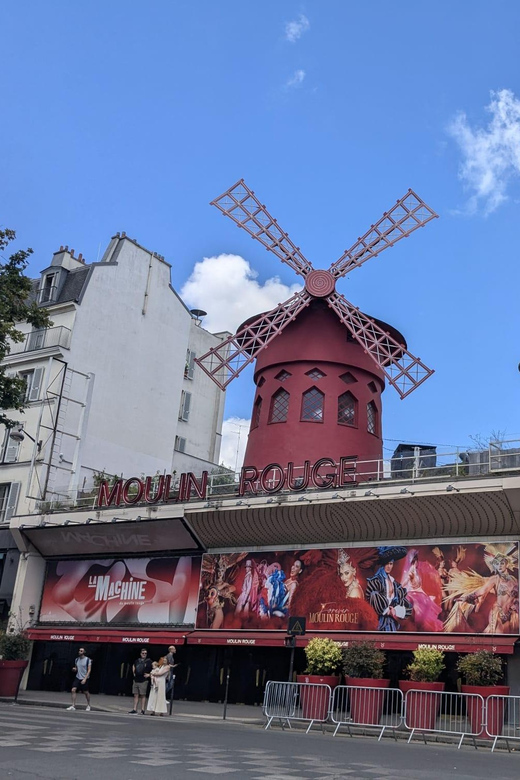
Most Montmartre tours begin here for a reason. Moulin Rouge is an iconic cabaret and a symbol of French culture since 1889, and it gives you instant context for what made the area famous.
From the start, your guide frames Montmartre as a place where performance, art, and nightlife all overlap. That matters because the rest of the route isn’t just about pretty streets. It’s about why artists and dreamers kept showing up in this neighborhood.
Even if you’ve seen pictures, you’ll get more out of the area when you understand it as a historical magnet. You’ll also get early photo chances, so your camera work starts on a high note instead of feeling like work later.
Place des Abbesses and the I love you wall: street art with a clever story
Place des Abbesses is more than a stop. It’s a visual breather, plus a quick lesson in how Montmartre layers old and new.
Here you’ll see a beautiful art nouveau metro entrance, which is a great detail to look for while you’re walking. It’s the kind of small design touch that makes Paris feel handmade instead of mass-produced.
Then comes Le Mur des Je t’aime, also known as the I love you wall. It’s covered in I love you written in over 300 languages. The guide’s commentary helps you see why that’s more than a photo backdrop. It turns a simple street corner into a small statement about art, language, and identity in the way Paris likes to do it.
If you enjoy quirky public art and want a break from bigger monuments, this stop is a good reset.
Rue Lepic: Van Gogh’s address and the reality behind the art myth
Rue Lepic is where the tour gets more specific, and that’s a big part of the value. You’ll walk along a historic street and talk about Vincent van Gogh’s Paris period.
The highlight here is the connection to No. 54, where van Gogh lived with his brother Theo. That matters because it turns the usual Van Gogh story from museum dates into a real sense of place. You’re not just hearing general facts. You’re standing where everyday life overlapped with big artistic moments.
If you’re the type who likes to connect art to daily routine, this stop will click fast. It also helps you understand why artists clustered here: Montmartre offered both inspiration and a working-life context.
Practical tip: take a moment to look up and along the street before you zoom in on one building. Your guide will point you toward what matters, but Montmartre rewards those extra seconds.
Place du Tertre: the artist square that still draws painters
Place du Tertre is the kind of square that feels made for postcards. Artists paint and sell their work there, and it’s easy to get caught in the “show” side of Montmartre.
Your guide keeps it grounded with historical context. This area was once the heart of Montmartre’s artistic community, and that is where the story starts getting serious.
You’ll hear connections to famous artists who worked nearby, including Picasso’s ties to the neighborhood and discussion of his workshop presence. Even if you don’t know Picasso’s timeline perfectly, you’ll come away with a cleaner picture of why places like Place du Tertre mattered beyond tourism.
Photo tip: this is a busy visual zone. If you want a clean shot, ask your guide when the group shifts so you’re not blocking someone’s view. The tour includes photo opportunities at stops, so don’t feel awkward about planning your pictures with the group flow.






Le Bateau-Lavoir on Rue Ravignan: Picasso’s work-life in a real building
Le Bateau-Lavoir is one of the most compelling stops on the route. You’ll visit the building at 13 Rue Ravignan, known as the Bateau-Lavoir, where Picasso lived and worked.
This is where the tour moves from “famous names” into something more tangible. Your guide connects Picasso’s early career to what was happening in the neighborhood at the time. That’s especially important because Montmartre is often reduced to vibes. Here, you’re getting the structure of the story.
The highlight tied to this stop is Picasso’s early career and the creation of Les Demoiselles d’Avignon. Understanding that connection while you’re standing at the place itself changes the feel of the artwork. You start thinking in terms of experimentation and artistic risk, not just final masterpieces.
If you’re an art lover, don’t rush this stop. Pause long enough to take in the building and then listen to the guide’s explanation. This is one of those moments where slowing down improves the payoff.
Saint-Pierre de Montmartre: Romanesque details before the big climb
After the art-heavy stops, the tour adds a quieter, older chapter at Saint-Pierre de Montmartre. This church dates back to the 12th century and is one of the oldest churches in Paris.
What makes it interesting on this walking route is the Romanesque architecture. Romanesque tends to show up as sturdy forms, heavy-looking structure, and details that reward closer looking. Your guide explains the historical significance, so it doesn’t feel like you’re simply entering a pretty building.
This stop also helps you pace the day. You get a break from crowds and the constant shopping-street pressure. If you’re someone who likes seeing how different centuries sit side by side, this church stop gives you that contrast.
Sacré-Cœur steps: your panoramic finish and what to notice
The tour ends at Sacré-Cœur Basilica on the summit of Montmartre. This is the big, classic finale for a reason: from the steps, you get panoramic views of Paris.
Your guide ties the viewpoint to the history and architecture of the basilica, but the main reason you came is the view. This is where your eyes finally get to rest on the city scale instead of focusing on doorways and details.
How to make the most of it: spend your first minute just looking. Then pick one landmark line in the distance and mentally track where it sits. When your guide points out features, you’ll catch it faster because you’ve already “mapped” the scene.
Also, plan for crowds and changing light. The basilica steps are a popular photo spot, and you’ll share the space with other visitors. The tour includes photo opportunities throughout, so you’ll likely end up with plenty of chances to get your shot without scrambling.
Price and value at $28: what you’re really paying for
At about $28 per person for roughly 1.5 hours, the real value comes from the guide’s interpretation and the tight routing between key Montmartre locations. This isn’t a long, slow stroll where you only get general chatter. You get a structured narrative: Moulin Rouge, Abbesses and the I love you wall, Rue Lepic and Van Gogh, Place du Tertre and artists, Le Bateau-Lavoir and Picasso, then Saint-Pierre and Sacré-Cœur.
Included features also help justify the price. You get:
- A professional guide fluent in English and Spanish (and the tour is offered in English, Spanish, and French)
- Stories and anecdotes about Picasso and Van Gogh, with historical significance explained at each stop
- Multiple photo opportunities, plus help capturing group photos
- A small group size for more personal questions
One more practical value point: you get help navigating which details matter. Montmartre can overwhelm you. This tour acts like a filter, so your first visit doesn’t become a blur.
Who this tour suits best (and who should think twice)
This tour is a good fit if you want:
- A short, high-impact Montmartre experience
- Clear context for Picasso and Van Gogh locations
- A walking plan that ends with a major viewpoint at Sacré-Cœur
- Photo-friendly stops with guide support
It’s not for everyone. It isn’t suitable for wheelchair users. And if you’re the kind of traveler who needs long time at each location, you might feel rushed by the 1.5-hour format.
One more caution based on reported experiences: there have been cases where a guide didn’t arrive and messages went unanswered. That doesn’t mean it will happen to you, but it’s enough to take seriously. If you book, I’d be ready to contact the provider quickly if your guide is late.
Should you book this Montmartre walking tour?
I’d book it if you want a fast, story-driven way to connect the places behind Montmartre’s art reputation. The route hits the big names and the most meaningful landmarks: Moulin Rouge, Abbesses and the I love you wall, Rue Lepic for Van Gogh at No. 54, Place du Tertre’s artist-square history, Le Bateau-Lavoir tied to Picasso’s early career, then Saint-Pierre and the Sacré-Cœur viewpoint.
Just go in prepared. Wear comfortable shoes, expect stairs and hills, and confirm your meeting details ahead of time. And if something feels wrong on the day, act quickly rather than waiting.
If you’re okay with a short walk and you want strong guidance between key art stops, this is a solid way to start (or refresh) your Montmartre visit.
FAQ
How long is the Montmartre Walking Tour?
The tour lasts about 1.5 hours.
Where does the tour start?
It begins near Moulin Rouge.
What are the main sights included?
Key stops include Moulin Rouge, Place des Abbesses (including Le Mur des Je t’aime), Rue Lepic, Place du Tertre, Le Bateau-Lavoir at 13 Rue Ravignan, Saint-Pierre de Montmartre, and Sacré-Cœur.
What languages is the live guide available in?
The guide is offered in English, Spanish, and French.
Is food or drinks included?
No. Food and drinks are not included during the tour.
What should I bring?
Bring comfortable shoes for walking.
Is the tour suitable for wheelchair users?
No, it is not suitable for wheelchair users.
Is free cancellation available?
Yes. You can cancel up to 24 hours in advance for a full refund, and there’s also a reserve now & pay later option.