REVIEW · PARIS
Paris Champs-Élysées 2-Hour Private Walking Tour
Book on GetYourGuide →Operated by Paris in person private tours · Bookable on GetYourGuide
Champs-Élysées clicks fast with the right guide. In two hours, you get an anchored start at Place de la Concorde and then a clear, story-driven path toward the Arc de Triomphe, not just a stroll. I like how this tour connects the glamour of the avenue to the big ideas behind it—Roman mythology, Napoleon, and the swing between 19th-century Paris and today. The one drawback: two hours is quick, so you’ll see plenty, but you won’t have time for a long shopping detour or sitting down for a full meal.
What makes this one feel good is the private format. You get a live guide (English, French, or Serbo-Croatian) and a focused route that hits major landmarks without dragging you through endless museum hours. You also pass things that feel very modern—like an easy look at Avenue Montaigne and a stop by a Ladurée macaron shop—while still getting the context that helps you understand why these places matter.
If you’re coming in cold, or you want a clean first-day plan, this works well. Do expect rain or shine, and plan to keep your phone charged for photos—because the views along this straight shot of Paris are hard to beat.
In This Review
- Key Things You’ll Notice on This Champs-Élysées Walk
- Starting at Place de la Concorde and the Luxor Obelisk
- How Champs-Élysées Connects Roman Myth and Napoleon
- Hôtel de Crillon, Petit Palais, and the Museum Shift
- Champs-Élysées Proper: The Avenue on Both Sides
- A Picasso Thread Through the Neighborhood
- Ladurée and the Real-Life Paris Pause
- Avenue Montaigne: Where the Tone Shifts
- Finale at the Arc de Triomphe: Napoleon’s Monolith
- Price and Value for a 2-Hour Private Tour
- Who This Tour Suits Best
- Should You Book the Paris Champs-Élysées 2-Hour Private Walking Tour?
- FAQ
- How long is the Paris Champs-Élysées private walking tour?
- How much does the tour cost?
- Is this tour private or shared?
- Where do we meet the guide?
- What major stops are included?
- What languages are available for the guide?
- Is food or drink included?
- Does the tour run in bad weather?
- Is the tour wheelchair accessible?
Key Things You’ll Notice on This Champs-Élysées Walk
- Place de la Concorde as the setup: you start at the Luxor Obelisk area and get the logic of the whole route
- Roman myth meets Napoleon: the avenue gets explained as more than famous buildings and storefronts
- Grand Palais and Petit Palais as modern museum stops: you’ll see what they are now, not just what they used to be
- Picasso-linked drinking dens: the guide points out the kind of places Picasso favored along the way
- A short shopping-and-snack reality check: Avenue Montaigne and a Ladurée macaron stop give you the taste of the neighborhood
Starting at Place de la Concorde and the Luxor Obelisk
Your tour begins in front of the Luxor Obelisk at Place de la Concorde, and your guide will be easy to spot with a red canvas tote bag. This matters more than it sounds. When you start at a major, well-planned square, the rest of the walk makes sense in your head. It’s one of those “why is this so obvious once someone explains it” moments.
Place de la Concorde is neoclassical in feel and layout, and your guide uses it as a starting point to talk about how Paris planned and staged power, movement, and visibility. Even if you already know Champs-Élysées is famous, starting here helps you understand that the avenue isn’t just a long promenade. It’s part of a bigger city design—one that frames monuments and directs your attention.
A practical tip: give yourself a moment here to orient your compass (and your camera). The square is wide enough that it’s easy to take a quick establishing shot, then start walking with a sense of direction instead of zigzagging in your own tourist bubble.
You can also read our reviews of more walking tours in Paris



How Champs-Élysées Connects Roman Myth and Napoleon
Champs-Élysées is known as the most beautiful avenue in the world by plenty of people, and sure, you can feel that just by looking at it. But the tour’s real value is the explanation. Your guide introduces both sides of the mythical Champs Elysees—its connection to Roman mythology and the Napoleon story that dominates the area.
That blend can sound abstract until you walk it. As you move down the avenue, the guide keeps pulling you out of the “pretty street” mode and into “this is what the street was trying to do” mode. That’s the secret sauce of a good guide. You stop seeing the monuments as random postcard props and start seeing them as symbols in a plan.
You’ll also hear how the avenue relates to the Paris of the 19th century as well as the Paris of today. Translation: you’ll get a sense of continuity, not just change. You’ll notice how the city kept the idea of a grand axis, even as the people, brands, and uses shifted around it.
One small consideration: this part of Paris moves fast, and the story will be paced for walking speed. If you’re someone who hates being rushed, tell your guide early that you want the historical bits but also want a few seconds extra at each viewpoint.
Hôtel de Crillon, Petit Palais, and the Museum Shift
After you get your myth-and-monument grounding, the tour starts passing buildings that feel like they’re wearing different costumes depending on the era. One of the named highlights on your route is Hôtel de Crillon, an important landmark because it signals the kind of prestige this area carries.
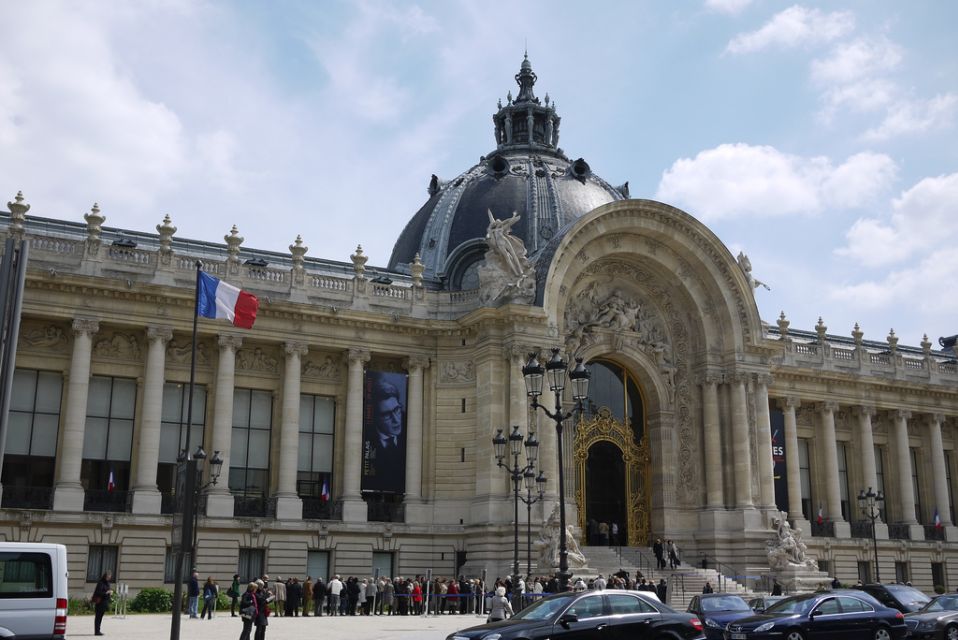
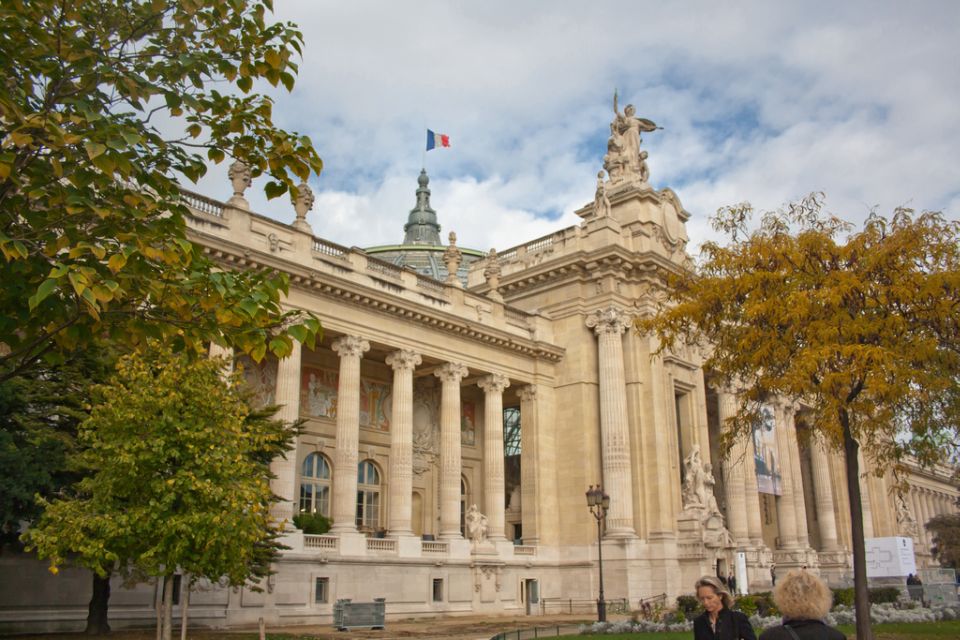
Then you hit the museum pair: Petit Palais and Grand Palais. Your guide points out that they’re now museums, which changes how you think about them. Instead of just admiring big facades, you’re seeing how major Paris architecture got repurposed for culture. This is especially useful if you’re on a short visit and you don’t want to spend half your day locked inside one ticketed institution.
Here’s the honest value of this stop: you get the exterior “wow” with a sense of what’s inside—without forcing you into a full-day museum schedule. If you later decide you want to return, you’ll at least know the buildings you’re walking into, not just chase them for the exterior shot.
If you’re a first-timer, this museum shift gives you a good mental model for Paris: grand spaces often evolve, but they stay central. That helps a lot when you start building your own itinerary after the tour.
Champs-Élysées Proper: The Avenue on Both Sides
This is the part most people expect: the stretch along Avenue des Champs-Élysées. The guide walks you along both sides, so you’re not just staring at one line of shops. You start picking up patterns—where the grand public monuments anchor the view, where the elegant storefront rhythm shows up, and where the avenue’s tone shifts.
Think of this as learning to read the street. Without context, Champs-Élysées can feel like a single long strip. With a guide, it becomes sections—each with its own function and mood.
And yes, there’s the commercial side. The route includes a stop area along Avenue Montaigne too, which is useful if you want the fashion-styled “Paris shopping” feeling without wandering aimlessly for hours. A private guide keeps it focused, so you get a preview of multiple vibes in a short span.
A Picasso Thread Through the Neighborhood
One of the fun highlights is discovering the favorite drinking dens of Picasso and more. I love this kind of detail because it turns the area into something lived-in. Instead of only monuments and architecture, you’re getting a cultural map—where an artist might have hung out, and how that fits the street’s long social life.
This is the type of story that makes later sightseeing feel smarter. If you come back on your own, you’ll notice little cues you would have missed. Even when the exact spot isn’t the point, the idea is: Champs-Élysées isn’t just for tourists. It’s also part of how artists and locals moved through Paris.
Just keep your expectations reasonable here. The tour doesn’t turn into a long bar crawl. It’s a walking tour, so you’ll get these Picasso-linked references as part of the route narrative, not as a stand-alone deep stop.
You can also read our reviews of more private tours in Paris





Ladurée and the Real-Life Paris Pause
You’ll pass by a Ladurée macaron shop, and this is one of those stops that actually helps most people. Food details are easy to overlook when you’re planning your route, and macaron time is one of the simplest ways to feel like you’re in Paris without needing a reservation.
Important: food and drink aren’t included in the tour. That’s good to know, because the hour-by-hour focus stays on the landmarks. You can decide on the spot whether you want to grab a treat or just keep moving.
I also like that this kind of stop breaks the walking rhythm. Two hours can feel quick, but adding a short pause gives your brain a rest and lets photos come out sharper.
Avenue Montaigne: Where the Tone Shifts
Avenue Montaigne is included on the tour route, and it’s a smart pairing with Champs-Élysées. The avenue is famous, but Montaigne gives you contrast. You start to sense how Paris organizes style and prestige by neighborhood edges, not just by a single “fancy” zone.
If you’re the type who enjoys people-watching, this part of the walk helps you feel the city’s texture. You see how the streets support a particular kind of Parisian day: strolling, window-shopping, and looking like you belong even when you’re holding a map.
Don’t force it, though. If your feet are tired, it’s totally fine to keep the pace and let the guide do the storytelling. You’re here for orientation and context, not a contest for how long you can stand in designer sidewalks.
Finale at the Arc de Triomphe: Napoleon’s Monolith
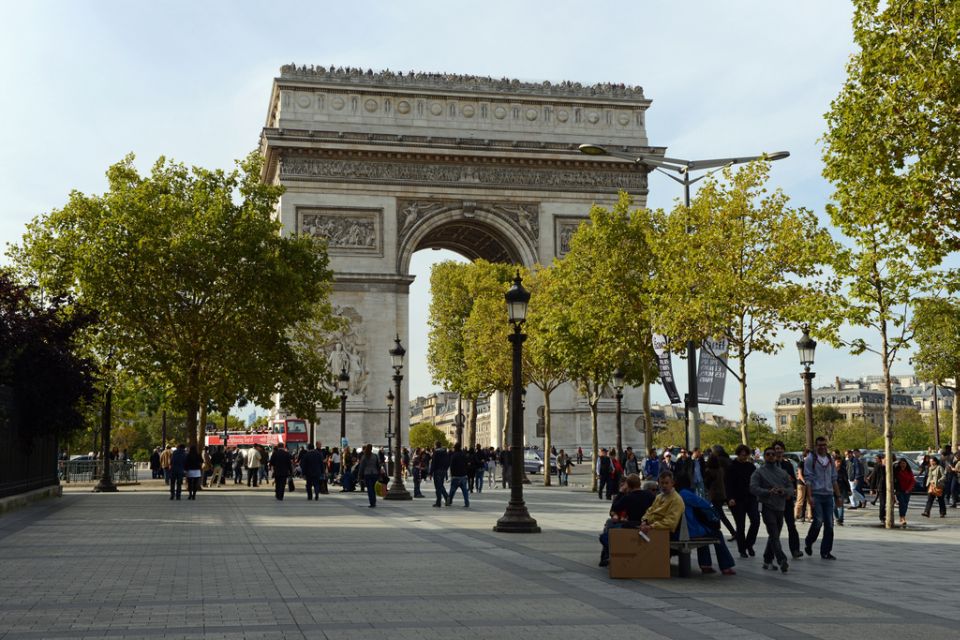
The end point of the tour is the Arc de Triomphe, described as a monolithic monument to Napoleon. That word matters. The Arc doesn’t feel delicate or decorative. It feels like it was built to be seen and to last.
Your guide ties the Arc back to the Napoleon story that runs through the entire tour. You’re not just walking past a famous structure—you’re reaching a payoff. Earlier, you heard about Roman mythology and the broader meaning of the avenue. Now you get a tangible monument that anchors the Napoleon thread in stone.
Practical advice: use your last minutes to take photos from the most comfortable angle you can find. The area around the monument can be busy, and with only a two-hour tour, it’s easy to lose your preferred shot if you wait too long.
Price and Value for a 2-Hour Private Tour
The price is $176 per person for a 2-hour private walking tour. That’s not cheap, and the best way to decide is to ask what you’re buying: time plus focus.
You’re paying for a live guide who can do two key jobs quickly:
- Connect the dots between the avenue’s myths, Napoleon themes, and 19th-century-to-today contrasts
- Make sure the walk covers major stops without wasting time
Also, this tour is private and wheelchair accessible, which adds value if you want a tailored pace or need mobility-friendly planning. Private means you’re not trapped in a group pace that’s too fast or too slow.
If you’re traveling solo, the price can feel heavy compared with group tours. But if you’re doing a first trip to Paris and you want the avenue to make sense right away, paying for a short, well-routed guide session can actually save you money later. Why? Because you’ll plan your next moves with better confidence.
One more perk that makes decision-making easier: tours operate rain or shine, and you get free cancellation up to 24 hours in advance plus reserve now & pay later options. That lowers the risk if your schedule is still fluid.
Who This Tour Suits Best
This is a great match if you:
- Want a first-day orientation to Champs-Élysées without losing half your vacation to transit
- Like guided context more than solo wandering
- Prefer seeing multiple major landmarks in a short time
- Want a private pace with a guide who can speak English, French, or Serbo-Croatian
It may be less ideal if you:
- Want lots of unstructured shopping time
- Plan to spend long stretches inside Petit Palais or Grand Palais (this tour keeps it walking-focused)
- Need frequent stops for cafés or museum ticket lines (food and drink aren’t included, and the time is tight)
Should You Book the Paris Champs-Élysées 2-Hour Private Walking Tour?
Yes, if you want your Champs-Élysées day to feel intentional. This tour is built for people who want the famous buildings plus the stories that explain why they’re famous. Starting at Place de la Concorde and ending at the Arc de Triomphe gives you a clear arc, and the Roman mythology and Napoleon connections make the walk more than sightseeing.
If you’re the kind of traveler who enjoys details but also wants a short, efficient plan, this is a smart use of time. Book it when you want to be oriented, not just entertained.
If you tell me your travel dates and whether you’re doing other museum stops that same day, I can suggest a simple schedule that pairs well with this 2-hour walk.
FAQ
How long is the Paris Champs-Élysées private walking tour?
It lasts 2 hours.
How much does the tour cost?
The price is $176 per person.
Is this tour private or shared?
It’s a private group tour.
Where do we meet the guide?
You meet in front of the obelisk at Place de la Concorde. Your guide will be carrying a red canvas tote bag.
What major stops are included?
The principal sites include Place de la Concorde, the Luxor Obelisk, Hôtel de Crillon, Petit Palais, Grand Palais, Avenue des Champs-Élysées, Avenue Montaigne, Ladurée macaron shop, and the Arc de Triomphe.
What languages are available for the guide?
The tour offers English, French, and Serbo-Croatian.
Is food or drink included?
No. Food and drink are not included.
Does the tour run in bad weather?
Yes, tours operate rain or shine.
Is the tour wheelchair accessible?
Yes, it’s wheelchair accessible.