REVIEW · PARIS
Paris: Le Marais Walking Tour
Book on GetYourGuide →Operated by ExperienceFirst · Bookable on GetYourGuide
Le Marais feels like Paris after-hours. In 90 minutes you trace hip streets, pause at the Jewish Quarter’s Street of Rosebushes, and look up at the Centre Pompidou from outside.
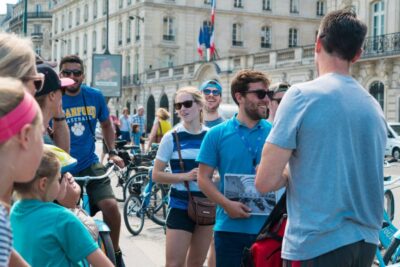
What I love most is how the tour turns stone-and-street history into real people stories. Guides like Joanna, Zack, and Maria bring the neighborhood alive, including the LGBTQ+ context around Sainte-Croix-de-la-Bretonnerie, and you still get clear explanations at a relaxed pace.
One consideration: the Stravinsky Fountain is listed as under renovation until 2023, so you should expect the possibility of limited fountain action depending on what’s actually available on your date.
In This Review
- Key highlights worth your time
- Le Marais in 90 minutes: hip streets, big ideas
- Starting point choices: Stravinsky Fountain vs Centre Pompidou
- Stravinsky Fountain: whimsical water sculpture with a renovation caveat
- Centre Pompidou: why the building is called inside-out
- Rue Sainte-Croix-de-la-Bretonnerie and the LGBTQ+ neighborhood context
- Cloister of Billettes and church-and-street architecture
- Impasse des Arbalétriers and the Street of Rosebushes
- Rue des Rosiers and Hôtel de Ville sights: texture over checklist
- Ending at Le Village Saint-Paul: where to wander after the tour
- Optional upgrade: narrated Seine cruise for a full year
- Price and value: what $42 buys you in real terms
- Should you book the Paris Le Marais Walking Tour?
- FAQ
- How long is the Paris Le Marais Walking Tour?
- How much does it cost?
- What language is the tour guide?
- Where can the tour start?
- How far do you walk?
- Does the tour run rain or shine?
- Is the Seine river cruise included?
- Is food and drink included?
- Is the tour wheelchair accessible?
- Is there a shuttle service included?
Key highlights worth your time

- Pompidou’s inside-out architecture: see how the building reveals its guts
- Stravinsky Fountain photo stop: playful sculptures that spray water when operating
- Jewish Quarter rosebush streets: a sweet, distinctive street scene you won’t forget
- Sainte-Croix-de-la-Bretonnerie LGBTQ+ stories: local context tied to real locations
- Place des Vosges + Hôtel Carnavalet area: classic Marais geometry and old-world prestige
- Seine cruise upgrade: adds a narrated river view without changing the walk’s pace
Le Marais in 90 minutes: hip streets, big ideas
If you only do one neighborhood walk in Paris, I’d put Le Marais near the top. It’s a rare mix: designer storefronts and antique clutter in the same stroll, plus centuries of religious and social history you can actually see on the street.
This tour is timed well. Ninety minutes is long enough to connect the dots—Jewish Quarter atmosphere, church-by-church architecture, and how modern Paris found a stage here. It’s also short enough that you don’t end up with that tired, legs-stopped-in-the-middle-of-nowhere feeling.
You’ll cover about 2 miles at a leisurely pace, and the walk is designed to be workable for strollers and wheelchairs. Also, plan for weather because it runs rain or shine. Paris weather has opinions. You don’t need to negotiate with it—just bring what you’ll actually wear.
Value-wise, $42 isn’t just “a guide with a map.” You’re paying for interpretation: the kind of explanation that helps you look at the same building twice and finally know what you’re seeing. If you’re the type who likes your sightseeing with context—this fits.
You can also read our reviews of more walking tours in Paris



Starting point choices: Stravinsky Fountain vs Centre Pompidou
There are two common places you might start: the Stravinsky Fountain area or the Centre Pompidou. Either option works, and both set the tone.
If you start at the Stravinsky Fountain, expect an immediate hit of quirky public art: abstract, outlandish sculptures that move and spray water when running. It’s a great opener because it loosens the “I’m just looking” mindset. You start paying attention.
If your tour starts near the Centre Pompidou, you’ll trade the fountain’s playful chaos for architecture theater right away. Either way, the guide helps you see the connections quickly—how Le Marais layers old and new, sacred and street life.
One practical tip: arrive a few minutes early for whichever meeting point you’re assigned. Meeting points can vary by option, and that first moment matters more than you’d think.
Stravinsky Fountain: whimsical water sculpture with a renovation caveat
The Stravinsky Fountain is the kind of stop that makes even non-museum people lift their phones. The sculptures are colorful and strange in the best way—built to look active, like they’re doing something, not just standing there for your photo.
The tour’s approach is smart: you get time to look, then time to learn. The guide explains what you’re seeing, then you can snap photos without rushing. For many people, this becomes the “easy win” stop of the day: quick energy, good visuals, minimal effort.
The caution is the renovation note. This fountain is listed as under renovation until 2023. I can’t promise what will be operating on your exact date from that info alone, so go in expecting it could be partially limited. If it’s not behaving like a full-on spray show, don’t panic. The fountain area is still visually interesting, and the guide can shift emphasis to the surrounding architecture and nearby stops.
Centre Pompidou: why the building is called inside-out
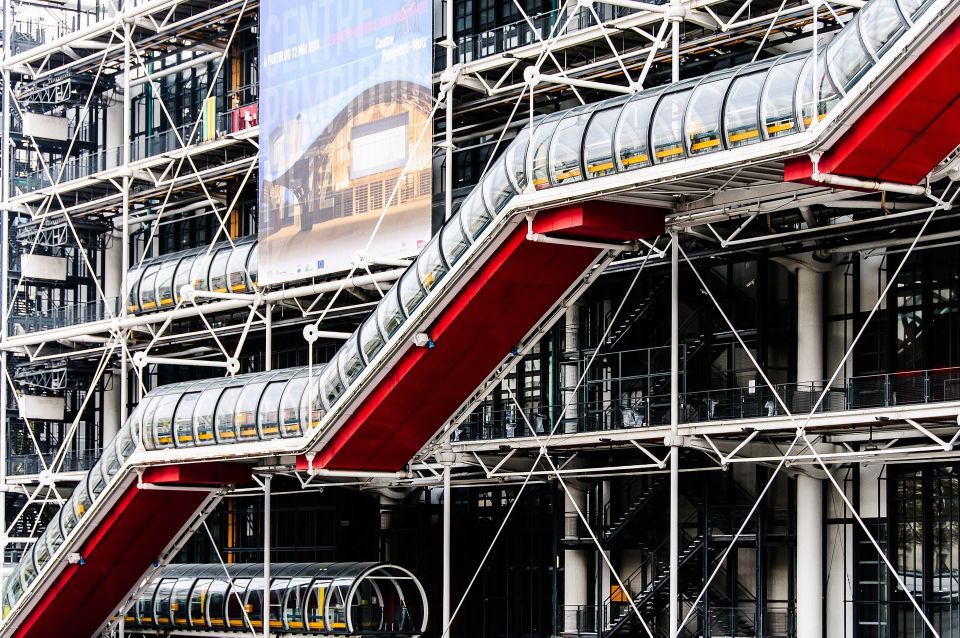
Centre Pompidou is one of those Paris buildings you either love instantly or spend the rest of the day trying to understand. This tour gives you the second part. You don’t just walk past it—you look at it in a way that sticks.
The key idea is the architecture’s openness. The building is famous for showing its structure and systems externally—an “inside-out” concept that turns function into design. Up close, that makes the building feel almost like a machine with personality.
Why this matters for your experience: Pompidou is often treated as a standalone museum stop. On this walk, it becomes a pivot point. The guide ties it into the neighborhood’s evolution, so you understand why this area continues to attract art, debate, and creativity.
Also, the timing helps. You’ll be close to it with the energy of the early part of the walk, so you’re not viewing Pompidou while mentally checked out from too many churches or too much pavement.
Rue Sainte-Croix-de-la-Bretonnerie and the LGBTQ+ neighborhood context
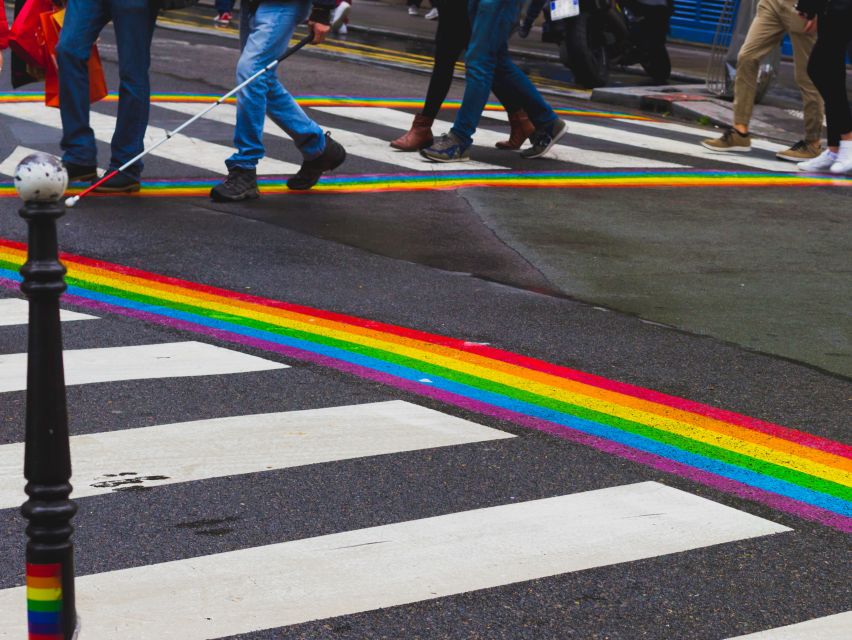
One of the strongest parts of the tour is how it handles the LGBTQ+ story without turning it into a vague slogan. You walk to and around Sainte-Croix-de-la-Bretonnerie, and the guide explains how the neighborhood’s social life became part of its identity.
This stop isn’t random. Le Marais has long been a place where communities found visibility, and this area reflects that. The church and its surroundings act like anchors: you remember not just a fact, but a location.
If you care about how cities change, this is a highlight. You’ll hear how culture, community, and space connect—then you keep walking, so it doesn’t feel like a classroom lecture.
My advice: use this part of the tour to ask questions. If a specific detail catches your interest—an era, a migration, a social shift—this guide style is meant to keep the flow conversational and responsive.






Cloister of Billettes and church-and-street architecture
Le Marais does churches in a way that feels more personal than grand monuments. You get smaller architectural moments that reward attention.
Along the walk, you’ll visit and learn about places like Église des Billettes and Notre-Dame-des-Blancs-Manteaux. One detail you get from the tour is the long timeline behind these buildings, including the fact that Saint Louis built the Église des Billettes area in the 1200s (the tour notes it as 1258). That kind of concrete date makes the stone feel less abstract.
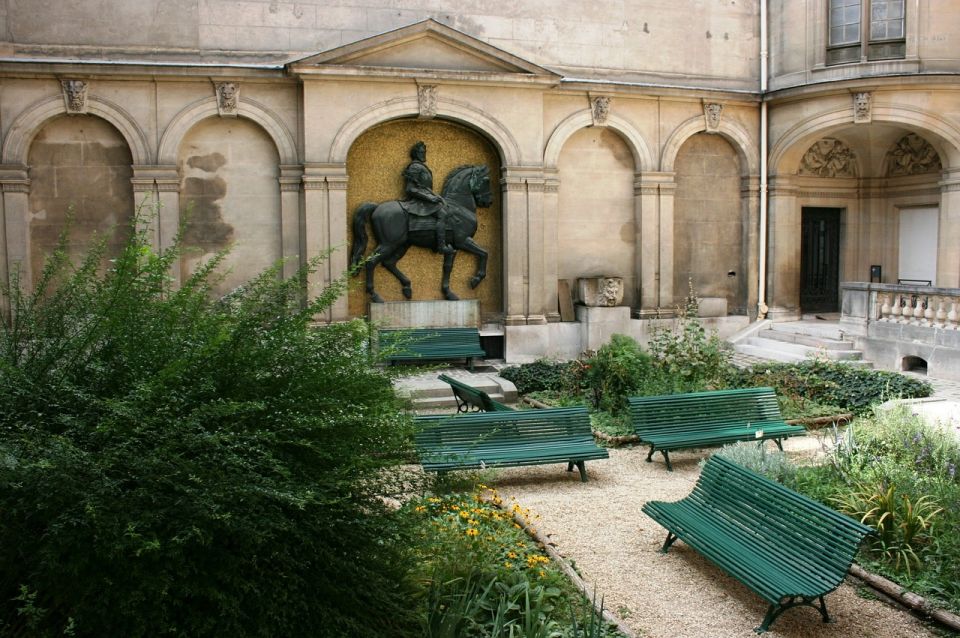
You also pass by the Cloister of Billettes, which is the sort of place you might otherwise miss. Cloisters tend to be quietly dramatic—an in-between space that contrasts with the street noise.
What I like about including these stops: it helps you understand Le Marais as a neighborhood that grew up around institutions, not just tourist landmarks. You’re not only collecting photos. You’re learning how the neighborhood functions.
Small drawback: if you’re the type who needs constant movement and hates pausing, church stops can slow you down. The good news is this walk is paced leisurely, and the guide keeps explanations short and pointed.
Impasse des Arbalétriers and the Street of Rosebushes
The Impasse des Arbalétriers leads you toward one of Le Marais’s most charming street scenes: the Street of Rosebushes. This is the part that feels like a Paris daydream—flowers, texture, and that calm, tucked-away feeling you don’t always expect in a major city center.
What makes it worth planning around is the contrast. This neighborhood is known for shopping and nightlife energy, yet here you get a softer visual rhythm. It’s a good moment to slow down, take a few photos, and reset your brain between bigger landmarks.
The guide also frames the Jewish Quarter context connected to the area, so the stop isn’t just pretty. It’s tied to how the neighborhood developed and why certain streets and institutions became symbols for people over time.
Rue des Rosiers and Hôtel de Ville sights: texture over checklist
As you head toward Rue des Rosiers, you’re moving through one of the most recognizable sections of the Jewish Quarter. The guide’s explanations help you connect what you see now—street life, shops, and signage—with what the area represents historically.
From there, the walk continues toward the city-focused landmarks, including the bibliothèque de l’hôtel de ville de Paris and Hôtel Carnavalet, before landing in the big-square mood of the Place des Vosges area.
These stops work because they give you variety:
- Rue des Rosiers is street-level texture.
- The library and Hôtel Carnavalet area adds civic and cultural weight.
- Place des Vosges gives you a classic Paris “wow” moment with clean lines and open space.
By the time you reach Place des Vosges and beyond, you’ll likely feel the neighborhood’s rhythm in your legs. And that’s when the final stretch becomes extra enjoyable.
Ending at Le Village Saint-Paul: where to wander after the tour
The tour finishes at Le Village Saint-Paul, a compact zone where antiques, art galleries, and artisan shops crowd together. This is a smart finishing point because it gives you something to do immediately after your last guided explanation.
Once the guide steps away, you can choose your own pace:
- Stay near storefronts if you want browsing time.
- Keep moving if you want more photos around Place des Vosges.
- Or simply linger with a coffee nearby (food and drink aren’t included on the tour, so you’ll be on your own here).
This ending also suits different travel styles. If you like structured sightseeing, you’ve just done the best part with context. If you like freedom, Le Village Saint-Paul is a natural place to “follow your curiosity” without feeling lost.
Optional upgrade: narrated Seine cruise for a full year
The Seine river cruise upgrade is one of those add-ons that often makes people say, “Yes, that’s worth it.”
You get a narrated cruise on the Seine, and it’s good for a year from your tour date, which is a huge scheduling relief. It lets you plan the walk now, then choose the cruise time that fits your remaining Paris days.
Why it pairs well with this tour: the walk teaches you the neighborhood grid and the cultural layers around Le Marais. The cruise then gives you the city’s big-picture view—still Paris, but seen from a different angle.
If you’re trying to keep costs down, skip it. But if you want one more memorable experience that doesn’t require more logistics (beyond picking a cruise time), this upgrade is a clean win.
Price and value: what $42 buys you in real terms
At $42 per person for 90 minutes, you’re paying for:
- a live English guide,
- a tight route through major Marais highlights,
- and explanation that ties the sights together into one story.
It’s not a full-day tour. It’s a focused burst. That makes it good value if you’re already planning to explore more on your own later.
It also helps that the walk is about 2 miles and done at a leisurely pace. In practice, that means you’re less likely to feel like you paid to suffer. You’re there for sights and meaning, not for punishment.
Finally, you’re not locked into only walking. The optional Seine cruise is a flexible add-on if you want to extend the day without buying a whole separate tour experience.
Should you book the Paris Le Marais Walking Tour?
Book it if you want a guided walk that connects architecture and neighborhood life, not just a photo parade. This is especially a good fit if you care about the LGBTQ+ story in Le Marais, like learning how streets and institutions shaped community life, and appreciate churches and side-streets as much as you appreciate big-name landmarks like Pompidou.
Skip it or think twice if you’re mainly chasing one specific spectacle and you’re sensitive to the possibility that the Stravinsky Fountain may not be fully operating, since it’s listed as under renovation until 2023.
If you do book, show up early for your assigned start point, wear comfortable shoes, and bring your patience for French weather. Then use the guide’s explanations to help you look at Le Marais like a local—because that’s exactly what this tour is built for.
FAQ
How long is the Paris Le Marais Walking Tour?
The tour lasts 90 minutes.
How much does it cost?
It costs $42 per person.
What language is the tour guide?
The live tour guide is available in English.
Where can the tour start?
The tour may start at either the Stravinsky Fountain (2 Rue Brisemiche) or the Centre Pompidou, depending on the option booked.
How far do you walk?
The tour involves about 2 miles of walking at a leisurely pace.
Does the tour run rain or shine?
Yes, it runs rain or shine.
Is the Seine river cruise included?
The narrated Seine river cruise is an optional upgrade, not included by default.
Is food and drink included?
No, food and drink are not included.
Is the tour wheelchair accessible?
Yes. The tour is wheelchair accessible and is also stroller-friendly.
Is there a shuttle service included?
Yes. A Paris shuttle is included with your tour. You can use the provided link to arrange it.