
REVIEW · PARIS
Paris: Treasure Hunt & Walking Tour “Marie Curie’s secret”
Book on GetYourGuide →Operated by Mystery City · Bookable on GetYourGuide
Paris turns into a puzzle fast. I love the physical treasure hunt setup—maps, boxes, and tools in hand—because it makes the city feel playable, not just scenic. I also like how the mission ties into Marie Curie’s story while you’re moving past major sights. One possible drawback: the history can feel light for people who want deep facts and long explanations.
This is an outdoor escape-game style walk that runs about 2 hours, starting at Play-In on Rue de Rivoli. You follow a treasure map, solve riddles at checkpoints, and work toward finding a secret weapon left behind as the story goes that soldiers are leaving Paris. It’s a fun option when you want a different kind of sightseeing—though you’ll still want to bring some curiosity and patience for puzzle time.
In This Review
- Key things to know before you go
- Marie Curie’s Secret Weapon: the smart twist on Paris sightseeing
- Price and what you actually get for $28
- Meeting at Play-In (59 Rue de Rivoli) and getting your game kit
- The no-app puzzle format: treasure maps, books, and real tools
- Walking through Paris center while solving riddles at real stops
- The story layer: soldiers leaving Paris and a mission to find the weapon
- Props that make it feel like a real experience, not a generic walk
- Pacing options: play your way, compete your way
- How long is 2 hours, and how to make it painless
- Who this treasure hunt fits best (and who should skip it)
- Should you book Marie Curie’s secret treasure hunt?
- FAQ
- Where does the game start?
- How long is the experience?
- Is it an app-based game?
- What languages are available?
- What’s included in the price?
- Is food and drinks included?
- Is it a private group?
- Can I play competitively?
- FAQ
- Do you return to the meeting point?
- Can I cancel for a refund?
- Can I reserve and pay later?
Key things to know before you go
- Start at Play-In (59 Rue de Rivoli) and collect everything you need from the shop
- No phone app required; the game uses physical maps, books, and tools
- Marie Curie themed mission with a plot that turns into puzzle challenges
- You move through Paris city center while solving tasks near top monuments and attractions
- Family-friendly puzzle rally that works well even with younger kids
- Private group format, with pacing you can set for your crew
Marie Curie’s Secret Weapon: the smart twist on Paris sightseeing
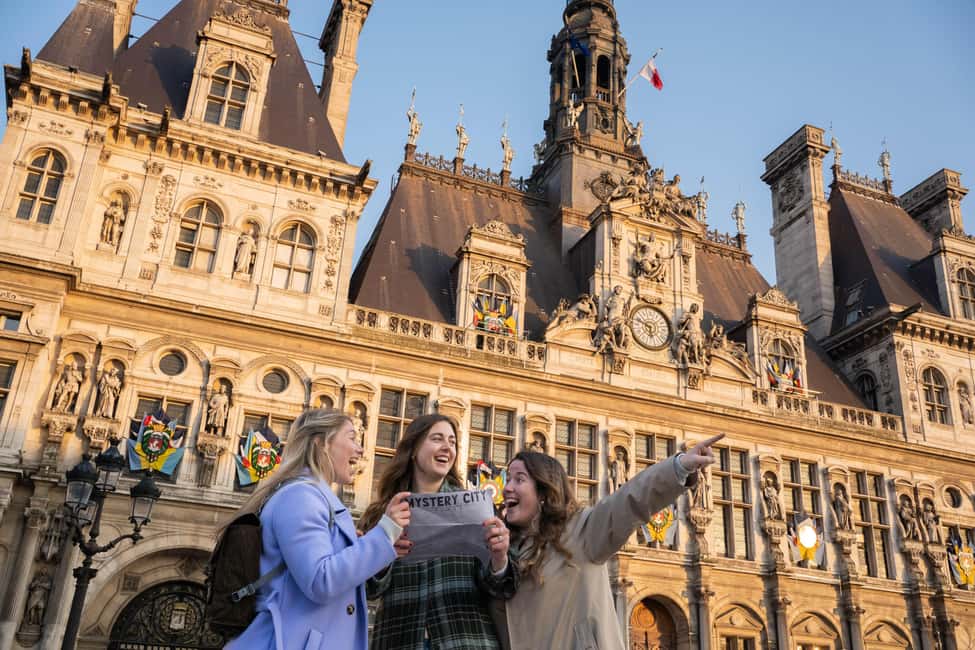
If your Paris plan is heavy on museums and light on hands-on fun, this game offers a clean change of pace. Instead of watching the city go by, you guide the action. You’re reading clues, making choices, and walking with purpose through the center.
The best part for me is that it’s not just a “look here, read that” tour. The activity is built around problem-solving. That means you naturally notice details you might otherwise miss—signs, street shapes, monuments in your line of sight—because your next step depends on it.
And yes, the theme matters. You’re hunting for the secret weapon left behind by Marie Curie, using a treasure map and clues that connect to the city’s story. It gives the walk momentum, especially if you’re traveling with friends, or you need a break from the usual Paris routine.
One note to keep expectations grounded: the experience is positioned as a fun quest with real props and a story thread, not a deep academic lecture. If your priority is heavy, fact-dense history, you might want to pair this with another history-focused stop on your own.
You can also read our reviews of more walking tours in Paris



Price and what you actually get for $28
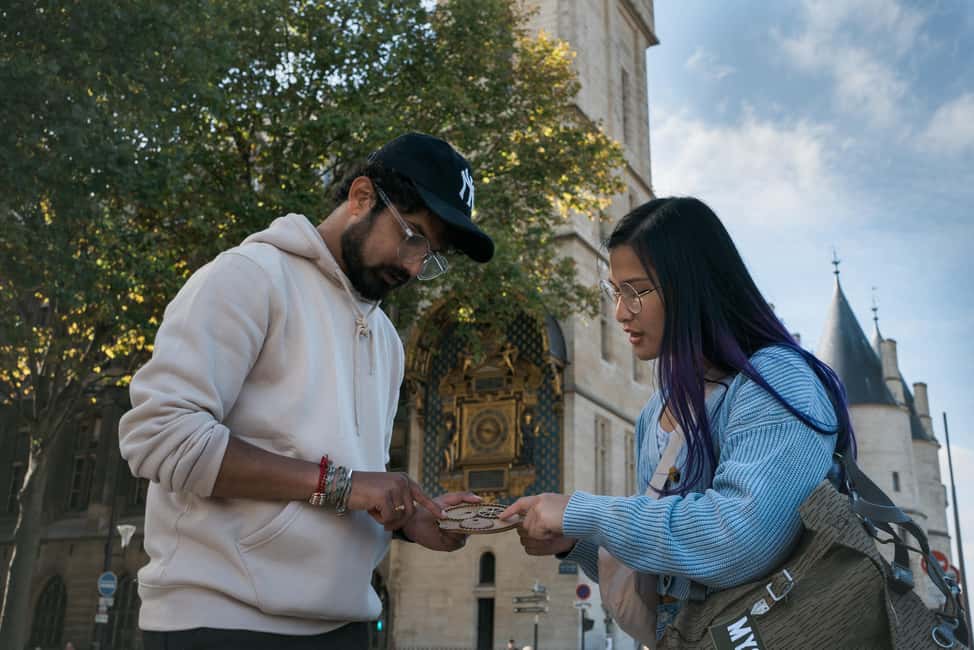
At around $28 per person for a two-hour experience, you’re paying for something you rarely get with traditional sightseeing: packaged puzzles plus the materials to do them. The price covers the treasure maps, boxes, and “beautiful tools” included with the game kit—so you’re not paying extra for a headset, an app subscription, or entry tickets tied to the story.
Is it good value? I think it is if you want:
- an organized way to explore Paris center without planning every turn
- a shared activity that keeps multiple ages engaged
- something that feels different from another guided walk
It’s not “cheap entertainment” exactly. It’s closer to paying for an interactive format. If you love games, it’s likely worth it. If you dislike puzzles and prefer quiet museum time, you may not get your money’s worth from the format alone.
Meeting at Play-In (59 Rue de Rivoli) and getting your game kit
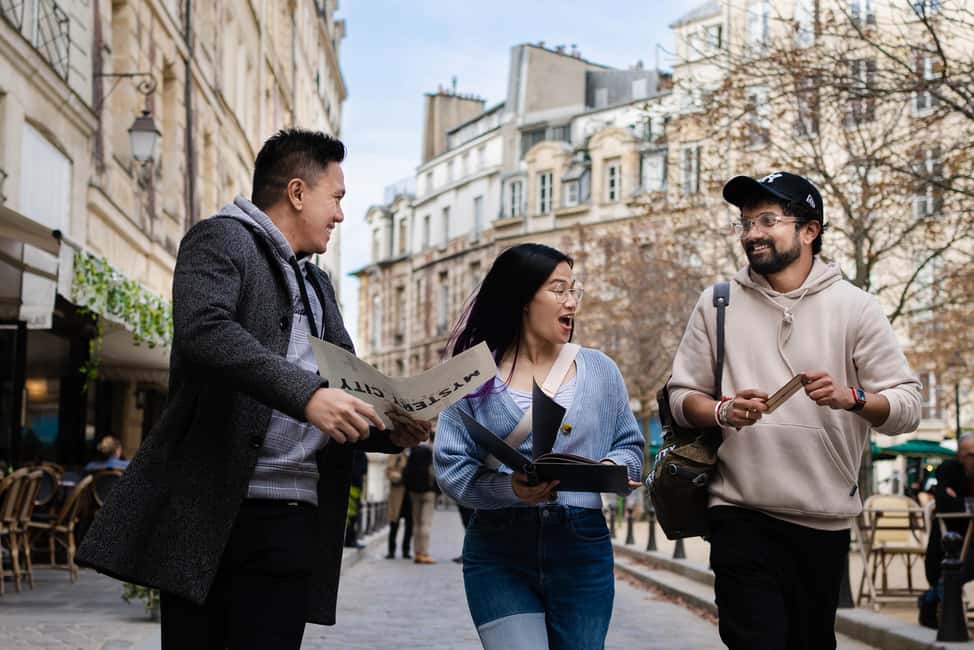
Your adventure starts back on the shopping-street side of the Seine area, at Play-In, 59 Rue de Rivoli. You meet your group at the location, then you tell the shopkeeper you’re there to play the Mystery City Game. The shop is where you get the materials you’ll need to play.
A key detail: you chat with a French soldier greeter at the start. The tone is theatrical, but practical too. The soldier explains how to pick up the backpack holding everything—so you can move immediately into the hunt without fumbling around later.
This matters more than it sounds. When a walking game starts smoothly, you lose less energy to logistics and more energy to the fun parts—reading clues, solving, and exploring. And since the activity ends back at the meeting point, you’re not worrying about finding your way across the city on your own at the end.
The no-app puzzle format: treasure maps, books, and real tools
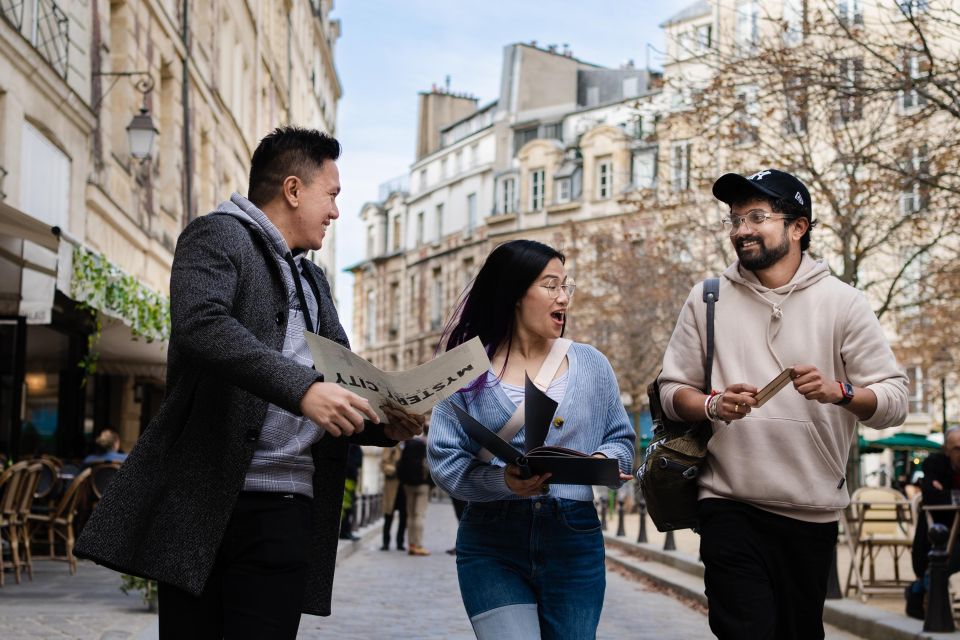
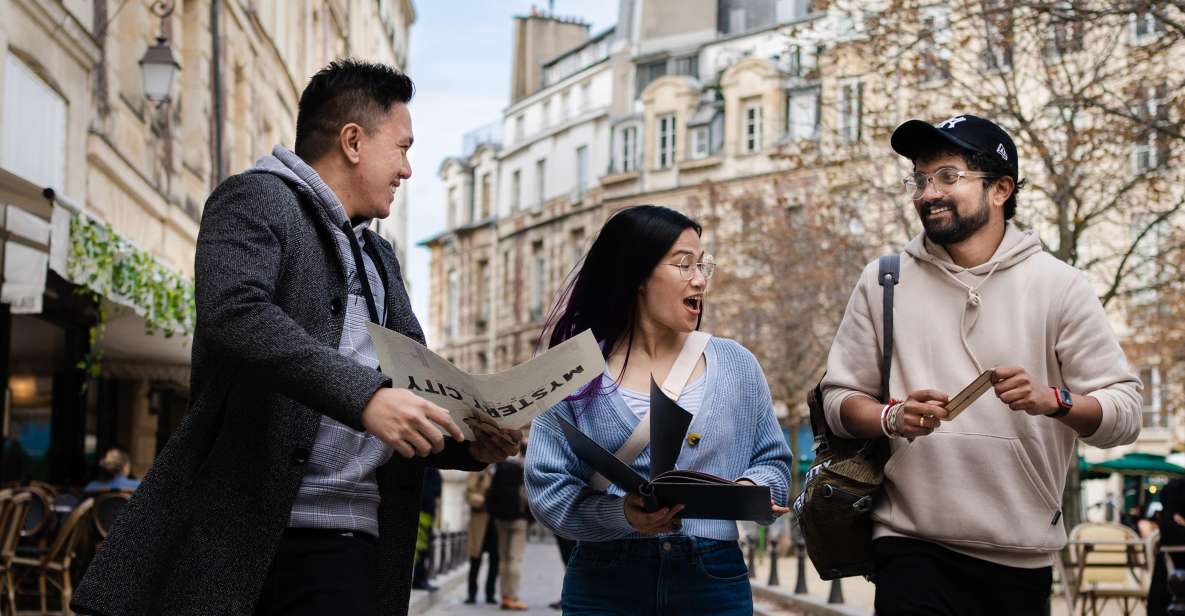
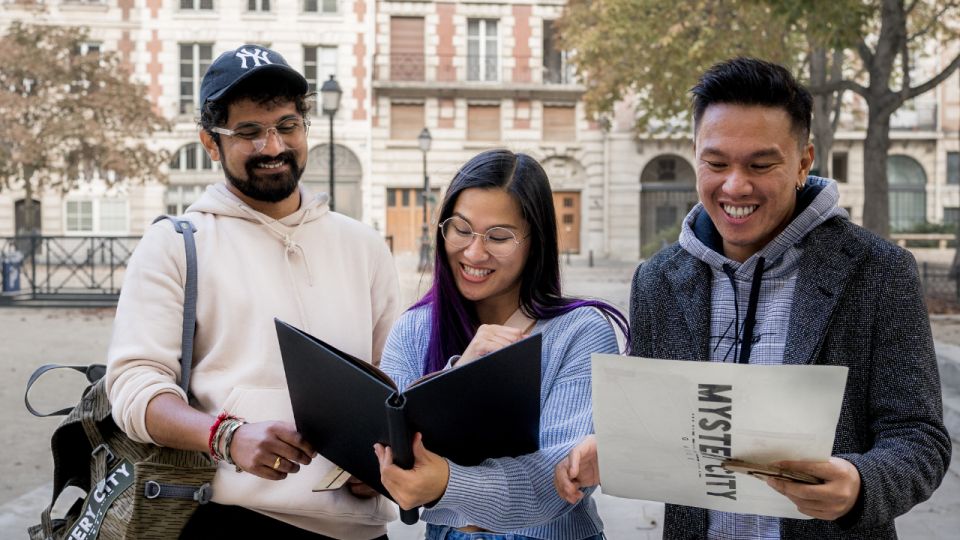
This is a big selling point: it’s not app-based. You won’t need your phone battery to cooperate. Instead, the game uses physical items—treasure maps, boxes, and books, plus tools that make the experience feel tactile and game-like.
Why that’s worth caring about: puzzle hunts go better when you’re not constantly stopping to load screens or interpret tiny UI elements. Physical maps encourage you to look up, read street context, and keep moving. You also get a bit more “role-playing” because the objects are part of the story.
In real terms, you’ll be solving escape-game style challenges while holding the kit materials and following the treasure map. That means the activity works well for mixed groups, including kids, because the interaction is obvious: you take an item, follow a clue, solve the next step.
If you enjoy scavenger-hunt energy, this format does a great job of putting you in that mode.
Walking through Paris center while solving riddles at real stops
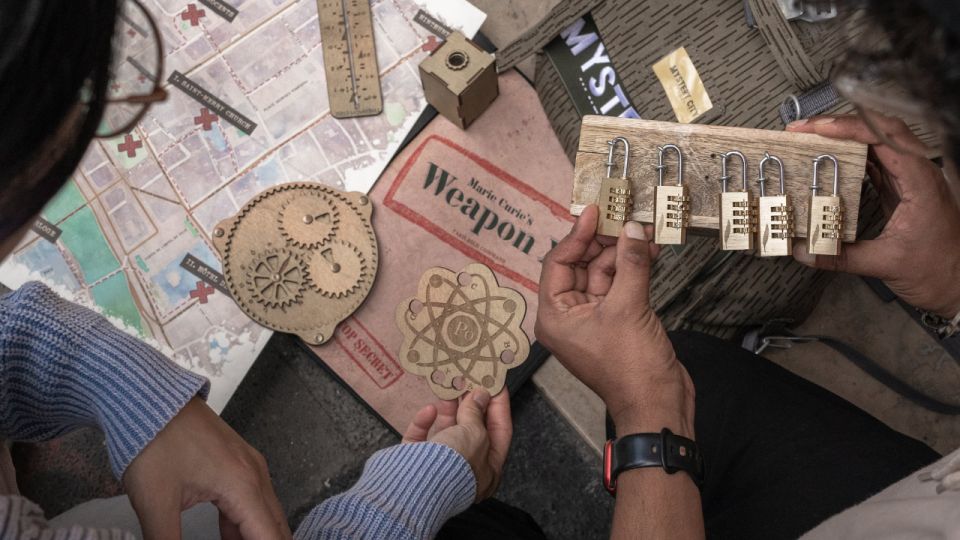
The route is built around the idea that you’ll explore Paris city center and pass major monuments and attractions while you solve puzzles. You’re following a treasure map and learning as you go—so the city becomes your board.
You can expect the flow to feel like this:
- You start with orientation and the mission context (Marie Curie’s secret weapon)
- You walk to puzzle checkpoints across classic central streets
- At each checkpoint, the riddle ties to what you’re seeing around you
- Your answers move you closer to the final objective
- The game loops back to the meeting point at Play-In
You won’t just be “walking from A to B.” The puzzles give each leg a reason to exist. That’s why it’s such a good one-day plan: if you only have a short window, this activity helps you see a wide swath of the center in a way that’s mentally active.
Practical consideration: because it’s puzzle-driven, you’ll move at a pace that depends on your group. If you’re rushing, you might feel stuck at a tricky step. If you’re relaxed, it’s easier to enjoy the walk and the problem-solving rhythm.






The story layer: soldiers leaving Paris and a mission to find the weapon
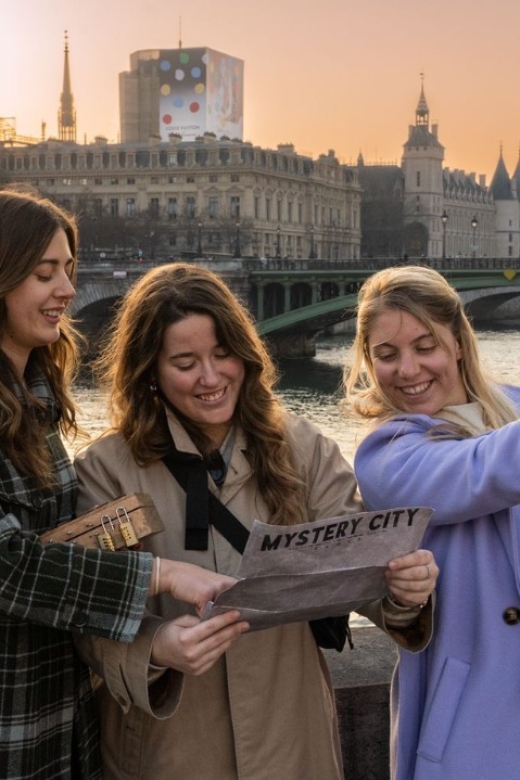
The theme is Marie Curie, but it’s told with a small dramatic hook. The plot goes like this: as soldiers leave Paris in taxis headed toward the battlefield, you have a special mission—to find the secret weapon left behind by the city’s famous scientist.
Whether you take the story seriously or mainly enjoy it as costume flavor, it gives you something to do beyond “look at buildings.” You’re working toward a narrative goal, so the clues feel linked instead of random.
This is where one review’s criticism is worth noting. The history component might not satisfy people craving lots of detailed facts. The storytelling is meant to support the game, not replace a museum talk. So if you want Marie Curie in depth, plan to add that separately.
Still, even with light storytelling, the mission structure helps you stay engaged. When you’re hunting, you remember what you find.
Props that make it feel like a real experience, not a generic walk
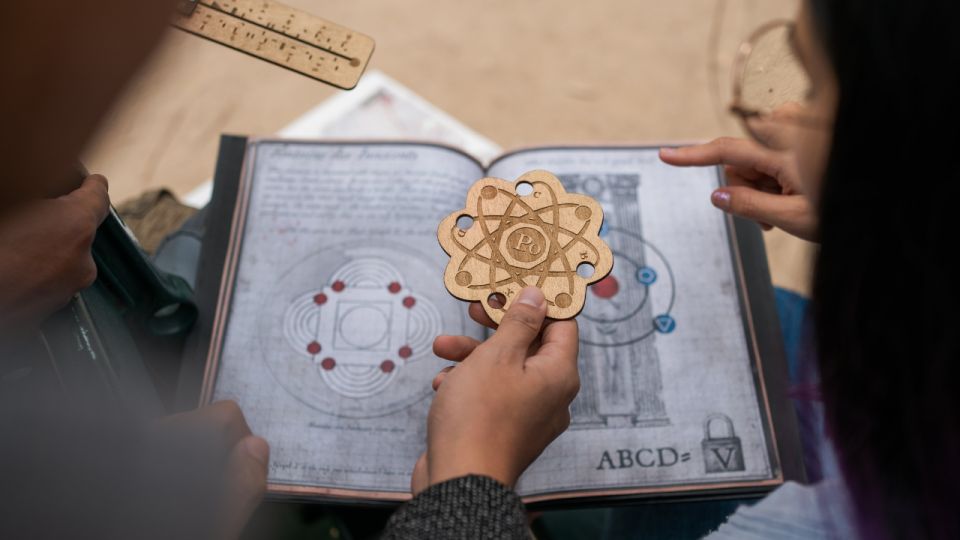
I’m a sucker for activities that come with tangible tools. Here, the kit includes treasure maps, boxes, and “beautiful tools,” plus book-style materials used during the quest. That combination makes it feel less like an ordinary guided walk and more like a constructed experience.
The kit also helps different personality types. Some people enjoy decoding. Others like finding what’s physically placed in the scene. And if you have a group with kids, the tactile nature matters. Kids don’t want only listening time. They want to do things.
That kid-friendly angle is backed by real-world experience with ages around 10 and 6. The general idea: children enjoy spotting sculptures and working through the mysterious challenges. If your family does well with scavenger hunt energy, this is a solid bet.
Pacing options: play your way, compete your way
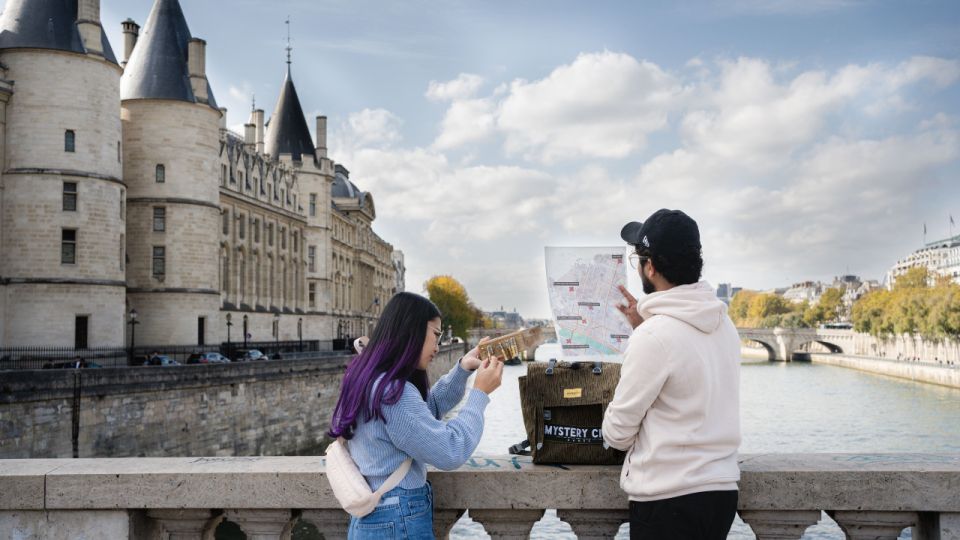
The experience is set up so you can play at your own pace or competitively. That flexibility is useful in a city like Paris, where groups vary wildly in energy and attention span.
If you’re with friends who want a laid-back stroll, you can treat the puzzles like a slow scavenger walk—time for photos and sidelong looks. If you’ve got a bachelorette party, or a group that likes games, competition adds adrenaline. Either way, the structure keeps you from getting bored.
Because it’s a private group format, you can also avoid the awkward social dynamics of being placed with strangers who move differently. Private tends to make puzzle hunts easier: you can align the group’s pace and decision style.
How long is 2 hours, and how to make it painless
The duration is listed as about 2 hours. That time window is ideal for a first-time Paris day because you get a meaningful slice of the city without turning the day into a full-day production.
What helps you enjoy the whole thing:
- show up ready to walk (comfortable shoes)
- bring your group’s attention, not just your camera
- expect some puzzle time where you’ll slow down a bit
No food or drinks are included, so plan a snack or plan to do a proper meal after. That matters because if you’re hungry, puzzles become less fun quickly.
Transportation to the start point isn’t included either. If you’re staying outside the center, build in transit time so you’re not arriving stressed.
Who this treasure hunt fits best (and who should skip it)
This experience fits especially well if you:
- want a playful way to see Paris center in a limited time
- like puzzles, riddles, or scavenger hunts
- travel with friends, couples, or families who enjoy doing things together
- want a non-app activity that’s tactile and engaging
It may be less ideal if you:
- only want museum-style history delivered in long explanations
- dislike puzzle formats entirely
- expect a strictly quiet or highly guided lecture experience
Also, if you’re traveling with very little walking tolerance, consider that you’ll be moving around the city center for the full two hours as you hit checkpoints.
Should you book Marie Curie’s secret treasure hunt?
If your Paris day needs variety, I’d lean yes. For the money, you’re buying a structured, physical, puzzle-driven way to experience the center. The French soldier start, the treasure map mission, and the real props make it feel like an event, not just sightseeing.
The only “think twice” case is if you’re coming primarily for heavy history facts. If that’s your top priority, you’ll still enjoy the walk, but you may want to pair it with a more narrative, detail-rich history stop before or after.
If you want a fun group activity that gets you moving and noticing Paris in a different way, this is an easy pick.
FAQ
Where does the game start?
You meet at Play-In at 59 Rue de Rivoli. Tell one of the shopkeepers you’re there to play the Mystery City Game, and they’ll give you what you need.
How long is the experience?
The game runs for about 2 hours. Starting times vary, so check availability when you book.
Is it an app-based game?
No. It’s not app-based. You’ll use physical treasure maps, books, boxes, and tools instead.
What languages are available?
The game is available in French and English.
What’s included in the price?
Included materials are treasure maps, boxes, beautiful tools, and true stories from Paris’s history.
Is food and drinks included?
No. Food and drinks aren’t included.
Is it a private group?
Yes, it’s offered as a private group.
Can I play competitively?
You can play either at your own pace or competitively, depending on how you want to approach the challenges.
FAQ
Do you return to the meeting point?
Yes. The activity ends back at the meeting point.
Can I cancel for a refund?
You can cancel up to 24 hours in advance for a full refund.
Can I reserve and pay later?
Yes. You can reserve now and pay later to keep plans flexible.