REVIEW · PARIS
Haussmannian Paris 2-Hour Private Walking Tour
Book on GetYourGuide →Operated by Paris in person private tours · Bookable on GetYourGuide
Paris wears its 1800s choices on every corner. On this private 2-hour walk, you get the big picture of the Haussmannian makeover—why streets were cut, facades were standardized, and the city ended up both flashy and strangely coherent.
I especially love how the route pairs drama with detail, starting at Opéra Garnier and then showing you Boulevard Haussmann as a real planning tool, not just a pretty street. And I also like the contrast shift toward calm elegance at Park Monceau and the refined bustle around Galeries Lafayette. One possible drawback: this is a walking tour with no food stop, so if you need a long break or indoor museum time, you’ll want to add that separately.
In This Review
- Key points to know before you go
- Why the Haussmann Plan Still Shapes Your Paris Walk
- Getting Oriented at Métro Opéra (and Finding Your Guide Fast)
- Opéra Garnier: More Than a Pretty Façade
- Boulevard Haussmann and Saint-Augustin: Reading the City Like a Map
- Galeries Lafayette: Paris Shopping as Architectural Sightseeing
- Jacquemart-André’s Villa Feel: Opulence Without the Museum Marathon
- Park Monceau and the Picasso Stories: A Shift From Stone to Mood
- Price and Pace: Is $176 Per Person Good Value?
- Who This Tour Suits Best (and Who Might Want Something Else)
- Should You Book the Haussmannian Paris Private Walking Tour?
- FAQ
- Where is the meeting point?
- How long is the tour?
- What languages are offered?
- Is this tour private?
- Is the tour wheelchair accessible?
- Does the tour run in bad weather?
- Is food included?
Key points to know before you go
- Opéra Garnier framing: you see the building as a statement of the era, not a random photo stop.
- Boulevard Haussmann explained in plain language: you learn how the layout affects what you notice while walking.
- Galeries Lafayette as a design landmark: shopping here feels like architecture sightseeing.
- Park Monceau’s quieter mood: the tour ends with a different kind of Paris elegance.
- Picasso drinking-den stories: the tour ties city planning to the people who later filled its rooms.
Why the Haussmann Plan Still Shapes Your Paris Walk
The Haussmann story is one of those rare city histories that affects your feet, not just your head. In the 19th century, Paris went through the largest urban planning push the city had seen. Whole areas were leveled and rebuilt, aiming for a city that was easier to navigate, better functioning, and visually unified.
Here’s what I like about this tour approach: it doesn’t treat Haussmann like a distant label. You get to connect the plan to what you actually see—wider streets, long sightlines, and that very specific Parisian rhythm of building lines.
There’s also a tradeoff built into the history. The same “order” that makes Paris look like a postcard also meant many older structures and streets were lost. You’ll hear that tension, the excessive side of the project alongside its undeniable impact.
You can also read our reviews of more walking tours in Paris


Getting Oriented at Métro Opéra (and Finding Your Guide Fast)
Your meeting point is at Métro Opéra, in front of Café de la Paix. Look for your guide carrying a red canvas tote bag—this is the kind of small detail that saves time when streets are busy and everyone’s scanning for landmarks.
Because it’s a private walking tour, you don’t have to fight for space or compete for attention. You can ask quick questions and get answers tied to what you’re standing in front of. It’s also offered in English and French, which matters if you want explanations to stay crisp instead of getting simplified.
One practical note: the tour runs rain or shine, and the duration is just 2 hours. So I’d dress for the weather and keep expectations realistic—this is built for seeing and learning efficiently, not for long indoor wandering.
Opéra Garnier: More Than a Pretty Façade
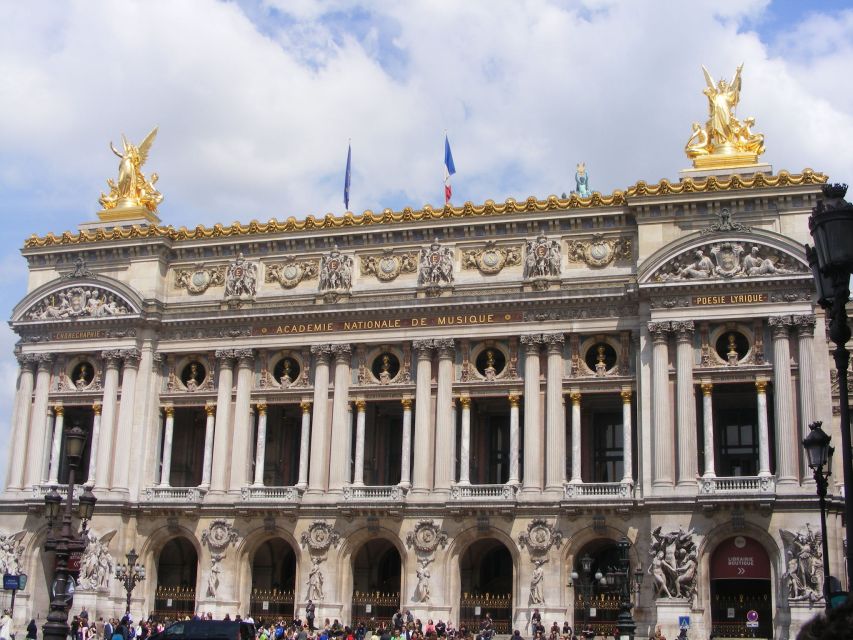
Opéra Garnier is the star that makes everything else make sense. It’s treated as the era’s big statement—where money, ambition, and theatrical spectacle line up in stone and ornament.
What you’ll get from the walk is context you can use on your own after the tour. Instead of only admiring the exterior, you learn to recognize the way buildings from this period were designed to project power and confidence. The result is that you stop seeing it as a single landmark and start seeing it as part of a broader city idea: grandeur with structure behind it.
And yes, it’s also a photo magnet. But the tour keeps it from becoming just a stop-and-shoot. You’ll better understand why it belongs in a Haussmannian route: it’s not only architecture—it’s an argument for the kind of city people wanted to build.
Boulevard Haussmann and Saint-Augustin: Reading the City Like a Map
Boulevard Haussmann is the Haussmann test case you can walk through. This is where the planning choices become obvious in real life: how the road feels wider, how views stretch, and how the buildings line up to create a consistent visual “frame” as you move.
The tour’s goal here is simple: help you read the city layout as design. When you understand that, you notice more on your own afterward—where streets pull you, where intersections change your perspective, and how the building rhythm controls the feel of each block.
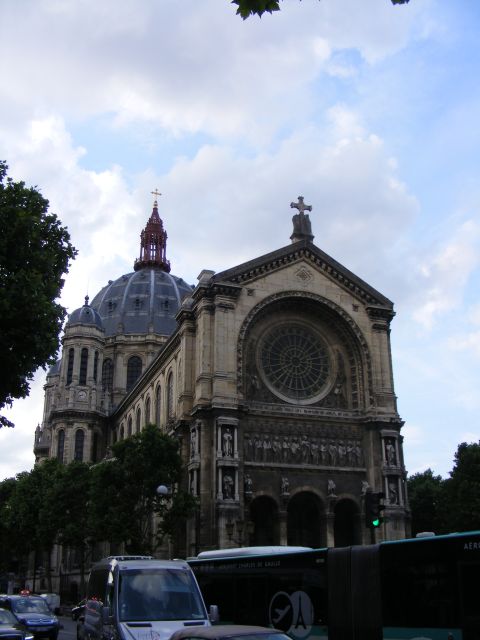
You’ll also spend time around the Church of Saint Augustin, described as an architectural marvel. Even if your style preferences are all over the map, this kind of church in this setting helps you see how religious architecture was used as another layer of civic identity during the same general era.
The quiet win: the walk gives you a way to interpret architecture without needing an architectural degree.
Galeries Lafayette: Paris Shopping as Architectural Sightseeing
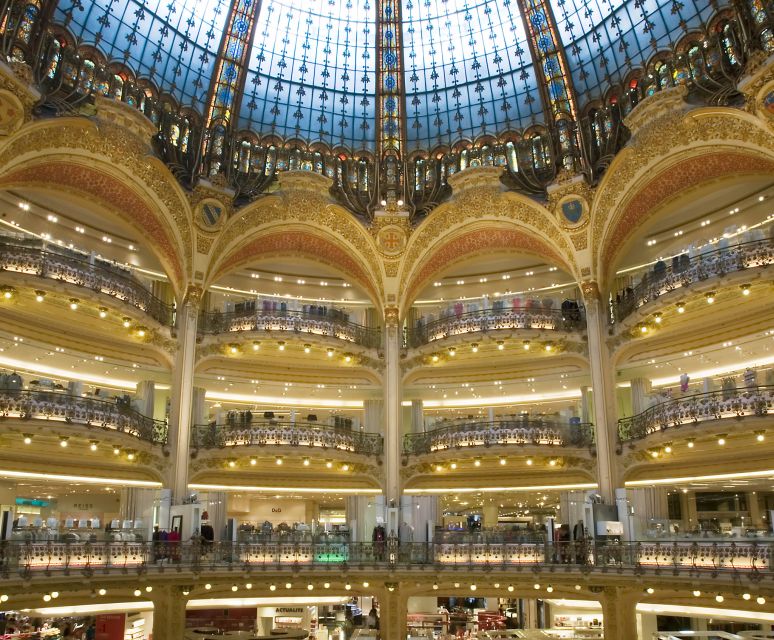
Galeries Lafayette isn’t just shopping. On this route, you get to experience it as a piece of the city’s elegance—an interior and exterior landmark that feels designed, not incidental.
The value here is that it breaks the usual pattern of “street history, then move on.” You get a shift in atmosphere: from the long lines of boulevards to a more curated, elegant environment. It also gives you an easy way to turn sightseeing into an optional next step. If you’re the type who likes one stop with a café or a browse, Galeries Lafayette fits that energy.
Just manage your timing. The tour is only 2 hours total, so you’ll be there for viewing and explanation, not for a full shopping session. If you want to shop seriously, plan to return later on your own.
You can also read our reviews of more private tours in Paris

Jacquemart-André’s Villa Feel: Opulence Without the Museum Marathon
You’ll see the Museum of Jacquemart-André, known for its lavish, opulent villa vibe. This stop works because it adds texture to the Haussmann story—proof that the era wasn’t only about infrastructure. It was also about taste, status, and private grandeur.
Since this is a walking tour, you should expect a focused look rather than a full museum visit. The tour’s strength is helping you spot what makes the place feel luxurious and period-specific so you can appreciate it quickly even if your schedule is tight.
If you like the idea of Paris history that blends architecture and everyday life, this is a good bridge stop between monumental public buildings and the calmer green spaces you’ll reach later.
Park Monceau and the Picasso Stories: A Shift From Stone to Mood
Then the tour changes the tempo with Park Monceau—called the city’s most elegant park. This is a big deal in how you experience Paris. After street architecture and grand buildings, a park gives you breathing room and lets you feel how the city also planned for leisure and atmosphere.
And here’s where the tour adds personality: you’ll hear stories connected to Picasso, including his favorite drinking dens. That detail matters because it connects the “built” Paris to the “lived” Paris. You’re not only learning about what planners intended—you’re learning how later artists and locals used the city’s spaces.
When a tour ties architecture to people, it stops being purely visual. It becomes something you can imagine yourself doing—wandering, pausing, and noticing how the mood shifts block to block.
Price and Pace: Is $176 Per Person Good Value?
At $176 per person for a 2-hour private walk, you’re paying for two things: a guide who stays with your group and a route built around high-impact stops.
Here’s why that price can feel reasonable. Opéra Garnier and Galeries Lafayette alone are landmarks most people end up visiting anyway, but the difference here is interpretation. You don’t just go to famous places—you learn how the Haussmann plan shapes what those places represent and how the street grid creates the city’s feel.
Private also matters. You can ask follow-up questions and get answers tailored to your pace. The reviews back up that guide quality is a highlight. On past tours, guides such as Tina and Hanna were praised for being friendly and for giving strong explanations about city planning, city history, and architecture. That kind of skill directly affects whether the walk feels like a useful lesson or just a route with facts.
The main value tradeoff: it’s 2 hours. This isn’t meant to replace a full day of museums or a long food-and-photo crawl. It’s a targeted, efficient way to get the Haussmann framework in your head so the rest of your Paris days make more sense.
Who This Tour Suits Best (and Who Might Want Something Else)
This tour is a strong match if you want to:
- Learn how Paris got its look, street by street
- See the key Haussmann landmarks without overplanning
- Get architectural and planning explanations in English or French
- Prefer a private pace over joining a larger group
It’s also a great pick if you like walking routes that mix famous buildings with a couple of less-obvious atmosphere stops, like Park Monceau’s elegance and the Picasso-linked stories.
If you’re hoping for a long meal break, heavy indoor time, or a museum-day schedule, you’ll likely feel boxed in by the 2-hour structure. The tour also doesn’t include food, snacks, or drinks, so you’ll want to plan your own timing.
Should You Book the Haussmannian Paris Private Walking Tour?
I’d book it if you want a fast, high-quality way to understand why Paris looks the way it does. The standout strength is the combination of famous visual stops—Opéra Garnier, Boulevard Haussmann, Galeries Lafayette—and the interpretive thread that ties them back to the Haussmann intervention.
I wouldn’t book it as your only Paris “architecture learning” plan if you want extensive interior time or a slow, multi-hour day with lots of breaks. This is a walking tour that teaches you how to see, then sends you back to the city with better eyes.
If your dates are flexible, reserve early and keep your expectations aligned: dress for the weather, wear comfortable shoes, and treat the tour as your Haussmann orientation session for the rest of your trip.
FAQ
Where is the meeting point?
You meet at Métro Opéra, in front of Café de la Paix. Your guide will be carrying a red canvas tote bag.
How long is the tour?
The tour lasts 2 hours.
What languages are offered?
The live guide speaks English and French.
Is this tour private?
Yes. It’s a private group.
Is the tour wheelchair accessible?
Yes, it is listed as wheelchair accessible.
Does the tour run in bad weather?
Yes. Tours operate rain or shine.
Is food included?
No. Food, snacks, and drinks are not included.