REVIEW · PARIS
Paris: 2-Hour Passages Private City Tour in German
Book on GetYourGuide →Operated by HelpTourists · Bookable on GetYourGuide
Paris has a secret for the curious.
This private German city walk turns the “hidden passages” of central Paris into a real time machine—built for a 19th-century city that was dirtier, louder, and far less modern than what you see today. I especially like that the guides focus on what these passages were for, not just where they are, and you get a smooth 2-hour pace that doesn’t drag.
One thing to consider: this is for German speakers and you start at Le Peletier (no hotel pickup listed), so you’ll want to plan your own way there and back. If you’re hoping for a quick self-guided shortcut, these passages really do take a guide to spot and understand.
In This Review
- Key things that make this passage tour worth your time
- Why these Paris passages feel like 19th-century story sets
- Starting at Le Peletier: the perfect launch point for a short, smart walk
- Passage Verdeau: where the vibe turns from street to corridor
- Passage Jouffroy: more details, more connections, more Paris-in-miniature
- Passage des Panoramas: the one that feels most like a covered city moment
- Grands Boulevards: stepping back out into the city the passages connected to
- Palais-Royal quarter: finishing in a place still worth roaming
- The guide matters: German storytelling that turns sights into meaning
- Price and 2-hour value: what you’re really paying for
- Who should book this passage tour (and who might skip it)
- A realistic game plan for your day
- Should you book this 2-hour German passages tour?
- FAQ
- Is this tour private or a group tour?
- Where do I meet the guide?
- What language is the tour in?
- How long is the tour?
- What days does the tour run?
- Is cancellation free?
Key things that make this passage tour worth your time
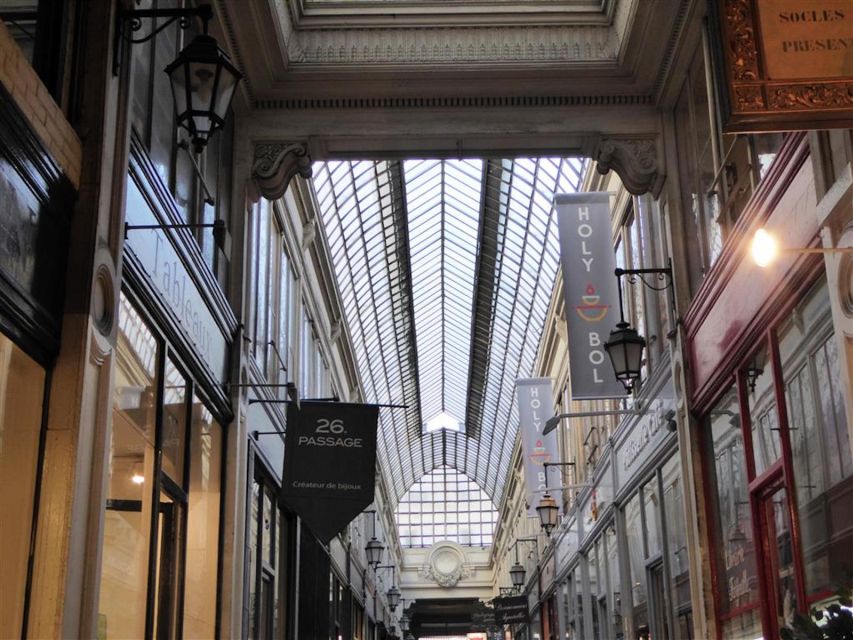
- 19th-century “solution” architecture: not shopping arcades as you’d picture them now
- Passage Verdeau to Passage des Panoramas: multiple classic covered passages, not just one
- A private German guide: you’ll get explanations and connections as you walk
- Fast, focused timing: 2 hours that fit easily into a Paris schedule
- Finish at Palais-Royal: you end in a lively area that’s still easy to enjoy
Why these Paris passages feel like 19th-century story sets
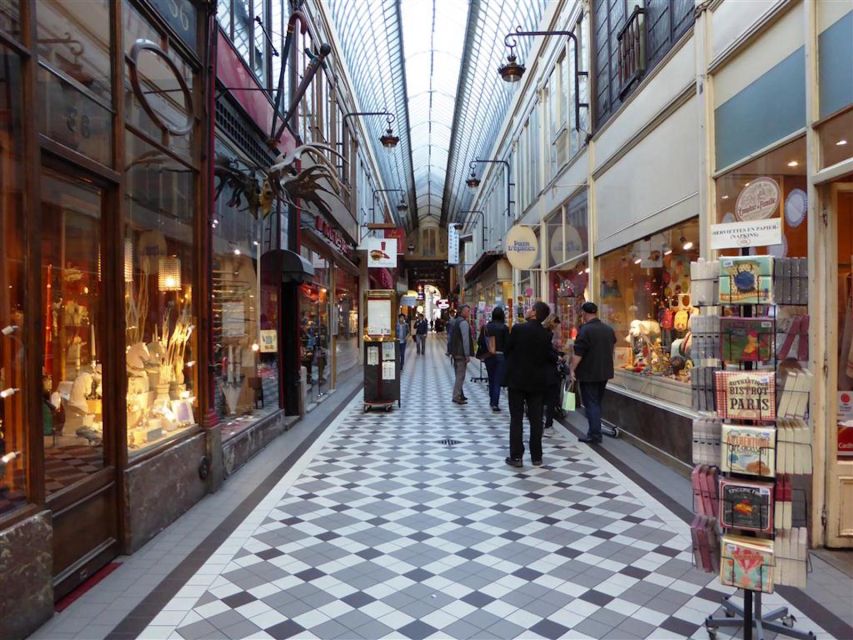
Parisian passages aren’t a phrase most visitors learn on day one. They’re called “hidden” for a reason: even when you know they exist, they can be tricky to locate without local help. That’s exactly why I like this kind of tour. You don’t just tick off an attraction—you get oriented in the city’s quieter corners, where people once sheltered from the mess of everyday street life.
These passages were designed for a very different Paris. Back in the early 1800s, the city had a filthy reputation, and the streets didn’t offer much comfort. The covered passages became an answer—more sheltered routes through the city, with a sense of order when the sidewalks and neighborhoods outside felt chaotic. In today’s terms, you can think of them as forerunners of the later department-store era, but with their own character: narrower, more “local,” and built around the rhythms of a specific time.
On this tour, you’re not asked to just admire beauty. You’re guided through why they were built, and why they feel so effective even now. That context changes the way you see the spaces. Suddenly, it’s not only about pretty facades—it’s about practical design meeting daily survival.
You can also read our reviews of more city tours in Paris



Starting at Le Peletier: the perfect launch point for a short, smart walk
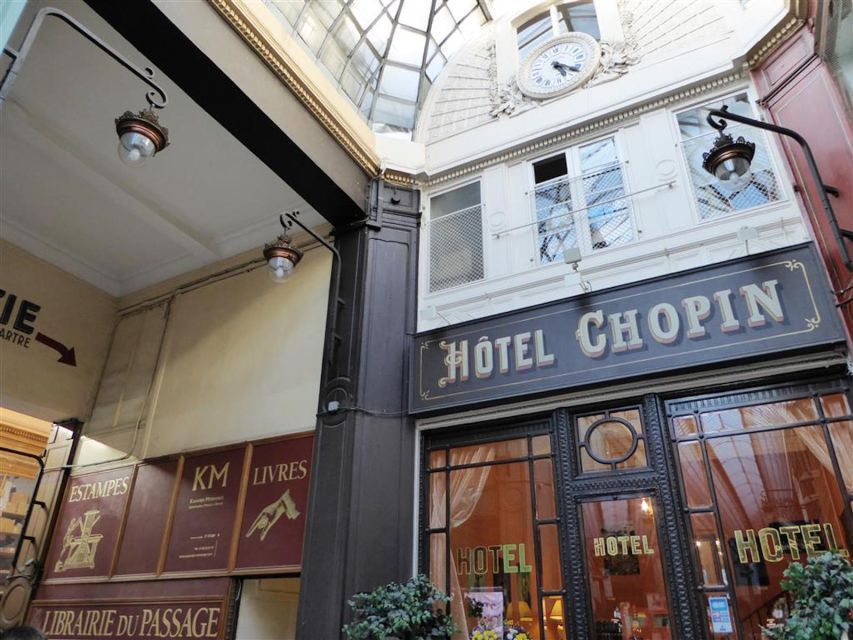
The tour begins at the Le Peletier metro station (Line 7). You meet your guide there and look for a HelpTourists bag. That matters more than you might think: in Paris, “easy to find” can still mean a few minutes of wandering, and the tour’s total time is only 2 hours. When the meeting point is clear, you don’t burn your precious sightseeing window.
From the start, the rhythm is simple: you move through central Paris, then step into passages that feel like another world. The private setup means the pace can stay comfortable, and the guide can point out details without a large group forcing you to follow like a checklist.
If you like walking tours, this one’s a nice fit because the route is built around compact highlights. If you don’t like walking at all, this still might work, but you’ll want to be realistic about short stretches between sites.
Passage Verdeau: where the vibe turns from street to corridor
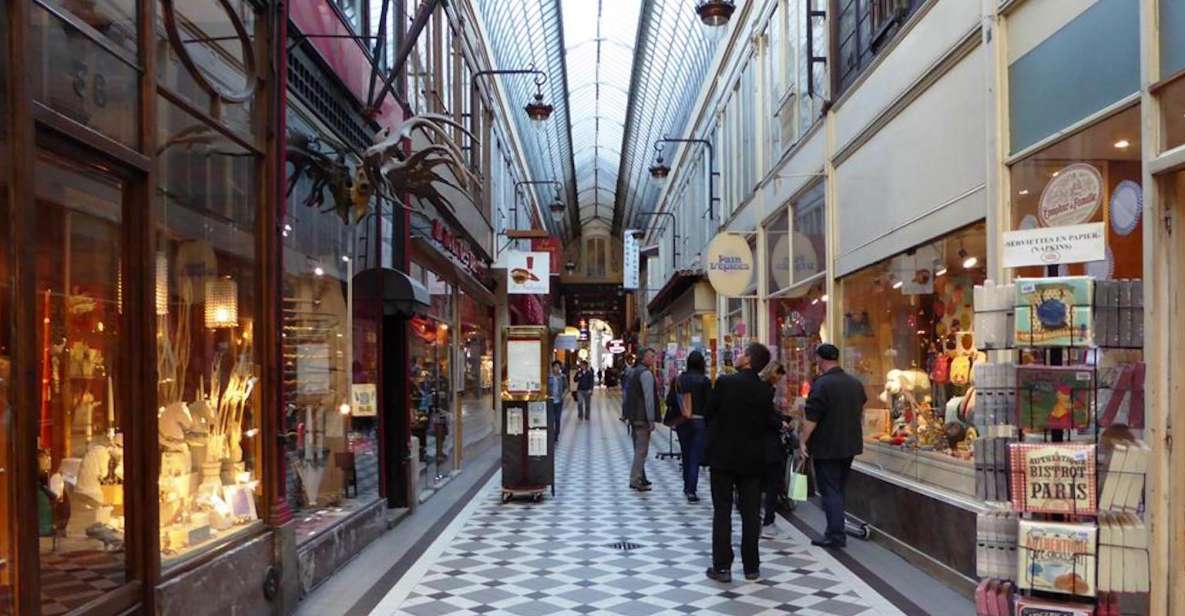
Your first stop is Passage Verdeau. This is the moment the tour starts doing what it promises: carrying you into the early 19th century. Covered passages have a certain feel—like the city becomes slightly quieter, even though you’re still in the middle of it.
What I like about starting here is the immediate contrast. You begin in the ordinary flow of Paris, then step into a space that seems designed for lingering. The guide’s job is to explain how these were practical spaces in their day, not just “cute corridors” for modern photos. Once you understand the original problem—messy streets, daily discomfort—your attention shifts to the passage as a response.
You’ll likely notice how the passage functions like a shortcut and a shelter at the same time. That combination is part of the charm: it feels intimate, but it also feels purposeful.
Passage Jouffroy: more details, more connections, more Paris-in-miniature
Next comes Passage Jouffroy. This is where the story tends to deepen. Even if two passages look similar at first glance, each one has its own character and role in the urban fabric. On a guided tour, you don’t just see a space—you learn what to watch for: the atmosphere, the design logic, and the way these passages fit into bigger Paris streets like puzzle pieces.
This stop also benefits from a private format. You can ask follow-up questions without worrying you’re slowing down a big group. The guides on this tour are described as German-speaking and familiar with Paris in detail, and that usually means you get explanations that connect what you’re seeing to how the city worked back then.
If you enjoy “how things came to be” stories more than postcard views, Passage Jouffroy is a strong second act.
Passage des Panoramas: the one that feels most like a covered city moment
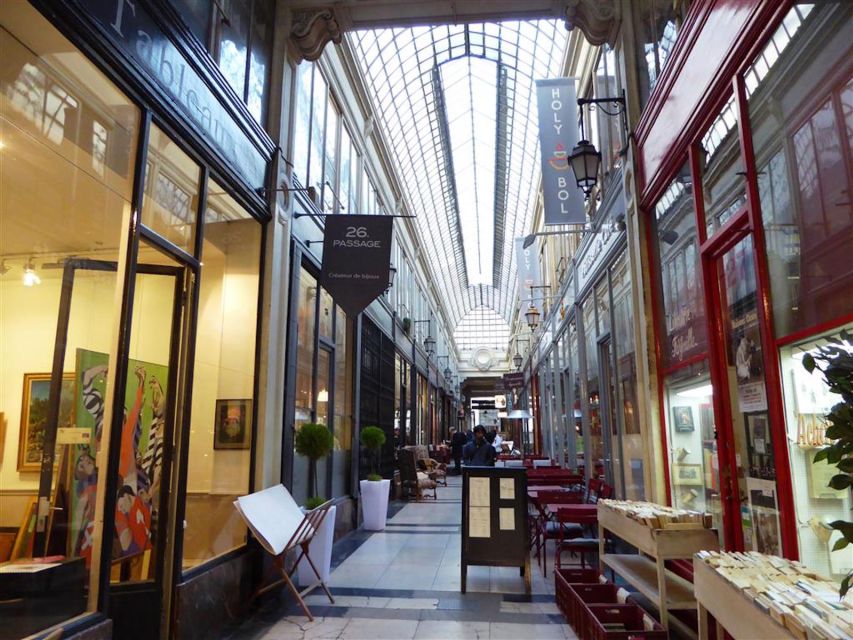
Then you move to Passage des Panoramas. This passage carries a sense of drama that’s hard to explain until you’re inside. The cover overhead helps the space feel enclosed, and the design encourages you to walk slowly—because the passage itself keeps giving you visual cues as you go.
What makes this stop especially valuable is that it shows the passages as more than a curiosity. They’re part of how the city adapted. They offered protection from bad weather, a more controlled environment, and a kind of indoor-outdoor in-between. When you combine that with what the guide tells you about the early 1800s, the whole experience stops being “just architecture.” It becomes a practical answer to daily reality.
You can also read our reviews of more private tours in Paris




Grands Boulevards: stepping back out into the city the passages connected to
After the passages, you return to the wider world at Grands Boulevards. This is an important part of the tour because it keeps the story anchored. The passages didn’t exist in a bubble. They linked neighborhoods, habits, and movement patterns in the city.
I like this stage because it helps you place what you just saw. If you only tour passages, you can end up with a soft-focus experience where everything feels the same. But when you transition to a major boulevard area, you understand how the covered spaces relate to the broader street grid.
Think of it as resetting your bearings. It also sets you up for the grand finale in the Palais-Royal area, which feels like a fitting place to end a walk through sheltered city “inventions.”
Palais-Royal quarter: finishing in a place still worth roaming
The tour finishes in the Palais-Royal area. Even if you don’t plan anything specific afterward, ending here is a smart move. It’s a central, easy-to-navigate neighborhood where you can keep the momentum going with a café stop or just a slow wander.
Palais-Royal works well as a conclusion because it balances what you learned on the tour. You saw how Paris responded to street discomfort with covered passages. Now you reach a place that invites lingering in a different way—still central, still charming, still designed to draw people in.
If you like to turn a guided walk into a self-paced evening, finishing at Palais-Royal gives you options. It’s also helpful that the tour ends where many visitors already want to be, so you don’t have to retrace your steps through unfamiliar streets.
The guide matters: German storytelling that turns sights into meaning
This is a private tour in German, guided by German-speaking specialists. The experience description also notes a group of sympathetic German guides who know Paris inside out, and that approach shows up in the kind of feedback people tend to leave: you get lots of details, friendly delivery, and explanations that create connections instead of just listing facts.
One guide name you might hear is Solene. The standout point in the feedback tied to her style is that she’s friendly and she shares interesting details and relationships—meaning she helps you understand how the pieces fit together.
For you, that’s the difference between a “see it” tour and a “get it” tour. The hidden passages are special, but they can also feel mysterious and hard to interpret. With the right guide, they become readable, and that makes the whole 2 hours feel like more than the sum of four passage stops and a couple of city segments.
Price and 2-hour value: what you’re really paying for
At $94 per person for a 2-hour private tour, the price isn’t the cheapest way to spend a couple of hours in Paris. But it’s also not trying to be. You’re paying for three things that matter in a city like Paris:
First, you’re paying for private time. That means a guide can shape the pace and answer questions without the pressure of squeezing into a group schedule.
Second, you’re paying for language alignment. If you’re comfortable in German, getting the story in German improves comprehension fast. It’s easier to follow details and keep the logic of the explanations.
Third, you’re paying for access to interpretation. The passages are physically reachable, but they’re mentally hard without context. The tour focuses on why these spaces appeared when Paris was dirty and unpleasant, and how they relate to later shopping culture. That turns “hidden” into “understood.”
Also worth noting: entrance fees aren’t included, and food isn’t included. That’s normal for a walking tour, but it affects your total day budget. If you plan to stop for a drink or snack after the tour, build in a little extra.
Who should book this passage tour (and who might skip it)
This is a great match if you:
- Prefer German-guided sightseeing
- Want something different from the usual Paris routine
- Like architectural details paired with city history that explains practical origins
- Enjoy short walks and a focused 2-hour plan
You might skip it if:
- You need hotel pickup and don’t want to handle your own meeting logistics
- You don’t speak German well enough to follow the explanations comfortably
- You’re the type who only wants major, world-famous landmarks (this tour is more about hidden, quieter “how Paris works” spaces)
One more subtle point: if you mainly want photos, you can still take photos on this tour. But the real payoff is understanding the passages’ purpose and charm—what they solved and why they were attractive in their time.
A realistic game plan for your day
To make the most of this tour, treat it like a compact “Paris orientation through architecture” session. Start on time at Le Peletier, then let the guide pull the story together across the passages.
Plan to move between stops with a steady pace. You’ll spend the majority of your time in passage spaces and their immediate surroundings, then transition back to boulevards before ending in Palais-Royal.
If you’re pairing this with other activities, Palais-Royal is a helpful anchor. It’s easy to keep going after the tour, instead of ending somewhere that forces you into a long return plan.
Should you book this 2-hour German passages tour?
If you’re a German speaker who wants a less obvious Paris experience, I think this is an easy yes. You’re getting a private 2-hour plan focused on hidden passages, with a guide who brings explanations and connections, including stories tied to guides such as Solene. The whole route is built around moving from shelter-like passage interiors to the broader city, so the experience feels coherent instead of random.
The main reason to pause is language and meeting logistics. If you’re not comfortable with German or you don’t want to get yourself to Le Peletier, this won’t be as satisfying.
But if those two points fit your trip, this is the kind of tour that gives you a Paris you can’t easily reproduce on your own.
FAQ
Is this tour private or a group tour?
It’s a private group tour with a German-speaking guide.
Where do I meet the guide?
Meet at the Le Peletier metro station (Line 7). Look for your guide with a HelpTourists bag.
What language is the tour in?
The tour is in German.
How long is the tour?
The duration is 2 hours.
What days does the tour run?
The tour takes place from Monday to Saturday.
Is cancellation free?
Free cancellation is available up to 24 hours in advance for a full refund.