REVIEW · PARIS
Paris: Louvre Museum Skip-The-Line Tour
Book on GetYourGuide →Operated by Paris in person private tours · Bookable on GetYourGuide
Skip the Louvre chaos and still see the good stuff. This 2-hour Louvre tour strings together Renaissance, Neoclassicism, and Romanticism through major works, starting at the Arc de Triomphe du Carrousel. I love how Botticelli’s Venus and the Three Graces sets the tone right away.
You’ll also like the way the guide turns the museum into a story, not a maze. The tour tracks the transition from Medieval thinking toward Humanism, and then pulls you into the calm drama of the Nike of Samothrace.
One thing to consider: the time is tight. You’ll see a curated set of highlights, not every gallery, so come ready to choose what you care about most.
In This Review
- Key highlights at a glance
- Meeting at Arc de Triomphe du Carrousel and Getting Moving
- Price and Logistics: What You’re Paying For (and What You’re Not)
- Skip-the-Line: The Real Benefit in a Crowded Louvre
- The Tour’s Roadmap: Renaissance, Neoclassicism, Romanticism
- Neoclassical Stop You’ll Feel Immediately: Nike of Samothrace
- Botticelli Fresco and the Early Renaissance Shift to Humanism
- Mantegna and Bellini: Two Different Ways of Seeing
- Da Vinci’s Mona Lisa and the Big Story-Painting Habit
- Romanticism at Full Volume: Medusa, July 1830, and More
- How the Guide Makes It Stick (Including Light and Custom Interest)
- What Your 2 Hours Feels Like on the Ground
- Practical Tips So You Don’t Lose Time Inside
- Who This Tour Suits Best
- Should You Book This Louvre Skip-the-Line Tour?
- FAQ
- How long is the Paris Louvre Museum skip-the-line tour?
- Where do we meet for the tour?
- What’s included in the price?
- What languages are available for the tour?
- Is the tour wheelchair accessible?
- Are there luggage or bag size limits?
Key highlights at a glance
- Skip-the-line entry: less queue time, more looking time.
- Three art periods in one route: Renaissance, Neoclassicism, Romanticism.
- Big-name works you can actually experience: from Botticelli to Delacroix.
- Renaissance focus on the shift to Humanism with concrete examples.
- Private-group feel that helps the pace stay comfortable.
- Wheelchair accessible, with practical museum limits on baggage.
Meeting at Arc de Triomphe du Carrousel and Getting Moving
Your tour starts at the Arc de Triomphe du Carrousel, and the guide will be carrying a red tote canvas bag. That detail matters more than it sounds. In the Louvre area, it’s easy to lose your group if you’re distracted by the sights.
From the start, the goal is simple: get you into the museum fast and get you oriented quickly. A skip-the-line ticket helps, but your guide’s job is what keeps your brain from turning into museum fog.
Also note the tour runs rain or shine. Paris weather can be unpredictable, so I’d dress like you expect both sun and drizzle—then you won’t be rushing when you’re supposed to be looking up at art.
You can also read our reviews of more museum experiences in Paris


Price and Logistics: What You’re Paying For (and What You’re Not)
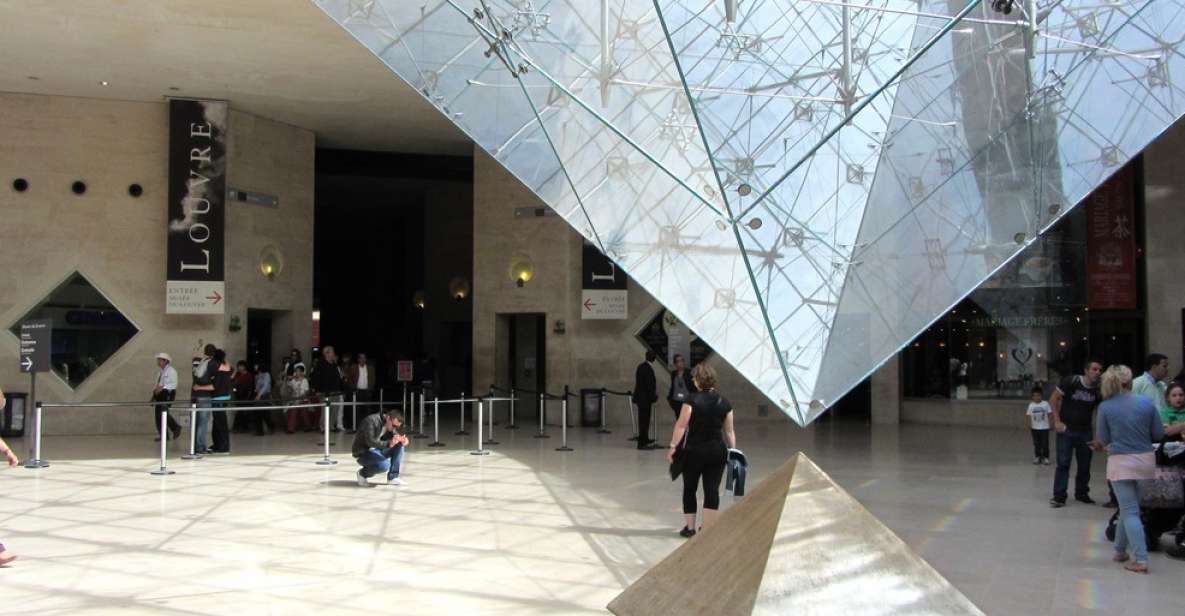
At $294 per person for a 2-hour private tour, you’re paying for two things: time savings and guided selection. The Louvre is huge. Even if you have tickets, you still face lines, crowds, and the problem of deciding what to see first.
This tour includes the skip-the-line entrance ticket plus a live guide. That’s the core value. What’s not included is food and beverages, so plan to either eat before you go or handle it afterward.
You’re also dealing with a museum size reality. Oversize luggage isn’t allowed, and anything larger than 55x35x20 cm can’t enter. If you’re traveling with shopping bags or a bulky daypack, keep it light so the logistics don’t slow you down.
Skip-the-Line: The Real Benefit in a Crowded Louvre
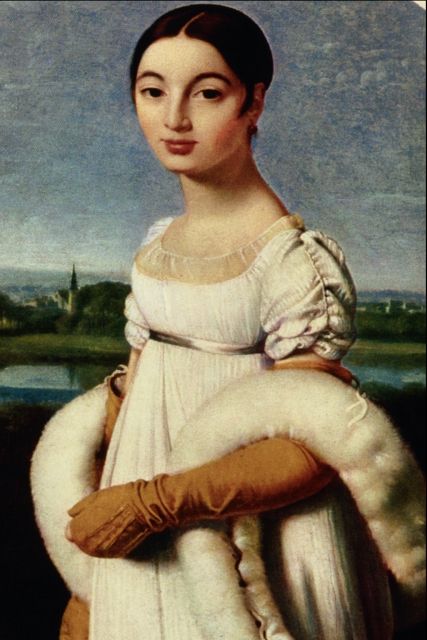
Skip-the-line here isn’t just a convenience line item. In the Louvre, waiting can steal your attention. You arrive already tired, then you spend your energy trying to regroup before you even reach the galleries.
With skip-the-line access, the tour starts with momentum. You’re in the building sooner, which means you actually have time to look rather than sprint and hope.
The private-group setup also helps the flow. You’re less likely to get stuck behind a wall of people when the route tightens around famous works. It won’t make the Louvre empty, but it does make your experience less chaotic.
The Tour’s Roadmap: Renaissance, Neoclassicism, Romanticism
The tour is organized around three art periods: the Renaissance (in stages), Neoclassicism, and Romanticism. That structure is what turns a frustrating museum visit into something you can remember later.
Instead of treating the Louvre like a list of famous names, you get guided connections. You learn about the early Renaissance and the shift from the Medieval world toward Humanism. Then the tour changes gears so you can see how different eras express different ideas—sometimes through emotion, sometimes through classical restraint.
If you like art history that has a narrative spine, this format is worth it. It keeps the visit from becoming one long blur of white walls and captions.
Neoclassical Stop You’ll Feel Immediately: Nike of Samothrace
One of the headline sculptures you’ll see is the Nike of Samothrace, a 2nd-century BC marble of the goddess Nike (Victory). Even when you don’t know the full backstory, you can usually feel why this piece is famous: it has energy.
In a short tour, choosing a sculpture like this is smart. It gives you a moment of impact before you return to paintings and visual stories. It also helps you compare eras. After the Renaissance-era themes of Humanism, you get pulled into Neoclassical ideas—again, through a work that’s instantly recognizable.
This is the kind of stop where being with a guide helps. The tour isn’t just pointing. You’re learning how the piece fits the broader period you’re studying.
You can also read our reviews of more tours and experiences in Paris




Botticelli Fresco and the Early Renaissance Shift to Humanism
The early Renaissance portion includes Botticelli’s fresco of Venus and the Three Graces Presenting Gifts to a Young Woman. A fresco is a different viewing experience than a canvas. You can’t just treat it like a framed image—you see it as part of a larger setting, which changes how it lands.
What I like about this part of the tour is that it doesn’t isolate famous names. It’s tied to the idea of the shift from Medieval thinking toward Humanism. That theme gives you a lens for how art starts to change what it values: the human figure, emotion, ideals, and storytelling that feels more grounded in human experience.
When your guide connects these dots, the Louvre stops being a storage room of masterpieces and starts feeling like a timeline you can follow.
Mantegna and Bellini: Two Different Ways of Seeing
You’ll also see Mantegna’s Saint Sebastian, presented as an example of early Florentine art. That matters because Florence and Venice weren’t just different cities—they often represented different artistic priorities. The tour uses that contrast to keep you from lumping Renaissance art into one vague category.
Then comes Bellini and the Venetian painting tradition. Again, this is useful in a short visit. You get at least two distinct Renaissance viewpoints instead of repeating the same visual language over and over.
If you’ve ever visited the Louvre and felt like everything was either too crowded or too similar, this pairing helps. It gives your eye something to compare right away.
Da Vinci’s Mona Lisa and the Big Story-Painting Habit
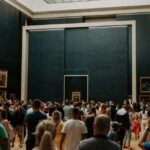
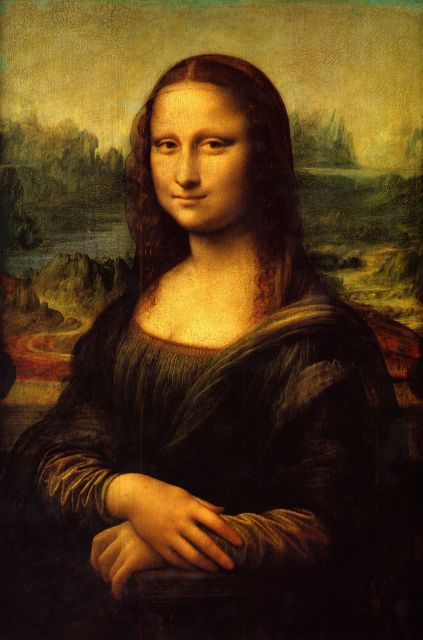
Leonardo da Vinci is represented by paintings such as Mona Lisa. You don’t need a lecture to understand why the Mona Lisa is a magnet. But the guide’s context helps you look past the crowd-size hype and into what you can actually observe during your time.
From there, the tour moves to Veronese and the Marriage at Cana. This work is described as the largest painting in the Louvre, and that scale is exactly why it fits a guided highlight tour. You can’t fully take it in alone in a short window, but you can learn how to approach it systematically—what to notice first and how the scene works.
This is also a good section for people who like narrative paintings. The Louvre can feel like “spot the famous name,” but big storytelling works keep your attention anchored in the scene.
Romanticism at Full Volume: Medusa, July 1830, and More
Romanticism is where the tour turns emotional. You’ll see Gericault’s Raft of Medusa as an example of Romanticism, and it’s the kind of subject that carries tension and drama without needing extra context to feel urgent.
Next up is Delacroix’s Liberty Leading the People, commemorating the July Revolution of 1830. This is one of those moments where art and politics meet, and the title alone gives you enough of the theme. With a guide, it’s easier to understand what’s being celebrated or argued through the imagery.
Then the tour includes Ingres’s Une Odalisque, described as a sinuous nude. Whether you love or dislike the work, you’re still learning why this period’s taste looks different from earlier eras.
And finally, Jacques-Louis David shows up with works including The Oath of The Horatii and the Crowning of Napoleon. David is a perfect bridge from storytelling to power. One part is civic legend; the other is imperial spectacle. Put together, it’s a fast way to see how Romantic-era intensity contrasts with David’s more formal, structured approach.
How the Guide Makes It Stick (Including Light and Custom Interest)
A strong highlight tour lives or dies by the guide’s framing. The tour description promises historical learning, and the best part is how specific examples get used.
One guide named Boris is noted for bringing a historical perspective and explaining how artists depicted the sun and light in their work. That’s a big deal for the Louvre, because lighting and painting technique change how you interpret scenes. If your guide uses a similar approach, you’ll find yourself looking longer at details instead of just snapping photos and moving on.
Another important theme from guides in this category is adaptation. A review mentioned customization to interests, and that’s exactly what you should look for in a private-group tour. If you care more about the political paintings than the Renaissance frescoes, you’ll get more attention on what you want instead of only what’s on a fixed checklist.
Even family-style visits can work well when the guide keeps the group moving. One review specifically highlighted success navigating the Louvre with two teenage boys, which tells me the guide style here can handle real-world energy levels.
What Your 2 Hours Feels Like on the Ground
Two hours sounds short, but the Louvre punishes hesitation. By design, this tour compresses key stops into an order that keeps you from wasting time searching.
Expect a pace that’s active but not frantic, because the format is built around named works and clear period shifts. The guide should help you decide what matters in each room—what to look for first, how to connect the work you’re seeing to the era you’re studying, and how to move on without losing momentum.
The biggest payoff of this tour is mental: you leave with a story you can repeat. You can explain that the Louvre isn’t random; it’s an arc from Renaissance change to Neoclassical ideals to Romantic-era emotion.
Practical Tips So You Don’t Lose Time Inside
Bring what you can comfortably carry for walking and standing. The tour doesn’t mention any special equipment, so think normal museum behavior. A small bag is easier than a bulky one because the Louvre has strict limits, and oversize luggage isn’t allowed.
Wear shoes you can stand in. Sculptures and large paintings often mean a mix of short stops and longer looking times.
If you’re sensitive to crowds, it still helps to arrive ready. Skip-the-line gets you in, but the Louvre is still popular. Your best move is to focus on the stops you’re here for: the Botticelli fresco, the Nike, Mantegna, Bellini, Mona Lisa, Marriage at Cana, Raft of Medusa, Liberty Leading the People, Une Odalisque, and the David works.
Also, since the tour happens in rain or shine, don’t plan on a “quick dry” moment later. If you get damp, you’ll feel it while standing in front of art.
Who This Tour Suits Best
This experience is a strong match if you want:
- High-impact highlights in limited time
- A guided approach that follows Renaissance → Neoclassicism → Romanticism
- A private-group style with room for attention and adjustment
- A guide who can bring specific themes into focus, like light and how it’s handled in art
It may be less ideal if you’re the kind of person who wants to roam freely and spend 20 minutes per artwork without a plan. In that case, you’d likely prefer a longer, more self-guided Louvre day.
But for most visitors—first-timers, time-crunched travelers, families, and couples—this is a practical way to feel satisfied instead of overwhelmed.
Should You Book This Louvre Skip-the-Line Tour?
If you want the Louvre without the stress, I think this is a smart booking. You pay for skip-the-line entry and a guide who turns famous artworks into a period story you can follow.
It’s also good value in the specific sense that the tour saves your most precious currency: attention. Two hours is not a full museum day, but it’s long enough to see real highlights and learn what connects them.
If you’re unsure, ask yourself one question: do you want a plan, or do you want freedom? If you want a plan, this tour gives you a clear route through major works from Renaissance to Romanticism, and it does it with the kind of guided focus that helps you actually enjoy the Louvre.
FAQ
How long is the Paris Louvre Museum skip-the-line tour?
The tour lasts 2 hours.
Where do we meet for the tour?
You meet at the Arc de Triomphe du Carrousel. The guide will be carrying a red tote canvas bag.
What’s included in the price?
The price includes a skip-the-line entrance ticket to the Louvre and a live guide.
What languages are available for the tour?
The tour is offered in English, French, and Serbo-Croatian.
Is the tour wheelchair accessible?
Yes, the tour is wheelchair accessible.
Are there luggage or bag size limits?
Yes. Oversize luggage isn’t allowed, and items exceeding 55x35x20 cm are not permitted in the museum.