REVIEW · PARIS
Paris Marais Quarter 2-Hour Private Walking Tour
Book on GetYourGuide →Operated by Paris in person private tours · Bookable on GetYourGuide
Marais meaning is easy to miss—until you walk it. This 2-hour private route turns the Marais into a story you can follow, from Les Halles and the Hôtel de Ville to the Pletzl and Place des Vosges. I especially like how the guide connects the neighborhood’s past to what you see today, including a surprise link to the modern Centre Pompidou.
Two things I love: the chance to see major Paris landmarks up close without rushing, and the way the guide stitches together big shifts in the neighborhood, from aristocratic elegance to rougher times, and now a second renaissance. One heads-up: this is a walking tour with no food included, so plan a snack or meal before you go or right after.
In This Review
- Key highlights at a glance
- Why the Marais works so well in a tight 2-hour private walk
- From Les Halles to Fontaine des Innocents: market Paris, then a pause in stone
- Hôtel de Ville’s Renaissance splash and Place des Vosges’s calm geometry
- The Pletzl and Rue Pavée synagogue: Jewish Paris in real street form
- Centre Pompidou’s medieval connection: how the past shows up in modern form
- Hôtel de Sully and Place de la Bastille: power and protest energy in the same walk
- What “private guide” really buys you on this route
- Price and value: is $176 per person worth a two-hour walk?
- When to go and what to wear (because it’s rain or shine)
- Who this tour suits best (and who might want a different plan)
- Should you book this Marais private walking tour?
- FAQ
- FAQ
- How long is the Paris Marais Quarter private walking tour?
- Where do we meet for the tour?
- Is this tour private?
- What language options are available?
- What’s included in the price?
- Is food or drinks included?
- Does the tour run in bad weather?
- Can I cancel and get a refund?
Key highlights at a glance
- Les Halles to Fontaine des Innocents: market history with a quick visual reset at the fountain
- Hôtel de Ville’s Renaissance grandeur: opulence you can actually stand in front of
- The Pletzl and Rue Pavée synagogue: Jewish Paris at street level
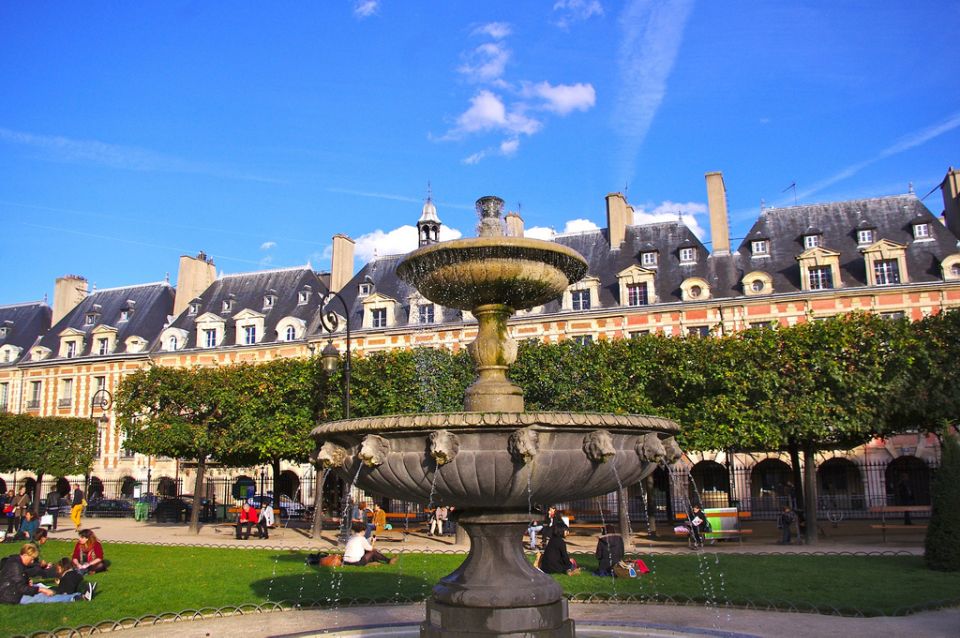
- Place des Vosges: one of Paris’s most beautiful squares, with context you’ll remember
- Centre Pompidou’s medieval-to-modern connection: learn how the neighborhood’s past echoes in the present
- Place de la Bastille and Hôtel de Sully: power, architecture, and the city’s changing moods in one stretch
Why the Marais works so well in a tight 2-hour private walk
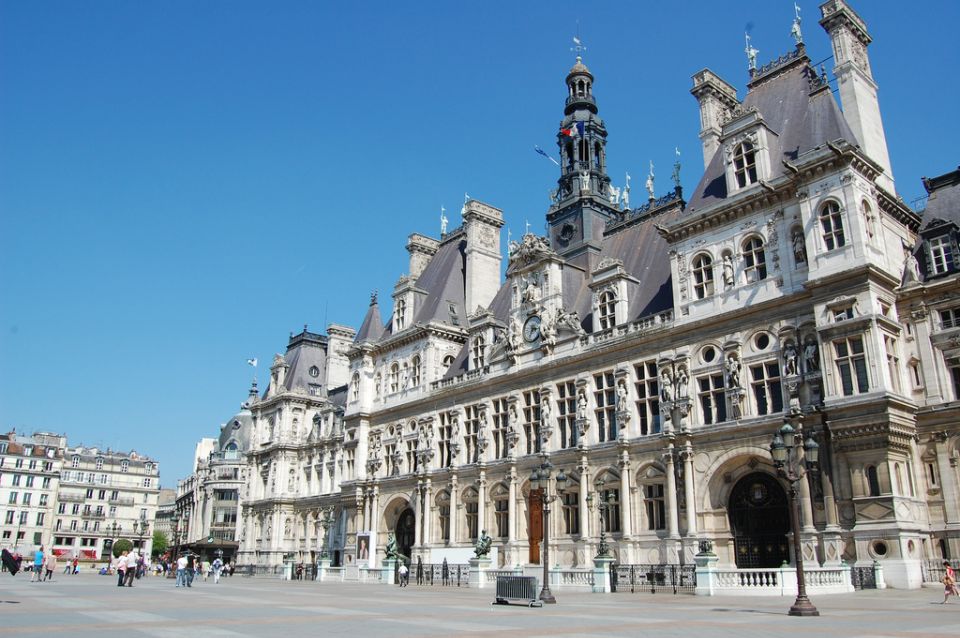
The Marais has layers. Not just a few plaques and photos, but a neighborhood that keeps changing its job description. You start with the basics that make the area so distinctive: it was once swampy land, then drained and made livable, and that shift pulled in settlers. Over time, the area became closely tied to the Jewish community, remaining its historic center in the modern city.
What makes this tour smart is the pacing. In just two hours, you get the kind of timeline that usually takes a full day of wandering. A private guide matters here. You’re not squeezed into a group rhythm, and you can slow down when something grabs your attention—like a facade, a neighborhood corner, or the contrast between medieval patterns and a very modern building.
Also, the route is built for people who like context. You’re not just ticking off stops. You’re learning why each stop belongs in the same story. That’s the big value: you’ll leave with a map in your head, not just a few photos on your phone.
You can also read our reviews of more walking tours in Paris



From Les Halles to Fontaine des Innocents: market Paris, then a pause in stone
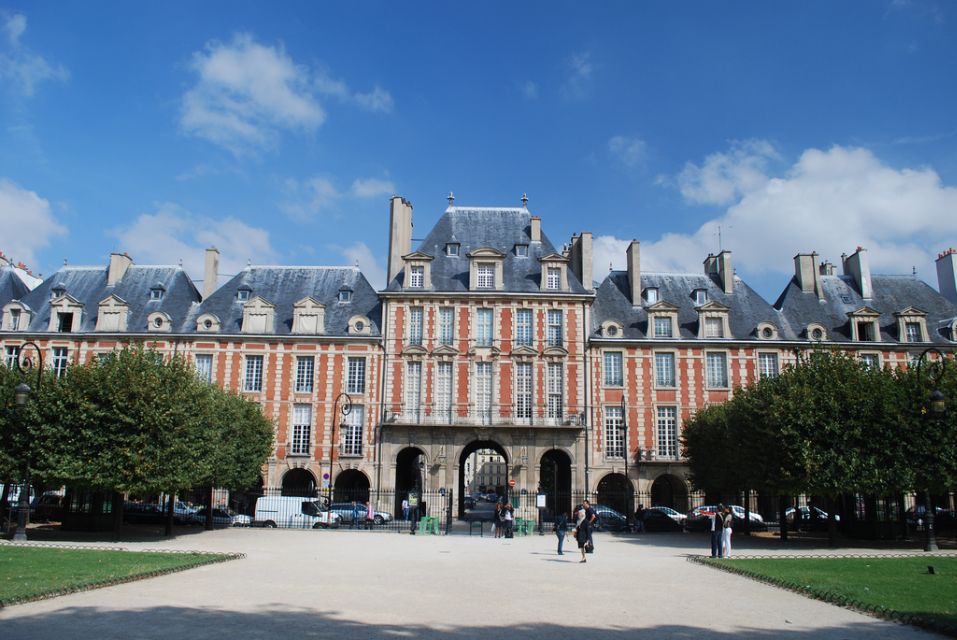
You begin with Les Halles, once the biggest open market in Paris. Even if you’ve seen the area in fragments before, your guide will help you see it as more than a shopping-adjacent district. Markets shape cities: they pull in crowds, workers, and wealth, and they also create the daily rhythm that neighborhoods grow around.
Then comes Fontaine des Innocents, a useful break in both pace and mood. A fountain stop isn’t just about stopping for a photo. It’s a moment to slow down and look at how Paris uses public spaces. When you pair the market history with a public fountain, you can feel the difference between commerce-driven space and a civic, everyday landmark that people pass without always realizing why it matters.
The practical takeaway for you: if you’re prone to power-walking through cities, this part helps you reset. I’d treat it as your moment to stop, look around, and let the guide’s stories give you bearings.
Hôtel de Ville’s Renaissance splash and Place des Vosges’s calm geometry
Next up is Hôtel de Ville, Paris’s Renaissance city hall. The word opulent fits, and you’ll feel it fast from the outside. This stop is a good reminder that the Marais wasn’t always what you might expect. It includes periods when the area was tied to high-status living—aristocrats, a royal court, and the kind of grandeur that comes with political and social power.
From that civic “big moment,” the tour moves to the neighborhood’s more human scale: Place des Vosges. The square is often praised for beauty, and what you gain here is the why behind the look. You’re learning how this kind of planned space supports the way people live—walk, gather, meet, linger—rather than treating the Marais like a museum hallway.
Here’s a consideration to keep in mind: Place des Vosges is a magnet. If you hate crowds, it might feel busy at times. The advantage of going with a guide is that you’re not standing there clueless. You know what you’re looking at and why the design feels so intentional.
The Pletzl and Rue Pavée synagogue: Jewish Paris in real street form
One of the most meaningful parts of the tour is the shift into the Pletzl area, described as the historic center of the Jewish community. This is where the Marais stops being abstract. Streets, blocks, and addresses give you the story in a grounded way.
Your guide also brings you to the synagogue at Rue Pavée. This stop isn’t just a landmark. It’s a chance to understand continuity—how a community footprint can survive neighborhood ups and downs. The Marais went through sharp changes: from chic residential life and aristocratic presence to a period when it became a best-avoided slum. Then it’s now in a second renaissance. The Pletzl section helps you connect those dots without turning it into a history lecture.
If you like tours that treat architecture and streets as evidence, this part will click. You’ll start noticing patterns that you might otherwise walk past: the way a neighborhood keeps memory in its layout.
Centre Pompidou’s medieval connection: how the past shows up in modern form
Centre Pompidou can feel like a separate world from medieval Paris—bright, modern, unapologetic. That’s exactly why this tour includes it. The highlights call out the link between the Middle Ages and the modern Pompidou Centre, and that’s the point: the guide is there to help you see continuity where you’d expect a hard break.
So instead of treating Pompidou as a lone icon, you’ll get a guided explanation of how the neighborhood’s older structures and identities connect to what’s there now. Even if you already know Pompidou’s reputation as an arts powerhouse, this version of the visit is about reading the area.
A practical note: Pompidou is a magnet for people. You’ll want to listen carefully, because the surroundings can pull your attention in ten directions at once. Let the guide set the frame first, and then look again with fresh eyes. That’s when it gets fun.
You can also read our reviews of more private tours in Paris






Hôtel de Sully and Place de la Bastille: power and protest energy in the same walk
Two more stops round out the tour’s “Paris at full volume” feeling. Hôtel de Sully adds another layer of architecture—another reminder that the Marais has long been a place where big money and big design show up. It helps you see why parts of this neighborhood once attracted aristocrats and the royal court.
Then you reach Place de la Bastille. This is where the tour’s overall theme sharpens: the Marais isn’t frozen in time. It has been shaped by politics and social change, and the city has repeatedly reworked it. Place de la Bastille sits in that orbit of French history that people often associate with major turning points. Having a guide explain how it fits into the bigger neighborhood story makes the stop feel less like a postcard and more like a chapter heading.
If you’re the kind of visitor who likes to understand how the French capital thinks—power, culture, and public space—this ending lands well. You’ve walked from market life and civic authority, through community history, and into major city symbolism.
What “private guide” really buys you on this route
A private group tour isn’t just a status thing. It changes the experience in three practical ways.
First, you can keep your focus. The Marais throws a lot at you: landmark after landmark, plus smaller corners that only matter if someone points them out. With a private guide, you’re more likely to notice the quieter details without feeling rushed.
Second, you get explanations tuned to your group. The tour’s guide experience includes working with mixed ages, and that matters. If you’ve ever had a tour where every detail is either too technical or too generic, you’ll appreciate a guide who can adjust the level and pace to the people in front of them.
Third, you can ask follow-up questions. When the guide connects the Middle Ages to Pompidou, you might want to know how. Or you might want more detail about a specific neighborhood shift. Private format makes those questions easy to raise in the moment.
Guides you might encounter for this tour include Alexander, Caroline, Boris, Alexandre, Fabienne, Yvana, and Anja. Across those different guide styles, the consistent strengths are clear: they connect the history to what you’re seeing and keep the talk understandable, not just academic.
Price and value: is $176 per person worth a two-hour walk?
At $176 per person for a private 2-hour walking tour, you’re paying for speed, focus, and personalization. This isn’t a “see everything” tour—so value comes from whether the guide helps you understand what you’re actually seeing.
Here’s how I think about the math for you:
- If you’d spend your time self-guiding, you might hit some highlights, but you’d miss the connecting tissue. This tour is built around connections: the Marais’s transformation over time, the Jewish community’s historic center, and the Middle Ages-to-Pompidou link.
- You’re also buying a curated sequence. Les Halles, Fontaine des Innocents, Hôtel de Ville, the Pletzl, Rue Pavée, Hôtel de Sully, Place des Vosges, and Place de la Bastille is a lot to coordinate on your own without turning your day into constant route-checking.
- The tour doesn’t include food, so you’re planning around that. The flip side is you stay flexible and don’t get locked into a restaurant schedule.
If you want a quick Marais orientation that turns into real understanding, this price can feel fair. If you’re the type who enjoys wandering with zero structure, you might decide to save money and self-walk the highlights.
When to go and what to wear (because it’s rain or shine)
This tour runs rain or shine, so don’t treat weather like a suggestion. Wear shoes that can handle uneven pavement. The route covers multiple neighborhoods within the Marais area, and in two hours you’ll feel every block.
Bring a light layer if the weather changes, and keep your phone charged for photos at Place des Vosges and other open areas. Since food isn’t included, consider grabbing a pastry or snack before you meet the guide and plan your next meal right after you finish.
Meeting point is at Metro Étienne Marcel, and the guide will be carrying a red canvas tote bag. That detail is handy when streets are crowded and you’re trying to confirm you’ve got the right person.
Who this tour suits best (and who might want a different plan)
This experience fits you if you want:
- A focused introduction to the Marais with clear historical context
- A mix of major landmarks and neighborhood corners, including the Pletzl and Rue Pavée synagogue
- A guide who can connect the Middle Ages to modern Paris, including Centre Pompidou
You might pick something else if you hate walking, want food included as part of the tour rhythm, or prefer to explore fully on your own with no guided framing.
Should you book this Marais private walking tour?
Yes—if you want the Marais to make sense fast. This tour is built around connections: how the land shifted from swamp to settlement, how the Jewish community shaped the area, how the neighborhood’s fortunes rose and fell, and how modern landmarks like Centre Pompidou can still be read through older Paris patterns.
It’s also a strong choice when you value a private guide who can explain clearly and keep the experience moving in a way that works for your group. If you’re willing to plan around the no-food format and bring comfortable walking shoes, you’ll likely get a lot out of your two hours.
FAQ
FAQ
How long is the Paris Marais Quarter private walking tour?
The tour lasts 2 hours.
Where do we meet for the tour?
The meeting point is at the Metro Étienne Marcel. The guide will be carrying a red canvas tote bag.
Is this tour private?
Yes. It’s a private group walking tour.
What language options are available?
The live tour guide is available in English, French, and Serbo-Croatian.
What’s included in the price?
Included is the 2-hour guided walking tour.
Is food or drinks included?
No. Food, snacks, and beverages are not included.
Does the tour run in bad weather?
Yes. Tours operate rain or shine.
Can I cancel and get a refund?
Yes. You can cancel up to 24 hours in advance for a full refund, and there’s also a reserve now & pay later option to keep plans flexible.