REVIEW · PARIS
Paris: Musee d’Orsay Private Tour
Book on GetYourGuide →Operated by UTG EXPERIENCE · Bookable on GetYourGuide
Two hours at Orsay feels like a cheat code. I love the private guided pacing—room by room, with an expert who knows how to explain 19th-century art in a way that sticks—and I also really appreciate the skip-the-line entry that keeps your time for looking, not waiting. The main thing to plan for is that security checks can slow entry, even with faster tickets, so arriving a bit early matters.
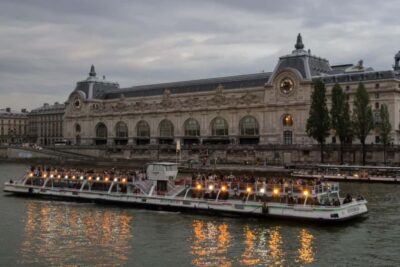
With a group capped at 6, you get more than a highlights walk. You get the kind of guided attention that helps you notice details (and not just recognize names), plus little museum secrets that most visitors miss. The Orsay itself is a treat: it was built from an old railway station, so the building feels like part of the story.
In This Review
- Key reasons this Orsay private tour is worth your time
- Musée d’Orsay in 2 hours: why this format works
- Finding your guide at the elephant statue (and starting smoothly)
- Skip-the-line tickets vs. real-world security checks
- Monet’s Water Lilies murals: where your guide makes the room click
- Degas, Renoir, and Gauguin: stories that turn names into meaning
- Van Gogh’s Starry Night over the Rhône: the up-close effect
- “Museum secrets” and the old-station atmosphere
- What the guide style feels like (and why it matters)
- Price and value: $530 per group up to 6
- Who should book this private Orsay tour?
- Should you book this Musée d’Orsay private tour?
- FAQ
- How long is the Musée d’Orsay private tour?
- What’s the price for this tour?
- Is this a private tour?
- Where do I meet the guide?
- Does it include skip-the-line entry?
- What language is the tour delivered in?
- Is the tour affected by museum hours?
- Is the tour wheelchair accessible?
Key reasons this Orsay private tour is worth your time
- Small group size (max 6) means you’re not competing for the guide’s attention
- Expert local docent brings famous paintings to life with engaging, tailored commentary
- Monet’s Water Lilies and Van Gogh’s Starry Night are front-and-center, with closer, calmer viewing
- Room-to-room flow helps you see the art in context, not as a random list of masterpieces
- Guide shares lesser-known museum facts and secret spots beyond the obvious stops
Musée d’Orsay in 2 hours: why this format works
The Musée d’Orsay is one of those Paris museums where the building and the collection team up. The setting is a former railway station, which gives the galleries a dramatic sense of space. On top of that, the museum is packed with big, recognizable works—especially from the Impressionist world and beyond—so it’s easy to feel like you’re doing a sprint if you go on your own.
That’s why I like this private 2-hour setup. It’s short enough to stay focused, but long enough for your guide to slow the experience down where it counts: around the paintings that define the era. Instead of rushing to check boxes, you get a guided route that prioritizes the works most people come for—Monet’s Water Lilies murals, Degas, Renoir, Gauguin, and Van Gogh’s Starry Night over the Rhône—and connects them with artist stories that make the art easier to understand.
Also, the guide adjusts the commentary to your group. If you’re bringing kids, the explanation can fit their level while still giving adults something worthwhile. If you’re more serious about art, the same guide-style works because the goal is to help you look smarter, not just listen louder.
You can also read our reviews of more private tours in Paris


Finding your guide at the elephant statue (and starting smoothly)
This tour starts outside the museum at the statue of the elephant. Your guide will be wearing a company badge that says UTG Experience, so it’s pretty easy to spot the right person.
Arrive 15 minutes early. Not because you need extra time to wander, but because it helps you get settled and avoid that first-minute stress that can ruin museum momentum. Once you’re inside, the tour runs at a pace set by the guide and your group—so that early arrival turns into smoother entry, clearer orientation, and less rushing.
One more practical note: the live tour guide language is French. If you’re comfortable with basic French or you don’t mind that the guide may occasionally use French art terms, you’ll still get a lot out of it. If you need your guide to be bilingual, you might want to think twice based on your comfort level (the tour is listed as French).
Skip-the-line tickets vs. real-world security checks
This tour includes skip-the-line entry tickets. That’s a big deal at Orsay, where the lines can eat into the time you want to spend in galleries.
But here’s the reality check: the museum has heightened security measures, and delays are possible when clearing security checks. The important part is the “plan for it” part. If you arrive early—like the tour asks—you give yourself a buffer. And because your guide leads the group once you’re through, you still tend to lose less time than you would trying to manage entry and orientation yourself.
So my advice is simple: treat the skip-the-line as “faster entry,” not “instant entry.” With that mindset, the schedule stays calm.
Monet’s Water Lilies murals: where your guide makes the room click
Monet’s Water Lilies series is a signature Orsay moment. In this tour, it’s not treated like a quick stop for a photo. You’ll see the murals as part of the museum’s atmosphere, and your guide explains what to look for so the paintings don’t just blur into a wall of color.
What I like about having a guide here is that the guide doesn’t only tell you the obvious. You get little art cues—things that help you notice brushwork, light, and the shifting sense of water and reflection. Even if you think you already “know Monet,” seeing Water Lilies in a museum setting like Orsay is different. The scale and surrounding galleries change how your eye behaves. A good guide helps you slow down just enough to catch what makes the work feel alive.
Your tour experience is set up so you can get closer and take it in without the typical crowd pressure. That matters. Standing there for two minutes and standing there for ten minutes isn’t just a timing difference. It’s the difference between recognizing and understanding.
Degas, Renoir, and Gauguin: stories that turn names into meaning
After Monet, you move through works by Degas, Renoir, and Gauguin. These artists can feel like separate stops when you visit alone, because they’re often introduced as lists: one room for this, another for that.
A private guide helps you connect the dots while you’re still standing in front of the art. The commentary is focused on famous works and Impressionist artists, but it’s also entertaining—your guide’s goal is to help the paintings and sculptures make sense in a 19th-century context. That means you’re not just learning trivia; you’re learning why certain styles, subjects, and artistic choices mattered.
If you’re the kind of person who likes context, this is where the tour earns its keep. Seeing how the guide explains a movement or an artist’s approach makes your own looking more efficient. You stop asking, What am I supposed to notice? and start noticing more of what’s actually there.





Van Gogh’s Starry Night over the Rhône: the up-close effect
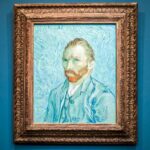
No Orsay visit is complete without Van Gogh. In this tour, you’ll get to gaze in wonder at Starry Night over the Rhône—up close and personal, without crowd hassle.
This is one of those paintings where your experience changes depending on where you stand. When you’re not shoved along by foot traffic, you can take in the motion in the sky and the sense of the scene’s rhythm. Your guide’s role is to make the experience more than a single moment of wow. You’ll get stories and insights that help you see why the painting hits so hard, not just that it’s famous.
And because the tour is private, you can linger. That’s the key: the guide helps you enjoy it without turning it into a rushed checklist photo-stop.
“Museum secrets” and the old-station atmosphere
One of the more memorable aspects of this Orsay experience is that your guide shares little-known museum secrets and facts, along with details most tourists don’t pick up.
Even without naming every secret spot (because the guide leads you room by room), you can expect two types of surprises:
- Practical surprises: places or viewpoints that make it easier to understand a work’s setting or the way the museum is laid out
- Story surprises: facts about how Orsay came to be, which helps you read the space itself as part of the experience
And yes, the building matters here. Orsay’s old railway-station transformation isn’t just a fun trivia detail. It shapes how the galleries feel and how you move through them. With a guide, it becomes part of the story you’re hearing while you look at the art.
What the guide style feels like (and why it matters)
The best part of this kind of private tour is that good guidance changes how you remember the museum later. You don’t just leave with images on your phone. You leave with impressions that make sense.
In real life, the guide approach can vary by person. You’ll see that in how different guides are praised for teaching style. For example, Ivan is singled out for deep knowledge, passion, and real skill in explaining art. Another guide, Christophe, is praised for adjusting explanations for kids while still giving useful information for teens and adults.
If you’re visiting with children, that’s a big plus. You want art time that doesn’t turn into “stand still and be quiet” punishment. A guide who can pitch the info to a 10-year-old, then shift gears for adults, turns the museum into a family activity instead of a battle.
Also, the tour experience is described as comfortable for all kinds of families, including an interracial gay couple with a kid. The practical takeaway: you can book without worrying that your group dynamic will be treated awkwardly.
One small caution: like any private service, there can be rare issues like a guide not showing up. If something seems off, handle it quickly through the provider so you can get a fix or resolution fast.
Price and value: $530 per group up to 6
Let’s talk money in a way that’s actually helpful.
The tour costs $530 per group for up to 6 people, lasting 2 hours. That means your per-person effective cost depends on how many people split it:
- 6 people: about $88 per person
- 4 people: about $133 per person
- 2 people: about $265 per person
So this tour is best value when you travel as a small group or family unit and can share the cost. If you’re only two adults and you’re paying the full group rate, it’s still a reasonable choice if you strongly value having an expert guide and want the skip-the-line advantage plus the private pacing. But if you’re solo, it’s usually harder to call it “cheap,” because you don’t get that per-person drop.
Where it justifies itself is in what you avoid: waiting around, losing time to confusion, and having to figure out what to prioritize inside a massive museum. In two hours, that guidance can be the difference between a pleasant walk and a genuinely satisfying museum visit.
Who should book this private Orsay tour?
I think this tour is a great fit if you:
- Want to see the big Impressionist names—Monet, Degas, Renoir, Gauguin, Van Gogh—without getting crushed by crowd energy
- Like expert storytelling that helps you look better, not just read labels
- Are traveling with kids or mixed-age groups and need explanations that work for different levels
- Prefer a small group format where the guide can actually talk to you, not lecture into the back of a crowd
It may be less ideal if:
- You only want a full-length self-paced museum visit. Two hours is highlights time.
- You’re visiting on a Monday. Orsay is closed on Mondays.
Should you book this Musée d’Orsay private tour?
If your priority is quality looking and expert guidance over wandering, I’d book it. The combination of private pacing, skip-the-line entry, and a guide who can make Monet and Van Gogh feel personal is exactly the kind of “spend money on the right thing” experience that tends to feel worth it.
I’d especially recommend it if you’re going during a busy period or if you want to bring kids and still keep the adults happy. Just plan for possible security delays, arrive a little early, and you’ll start the tour already in a good mood.
FAQ
How long is the Musée d’Orsay private tour?
It lasts 2 hours.
What’s the price for this tour?
The price is $530 per group, up to 6 people.
Is this a private tour?
Yes. It’s a private group tour, and the group size will not exceed 6 people.
Where do I meet the guide?
Meet the guide outside the museum at the statue of the elephant. The guide will be wearing a company badge with the name UTG Experience. Arrive 15 minutes early.
Does it include skip-the-line entry?
Yes, skip-the-line entry tickets are included.
What language is the tour delivered in?
The live tour guide language is French.
Is the tour affected by museum hours?
The Orsay is closed on Mondays.
Is the tour wheelchair accessible?
Yes, the tour is listed as wheelchair accessible.