Paris clicks fast in the Marais. This 2-hour walk strings together medieval lanes, modern street art, and today’s LGBTQIA+ energy in one easy route. I really like how the tour connects people and places, from the Jewish Quarter on Rue des Rosiers to the big landmarks like Saint-Gervais.
I also love the human side: a great guide makes the neighborhood feel personal, not like a checklist. On my tour, guides like Paloma and Camila set a smart pace and point out details you’d miss on your own, including street art that feels like an Easter egg hunt. One thing to think about: the included treat is pastry, and it’s only suitable for vegetarians—it’s not listed as lactose-free, gluten-free, or vegan-friendly.
In This Review
- Key Things I’d Highlight Before You Go
- Why the Marais Makes Sense in 2 Hours
- Meeting by Pompidou: Art, Street Life, and the Right Starting Mood
- From Le Marais to Hôtel de Ville: Seeing Old Paris Without Guesswork
- Saint-Gervais Church: Why This Stop Changes How You See the Neighborhood
- Rue des Rosiers: Jewish Paris Through Street Scenes and a Food Moment
- Place des Vosges: The Pretty Square With a Big Name Attached
- Place de la Bastille: Revolution-Era Energy (and a Good End Point)
- What You Actually Get for the Money ($56): Value Beyond the Price Tag
- The Guides Make or Break It: How the Tour Feels in Real Life
- Dietary Reality Check: The Sweet Stop and Who It Works For
- Walking Comfort: Umbrella, Shoes, and 2 Km of City Legs
- Who This Tour Fits Best
- Should You Book This Marais Culture Walk?
- FAQ
- How long is the Explore the Marais walking tour?
- What is included in the price?
- Where does the tour start?
- How much walking is involved?
- Is it suitable for vegetarians and people with dietary restrictions?
- How big are the groups?
Key Things I’d Highlight Before You Go
- Two hours, about 2 km: enough time to see the Marais without burning your whole day.
- Stravinsky Fountain and Pompidou edge: you start in an artsy pocket, not a dead zone.
- Saint-Gervais church stop: a strong architectural pause in the middle of the walking.
- Rue des Rosiers focus: Jewish Paris through street scenes and food.
- LGBTQIA+ influence is front-and-center: not tacked on, it shapes the story.
- Small group max 12 (or private): you get room for questions and a tailored feel.
Why the Marais Makes Sense in 2 Hours
Le Marais is the kind of neighborhood where you can lose hours just wandering. The trick is knowing what to look for. This tour is designed for people who want the “why” behind the streets, not just the “where.”
In two hours, you cover about 2 km on foot. That’s a manageable amount, especially if you wear comfy shoes and keep your pace steady. You’ll get a concentrated mix: grand squares, a major church, and quieter medieval lanes, plus one food stop that’s genuinely fun.
The route also helps you understand the Marais as a living neighborhood. You’re not stuck in one theme. Instead, you see how old Paris traditions and today’s LGBTQIA+ community share the same streets, the same storefronts, and the same public spaces.
You can also read our reviews of more historical tours in Paris



Meeting by Pompidou: Art, Street Life, and the Right Starting Mood
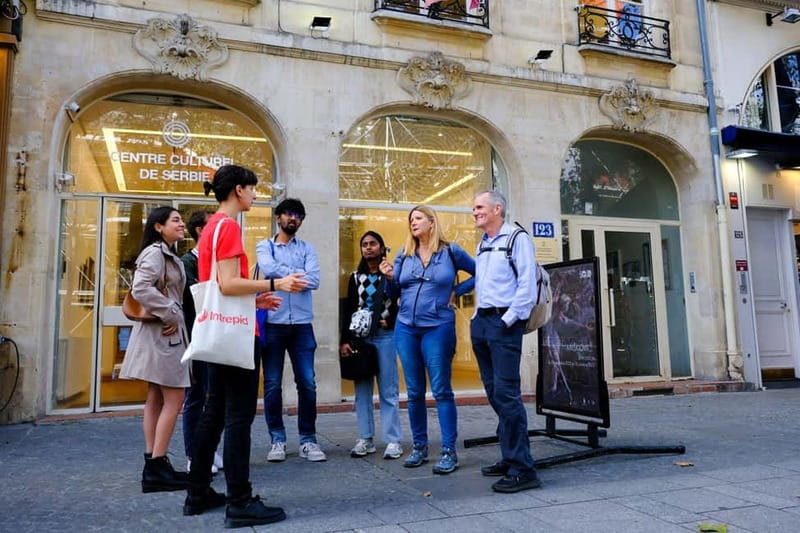
Your guide meets you opposite the Pompidou Center, near the Centre Culturel de Serbie, holding a sign. That choice matters. You start right where the city feels creative and a little chaotic—in other words, very Paris.
Early on, you’ll pass the Stravinsky Fountain and some street art. This gives you an immediate sense of how the Marais connects to modern Paris, not just its postcard side. And there’s something practical here too: you’re warming up with visual distractions while your guide sets the historical and cultural framework for what you’ll see next.
If it’s your first time in Paris, this kind of opener helps you get your bearings fast. You’re not just walking into a maze; you’re being taught how to read it.
From Le Marais to Hôtel de Ville: Seeing Old Paris Without Guesswork
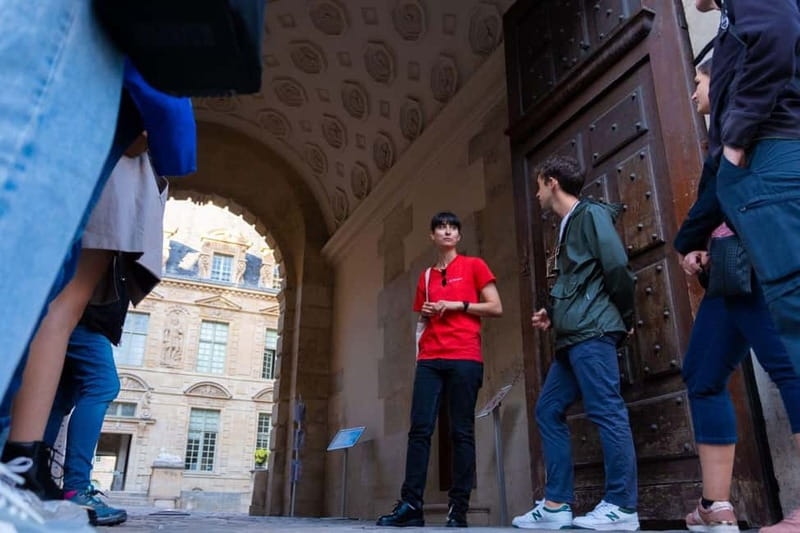
Once you shift fully into the Marais area, you start getting the neighborhood’s layering explained. The Marais is a place where eras stack on top of each other, and this tour keeps pointing out those transitions.
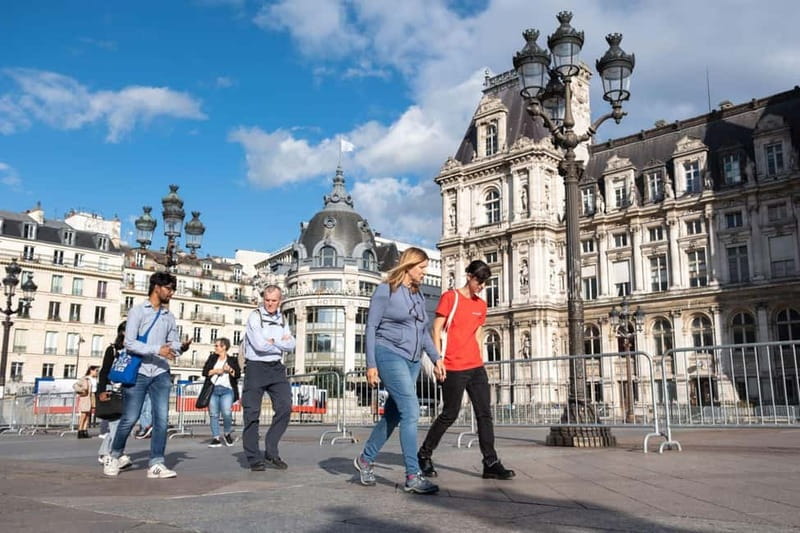
You spend time around Le Marais itself and then head to Hôtel de Ville. This is where the city’s civic story—its public identity—sits in the same frame as everyday street life. Your guide weaves in how the neighborhood’s mix of communities shaped what it became.
You’ll also hear about the LGBTQIA+ community’s impact on the Marais’ vibrant identity. The key is that it doesn’t feel like a side lecture. It’s part of the way the tour narrates the neighborhood: who lived here, who built culture here, and how the streets reflect that over time.
One small practical note: this segment is part sightseeing, part conversation. Wear shoes you can stand in comfortably, because you’ll stop often for context.
Saint-Gervais Church: Why This Stop Changes How You See the Neighborhood
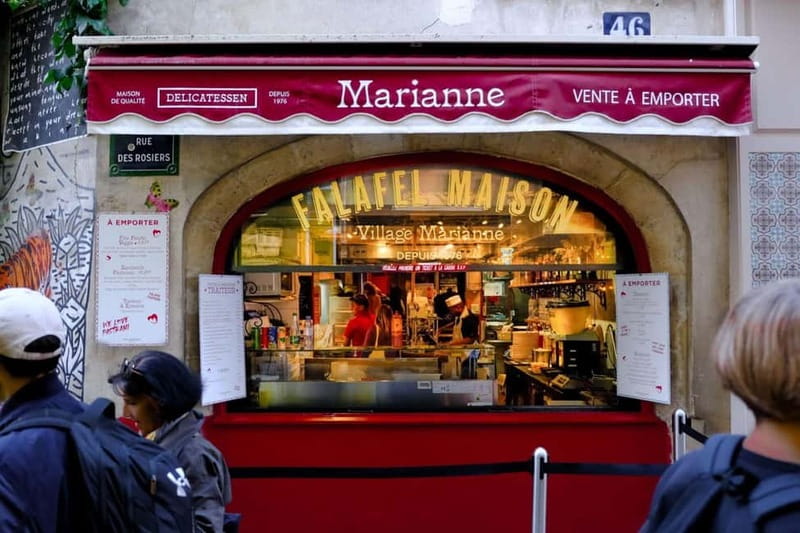
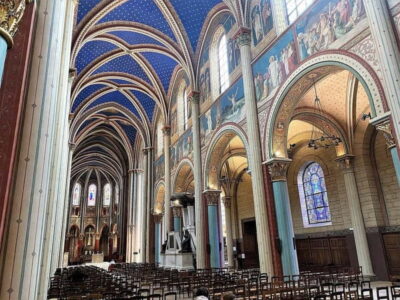
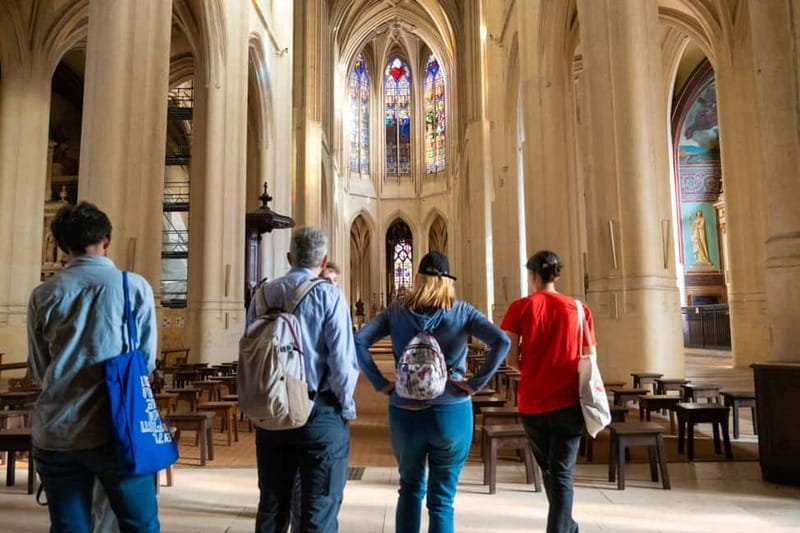
A standout moment is the visit to Saint-Gervais Church. Your guide gives you a focused 15-minute sightseeing stop here, which is exactly the right length for a walking tour. You get enough time to notice architecture and mood, but you’re not stuck long enough to lose the thread of the rest of the walk.
Why it works: churches like this are more than a building. In the Marais, you see how religious history intersects with the neighborhood’s broader social history. The tour frames it in a way that makes you look up, not just around.
You’ll also move through medieval streets with quirky corbelled houses, where the architecture becomes part of the story. This is where the tour earns its “hidden” feeling—more about finding personality in small details than finding a secret door.
Rue des Rosiers: Jewish Paris Through Street Scenes and a Food Moment
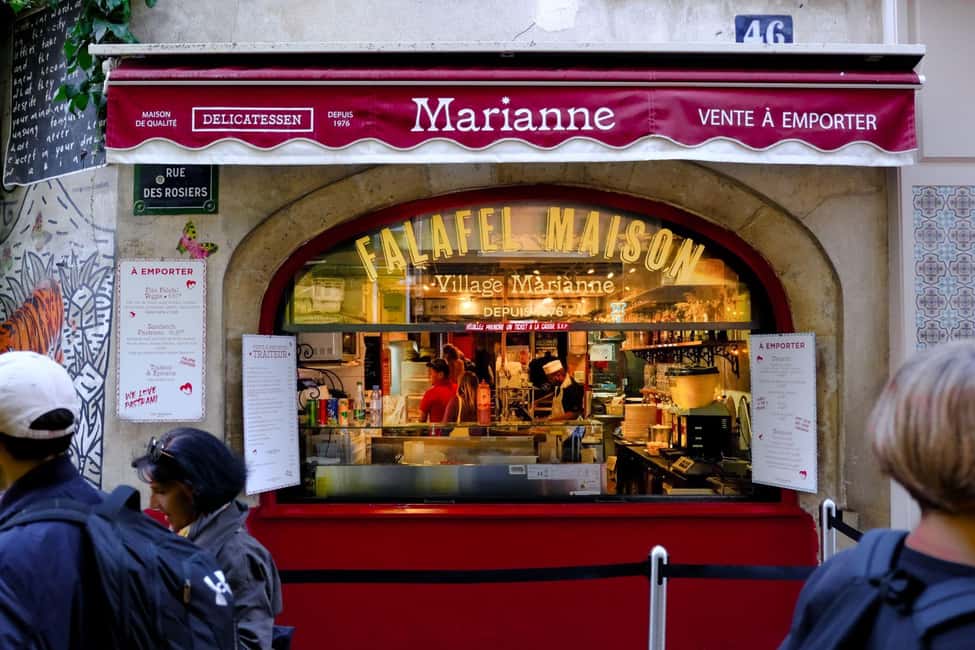
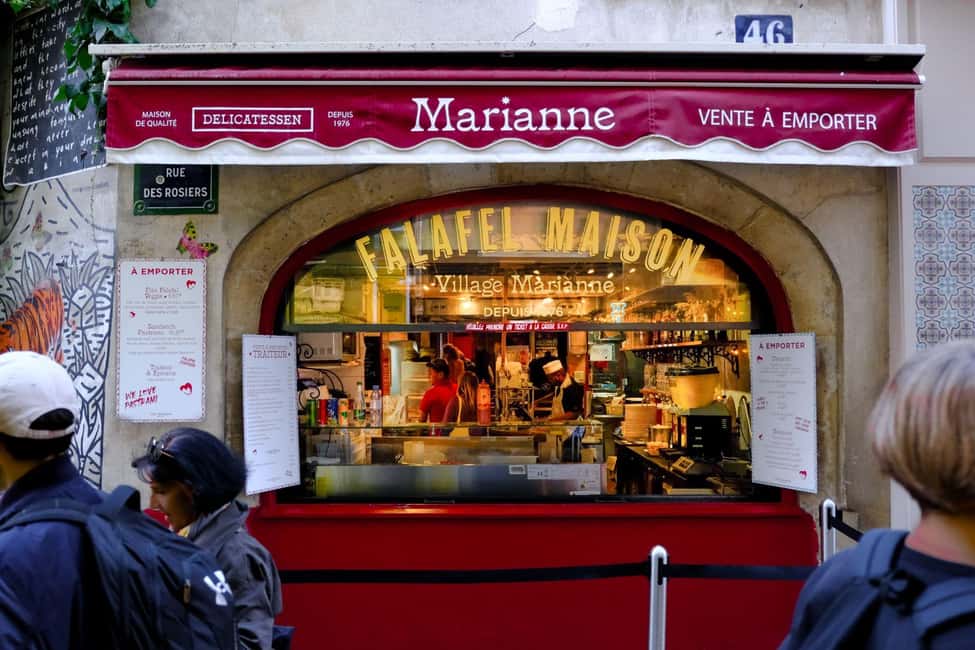
Next comes Rue des Rosiers, often treated as a highlight for a reason. This is a major corridor for Paris’ Jewish community, and the tour gives you the cultural context while you walk.
You’re there for sightseeing, but the route is paced so you’re not rushing through shop windows. Your guide connects what you’re seeing to the neighborhood’s history and ongoing community life. It’s the kind of stop where you’ll start recognizing patterns: signage, food smells, and the rhythms of daily shopping.
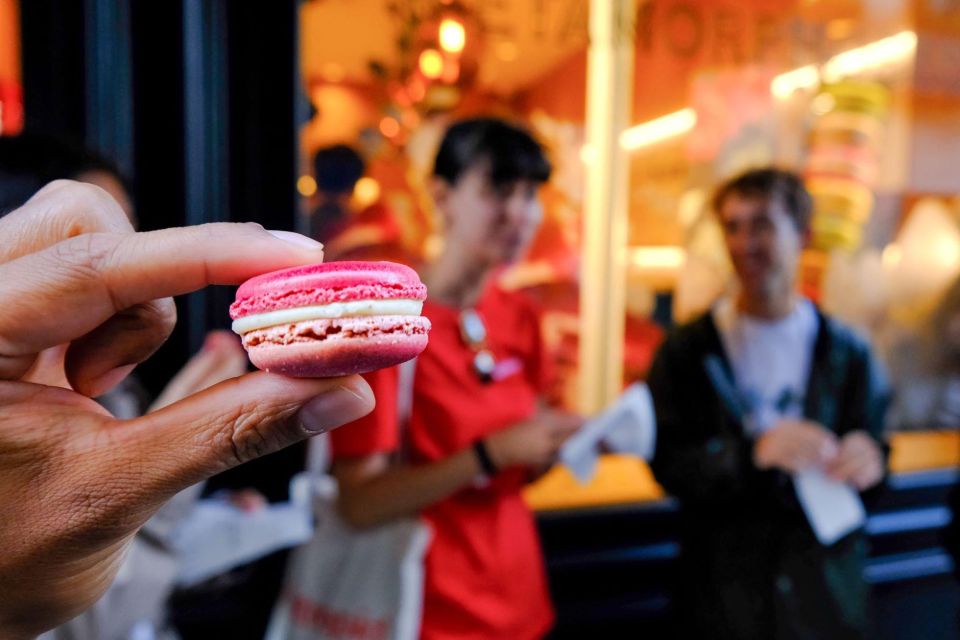
Then there’s the food payoff. The tour includes a stop for a merveilleux, a meringue treat that’s described as mind-blowing by people who clearly have standards. Expect something sweet and dramatic enough to reset your energy midway through the walk.
After that, you’re set up to keep exploring Rue des Rosiers on your own. If you like food culture and you enjoy understanding why certain cuisines live where they do, you’ll feel like you’re traveling with a map made of stories.






Place des Vosges: The Pretty Square With a Big Name Attached
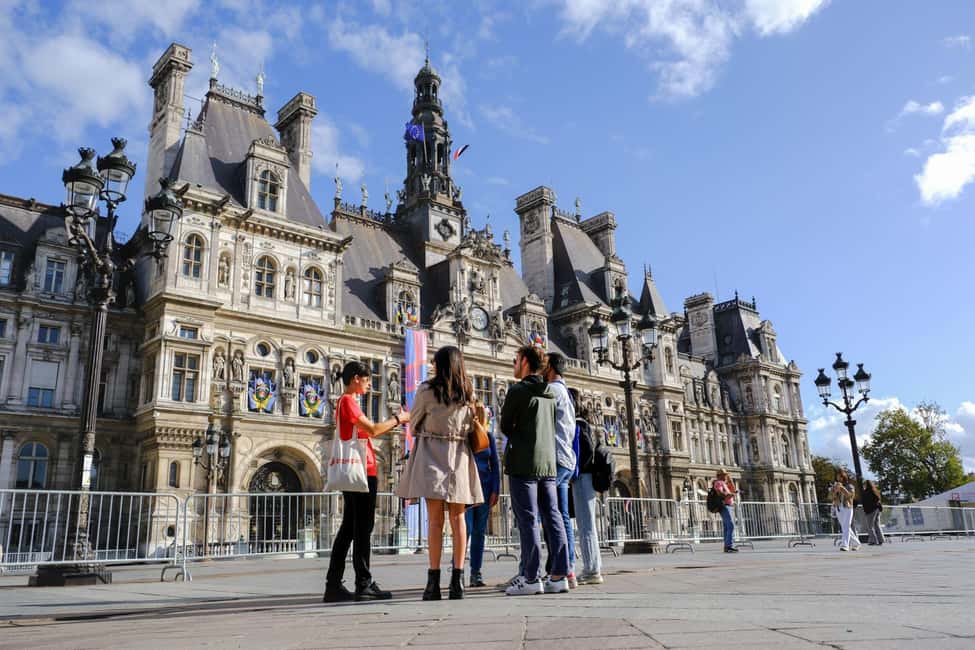
You’ll spend time at Place des Vosges, including the association with Victor Hugo. This is one of those places that looks beautiful from every angle, but it becomes even more enjoyable once you know why it matters.
On a walking tour, this kind of stop is valuable because it gives your brain a rest. After churches and narrow streets, a square with space to pause is a gift. You can look around, take photos, and absorb what your guide has been building toward.
This is also a smart place to ask questions. If something sparked your interest—street art, community history, architecture—you can usually get a quick recommendation on where to go next without derailing the group.
Place de la Bastille: Revolution-Era Energy (and a Good End Point)
The tour finishes with time at Place de la Bastille, where the French Revolution started. You’re given a longer sightseeing window here, and that makes sense. Big squares need time to read, and Bastille is all about scale and significance.
You’ll be in a part of Paris where modern life meets history. It’s the kind of endpoint that helps you transition from tour mode to hang-out mode. The tour description even hints at grabbing a drink at a local bar after you wrap.
One thing I’d plan for: your group will likely end up wanting food and conversation right after the walking stops. If you’re the type who hates rushing, take a slow lap near the square before you pick where to eat.
What You Actually Get for the Money ($56): Value Beyond the Price Tag

At $56 per person for a 2-hour, small-group walk, you’re paying for more than movement. You’re paying for guided context in a neighborhood that can be hard to interpret if you’re relying only on a map.
Here’s why the value holds up:
- You get a local English-speaking guide who organizes all the “so what” behind the sights.
- You get a pastry included, plus the tour’s food stop is the kind you’ll remember.
- The walking route is short enough to keep it enjoyable, not exhausting.
- Group size is capped at 12, which makes question time realistic.
If you normally skip guided tours because you think you’re just paying for someone to point, this is a good test. The tour is built around community stories—Jewish Paris and LGBTQIA+ influence—plus architecture and city evolution. That’s hard to recreate solo in a short window.
The Guides Make or Break It: How the Tour Feels in Real Life
A big reason the rating stays strong (about 4.6 with 100 reviews) is that the guide experience seems consistently strong. People specifically praise guides for being engaging, moving at a good pace, and bringing the Marais to life with details.
Names that come up include Maxi, Cecelia, Camila, Paloma, Laure, Linda, and Adele, plus Mitch in some feedback. You’ll also see a theme: guides don’t just recite facts. They help you notice things.
Camila, for example, is described as pointing out lots of hidden street art, with the vibe of a playful scavenger hunt. Paloma is praised for pacing that lets you absorb information without feeling rushed. Laure is noted for showing you places you’d probably walk right past alone.
That’s exactly what you want from a short tour: someone who knows how to deliver a neighborhood, not just talk over it.
Dietary Reality Check: The Sweet Stop and Who It Works For
This tour is listed as suitable for vegetarians, which is great. But it’s also listed as not suitable for lactose-free, gluten-free, or vegan diets.
So here’s my practical advice: if you have strict dietary needs, don’t assume you can swap the included pastry. The tour data is clear about what it can and can’t accommodate.
If you’re flexible with ingredients, the included merveilleus is part of the fun and keeps the tour from becoming purely sightseeing. If you’re not, you might want to plan your own snack and treat the pastry stop as optional.
Also remember: drinks and additional food aren’t included. The tour ends near places where you can grab something, but plan to cover that yourself.
Walking Comfort: Umbrella, Shoes, and 2 Km of City Legs
The tour covers about 2 km. That’s not long, but Paris streets can be uneven and you stop often. Bring comfortable shoes and a small umbrella just in case. Rain in Paris can turn a pleasant walk into a slippery one fast.
Also, be mentally ready for lots of short stops. This is not a straight-line march. It’s a guided stroll where the pace is set by photos, questions, and mini explanations.
If you’re traveling with limited mobility, you’ll want to consider whether frequent stops and standing in public spaces will work for you. The tour is child-friendly, but it’s still a walking experience.
Who This Tour Fits Best
This is a great match for you if:
- You want a quick but meaningful intro to the Marais without spending a whole day.
- You care about how neighborhoods evolve through community culture, not just famous buildings.
- You like food stops and guided recommendations for what to do next.
- You enjoy architecture and street details, including street art.
It’s also a smart choice for first-time visitors. The route helps you connect landmarks—Pompidou edge, Hôtel de Ville, Saint-Gervais, Rue des Rosiers—to the feel of the area you’ll explore afterward.
If you’re the type who only wants museum-ticket highlights, this might feel more street-level than you expect. But if you like Paris the way locals do—walking, chatting, and snacking—it hits the sweet spot.
Should You Book This Marais Culture Walk?
I’d book this tour if you want a short, guided way to understand why the Marais feels like it does—old Paris charm plus modern LGBTQIA+ life, plus the Jewish community’s influence on the street. The small group size and the consistent praise for guides’ pacing and storytelling make it a reliable bet for a first or second day in town.
Skip it (or double-check fit) if you need gluten-free, lactose-free, or vegan options, because the included pastry isn’t listed as accommodating those diets. Also, if you hate walking or standing during short stops, the 2 km and frequent pauses may feel like too much.
If those aren’t dealbreakers, you’ll likely come away with two things: a stronger sense of the Marais as a real neighborhood, and a list of places to keep exploring long after the tour ends.
FAQ
How long is the Explore the Marais walking tour?
The tour lasts 2 hours.
What is included in the price?
The tour includes a local English-speaking guide, a walking tour, and a pastry.
Where does the tour start?
The meeting point is opposite the Pompidou Center by the Centre Culturel de Serbie, and your guide will be holding a sign with the local partner’s name.
How much walking is involved?
The tour covers about 2 km (1.2 mile) on foot.
Is it suitable for vegetarians and people with dietary restrictions?
It is suitable for vegetarians, but it is not indicated as lactose free, gluten free, or vegan.
How big are the groups?
The tour is designed as a small-group experience with a maximum of 12 passengers, and there is also a private group available.