REVIEW · PARIS
Paris Jewish History 2-Hour Private Guided Walking Tour
Book on GetYourGuide →Operated by Paris in person private tours · Bookable on GetYourGuide
Paris keeps Jewish stories in plain sight. In just two hours, this Paris Jewish history private walking tour connects major turning points of Europe’s Jewish experience with the streets you can actually see, from the Pletzl to the Art Nouveau synagogue on Rue Pavée.
I especially like the way the route mixes big historical events with small street-level details. You’ll move through the Marais’s Jewish quarter feel, pause at the right architectural spots, and hear how themes like medieval stereotypes and later persecution were formed—so it’s not just dates, it’s cause and effect.
One thing to consider: the subject matter gets heavy, and the tour stays tightly timed. At 2 hours, you’ll get a strong overview, but you may still want follow-up reading or a longer visit if you prefer slower, deeper stops.
In This Review
- Key highlights that make this tour worth your time
- A tight 2-hour route that actually feels organized
- Meet at Shakespeare & Company, then follow the red canvas tote
- Notre-Dame Cathedral: the Jewish threads around a world-famous landmark
- The 15-minute pivot to the Vichy memorial themes
- Le Marais for one hour: the neighborhood becomes the lesson
- Pletzl and Rue des Écouffes: how place explains community
- Rue Pavée synagogue: Art Nouveau on a meaningful street
- Place des Vosges: when beauty and memory share the same square
- Where the tour ends: Bastille area for an easy next step
- Price and value: $176 for a private 2-hour story-walk
- Who should book this tour (and who might want something longer)
- Should you book the Paris Jewish History 2-hour private walking tour?
- FAQ
- How long is the Paris Jewish History private guided walking tour?
- Where do we meet?
- How do I recognize my guide?
- Is this tour private?
- What languages are available?
- Does the tour run in bad weather?
- Is food or drinks included?
Key highlights that make this tour worth your time
- Pletzl area walk: you’ll orient yourself fast in the historic center of the Hebrew community
- Rue Pavée synagogue: a 100-year-old Art Nouveau architectural highlight with real visual impact
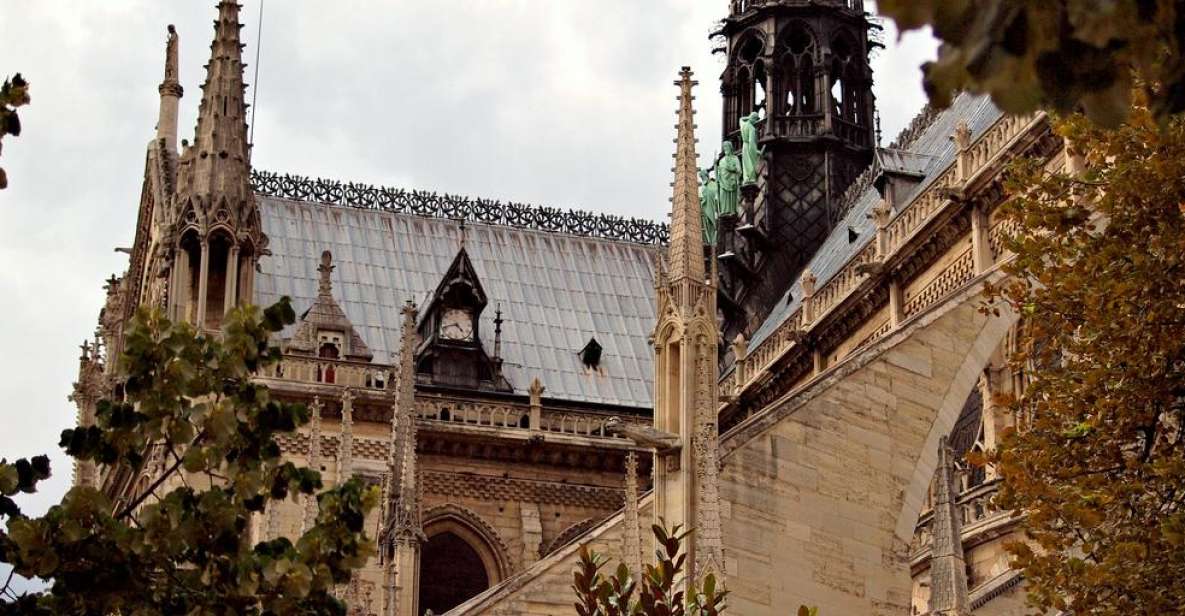
- Notre-Dame connections: your guide points out Jewish-related threads around the cathedral area
- Le Marais focus: the walk concentrates on a compact set of meaningful stops
- Place des Vosges: one of the most beautiful squares in the world, right in the middle of the story
- A guide who ties events to place: you leave with names, timelines, and street context
A tight 2-hour route that actually feels organized
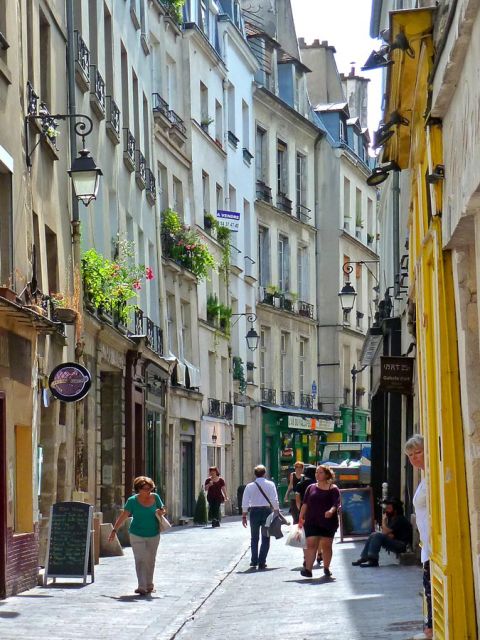
This is the kind of tour that works well in Paris because it avoids the common mistake: trying to cover everything. Two hours is short, but it’s long enough to do something useful. You get context for what happened, then you see where it happened in the city.
I like that the tour is designed around clear thematic transitions. You start with a landmark everyone recognizes, then you shift into the Jewish-quarter geography of the Marais, where the sites feel connected instead of random. That pacing matters because Jewish history in Paris isn’t just one story—it’s a chain of events, policies, and attitudes that changed over centuries.
You can also read our reviews of more walking tours in Paris


Meet at Shakespeare & Company, then follow the red canvas tote
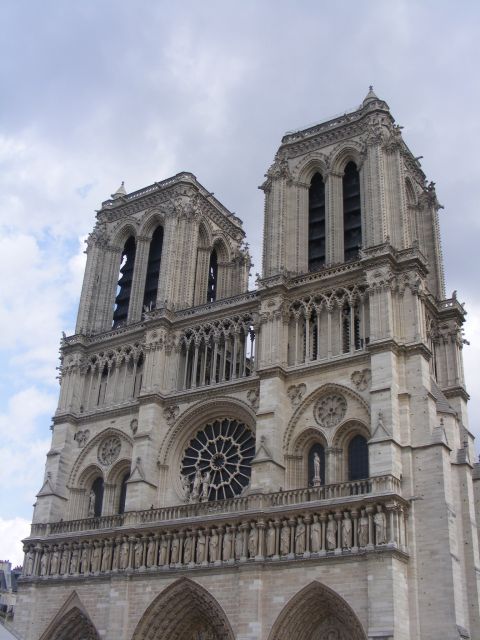
Your meeting point is right in the center of the action: in front of Shakespeare & Company by the green water fountain. Your guide will be carrying a red canvas tote bag, which makes it easy to spot them and start on time.
Because it’s private, you’re not blending into a large group that turns each stop into a quick photo line. Private walking also means the guide can shape the pace to your questions. In the strong versions of this tour, guides like Hannah and Boris are praised for answering questions and weaving the story so it feels coherent instead of like a list of dates.
Practical tip: wear comfortable shoes. You’ll be walking in and around the Marais while focusing on several distinct sites in a short window.
Notre-Dame Cathedral: the Jewish threads around a world-famous landmark
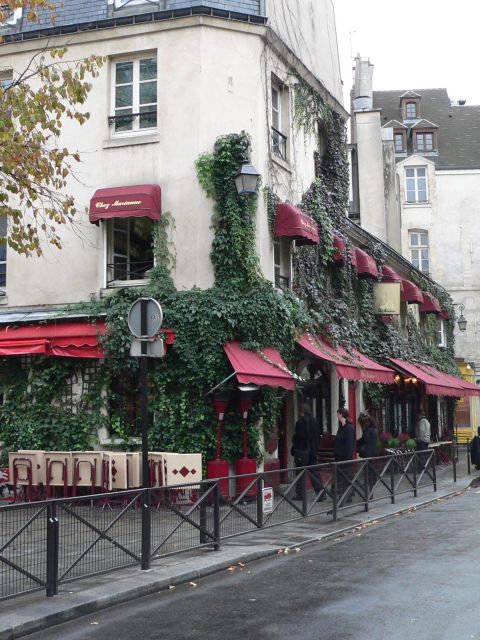
The tour begins with Notre-Dame Cathedral, where you’ll spend about 30 minutes. Even if you know Notre-Dame from postcards, the value here is how your guide frames it in relation to Jewish life and the broader European context around the city.
The tour’s highlight mentions Jewish aspects tied to Notre-Dame de Paris. What that means for you in real terms is this: your guide will point out connections you might not notice on your own. Instead of treating the cathedral as only Catholic iconography, you’ll understand it as part of a wider social landscape where prejudice and power played out over time.
This stop also helps you get your bearings before heading into the Marais. When you later see the Pletzl area and the old streets, it feels less like wandering and more like following a map your guide explains.
The 15-minute pivot to the Vichy memorial themes
After Notre-Dame, you’ll have a shorter guided segment (about 15 minutes). In the tour’s principal sites, this is where the story pivots toward the WWII era—specifically the memorial to the victims of the Vichy regime.
This part matters because it brings the emotional weight closer to the present day. You’re not just learning about medieval origins of superstitions and prejudgments; you’re also confronting how those attitudes translated into policy, occupation, and persecution.
A good guide keeps the tone respectful and clear. If your guide is the type praised for thoughtful narration—as some are, like Hannah and Boris—you’ll likely feel the structure: raids of French kings, the Dreyfus affair, Nazi occupation, and the role of the Vichy government—each event explained as part of a longer pattern.
Le Marais for one hour: the neighborhood becomes the lesson
Next comes Le Marais for about an hour. This is where the tour turns from national headlines into street-level geography.
You’ll see the Pletzl area, described as the historical center of the Hebrew community. That label is important. The Pletzl isn’t just a vibe; it’s a way to understand how communities took shape in specific neighborhoods, and how those neighborhoods were affected by changing laws and public attitudes.
Within this Marais segment, you’ll also encounter:
- Rue Pavée synagogue area (including the Art Nouveau stop on Rue Pavée)
- Rue des Écouffes
- Goldenberg Deli
- Place des Vosges, considered one of the most beautiful squares in the world
Why this matters for you: the tour doesn’t isolate history in a museum box. It uses living city space—streets and landmarks you can revisit after the walk. That makes the story easier to remember because your brain ties events to physical shape and location.
You can also read our reviews of more guided tours in Paris




Pletzl and Rue des Écouffes: how place explains community
Walking the Pletzl area helps you understand how a community can be both visible and vulnerable. In the tour framing, your guide covers centuries of presence—from a time when there was already a Hebrew community in the Paris area before France even existed—then moves through medieval periods when anti-Semitism rose.
The guide also talks about medieval origins of superstitions and prejudgments. On the street, that theme lands differently. It stops being abstract. You can look at the built environment and sense how stories—truths and lies—shaped how people behaved toward neighbors.
If you’re the type who likes context that doesn’t just sit in the background, this is a strong section. The goal is not to romanticize or oversimplify. It’s to help you see the connection between belief, power, and where people lived.
Rue Pavée synagogue: Art Nouveau on a meaningful street
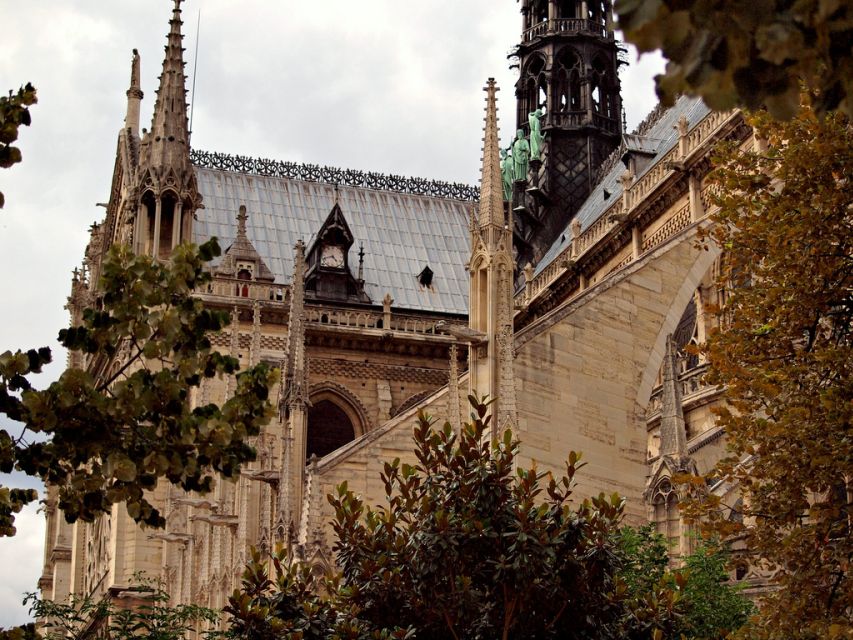
One of the clearest visual rewards is the Rue Pavée synagogue, described as a 100-year-old jewel of Art Nouveau architecture.
For you, this stop is more than pretty building photography. It’s where history becomes tangible in materials, lines, and design. A synagogue like this also shows something practical about Jewish life in Paris: communities built institutions, planned for the future, and expressed identity through culture and architecture.
If you care about design, take a slow look at the details your guide points out. If you don’t care about architecture, still pause. Art Nouveau can feel decorative until you connect it to real people and real communities using it as a statement of presence.
Place des Vosges: when beauty and memory share the same square
The tour also includes Place des Vosges, famous for being one of the world’s most beautiful squares. This square can feel like a postcard stop—open sky, symmetry, classic facades.
Here’s why it still works inside a Jewish history tour: your guide uses it as a contrast point. You’re seeing the long continuity of Paris’s public spaces while understanding that Jewish life—and the discrimination faced by Jews—developed alongside the city’s “everyday” beauty.
Even if the square itself doesn’t tell the whole story, placing the story there helps you remember the takeaway: history happens in the same places where people later drink coffee, shop, and take photos.
Where the tour ends: Bastille area for an easy next step
The tour finishes at Трг Бастиље (Bastille area). That’s handy because it puts you in a major transit zone and a lively neighborhood for dinner afterward.
Since food and beverages aren’t included, I’d plan a snack before you go (or grab something immediately after). With a topic this weighty, you’ll probably appreciate having a simple plan for energy.
Price and value: $176 for a private 2-hour story-walk
At $176 per person for a 2-hour private guided walking tour, the cost isn’t low. So what’s the value?
Here are the main reasons it can be worth it:
- It’s private: you’re paying for a live guide’s time, pacing, and ability to answer questions.
- The route is tightly built: Notre-Dame for broad context, then the Marais/Pletzl area for place-based learning.
- You’re getting both architecture and history: Rue Pavée synagogue and Place des Vosges aren’t just named; they’re connected to the narrative.
- The guide format supports language needs: English, French, and Serbo-Croatian are available.
The trade-off is the obvious one: the time is limited. If you’re expecting an all-day study session, this won’t replace museum time. But if you want a strong, guided orientation to Paris Jewish history in a compact format, the price can feel justified.
Who should book this tour (and who might want something longer)
This tour is a good fit if you:
- want a private walk instead of a large group experience
- like history tied to actual streets, squares, and buildings
- want a guided timeline that covers major turning points (royal raids, Dreyfus, WWII/Nazi occupation, Vichy)
- care about architecture at least enough to appreciate Art Nouveau at Rue Pavée
You might want a longer, separate experience if you:
- prefer slow stops and lots of reading at each site
- want more time for reflection at memorial spaces
- plan to go deep into either medieval history or WWII history only
Should you book the Paris Jewish History 2-hour private walking tour?
If you’re going to Paris and you want an organized, emotionally honest overview that turns neighborhoods into understanding, I think this is a solid choice. The structure is practical, the sites are real and memorable (Pletzl, Rue Pavée, Place des Vosges), and a good guide can keep the story clear without losing the human weight.
My main “yes, but” is timing. You’ll cover a lot, so come with comfortable shoes and a willingness to sit with heavy moments briefly rather than expecting a full day of study.
If you want a focused first step into Paris Jewish history—one you can build on later—I’d book it.
FAQ
How long is the Paris Jewish History private guided walking tour?
The tour lasts 2 hours.
Where do we meet?
Meet in front of Shakespeare & Company by the green water fountain.
How do I recognize my guide?
Your guide will be carrying a red canvas tote bag.
Is this tour private?
Yes, it’s listed as a private group.
What languages are available?
The live guide is available in English, French, and Serbo-Croatian.
Does the tour run in bad weather?
Yes, the tour operates rain or shine.
Is food or drinks included?
No. Food and beverages are not included.