REVIEW · PARIS
Guided tour of historic Paris with treasure hunt
Book on GetYourGuide →Operated by From Paris with Fun · Bookable on GetYourGuide
Paris becomes a game board in 2 hours.
This guided treasure hunt turns the classic route from the Panthéon to the Louvre into something you actually do, not just watch. Two things I especially like: you get a game book + clue kit with around 15 riddles (so you’re constantly looking closely), and you end up seeing major landmarks like Notre-Dame and the Louvre as part of a story you’re solving. One possible drawback: it’s not a traditional deep-dive history tour, and the guides say they aren’t professional historians, so you may want to treat the facts as helpful context rather than textbook-level detail.
The format is simple and smart for sightseeing: small groups, guided in French or English, with time to wander the Latin Quarter and the Île de la Cité at a fun pace. You’ll be given a mission—crack a password on a cryptex (a letter lock) to open the treasure chest—and the route is designed to keep you moving and scanning streets and buildings like a detective.
In This Review
- Key highlights to know before you go
- Why a cryptex treasure hunt makes historic Paris feel different
- Start at the Panthéon: where your clues begin
- What the Panthéon area does well
- Latin Quarter stretch: Sorbonne and Musée de Cluny without the museum detour
- The best part: you look up more
- Île de la Cité and Notre-Dame: Paris’s historic heart, paced for clues
- Why I like this section for first-timers
- Pont Neuf and the river-bridge rhythm before the Louvre
- A small drawback to consider here
- How the final riddle near the Louvre works
- Price and value: why $35 can feel like a smart deal
- Group size, pace, and practical tips that keep the hunt fun
- Who this tour fits best (and who should skip it)
- Should you book this Panthéon-to-Louvre treasure hunt?
- FAQ
- How long is the treasure hunt tour?
- Where does the tour start and end?
- Do I need to buy tickets for monuments?
- What language is the tour guide?
- Is the tour suitable for children?
- What should I do if I’m running late?
Key highlights to know before you go
- 15 riddles between the Panthéon and the Louvre, with a final puzzle near the end
- Cryptex password mission using a padlock-style letter puzzle
- Small-group walking with a pace that can slow down for families
- Must-sees outside the ticket lines: Notre-Dame area sights and key river bridges
- A guide who may include Marion, with a focus on fun, not lecturing
Why a cryptex treasure hunt makes historic Paris feel different
Paris is full of iconic views, but most walking tours still feel like: here’s the building, here’s the story, next stop. This one swaps the usual rhythm for a mission. You’re not just absorbing facts—you’re hunting for clues, noticing architectural details, and working out answers on the go.
The cryptex part is what makes it feel real. It’s hands-on, tactile, and surprisingly satisfying when the letters click into place. And because the puzzles are spread out across a classic route, the game keeps your attention where it matters: street-level details, angles, signage, and the general geometry of the neighborhoods between the Panthéon and the Louvre.
You can also read our reviews of more guided tours in Paris


Start at the Panthéon: where your clues begin
You meet at 12 Pl. du Panthéon, on the bench opposite the Panthéon—left side when you look up at the monument. Bring yourself (and your brain) to the exact starting point, because the first puzzles take place right there.
Expect a short orientation moment before you start. You’ll be handed the game book and your clue kit, then you’ll begin solving riddles that point you toward the next area. The Panthéon stop itself gets about 10 minutes—enough time to orient and start the hunt without feeling like the tour is waiting on you.
Practical tip: if you’re the type who likes to take photos, do it quickly at the beginning. After that, the hunt keeps your attention moving. Also, use the restroom before you start—there aren’t public toilets nearby.
What the Panthéon area does well
This opening stretch sets expectations fast. You’re introduced to the style of clue-solving right away, so you don’t spend half the tour trying to figure out how the game works. It’s also a good “you’re in Paris” moment: you’re at a landmark, but you immediately shift into street-level exploration.
Latin Quarter stretch: Sorbonne and Musée de Cluny without the museum detour
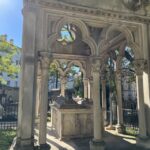
After you leave the Panthéon area, the route flows toward the Latin Quarter, a neighborhood where walking reveals history at every scale—grand stone, small streets, and places students (and scholars) still tend to crowd.
You pass the Sorbonne University and then the Musée de Cluny / Thermes et Hôtel de Cluny area. These are stop-and-see moments rather than full museum visits. You’ll get passing looks and guide context, but the real focus stays on the riddles you’re solving as you walk.
Why this matters: if you’re on a tight schedule, you still get the payoff of moving through historically important spaces without adding ticket lines, timed entry pressure, or extra transit.
The best part: you look up more
One of the strongest themes in the experience is how often you’ll naturally scan upward. The puzzle design pushes you to notice details you’d otherwise ignore while strolling—facades, architectural cues, and “wait, what is that?” moments. It’s a smart way to learn the feel of the city without turning it into a classroom.
You can also read our reviews of more historical tours in Paris



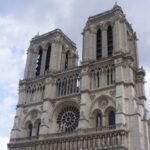

Île de la Cité and Notre-Dame: Paris’s historic heart, paced for clues
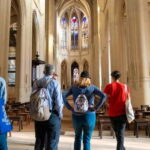
This is where the route earns its reputation as a “classic Paris” walk. You move onto the Île de la Cité, widely considered the historic heart of the city, and you’ll spend about 30 minutes walking through the area.
You’ll see Notre-Dame de Paris along the way. The experience keeps things exterior-focused, so you’re enjoying the cathedral area in the way many visitors can: by watching the neighborhood around it and letting the surroundings carry the atmosphere.
You’ll also pass through the vibe zone of older Paris, where the streets tighten and the landmarks feel close—even when you’re moving.
Why I like this section for first-timers
For many people, the Île de la Cité is the “stop everything and look around” part of Paris. The treasure hunt keeps you from just stopping in one place. Instead of lingering until you get bored, you keep moving, solving, and reorienting—so you get more from the same time window.
One more thing: you get touristy explanations from the guide as you go. That’s not always a bad thing. In a game-format tour, those quick notes help you connect clues to real-world places, which makes the puzzles less random.
Pont Neuf and the river-bridge rhythm before the Louvre
As you continue, you cross into one of Paris’s most photogenic rhythms: the river crossings and the bridges that link different layers of the city.
You’ll pass Pont Neuf (about 10 minutes) and continue toward the Louvre area. The broader route is built around several key sights in this zone, including Conciergerie, Institut de France, and Pont des Arts, before finishing at the Louvre area.
Even if you don’t stop for long at each named landmark, this section gives you the sense of how Paris organizes itself: a connected chain of cultural anchors, tied together by walkable streets and bridge views.
A small drawback to consider here
Because you’re walking and solving constantly, this isn’t the best choice if you want long, slow sitting breaks. You’ll have moments to look, but the pace is designed to keep the hunt moving. If you’re easily tired by steady walking, plan on taking short pauses when the group naturally does.
How the final riddle near the Louvre works
The tour ends at Place du Louvre. The final stretch is set up to feel like a payoff: once you’ve solved the riddles, you tackle the last clue near the end and then open the treasure chest.
The best part of the ending is the structure. You don’t just reach a famous museum square and hope your memories make a story. You have a mission that builds toward closure, so the last minutes feel like a reward rather than another landmark checkmark.
If you’re the type who likes a clear finish line, this one delivers. And if you enjoy teamwork, you’ll likely feel the group dynamic kick in right before the end, when everyone’s comparing answers and trying to make the cryptex click.
Price and value: why $35 can feel like a smart deal
At $35 per person for a 2-hour guided experience, the value comes from three things:
First, you’re paying for a guided route through multiple headline areas—Panthéon, Latin Quarter zone sights, Île de la Cité, and the approach to the Louvre—without paying for entry tickets to museums or monuments.
Second, you’re paying for the interactive mechanism: the game book, clue kit, and cryptex puzzle. That’s the “product,” not just a walk with a talk.
Third, you’re getting small-group energy. The experience is designed to keep you actively participating, which usually makes sightseeing time feel more productive than a standard 60–90 minute guided circuit.
What you should know up front: entrance tickets are not included. So don’t expect to go inside the major monuments. This tour is for seeing and learning from the outside, then using puzzles to deepen your attention.
Group size, pace, and practical tips that keep the hunt fun
This is a small-group walk. The tour usually lasts 2h00 to 2h30, depending on walking speed and time spent solving riddles. The pace can be adapted for slower walkers, including families with children, but the experience isn’t suitable for children under 8.
It runs in all weather, so bring weather-appropriate clothing. Also, the tour does not work well with extra friction: oversize luggage and large bags aren’t allowed, and alcohol/drugs are not allowed.
If you’re running late, don’t panic—but do act. The tour notes that the first puzzles are at the Panthéon, while the last riddles happen roughly 10–15 minutes before heading down rue Saint-Jacques. Calling to catch up is the right move if you’re behind.
Who this tour fits best (and who should skip it)
This is a great fit if you want:
- A short, active way to see big Paris landmarks
- A route that keeps you looking closely instead of zoning out
- A light, fun structure that still provides context as you walk
It’s also ideal if you’re traveling with someone who doesn’t love sitting through long guided talks. The puzzles give you a shared mission.
Skip it if:
- You want to go inside monuments (this is exterior-focused)
- You want a slow, museum-style pace
- You need a tour designed for people with very limited mobility or long walking endurance (the tour is built around steady walking)
Should you book this Panthéon-to-Louvre treasure hunt?
If you’re spending limited time in Paris and want an experience that turns sightseeing into something you do, this is a strong booking choice. The cryptex mission, the about 15 riddles, and the clever route linking the Panthéon, the Latin Quarter, the Île de la Cité, and the approach to the Louvre make it feel like you’re learning Paris through your own curiosity.
I’d only think twice if you hate walking, dislike interactive activities, or need museum entry tickets included. For most people looking for a fun, value-packed Paris afternoon, this is exactly the kind of tour that makes a city feel personal fast.
FAQ
How long is the treasure hunt tour?
The tour lasts about 2 hours, and it can run between 2h00 and 2h30 depending on walking time and how long it takes to solve the riddles.
Where does the tour start and end?
It starts at 12 Pl. du Panthéon, meeting on a bench opposite the Panthéon (left side when looking up). It finishes at Place du Louvre.
Do I need to buy tickets for monuments?
No. Entrance tickets are not included, and the discovery game does not include entering monuments.
What language is the tour guide?
The tour is offered with a live guide in French and English.
Is the tour suitable for children?
It is not suitable for children under 8. The pace can be adapted for slower walkers, including families with children.
What should I do if I’m running late?
The tour notes that the first puzzles take place in front of the Panthéon, and the last riddles happen 10 to 15 minutes before heading down rue Saint-Jacques. If you’re late, you should call to catch up.