REVIEW · PARIS
Montmartre Walking Tour: A Journey Through Art and History
Book on GetYourGuide →Operated by Parisian Tales · Bookable on GetYourGuide
Montmartre can feel like a postcard. This tour turns that hill into art history you can walk through. I like that it’s a small, interactive group limited to 10, and I also like the guide’s picture-based explanations on a tablet. One thing to consider: it’s a hilly, mostly outdoor walk, so you’ll want solid shoes and weather-ready clothing.
The vibe is friendly and calm, with a guide who speaks excellent English and clearly cares about how the stories land. A Parisian guide named Arthur brings places like Moulin Rouge and Sacré-Cœur into focus, while connecting the neighborhood to artists like Picasso and Van Gogh—and even widening the lens to include women artists who often get left out of the usual version of the story.
This is best for people who want meaning, not a checklist. If you’re traveling with kids under 10 or you’re over 80, this probably won’t be the right fit.
In This Review
- Key moments that make this Montmartre walk work
- Montmartre’s steep streets, with a storyteller’s map
- Where you meet and how the tour stays personal
- Moulin Rouge and the first art-story angle
- The secret stop: when Montmartre stops being obvious
- Viewpoints that teach you how to look
- Le Bateau-Lavoir: artists’ workspaces you can almost feel
- Windmills and photo moments at working height
- La Maison Rose and the edges of “real Montmartre”
- The vineyard: a reminder this hill isn’t only museums
- Musée de Montmartre and the story behind the symbols
- Sacré-Cœur: the finish line with the right kind of wrap-up
- How Arthur uses pictures on a tablet (and why it helps)
- What the price gets you in real terms
- Best fit: who will love this tour
- Practical tips so you don’t suffer on the hill
- Should you book the Montmartre Walking Tour?
- FAQ
- How long is the Montmartre Walking Tour?
- Where do I meet the guide?
- What group size is this tour?
- Is the tour guide English-speaking?
- Is the tour wheelchair accessible?
- What should I wear or bring?
- Are video or audio recordings allowed?
- Where does the tour end?
Key moments that make this Montmartre walk work
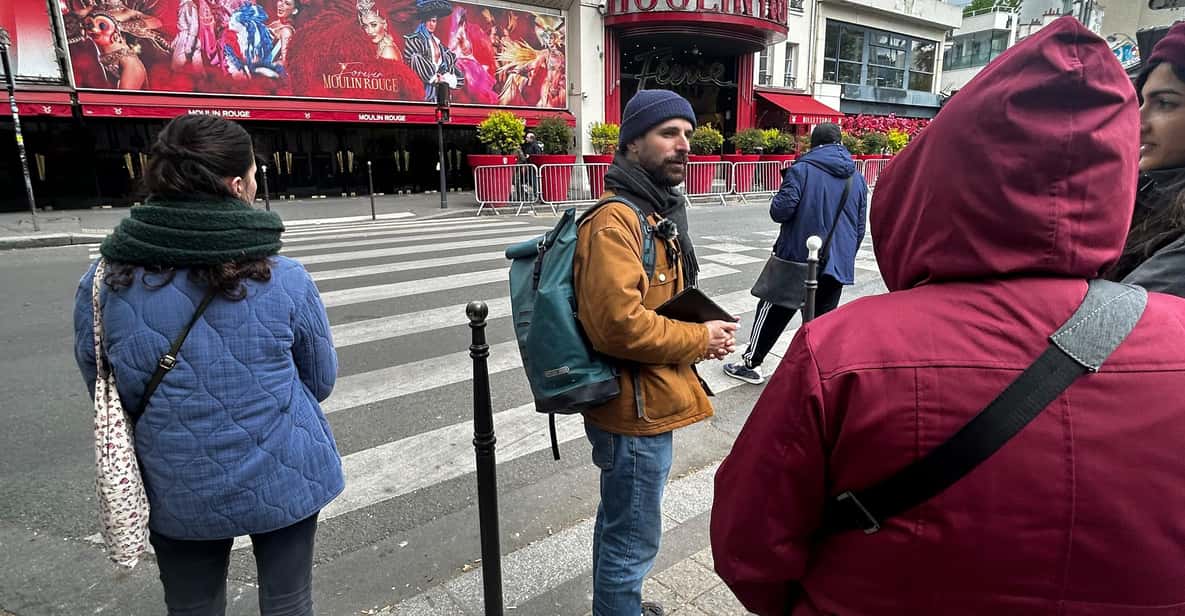
- Tablet-based art explanations that help you connect street corners to paintings and ideas
- Limited to 10 people, so your questions actually get answered
- Moulin Rouge and Sacré-Cœur plus the in-between streets most people skip
- Le Bateau-Lavoir, windmills, viewpoints, and the Maison Rose as story anchors
- A feminist lens in the storytelling, including attention to women in the art scene
Montmartre’s steep streets, with a storyteller’s map
Montmartre is Paris’s big hill, and the best way to get it is on foot. You’ll cover about 160 minutes (2.5 hours), moving from classic landmarks into quieter streets away from the densest crowds.
What I like most is the pacing. It’s not just walk, point, move on. There are photo stops and short guided segments built around how the neighborhood changes as you climb—so you start seeing the “why” behind the views.
The tour is also designed to help you connect ideas. You’ll hear how art, religion, and politics mixed here, and you’ll watch how that mix shaped what artists did and what buildings became symbols.
You can also read our reviews of more walking tours in Paris



Where you meet and how the tour stays personal
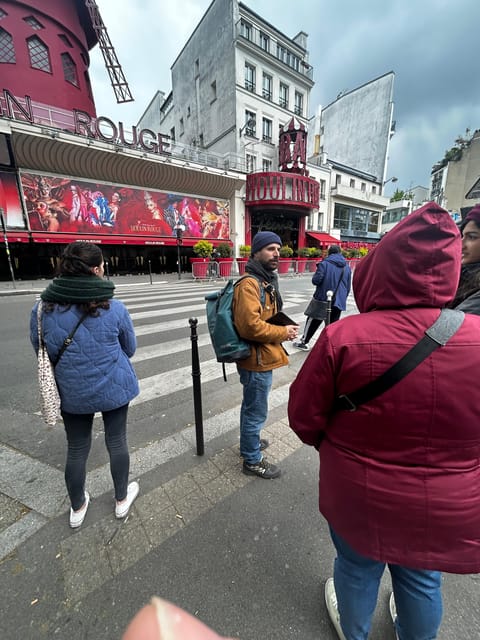
You meet just outside Five Guys at 3 Place Blanche (75009 Paris). That location is practical because it’s easy to find, and it puts you right at the start of Montmartre’s story rather than at the top where you’d miss context.
The group stays small—10 participants maximum—which matters on a hill. In a big group, you spend more time waiting than looking. In this format, your guide can keep the pace humane and answer questions as they come up.
Also, you won’t be sold anything. The tour has a clear purpose: walking and interpreting the neighborhood, not pushing shops or tickets.
Moulin Rouge and the first art-story angle
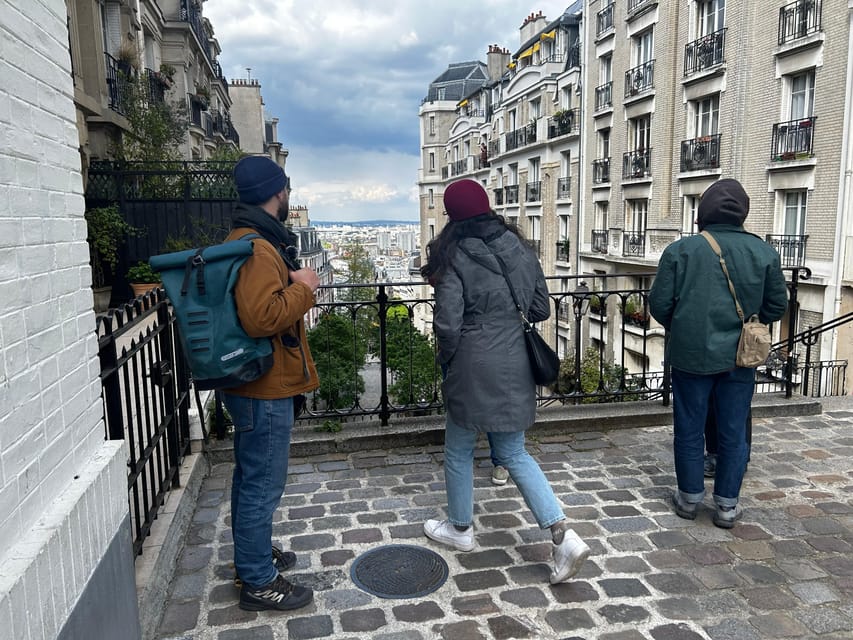
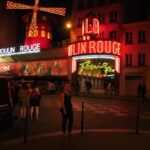
The walk kicks off with Moulin Rouge and a photo stop plus guided tour (20 minutes). This is an obvious stop, but here it works because the guide doesn’t treat it like a photo backdrop.
You’ll get the neighborhood energy first—cabaret fame, performance culture, and the city’s appetite for spectacle—then you’ll start linking that energy to the artists who lived nearby around the late 19th and early 20th centuries.
Photo stops are short on purpose. You’ll get time to look, but the goal is to keep moving and listening. If you love that rhythm—view, then context—you’ll click with this style.
The secret stop: when Montmartre stops being obvious
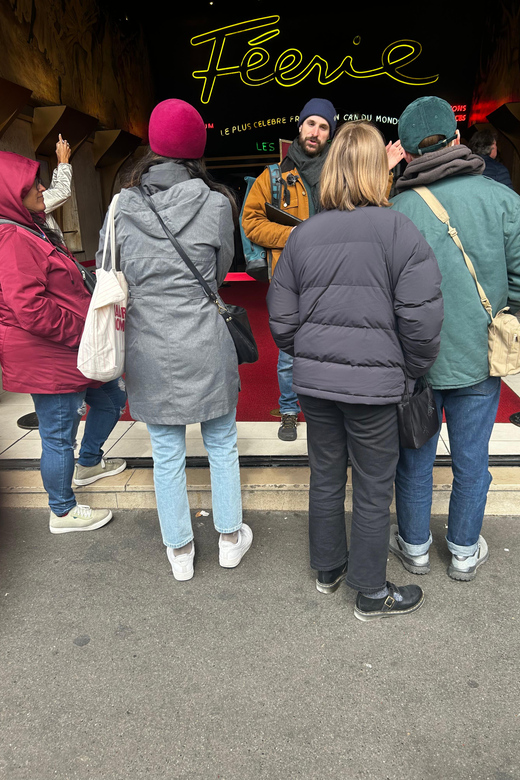
Next comes a secret stop (20 minutes). The term matters less than the function: this is where the tour breaks away from the “seen-it-all” route.
This kind of pause is useful because Montmartre can overwhelm you with landmarks. A well-chosen side street resets your attention. You start noticing building details, angles, and street layouts that help explain why artists were drawn here.
One possible drawback: because this is a less famous stop, you may need to lean into listening rather than relying on recognition. If you come expecting only big monuments, this section might feel like it moves too quickly.
Viewpoints that teach you how to look
You get a couple of viewpoint photo/sightseeing moments. One is listed as a photo stop and sightseeing (5 minutes) and another photo stop (5 minutes) later.
These breaks aren’t random. They’re timed so your guide can connect what you see—topography, sightlines, the way Paris spreads out—with the stories you’ve just heard. Montmartre is a visual hill, and these stops teach you to read it.
Bring patience for the stairs and slopes. Even short viewpoint breaks add up when you’re moving uphill. This tour is “easy to follow,” but it’s still a walking tour.
You can also read our reviews of more historical tours in Paris





Le Bateau-Lavoir: artists’ workspaces you can almost feel
A major highlight is Le Bateau-Lavoir, with a guided tour and sightseeing (20 minutes). This stop is especially valuable for anyone who wants more than celebrity names.
You’ll hear how the area connected to the working lives of artists like Picasso and Van Gogh, and you’ll start seeing the neighborhood as something more specific than “pretty Paris.” It becomes a place where studios, creative communities, and day-to-day hustle mattered.
What’s clever here is the tablet support. When you see a street corner and then get an image-based explanation right away, it’s easier to connect what you’re hearing with what you’re picturing.
Windmills and photo moments at working height
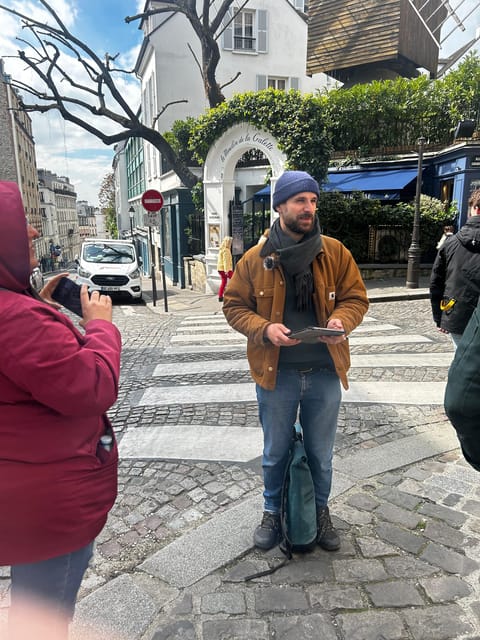
After that, the tour takes you past the windmills with a photo stop, guided tour, and sightseeing (5 minutes). Short segment, big payoff: windmills are one of Montmartre’s most iconic visual symbols, and your guide uses them as a story hinge.
Even with just a few minutes, you should come away with a better understanding of how the neighborhood’s identity formed. You’ll also get the photo time you need without turning the tour into a long queue for one angle.
If you’re traveling on a day when it’s windy or cold, this kind of quick outdoor stop can feel brisk. Dress for it.
La Maison Rose and the edges of “real Montmartre”
Next is La Maison Rose with a photo stop and guided tour (no duration listed, but it’s a guided segment). This is the kind of stop that gives you something visual and specific.
Maison Rose is interesting because it helps you shift from “famous names” to “place-making.” It’s not just that artists lived here. It’s that the neighborhood had features that influenced how creativity was expressed and remembered.
This section also supports the tour’s overall promise: you’re seeing Montmartre’s personality, not just its résumé.
The vineyard: a reminder this hill isn’t only museums
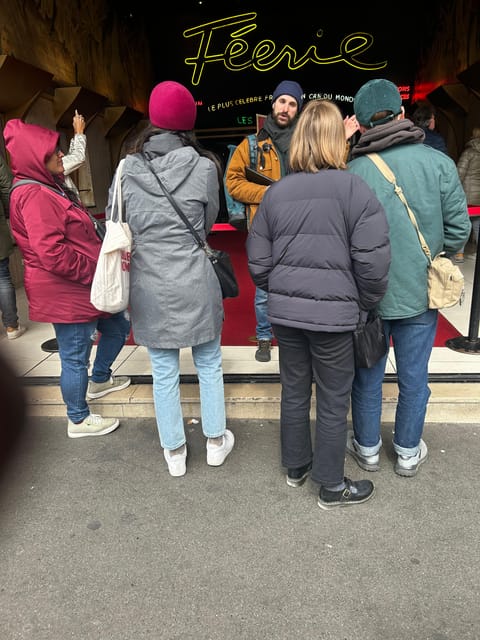
The itinerary includes a vineyard stop for 5 minutes of guided sightseeing. This is one of those Montmartre moments that keeps the area from becoming too art-gallery themed.
Instead of turning every corner into a lecture, the vineyard provides contrast. You get a sense of Montmartre as a living neighborhood with history layered into everyday space.
It’s also a good pause when you need to catch your breath. Five minutes feels small, but on a hillside it can be exactly what you need before the final climb.
Musée de Montmartre and the story behind the symbols
You then reach the Musée de Montmartre for a guided tour/sightseeing (15 minutes). Even if you’ve visited museums before, this works differently because it’s tied directly to what you’ve been walking past.
A 15-minute museum moment can sound too short, but in this format it’s a setup. You’re not trying to finish everything the museum offers. You’re getting the meaning that makes the streets make sense.
This is a good point in the tour to ask questions too. You’ve built enough context that your curiosity won’t feel random.
Sacré-Cœur: the finish line with the right kind of wrap-up
The tour ends with Sacré-Cœur Basilica, including a photo stop plus guided tour and sightseeing (20 minutes). Sacré-Cœur is a must-see. The guide’s job is to make it more than a view you’ve already seen online.
By the time you arrive, you’ll already understand how religion, politics, and art tangled together in Montmartre. That matters here, because Sacré-Cœur isn’t just a postcard dome. It’s part of a long story about what this hill symbolized to different groups over time.
You finish at 35 Rue du Chevalier de la Barre, 75018 Paris.
How Arthur uses pictures on a tablet (and why it helps)
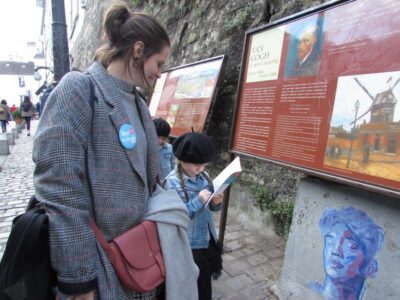
A standout feature is how the guide uses a tablet with pictures to illustrate the content. That matters because art history is hard to hold in your head when you’re outside, walking, and climbing.
The tablet support helps you connect:
- the location you’re standing in
- the era you’re hearing about
- the artwork or artistic ideas referenced by the story
It also makes the tour easier to follow for people who don’t consider themselves “art people.” You don’t need a degree. You need clear explanations and visual anchors, and that’s exactly the format here.
This is where the guide’s English skills show too. The communication stays smooth, so you don’t lose the thread on every other sentence.
What the price gets you in real terms
The tour costs $34 per person and runs about 160 minutes. For central Paris sightseeing, that’s in the reasonable range—especially because the group is limited to 10 and the content includes real guided time, photo stops, and tablet-based visuals.
You’re paying for something that’s hard to DIY: the way the guide blends iconic landmarks with less crowded streets and turns them into a sequence of ideas.
Another value point: the tour claims no selling and uses places that don’t feel like shopping stops. So your money goes to the walking and the storytelling.
Best fit: who will love this tour
This tour is ideal if you:
- want Montmartre art and history explained in plain English
- like tours where you can ask questions without feeling rushed
- want a mix of famous sites and less obvious corners
- care about a more balanced look, including attention to women artists
It can also work for families, but with a key limit: it’s not suitable for children under 10. And it’s not suitable for people over 80, likely because of the walking and hill terrain.
Practical tips so you don’t suffer on the hill
This is a walking tour, so bring comfortable shoes. Montmartre can run cooler than the rest of the city, and the tour specifically asks you to check the forecast.
If it’s raining, plan for an umbrella or rain coat. If it’s cold, wear warm layers. If it’s hot, bring water (there’s a supermarket by the meeting point, which helps if you forget).
One more note: video recording and audio recording aren’t allowed. So plan to enjoy the moment without trying to capture everything.
Should you book the Montmartre Walking Tour?
If you want Montmartre with meaning—not just a selfie route—this is a strong choice. The small group size, tablet-based art visuals, and guide style (with Arthur leading the storytelling) make it feel closer to an art class than a lecture you can’t feel.
Book it if you’re excited by connections between place and art: Moulin Rouge, Le Bateau-Lavoir, Montmartre’s viewpoints, and the ending at Sacré-Cœur as a final payoff.
Skip it if you want a hands-off walk where you only care about the biggest monuments, or if you’re sensitive to hillside walking. For the right person, this tour gives you a smarter way to see one of Paris’s most loaded neighborhoods.
FAQ
How long is the Montmartre Walking Tour?
It lasts about 160 minutes (around 2.5 hours).
Where do I meet the guide?
Meet just outside Five Guys at 3 Place Blanche, 75009 Paris.
What group size is this tour?
It’s a small group limited to 10 participants.
Is the tour guide English-speaking?
Yes, the tour is in English.
Is the tour wheelchair accessible?
Yes, it’s wheelchair accessible. It’s also noted as not suitable for children under 10 and people over 80.
What should I wear or bring?
Wear comfortable shoes. Check the weather and bring what you need (umbrella or rain coat if raining, warm clothes if cold). Bring water if it’s hot.
Are video or audio recordings allowed?
No. Video recording and audio recording aren’t allowed.
Where does the tour end?
The tour finishes at 35 Rue du Chevalier de la Barre, 75018 Paris.