REVIEW · PARIS
Paris: Charming Nooks and Crannies Bike Tour
Book on GetYourGuide →Operated by Simply France Tours SAS · Bookable on GetYourGuide
Paris feels like it has secret doors. This bike tour is built to find them at easy speed and with a local guide doing the storytelling. You’ll ride mostly flat routes on quieter streets, then pause for views and facts that make old neighborhoods click. One thing to consider: it’s street riding in Paris, so you’ll want to be comfortable cycling and following the guide closely.
I especially like the way the route avoids the usual postcard loop. You get nooks and crannies in the Marais (including its Jewish and gay neighborhoods) plus the left bank areas like Saint Germain des Prés and the Latin Quarter, where you see Paris layers instead of just one monument. The second big plus is the guides: many tours I’ve seen get praised for great pacing and safety, with guides like Clément, Christian, and Igor frequently mentioned for steady, friendly leadership.
The only real drawback is that you won’t be stopping at major “must-see” icons like a highlights bus tour. It’s more about atmosphere, side streets, and history in context. If your priority is ticking off famous statues, you may find this a little less direct.
In This Review
- Key things I’d center in your decision
- The “starter course” of Paris, by bicycle
- Starting at Hôtel de Ville: where the ride actually begins
- Île Saint-Louis and the “old Paris” feeling that sticks
- Entering the Marais: medieval streets and real community history
- Bastille area and the prison story: why the streets feel dramatic
- The left bank: Saint Germain des Prés, cafés, and art streets
- Odéon and Luxembourg: history you can feel while riding
- Sorbonne and the Latin Quarter: ruins, back streets, and contrast
- Cycling comfort: what the bike ride is really like
- Who this tour suits best (and who should skip it)
- Price and value: how $53 fits the day
- Final check: should you book this Paris ride?
- FAQ
- FAQ
- How long is the Paris bike tour?
- Where does the tour meet?
- What’s included in the price?
- Are food or drinks included?
- What kind of riding should I expect?
- Is the tour suitable for beginners?
- What languages are available for the guide?
- Is it a small-group experience?
- Are children allowed?
- What are the height limits?
Key things I’d center in your decision
- Low-traffic side streets with a flat, manageable ride rhythm
- Marais-to-left-bank route that connects neighborhoods in a smart loop
- Story-first guiding (names remembered, relaxed answers, lots of explanation)
- Seine-side cycling and stops for scenery without long detours
- Small-group feel, which makes questions easy and the ride less chaotic
The “starter course” of Paris, by bicycle
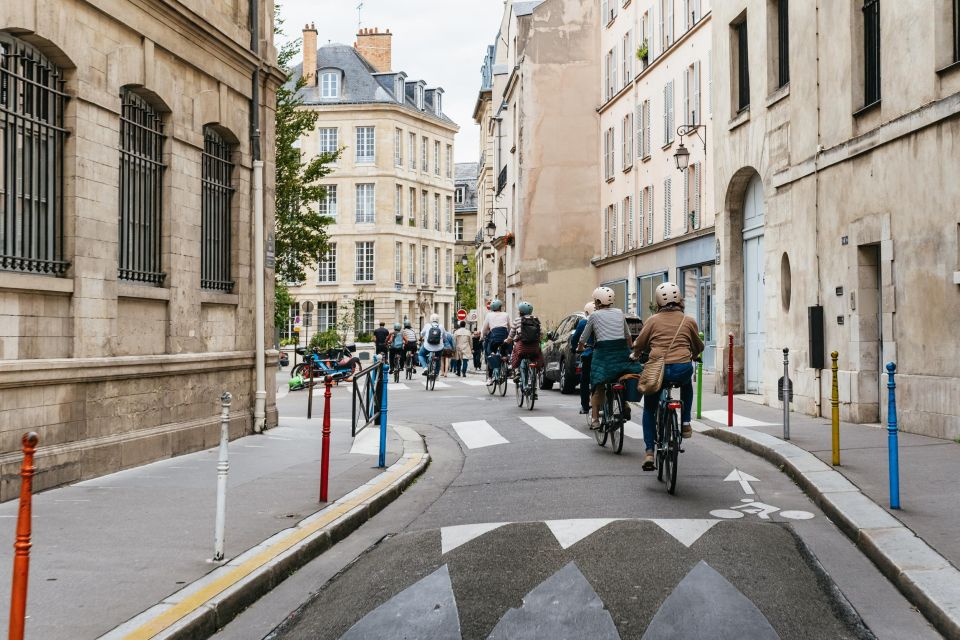
This tour works great as an early trip plan. Paris is huge, and first-time orientation is tough when you’re walking: you see something cool, then lose the thread. On this ride, the guide keeps the city connected. You move through major districts, but on smaller streets and in the spaces between big landmarks—so you leave with a mental map you can actually use later.
The pacing is leisurely, and the ride is designed for all levels of fitness. That doesn’t mean it’s an exercise class. It means you’re more likely to stop when something matters—an architectural clue, a historical turning point, or a street layout you wouldn’t notice at walking speed.
And yes, it’s safe because the tour is managed. Across many guide names tied to this experience—Clément, Christian, Matthieu, Lorenzo, Paul, Igor, and others—you’ll see the same theme: clear instruction, calm handling on busy streets, and a guide who keeps the group together.
You can also read our reviews of more cycling tours in Paris


Starting at Hôtel de Ville: where the ride actually begins
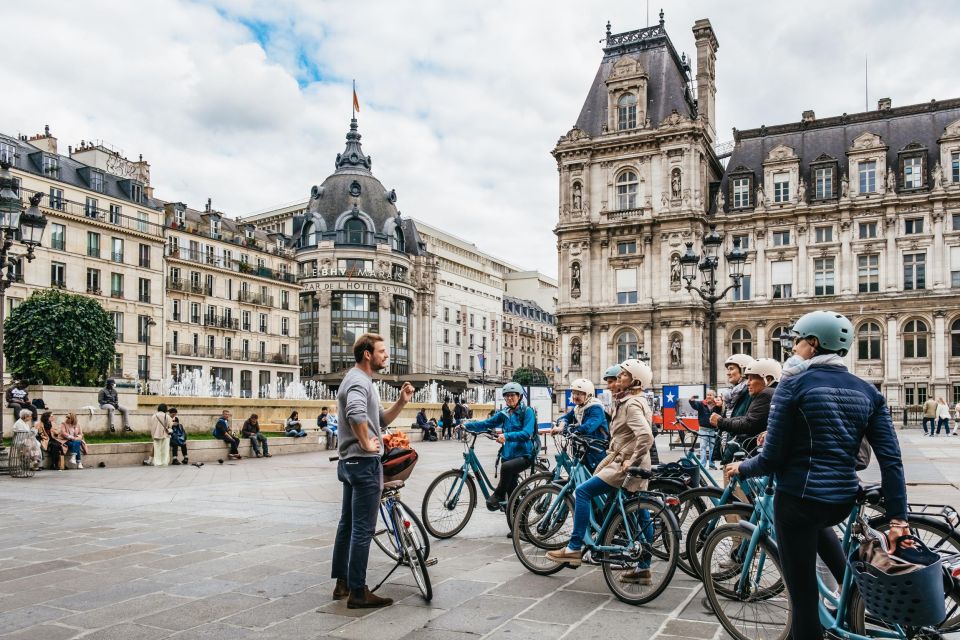
You meet at 7 Place de l’Hôtel de Ville, in the large square by City Hall (75004). The meeting point can feel confusing at first because the square is big, so double-check the exact address in Google Maps before you arrive.
Your guide waits at the lift entrance leading to the underground parking where the bikes are stored, and they’re holding a red umbrella. It sounds minor, but it helps a lot with first-timer nerves. If you’re worried about time in Paris traffic, the Metro is the safest bet to get there on schedule—specifically Hôtel de Ville on lines 1 and 11, and exit number 4 (Avenue Victoria). Once you’re above ground, the elevator is about 20 meters ahead.
This part matters because a good bike tour depends on a smooth start. When you spend 10 minutes locating the group, you don’t waste the best energy of the morning or afternoon.
Île Saint-Louis and the “old Paris” feeling that sticks
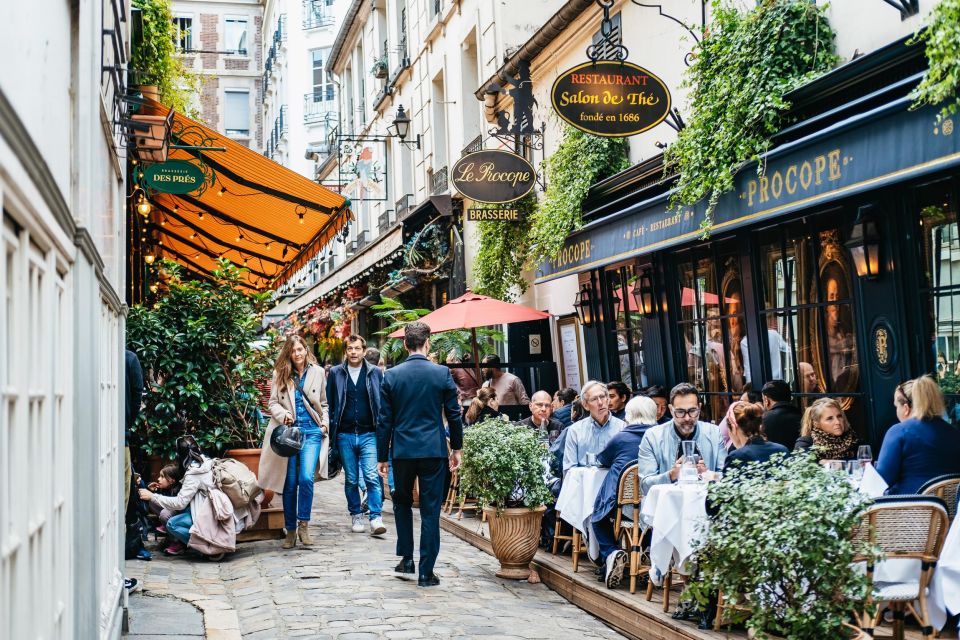
Once you’re rolling, you head toward the city island and then to St Louis Island. The highlight here is the sense of continuity: it’s described as mostly unchanged since the 17th century. That’s not just a trivia line. It changes how the streets feel. You’re riding through a place that doesn’t behave like a modern neighborhood grid, and the guide helps you read what you’re seeing.
Crossing to the right side of the Seine also gives you a helpful change of perspective. Paris is famous for postcard views, but on a bike, the in-between angles matter. You don’t just look at the river—you travel alongside it, and the city starts to feel navigable.
Entering the Marais: medieval streets and real community history
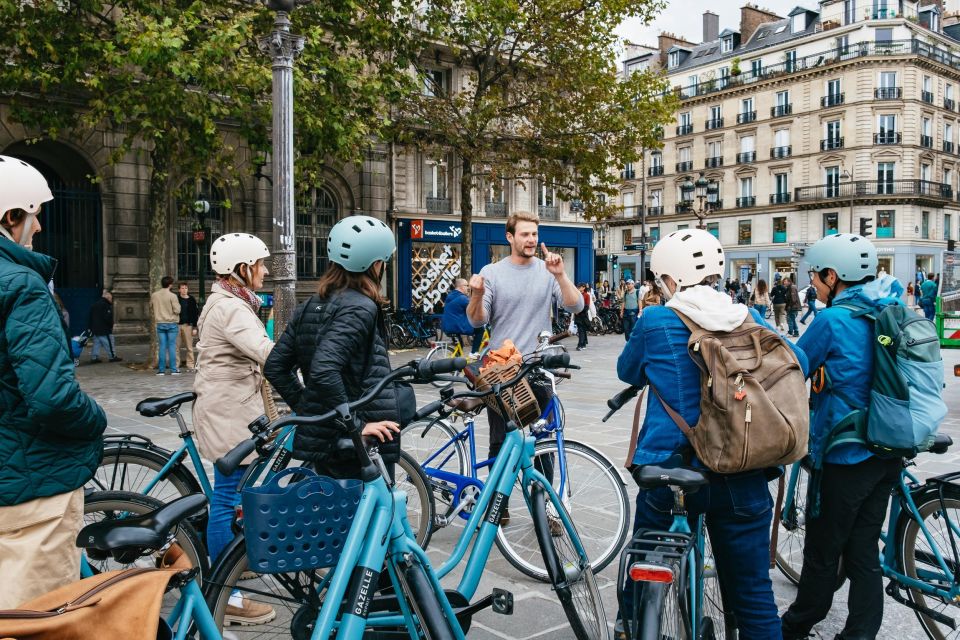
From the Seine crossing, you enter the medieval Marais, a district known for its Jewish and gay neighborhoods. This is where the “nooks and crannies” promise becomes tangible. You ride through middle-aged house fronts and quieter side streets, then move into more stylish corners as the area transitions.
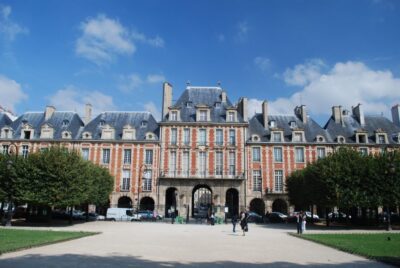
A key stop in this section is the first-ever Kings Square, where the buildings are described as magnificent. The tour’s value isn’t just the names of places; it’s the explanation of why these squares and streets formed the way they did and how the city’s social history shaped what you see now.
One drawback to flag: this section depends on group flow. If you’re the kind of rider who wants constant frequent photo stops, you may need to balance your timing with the pace of a small group. The ride is relaxed, but it’s still a guided loop.
Bastille area and the prison story: why the streets feel dramatic
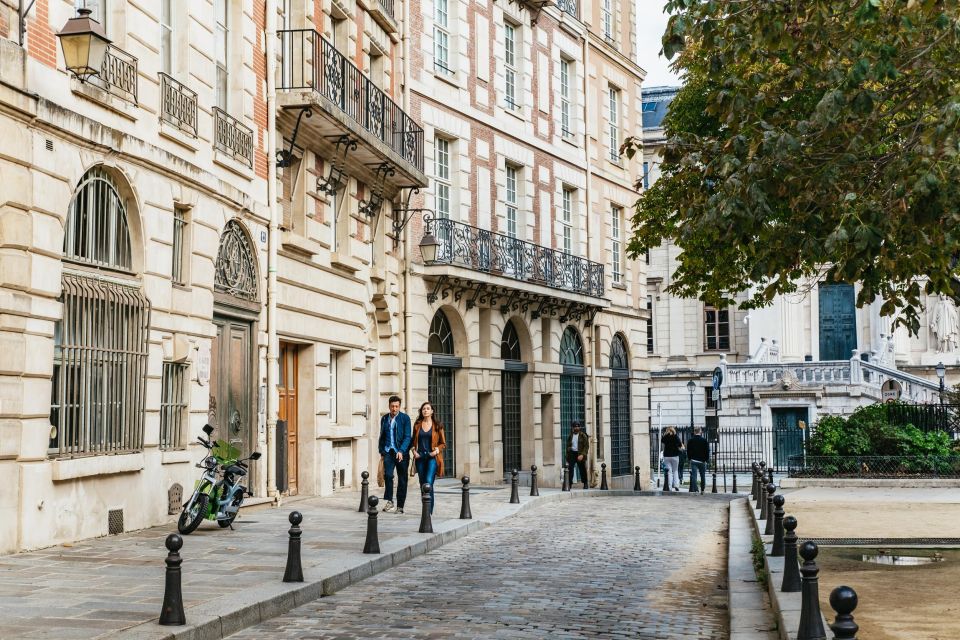
Continuing through the Bastille square, the guide helps demystify the legendary prison and the story behind Bastille Day. The value here is that you’re not learning it from a textbook. You’re hearing it while you ride through the surrounding area, so the place makes more sense.
You also get a nice break from city-road chaos. The tour is designed to escape heavy traffic by using a bike-friendly path lined along the Seine. That means you get scenery and a calmer ride rhythm at the same time.
Then comes the water-side pause: there’s a drink stop along the water. Food isn’t included, so think of this as a refreshment opportunity rather than a full meal plan. I’d still bring your own snack strategy for later if you’re prone to getting hungry mid-afternoon.






The left bank: Saint Germain des Prés, cafés, and art streets
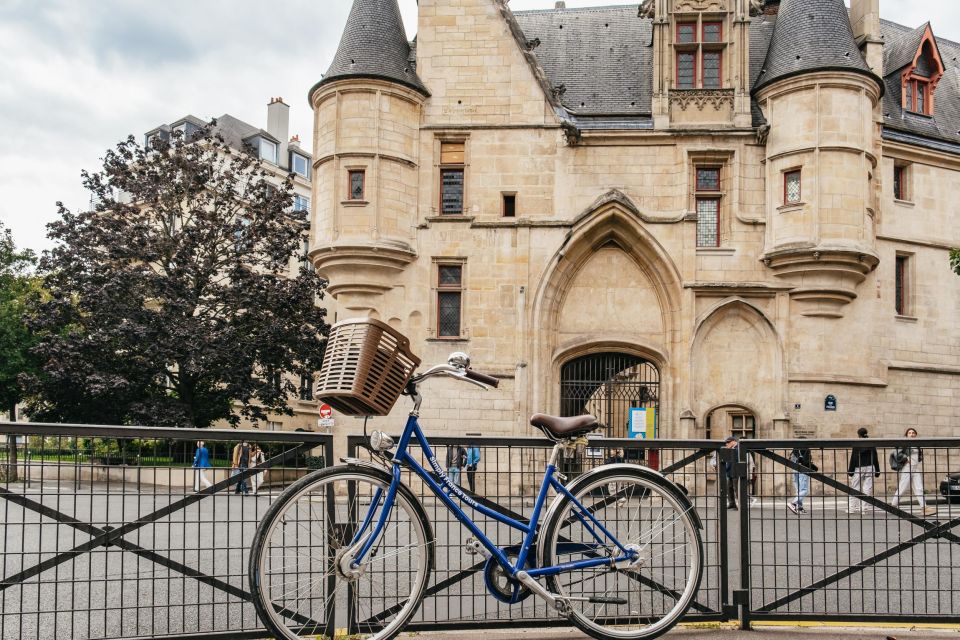
After the Seine stretch, you move to the left bank. The guide steers you toward Saint Germain des Prés, calling it literary and tying it to cafés and art galleries that locals favor.
One of the more unusual bits of context is the mention of the world’s oldest company, described as about 1154 years old. Even if you don’t care about corporate history, that detail works as a mental anchor. It tells you this isn’t a city of isolated sights. The places connect across centuries.
If you like wandering but hate aimless wandering, this is your sweet spot. You’ll see how kings, queens, revolutionaries, and Napoléon get mixed into a timeline that ends in blood in Odéon and Luxembourg. That framing changes how you interpret the buildings around you—you start looking for the “why” behind the street corners.
Odéon and Luxembourg: history you can feel while riding
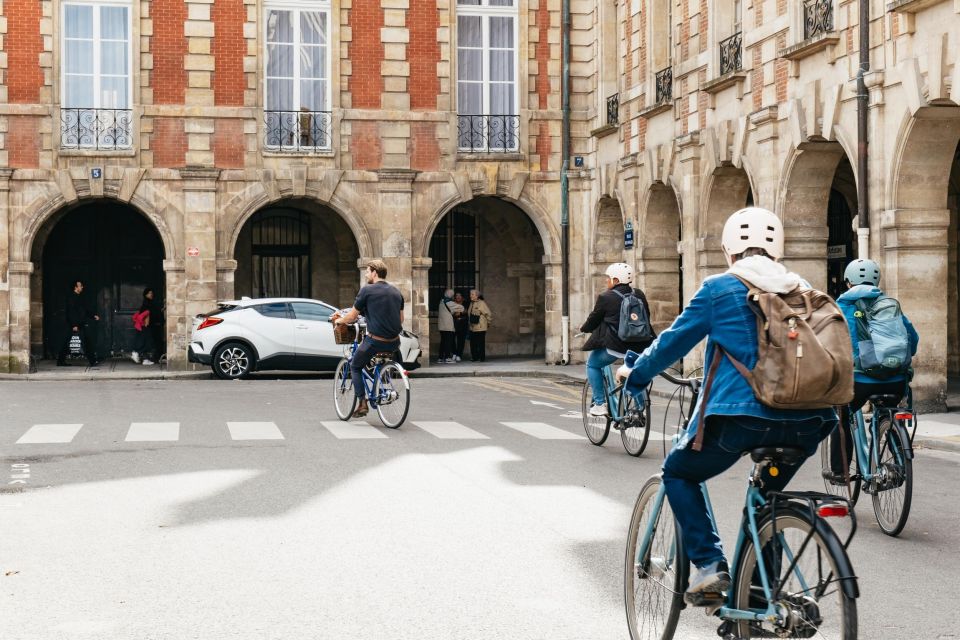
Odéon and Luxembourg are often treated as separate stops on other tours. Here, they’re connected as part of a bigger story arc. You’ll be riding between left-bank neighborhoods where the atmosphere shifts quickly—more intellectual and café-centered in some blocks, then more formal and garden-based nearby.
The tour includes a rest moment at the left bank’s preferred garden area (Luxembourg). That break matters for a bike tour because it lets you reset: water, quick photos, and a breather before you tackle the Latin Quarter streets.
If you’re traveling with people who aren’t sure they want bike riding at all, this garden stop can be the “okay, I get it” moment. It turns the ride into a sequence of experiences rather than just transportation.
Sorbonne and the Latin Quarter: ruins, back streets, and contrast
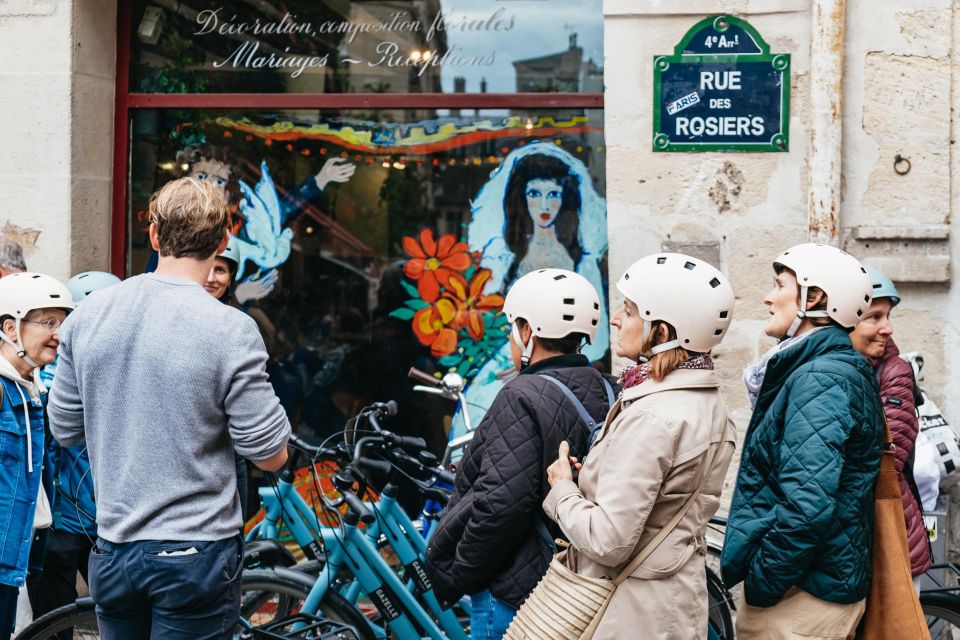
Next you reach Sorbonne University and the Latin Quarter. The description here is specific: antic Roman empire ruins mixed with older medieval streets, including some back lanes that are described as “dangerous.” That last part isn’t meant to scare you. It’s a reminder that this area’s streets evolved over time, not all of them designed for modern traffic flow.
On a bike, you feel the contrast fast. The Roman-era remnants or references don’t land the same way as a museum plaque. You’re physically close to the space where layers of the city overlapped, and the guide helps you spot that relationship.
If you’re tempted to skip this district because it’s already “historic enough,” don’t. This is where the tour’s approach pays off: it links what you might see in fragments during separate day trips into one coherent ride.
Cycling comfort: what the bike ride is really like
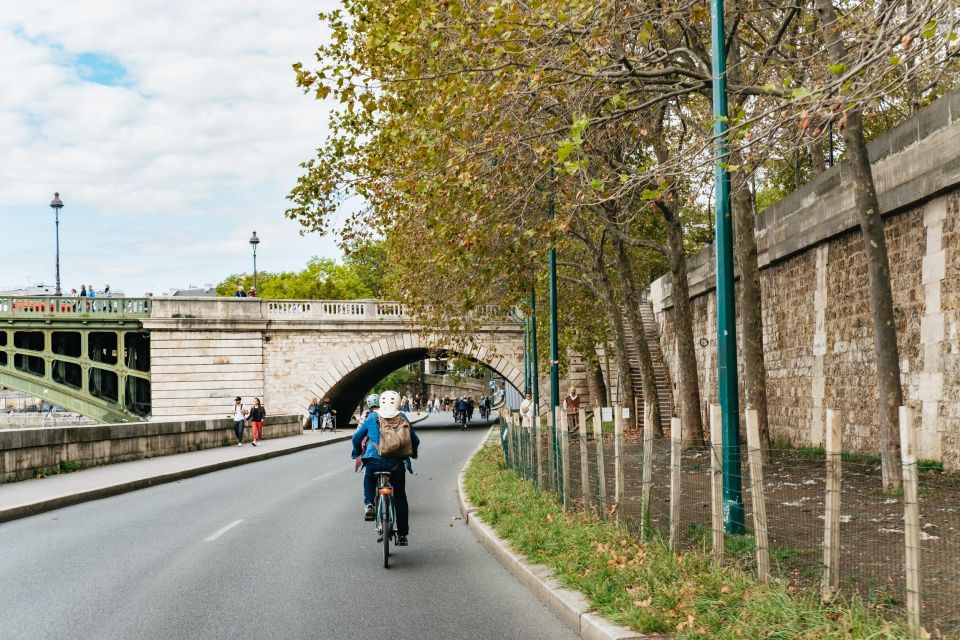
You’ll get a bike and helmet included, and the ride is described as suitable for all levels of fitness. That tracks with the consistent praise from riders about the bikes being easy to ride and the route being mostly side-road and flat.
Safety is a repeated highlight, with guides emphasized for keeping everyone comfortable and making the group feel protected even when the road gets busy. Guides like Christian, Lorenzo, and Paul are frequently described as calm, patient, funny, and focused on keeping the ride smooth.
A practical note: Paris streets can be chaotic. Even on low-traffic side streets, you’ll still be riding around buses, cars, and pedestrians. Your best strategy is to relax your grip, follow the guide’s instruction, and keep your eyes up on intersections.
Who this tour suits best (and who should skip it)
This is a smart choice if you:
- want a 3-hour orientation that helps you plan the rest of your trip
- already saw some big highlights and now want neighborhoods with personality
- like history tied to streets, not just monuments
- prefer a guided route that helps you avoid dead-end wandering
It may be less ideal if you:
- want heavy monument-hopping or lots of long stops at famous statues
- are traveling with anyone under 13, or if anyone in your group is under 4 ft 4 in (135 cm)
Price and value: how $53 fits the day
At $53 per person for 3 hours, this is priced like a genuine city experience rather than a premium museum ticket. You’re paying for more than just a bike. You get a local guide, equipment (bike + helmet), and a route that puts you through multiple districts—Marais, Seine paths, Saint Germain des Prés, Odéon, Luxembourg, Sorbonne, and the Latin Quarter—in one connected loop.
Food and drinks aren’t included, so plan on buying something for yourself. But the included drink stop along the Seine helps soften that cost. For many people, this tour becomes a high-value “map maker”: it tells you where you’ll want to return for a longer wander later.
Given how often the guides are praised for safety and storytelling, the real value is the guide’s control of the route. A cheap bike rental doesn’t come with context, pace, or a plan for where the streets get tricky.
Final check: should you book this Paris ride?
I think you should book this tour if you want Paris that feels walkable but faster—plus stories that explain why these neighborhoods look the way they do. The best version of this experience is when you treat it as an introduction and a scouting mission: you get your bearings, you learn what you actually like, and you come back later under your own feet.
If you’re the type who only enjoys Paris when you’re at the most famous landmark at the exact right angle, you might feel slightly under-satisfied. This tour trades “icon time” for street-level understanding, which is exactly why it’s so loved.
If you want to maximize value, aim to do it early in your trip. Then build your remaining days around what you saw—cafés in Saint Germain des Prés, another pass through the Marais, or a slower return to Luxembourg when you’ve got more time.
FAQ
FAQ
How long is the Paris bike tour?
It runs for 3 hours.
Where does the tour meet?
The meeting point is 7 Place de l’Hôtel de Ville, 75004 Paris (City Hall area). Your guide waits at the lift entrance leading to the underground parking and is holding a red umbrella.
What’s included in the price?
You get a guide, a bike, and a helmet.
Are food or drinks included?
No. Food and drinks aren’t included, though the route includes a drink stop along the Seine.
What kind of riding should I expect?
The tour focuses on flat routes and low-traffic side streets, plus a bike-friendly path along the Seine.
Is the tour suitable for beginners?
Yes. The tour is described as suitable for all levels of fitness, and riders are set up for comfortable, manageable cycling.
What languages are available for the guide?
Live tour guide languages include Italian, Spanish, German, Dutch, French, and English.
Is it a small-group experience?
Yes, it’s offered as a small group.
Are children allowed?
No. It’s not suitable for children under 13.
What are the height limits?
It’s not suitable for people under 4 ft 4 in (135 cm).