REVIEW · PARIS
Paris: Montmartre Culture and Local Pastries Walking Tour
Book on GetYourGuide →Operated by Simply France Tours SAS · Bookable on GetYourGuide
Montmartre turns every corner into a story. I love how the route links Sacré-Cœur views to Place du Tertre so you feel oriented fast, and I like that you get a guide to steer you toward top pastry and drink stops. One thing to plan for: this is not a tasting-included tour, so you’ll pay for anything you order.
I’ve heard great things about guides who bring the neighborhood to life, including Frédéric and also Climont, with a style that feels more like walking with a smart friend than sitting through a lecture. You cover a lot of ground in 150 minutes, starting near Lamarck–Caulaincourt by the restaurant Chez Ginette, then finishing at the iconic Moulin Rouge.
This walk is best if you’re comfortable on cobbled streets and lots of stairs and side alleys. It isn’t suitable for people with mobility impairments or wheelchair users.
In This Review
- Key things you’ll enjoy
- Where the tour starts: Lamarck–Caulaincourt and Chez Ginette
- Sacré-Cœur and the logic of Montmartre’s layout
- Place du Tertre: where art happens now
- The artist streets: Modigliani, Picasso, Utrillo, Matisse, and more
- The labyrinth of alleyways and side streets
- The mill painted by Renoir and Van Gogh
- Café des Deux Moulins and the pastry/drink stops you’ll actually use
- The Eiffel-level finale: ending at Moulin Rouge
- Value and price: why $37 can work if you plan it right
- Who should book this Montmartre walking tour
- Should you book this tour or skip it?
- FAQ
- Where is the meeting point?
- How long is the tour?
- What does the $37 per person include?
- Are pastries and drinks included in the price?
- What landmarks will we see?
- Who is the tour best for?
- What languages are available?
- Is the tour suitable for wheelchair users or mobility impairments?
Key things you’ll enjoy
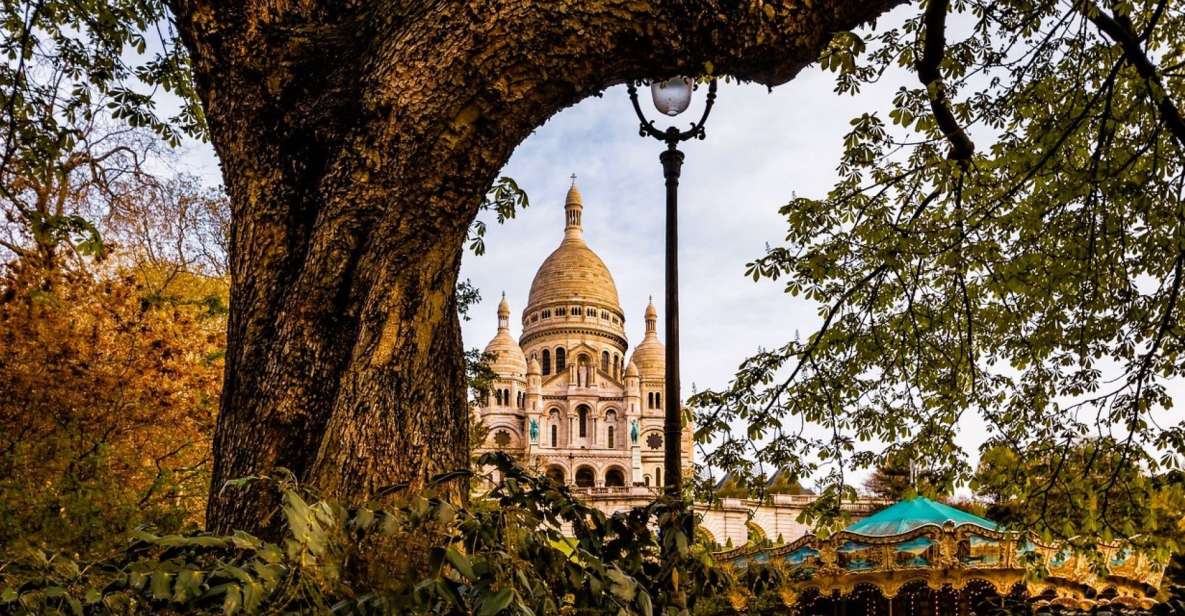
- Sacré-Cœur and the Montmartre skyline: get the big landmark moment early
- Place du Tertre’s art scene: see where modern artists still cluster
- Artist-street storytelling: names like Modigliani, Picasso, Utrillo, Matisse, and more
- Hidden side streets with a guide: you won’t feel “lost in the maze”
- Iconic ending at Moulin Rouge: a dramatic finish to your Montmartre circuit
- Pastry and drink stops with local guidance: you choose what to buy
Where the tour starts: Lamarck–Caulaincourt and Chez Ginette
Montmartre can be confusing at first. That’s why I like that this tour starts in a very practical place: the meeting point is between the metro stairs at Lamarck–Caulaincourt and the restaurant Chez Ginette. It’s easy to reach by metro, and you’ve got a clear landmark on the street to anchor yourself.
The tour begins at Chez Ginette, and that matters more than it sounds. Starting with a real neighborhood address helps you transition from “getting there” into “now we’re walking Montmartre,” instead of spending the first minutes trying to line up your bearings.
Bring comfortable shoes. Montmartre streets include cobbles, steep stretches, and tight lanes. In 150 minutes you’ll be glad your feet are up for it. Also, pack your camera—this route is made for photos, especially around the big viewpoints.
You can also read our reviews of more walking tours in Paris



Sacré-Cœur and the logic of Montmartre’s layout
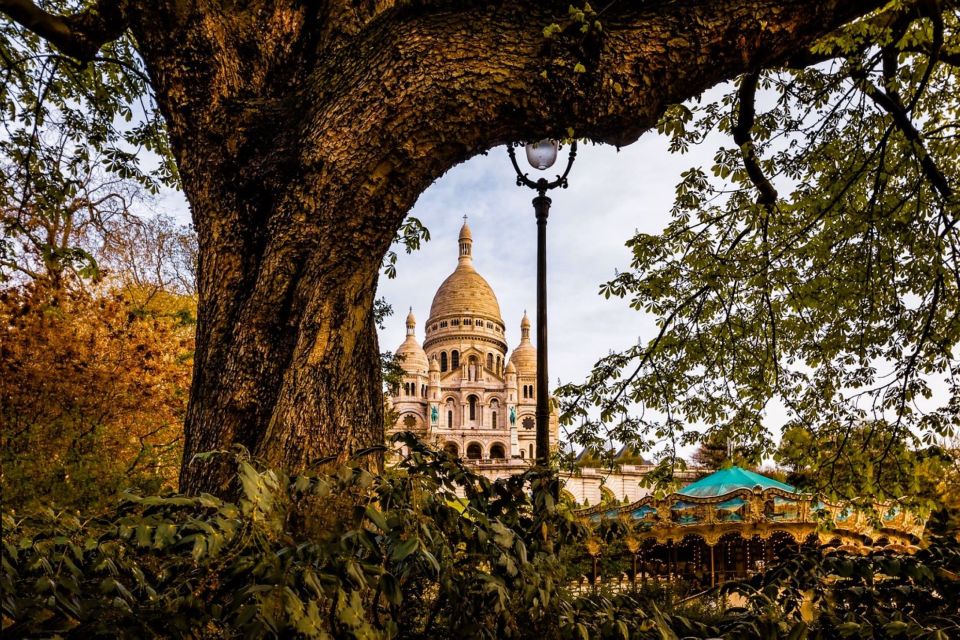
You’ll see Sacré-Cœur during the walk, and it’s one of those stops that helps everything else make sense. From this area, Montmartre’s geography becomes clearer: why certain squares feel like stages, why side streets feel like shortcuts, and why the views matter so much.
I also appreciate that the tour doesn’t treat Sacré-Cœur as a quick photo and then off to the next dot on a map. You get the surrounding context as you move through the district. That’s the difference between seeing a landmark and understanding why it’s positioned where it is.
After Sacré-Cœur, you’re set up for the next step: the art-focused heart of Montmartre, where you’ll trade grand views for street-level character.
Place du Tertre: where art happens now
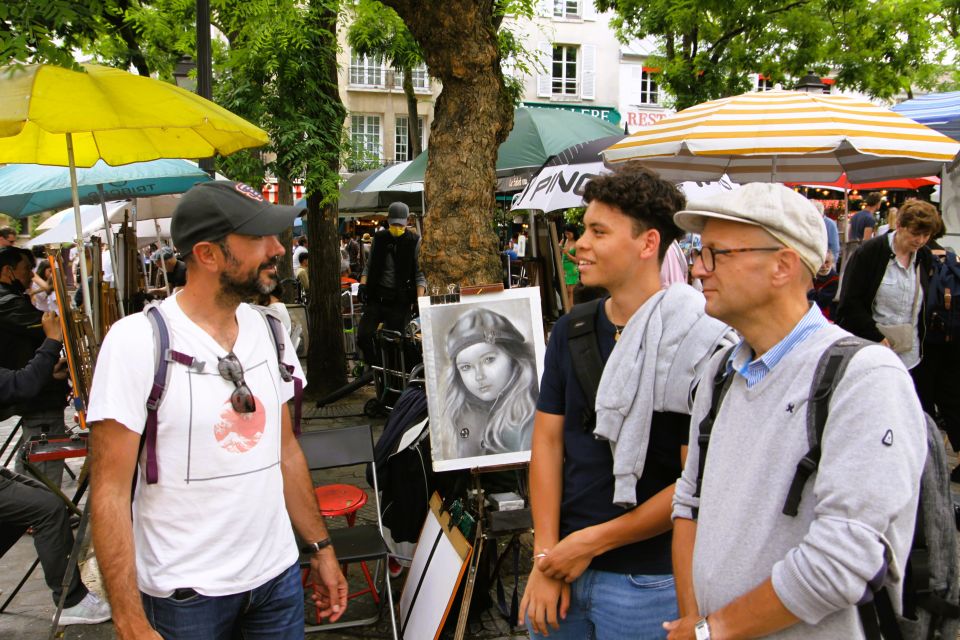
Place du Tertre is one of those squares you either rush past or actually watch. Here, you’ll spend time in the area that still functions as an artistic hub, with a strong “Montmartre” vibe that’s easy to recognize the second you arrive.
What I like about this stop is that it connects past and present. The guide helps you see how Montmartre built its reputation for artists and how that reputation still shapes what you see on the ground today. You’re not just hearing a list of names; you’re watching the place where people keep coming to make and sell art.
This is also a useful pause for photography. The square gives you a kind of stage framing—people, street texture, and that Montmartre atmosphere all in one frame.
The artist streets: Modigliani, Picasso, Utrillo, Matisse, and more
Montmartre is famous for its artist community, and this tour leans into it with real street-level storytelling. You’ll be guided to spots associated with artists such as Modigliani, Picasso, Utrillo, Van Dongen, Juan Gris, and Matisse.
You don’t need to know art history to enjoy this. The point is to learn how these names connect to the neighborhood layout and to the daily rhythms of the people who lived and worked here. When a guide ties a famous name to a specific part of the district, you start noticing details you would’ve missed on your own: what the streets would’ve offered, what kind of light people might have chased, why certain viewpoints became iconic.
This part of the tour is also where a great guide makes the biggest difference. The style you’ll want is exactly what people described with guides like Frédéric: friendly delivery, clear explanations, and stories that make time fly. If you enjoy walking while someone fills in the blanks, you’re going to like this section.
The labyrinth of alleyways and side streets

Montmartre’s street plan can feel like a maze. You’ll cover labyrinthine alleyways and side streets with the help of your guide, which is the smart way to do it.
I like guided walking in places like this because you get two payoffs at once:
1) you move efficiently through tight lanes without backtracking, and
2) you notice the neighborhood’s textures—doorways, small squares, and quick changes in elevation.
Even if you love getting “lost,” Montmartre is one of those neighborhoods where it helps to have someone who knows where the story points next. That turns the whole walk from wandering into a connected route with momentum.
You can also read our reviews of more tours and experiences in Paris





The mill painted by Renoir and Van Gogh
The tour includes a stop connected to a famous mill linked to Renoir and Van Gogh. That’s a special kind of Montmartre moment: you’re standing near a subject that artists turned into art, not just hearing about famous paintings in the abstract.
This is one of the reasons I’d call this tour more than a sightseeing stroll. It encourages you to look at the place the way artists may have looked at it—shape, light, and the feel of the street corner as a creative backdrop.
If you’re a museum person, this stop may make you want to chase more art afterward. If you’re not, it still works because it gives you a memorable reason to look carefully instead of just snapping a photo and moving on.
Café des Deux Moulins and the pastry/drink stops you’ll actually use
Here’s the practical part: you’ll visit some of the city’s best spots for pastries and drinks with guidance from the local. A named highlight is Café des Deux Moulins.
Now the important catch: pastry testing is not included into the price of the tour. In other words, you get the direction and the “best place to go” advice, but if you want to taste something, you’ll be paying on your own.
I think that’s actually fair value—because it keeps you flexible. You can choose what fits your taste and budget: a sweet pastry, a coffee, a quick drink, or nothing if you’re saving room for later. But you should go in with the right expectation so you don’t feel like the tour promised free bites and then didn’t deliver.
If you want to make the pastry portion work smoothly, do this:
- come hungry (or at least pastry-curious)
- plan to spend some euros on your own order
- use the guide’s suggestions to avoid wasting time comparing menus
The guide also helps you understand which places are worth your stop, which is helpful in a neighborhood where “tourist trap” energy can hide behind pretty storefronts.
The Eiffel-level finale: ending at Moulin Rouge
You’ll end at the Moulin Rouge cabaret, which is a dramatic way to wrap up your Montmartre walk. By the time you reach it, you’ll have already absorbed the area’s mix of art, performance, and street identity—so the cabaret doesn’t feel random.
This ending also helps you decide your next move. If you want to go further into the nightlife side of the neighborhood, you’re already at the center. If you’d rather be calmer, you can head downhill toward more ordinary streets with a clearer sense of where you are.
Value and price: why $37 can work if you plan it right

At about $37 per person for roughly 150 minutes with a local guide, you’re paying for three things:
- guided orientation in a confusing district
- history and stories that connect landmarks and side streets
- curated food-and-drink recommendations (even though tasting isn’t included)
When food testing is not included, the big question is whether the guide still justifies the price. From what I’ve seen people respond to, the answer is yes—especially if you like stories that make famous places feel human. Guides who deliver in a lively, personable way (like Frédéric, according to accounts) turn the walking time into real experience, not just motion.
The only reason this wouldn’t be great value is if you came specifically expecting a true tasting tour where multiple bites are built into the ticket. If that’s your plan, you’ll want a different type of tour.
Who should book this Montmartre walking tour
This works best if you:
- want an organized way to see Sacré-Cœur, Place du Tertre, and Moulin Rouge without getting stuck in wrong turns
- enjoy art-related storytelling, especially names tied to Montmartre like Picasso and Matisse
- like walking with a guide who keeps things friendly and moving
- want pastry and drink guidance but you’re okay paying separately for what you order
It’s less suitable if you:
- need wheelchair-accessible routes or have mobility limitations, since the experience involves walking and is not recommended for wheelchair users
Should you book this tour or skip it?
Book it if you want Montmartre in a single, guided loop: landmarks up front, art-street context in the middle, and an unforgettable finish at Moulin Rouge. The guide-driven navigation of the side streets is a real benefit, especially in a place with tight lanes and steep changes.
Skip it (or pick a different option) if your main goal is an included pastry tasting. This one offers famous stops and helpful recommendations, but it doesn’t include food or drink.
If you’re the kind of person who enjoys learning while you walk, this is a strong way to spend 150 minutes in Montmartre.
FAQ
Where is the meeting point?
Meet your guide between the metro stairs at Lamarck–Caulaincourt and the restaurant Chez Ginette.
How long is the tour?
The tour lasts 150 minutes.
What does the $37 per person include?
It includes a walking tour and a local guide. Food and drinks are not included.
Are pastries and drinks included in the price?
No. The tour provides pastry and drink recommendations and stops, but pastry testing is not included in the tour price.
What landmarks will we see?
You’ll see Sacré-Cœur, Place du Tertre, and the Moulin Rouge, plus artist-related spots in the Montmartre area.
Who is the tour best for?
It’s best for people comfortable walking in a neighborhood with side streets and stairways, and who want guided navigation and local recommendations.
What languages are available?
The live guide is available in English, German, French, Italian, and Spanish.
Is the tour suitable for wheelchair users or mobility impairments?
No. It’s not suitable for people with mobility impairments or wheelchair users.