REVIEW · PARIS
Paris: Croissant Baking Class with a Chef
Book on GetYourGuide →Operated by Studio Pâtisserie · Bookable on GetYourGuide
Butter, dough, and a Parisian lesson. This croissant baking class turns a famous pastry into a step-by-step skill you can actually repeat at home, with small-group help from Chef Léo in a cozy studio kitchen. The format is very practical: you work the dough, learn the why behind the technique, and you get to eat the results while they’re still warm.
Two things I especially like: you’re not just watching—you’re hands-on for the key moves like rolling and folding, and the chef keeps checking your technique so you don’t pick up bad habits. Also, the class mixes technique + simple science, like how butter quality affects the layers and how proofing changes texture and flavor.
One consideration: this is physical work. Rolling out croissant dough takes arm strength, and there are age limits—children under 15 aren’t suitable, and children under 17 must be accompanied by a paying adult.
In This Review
- Key Highlights at a Glance
- First Things First: Where This Class Happens in Paris
- Meet Chef Léo: How the Teaching Style Works
- The Croissant Workflow: What You Do During the 3 Hours
- 1) Prepare and handle the dough
- 2) Master rolling and folding
- 3) Dough rest and proofing (the part that feels slow, but isn’t)
- 4) Shape into classic crescents
- 5) Bake, sample, and finish with confidence
- What You’ll Actually Bring Home (And Why It’s Better Than a Recipe Sheet)
- Bi-Color Croissants: The Optional Side Quest (When Offered)
- Price and Value: Is $140 Worth It?
- Who This Croissant Class Is Best For
- Physical Reality Check: Age and Effort Matters
- A Practical Tip List Before You Go
- Should You Book This Croissant Class?
- FAQ
- What’s the duration of the croissant baking class?
- How many people are in the group?
- Who teaches the class, and what language is it in?
- Where do I meet for the class?
- Which metro lines are closest to the meeting point?
- What’s included in the class price?
- Do I get to eat what I make?
- Is there an option for bi-color croissants?
- Are there age requirements?
- Is the class flexible to book if my plans change?
Key Highlights at a Glance
- Hands-on folding and shaping with close guidance so you build proper layers
- Chef Léo (English instruction) leads the session with a friendly, efficient pace
- Science of the croissant: butter quality and proofing are explained clearly
- Warm sampling during the class from what you make, not just a final plate
- Optional bi-color croissants on selected days for an extra visual twist
First Things First: Where This Class Happens in Paris
You’ll meet at Studio Pâtisserie, in a building with a gray storefront. It’s set up for training, not a demo show—think workstation setup, tools ready to go, and a kitchen vibe designed for learning.
Getting there is straightforward on public transport. The nearest metro options are Line 2 (Rome) and Line 3 (Villiers. If you like arriving with less stress, use those lines and keep your directions simple: just plan to get to the gray storefront and you’re done.
This matters because you’re going to spend most of the time working with dough. When the meeting point is easy, you show up calmer—and you’ll do better at steps that require focus and proper temperature.
You can also read our reviews of more cooking classes in Paris


Meet Chef Léo: How the Teaching Style Works
This class is instructor-led in English and limited to 8 participants, which is a sweet spot. Big enough that you’re not stuck in awkward silence, small enough that the chef can correct your fold and shaping as you go.
Chef Léo’s role is twofold: he teaches the steps, and he teaches judgment. That second part is what makes this class feel more useful than a one-off cooking session. You’re not only learning what to do, you’re learning how to tell if the dough is behaving the way it should.
In the real flow of the class, you also get room for questions. People in the class tend to ask the practical stuff—why the dough needs rest, what to do if butter starts to feel too soft, how to keep shaping consistent. The chef is there to keep your process on track.
The Croissant Workflow: What You Do During the 3 Hours
The class runs 3 hours, and it doesn’t feel rushed. The reason is simple: croissant dough has a schedule. You’ll work in phases, then wait while the dough rests and rises, and you’ll work again with a clearer goal each time.
Here’s the typical rhythm, written like you’ll experience it:
1) Prepare and handle the dough
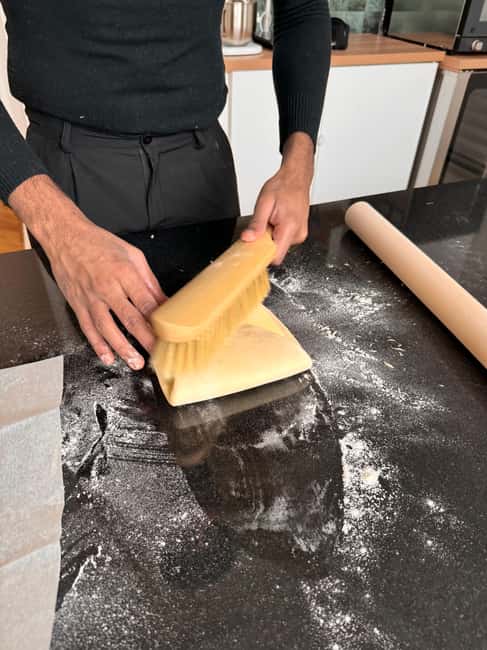
You start in the workstation and learn the fundamentals of working the dough properly. Croissant dough isn’t like pizza dough where you can kind of “go by feel.” You need gentle control—mixing and handling in a way that sets you up for strong layers later.
This is where the class earns its keep. You’ll be doing the motions yourself, not just receiving instructions. And since the group is small, the chef can notice issues early.
2) Master rolling and folding
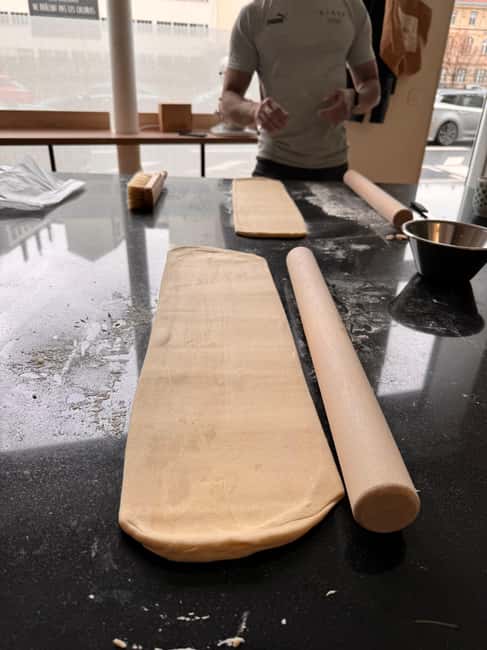
This is the signature skill. You’ll learn the folding techniques that create the croissant’s flaky structure. The chef guides each step so the fold is tight, even, and correctly aligned—because misalignment tends to show up later in uneven layers.
If you’ve only ever bought croissants, folding sounds abstract. In this class, it becomes physical. Your hands learn the method. Your eyes learn the result you’re aiming for.
You can also read our reviews of more tours and experiences in Paris





3) Dough rest and proofing (the part that feels slow, but isn’t)
Croissant dough needs time to relax and develop structure. During the resting and rising periods, you’re not just sitting. The chef shares the science in plain language so the waiting makes sense.
You’ll learn why butter quality matters and how proofing influences texture and flavor. This is useful even if you never become a serious baker, because it helps you understand what changes when dough is cold, warm, under-proofed, or over-proofed.
4) Shape into classic crescents
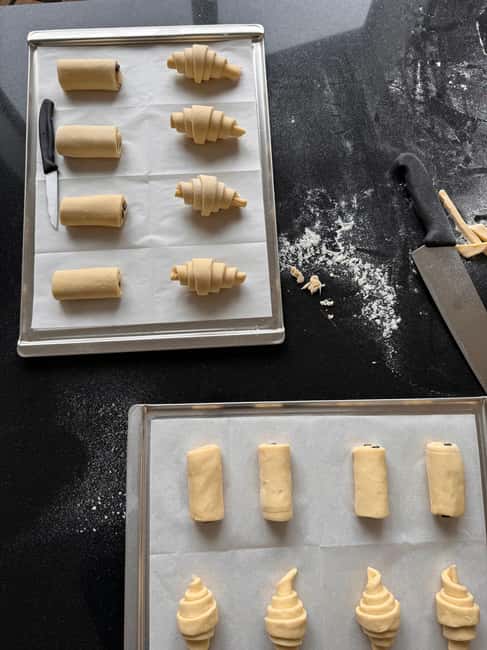
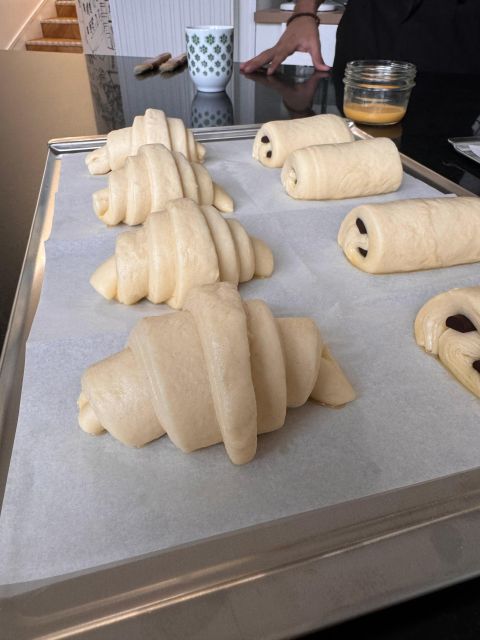
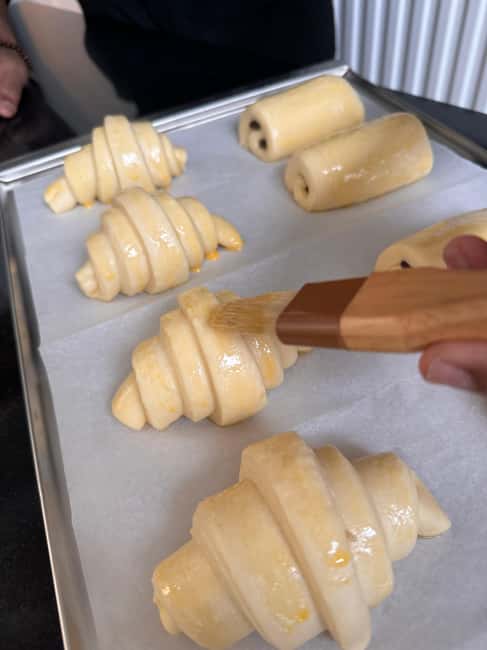
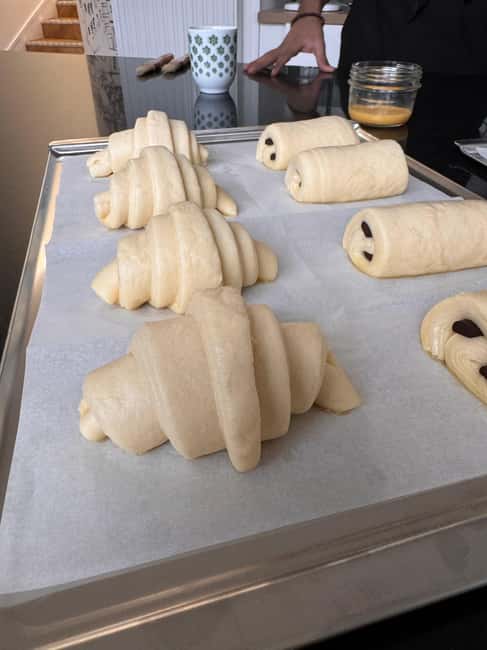
Once the dough is ready, you’ll shape. That means cutting, rolling, and forming those classic crescents. You do this under watchful guidance so your pieces are consistent in size and thickness.
This is also the part that makes everyone smile. When your croissants start looking like croissants, the process clicks.
5) Bake, sample, and finish with confidence
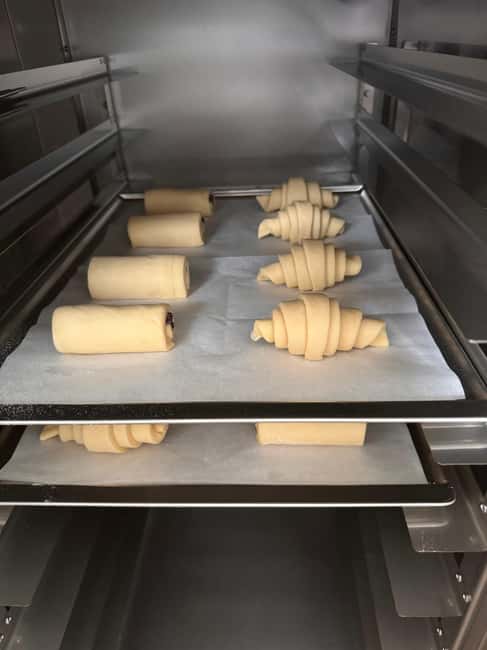
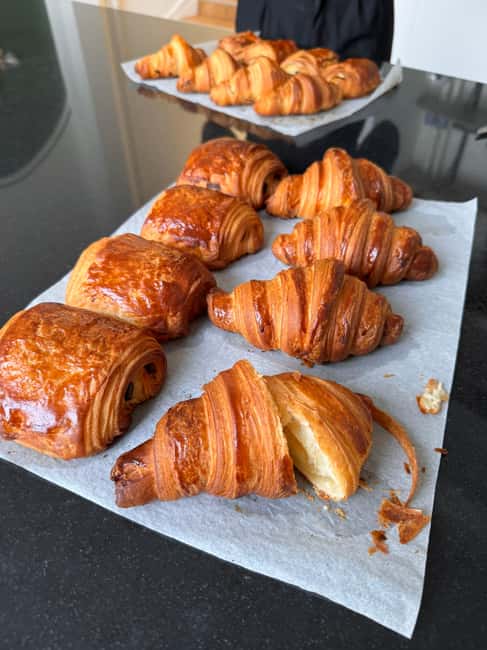
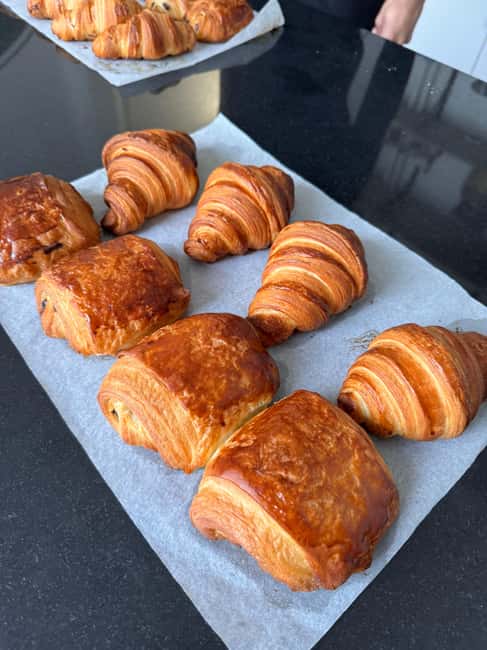
Your session includes sampling freshly baked croissants made in class, while they’re warm. That’s not a small perk. Croissants are at their best right away—crisp outside, flaky inside—and tasting at the right moment helps you “calibrate” what good looks like.
You also get a recipe to take home, plus personalized tips so your next attempt at home doesn’t depend on guessing.
What You’ll Actually Bring Home (And Why It’s Better Than a Recipe Sheet)
You leave with more than a name of ingredients. You get:
- Your croissants from the baking process (you taste during class, and you can take more along as you finish)
- A take-home recipe for reference
- Chef tips specific to what you did during class (this is the part most classes skip)
That last bit is huge. Most home bakers struggle not because they lack recipes, but because they don’t know which step mattered most for their outcome. The chef’s feedback helps you decide what to repeat and what to adjust next time.
Also, because you worked in a small group, you often get support while you’re still in the danger zone—rolling too hard, folding too loosely, or shaping without consistent tension. Those issues are easier to fix in the moment.
Bi-Color Croissants: The Optional Side Quest (When Offered)
On selected days, the class offers an exclusive bi-color croissant option. If you choose it, you’ll learn how to incorporate vibrant colors into the dough.
This isn’t just for looks. The technique adds an extra element of attention to handling and mixing so the dough stays workable and structured. If you already bake—or if you want a challenge beyond the basics—it’s a fun upgrade.
If bi-color isn’t offered on your day, you can still expect classic croissants and the core workflow remains the same.
Price and Value: Is $140 Worth It?
At $140 per person for a 3-hour class, the price is not low. But it’s also not just “a tasting experience.”
Here’s where the value comes from:
- You get expert chef guidance throughout, led by Chef Léo
- All ingredients are provided, plus professional-grade kitchen equipment
- You learn a demanding technique—rolling and folding—where feedback matters
- You get warm sampling from your own batch
- You receive a recipe to take home
- The group size is limited to 8, so you’re not lost in a crowd
If you were going to buy ingredients and tools and then teach yourself croissant folding from a video, you’d likely spend similar money—and still lose the guidance on timing and dough behavior. This class compresses the learning curve into one focused session, with feedback while it counts.
Who This Croissant Class Is Best For
This is a good fit if you want a hands-on Paris activity that doesn’t feel like a theme park. It’s especially great for:
- People who like cooking but want clearer technique than generic classes
- Couples who enjoy making something together (and bringing pastries back)
- Solo travelers who want a small group and a real skill at the end
- Food lovers who want the science behind why croissants work
It’s also ideal if you enjoy learning from a chef with personality. Many sessions are described as light-hearted while still structured—so you get education without stiff formality.
Physical Reality Check: Age and Effort Matters
Croissant making needs physical strength for rolling out the dough. That’s not a figure of speech. You’ll be using your arms and hands, and you’ll do it repeatedly.
The class also has age rules:
- Children under 15 are not suitable
- Children under 17 must be accompanied by a paying adult
If you’re bringing teens or adults with limited cooking comfort, that’s fine—confidence grows fast when you’re guided step-by-step. Just be honest about the physical part.
A Practical Tip List Before You Go
You’ll get better results when you come prepared. I’d do these:
- Come ready to work, not just watch. Croissants are hands-on by nature.
- Be ready to handle waiting periods. Resting and proofing are part of the learning, not downtime.
- Ask questions early, especially about butter temperature and proofing timing—those are recurring decision points.
- Plan to bring home pastries carefully. The class gives you what you make, so think ahead for carrying them.
Also, if you’re a first-timer, don’t aim for perfection on your first batch. Aim for good technique and accurate dough handling. That’s what the chef corrects, and that’s what you can reproduce later.
Should You Book This Croissant Class?
Yes, I think it’s worth booking if you want a classic Paris food experience with real instruction, not just a cute activity for photos. The small group size, the hands-on rolling and folding, and the fact that you taste the results while warm all point to a session designed for learning.
Book it if:
- You want technique you can repeat at home
- You value personal guidance over large-group demos
- You like the idea of croissant-making as a blend of craft and science
Skip it if:
- You want something purely low-effort and seated
- You’re not comfortable with the physical rolling step
- You’re traveling with someone who doesn’t meet the age suitability rules
If you do book it, you’ll leave with more than croissants. You’ll leave with a clearer sense of what makes the layers work—and that’s the real souvenir.
FAQ
What’s the duration of the croissant baking class?
It lasts 3 hours.
How many people are in the group?
The class is a small group limited to 8 participants.
Who teaches the class, and what language is it in?
The class is taught by Chef Léo (and the session is run in English).
Where do I meet for the class?
Meet at Studio Pâtisserie, in a building with a gray storefront.
Which metro lines are closest to the meeting point?
The nearest metro stations are Metro Line 2 (Rome) and Metro Line 3 (Villiers).
What’s included in the class price?
Your price includes chef guidance, all ingredients, access to professional-grade kitchen equipment, sampling of freshly baked croissants, and a recipe to take home.
Do I get to eat what I make?
Yes. There is ample sampling of freshly baked croissants during the class from what you prepare.
Is there an option for bi-color croissants?
Yes. There’s an exclusive bi-color croissant option on selected days, which includes the bi-color ingredients and class.
Are there age requirements?
Yes. Croissant making needs physical strength to roll the dough. Children under 15 are not suitable, and children under 17 must be accompanied by a paying adult.
Is the class flexible to book if my plans change?
You get free cancellation up to 24 hours in advance for a full refund, and there’s a reserve now & pay later option to keep plans flexible.