REVIEW · PARIS
Paris: Pastry & Chocolate Walking Tour with Tastings
Book on GetYourGuide →Operated by Devour Tours · Bookable on GetYourGuide
Paris desserts get their own guided street map. In about 2.5 hours, you’ll sample chocolate, croissant, macarons, and crêpe while walking through Paris covered passages and streets you’d miss on your own. It’s sweet, efficient, and very “Paris, but with a plan.”
Two things I especially like: you start with handmade chocolate at an older, family-run place, and you end with bean-to-bar chocolate in the center of town. Guides such as Emily, Sam, Khosi, Juan, Michelle, and Joshua are consistently praised for making the route feel easy and the stories make sense. One drawback to consider: it’s not a fit for everyone’s diet, since it’s not gluten-free/vegan, and it’s not suitable for people with serious nut allergies.
If you’re hungry from the start and keep your expectations practical, this is a fun way to fall harder for French pastry.
In This Review
- Key things to know before you go
- Your 2.5-hour Paris pastry plan (with real-world pacing)
- Meeting near Rue du Faubourg Montmartre and how the tour starts
- Le Petit Parisien: two homemade chocolates to start your sweet education
- Philippe Conticini and the croissant moment you should not miss
- The covered passages: Passage de l’Ancre, Bourg l’Abbé, and Grand Cerf
- Boulangerie LIBERTÉ: a bakery stop that keeps the variety moving
- Stohrer: macarons at one of Paris’s oldest patisseries
- Crêperie stop in Paris: crêpe with apple cider from Brittany
- Rue Montorgueil finish: bean-to-bar chocolate in the heart of the city
- Why this tour feels different from a basic food crawl
- Price and value: is $90 worth it?
- Who should book this Paris dessert walk
- Should you book this Paris Pastry & Chocolate Walking Tour?
- FAQ
- How long is the Paris pastry and chocolate walking tour?
- What’s the price per person?
- How many tastings are included?
- How big is the group?
- Where do I meet the guide, and where does the tour end?
- Is this tour vegan or gluten-free?
- What should I bring or wear?
Key things to know before you go
- You get 6+ tastings in 2.5 hours, so you won’t spend the whole morning waiting outside shops.
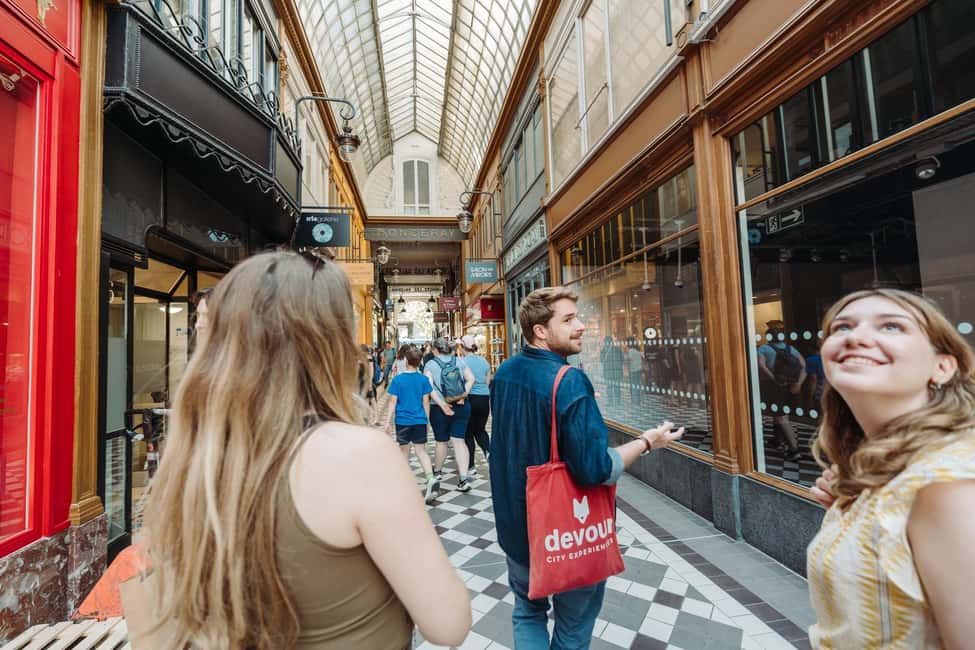
- The covered passages are a big part of the experience, with photo time and old-school Paris atmosphere.
- Croissant timing matters: the first pastry stop comes early, so don’t show up already full.
- Stohrer is the major dessert history stop, where you’ll try macarons at one of Paris’s oldest patisseries.
- It mixes regions on purpose: you’ll taste a Brittany-style crêpe with apple cider.
- Small group (max 10 people) keeps the pacing friendly and the guide able to talk clearly.
Your 2.5-hour Paris pastry plan (with real-world pacing)
This tour is built for people who love food but also want to actually see Paris afterward. You’re not locked into a long, all-day food crawl. Instead, you get a compact route of stops that keeps moving at a moderate walking pace, with short shop visits that add up quickly.
The best part is how the tour flows. It doesn’t just stack sugar on sugar. It teaches you the “why” behind the classics while you’re standing right in the place where the tradition shows up.
If you want an easy win for your first time in Paris, this can be a great move. If you’re already a pastry superfan, you’ll still appreciate how the stops connect French baking, chocolate-making, and the city’s hidden architecture.
You can also read our reviews of more walking tours in Paris


Meeting near Rue du Faubourg Montmartre and how the tour starts
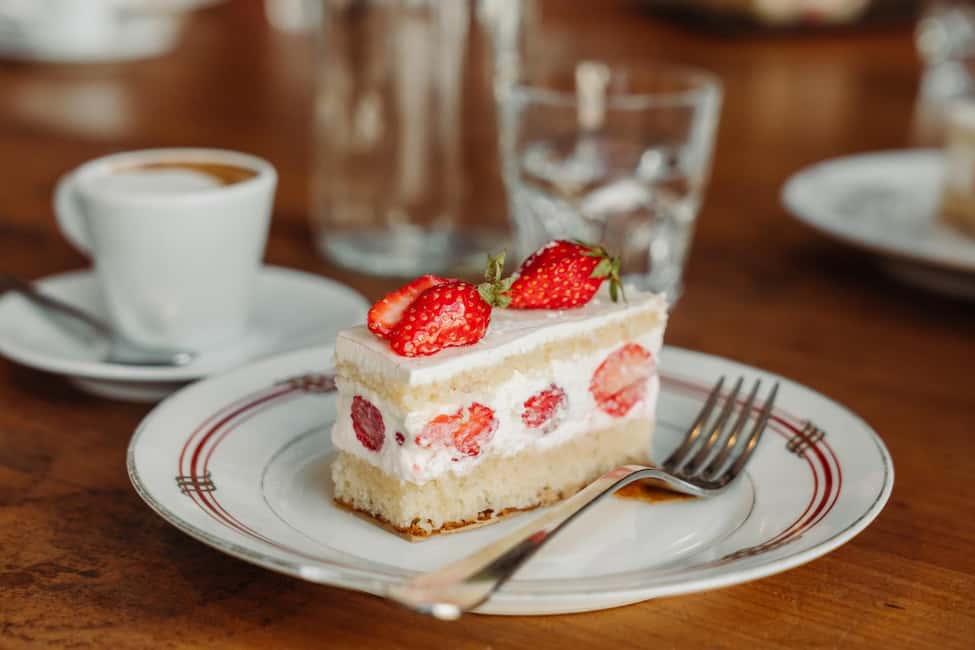
You meet at 34 Rue du Faubourg Montmartre (in the pedestrian area by the restaurant Faubourg 34). Plan to arrive 15 minutes early so you can get grouped up without stress. Your guide will be holding a red bag or a Devour Tours sign.
Right away, you’re set up for success: comfortable shoes, a full appetite, and enough time to digest afterward while you explore the rest of your day. The tour is in English, and the group stays small, limited to 10 people.
One simple tip: if you’re the kind of person who snacks early “just in case,” this tour will punish you for it. You want room for croissant, macarons, crêpe, and chocolate, in that order.
Le Petit Parisien: two homemade chocolates to start your sweet education
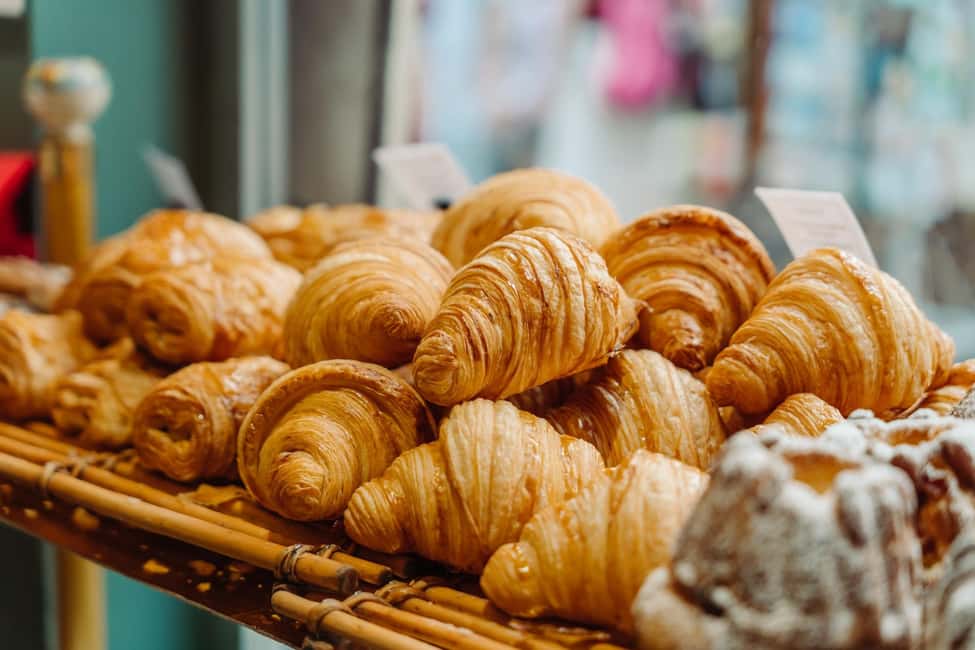
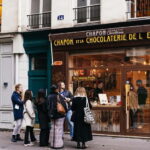
The tour kicks off with a visit to the oldest chocolatier in Paris. You’ll taste two homemade chocolates from a family-run shop and get a feel for traditional French chocolate-making.
This is a smart first stop because it sets your palate. Before you even start thinking about croissant flake or macaron crunch, you’re learning what “good chocolate” means in a French context. And tastings here are part of the pacing: you’ll get enough time to taste and listen without losing the group.
If chocolate is your thing, this is one of the strongest segments of the whole experience. It’s not just a sample for show. It’s a start that frames what you’re about to eat next.
Philippe Conticini and the croissant moment you should not miss
After the chocolatier stop, the route takes you into a cozy café tucked inside a passageway. This is where you’ll sip a café crème and eat a buttery, flaky croissant the way locals do.
Here’s the practical advice that matters: don’t eat breakfast before this tour. A croissant is a powerful thing. If you arrive with your stomach already claimed, you’ll feel like the tour is rushing you when it really isn’t. One guide on this route has even been praised for food-first pacing that makes people hungry in the good way.
Also, this café break is more than a pit stop. It’s part of the story. You’re tasting something simple that French bakers get right through method and patience.
The covered passages: Passage de l’Ancre, Bourg l’Abbé, and Grand Cerf
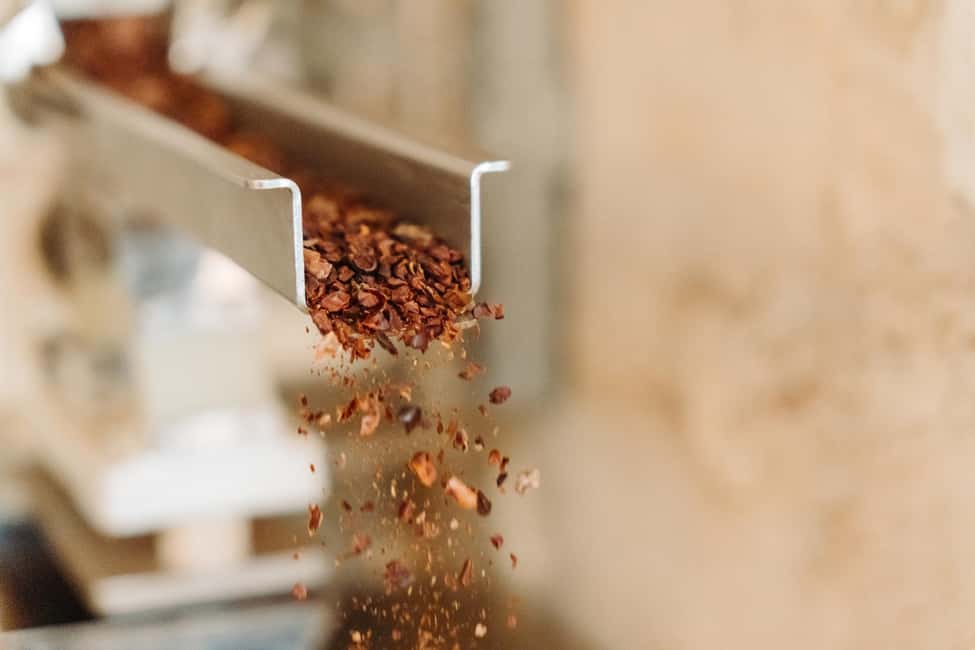
One of the most memorable parts of this tour is the walk through Paris’s covered passageways. These are the old shopping corridors with glass, ironwork, and a kind of sheltered, in-between world feeling.
You’ll pass by iconic passageways including:
- Passage de l’Ancre
- Passage du Bourg l’Abbé
- Passage du Grand Cerf
Your guide uses this section for more than scenery. You’ll be encouraged to look for details, take photos, and spot historic cafés and boutiques tucked behind the street façade.
This is also where the tour helps you orient yourself in Paris. You start noticing how the city’s old commercial life shaped the streets you walk every day.
You can also read our reviews of more tours and experiences in Paris


Boulangerie LIBERTÉ: a bakery stop that keeps the variety moving
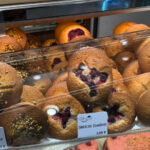
Between the covered passage passes and the big patisserie finale, you’ll hit another bakery stop: Boulangerie LIBERTÉ. Expect a short tasting window (about 10 minutes), which keeps your tour rhythm from stalling.
This stop matters because it prevents the tour from turning into a one-note parade of the same texture. You’re moving between chocolate, pastry, and then later the more colorful world of macarons and crêpes. That variety is part of what makes the tour feel worth it, even if you’re not a “sweet-only” person.
Stohrer: macarons at one of Paris’s oldest patisseries
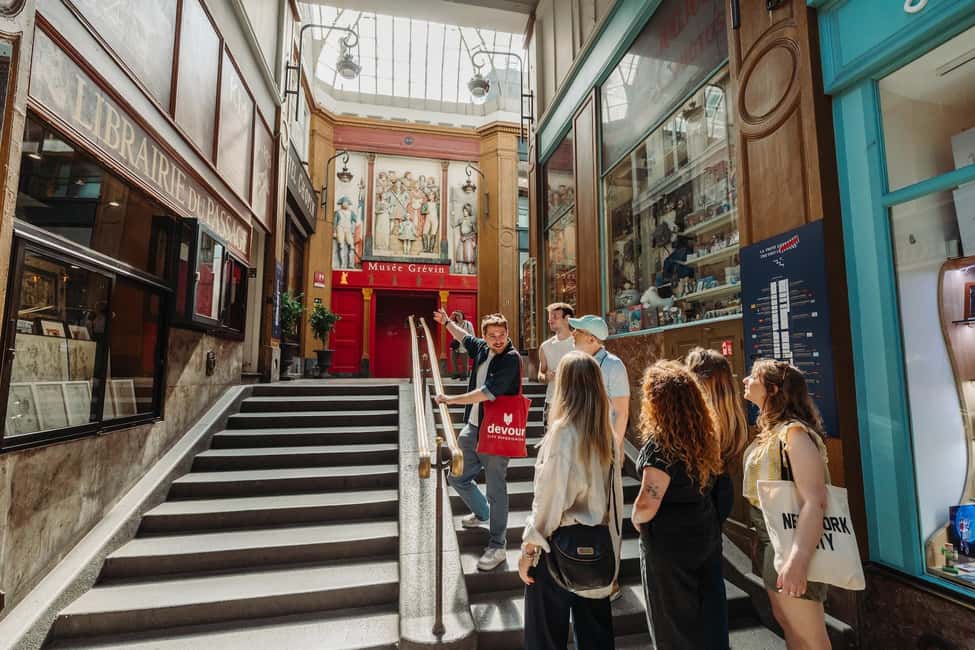
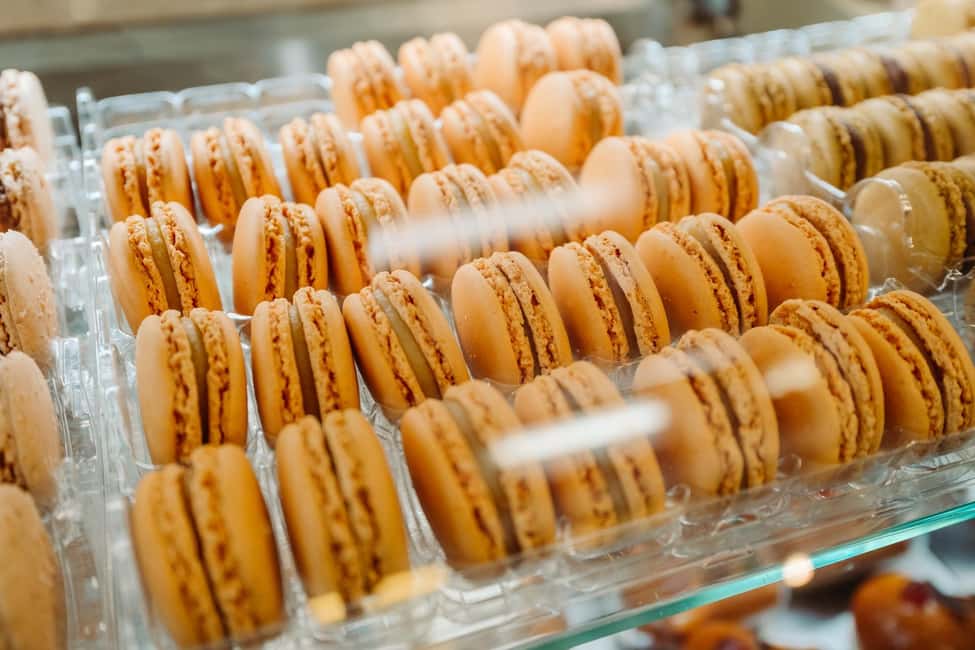
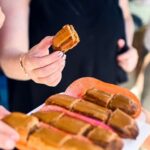
Then comes the classic history anchor: Stohrer, the oldest patisserie in Paris. You’ll bite into macarons with a guide explaining where the dessert comes from and how it became a French icon.
Stohrer is the kind of place where the experience feels grounded. You’re not eating something trendy in a generic setting. You’re in an old patisserie context, with the guide giving meaning to the sweet you’re tasting.
Macarons themselves are also a useful tasting. They’re not just sugar; they reflect technique—shell texture, filling balance, and how the flavors land. This stop gives you a more “dessert craft” understanding, not just a “dessert hit” moment.
Crêperie stop in Paris: crêpe with apple cider from Brittany
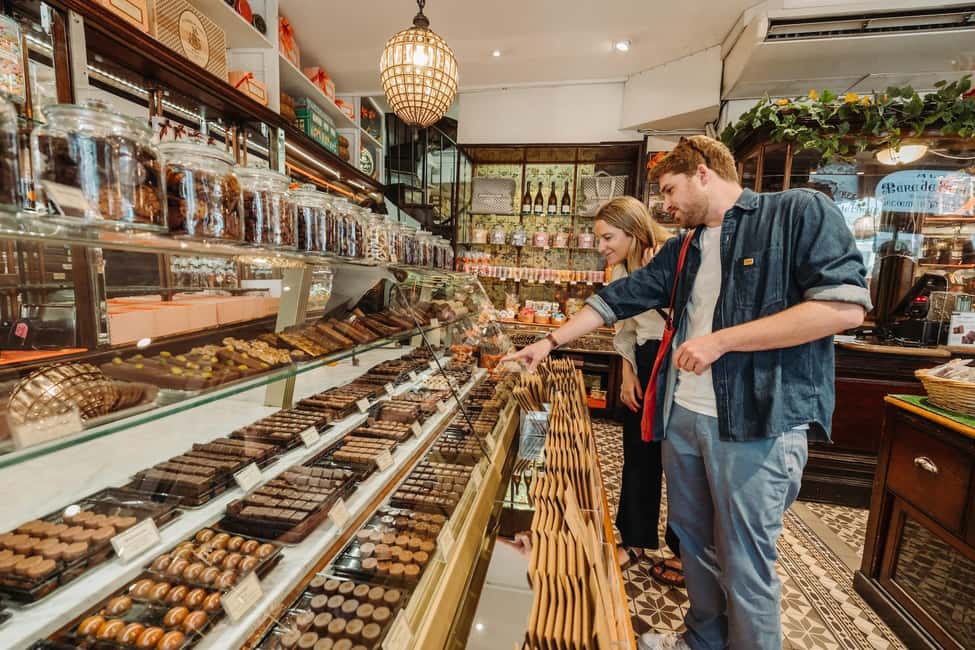
After the patisserie, you move into a crêperie: Le Comptoir du Commerce. Here, you’ll taste a traditional crêpe from Brittany, served with a glass of apple cider.
This is a welcome change of pace because it’s not just another Paris cookie or confection. It’s a different regional French tradition, and the cider brings a lightly tart, refreshing counterpoint to the sweetness you’ve had so far.
The crêpe stop is also where you’ll likely settle into a “this is fun” mood. The walking, the stories, and the tastings line up well, so the whole experience feels like a guided day out rather than a checklist.
Rue Montorgueil finish: bean-to-bar chocolate in the heart of the city
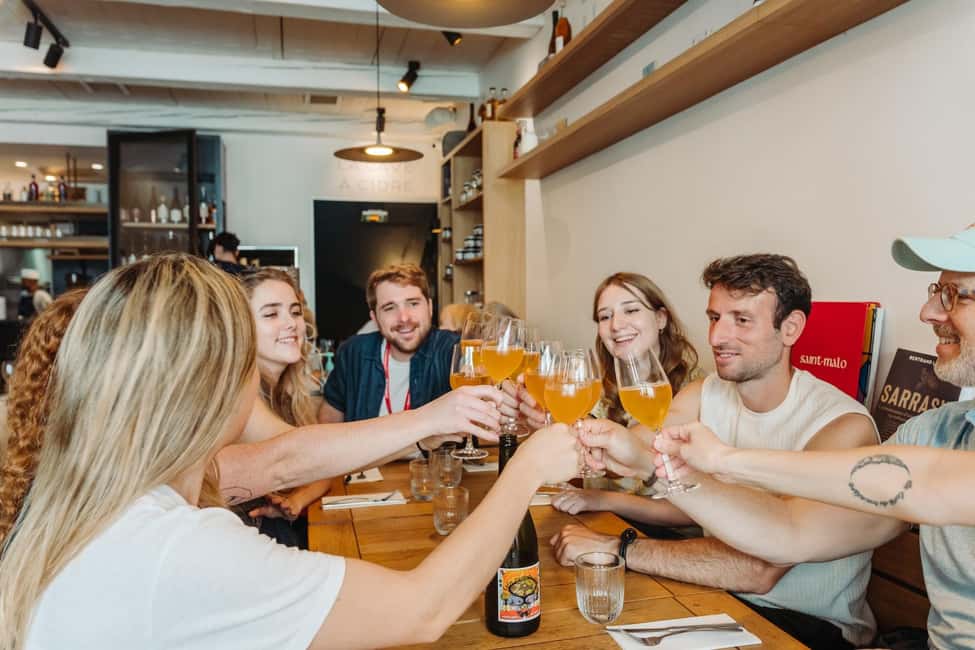
Near the end of the tour, you head into the area around Rue Montorgueil and finish with a tasting of bean-to-bar chocolate made by artisanal chocolatiers.
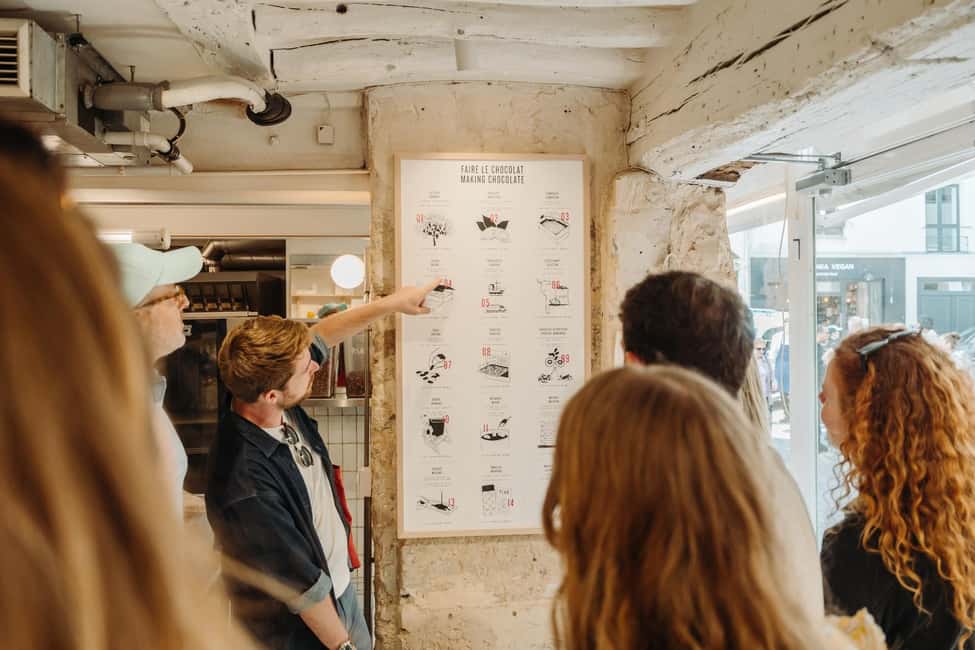
This ending makes sense. By now, you’ve tasted chocolate earlier, and you’ve seen the classic side of French desserts. The bean-to-bar finale brings you to a modern craft approach—how ingredients and process shape the final chocolate flavor.
It’s a satisfying closer because it gives you something to think about as you walk away: what changed from earlier chocolate tastings, and why the craft matters.
Why this tour feels different from a basic food crawl
A lot of walking food tours do one thing well: feeding you. This one does that too, but it also gives you context while you’re walking.
You learn the history behind major dessert classics, and that matters because French pastry is full of tiny details—technique, ingredients, and tradition tied to specific places. When you taste something like macarons or croissant with a guided explanation, you start recognizing what to look for later, long after the tour ends.
The small group also helps. With a cap of 10 people, you’re not swallowed by a crowd. Guides have space to keep the story moving, answer questions, and keep the pace comfortable for different travelers.
Price and value: is $90 worth it?
At $90 per person for about 2.5 hours, you’re paying for three things at once:
- 6+ food tastings
- a local English-speaking guide
- a structured route with stops you might not find quickly on your own
Even if you treat the tastings as the main “per-item” value, 6+ tastings means you’re often closer to roughly $15 per tasting, before factoring in the guided storytelling and the time inside well-known shops. That’s not a budget snack, but it’s also not just a one-store tasting. It’s a planned sequence of experiences.
Where the tour delivers best value is when you actually lean in—eat before you go (or at least don’t overdo it), wear comfortable shoes, and take your time tasting each stop rather than rushing through.
Who should book this Paris dessert walk
This is a great fit for you if you:
- love pastries and chocolate and want a focused tasting route
- want to see famous and less-famous Paris streets in a short window
- like the idea of covered passages and historic shop interiors
- appreciate guided context, not just food
It’s also a strong option for families or mixed-age groups because the walking is moderate and the pacing is designed to keep everyone together.
It’s not the best choice if you need strict diet handling. The tour is not suitable for gluten-free or vegan guests, and it’s not suitable for serious nut allergies (there are no peanuts, but almonds, hazelnuts, and pecans are possible in the mix). If you have dietary restrictions, you’ll need to email the guest team after booking so ingredients can be arranged where possible—and serious allergies require paperwork at the start.
Should you book this Paris Pastry & Chocolate Walking Tour?
I’d book it if you want a high-hit-rate Paris morning: great sweets, a guided route through passages you can’t easily map yourself, and enough food variety to keep things interesting. The price is fair for what you get when you count the tastings and the guided structure.
I’d skip it if you’re already committed to strict diets that the tour can’t support, or if you hate walking enough to make a 2.5-hour stroll feel like punishment. And if you tend to snack early, do yourself a favor and show up ready to taste, not trying to power through a tour on a full stomach.
If you want the classic French dessert experience with a plan (and some architectural charm), this is a very solid bet.
FAQ
How long is the Paris pastry and chocolate walking tour?
The tour lasts about 2.5 hours.
What’s the price per person?
It’s $90 per person.
How many tastings are included?
You get 6+ food tastings as part of the tour.
How big is the group?
The group is small, limited to a maximum of 10 participants.
Where do I meet the guide, and where does the tour end?
You meet at 34 Rue du Faubourg Montmartre, near the pedestrian street in front of restaurant Faubourg 34, and the tour ends around the Rue Montorgueil area in the 2nd arrondissement.
Is this tour vegan or gluten-free?
No. It’s not suitable for vegan guests and it’s not suitable for gluten-free.
What should I bring or wear?
Wear comfortable shoes and bring a passport or ID card. If you have children, bring their passport or ID card too.